That slow-draining shower or gurgling toilet isn't just a minor inconvenience. For many homeowners in Las Vegas, it's the first clue of a serious problem brewing right under their property. Tree roots can silently invade your pipes, and getting effective root removal from your sewer line is the only way to stop a hidden threat before it turns into a disastrous and expensive sewage backup in your home. At MG Drain Services, we see this problem every day and are here to guide you through the solution.
The Hidden Threat Beneath Your Las Vegas Yard
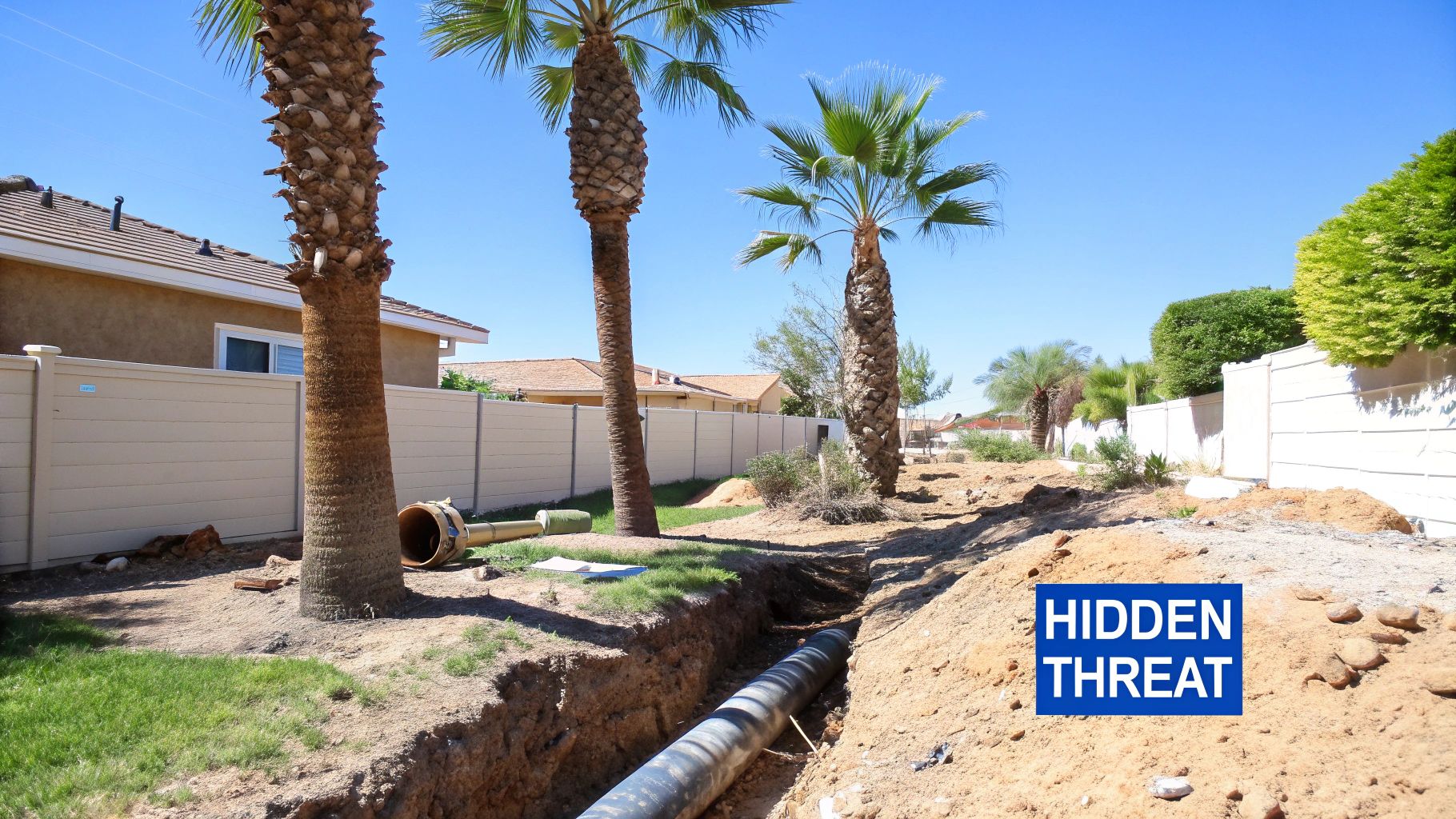
Here in the arid Las Vegas climate, trees and large shrubs are in a constant search for a reliable source of water and nutrients. It turns out, your sewer line is the perfect environment—a steady flow of moisture and organic material. This natural instinct drives roots toward your pipes with surprising force, setting the stage for a plumbing nightmare that only gets worse over time. Getting professional root removal from a sewer line in Las Vegas is critical to protecting your home.
Why Tree Roots Target Sewer Pipes
Even if your sewer pipes seem solid, they have tiny vulnerabilities that roots are experts at finding. The joints between pipe sections, hairline cracks from shifting soil, or even pinhole-sized leaks all release water vapor into the ground. That vapor acts like a beacon, guiding thirsty roots straight to your sewer line.
Once a root finds an opening, it sends out tiny, hair-like tendrils that muscle their way inside. Thriving in that nutrient-rich environment, these tendrils quickly grow into a thick, tangled mass. This isn't just a simple clog; it's an invasive growth that can compromise the structural integrity of your entire plumbing system.
Field Experience: It's a pervasive nightmare for homeowners. Tree roots invading sewer lines account for a huge percentage of all sewer blockages we see. In older Las Vegas and Henderson neighborhoods with clay or cast iron pipes from the 1960s-70s, unchecked root growth causes major breaks far more frequently.
What starts as a minor intrusion quickly snowballs. The root mass acts like a net, catching grease, toilet paper, and other debris that flows down the drain. This combination creates a dense, stubborn blockage that a traditional drain snake just can't clear.
Eventually, the constant pressure from the growing roots can cause pipes to crack, separate at the joints, or even collapse entirely. This leads to much more than just slow drains—it can result in raw sewage backing up into your home through toilets, tubs, and floor drains. A situation like that is not only destructive and expensive to fix but also poses a significant health hazard for your family. Understanding the signs and getting professional root removal from your sewer line is the critical first step to preventing this plumbing catastrophe.
Decoding the Warning Signs of a Root Intrusion
Root intrusion isn’t a sudden catastrophe; it’s a slow-motion invasion that gives you plenty of warning long before your drains back up into the house. Many Las Vegas homeowners brush these early symptoms off as minor quirks, but to a professional plumber, they tell a very specific story.
Learning to spot these clues is the first step in avoiding a messy, expensive plumbing emergency. What starts as a drain that’s just a little sluggish can escalate into a complete blockage, and knowing why it's happening empowers you to act before it gets out of hand.
Sounds and Smells From Your Drains
Your plumbing should be quiet and odorless. When that changes, it’s a huge clue that something is blocking the normal flow of water and air inside the pipes.
- Gurgling Noises: Do you hear your toilet gurgle whenever the shower is running? Or does the sink make weird noises after you flush? That’s not random. It's the sound of trapped air being forced past a growing root mass in your sewer line. As water shoves its way through, the air has nowhere to go but back up, creating that telltale gurgle.
- Foul Odors: If you’re catching whiffs of sewer gas from your drains or even out in the yard, that's a major red flag. Roots don't just create blockages that trap waste; the cracks they make also allow those nasty gases to escape into your home or the soil.
Slow Drains and Frequent Backups
The most obvious sign of trouble is how your drains are behaving. A single clogged sink is one thing, but when the problem is happening all over the house, it points to a much bigger issue in the main sewer line.
If multiple fixtures—like a toilet, shower, and sink in the same bathroom—are all draining slowly, the blockage almost certainly isn't in an individual pipe. That’s a classic symptom of a root problem that’s starting to impact your entire home’s drainage system.
Contractor Insight: A clog that keeps coming back, no matter how many times you snake it, practically screams "roots." A basic snake might punch a small hole through the blockage, giving you temporary relief, but it won't clear out the dense root ball. That means it'll just trap more debris and clog right back up in a few weeks or even days.
Unexpected Changes in Your Yard
Sometimes, the best clues aren't inside your house at all—they're right under your feet on the lawn. A compromised sewer line can have a direct impact on the landscape right above it.
One of the most revealing signs is a random patch of grass that looks incredibly green and lush compared to the rest of the yard. This happens because the sewer line, cracked by roots, is leaking out nutrient-rich water. It’s basically fertilizing that spot 24/7. It might look nice, but it’s a clear sign of an underground leak that needs immediate attention.
You can learn more about these subtle but crucial indicators in our detailed guide on the common signs of sewer line problems. Ignoring them almost always leads to more severe damage, making early detection the key to a simpler, cheaper fix.
How Professionals Tackle Root Removal From Sewer Line
When DIY fixes just aren't cutting it and the signs of root trouble are staring you in the face, it's time for the pros to step in. A dense mass of tree roots strangling your sewer pipe requires specialized equipment and a level of expertise you just can't get from a hardware store rental.
Here in Las Vegas, our team at MG Drain Services typically relies on two powerful methods for effective root removal from sewer line: mechanical augering and high-pressure hydro jetting. These aren’t just beefed-up drain snakes; they are professional-grade solutions designed to demolish the toughest blockages and get your plumbing back to normal. The right choice always depends on what we see during that initial camera inspection.
The Power of Mechanical Root Cutting
Think of a mechanical auger—often called a rooter machine—as the brute-force approach for immediate relief. This powerful machine uses a heavy-duty steel cable that we guide into your sewer line from a cleanout port.
At the business end of that cable is a specialized cutting head with razor-sharp, rotating blades. As the cable spins, those blades act like a miniature buzzsaw, tearing and chewing through the tangled web of roots invading your pipe. It effectively bores a hole through the blockage, breaking the root ball into smaller chunks that can then be flushed away.
This method is incredibly effective for clearing a path right away. If your drains are completely backed up and you need a fast fix, mechanical cutting is often our first line of attack to restore flow and get your system working again.
The whole process of root intrusion tends to follow a familiar pattern. It starts with subtle gurgling sounds, then slow drains, and often ends with a suspiciously green and lush patch of grass in your yard.
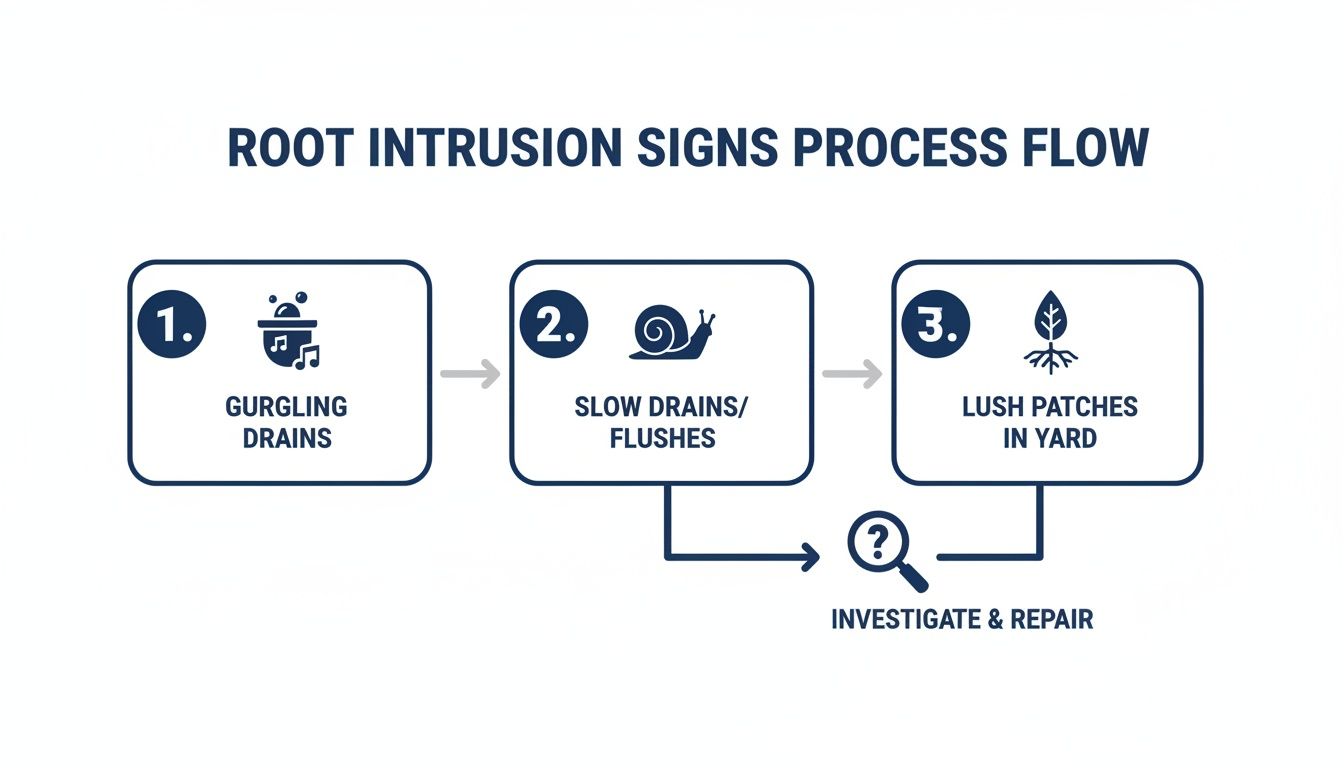
This visual really shows how all those seemingly minor issues are often connected, pointing back to a single, growing problem deep inside your sewer line.
Hydro Jetting: The Ultimate Pipe Cleaning Solution
While an auger clears a path, hydro jetting cleans the entire pipe. This is the gold standard for comprehensive root removal from sewer line and is hands-down the best long-term solution for keeping those roots from coming right back.
A hydro jetter is essentially a massive pressure washer, blasting water through a specialized hose and nozzle at up to 4,000 PSI. When we send this into your sewer line, the pressurized water doesn't just cut through the roots—it obliterates them, scouring them completely clean from the pipe walls.
Professional Insight: Hydro jetting is like pressure washing the inside of your pipes. It destroys not only the tree roots but also years of accumulated grease, scale, and sludge that roots love to cling to. This leaves the pipe interior incredibly smooth, making it much harder for new roots to get a foothold.
It's a well-known fact that roots thrive where there's a steady supply of water and nutrients. That's why they invade cracks in the majority of older sewer systems. High-pressure jetting is widely recognized as a top-tier method for clearing these stubborn root masses without causing more damage to the pipe itself.
For Las Vegas homes with recurring root problems or heavy grease buildup, our hydro jetting service is almost always the most effective and lasting solution.
Comparing Professional Root Removal Methods
So, which method is right for your home? It really comes down to what we find on camera. To make it clearer, here’s a quick comparison of the two main professional techniques.
| Feature | Mechanical Augering (Root Cutter) | Hydro Jetting |
|---|---|---|
| Primary Goal | Bores a hole through a blockage to restore flow quickly. | Cleans the entire inner diameter of the pipe for a like-new finish. |
| Best For | Completely clogged lines, urgent backups, and older/fragile pipes. | Thorough cleaning, preventing root regrowth, and removing grease/sludge. |
| Effectiveness | Good for immediate relief but often leaves root fragments behind. | Excellent for removing all debris and slowing down future growth. |
| Cost | Typically more affordable for a one-time fix. | Higher upfront cost but often more cost-effective in the long run. |
Ultimately, both tools have their place. An auger is great for punching through a solid wall of roots, while the hydro jetter is the perfect follow-up to ensure every last bit is gone for good.
In many situations, we actually use a combination of both. We might start with the mechanical auger to break apart a massive root ball, then follow up with the hydro jetter to flush out all the remaining debris and leave the pipe perfectly clean. This two-pronged attack ensures your sewer line is as clear as it can possibly be, giving you lasting peace of mind.
Planning Your Next Steps After Root Removal
Getting the roots out of your sewer line brings immediate relief. Your drains work again, the gurgling stops, and you've dodged a messy sewage backup. But the job isn't finished yet.
Clearing the blockage is just the first step. Securing your pipes for the long term is the real goal, and what you do next is absolutely critical.
The simple truth is that roots don't invade perfectly sealed pipes. They found a way in for a reason—a crack, a separated joint, or a tiny fissure. Just performing a root removal from your sewer line without addressing that entry point is like bailing water out of a boat without patching the hole. The problem is guaranteed to come back.
The All-Important Post-Removal Camera Inspection
After we’ve cleared the immediate blockage with a mechanical auger or hydro jetter, the single most important next step is a detailed video camera inspection. We send a high-resolution camera down the entire length of your sewer line, from your home to the city main. This isn't an upsell; it's essential diagnostics.
This inspection allows us—and you—to see the pipe's condition in real-time on a monitor. It answers crucial questions:
- Where did the roots get in? We can pinpoint the exact locations of cracks, joint separations, or breaks.
- How bad is the damage? We can see if it’s a minor crack or if a section of the pipe has collapsed, a condition known as a "belly."
- Is there other damage? The camera will reveal any other potential issues, like heavy scale buildup or offsets in the pipe.
Seeing the damage firsthand empowers you to make an informed decision. Instead of guessing, you know exactly what you’re up against and can choose a permanent solution rather than waiting for the next inevitable clog.
Trenchless Pipe Lining: A Modern Solution
For many Las Vegas homes, the best long-term fix is a modern, non-invasive technology called trenchless pipe lining. This method avoids the costly and destructive process of digging up your entire yard to replace the old pipe.
Think of it as creating a brand-new, seamless pipe right inside of your existing one. We insert a flexible, resin-saturated liner into the damaged pipe. Once it's in place, we inflate a bladder that presses the liner against the old pipe's interior walls. The resin then cures, hardening into a super-strong, joint-free structural pipe that is often stronger than the original.
This new liner seals off all the cracks and gaps where roots were getting in. Because it's a single, continuous pipe, there are no joints for roots to penetrate in the future. It's a permanent fix that addresses the root cause of the problem.
This method is a game-changer for homeowners who want to avoid having their landscaping, driveways, or patios torn up. You can explore a more detailed breakdown of the costs and benefits of trenchless pipe lining to see if it’s the right investment for your property.
When Is a Traditional Repair Necessary?
While trenchless methods are ideal for most situations, they aren't a silver bullet for every problem. If our camera inspection reveals that a section of your sewer line has completely collapsed or is severely offset, a more traditional spot repair might be necessary.
This involves excavating a small, targeted area to access and replace only the severely damaged section of pipe. Our goal is always to minimize disruption. By using precise locating equipment, we can dig in the exact spot needed, repair the pipe, and then connect it seamlessly to the rest of your system—which can often be lined afterwards.
Choosing the right path forward—lining or a spot repair—depends entirely on the visual evidence from the camera. This strategic approach ensures you’re not just paying for another temporary root removal from your sewer line in a year, but investing in a permanent solution that protects your home and gives you lasting peace of mind.
Proactive Strategies to Prevent Future Root Problems
Once you’ve dealt with a root-clogged sewer line, the last thing you want is a repeat performance. The smartest thing any Las Vegas homeowner can do is switch from crisis mode to prevention mode. An ounce of prevention is truly worth a pound of cure, especially when you’re up against something as relentless as tree roots.
Taking a few strategic steps now can save you from emergency calls, expensive repairs, and the nightmare of another sewage backup down the road.
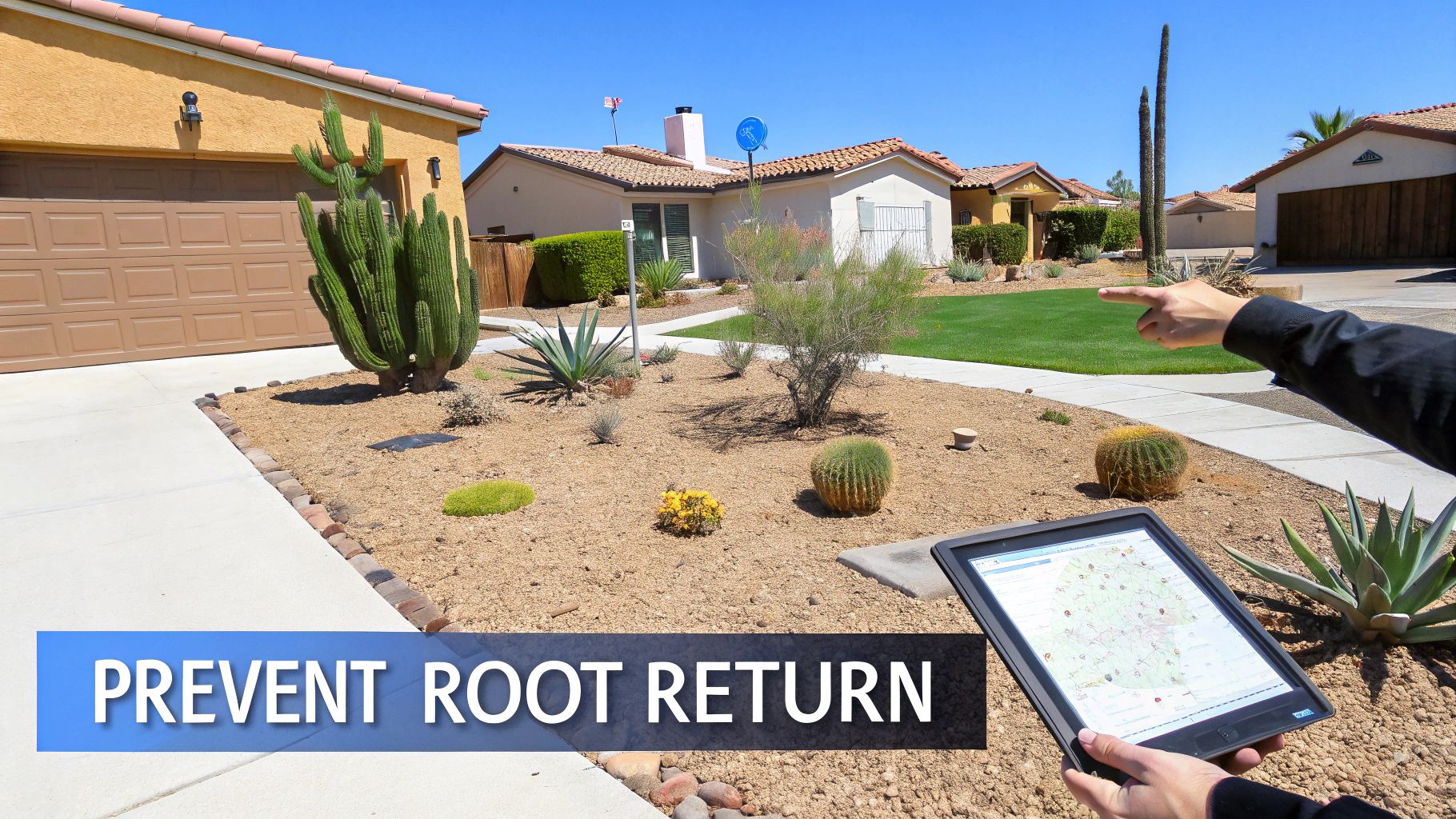
Simply performing a root removal from your sewer line isn’t a permanent fix. If those tiny cracks or loose joints that let the roots in are still there, the roots will find their way back. It's a guaranteed source of water, after all. The real goal is to make it as difficult as possible for them to get in again.
Strategic Landscaping for Las Vegas Homes
One of the most powerful long-term strategies starts right in your own yard. The trees you plant—and where you plant them—can either set you up for a future plumbing disaster or protect your sewer line for decades.
It's crucial to know which trees are the biggest offenders. In the Las Vegas and Henderson area, there are a few usual suspects you should never plant near your main sewer line:
- Ficus Trees: These are notorious for their incredibly aggressive and invasive root systems that seem to travel for miles.
- Mulberry Trees: They grow fast and have shallow, powerful roots that are famous for wrecking pipes and even cracking foundations.
- Willow Trees: Beautiful, yes, but willows are thirsty. Their extensive root systems will actively hunt down your sewer line for a drink.
A much safer bet is to choose "sewer-safe" trees with less invasive root systems that are better suited for our desert climate anyway. Think about options like the Palo Verde, Desert Willow, or certain types of Acacia—they are generally safer choices, especially when planted at a respectable distance.
Professional Tip: Before putting a shovel in the ground, have a plumber come out and map the exact location of your sewer line. Knowing its path helps you create a safe zone—usually at least 10-20 feet away—to keep your landscaping and your plumbing from fighting it out later.
The Value of a Scheduled Maintenance Plan
The absolute best way to stop a catastrophic blockage is to catch root intrusion while it's still a minor issue. A scheduled maintenance plan is your best defense, turning a potential emergency into a simple, routine check-up. This is especially true for property managers and anyone with an older Las Vegas home.
A smart, proactive plan usually involves two key services:
- Annual Camera Inspections: About once a year, we can send a camera down the line just to see what’s going on. This lets us spot those first tiny root tendrils long before they can bunch up and cause a real problem.
- Preventative Hydro Jetting: Depending on what the camera sees, we might recommend a hydro jetting service every 18-24 months. This isn't just for clogs; it's a deep clean that scours the pipe walls, blasting away any small roots that have snuck in and removing the sludge and grease they love to feed on.
This kind of routine upkeep is far more affordable than an emergency root removal from a sewer line coupled with the cost of cleaning up water damage. It gives you peace of mind and keeps your whole plumbing system flowing the way it should, year after year.
Your Go-To Partner for Sewer Line Health in Las Vegas
Ignoring the subtle warnings of root intrusion is a gamble many Las Vegas homeowners take without even realizing it. That gurgling sound from your drain? It might seem minor, but it can quickly turn into a full-blown sewage backup, causing thousands in property damage and creating a serious health hazard.
The real key isn't just reacting to a disaster—it's having a trusted local partner who can solve the problem for good and help you make sure it never happens again.
For homeowners and property managers across Las Vegas, Henderson, and North Las Vegas, MG Drain Services is the local authority on all things drains and sewers. We aren't a generic, one-size-fits-all plumbing company; we're specialists who live and work right here in Clark County.
Why Call a Local Pro?
Choosing the right team for root removal from your sewer line is a huge decision. You need technicians who get the unique challenges of Las Vegas homes, from our hard, shifting soil to the types of trees that cause the most headaches for underground pipes.
- Licensed & Insured: We give you complete peace of mind. You can rest easy knowing your property is protected and all work is done to the highest professional standards.
- Experienced Journeyman Plumbers: Our team isn't learning on your dime. You get seasoned experts with decades of real-world experience diagnosing and solving the toughest sewer line issues.
- Fast, Reliable Response: When your sewer is backing up, time is not on your side. We prioritize getting to you quickly to restore your system and minimize the disruption to your life.
- Honest, Transparent Pricing: We believe in clear, upfront quotes before any work starts. No hidden fees, no surprise charges—just honest work at a fair price.
Our commitment is to be more than just a one-time service call. We want to be your long-term partner in maintaining your home's plumbing health. We fix the immediate problem and give you the knowledge and tools to prevent it from coming back.
Connecting homeowners with specialized solutions like root removal requires a strong local presence. For anyone curious about how businesses like ours reach their community, understanding the ins and outs of Local SEO for home services shows how critical it is for ensuring you can find a qualified pro when you need one most.
If you're noticing any of the signs we've discussed—from sluggish drains to strange smells—don't wait for a disaster. The problem with roots is that they never stop growing, and putting off the repair only makes the job more complex and expensive down the road.
Don’t let a hidden threat under your lawn become a full-blown crisis in your home. For a professional camera inspection and expert root removal from your sewer line, call the trusted local plumbers in Las Vegas.
Contact MG Drain Services LLC today at 702-480-8070 or book your appointment online at https://mgdrainservices.com to get a fast, reliable solution from our experienced team.
Common Questions About Sewer Line Root Removal
We get a lot of the same questions from homeowners across Las Vegas dealing with tree root problems. It's a common issue, but it can feel overwhelming. Let's walk through some of the most frequent things we're asked to give you some clear, honest answers.
How Much Does Root Removal Cost in Las Vegas?
This is usually the first question, and the honest answer is: it depends. The final cost for root removal from a sewer line really hinges on how bad the blockage is and which method we need to use.
The first step is always a camera inspection to see exactly what we're up against. For a quick fix on a minor blockage, mechanical cutting is often the most affordable option upfront. However, if you're looking for a deep, long-lasting clean, hydro jetting is the way to go. Here at MG Drain Services, we give you a transparent, on-site quote so you know the full cost before we even start. No surprises.
Will Tree Roots Grow Back After Removal?
Yes, they absolutely will. If the pipe has cracks or leaky joints letting moisture out, those roots will find their way back to that water source eventually. Just cutting the roots out is really a temporary fix.
For a permanent solution, you have to fix the pipe itself. We almost always recommend trenchless pipe lining for this. It creates a brand-new, solid barrier inside the old pipe that roots simply can't get through, solving the problem at its source for good.
Can I Use Chemical Root Killers from the Store?
We generally tell homeowners to steer clear of the DIY chemical treatments you find at the hardware store. They're just not very effective on a dense mass of roots, and they can be pretty harmful to the environment.
Worse, some of those harsh chemicals can actually damage older pipes that are already fragile. Professional methods are safer, much more thorough, and do a far better job of clearing the whole line without causing any extra damage.
How Long Does the Removal Process Usually Take?
A straightforward root removal job, whether we're using a mechanical auger or hydro jetting, can often be wrapped up in just a few hours.
Of course, more complex jobs with severe blockages or lines that are hard to get to might take a bit longer. Our technicians are experienced and work efficiently to get your plumbing back to normal with as little disruption to your day as possible.
Don't let a slow drain turn into a full-blown sewage backup. For an expert diagnosis and fast, effective root removal, trust the local pros at MG Drain Services LLC. Give us a call at 702-480-8070 or book your service online for honest, reliable plumbing right here in Las Vegas.