If you’re hearing a steady drip in a quiet house, or you’ve opened a cabinet and found a shutoff valve leaking onto the floor, your concern is justified. A valve leaking water usually starts small, then turns into cabinet damage, stained drywall, warped baseboards, or a much bigger repair if it’s ignored. In Las Vegas homes, hard water often speeds that process up because mineral buildup makes valves stiff, brittle, and more likely to seep around moving parts.
This is one of those plumbing problems that feels minor until it isn’t. The average U.S. household leak wastes about 10,000 gallons per year, enough to wash 270 loads of laundry, and fixing easy household leaks can save about 10% on water bills, according to household leak detection guidance from the Springfield Water and Sewer Commission citing EPA data. That’s why the right first move matters more than the fast first move.
That Drip Is More Than Just Annoying
A lot of homeowners first notice a valve leak late at night. The dishwasher is off. No one’s using a sink. Then you hear a soft tick of water under a bathroom vanity or behind a toilet. You wipe it up, check again in the morning, and the moisture is back.
That’s a classic valve problem. It might be an angle stop under a sink, the shutoff behind a toilet, a hose bib outside, or the main shutoff where the line enters the house. In Las Vegas, I see the same pattern often. Hard water leaves scale behind, scale makes valves harder to turn, and once someone finally touches that old valve, the stem or packing area starts leaking.
Why Las Vegas homes see this more often
Mineral-heavy water doesn’t usually destroy a valve all at once. It wears it down. The handle gets stubborn. The packing dries out. The seal surfaces collect buildup. Then a simple turn that should’ve been routine becomes the moment the leak starts.
That’s why a valve leaking water should never be dismissed as “just a drip.”
Practical rule: If the leak started right after you turned a valve, don’t keep forcing it. The next quarter turn can be the one that turns a nuisance into a flood.
What usually makes it worse
Homeowners often lose time on the wrong fix. They wrap the outside with tape, smear on sealant, or tighten every visible nut. Sometimes that slows the drip for a few hours. It also makes the actual repair messier.
The better approach is simple:
- Find the exact leak point so you know whether it’s the stem, packing nut, body, or connection.
- Shut water off safely before trying anything.
- Decide realistically whether this is a light adjustment or a replacement job.
That decision matters most with older Las Vegas valves, because hard water scaling can hide how fragile the metal has become.
Your First Step Pinpointing the Leak
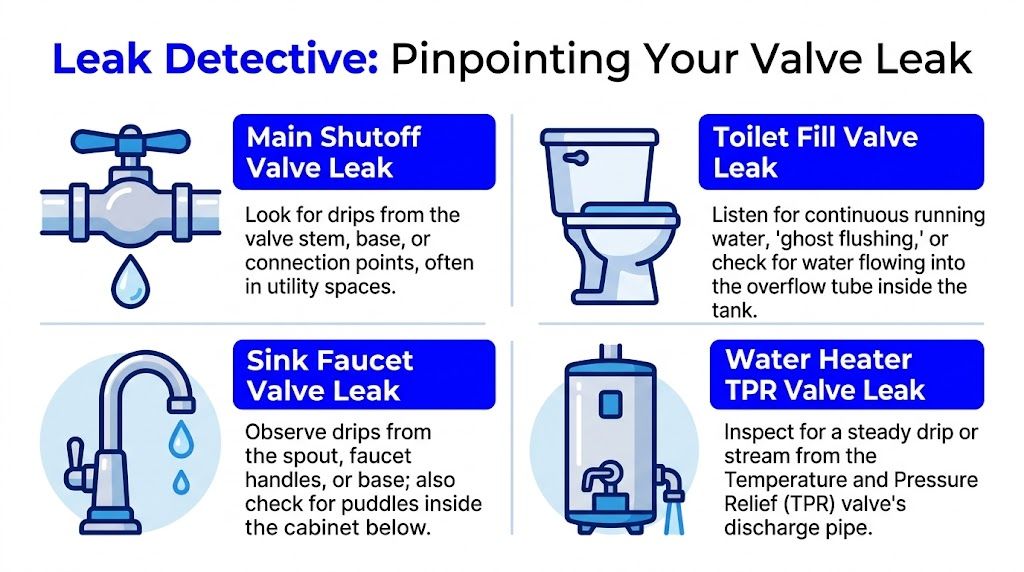
Before you grab pliers, figure out where the water is coming from. A lot of people say “the pipe is leaking” when the problem is the valve stem. Others replace the valve when the connection above it is the only wet point.
Start with a dry test
Use a rag or paper towel and dry the valve completely. Dry the supply line too. Then watch closely for a minute or two with a flashlight.
Look at four places:
Handle or stem area
Water here usually points to the packing nut or stem seal.Where the valve meets the supply line
This suggests a connection issue.Where the valve meets the wall pipe or stub-out
This can mean a failed compression connection, corrosion, or a bad install.Valve body itself
If the metal body is cracked or corroded, that’s not a tighten-and-go repair.
Common Household Valves and Their Leak Points
| Valve Type | Common Location | Typical Leak Source | DIY Repair Level |
|---|---|---|---|
| Angle stop valve | Under sinks, behind toilets | Packing nut, outlet connection, body corrosion | Moderate if leak is minor and accessible |
| Main shutoff valve | Garage, side yard, utility area | Stem leak, body seep, connection leak | Low for DIY, risk is high |
| Hose bib or outdoor shutoff | Exterior walls, irrigation areas | Stem packing, worn internal seal, cracked body | Moderate if isolated and visible |
| Toilet fill valve | Inside toilet tank | Internal running water, overflow into tube | Moderate for handy homeowners |
| Water heater relief valve | On or near water heater with discharge pipe | Valve discharge, pressure or heat related issue | Professional repair recommended |
Match the symptom to the likely problem
A packing nut leak usually shows up right below the handle. The valve may work normally, but water beads around the stem when the valve is on or after you turn it.
A connection leak forms at the nut where tubing attaches. You’ll often see a droplet hanging from the bottom of the connection, not from the handle area.
A body leak is the bad one. If the casting itself is cracked, greened up, or crusted with heavy mineral buildup and staying wet, replacement is usually the best answer.
Dry first. Then identify the highest wet point. Water travels downward and fools people into blaming the wrong part.
The spots I’d check first in a Las Vegas house
The most common residential trouble spots are usually:
- Bathroom and kitchen angle stops that haven’t been touched in years
- Toilet shutoff valves after a fill valve or supply line replacement
- Outdoor hose bibs exposed to heat and scale buildup
- Main shutoff valves that only get touched during emergencies
If you’re not sure whether the moisture is from a valve or from somewhere hidden behind the wall, professional water leak detection in Las Vegas can save time and prevent opening up the wrong area.
Stopping the Damage Before We Arrive
The first priority is not fixing the valve. It’s limiting damage.
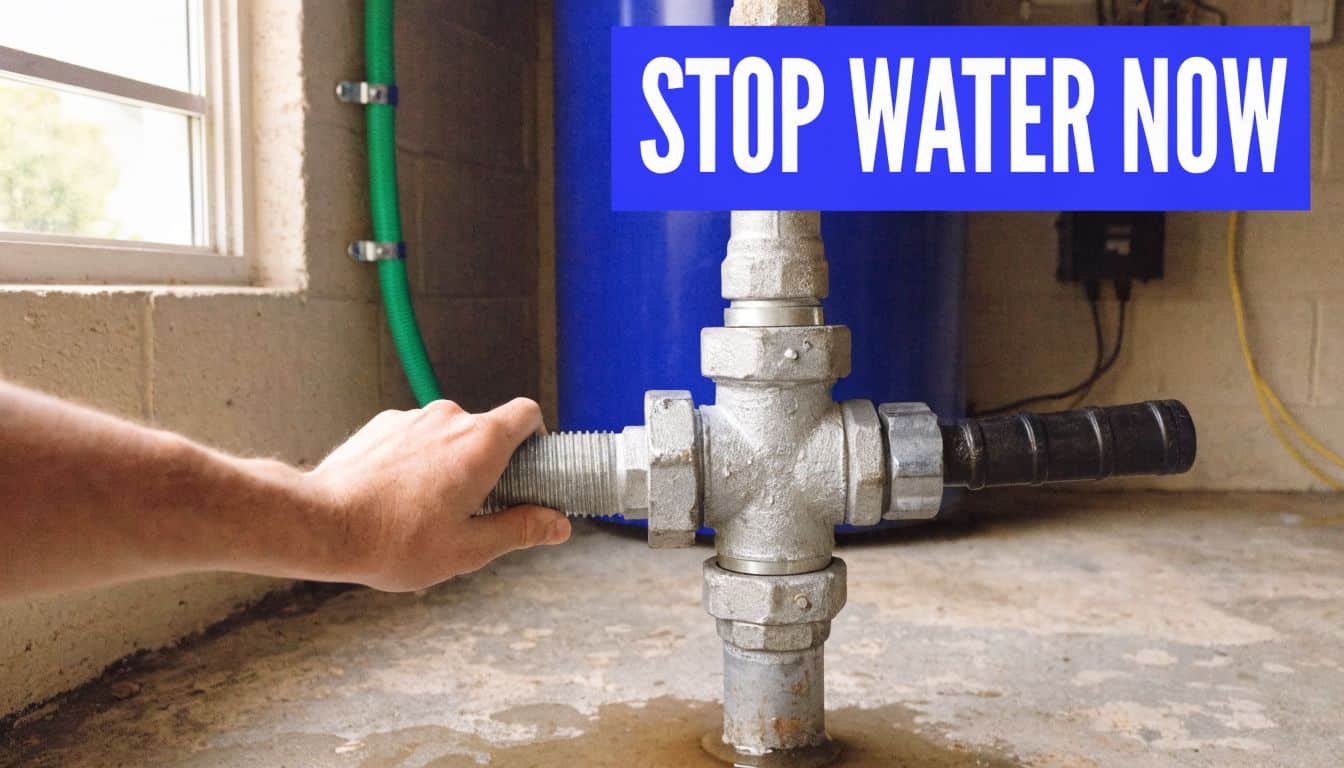
If the leak is at a sink or toilet shutoff, try closing that fixture valve gently. Don’t muscle it. If it turns with reasonable pressure, close it and confirm the leak slows or stops. If the handle feels frozen, stop there. Old hard-water valves can snap when forced.
If the leak continues, or if it’s on the main shutoff, shut off water to the house. Every homeowner in Las Vegas should know where that valve is before an emergency happens.
What to do right now
- Catch the water: Put down a towel, shallow pan, or bucket.
- Move stored items: Pull cleaners, toiletries, paper goods, and anything absorbent out of the wet area.
- Dry the cabinet or floor: This helps you tell whether the leak is still active.
- Take one clear photo: That helps later if the leak changes or stops before a plumber arrives.
For homeowners who want a refresher on locating and handling a fixture shutoff, this guide on how to install a shut off valve also helps you understand how these valves are laid out and what you’re looking at.
What not to do
In this situation, people create bigger repairs.
- Don’t use epoxy on a live valve leak: It rarely holds on mineral-coated surfaces.
- Don’t bury the valve in tape: Tape on the outside doesn’t repair a failed packing seal or cracked body.
- Don’t keep cycling the valve open and closed: That can worsen the leak.
- Don’t ignore slow leaks in enclosed spaces: Cabinets and wall cavities stay damp longer than people think.
A slow leak is not only about wood damage. In dry climates, hidden moisture can sit in enclosed plumbing spaces and support bacterial growth. This article on health risks from plumbing leaks notes that in arid regions like Las Vegas, slow leaks can create stagnant water pockets that foster bacteria such as Legionella, and it references a 2023 CDC report noting a rise in Legionnaires’ disease cases in the Southwest tied to undetected plumbing leaks.
If water already spread beyond the valve
Once water gets into flooring, drywall, or lower cabinets, cleanup matters as much as repair. Even though it’s outside Las Vegas, this overview of emergency water cleanup is a useful reference for understanding how fast wet materials need attention after a plumbing leak.
Here’s a quick visual if you want to see a shutoff process in action before touching anything:
A Guide to Common Valve Repairs
Some valve leaks are manageable. Some are traps. The difference is usually the leak location, the age of the valve, and whether hard water has already glued everything together with scale.
The safest first repair to try
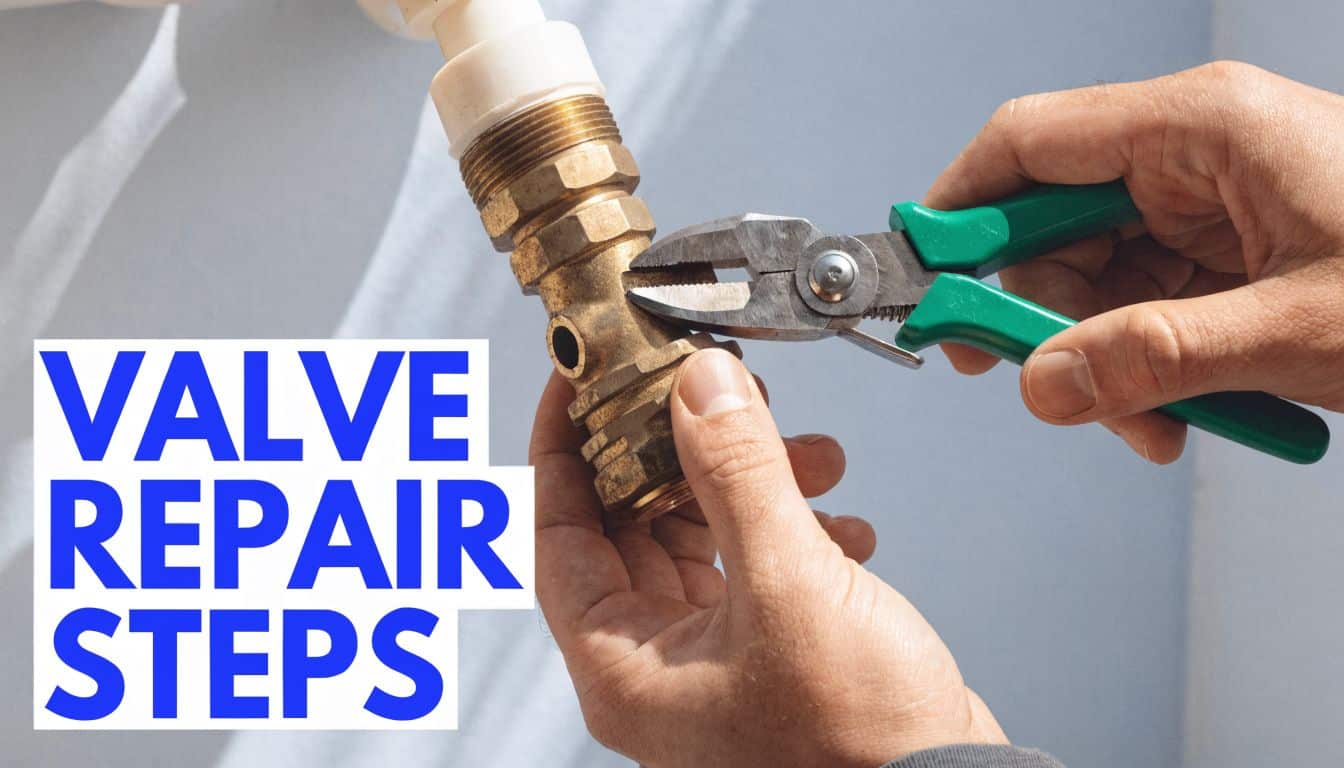
For most external valve leaks, the packing gland is the first place to check. Virago Valves’ repair guidance notes that carefully tightening the packing nut by 1/4 to 1/2 turn often resolves minor leaks without replacing parts, making it the most cost-effective first step.
That applies well to common shutoff valves and hose bibs when the water is clearly seeping from the stem area.
Tools that actually help
Set out the basics before you touch anything:
- Adjustable wrench for the packing nut
- Channel-lock pliers for steadying the valve body if needed
- Dry rag to confirm where water starts
- Flashlight for seeing the top side of the valve
- Small bowl or towel for catch water
- Work gloves if the valve is crusted with mineral buildup
If you’re replacing threaded fittings during a proper repair, understanding thread type matters. This primer on NPT thread adapters is useful background so you don’t force mismatched threaded parts together.
Repair one, a minor packing nut leak
This is the most reasonable DIY attempt for many homeowners.
- Shut off the water to the fixture or the home.
- Dry the valve completely so you can tell if your adjustment worked.
- Hold the valve body steady if possible. You don’t want torque transferring into the pipe in the wall.
- Tighten the packing nut slightly. Think small movement, not full turns.
- Turn water back on slowly and watch the stem area.
If the leak stops, leave it alone and monitor it. If it slows but doesn’t stop, the valve may need repacking or replacement.
A packing nut adjustment is a finesse repair. If you bear down on it like a lug nut, you can make the valve harder to operate or damage the seal.
Repair two, a loose connection at the outlet
If the leak is where the supply line connects to the valve, you may be dealing with a loose connection or a worn supply line seal.
Use two tools if space allows. One holds the valve body steady. The other snuggs the connection, as turning only the nut can still twist the valve if the body moves with it.
A few cautions:
- Don’t overtighten a compression-style connection
- Replace a damaged supply line instead of trying to rescue it
- Stop if the pipe in the wall moves because that changes the job
Repair three, replacing a valve is sometimes smarter than fighting it
Older gate valves, multi-turn shutoffs, and heavily corroded angle stops often don’t reward DIY persistence. In Las Vegas, scale can make a valve look intact while the internals are already failing.
These are usually poor candidates for casual repair:
- A valve body with visible corrosion or cracking
- A handle that won’t turn without force
- A valve that leaks more after adjustment
- A shutoff soldered tightly in place
- A main shutoff that feels fragile
At that point, replacement is usually the cleaner, safer solution.
What works and what usually doesn’t
Usually works
- Light packing nut adjustment
- Tightening a clearly loose outlet connection
- Replacing an accessible supply line when the valve itself is dry
Usually doesn’t
- Smearing sealant on the outside
- Forcing an old handle
- Reusing mineral-damaged washers and seals
- Guessing at parts because they “look close enough”
The hard water factor homeowners miss
Hard water changes the repair decision. A small leak on a newer valve can be a quick fix. The same leak on an older mineral-coated valve can mean the brass is already compromised or the moving parts are binding internally.
That’s why the same symptom doesn’t always call for the same repair. If the valve is accessible, recent, and only leaking at the packing nut, a cautious adjustment makes sense. If it’s old, crusted, and stiff, trying to save it can cost you more than replacing it correctly.
When to Put Down the Wrench and Call an Expert
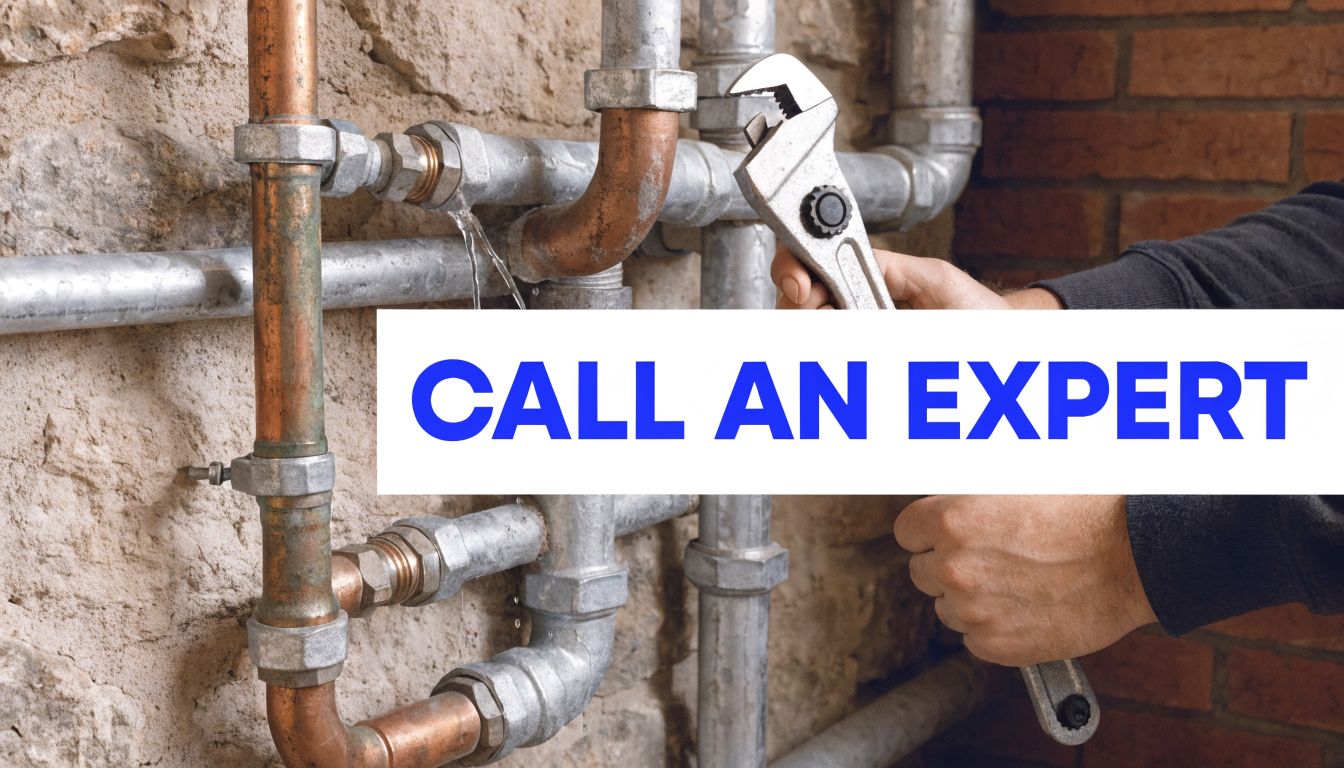
Some leaks stop being a homeowner project the moment you identify them. The smart move isn’t doing more. It’s doing less before damage spreads.
The red flags
Call a plumber if any of these are true:
- The leak is inside a wall or slab area
- The main shutoff valve is leaking
- The valve is soldered in and not easily isolated
- The handle feels seized or brittle
- You tightened the packing nut and the leak got worse
- The body of the valve is cracked or heavily corroded
- The leak involves a water heater relief valve
This is especially important in Las Vegas homes with older shutoffs. Hard water deposits can make a valve feel repairable right up until the stem snaps or the connected pipe twists.
Why guessing gets expensive
Misdiagnosis costs money. Valve Magazine’s discussion of leak testing misconceptions notes that homeowners can waste over $500 on wrong parts or unnecessary pump replacements when the underlying issue could have been identified with proper diagnostics.
That same pattern shows up in homes all the time. Someone thinks the faucet is bad when the shutoff is leaking. Someone blames a supply line when the valve body has failed. Someone replaces parts on a toilet only to find the shutoff behind it is the actual problem.
If you can’t identify the exact leak point with confidence, the cheapest path is usually diagnosis first.
The right time to bring in local plumbing professionals
A professional should handle it when the repair has consequences beyond the valve itself. That includes wall risk, pipe movement, poor access, heat-based connections, or any job where failure would flood the home.
If you’re weighing that call, this article on when to call a plumber lays out the line between a manageable fix and a repair that needs trained hands.
Your Trusted Plumbers in Las Vegas and Henderson
A valve leak in Las Vegas rarely stays a small plumbing problem for long. Hard water changes the math. Mineral scale builds up inside shutoffs, angle stops, hose bibs, and irrigation valves, then the first time someone tries to turn that valve after years of sitting, the seal starts weeping or the stem gives out.
That local wear pattern matters. A generic repair guide may tell you to tighten, rebuild, or replace the valve, but in many valley homes the actual issue is calcification that has already damaged the working parts. On older shutoffs, especially under sinks, behind toilets, and at outdoor connections, a valve can look serviceable from the outside and still fail as soon as it is disturbed.
For landlords and small commercial properties, the risk is higher because small leaks often go unnoticed in vacant units, irrigation boxes, and utility areas. HydroPoint’s flow monitoring examples show how one failed irrigation valve created extreme water loss at a commercial site. That is a good reminder to treat any active valve leak as a time-sensitive repair, not a cosmetic nuisance.
MG Drain Services LLC serves homeowners and property managers across Las Vegas, Henderson, and North Las Vegas. The company is licensed and insured, and the technicians are used to the problems that show up here most often: hard-water scale, aging shutoffs, outdoor valve failures, and leak points hidden by cabinets, walls, or landscaping.
Homeowners usually need two things from a plumber in this situation. Clear diagnosis and a repair that matches the condition of the valve and the pipe it connects to. Sometimes that means a straightforward replacement. Sometimes the safer call is to replace more than the valve because the escutcheon, stub-out, supply line, or nearby fitting is already compromised by corrosion or mineral buildup.
MG Drain Services also offers bilingual support for Las Vegas families who prefer service in Spanish. You can learn more and request help at MG Drain Services.
Your Leaking Valve Questions Answered
Can I fix a valve leaking water myself?
Sometimes, yes. If the leak is minor, visible, and clearly coming from the packing nut area on an accessible shutoff, a careful adjustment may solve it. If the valve is old, crusted with mineral buildup, leaking from the body, or connected to the main water line, that’s usually not the place to learn by trial and error.
Why is this so common in Las Vegas homes?
Hard water is a big reason. Mineral buildup collects on moving parts and sealing surfaces over time. That makes valves harder to turn and more likely to leak after they’ve been disturbed.
Should I use plumber’s tape, epoxy, or sealant on the outside?
No. Outside-applied patch products usually don’t solve the actual failure point. They can also interfere with the proper repair later, especially when a plumber needs clean access to threads, packing nuts, or compression fittings.
Is a leaking water heater relief valve an emergency?
It should be treated as urgent. That valve is a safety component, not a convenience part. If it’s leaking, don’t cap it, plug it, or try to defeat it. Shut down the risk if you know how to do so safely, then call a professional plumber right away.
What can I do to prevent valve leaks?
A few habits help:
- Exercise shutoff valves gently instead of leaving them untouched for years
- Check under sinks and behind toilets for early moisture or mineral crust
- Replace aging valves before they fail during an emergency
- Address hard water issues so scale has less chance to damage fixtures and valves
If you’ve got a valve leaking water in Las Vegas, Henderson, or North Las Vegas, don’t wait for a small drip to turn into cabinet damage, hidden moisture, or a major shutoff failure. MG Drain Services LLC provides fast, professional plumbing in Las Vegas with experienced journeyman plumbers, honest pricing, and bilingual support. Call 702-480-8070 to schedule service or book online through the website.