
A drain problem usually starts small in a Las Vegas home. The kitchen sink slows down after dinner. The shower leaves water around your feet. Then one morning the basin won't drain at all, and the first instinct is to dump in a chemical cleaner and hope for the best.
That's not the move I recommend.
If you're trying to figure out how to unclog a drain without chemicals, the right answer depends on what's causing the blockage and where it is. A bathroom hair clog is different from a kitchen grease clog. A single slow sink is different from several fixtures acting up at once. The safe fix changes with the situation.
In Las Vegas, Henderson, and North Las Vegas, homeowners often want a method that works without adding harsh drain opener residue into the line. That's reasonable. For a lot of minor clogs, a careful mechanical approach or a simple baking soda and vinegar flush can help. For deeper blockages, DIY can waste time or push the problem farther into the pipe.
That Sinking Feeling A Clogged Drain in Your Las Vegas Home
You know the moment. You turn on the faucet, rinse a plate, and the water starts pooling instead of disappearing. Or you step into the shower and realize yesterday's slow drain has turned into standing water today. In a busy house, that one clogged fixture quickly becomes everyone's problem.
Las Vegas homeowners deal with this all the time in kitchens, tubs, showers, and bathroom sinks. Property managers see it too. Tenants report a “small” drain issue, but by the time someone looks at it, the sink is unusable or the tub is backing up every morning.
What makes these calls frustrating is that many people try the wrong fix first. They use a liquid when the clog needs to be pulled out mechanically. Or they keep plunging a line that's showing signs of a bigger sewer issue.
Practical rule: Match the method to the clog. Light organic buildup can respond to a gentle flush. Hair, food debris, and solid obstructions usually need a tool.
That's the practical way to think about drain cleaning in Las Vegas. Start with the fixture. Think about what goes down that drain. Then choose the least aggressive method that fits the blockage.
Understanding What's Blocking Your Pipes
Most drain advice online gives the same short list of remedies. That's where people get misled. The method that helps a bathroom sink often doesn't do much for a greasy kitchen line.
Kitchen drains and bathroom drains clog differently
Bathroom drains usually collect hair, soap scum, and grooming residue. Kitchen drains usually deal with grease, food particles, and soap-heavy sludge. Those are not the same clog.
Roto-Rooter notes that baking soda and vinegar work best on bathroom sink, tub, and shower drains and are less effective on kitchen drains that deal with grease-heavy buildup, as explained in their guide on clearing a clogged drain without chemicals.
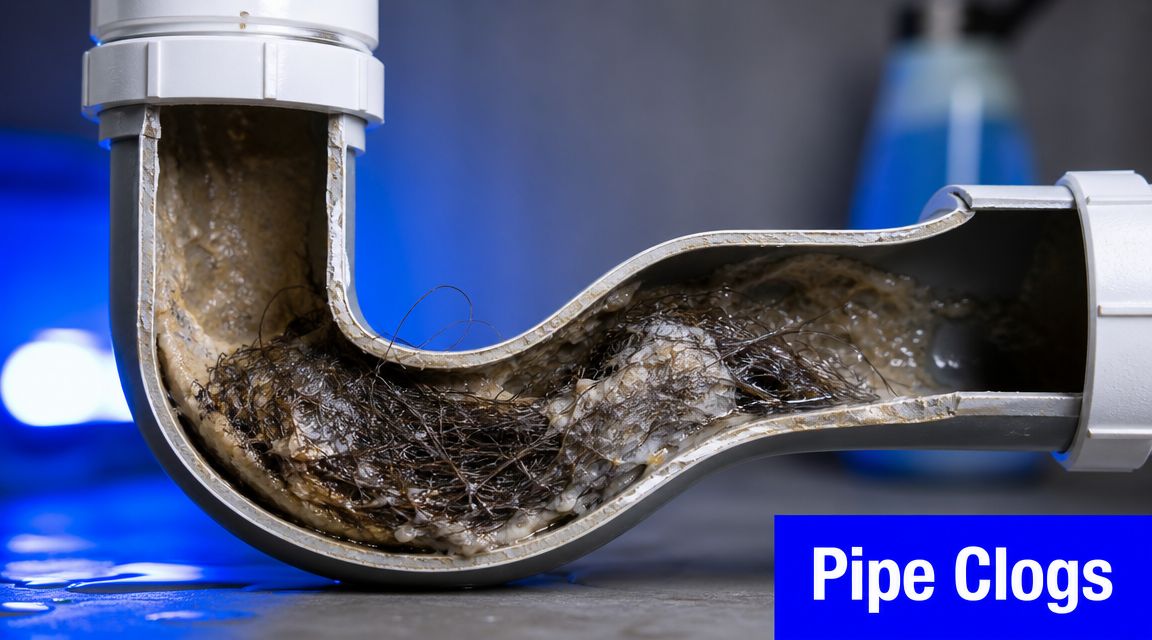
That matters because homeowners often use one remedy for every fixture in the house. Then they assume “natural” methods don't work, when the problem is that they used the wrong tool for the wrong clog.
What usually points to the clog type
A few clues help narrow it down:
- Bathroom sink or shower slowing down usually points to hair and soap buildup
- Kitchen sink draining sluggishly after cooking or dishwashing often points to grease or food residue
- A clog that returns fast often means debris is still sitting in the trap or farther down the branch line
- Bad sounds or multiple fixtures acting up suggest the problem may be deeper than one local clog
In Las Vegas homes, hard water can also make buildup stick harder to the pipe walls over time. I'm not talking about a dramatic overnight failure. It's more that soap residue, grease, and debris get a better surface to hang onto when the inside of the pipe isn't staying clean.
Why this gets worse if you wait
A slow drain rarely fixes itself. Water still passes, but the buildup keeps catching more debris. In a bathroom, that means more hair tangling into the same mat. In a kitchen, grease cools and holds onto food particles.
If the drain is slow but still moving, that's usually the best time to deal with it. Once it becomes a full blockage, your DIY options narrow fast.
Gentle Solutions for Slow-Moving Drains
When the water is slow, not fully stopped, gentle methods make sense. These are not the answer for a solid blockage. They're best for light buildup, routine maintenance, and early-stage drain problems.
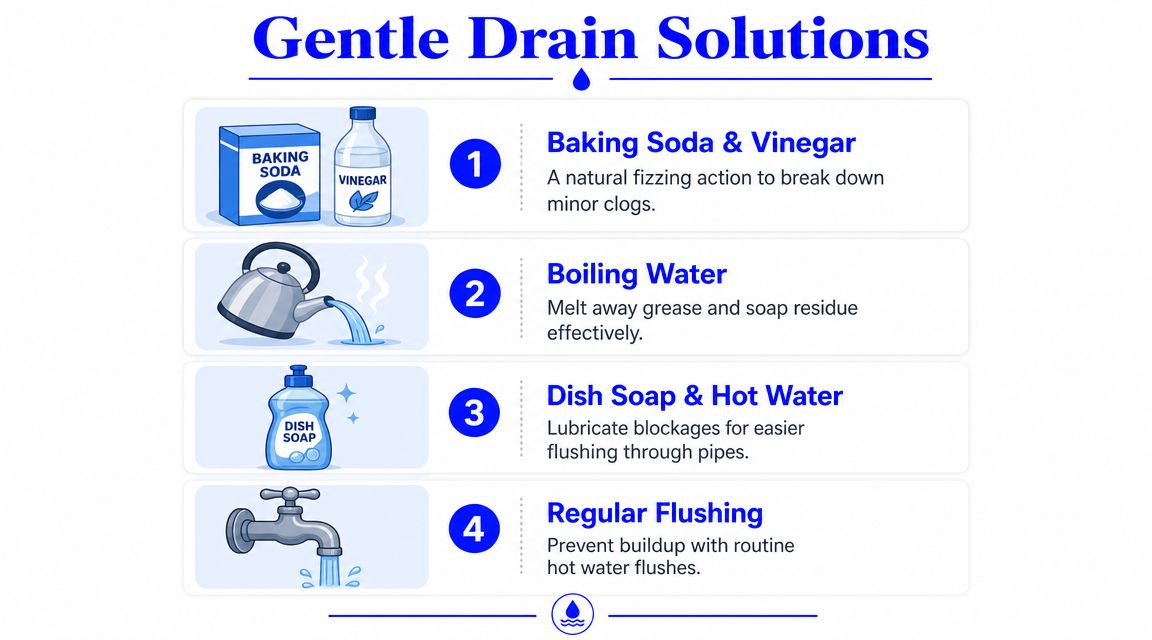
Start with hot water for grease or soap residue
If the drain is in the kitchen and the problem feels like soft grease buildup, hot water can help move residue along. This is a first step, not a cure-all.
Use it when:
- The sink is draining slowly, not completely blocked
- You suspect grease or soap film
- There's no sign of a deeper backup elsewhere
Skip it if the line is fully backed up or if the problem clearly involves hair.
The baking soda and vinegar method
A common chemical-free method uses 1/2 cup of baking soda followed by 1 cup of white vinegar, lets it fizz for 5 to 10 minutes, then finishes with about 4 cups of boiling water, as outlined by the David Suzuki Foundation's guide on how to unclog a drain.
That method is best thought of as a light-cleaning flush, not a miracle fix. It can help loosen minor organic residue. It won't pull a hairball out of a shower line, and it won't cut through a serious kitchen blockage the way people hope.
A simple way to use it:
- Remove as much standing water as you can.
- Add the baking soda into the drain opening.
- Follow with the vinegar.
- Let the fizzing stage finish.
- Flush with the hot water.
For shower-specific help, this guide on how to unclog the shower drain naturally is a useful next step.
What these gentle methods can and can't do
Here's the honest trade-off:
| Drain situation | Gentle flush worth trying | Better next step |
|---|---|---|
| Bathroom sink running slow | Yes | Plunger or hair removal if needed |
| Shower with light soap buildup | Yes | Drain snake if hair is present |
| Kitchen sink with light grease film | Sometimes | Mechanical clearing if flow doesn't improve |
| Completely blocked drain | No | Plunger, trap cleaning, or snake |
A gentle flush is a maintenance move and an early-intervention move. It's not the right answer for every clog.
Using Plumbers Tools for Physical Blockages
A drain that stays blocked after a gentle flush usually has something solid in the line. At that point, the job changes. You are no longer trying to dissolve residue. You are trying to remove or break up a physical clog without damaging the drain.
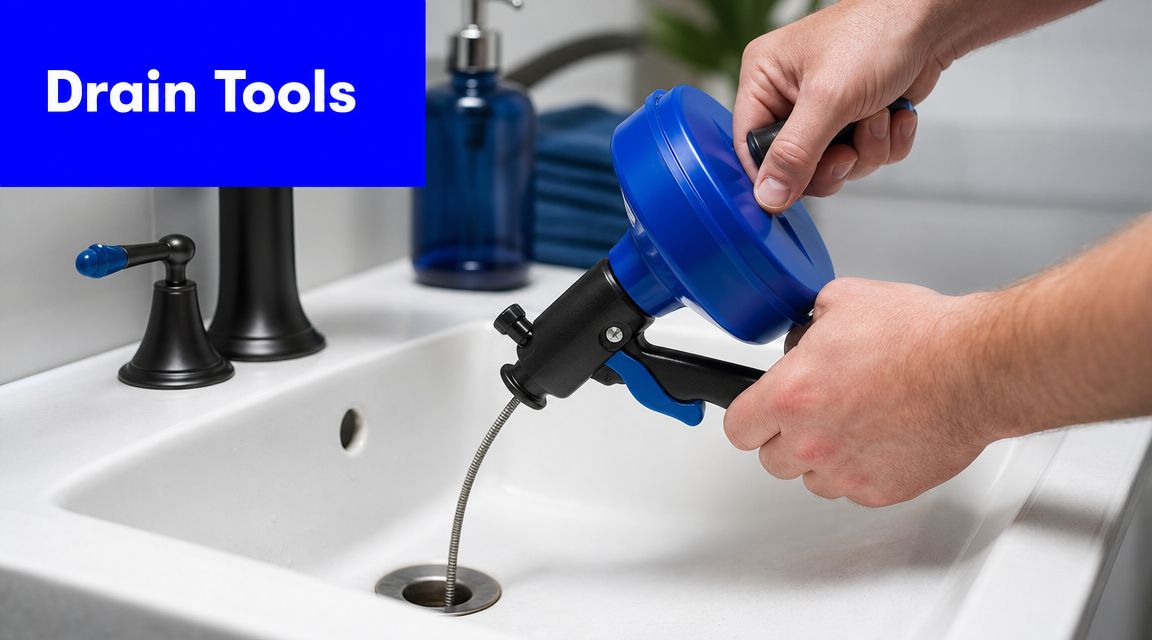
Bathroom and kitchen clogs usually need different tools. Hair and soap buildup in a lavatory sink or tub often respond to a plunger, a zip tool, or a hand auger. Kitchen sink blockages are more likely to involve grease and food sludge, which often collect in the trap and branch line. That difference matters, because the wrong tool or too much force can pack a kitchen clog tighter or jam a snake into a mess of hair.
How to use a plunger the right way
A plunger works best on sinks, tubs, and showers where the clog is close enough for pressure to move it. Technique matters more than force.
Cover the overflow opening with a wet cloth first. Then add enough water to cover the plunger cup, keep the seal tight, and use steady push-pull strokes. If air escapes through the overflow, the plunger loses pressure and the effort is weak.
Keep these points in mind:
- Use the right plunger shape. A flat-bottom sink plunger works for sinks and tubs. Toilet plungers are built differently.
- Use controlled strokes. Fast, sloppy pumping splashes water but does not build much pressure.
- Stop if nothing changes after a few rounds. Repeating the same failed plunge session usually does not solve a packed hair clog or a greasy kitchen blockage.
Trap cleaning is often the real fix
Under many sinks, the P-trap is the first place I would check. It catches debris by design. In bathroom sinks, that often means toothpaste sludge, soap scum, and hair. In kitchen sinks, it is usually grease mixed with food particles.
Put a bucket under the trap before you loosen anything. Remove it carefully, empty the contents, and clean the trap completely before reinstalling it. If the clog is sitting there, flow usually comes back right away.
If you need step-by-step help, this guide on how to snake a sink drain shows the basic process.
Here's a quick visual if you want to see a basic drain-clearing tool in use:
When to use a drain snake
A hand snake or small auger makes sense when the blockage is past the trap or when hair is wrapped deeper in the line. Feed the cable slowly. Turn it with light, even pressure. Pull it back out and clean the cable as needed.
Do not force it if it binds. That is how homeowners kink cables, scar softer drain parts, loosen slip-joint connections, or shove the clog farther down the pipe.
One more practical call. If you are working on an older Las Vegas home with metal drain lines, be extra careful with aggressive snaking. Older pipes can be less forgiving than newer plastic assemblies.
MG Drain Services LLC also handles drain cleaning, rooter service, sewer camera inspection, and hydro-jetting when a hand tool is no longer the safe choice.
Warning Signs That Mean You Need a Professional
Some drain problems look small from the sink side but are not small inside the system. That's where people lose a weekend trying one DIY step after another.
AAA points out an important boundary that many DIY articles miss. Recurring slow drains, gurgling noises, or multiple fixtures backing up can signal a main-line issue that a plunger or baking soda method can't fix, as noted in AAA's advice on unclogging a drain without chemicals.
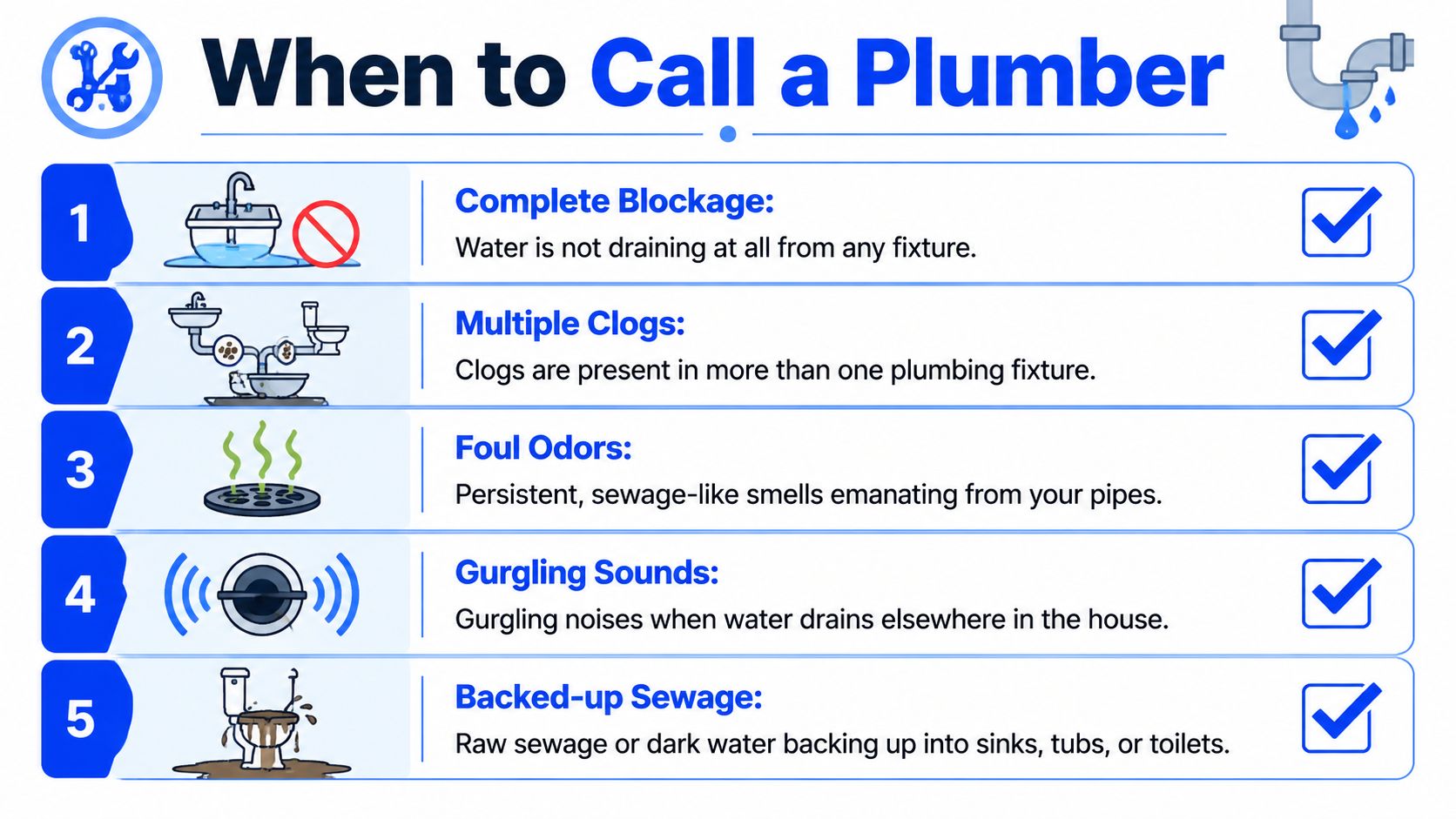
Stop DIY if you notice these signs
- More than one fixture is affected. A sink, tub, or toilet acting up together usually points beyond a single local clog.
- You hear gurgling. That often means the line is struggling to move air and water properly.
- The clog keeps coming back. Temporary improvement doesn't mean the line is clear.
- Water shows up where it shouldn't. Backup in another fixture is a warning sign.
- You suspect a sewer issue. At that point, trying random fixes can waste time and create more mess.
The biggest DIY mistake isn't trying a plunger. It's continuing after the plumbing has already told you the problem is deeper.
If you're not sure where that line is, this article on when to call a plumber lays it out in plain language.
Call Your Local Las Vegas Drain Experts
A slow drain that clears after a basic cleanup is one thing. A kitchen sink that keeps backing up after grease removal, or a shower that clogs again a week after pulling hair out of the stopper, is a different problem.
At that point, the goal is not to keep trying random fixes. The goal is to find out whether you are dealing with a local blockage, a branch-line problem, or something deeper in the sewer line. In Las Vegas homes, I recommend stopping DIY work once the symptoms stop matching a simple fixture clog. That is how homeowners avoid broken cables, damaged trap parts, and water where it does not belong.
For homeowners, landlords, and small commercial properties in Las Vegas, Henderson, and North Las Vegas, professional drain service usually means using the right diagnostic tools first. That can include rooter work, camera inspection, or hydro-jetting, depending on the pipe condition and the type of blockage. Grease, hair, wipes, scale, and root intrusion do not get handled the same way. Treating them the same way is how a minor drain problem turns into a larger repair.
Choose plumbers in Las Vegas who are licensed and insured, explain what they found, and price the work clearly. Fast service matters, but accurate diagnosis matters more.
Call MG Drain Services LLC for professional plumbing in Las Vegas if your clog will not clear, keeps returning, or appears to involve more than one fixture. Call 702-480-8070 or book service online. MG Drain Services LLC serves Las Vegas, Henderson, North Las Vegas, and nearby areas with experienced technicians, transparent pricing, and drain solutions aimed at the actual cause, not a short-term patch.