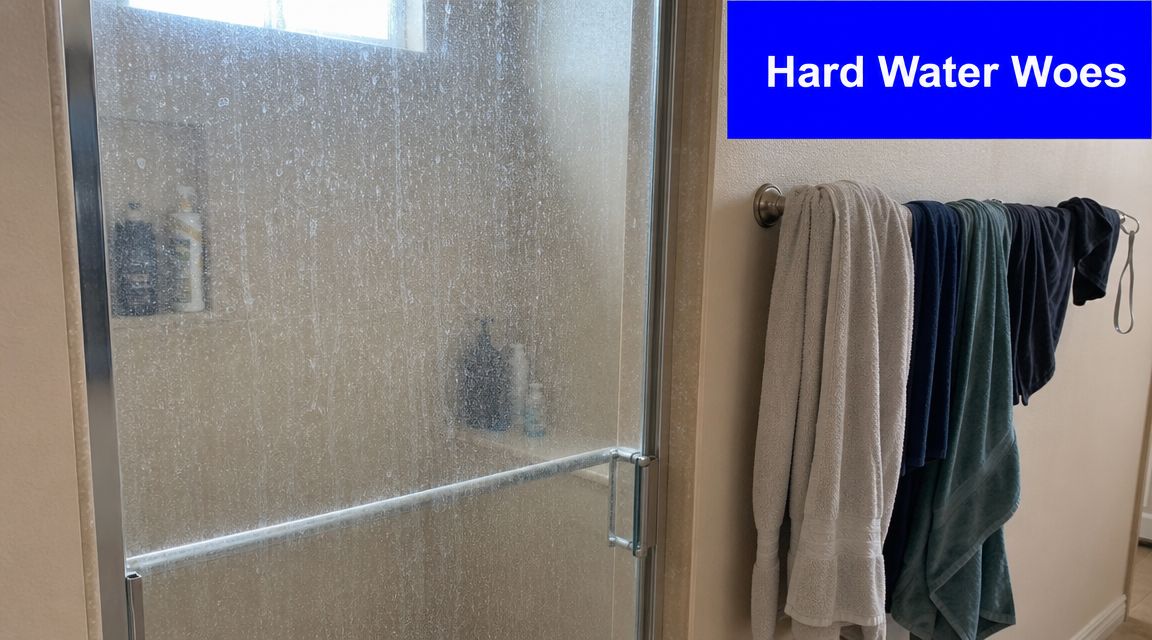
Hard water problems in Las Vegas rarely arrive all at once. They creep back in. Your towels start feeling rough. Glassware comes out spotted again. Soap scum builds faster on the shower door. You may already have a softener, but the system can still fall out of tune, run low on salt, develop a salt bridge, or stop keeping up with your household.
That's where water softener service matters. In Las Vegas homes, service isn't just about fixing a broken unit. It's about protecting fixtures, preserving water flow, and making sure the system is still doing the job you bought it to do. If you also care about drinking water quality for things like coffee, this practical guide from PureHQ on coffee water filtration is worth reading because softened water and filtered water solve different problems.
Your Guide to Water Softener Service in Las Vegas
Las Vegas homeowners usually notice the same pattern first. The softener seems “fine,” but daily signs say otherwise. Dishes lose that clean look. Skin feels drier. The shower glass starts collecting white film again. In a hard-water market like Las Vegas, that's often the first clue that the softener needs attention before a bigger plumbing issue follows.
A lot of people assume service means one thing. Add salt and move on. That's not how a good softener stays reliable. The U.S. Department of Energy says the average water softener lasts 10 to 15 years and that routine care helps extend its life. DOE also says homeowners should check salt levels every 4 to 6 weeks, because when salt gets too low, hard water can return to the plumbing system (DOE water softener guidance).
Why service matters more in Las Vegas
Hard water puts steady pressure on plumbing fixtures, water heaters, shower heads, and valves. If the softener starts underperforming, scale doesn't wait. It starts collecting where water slows down or gets heated.
Practical rule: If hard water symptoms return, don't assume the whole unit needs replacement. Many systems need cleaning, recalibration, or a control issue corrected before replacement makes sense.
Professional water softener service is really preventative plumbing work. It catches the problems that homeowners don't usually see from the outside, including poor regeneration, blocked brine flow, and settings that no longer fit the household's actual water use.
Signs Your Water Softener Needs Professional Attention
You walk into the shower and the glass is spotting again. Towels feel scratchy. Soap stops lathering the way it did a month ago. In Las Vegas, that change usually means hard water is getting past the softener, and the sooner you catch it, the less you spend on fixtures, heaters, and cleaning.
Some warning signs show up on surfaces. Others show up on your water bill, salt use, or plumbing performance. A softener can still look fine from the outside while wasting water during regeneration, sending excess brine to the drain, or letting hardness slip through the house.
What homeowners usually notice first
The first clue is usually familiar hard water behavior returning in places you use every day.
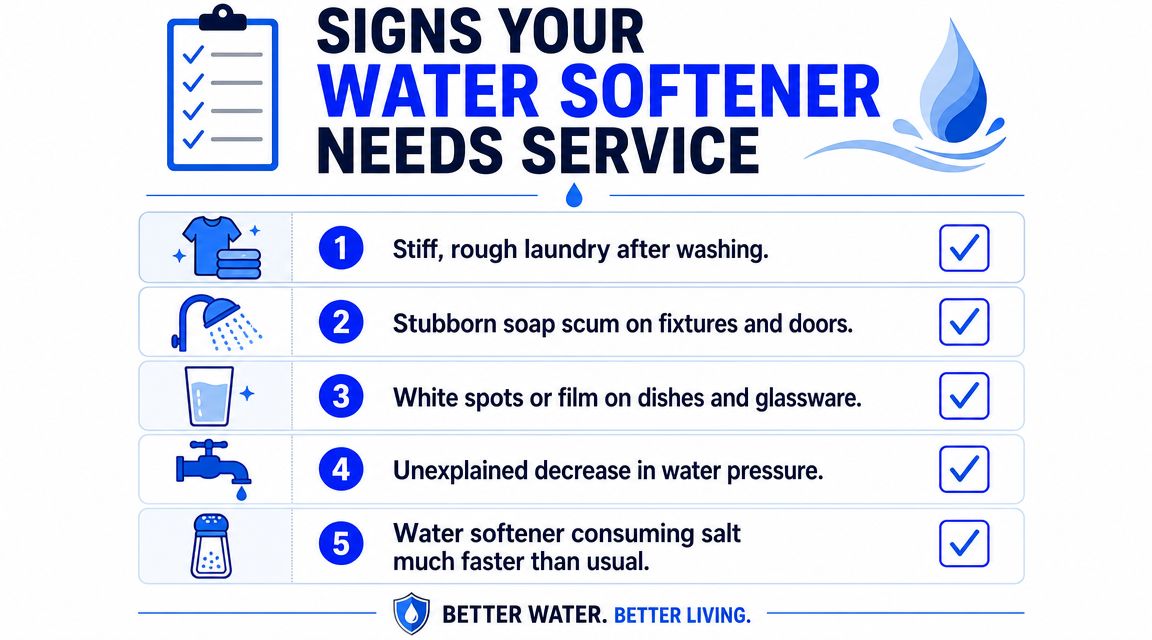
- White spotting on glass, dishes, and fixtures: If deposits come back soon after cleaning, the system may be under-softening or skipping proper regeneration.
- Soap scum and stiff laundry: Calcium and magnesium make soap harder to rinse away, so towels feel rough and tubs get that dull film again.
- Salty-tasting water: That often points to a brine draw or rinse problem. It can also mean the unit needs adjustment or repair.
- Lower flow at showers or faucets: A restriction through the softener, scale in nearby plumbing, or a valve problem can all reduce pressure. If the whole house is affected, this guide on low water pressure repair in Las Vegas can help you connect the softener issue to the rest of the plumbing system.
- Salt disappearing too fast, or barely being used at all: Heavy salt use can point to poor settings, a control problem, or a unit that is regenerating more often than needed. Very low salt use can mean the system is not regenerating correctly in the first place.
- A unit that runs at odd times or seems stuck cycling: That usually means the control head, timer, or valve needs professional diagnosis.
Here in Las Vegas, I pay close attention to changes in salt use and drain discharge. An inefficient softener does not just soften poorly. It can burn through salt, waste water, and send more brine to the drain than necessary. That matters in a desert city where water efficiency and local discharge rules are part of the actual cost of ownership.
What you can check yourself
A homeowner can do a few useful checks before calling for service. Lift the lid and look for a hard crust over the salt, which can stop the system from making brine. Check for sludge at the bottom of the tank, standing water that seems abnormal, or obvious leaks around the bypass and fittings.
You can also clean the stains the bad water leaves behind. If you need help with that side of the problem, DIY hard water removal methods can be useful for glass and surface cleanup.
Cleaning off mineral stains fixes the evidence. Servicing the softener fixes the cause.
What DIY does not tell you is whether the resin is still exchanging hardness properly, whether the injector and venturi are pulling brine the way they should, or whether the settings still match the way your household uses water. Those are the problems that gradually raise costs over time. You see more spotting, more wear on plumbing fixtures, and more waste going down the drain before the softener fully fails.
What a Professional Water Softener Service Includes
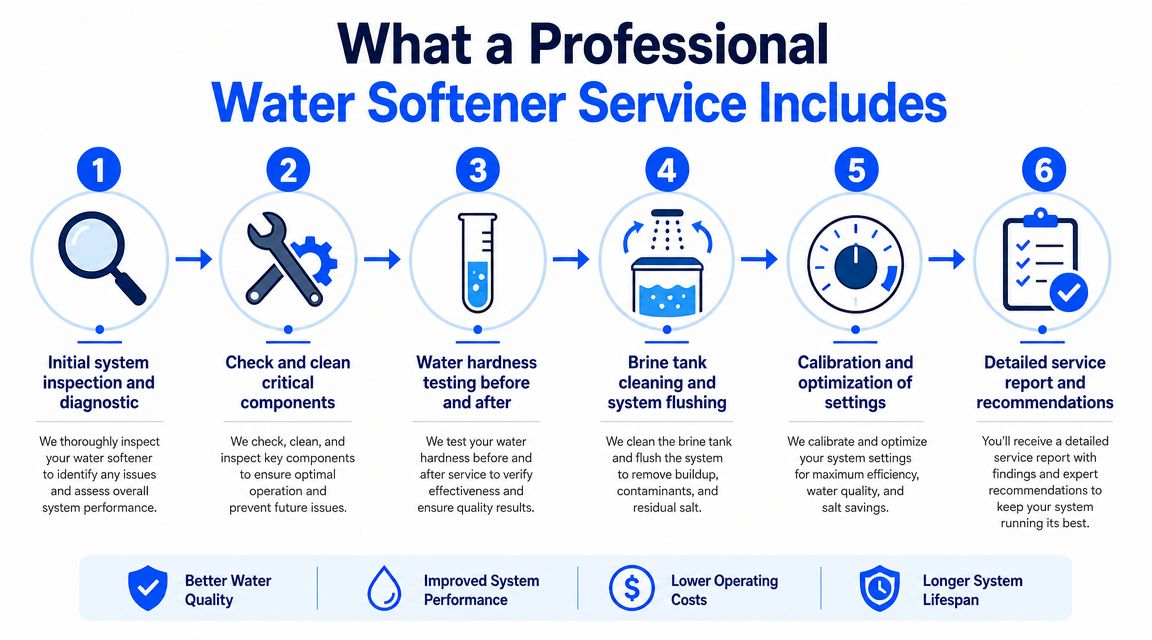
A proper service visit is a diagnostic appointment first. That matters because a softener can fail in ways that look identical from the kitchen sink. Spotting on dishes might come from low salt, a blocked injector, a control issue, resin exhaustion, or a system that was never sized well in the first place.
Inspection and performance testing
A technician should start by checking the unit's operating condition, not just topping off salt. That includes checking for bypass issues, visible leaks, salt bridging, sludge in the brine tank, and whether the control head is cycling properly.
Then comes hardness testing before and after treatment. If the water isn't softening correctly, the next step is figuring out whether the problem is mechanical, chemical, or sizing-related.
Cleaning and correction
Professional service usually includes hands-on work inside the system, such as:
- Brine tank check and cleanup: Salt bridges and buildup can interrupt normal operation.
- Control valve inspection: The valve controls draw, rinse, refill, and regeneration timing.
- Regeneration verification: The cycle has to complete correctly or the resin won't recharge properly.
- Setting adjustments: A softener should match the way the household uses water, not generic factory defaults.
- Flow and restriction review: In some homes, mineral buildup also starts affecting fixtures. If hard water has already choked down shower output, this guide on how to unclog a shower head can help with the fixture side while the softener issue gets corrected.
Proper service is about restoring function and efficiency at the same time. A unit that softens poorly and wastes salt is not “mostly working.”
Why technical sizing matters
Industry guidance is very clear that proper service involves more than filling the tank. Water softeners should be sized by service flow, hardness load, and regeneration frequency, and flow rates shouldn't exceed performance targets such as 10 gpm per square foot of bed area if you want to avoid hardness leakage (industry sizing guidance from WCP).
That's why some homes keep seeing scale even after “maintenance.” If the resin bed is undersized or the unit is pushed too hard at peak demand, the softener may never deliver consistent soft water.
Service Costs, Frequency, and What to Expect on Appointment Day
For most homeowners, the practical questions are simple. How often should service happen, what does it cost, and what's the appointment like?
A common market baseline is annual maintenance. A maintenance cost guide reports that standard salt-based softeners typically cost $100 to $300 per year to maintain, with $60 to $240 per year for salt refills. The same guide says professional servicing commonly runs $150 to $600 per year, depending on the system and the issue (water softener maintenance cost guide).
A simple cost snapshot
| Service item | Typical range |
|---|---|
| Annual maintenance | $100 to $300 |
| Salt refills per year | $60 to $240 |
| Professional service | $150 to $600 |
Those numbers are useful because they frame water softener service as an operating cost, not just a repair bill. If a system is wasting salt and water, the cost isn't limited to the appointment. It shows up month after month.
What should happen before and during the visit
A good appointment should feel organized and straightforward.
- Before arrival: The company should ask about symptoms, system age, and whether the issue is loss of soft water, salty taste, low pressure, or a leak.
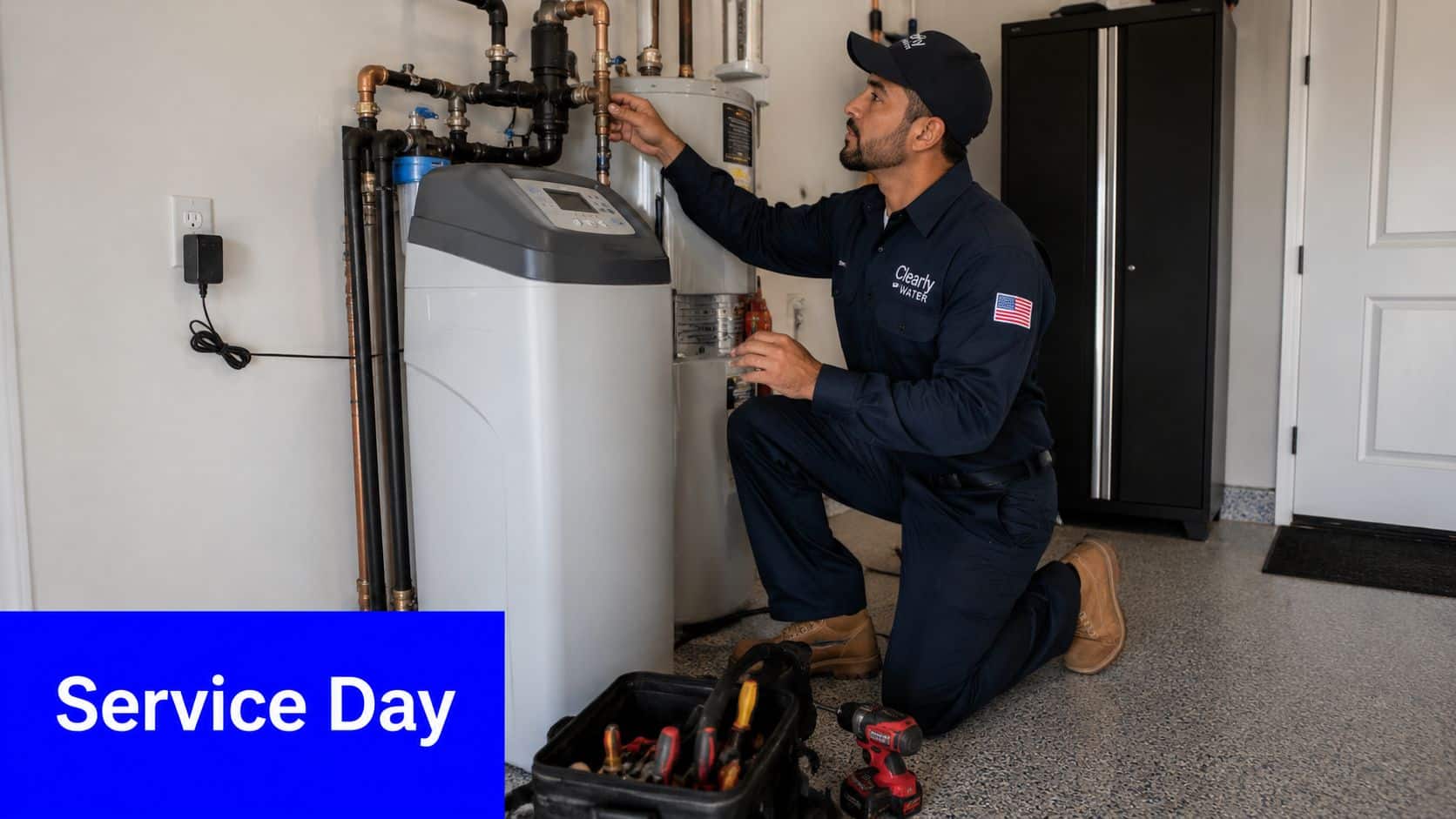
- At the home: The technician should inspect the unit, test water, review settings, and explain what they find in plain language.
- Before repairs move forward: You should get honest pricing and a clear recommendation, especially if the system is old enough that repair versus replacement is a real decision.
- After service: You should know whether the problem was corrected, what maintenance you should handle yourself, and what signs to watch for next.
This overview gives a quick visual of what homeowners can expect from a service visit and why the details matter.
Homeowner tasks versus technician tasks
Some maintenance belongs to the homeowner. Some doesn't.
Homeowner job: Check salt, look for obvious bridging, and pay attention to changes in water feel, spotting, and fixture performance.
Technician job: Diagnose valve problems, verify regeneration performance, test hardness, inspect efficiency, and determine whether the system is still worth servicing.
That split matters because a softener can appear normal from the outside while still operating inefficiently inside.
Choose a Trusted Las Vegas Plumber for Your Water Softener
A water softener touches plumbing, water quality, fixture performance, and operating cost. That's why this isn't a job to hand to someone who only wants to sell a replacement tank.
A strong provider should be licensed and insured, familiar with Las Vegas, Henderson, and North Las Vegas water conditions, and able to explain whether the problem is maintenance, repair, or bad system fit. They should also give upfront pricing and practical recommendations instead of treating every symptom like a sales lead. If you're comparing local contractors, this page for plumbers in Las Vegas is a good place to start.
What separates a real service plumber from a parts changer
The most useful water softener service call answers the money question. Is this unit still efficient, or is it wasting salt and water? That's the overlooked part. A top-tier provider should help you decide whether repair is more cost-effective than replacement over the near term, not just restore operation for the day (water softener repair versus replacement guidance).
Here's what to look for:
- Local experience: Las Vegas plumbing issues aren't generic. Hard water behavior, fixture wear, and conservation concerns all shape the service approach.
- Clear diagnostics: You want reasons, not guesses.
- Honest recommendations: Sometimes a simple correction solves it. Sometimes an aging unit keeps burning money.
- Professional reputation: Strong contractors earn trust by communicating well and showing up prepared. If you're curious what that looks like from the business side, this article on how plumbers can get more customers indirectly highlights the same traits homeowners usually value most: responsiveness, credibility, and consistent service.
The right plumber doesn't just make the system run again. They tell you whether it's running wisely.
Las Vegas Homeowner FAQs About Water Softeners
Are there local rules about softener discharge in Las Vegas
A lot of homeowners ask about salt and hardness, but the drain line matters too. In Southern Nevada, brine discharge is not something to ignore, especially if you are installing a new unit, moving an existing one, or replacing an older softener that may not meet current expectations. Some municipalities pay close attention to high-chloride discharge because it can create treatment issues downstream, which is why discharge routing and approved drain connections deserve a closer look before work starts (regional discussion of softener discharge concerns).
The practical question is simple. Where does the unit discharge, and is that drain point acceptable for the setup in your home? Getting that right helps you avoid code problems, unnecessary water waste, and expensive rework later.
Does Las Vegas heat affect water softener performance
Yes, but usually indirectly.
The heat in Las Vegas does not normally destroy a softener by itself. What I see more often is salt bridging in a hot garage, a brittle drain line, or neglected equipment that gets harder to monitor because nobody wants to spend time in a 110-degree garage. If the brine tank stays humid or dirty, the salt can harden into a crust and the system may stop drawing brine correctly.
Keep the salt covered if your setup allows it, store extra bags in a dry place, and pay attention to changes in feel, spotting, or soap performance during the hottest months.
Can a softener save money or can it start costing too much
Both happen in Las Vegas.
A properly adjusted softener can reduce scale buildup in fixtures, water heaters, dishwashers, and shower valves. That usually means fewer plumbing repairs, better appliance efficiency, and less money spent fighting hard water stains. But an older unit can subtly become expensive if it regenerates too often, uses more salt than it should, or keeps running while still letting hard water through.
That is why a real service visit should answer a cost question, not just a mechanical one. Is the unit still protecting the house efficiently, or is it burning through salt and water without giving you the benefit?
Do HOA or rental properties need a different approach
Often, yes. Landlords, property managers, and HOA-governed owners usually need a setup that is predictable, easy to inspect, and less likely to create tenant complaints.
In these cases, a service-minded approach works better than a reactive one because it cuts down on recurring problems like cloudy glassware, scale around faucets, poor soap lather, and weak flow at showers. It also helps with budgeting. Scheduled service is usually cheaper than repeated complaint calls, fixture replacements, or an early water heater failure caused by unchecked scale.
If your water softener isn't keeping up in Las Vegas, Henderson, or North Las Vegas, call MG Drain Services LLC for practical help from a licensed and insured local plumbing company. The team provides honest pricing, experienced technicians, and fast response for homeowners, landlords, and small commercial properties. Call 702-480-8070 or book online through the MG Drain Services website for professional plumbing in Las Vegas.