

The shower starts hot, then turns cold in a hurry. Or you get no hot water at all, right when everyone in the house needs it. That's usually when Las Vegas homeowners start searching for answers about gas water heater issues and wondering whether they're dealing with a quick fix, a dangerous problem, or a unit that's at the end of the road.
In the Las Vegas Valley, water heaters work hard. Hard water leaves mineral buildup behind, and when a gas unit starts acting up, the symptoms can point in several directions at once. A weak pilot flame, a venting problem, sediment in the tank, a thermostat set wrong, or a failing gas valve can all look similar from the homeowner's side.
The good news is that some checks are simple and safe. The bad news is that gas appliances don't leave much room for guessing. If you're in Las Vegas, Henderson, or North Las Vegas and your water heater has started making noise, leaking, producing lukewarm water, or shutting down, it helps to understand what the symptom usually means before you touch anything.
That Unwanted Cold Shower A Guide for Las Vegas Homeowners
You turn on the shower before work, get a minute of hot water, and then it drops cold. A few minutes later, you are in the garage or utility closet looking at a gas water heater that is quiet, inconsistent, or acting different than it did last week.
That kind of failure is common in Las Vegas homes because local conditions are hard on water heaters. Hard water leaves scale inside the tank and around key components. Long, brutal summers also push garage temperatures higher, which adds stress to an appliance that already handles heat, combustion, and daily demand.
I see homeowners wrestle with the same question at that moment. Is this a repair, or is the heater telling you it is done?
That answer depends on more than whether you still have a little warm water left. The age of the unit matters. The type of symptom matters. Safety matters most. A tank that is rumbling from sediment may still be repairable. A unit with venting trouble, burner problems, repeated shutdowns, or signs of gas trouble deserves a much more careful response.
Cost matters too. Many homeowners keep an older storage water heater running because replacement never comes at a good time, and going without hot water for even a day is a real disruption. That hesitation is understandable, especially if you are comparing repair bills, replacement cost, and whether a different setup would fit your home. For a useful outside perspective on maintenance planning, this article on servicing equipment for homeowners covers the value of dealing with equipment issues before they turn urgent.
The goal at this stage is simple. Figure out whether you are looking at a maintenance issue, a mechanical failure, or a safety risk. In Las Vegas, that distinction often decides whether a repair makes sense or whether replacement is the smarter and safer call.
Decoding the Signs Common Gas Water Heater Problems
When a gas water heater starts failing, the symptom you notice isn't always the true cause. Homeowners usually see the effect first. No hot water. Warm water that won't stay hot. A pilot that keeps going out. Strange sounds. Water on the floor. A gas smell.
Here's how to read those signs more accurately.
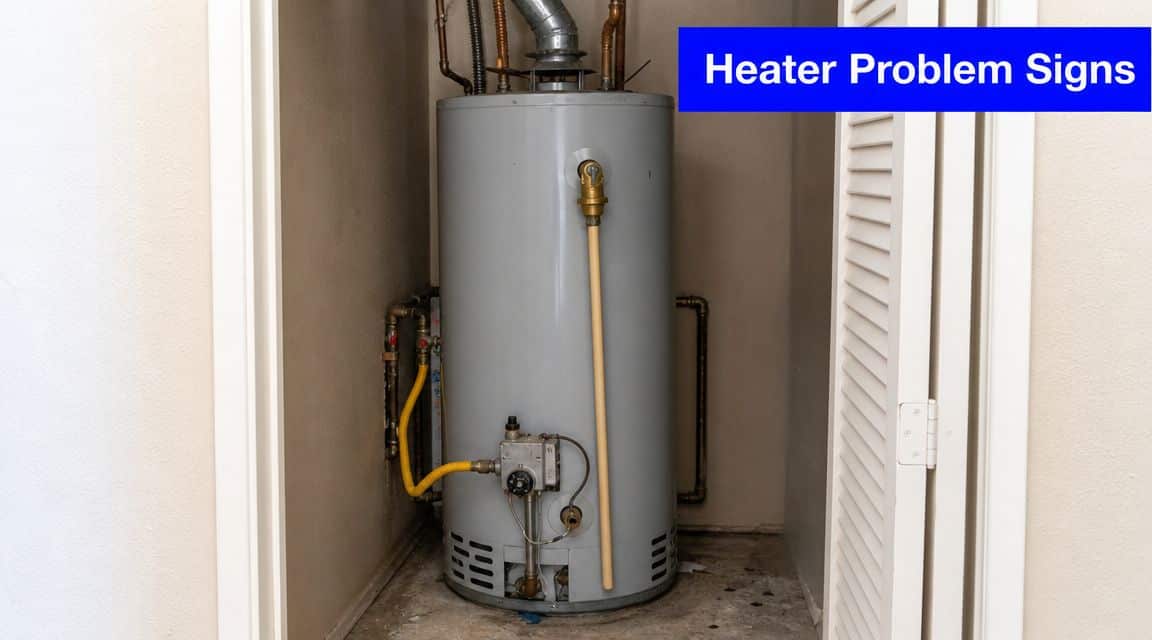
No Hot Water at All
If the tank produces no hot water, many homeowners assume the heater itself has completely died. Sometimes that's true, but often the problem is in the combustion-control side of the system.
A gas water heater that won't heat can have a pilot issue, sensor issue, gas supply issue, or gas control issue. In atmospherically vented units, a pilot that won't stay lit can be caused by inadequate thermocouple or thermopile output, poor pilot-flame impingement, a clogged pilot orifice or tube, kinked pilot tubing, or low inlet gas pressure. The practical diagnostic approach is to confirm the flame fully reaches the sensor, clean the pilot assembly, and test thermopile voltage. If voltage is low, the thermopile is a likely replacement item. If voltage is acceptable but the burner still won't operate, the gas control valve becomes a likely suspect, as explained in this technical walkthrough on gas water heater combustion control diagnosis.
For homeowners, the key point is simple. “No hot water” doesn't automatically mean “bad tank.”
Lukewarm Water Instead of Hot Water
Lukewarm water often sends people straight toward replacement, but the tank may not be the issue. Sometimes the thermostat setting is too low. Sometimes it was accidentally left in vacation mode. In other cases, the heater is firing, but the burner input or system demand isn't lining up with what the house is asking for.
If the demand in the home is high, a storage unit can fall behind. If supply conditions aren't right, the burner may not recover fast enough. That's why a technician doesn't just ask whether the water is warm. They ask when it goes warm, how long it lasts, and whether the issue affects every fixture or only the farthest one.
Pilot Light That Won't Stay Lit
This is one of the most common complaints on older gas units. The flame may ignite and then die. Or it may stay on for a while and then shut off later.
That symptom points back to the pilot assembly, flame contact with the sensor, thermocouple or thermopile condition, and gas control behavior. It can also point to airflow or exhaust trouble. A blocked air path can cause the heater to shut down as a protective response.
A pilot problem is often treated like a “relight it again” issue. In the field, repeated pilot outages usually mean something else in the system is wrong.
If you want a general homeowner primer on servicing equipment for homeowners, it's useful to think in those terms here too. Basic observation helps. Blind part swapping usually doesn't.
Popping, Rumbling, and Other Tank Noises
When a gas water heater starts sounding like it's popping or rumbling, sediment is high on the list. Las Vegas hard water makes this especially common. Minerals settle in the bottom of the tank and create a barrier between the burner heat and the water above it. The tank has to work harder, and the sounds get more noticeable.
Those noises matter because they usually tell you the heater has been straining for a while. The longer sediment stays in place, the more likely you are to see reduced efficiency, slower recovery, and wear that shows up in other ways.
Visible Water Leaks
A leak can come from fittings, valves, supply lines, or the tank body itself. Those are very different problems.
A loose connection might be repairable. A failing valve may be replaceable. But if the tank itself is leaking, replacement is usually the conversation. Water around the base of the heater should never be ignored, especially in garages, closets, or utility rooms where the leak can spread before anyone notices.
The Smell of Gas
This is the symptom that moves immediately out of the DIY category. If you smell gas near the heater, don't try to diagnose by trial and error. Don't relight anything. Don't stay in the space while deciding what to do next.
A gas odor may come from a connection issue, valve problem, or burner-related problem, but from the homeowner's side the cause doesn't matter yet. The right response is safety first, then professional diagnosis.
Safety First Critical Precautions for Your Home
Gas appliances deserve respect. A water heater may operate without incident for years, but when something goes wrong, the risks can include gas leaks, fire hazards, and unsafe exhaust conditions. In Las Vegas homes, especially in enclosed garage corners or utility closets, that's not something to improvise your way through.
If You Smell Gas
Leave the house or move everyone to a safe distance first. Don't switch lights on or off. Don't use anything that could create a spark near the suspected leak. Once you're safely away, contact the proper emergency resource and a qualified plumbing professional.
For homeowners who want a plain-language overview of gas line emergency safety, that kind of guidance is worth reviewing before an emergency happens. It's easier to act correctly when you've already thought through the steps.
If your nose says gas, your job is evacuation and communication. It is not diagnosis.
What Not to Touch
Some homeowners are comfortable with tools. That doesn't make every water heater repair a safe DIY project.
Avoid taking apart gas valves, burner assemblies, vent connections, pressure-related safety components, or gas piping. Don't force shutoffs. Don't tamper with the temperature and pressure relief path. If you need to learn where a shutoff is located in your plumbing system, this guide on how to install a shut off valve helps explain the importance of proper isolation points, but gas appliance work itself still needs trained hands.
Protect the Household
A few precautions make a big difference:
- Keep carbon monoxide detectors active in the home, especially near sleeping areas.
- Watch for venting concerns such as soot, unusual odors, or repeated shutdowns.
- Clear storage away from the heater so combustion air isn't restricted and service access stays open.
- Take repeated pilot outages seriously because recurring shutdowns often point to something beyond a simple relight.
A safe water heater is not just one that makes hot water. It's one that burns cleanly, vents properly, and shuts down only when it should.
What You Can Safely Check Before Calling a Plumber
A common Las Vegas call goes like this. The shower starts hot, then turns lukewarm before the second person is done. In many homes here, that points to one of two simple possibilities first. The control setting changed, or hard-water sediment has cut into the heater's recovery.
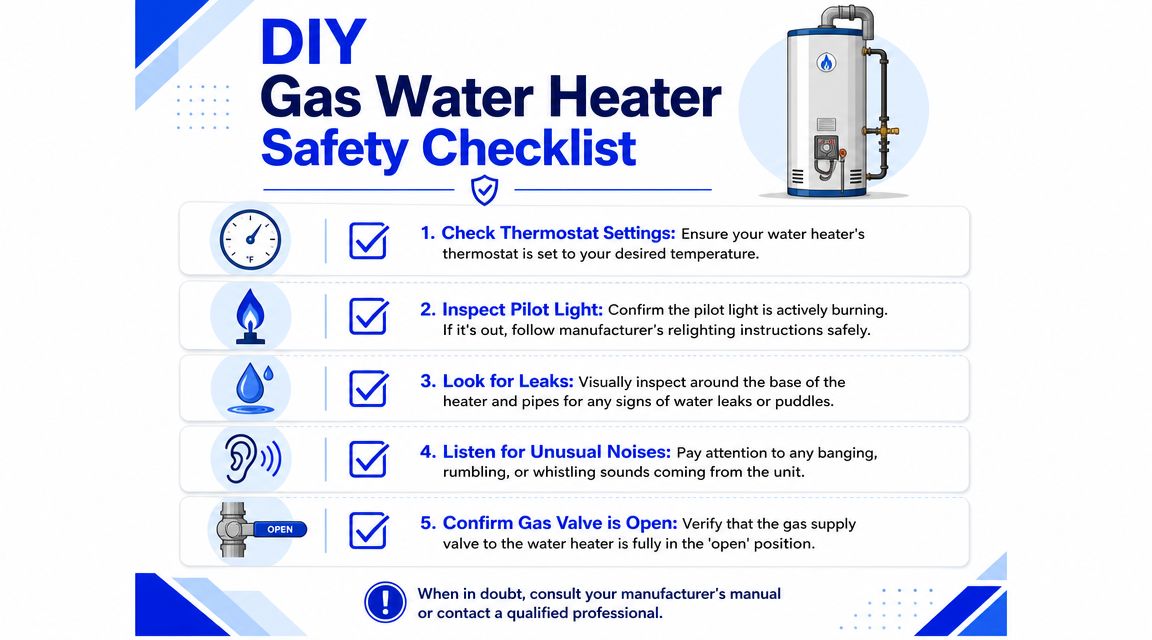
Start with checks that involve your eyes and the thermostat dial only. If a step would require tools, panel removal, or relighting attempts you are not fully comfortable with, stop there and schedule service.
Start With the Control Setting
Check the gas valve thermostat setting. Vacation mode, a bumped dial, or an overly low setting can cause a sudden hot-water complaint without any part failing.
A practical household target is 120°F. That is a common setting used to balance scald risk with normal daily use, as noted in this manufacturer-focused guide on common gas water heater temperature issues.
If the setting is normal and the water still drops off fast, the problem is probably not the dial. In Las Vegas, heavy mineral scale inside the tank often shows up as short hot-water runs and noisy operation because the burner has to work through sediment to heat the water.
Make a Visual Check Only
Do a slow walk-around without opening anything.
- Look near the base for moisture, rust streaks, white mineral crust, or staining.
- Check the gas shutoff handle to see whether it appears fully open and in line with the pipe.
- Use the viewing window if your model has one. A stable flame looks different from a unit that keeps shutting down.
- Look at the vent connection and draft hood area from the outside. Corrosion, loose sections, or dark staining are reasons to stop and call.
- Notice the area around the tank. In Las Vegas garages, summer heat and stored items can leave the heater packed into a hot, dusty corner with poor airflow.
Pay Attention to Sound and Performance
The pattern matters as much as the symptom.
| Symptom | What it can suggest |
|---|---|
| Water starts hot, then fades fast | Recovery problem, sediment buildup, or high household demand |
| Rumbling or popping | Scale and sediment heating at the bottom of the tank |
| Repeated pilot outage | Ignition, venting, or safety-control issue |
| Weak or cool water at one faucet only | Fixture or branch-line problem instead of heater failure |
One quick check helps narrow it down. Compare the closest hot-water fixture to the farthest one. If every fixture is underperforming, the heater is the likely suspect. If one bathroom or one sink is the only problem, look at that fixture, cartridge, or branch line first.
Leave Safety Components Alone
Homeowners often ask about the relief valve. It protects the tank from excess temperature and pressure, so it is not a casual DIY item. Educational resources on hot water pressure relief valve checks can explain what the valve does, but testing or replacing it on an older gas unit takes judgment, especially if the discharge piping is questionable or the valve has mineral buildup.
That trade-off matters. A five-minute homeowner check can rule out a bad setting or an obvious leak. Pushing past that point can turn a manageable service call into a gas, venting, or burn hazard. In my experience, that is the line where professional diagnosis saves time, avoids wasted parts, and keeps the house safe.
Professional Insights on Hidden Water Heater Issues
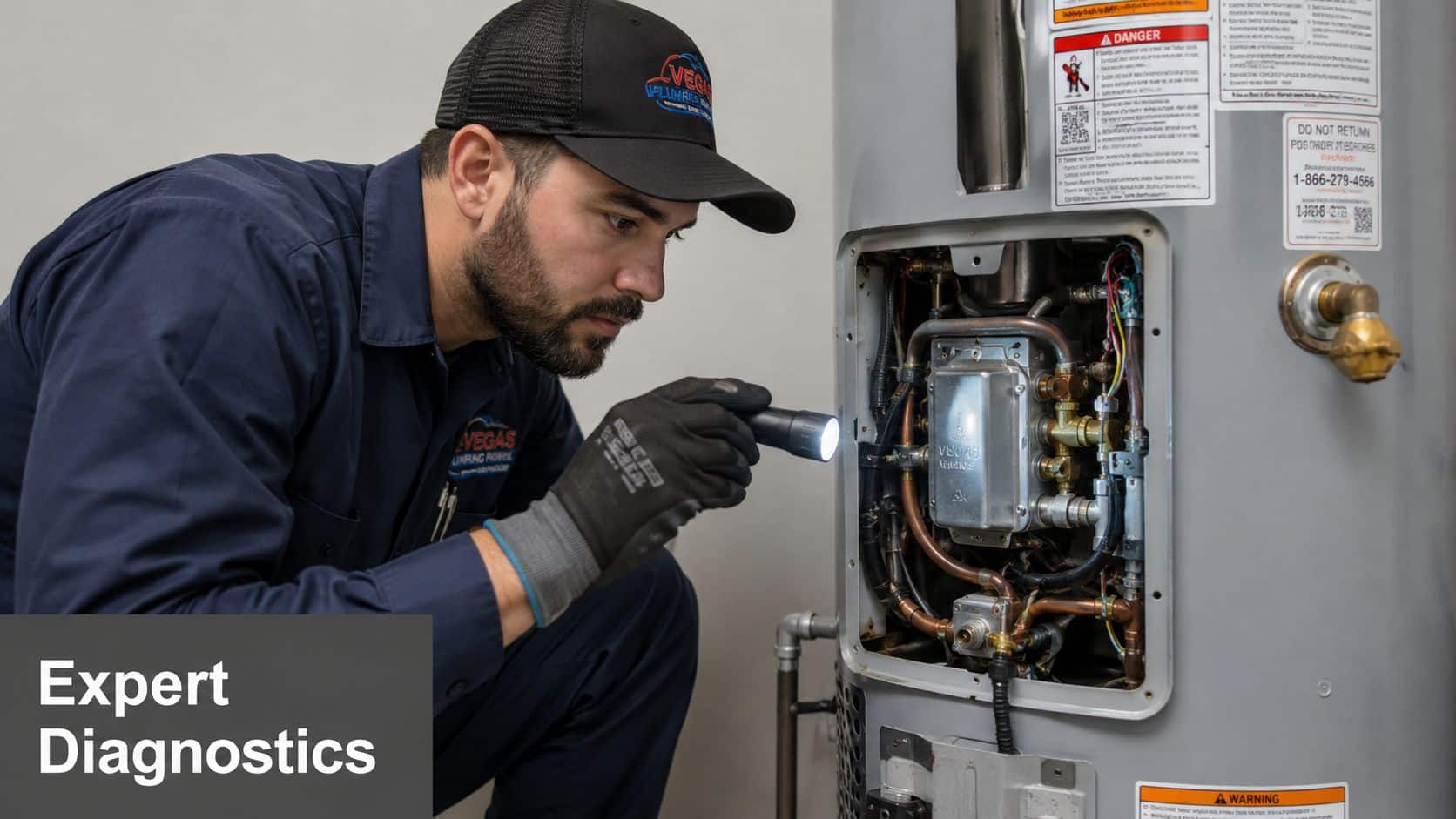
A gas water heater can look like it has one simple bad part when the underlying problem is buried deeper. I see that often in Las Vegas homes. A pilot problem turns out to be poor draft. Noise that sounds harmless points to heavy mineral buildup. A small drip at the top hides corrosion that has already started inside the tank.
Venting and Combustion Air Problems
Gas units need proper airflow to burn cleanly and vent safely. If that airflow is restricted, the heater may short-cycle, shut itself down, or struggle to keep water hot even though the burner assembly is not the main failure.
Technical guidance on venting and airflow-related water heater problems points to common causes such as damaged venting, loose connections, clearance problems, and outdoor blockages. In the field, those problems matter even more during Las Vegas summer heat, when attic spaces and garage installations can already be under extra temperature stress. On newer high-efficiency units and tankless water heater systems, venting details are even less forgiving, so guessing at the fix usually wastes time and parts.
Hard Water Hides Expensive Wear
Las Vegas hard water changes how I read symptoms. Sediment does not just cause noise. It insulates the burner from the water, slows recovery, overheats the bottom of the tank, and adds stress to valves and fittings. By the time a homeowner notices longer wait times for hot water, the buildup may already be affecting several components.
Heat makes that worse. In summer, incoming cold water is warmer, so some performance issues stay hidden longer. Then winter arrives, demand rises, and the heater suddenly seems to fail all at once.
The Problems Homeowners Cannot Confirm from the Outside
Some of the most important calls are judgment calls. A technician is not only looking for the failed part. We are trying to answer whether the heater is still a safe and reasonable candidate for repair.
That inspection usually includes:
- Burner flame quality and ignition behavior
- Signs of backdrafting or vent deterioration
- Mineral buildup severe enough to affect tank life
- Early corrosion around fittings, nipples, and the draft hood
- Whether moisture is coming from a serviceable connection or the tank itself
That last point matters. A leaking flex line or threaded fitting may be repairable. A leaking tank shell usually ends the discussion.
A good service call should leave you with a clear decision, not a pile of replaced parts and another shutdown a month later.
The Big Decision Repair or Replace Your Water Heater
You usually reach this point after a rough morning. Someone gets a cold shower, the heater has already acted up once, and now you have to decide whether paying for another repair makes sense or just delays the ultimate expense.
In Las Vegas, that decision needs a little more caution. Hard water shortens the life of burners, valves, and tanks. Summer heat can also hide weak performance because the incoming water is warmer, so an aging heater may seem acceptable until cooler weather exposes the problem.
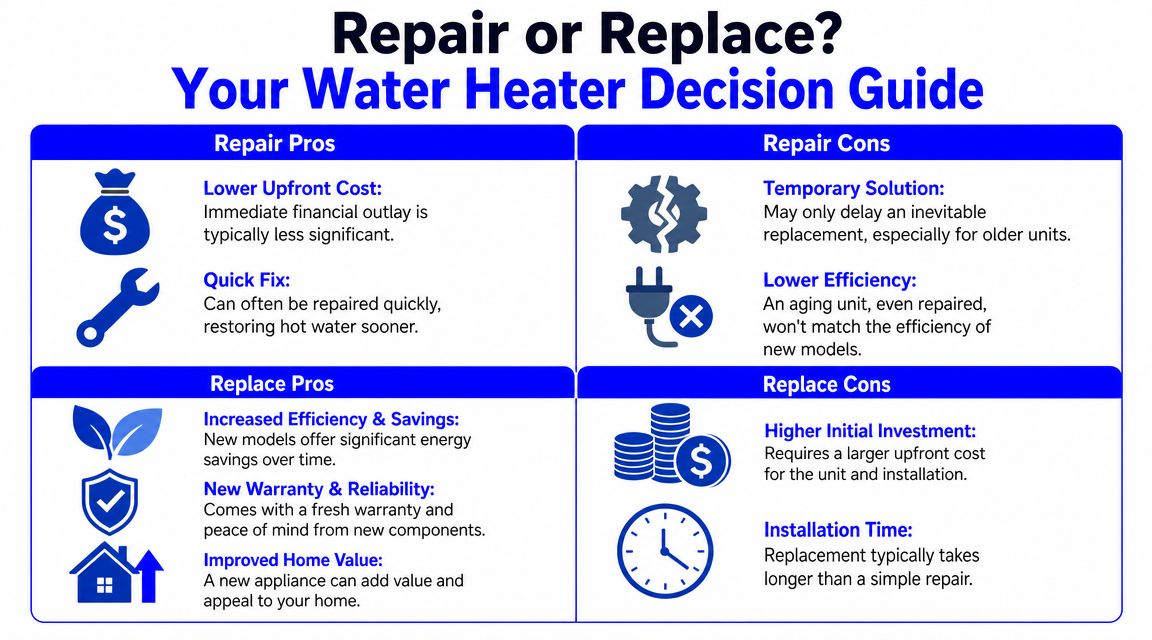
The practical test is simple. Look at the heater's age, the type of failure, and how much confidence a repair would buy you.
When Repair Makes Sense
Repair is usually the better call when the problem is limited to one serviceable part and the tank itself is still in good condition. A failed thermocouple, igniter, control issue, or relief valve can often be fixed without turning the heater into a money pit.
Repair is usually reasonable when:
- The tank is not leaking
- The heater has been reliable until this specific problem
- There is no gas odor, venting concern, or combustion safety issue
- You are not stacking one repair on top of another
That last point matters. A single part failure is one thing. A heater with declining recovery, mineral buildup, age-related wear, and repeat shutdowns is another.
When Replacement Is the Smarter Use of Your Money
Replacement usually wins when the heater is failing as a system, not just as a part. That includes tank leaks, repeated outages, poor hot water recovery, or a major repair on an older unit that still leaves you with a worn tank and Las Vegas hard-water exposure.
Use this framework:
| Situation | Better path |
|---|---|
| One repairable control or ignition issue, tank in good shape | Repair |
| Older heater with slow recovery and repeated service history | Replace |
| Leak from the tank body | Replace |
| Repair cost is high and confidence stays low | Replace |
I tell homeowners to focus on confidence, not just the invoice. If a repair gives you dependable hot water for a reasonable cost, it did its job. If it only buys a little time on a heater that is already wearing out, replacement is usually cheaper in practice.
A Las Vegas-Specific Rule of Thumb
Hard water changes the math. A heater that might have more life left in a softer-water area can be much closer to the end here, especially if it has not been flushed regularly. That does not mean every older heater needs to go. It does mean age and condition should carry more weight in Las Vegas than they might elsewhere.
For homeowners planning to stay in the house, replacement can also be a chance to choose a different setup based on household size, gas usage, and maintenance expectations. If you are comparing storage units with on-demand systems, review these tankless water heater options before deciding.
What Homeowners Regret Most
The mistake I see most often is paying for a large repair too late in the life of the heater. The unit may come back on, but the next weak part is already in line.
A good decision is not about squeezing one more repair out of the heater at any cost. It is about choosing the option that gives you safe, reliable hot water without turning the next few months into a series of service calls.
For rental properties in Las Vegas, Henderson, and North Las Vegas, that matters even more. Downtime creates tenant complaints fast, and repeated no-hot-water calls usually cost more than making a clear replacement decision the first time.
Your Local Las Vegas Solution MG Drain Services LLC
A no-hot-water call in Las Vegas usually starts the same way. Someone gets up for work, the shower goes cold, and now there is pressure to fix it fast. Speed matters, but a fast guess is not the same as a correct diagnosis, especially on a gas unit where ignition, venting, gas control, and tank condition can all point in different directions.
That is why homeowners and property managers usually ask for the same basics from a local plumber. Licensed and insured service. Clear pricing. Straight answers about what failed, what it takes to fix it, and whether the repair still makes sense on an older heater that has been working against hard water for years.
If you need local help, start with gas water heater repair in Las Vegas. Ask whether the company handles emergency no-hot-water calls, active leaks, and safety concerns tied to gas appliances. Those details matter in Las Vegas, Henderson, and North Las Vegas, where a failed heater can disrupt a household fast and summer attic heat can make already-stressed equipment work under harsher conditions.
A good service company does more than swap parts. It explains the trade-offs. If a repair is reasonable, they should say so. If the burner issue is only part of a bigger problem, such as a deteriorating tank or poor venting condition, they should say that clearly too.
MG Drain Services LLC serves local homeowners and rental property owners who need that kind of direct diagnosis. Call 702-480-8070 to book service.
Frequently Asked Questions About Gas Water Heaters
How long should a gas water heater last in Las Vegas
Las Vegas water heaters often wear out sooner when scale builds up inside the tank. Hard water makes the burner work harder, slows recovery, and shortens the life of parts that already run hot in our climate.
Age matters, but condition matters more. A unit can still produce hot water and still be close to failure if it has heavy sediment, rust at the tank, or repeated burner and pilot problems.
What is included in professional water heater maintenance
A proper service visit should include checking burner performance, testing the shutoff, inspecting venting, looking for leaks, confirming the temperature setting, and checking for sediment-related wear. On some tanks, a flush still helps. On others, especially older units with years of buildup, a flush can create new leak problems if the tank is already weak.
That is a real trade-off in Las Vegas. The right maintenance plan depends on the unit's age, service history, and how much hard water scale has built up.
Is a tankless water heater a good choice for my Henderson home
It can be, if the house is set up for it. Tankless units need the right gas supply, proper venting, and regular descaling in a hard water area.
A standard tank heater is often the better choice when replacement needs to happen quickly or when keeping installation cost under control matters more than gaining endless hot water. In many Las Vegas and Henderson homes, the best option is the one that fits the existing system safely and keeps future repair costs predictable.
Why is my water heater making a popping noise
Popping usually means sediment has hardened at the bottom of the tank. The burner heats through that layer, and trapped water bubbles up through it.
That sound is common in Las Vegas, and it usually means the heater is losing efficiency and running under more stress.
Why do I get hot water in one bathroom but not another
That usually points to a plumbing distribution problem, not a full water heater failure. A clogged line, a bad fixture cartridge, or a failing mixing valve can affect one bathroom while the rest of the house still gets hot water.
Hard water is a frequent cause. Scale can choke down one shower or faucet long before it creates a whole-house hot water problem.
Can I relight the pilot myself
If the label on the heater gives relighting instructions for homeowners, follow those steps exactly. If you smell gas, stop, leave the area, and call for help.
If the pilot will not stay lit, the issue may be the thermocouple, burner assembly, venting, or gas control valve. That calls for diagnosis, especially on an older heater or any unit showing other warning signs.
If you are dealing with no hot water, a leak, unstable temperatures, or a gas safety concern, call MG Drain Services LLC at 702-480-8070. A licensed plumber can check the full system and give you a straight answer on whether repair makes sense or replacement is the safer investment.