A backed-up sink or a shower that turns into a foot bath usually sends people straight to Google for Clogged Drain Near Me. In Las Vegas, that search often starts with one question and should really start with another. Is this one simple fixture clog, or is it the start of a bigger sewer problem?
That distinction matters. A slow bathroom sink is one kind of job. A toilet that bubbles when you run a nearby faucet is a very different one. Many local search results focus on fast unclogging, but they don't spend enough time on diagnosis. One plumbing reference makes that point directly. It notes that many results for this search focus on quick service and rarely explain when recurring backups, multiple slow drains, or toilet-and-shower issues may point to a deeper main-line problem, not just a one-off blockage in a single fixture (drain cleaning guidance on deeper sewer-line problems).
In Las Vegas homes, condos, rentals, and small commercial spaces, that difference can save you time, wasted DIY effort, and a bigger mess. Some clogs respond to a plunger and a hand snake. Others need a trained plumber with the right equipment to inspect the line, locate the blockage, and clear it without guessing.
That Sinking Feeling A Clogged Drain in Your Las Vegas Home
A lot of drain calls start the same way. The kitchen sink slows down for a few days. Then the water stops moving. Or the upstairs shower drains a little slower every week until one morning you're standing in dirty water and hoping it goes down before it spills over.
That frustration gets worse when you're trying to decide whether to fix it yourself or call plumbers in Las Vegas right away. If it's one sink, one tub, or one shower, you may be dealing with a local fixture clog. If more than one drain is acting up, the issue may be farther down the system. That's the part many homeowners miss.
What homeowners usually notice first
The first symptom isn't always dramatic. It may be one of these:
- A slow drain that used to clear normally
- Standing water around the stopper or tub drain
- Bad odor near one fixture
- A clog that seems to clear, then comes back
Those signs don't all mean the same thing. A hair clog near a tub drain behaves differently than a blockage deep in a branch line or sewer line.
Field rule: Don't judge the problem by how annoying it feels. Judge it by how many fixtures are involved.
Las Vegas homes also see a mix of older plumbing, remodel work, long drain runs, heavy kitchen use, and hard-water-related buildup. Those conditions can turn what looks like a small clog into a recurring service issue. Property managers and landlords in Henderson and North Las Vegas run into this all the time. The same unit gets "fixed" more than once because the first repair only punched through part of the blockage instead of solving the cause.
Why the right diagnosis saves money
If you treat a main-line problem like a sink clog, you'll waste time. If you treat a sink clog like a sewer emergency, you'll overreact. The right move is to read the symptoms before you grab a tool.
That's how the drain cleaning Las Vegas homeowners need should be approached. Start with scope. Then choose the fix.
Diagnosing the Blockage Is It One Drain or a Bigger Problem
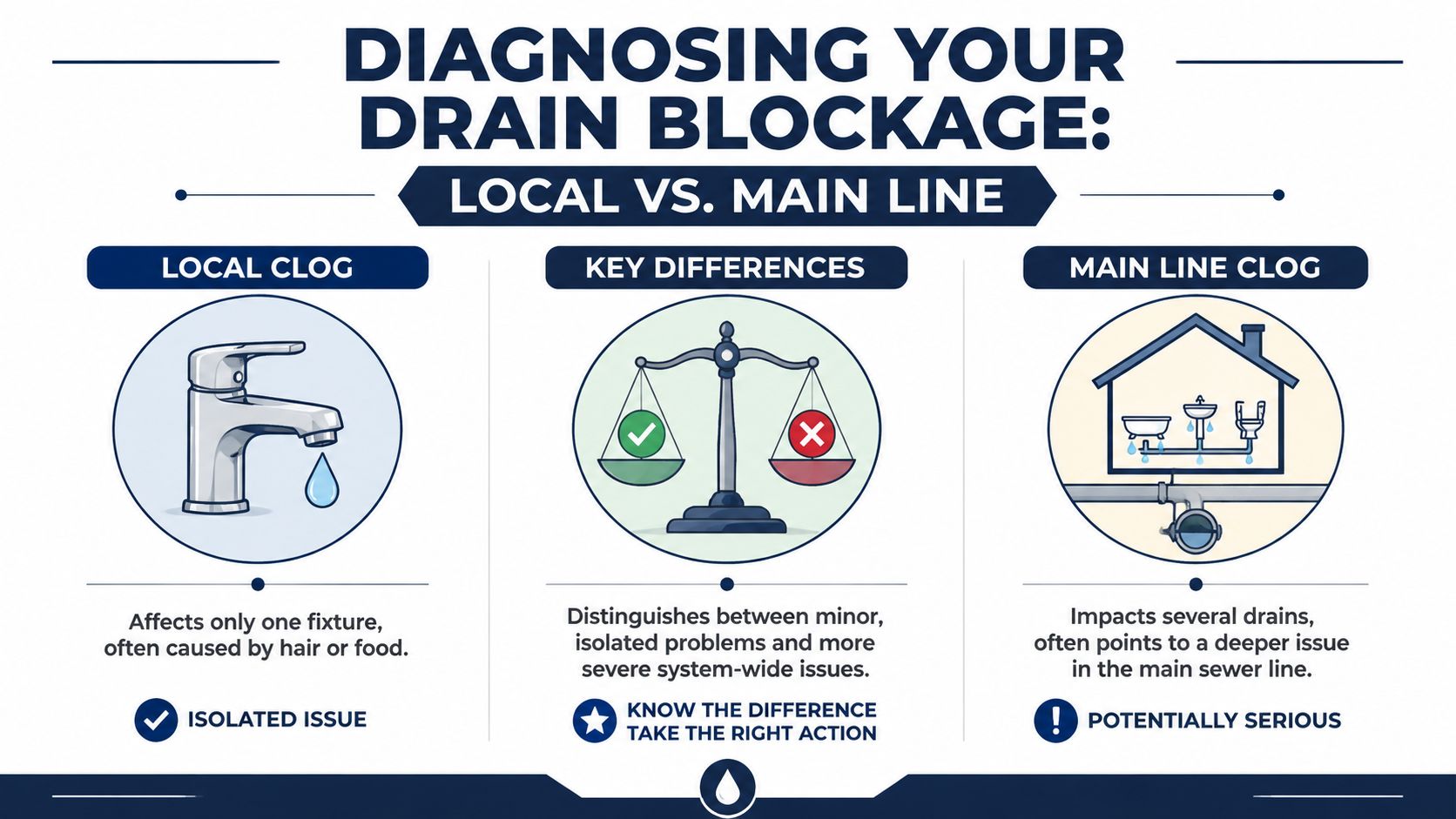
The fastest way to sort this out is simple. Ask whether the problem is happening at one fixture or across the house.
Signs of a local fixture clog
A local clog usually stays close to one drain opening. Common examples include a bathroom sink slowed by toothpaste and soap residue, a shower blocked by hair, or a kitchen sink plugged with food debris near the trap.
A local clog usually looks like this:
| Symptom | What it often means |
|---|---|
| One sink drains slowly | Buildup in that sink's trap or branch line |
| One shower backs up | Hair and soap scum near the drain opening |
| One toilet is hard to flush | Obstruction in that toilet or its immediate line |
These are the jobs where basic tools can sometimes work.
Signs of a main-line problem
When multiple fixtures act up, stop thinking about one drain. Start thinking about the drain system.
A plumbing source notes that when water backs up in drains as other fixtures are used, when toilets bubble after running a nearby sink, or when odors and poor flow appear across the system, the problem may be in the sewer main rather than the fixture. The same source also notes that pricing can jump from $110 to $275 for a single-fixture cleaning to $100 to $800 for a main-line cleaning, which shows how quickly the scope can change (main-line warning signs and pricing context).
If you run the washing machine and the toilet bubbles, that isn't a toilet problem. It's a drainage system problem.
A quick decision test
Use this checklist before you try to clear anything:
- Only one drain is affected: More likely a local clog.
- Two or more fixtures are slow: Think branch line or main line.
- Toilet bubbles when another fixture runs: Treat it as a sewer warning.
- Odors show up in more than one area: The problem may be deeper than the trap.
In practice, experienced technicians separate guesswork from diagnosis. The pattern matters more than the individual fixture.
Safe DIY Methods for Common Household Clogs
If the problem is isolated to one fixture and there are no system-wide warning signs, a careful DIY attempt makes sense. The key word is careful.
One plumbing guide recommends a layered approach for a sink or tub blockage. Remove the stopper, use a plunger for about 20 to 30 seconds, then move to a drain snake or wet/dry vacuum if the clog doesn't clear. That same guide says chemical drain cleaners should be a last resort because they can damage pipes (safe unclogging workflow for sinks and tubs).
Kitchen sink clogs
Kitchen drains usually fail because debris collects in the trap or just beyond it. Grease makes this worse because it grabs food particles and builds a sticky obstruction.
Try this:
- Remove standing water if you can.
- Check the stopper and strainer area for visible debris.
- Use a sink plunger with enough water in the basin to seal the cup.
- Work the plunger firmly, not wildly.
- If needed, use a hand snake to reach farther into the line.
If the clog is likely in the P-trap, place a bucket underneath, open the trap, clean it out, then reassemble it carefully. That's often more effective than forcing chemicals into the line.
Shower and tub clogs
Hair and soap scum are the usual suspects. Pull the stopper first. You'll often find the blockage closer to the opening than you think.
Use a plastic hair tool or a small hand snake. Avoid jamming the tool hard into the pipe. The goal is to pull material out, not shove it deeper.
For more safe methods without harsh liquids, MG's own guide on how to unclog a drain without chemicals is worth reviewing before you start.
Here's a quick visual on basic drain-clearing technique:
Toilet clogs
Use a flange plunger, not a flat sink plunger. Make sure the cup covers the outlet fully. Give it controlled plunges until you feel the seal working.
Don't keep forcing it if the bowl level rises and stays high. That tells you the obstruction isn't moving, and overflow becomes the next problem.
Practical advice: If your first safe attempt doesn't improve flow, stop before you turn a simple stoppage into a damaged fixture or a flooded bathroom.
Red Flags When to Immediately Call a Las Vegas Plumber
Some drain symptoms aren't DIY jobs. They're warning signs.
If you're in Las Vegas, Henderson, or North Las Vegas and you see any of the conditions below, stop trying to "push through" the clog:
- Multiple drains backing up at once
- Water shows up in a shower when a toilet is flushed
- A clog keeps returning after plunging or snaking
- Sewage odor is present indoors
- The toilet bubbles when another fixture runs
- You already used tools and the blockage didn't improve
Those symptoms usually mean the problem isn't sitting right under the drain cover. It's farther down the line, or it's part of a larger obstruction.
Why stopping early is the smart move
Homeowners often think calling a plumber means the problem got worse. Usually, the opposite is true. Calling sooner prevents contamination, water damage, repeated backups, and wasted money on products that don't solve the actual issue.
If you want a mild housekeeping approach for general cleaning around the home, resources like Sparkle Tech's baking soda vinegar tips can be useful for surface cleaning habits. But once drains are backing up repeatedly or more than one fixture is involved, household cleaning methods aren't the fix.
A professional diagnosis isn't admitting defeat. It's choosing the right repair before the mess spreads.
What to Expect from Your Professional Drain Cleaning Service
Individuals seeking drain service aren't typically driven by curiosity. Instead, they call because something in the house isn't working and they want it fixed without guessing. A proper service call should be straightforward.
What happens first
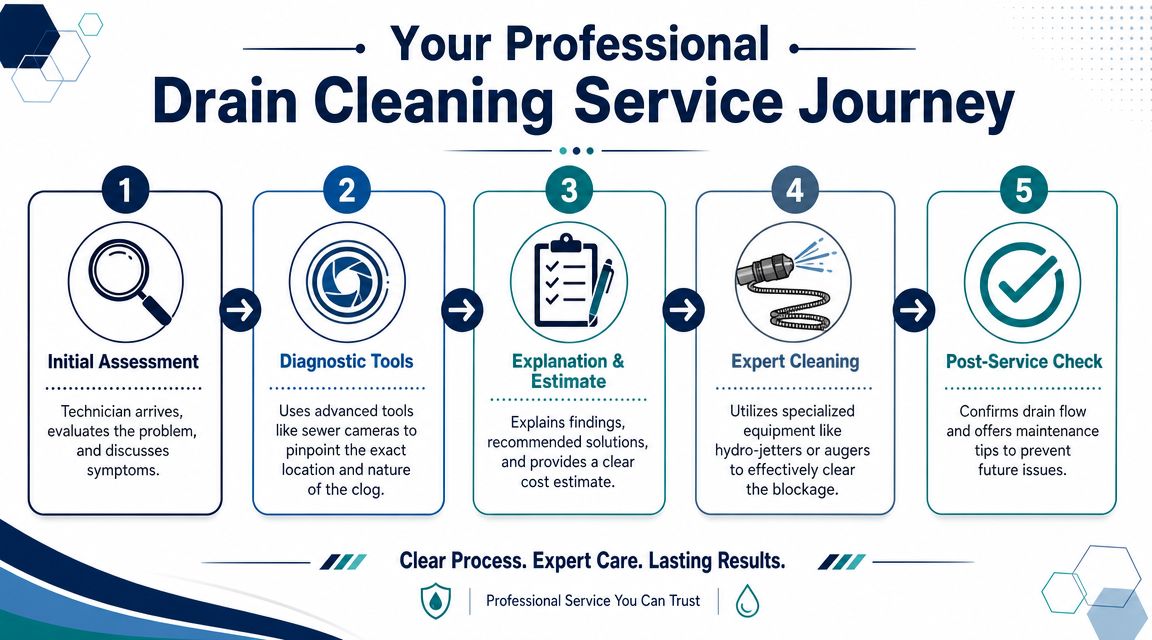
The first step is a symptom review. A technician asks what fixture is affected, whether more than one drain is involved, whether there's odor, bubbling, or backups, and whether you've already tried plunging or snaking.
Then comes inspection. If the issue appears limited to a single fixture, the technician may start with localized clearing. If the symptoms point deeper into the system, the technician may move to a sewer camera inspection to see what's in the line.
Tools that match the problem
Not every clog needs the same tool. A trap blockage may only need hand clearing or a compact machine. A heavy line obstruction may call for rooter equipment, camera locating, or hydro jetting.
For homeowners searching for a clogged drain near me, cost can vary quite a bit. One consumer pricing source reports an average drain-cleaning price of $250, with common fixture clogs such as toilets, kitchen sinks, bathtubs, and showers typically costing $110 to $275, while sewer main line cleaning can range from $100 to $800 (drain cleaning price ranges and scope differences).
That spread makes sense in the field. Clearing a hair clog near a tub drain isn't the same job as diagnosing and cleaning a main sewer blockage.
The value of clear answers
A professional visit should leave you with three things:
- A real diagnosis, not a guess
- A clear explanation of the recommended fix
- Pricing before work moves forward
For system-level issues, services such as sewer and hydro jetting and sewer camera inspection are often the right next step because they address both location and cause. In Las Vegas homes with recurring drain trouble, that's often more useful than repeated surface-level clearing.
Proactive Tips to Prevent Future Drain Clogs
Most future clogs start as small habits, not sudden disasters. If you want to avoid another backed-up sink or shower, focus on what enters the drain and how quickly you respond when flow starts slowing down.
Daily use matters more than occasional deep cleaning. A shower drain usually clogs from hair and soap residue near the opening. A kitchen line usually clogs from grease, food scraps, and sludge building up over time. Those are preventable problems.
Habits that protect your drains
Use these routines consistently:
- Install strainers in showers and tubs. Catching hair at the surface is much easier than pulling it from the trap or branch line.
- Scrape food into the trash before rinsing dishes. Even homes with garbage disposals can develop heavy kitchen buildup.
- Keep grease, oil, and fat out of the sink. Let it cool, put it in a container, and throw it away.
- Clean stoppers, pop-ups, and drain covers regularly. That visible buildup is often the same material collecting farther down.
- Treat a slow drain as an early warning. Clearing a minor fixture clog early is easier than dealing with a packed line later.
After a simple clog is cleared, flush the drain well. Several plumbing guides note that running hot water afterward can help move loosened residue out of the line instead of leaving it behind to collect again (why hot-water flushing matters after clearing a clog).
Las Vegas-specific maintenance mindset
Las Vegas homes have a few common contributors to repeat drain trouble. Hard water leaves scale. Kitchen lines see plenty of grease. Rental properties and busy households often get a lot of use with very little preventive cleaning. That combination can turn a small fixture clog into a recurring complaint.
Pay attention to the pattern. If one bathroom sink slows down now and then, that usually points to a local blockage in that fixture line. If different drains start acting up over time, stop assuming each one is a separate clog. The issue is often deeper in the line, and repeated DIY clearing at individual fixtures may only buy a little time.
Laundry areas get overlooked too. If a washer area smells bad or seems slow to drain, it helps to rule out appliance residue before blaming the piping. This expert washing machine cleaning guide is a useful outside resource for that.
A drain that slows down the same way every few months is usually leaving material behind. That is the point where prevention shifts to diagnosis.
Frequently Asked Questions About Drain Clogs
Homeowners usually ask the same few questions once the water stops moving. Direct answers help you decide whether to keep troubleshooting or make the call.
| Question | Answer |
|---|---|
| Should I keep plunging if the drain isn't clearing? | No. A few controlled attempts are reasonable for a simple local clog. If nothing changes, repeated force usually wastes time and can make the mess worse. |
| Are chemical drain cleaners worth trying? | Usually no. They can be rough on plumbing and often don't remove the full blockage. They're especially risky when the real issue is deeper in the line. |
| How do I know if it's a sewer problem instead of one drain? | The pattern tells you. If several fixtures are slow, if water backs up in another drain when you use a fixture, or if toilets bubble, think system-wide. |
| Can a recurring clog really mean pipe damage or a deeper issue? | Yes. If the same drain keeps clogging, the blockage may be farther down the line, or the pipe may need inspection instead of repeated spot clearing. |
| Is a slow drain an emergency? | Not always, but it shouldn't be ignored. Slow flow is often the stage before a full backup. Early service is cleaner and easier than waiting for overflow. |
For homeowners searching for drain cleaning Las Vegas help, the goal isn't just to get water moving for one day. It's to identify whether you're dealing with a simple fixture clog or a larger drainage problem that needs proper equipment and diagnosis.
If your search for a solution started with Clogged Drain Near Me, the next step is getting the right diagnosis. MG Drain Services LLC serves Las Vegas, Henderson, and North Las Vegas with licensed and insured plumbing service, experienced technicians, honest pricing, and fast response. Call 702-480-8070 or book through the website if you have a recurring clog, a slow drain that won't stay fixed, or signs of a main-line backup.