If you're searching for Sewer Cleaning Near Me in Las Vegas, you're probably already seeing the warning signs. A kitchen sink that won't drain. A toilet that bubbles when the shower runs. A sewer odor that seems worse by the afternoon, especially when the Las Vegas heat settles in. Those aren't random plumbing annoyances. They usually mean wastewater isn't moving through the line the way it should.
Most homeowners wait too long because they hope it's just one slow drain. Sometimes it is. But when more than one fixture starts acting up, the smart move is to stop guessing and find out what's happening in the main line. Proper sewer cleaning isn't just about getting water moving again. It's about protecting the home as a long-term asset, avoiding repeat backups, and making sure you're not paying twice for the same problem.
Telltale Signs Your Las Vegas Home Needs Sewer Cleaning
A lot of main line calls start the same way. The homeowner notices one slow drain, then a second one, then an odor they can't quite place. By the time water shows up in the tub after flushing a toilet, it's no longer a minor clog. It's a sewer line problem that needs attention.
That pattern shows up often in Las Vegas homes, older properties, rental units, and busy households where drains get heavy daily use. If you've been searching for sewer cleaning near me, the symptoms below are the signs to take seriously.
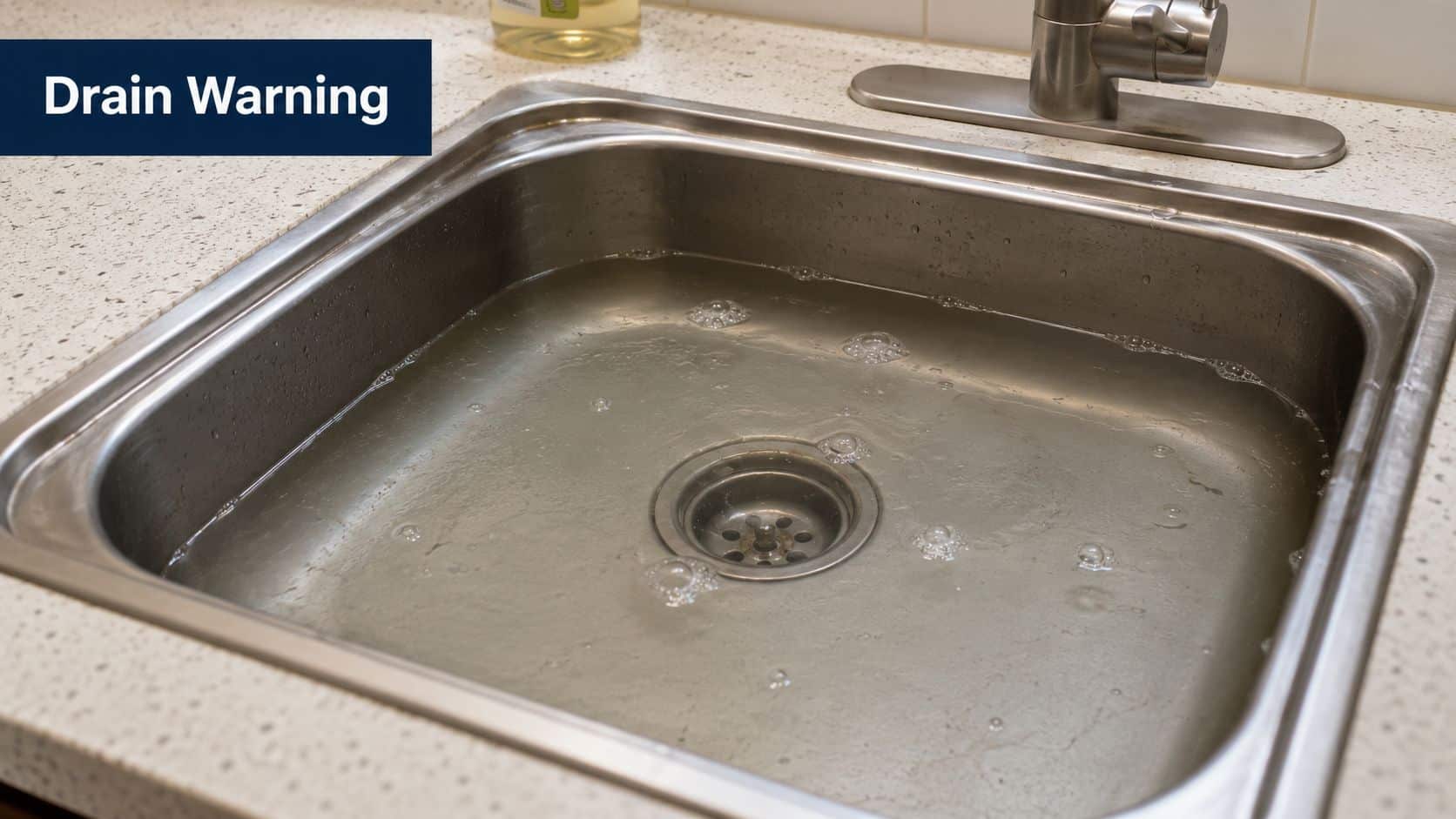
Signs that point to a main sewer issue
- More than one drain is slow: A single slow lavatory sink may be a local clog. A slow kitchen sink, shower, and toilet at the same time usually points deeper into the system.
- Toilets gurgle or bubble: Air trapped by a blockage often shows up first in the toilet. That sound means the line isn't flowing freely.
- Water backs up into another fixture: Flush the toilet and water rises in the shower. Run the washing machine and a nearby floor drain reacts. That's classic shared-line behavior.
- Sewer odor indoors or outside: If the smell keeps returning, there may be buildup or standing waste in the line.
- Recurring clogs in the same home: If the problem keeps coming back after plunging or basic snaking, the clog may not be the underlying issue.
- Patches in the yard look off: Wet soil, unusual softness, or isolated lush growth can point to an underground sewer problem.
- Pests show up around drains or outside cleanouts: In some cases, sewer issues create the kind of environment pests are drawn to.
What these symptoms usually mean
A sewer line rarely fails all at once. It narrows over time from grease, sludge, scale, wipes, roots, or a damaged section of pipe. The early signs are subtle. Then drainage gets slower, pressure changes inside the system, and backups start appearing where you least want them.
Practical rule: If one drain is slow, watch it. If several fixtures are involved, treat it like a sewer line problem until proven otherwise.
If you want a deeper look at symptom patterns, these common sewer line warning signs are worth reviewing before the backup gets worse.
The Limits of DIY and the Power of Professional Diagnosis
Many try the easy fix first. That makes sense. A plunger, a hand auger, maybe a bottle off the hardware store shelf. For a simple fixture clog, that can work. For a main sewer issue, it usually doesn't solve much.
Chemical drain cleaners are the biggest example. They may sit in the trap, partially eat at soft buildup, and give the impression that the line is opening. But they don't tell you what caused the blockage. They also don't tell you whether the pipe has roots, an offset joint, or a section holding waste because of poor alignment.
Why repeated DIY clearing often fails
The problem with a sewer line is that the clog is often a symptom, not the actual defect. You can poke a hole through buildup and get temporary drainage. That doesn't mean the pipe is healthy.
The more useful view comes from diagnosis. A common observation in the trade is that individuals seeking this service often encounter emergency messaging first, but the primary value is identifying the root cause. Recurring clogs often point to grease buildup, root intrusion, or pipe offset that need more than a quick clearing, as noted by 247 Sewer's discussion of root-cause diagnosis.
What a camera changes
A sewer camera inspection gives you direct evidence. Instead of guessing, the technician can see where the blockage is, what it's made of, and whether the pipe itself is part of the problem. That matters because the right solution depends on what the camera shows.
A few examples:
- Grease and sludge: Often better handled by thorough cleaning, not just punching a narrow opening through the center.
- Roots: Need cutting or targeted removal, then a plan for follow-up if the pipe has intrusion points.
- Offset or damaged pipe: Cleaning may restore flow today, but it won't correct the structural defect.
- Foreign objects or dense stoppages: Mechanical clearing may be the best first move.
A line that drains for a week isn't necessarily fixed. A line that's inspected, cleaned correctly, and verified is far less likely to surprise you again.
That's the difference between an emergency patch and protecting your property. The first gets through the night. The second helps you avoid paying for the same sewer problem over and over.
Professional Sewer Cleaning Methods for Las Vegas Homes
Professional sewer cleaning works best when the method matches the condition inside the pipe. That's why pricing varies. Homeowners comparing estimates should know that HomeGuide lists basic snaking at $150 to $500, residential hydro jetting at $250 to $800, and severe hydro jetting jobs at $1,000 or more. The right number depends on access, severity, and what the line needs.
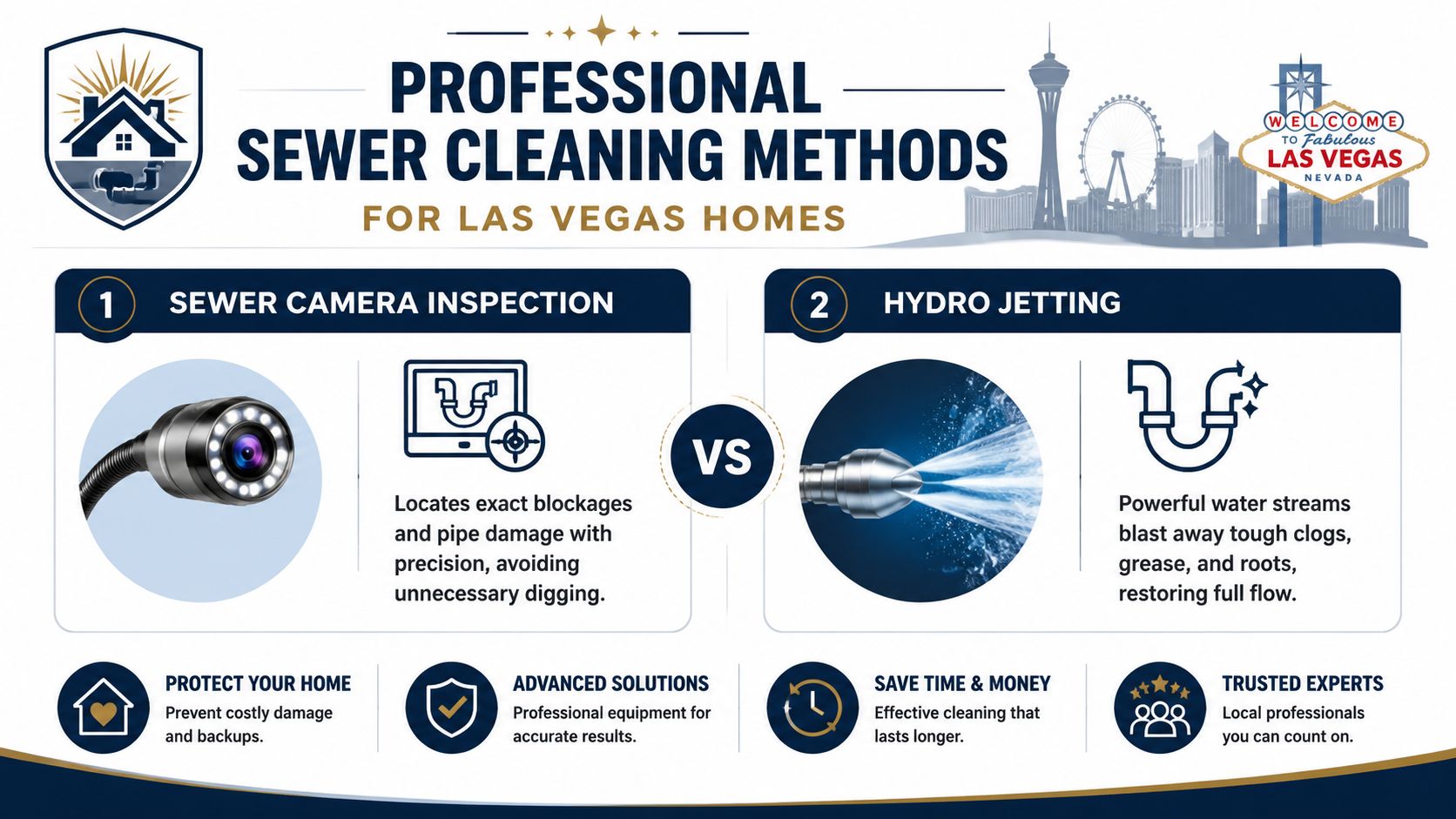
Sewer camera inspection
This is the diagnostic step that prevents wasted money. A camera goes into the line through an accessible opening and shows the condition of the pipe in real time. If the problem is a grease choke point near the kitchen branch, that matters. If it's roots farther out in the lateral, that matters too.
For homeowners, this is often the point where the job shifts from “clear the clog” to “protect the pipe.” MG Drain Services LLC offers sewer line inspections with color video cameras, which is useful when you want visual confirmation before agreeing to cleaning or repair work.
Mechanical snaking and rooter service
Think of a cable machine as a cutting and opening tool. It's effective when the job calls for breaking through a blockage, reopening flow, or cutting through certain obstructions. It's often the right first response for a solid stoppage.
It's not always the final answer. A cable can create a path through debris without fully cleaning the pipe walls. If heavy grease, sludge, or scale remains, the line may back up again.
Hydro jetting
Hydro jetting uses high-pressure water to scour the inside of the pipe. It's usually the better option for grease, sludge, and thick buildup because it cleans more of the pipe wall instead of just drilling a hole through the blockage.
That matters because sewer cleaning should restore usable flow, not just produce a short-lived opening. If you want a simple explanation of how the process works and when it makes sense, this hydro jetting guide breaks it down well.
Choosing the right method
A quick comparison helps:
| Method | Best for | Limitation |
|---|---|---|
| Camera inspection | Finding the exact cause and location | It diagnoses, but doesn't clean by itself |
| Mechanical snaking | Breaking through dense stoppages | May leave buildup on pipe walls |
| Hydro jetting | Removing grease, sludge, and widespread buildup | Needs the right pipe condition and access |
The wrong tool wastes time. The right tool solves the actual problem.
Your Step-by-Step Guide to Our Sewer Service Process
When homeowners call for sewer service, they usually want two things right away. They want the backup handled, and they want to know they're not walking into a vague, open-ended bill. A clear process matters.
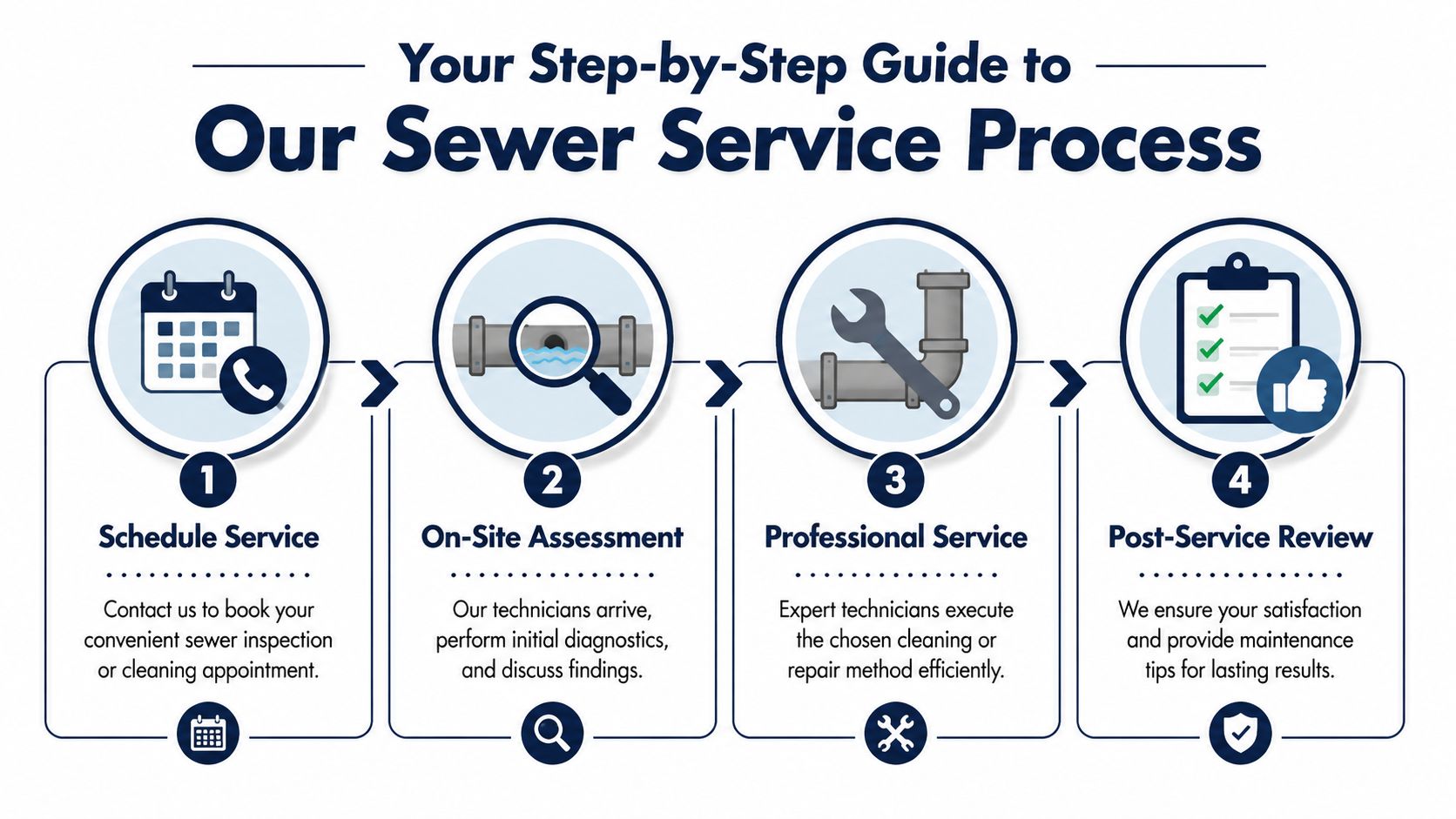
Step 1 Schedule the visit
The first part is straightforward. You call, explain what the plumbing is doing, and the service gets scheduled. The more specific you are about symptoms, the easier it is to prepare for the job. Mention whether multiple drains are affected, whether there's backup at the shower or toilet, and whether you know where the cleanout is.
Step 2 On-site assessment
Once on site, the technician checks the symptoms, looks at available access points, and decides how to approach the line safely. If there's a cleanout, that often makes the work more direct and less disruptive.
This stage matters because professional sewer maintenance is tied to accurate diagnosis. In utility specifications, gravity sewer lines are typically required to be cleaned and cleared before hydrostatic or air testing because leftover debris can distort diagnostics, as explained in these sewer technical specifications. In plain terms, dirty lines hide problems.
Step 3 Cleaning or inspection first, depending on conditions
Some jobs need immediate opening of the line before anything else. Others benefit from camera work first. If the line is too packed with debris to read clearly, the technician may clear it enough to inspect properly, then verify what remains.
That order is important. Homeowners often assume inspection always comes first, but field conditions decide the safest sequence.
Clean enough to see clearly. Then make the repair or cleaning decision based on evidence, not guesswork.
Step 4 Review and next steps
After the work, the findings should be explained plainly. If the blockage was buildup and the pipe looks sound, the next step may just be maintenance advice. If roots, offsets, or damage are visible, you should be told that too, along with practical options.
A professional closeout should include:
- What was found: Buildup, roots, debris, or visible pipe damage.
- What was done: Snaking, jetting, camera inspection, or a combination.
- What to expect next: Normal use, warning signs to watch, and whether more work is recommended.
- How to reduce repeat problems: Disposal habits, maintenance timing, and when to call again.
That's how sewer service should feel. Clear. Documented. No mystery.
Preventative Maintenance to Protect Your Plumbing Investment
The cheapest sewer backup is the one that never happens. That's especially true in Las Vegas homes with older piping, rental turnover, heavy kitchen use, or long periods where small problems go unnoticed.
Preventative sewer care starts with what goes into the system. Grease is a major offender because it cools, sticks, and keeps collecting debris. “Flushable” wipes are another common problem. They don't break down like toilet paper, and they create stubborn snags in the line. In kitchens, food scraps that slip past the disposal can add to the same mass.
Habits that actually help
- Keep grease out of the drain: Let it cool in a container and throw it away instead of rinsing it into the sink.
- Flush only what belongs there: Toilet paper and human waste. That's it.
- Pay attention to early drain changes: A drain that starts slowing down is easier to deal with than a full backup.
- Know your property's risk factors: Older homes, mature landscaping, and heavy-use kitchens deserve closer attention.
- Use maintenance strategically: If the line has a history of buildup, periodic cleaning can be far cheaper than repeated emergencies.
What thorough cleaning is supposed to accomplish
Professional cleaning should improve flow in a meaningful way. In municipal sewer specifications, the target is often restoring a line to at least 95% of original carrying capacity, which is a useful benchmark for understanding the difference between a quick opening and a thorough cleaning, according to BlueWorks sewer cleaning specifications.
That standard matters for homeowners too. You don't want a pipe that barely drains. You want one that functions close to how it should.
Good sewer maintenance protects the house the same way roof maintenance or HVAC service does. It reduces the chance that a hidden system failure turns into interior damage.
While frozen-pipe claims aren't a Las Vegas sewer issue, homeowners who want to understand how plumbing failures can affect property damage coverage may also find this overview of home insurance for frozen pipes useful for broader planning.
Your Trusted Plumbers in Las Vegas Henderson and North Las Vegas
When homeowners search for Sewer Cleaning Near Me, they aren't just looking for someone with a machine. They're looking for a local plumbing company that shows up, communicates clearly, and solves the problem without games. In a large service category, that distinction matters.
The U.S. septic, drain, and sewer cleaning industry is projected at $8.1 billion in 2026, with 7,756 businesses operating in 2025, according to IBISWorld's industry report on septic, drain, and sewer cleaning services. For Las Vegas homeowners, that means there are a lot of options. It also means choosing a licensed and insured local company matters more, not less.
What homeowners should look for locally
In Las Vegas, Henderson, and North Las Vegas, the basics still matter:
- Licensed and insured service: You want accountability when work involves your home's plumbing system.
- Experienced technicians: Sewer work goes faster and cleaner when the person diagnosing it understands what they're seeing.
- Transparent pricing: Honest quotes are better than vague promises.
- Modern tools: Camera inspections and the right cleaning equipment reduce guesswork.
- Local knowledge: Las Vegas homes, rental properties, restaurants, and older neighborhoods don't all present the same sewer issues.
If you're comparing providers, it can also help to understand why insurance and liability coverage matter in the trades. Even though it's a different market, this breakdown of insurance packages for Vero Beach tradespeople gives useful context on the type of business protections serious contractors carry.
Common questions before booking
How much does sewer cleaning cost in Las Vegas?
It depends on the method and the severity of the blockage. As covered earlier, basic snaking and hydro jetting fall into different pricing ranges, and severe conditions cost more than straightforward stoppages. The key is getting the right method for the actual problem.
How long does the job take?
That depends on access, blockage type, and whether inspection is needed. Some jobs are direct. Others take longer because the line has to be opened, inspected, and verified before a final recommendation makes sense.
Do you service my area?
Local plumbing professionals commonly serve Las Vegas, Henderson, North Las Vegas, and nearby communities across the valley. If you're in Clark County and dealing with a sewer backup, it's worth calling to confirm service availability.
Can I wait if the drains are still moving a little?
You can, but that's often when the problem gets more expensive. A partially restricted sewer line is warning you before it fails completely.
Do you offer bilingual support?
Yes. Se habla español. That matters for many Las Vegas households that want plumbing issues explained clearly before work begins.
If your home has multiple slow drains, sewer odor, or repeat backups, don't settle for a temporary opening. Get the line diagnosed properly, cleaned with the right method, and checked so you know what condition your plumbing is in.
If you need fast, professional help from MG Drain Services LLC, call 702-480-8070 or book online. MG Drain Services LLC serves Las Vegas, Henderson, and North Las Vegas with licensed and insured plumbing, honest pricing, experienced technicians, sewer camera inspections, hydro jetting, rooter service, and drain cleaning that focuses on solving the cause of the problem, not just clearing today's backup.