Hydro jetting in Las Vegas usually costs $250 to $600, and it's the right fix when you've got a drain or sewer line that keeps clogging because it cleans the pipe instead of just poking a hole through the blockage. If the call is after hours for an urgent backup, that service can add $100 to $150.
A lot of homeowners in Las Vegas, Henderson, and North Las Vegas end up in the same cycle. The kitchen line slows down, someone runs a store-bought cleaner, the toilet starts gurgling, a snake gets run through the line, and everything seems fine for a little while. Then the clog comes back.
That usually means the problem isn't one lump of debris. It's buildup on the pipe walls, grease, sludge, scale, or roots that were never fully removed. That's where Hydro Jetting Las Vegas searches come from. People aren't looking for a temporary patch. They want the drain to stay open.
Good hydro jetting work does that. Bad hydro jetting work can create a much bigger problem if the pipe is old and brittle. In older Las Vegas homes, especially houses with aging sewer materials, blasting a compromised line without checking it first is how a cleaning job turns into a repair job. That's why the smart conversation isn't just “Does hydro jetting work?” It's “Is my line a safe candidate, and what's the right way to do it?”
Tired of Stubborn Clogs in Your Las Vegas Home
If you're reading this, there's a good chance you've already tried the easy fixes.
Maybe the shower drains slowly every morning. Maybe the kitchen sink backs up when the dishwasher empties. Maybe one toilet flushes and another one starts bubbling. In a lot of Las Vegas homes, those aren't isolated fixture issues. They're early warnings that the drain line is narrowing up and catching more debris every week.
Homeowners call plumbers in Las Vegas for this all the time because recurring clogs are frustrating in a way that a one-time clog isn't. A simple clog is inconvenient. A clog that keeps returning makes you wonder what's happening inside the pipe and whether the next backup is going to show up on a weekend or late at night.
Practical rule: If a line was snaked and the problem came back quickly, don't assume the first job was done wrong. It usually means the pipe walls are still coated with material that keeps snagging waste.
That's why drain cleaning Las Vegas calls often turn into hydro jetting recommendations. A cable machine can break a path through a blockage. Hydro jetting cleans the inside diameter of the line much more thoroughly, which is why it's often the better answer for stubborn main line issues.
Here's when the problem usually stops being a DIY matter:
- Multiple fixtures act up at once. That points toward a branch line or main sewer issue.
- The clog returns after plunging or snaking. Something deeper is still there.
- You smell sewer odor. That's a warning sign, not just an annoyance.
- Water shows up where it shouldn't. A tub filling when the toilet flushes is a classic red flag.
For Las Vegas homes, the local conditions matter too. The same drain problem behaves differently here than it does in a softer-water market. That local detail is what separates a quick patch from a lasting repair.
Why Drains Keep Clogging in the Las Vegas Valley
Las Vegas plumbing has one local enemy that homeowners don't always see coming. Hard water scale.
In the Las Vegas Valley, local groundwater measures 291 parts per million hardness, and that water deposits calcium and magnesium scale onto pipe walls over time, creating flow restrictions that standard augering can't remove, as noted in Roto-Rooter's Las Vegas hydro jetting overview. That buildup hardens. It doesn't act like soft sludge. It acts more like a rough mineral lining inside the pipe.
What that looks like inside the pipe
Think of the inside of the drain like the inside of an artery. The opening gets narrower. The walls get rougher. Once that happens, ordinary debris has more places to hang up.
Hair catches faster. Grease sticks harder. Paper drags. Food waste doesn't slide as cleanly as it should.
A homeowner usually notices the symptoms before they understand the cause:
- The sink drains, but slowly
- The toilet needs a second flush
- The tub gurgles after another fixture runs
- The same line clogs again and again
Why snaking often falls short
A snake is useful. It has a place in the trade. For a small localized clog, it can save the day.
But a snake works down the center of the pipe. It doesn't scrub the full circumference. When scale is the problem, that matters. The cable may open enough space for water to move, but it leaves the narrowed, rough interior behind. That rough surface starts collecting debris again almost immediately.
A recurring clog is often a pipe-wall problem, not a single blockage problem.
Las Vegas homes also see combinations of buildup, not just one issue at a time. Scale traps grease. Grease traps food solids. Debris hangs on and grows into a bigger obstruction. That's why a line can seem “partially fixed” after one service call and then fail again soon after.
For local plumbing professionals, that pattern is familiar. If the line keeps acting up, the question isn't whether something is in the pipe. The question is what the pipe itself looks like.
Seeing Is Believing Why a Camera Inspection Is Crucial
A homeowner in an older Las Vegas neighborhood calls for hydro jetting because the main line keeps backing up. If that sewer line is old clay, thin cast iron, or a patched-together mix of materials, blasting it with high pressure before looking inside can turn a drain cleaning into a pipe failure.
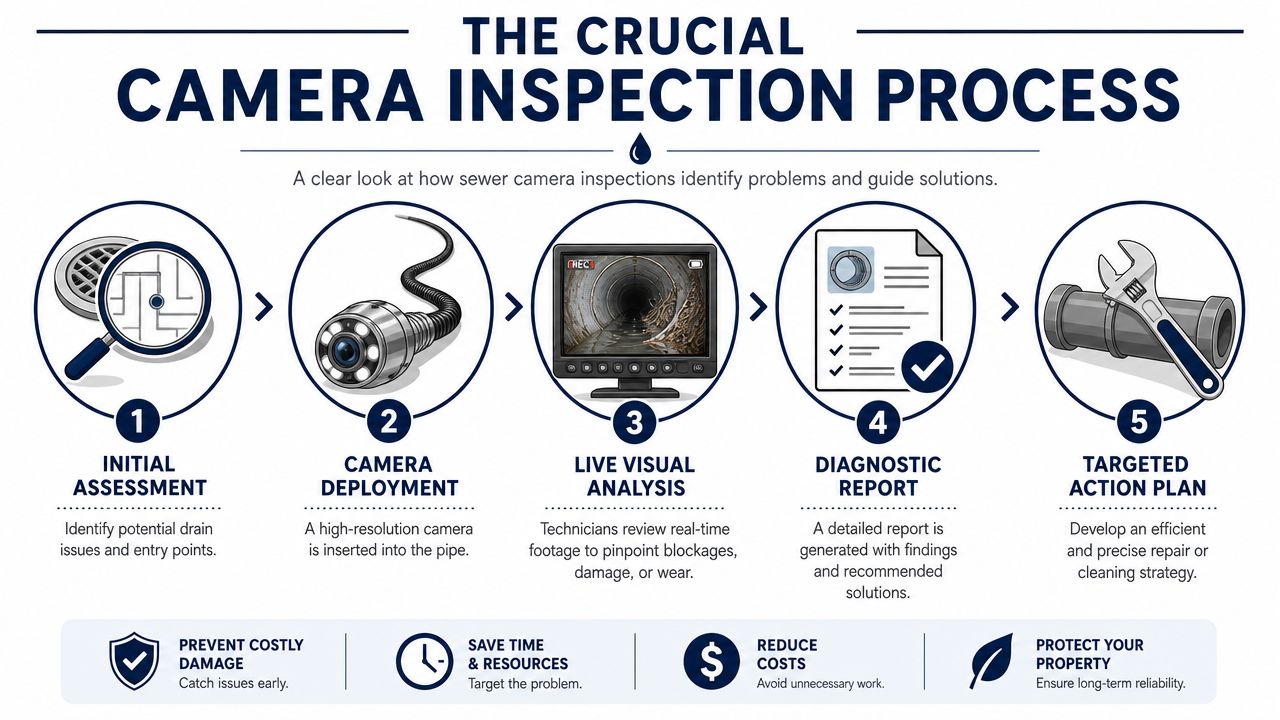
That is why I treat a camera inspection as the first step, especially on older homes. It shows what the pipe is made of, how bad the blockage is, and whether the line can handle jetting without coming apart.
Why this matters more in older Las Vegas homes
Older sewer lines can be the weak link. The U.S. EPA has documented that many legacy sewer systems still include aging materials such as vitrified clay and other outdated pipe types, which is part of why condition matters before any aggressive cleaning method is used. See the EPA overview on aging wastewater infrastructure here: EPA information on aging water infrastructure.
In the field, the bigger issue is not the clog. It is the pipe wall. A brittle line may already have hairline cracks, bad joints, offsets, root intrusion, or sections that were repaired years ago with whatever worked at the time. Hydro jetting can clean a sound line extremely well. It can also finish off a failing one.
That risk gets overlooked on a lot of sales pages. They talk about pressure and cleaning power. They do not spend much time on what happens when that pressure hits old clay or flaking cast iron.
What a camera inspection confirms before jetting
A proper inspection answers a few plain questions:
- Where the blockage is
- What is causing it
- Whether the pipe walls look solid or compromised
- Whether the problem is buildup, roots, a belly, separated joints, or a break
Those details change the whole job. If the line is intact and packed with grease, sludge, or roots, hydro jetting may be the right tool. If the camera shows a cracked clay line or cast iron that is scaling apart, a cable machine, spot repair, or line replacement may be the safer call.
For homeowners who want to see how plumbers verify that before recommending work, this guide to a sewer camera inspection walks through the process.
One honest camera inspection can save you from paying for the wrong service and dealing with a broken sewer line afterward.
If a contractor wants to hydro jet an older line without putting a camera in it first, stop the job and ask what they are trying to avoid showing you.
The camera protects more than the plumber. It protects your slab, your yard, and your budget.
Snaking vs Hydro Jetting Which Is Right for Your Drain
Snaking and hydro jetting are both real tools. They just do different jobs.
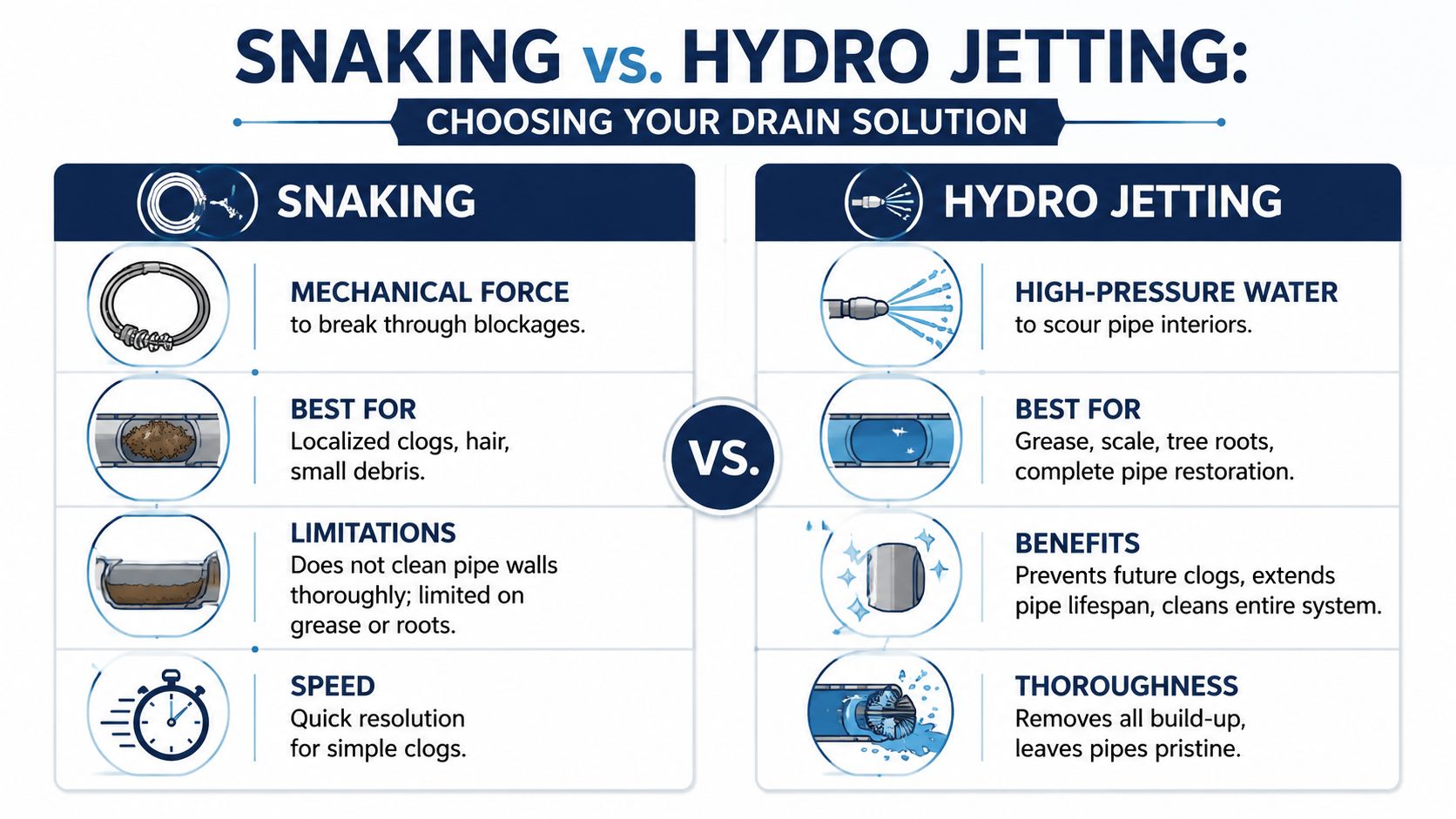
The easiest way to explain it is this. Snaking is like punching a hole through a snowbank so one car can squeeze through. Hydro jetting is like plowing the whole road. Both can restore movement. Only one fully clears the path.
When snaking makes sense
A cable machine is often the practical first tool for a simple blockage.
Use cases usually include:
- A bathroom sink hair clog near the fixture
- A small toilet stoppage caused by paper buildup
- A localized branch drain issue that doesn't involve heavy wall buildup
It's quick, mechanical, and often enough for a one-time clog. If the problem is small and isolated, snaking can solve it without bringing in larger equipment.
When hydro jetting is the better tool
Hydro jetting is for the jobs where the pipe walls are the problem, not just the center of the line.
Hydro jetting uses high-pressure water streams exceeding 4,000 PSI to remove stubborn clogs, grease, roots, and sludge that traditional augering can't remove. Unlike mechanical augering, which only punches through a blockage, hydro jetting cleans the entire interior pipe diameter, as described in Pure Plumbing's Las Vegas hydro jetting service overview.
That difference matters in real houses. If grease coats the line, or mineral scale has narrowed it, or roots have created a recurring catch point, a cable may restore flow for now but leave most of the problem behind.
Side-by-side decision guide
| Method | Best fit | Main limitation |
|---|---|---|
| Snaking | Small, isolated clogs | Doesn't thoroughly clean pipe walls |
| Hydro jetting | Recurring blockages, grease, scale, roots | Needs proper diagnosis first |
What works and what doesn't
Some homeowners assume hydro jetting is automatically the best answer every time. It isn't.
It works well when the line is structurally sound and loaded with buildup. It doesn't solve a pipe belly, a collapse, or physical damage that needs repair. Water pressure can clean. It can't correct bad slope or rebuild a broken section of sewer.
Snaking also gets oversold in the other direction. It's useful, but if a line has years of residue on the walls, repeated snaking often becomes repeat billing instead of a real fix.
The right question isn't “Which tool is stronger?” It's “What is actually inside this pipe, and what condition is the pipe in?”
That's how experienced plumbers make the call. They match the tool to the line, not the other way around.
The Hydro Jetting Process What to Expect During Service
Most homeowners are less worried about the concept of hydro jetting than they are about what the service day will look like. That's fair. You want to know where the plumber will work, how disruptive it'll be, and what happens once the machine starts.
What happens on arrival
The plumber starts by confirming the symptoms and locating the best access point, usually a cleanout. If the line has already been inspected and approved for jetting, equipment gets set up where it can safely feed into the drain or sewer line.
Professional sewer jetting equipment is built to do one thing well. A common operating benchmark in the trade is a 13 HP gasoline motor delivering 3,000 PSI at 4 gallons per minute, which is designed to break up grease, food residue, and fibrous waste while flushing debris toward the main sewer, according to Spartan Tool's guide on sewer jetting pressure and flow.
What you'll hear and notice
Hydro jetting isn't silent. It can be noisy, and the work area can get messy if the crew doesn't control it properly. High-pressure drain cleaning is effective, but the plumber's job is to manage that noise and mess so daily life in the home isn't thrown off more than necessary, as explained in The Water Scrooge's hydro-jetting overview.
A clean service call usually includes:
- Protecting the work area around the cleanout or access point
- Running the hose and nozzle carefully so the line is cleaned methodically
- Flushing debris out rather than leaving loosened material behind
- Cleaning up the area before the crew leaves
If you want a broad overview of how contractors approach this type of service, this resource on get professional drain jetting gives a useful outside look at what homeowners should expect from a proper setup.
What DIY can't safely do
This isn't a homeowner machine rental situation. The pressure involved is serious, and choosing the wrong nozzle, wrong access point, or wrong line can make a bad day worse fast.
A professional doesn't just “spray water down the drain.” They control direction, pressure, hose feed, debris removal, and jobsite cleanup. They also know when to stop because the line needs repair, not more force.
Understanding Hydro Jetting Costs in Las Vegas
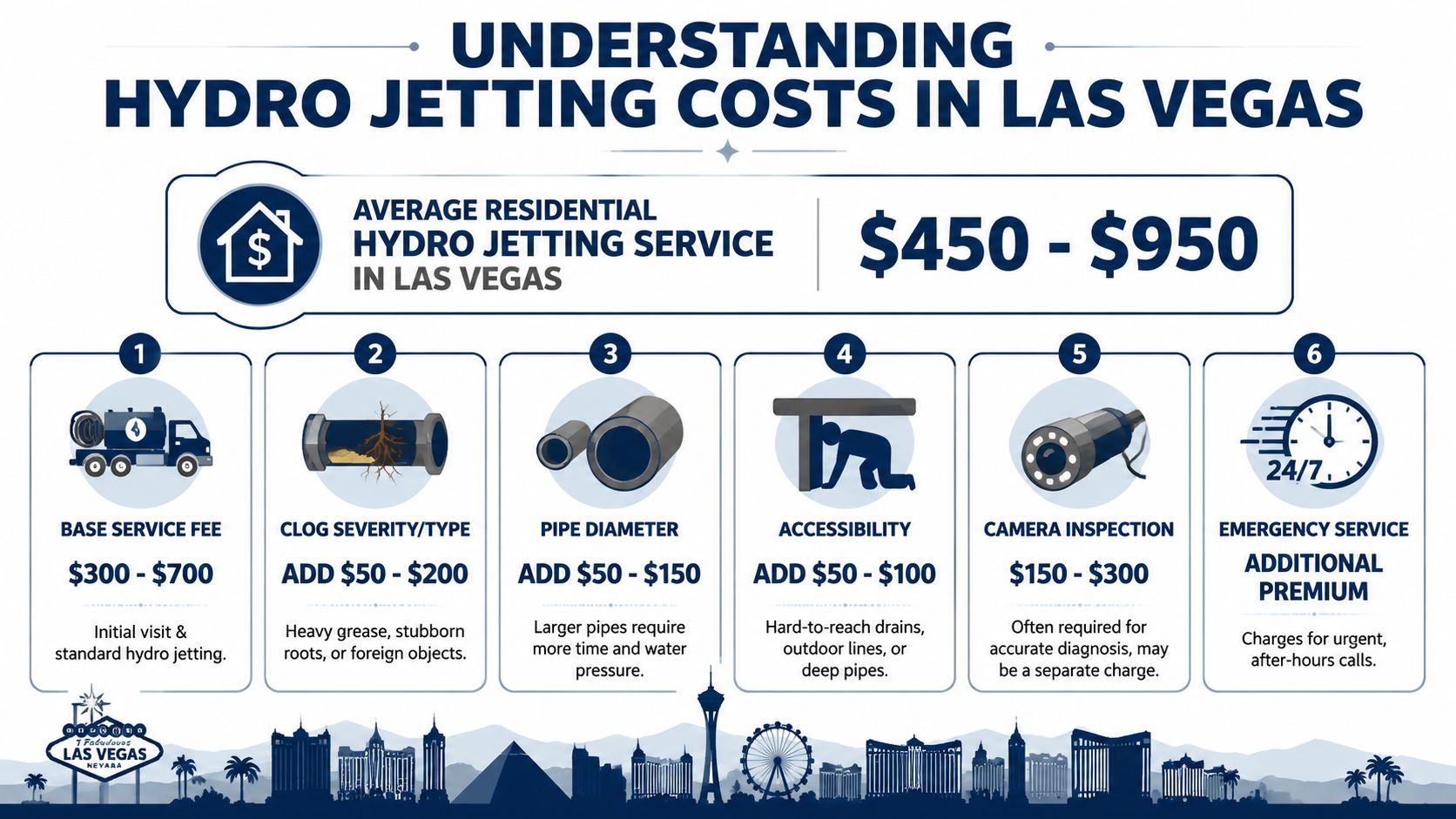
The straightforward local range for hydro jetting a main sewer line in Las Vegas is $250 to $600, according to updated Las Vegas hydro jetting cost data. The biggest factor behind that spread is ease of access to the clogged pipe. Emergency after-hours service can add $100 to $150.
That range is useful, but it helps to know what moves the price up or down in practice.
What affects the final quote
A simple line with easy cleanout access is usually more straightforward than a line hidden behind landscaping, tight access, or a severe blockage.
Common cost factors include:
- Access to the pipe. The easier it is to reach, the simpler the job.
- Severity of the blockage. Heavy buildup takes more time and a more methodical cleaning pass.
- Emergency timing. Night, weekend, and urgent backup calls often cost more.
- Whether diagnosis is needed first. If the line condition is unknown, the inspection step matters.
What honest pricing should sound like
A reputable plumber should be able to explain why the quote is what it is. Not in sales language. In plain trade language.
If a company throws out a low teaser number before asking where the clog is, how the line is accessed, or whether the problem is recurring, be careful. Sewer and drain work isn't one-size-fits-all.
For a more detailed breakdown of what goes into local pricing, this article on the cost of hydro jetting plumbing gives homeowners a better picture of what to ask before booking.
A properly priced jetting job isn't just about today's clog. It's about avoiding repeated service calls and reducing the odds of a backup that causes bigger property damage later.
Why Choose MG Drain Services for Your Plumbing Needs
A hydro jetting call can go sideways fast in an older Las Vegas home. The drain is backing up, the pressure machine is ready, and everyone wants the line cleared that day. If the pipe is brittle, cracked, or already paper-thin from age and corrosion, rushing into jetting can turn a drain problem into a broken sewer line.
That is the standard any drain contractor should be held to. A plumber should know when to clean a line, when to inspect it first, and when to stop because the pipe is too far gone. In older neighborhoods around Las Vegas, Henderson, and North Las Vegas, that judgment matters as much as the equipment.
What local customers should expect
Homeowners and property managers should expect more than a sales pitch and a pressure washer. They should expect:
- Licensed and insured plumbing service
- Journeyman-level field experience
- A camera inspection when the pipe condition is unknown
- Clear quotes and plain-language answers
- Fast response for urgent drain and sewer backups
- Modern diagnostic tools
- Bilingual support for English and Spanish speakers
MG Drain Services LLC applies that standard to hydro jetting work across the Las Vegas Valley, along with sewer camera inspections, drain cleaning, rooter service, and related plumbing repairs.
Why local field experience matters
Las Vegas homes have patterns that out-of-town advice often misses. Hard water scale builds up differently here. Some older lines can handle a proper cleaning. Others cannot. A plumber who sees these systems every week is more likely to catch the warning signs before high-pressure cleaning starts.
That is what homeowners are really paying for. Sound judgment.
A good service call should leave you knowing the condition of the line, the risk of jetting it, and the repair options if cleaning is not the right move. If a company is eager to sell hydro jetting before confirming the pipe can take it, that is a reason to slow the job down and ask better questions.
Frequently Asked Questions About Hydro Jetting
Quick Answers to Your Hydro Jetting Questions
| Question | Short Answer |
|---|---|
| Is hydro jetting safe for every old pipe? | No. Older or brittle lines should be inspected first to confirm they can handle the pressure. |
| Does hydro jetting clear tree roots? | It can remove root intrusion in many cases, but if the pipe is damaged, cleaning alone may not solve the problem. |
| Is hydro jetting better than snaking? | For recurring buildup, yes. For a small isolated clog, a snake may be enough. |
| Can I rent a jetter and do it myself? | That's risky. The pressure is high, and using it without proper diagnosis can damage the line or create a mess inside the home. |
| How do I know the main sewer is the issue? | Multiple slow drains, gurgling toilets, sewer odor, and backups affecting more than one fixture are common warning signs. |
Is hydro jetting worth it for recurring clogs
If the problem keeps returning, hydro jetting is often worth considering because it addresses buildup on the pipe walls instead of only reopening a narrow path. For recurring sewer or drain problems, that distinction is usually what decides whether the fix lasts.
If the issue is a broken pipe, though, cleaning won't replace repair. That's why diagnosis matters first.
A drain can be open and still be unhealthy. Good flow for one week doesn't mean the line is actually clean.
Can hydro jetting remove roots
It can remove root intrusion in many situations, especially when the roots are part of a blockage inside an otherwise serviceable line. But root removal and root prevention aren't the same thing.
If roots are entering through cracks or failed joints, the line may need repair after cleaning. The jetting handles the obstruction. It doesn't seal the opening that let roots in.
How often should a homeowner schedule hydro jetting
There isn't one schedule that fits every property. Some homes need it only when symptoms show up. Others benefit from preventive service because of grease habits, older pipes, past backups, or line configuration.
A property manager with recurring kitchen line issues may schedule maintenance differently than a single-family homeowner with a newer line. The right interval depends on what the camera shows and how the system is being used.
Is DIY hydro jetting a good idea
No. This is one of those jobs where the danger isn't only personal injury. It's also property damage.
A homeowner usually doesn't know the pipe material, structural condition, nozzle choice, or safe operating setup. If the line is brittle, blocked by something solid, or already damaged, DIY pressure can turn a drain cleaning problem into a sewer repair problem.
What should I ask before booking service
Keep it simple and direct.
- Will you inspect the line first if the pipe condition is unknown?
- Are you cleaning a fixture drain or the main sewer line?
- What access point are you using?
- What signs would tell you the line needs repair instead of jetting?
- How do you handle cleanup after the job?
Those answers will tell you a lot about the company before the work even starts.
If your drains keep backing up, or you want a camera inspection before anyone puts pressure into an older sewer line, call MG Drain Services LLC for fast, professional plumbing in Las Vegas. The team serves Las Vegas, Henderson, and North Las Vegas with licensed and insured service, experienced technicians, honest pricing, and bilingual support. To book service or request help with hydro jetting, call 702-480-8070 or visit the MG Drain Services website.