A sulfur-like odor near the stove at 6 a.m. Water under the sink by dinner. A new stain on the wall before the weekend is over. In a Las Vegas home, any one of those signs can leave you asking the same question fast. Is this a gas leak, or is it water?
The answer matters because the first safe step is different for each one. Gas leaks can put people in danger right away and may require evacuation and an emergency call. Water leaks usually give you more time to act, but they can still cause expensive damage to cabinets, flooring, drywall, and the structure of the home if you wait.
Las Vegas adds one complication many national articles miss. Water leaking outside the home may not rise to the surface quickly because local soil can absorb it and hide the problem underground for a long time. That is why homeowners here sometimes have a real leak with no obvious puddle in the yard.
This guide is written for that moment of uncertainty, with a Las Vegas homeowner in mind. The goal is simple. Protect people first, then limit property damage, and know when the problem has moved beyond a DIY check and needs a licensed leak detection professional.
That Unsettling Feeling A Leak in Your Las Vegas Home
You notice something is off, but you cannot tell how serious it is yet. The house smells strange for a moment, a wall looks slightly swollen, or the water heater area feels damp when it should be dry. That uncertainty is what unsettles homeowners most.
Gas and water leaks both start small enough to be missed during a normal day. The difference is what they threaten first. Gas raises an immediate life-safety concern. Water usually gives more warning, but it can spread through drywall, flooring, cabinets, and framing long before the source is obvious.
I've seen homeowners lose time because the first sign did not look dramatic. A faint odor gets blamed on cooking. A soft spot near a baseboard gets written off as old paint. A higher water bill gets ignored for a month. By the time the cause is confirmed, the repair is usually bigger than it needed to be.
Some leak sources also blur the line. A failing appliance can involve water, gas, or both, especially around utility connections. If the problem seems to be near a heater or utility area, it helps to know the warning signs of gas water heater issues before touching anything.
Why the first few minutes matter
The safest response depends on what you are dealing with.
If you suspect gas, protect people first. Leave the home, avoid switches and open flames, and call for help from a safe location.
If you suspect water, act fast to limit damage. Shut off the nearest fixture valve or the main water supply if you can do it safely, then start isolating where the moisture is showing up and what might be feeding it.
A calm first decision prevents a bad situation from getting worse. Guessing does not.
Identifying a Gas Leak The Invisible Danger
A gas leak is the one leak in your home that you should treat as an emergency first and a repair issue second. Don't troubleshoot it casually. Don't wait to “see if the smell goes away.”
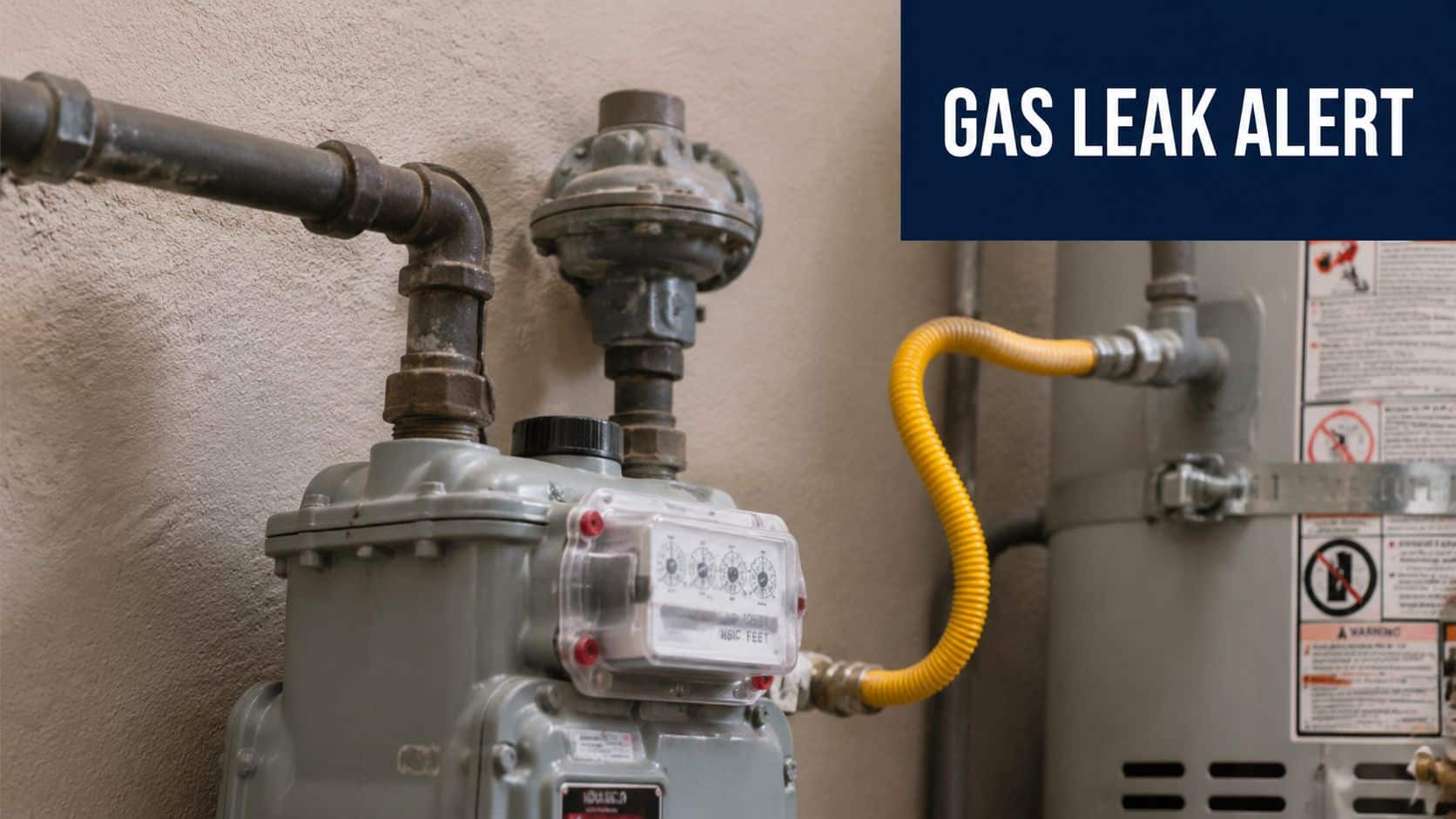
A major 2023 gas pipeline leak near Las Vegas triggered a state of emergency in Nevada, showing how serious gas infrastructure problems can become, as reported by Axios coverage of the Kinder Morgan leak. Even when there's no fire, a leak can force shutdowns, disrupt service, and create immediate danger for anyone nearby.
Signs that point to gas, not water
If you notice any of the following, treat the situation as a potential gas leak:
- Rotten egg smell: Natural gas is naturally odorless, so a sulfur-like odor is added to help people detect leaks.
- Hissing or whistling: Escaping gas often makes noise near a meter, valve, appliance connection, or exposed line.
- Outdoor bubbling or blowing dirt: Gas moving through wet soil or standing water can create bubbling. It can also disturb dirt near a buried line.
- Dead or discolored vegetation: A buried gas leak can affect plant life above the line.
Clark County safety guidance also notes that low-pressure residential gas systems require detection gauges calibrated to 1/10-pound increments, and a sustained pressure drop below that threshold indicates a breach that calls for evacuation and emergency response, as outlined in the Clark County gas piping document.
What to do immediately
If the signs point to gas, follow this order:
- Leave the area immediately.
- Do not use light switches, appliances, garage door openers, phones, or anything that could create a spark while inside.
- Do not try to find the exact source yourself.
- Call 911 and your gas provider from a safe distance.
Practical rule: If you smell gas in a Las Vegas home, your first job is evacuation, not inspection.
A lot of homeowners get hung up on whether the smell is “strong enough” to count. That hesitation causes trouble. If you've also been dealing with appliance concerns, it helps to review common gas water heater issues because venting and fuel-related symptoms are often confused with plumbing leaks.
What doesn't work
Don't test a gas leak with a flame. Don't stay inside to open windows if you already suspect gas. Don't assume a carbon monoxide alarm confirms or clears a natural gas leak. Gas diagnosis belongs to the utility and qualified professionals with proper testing equipment.
Detecting a Water Leak The Silent Destroyer
A water leak in Las Vegas often stays hidden longer than homeowners expect. By the time you see a stain on drywall or feel a soft spot in the floor, the leak may have been active for weeks, especially if water is moving under a slab or through the valley's porous soil instead of surfacing in the yard.
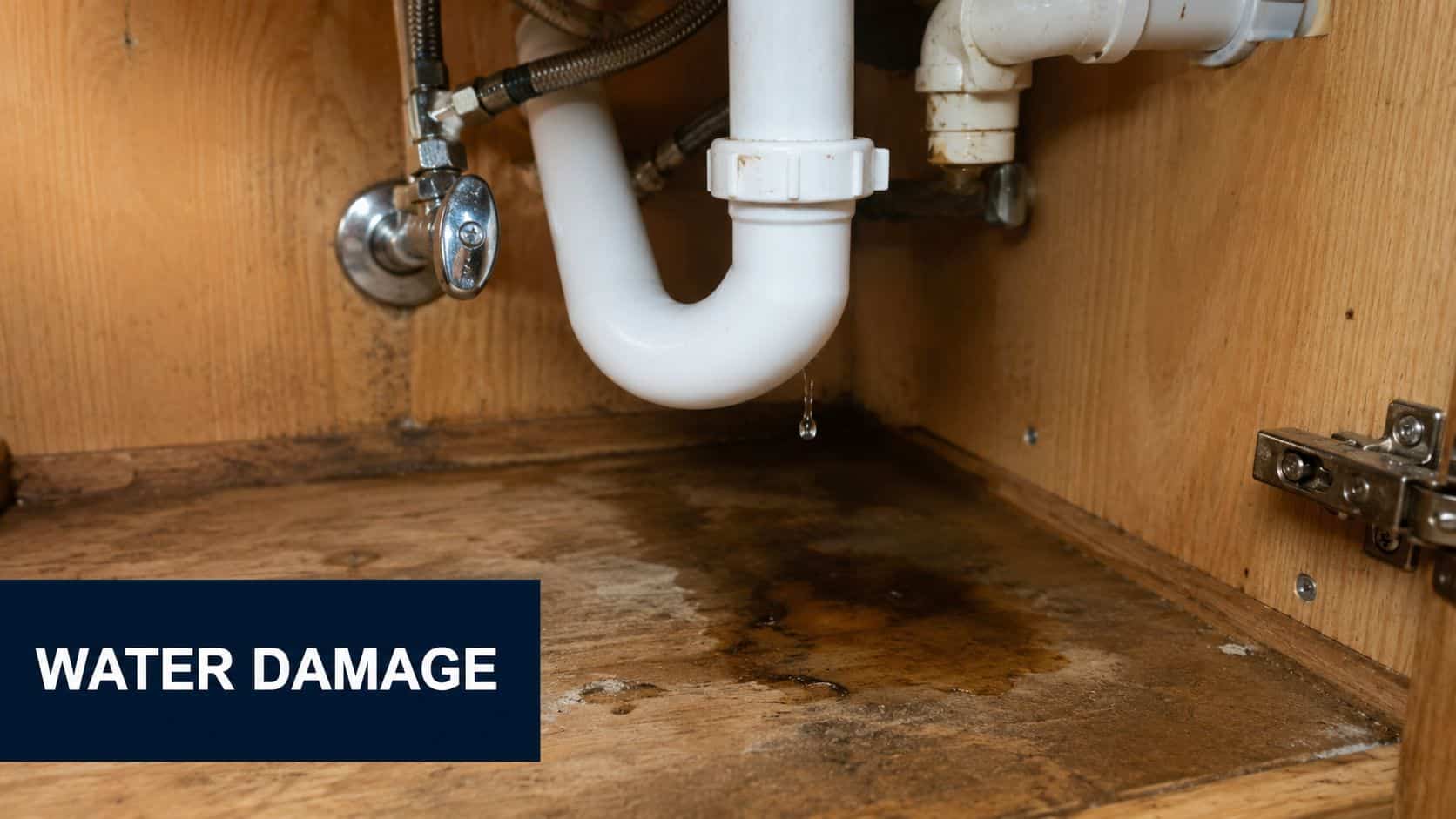
The Las Vegas Valley Water District estimates that about 70,000 residential customers experience leaks annually, wasting about 600 million gallons of water, and undetected leaks can raise a water bill by 10% or more without a change in household use, according to the district's Las Vegas leak awareness post.
Signs that point to water
Water leaks tend to show up in patterns. Some are visible inside the home. Others only show up on the water bill.
- Damp spots or staining: Check ceilings, baseboards, cabinet bottoms, drywall, and around tubs or showers.
- Musty odor: Trapped moisture behind walls, under flooring, or inside cabinets often smells before it shows.
- Warped flooring or swollen trim: Wood, laminate, and MDF trim absorb moisture fast and change shape early.
- Running water sound when fixtures are off: That can point to a supply leak in a wall, ceiling, crawlspace, or under the slab.
- Unexpected bill increase: In Las Vegas, this is often the first warning sign of a service line or irrigation leak outside the house.
Mold can begin growing within 24 to 48 hours after water exposure, according to the EPA mold cleanup guidance. That short window is why hidden leaks behind finishes need prompt attention, even when the water damage looks minor.
Why homeowners miss exterior leaks in Las Vegas
Outside leaks are harder to catch here than in many other cities. In much of the Las Vegas area, porous soil absorbs escaping water before it reaches the surface. A homeowner may have a leaking service line, pressure line, or irrigation branch and never see mud, pooling, or a green patch right away.
That local soil condition changes the usual advice. A quick walk around the yard is not enough. If the bill is climbing, pressure has dropped, or you hear water with everything shut off, start with this guide on how to detect water leaks and then bring in professional testing if the clues still do not line up.
A small leak can still turn into cabinet damage, flooring failure, mold growth, and a much larger repair bill.
What you should do first
If you are confident the issue is water and not gas, act in this order:
- Shut off the main water valve if the leak is active, spreading, or feeding a damaged line.
- Protect nearby materials such as rugs, boxes, furniture, and anything stored in cabinets or on the floor.
- Contain the water temporarily with towels, buckets, or by isolating the fixture if it has a working stop valve.
- Call for leak detection if the source is hidden, under the slab, outside, or behind finished surfaces.
Flooring is one place where hidden water gets expensive fast. If water has reached wood floors, this guide on repairing water damaged hardwood floors gives a useful look at what restoration can involve after the plumbing issue is resolved.
Gas Leak vs Water Leak Key Differences at a Glance
When a homeowner is stressed, a side-by-side comparison helps more than a long explanation.
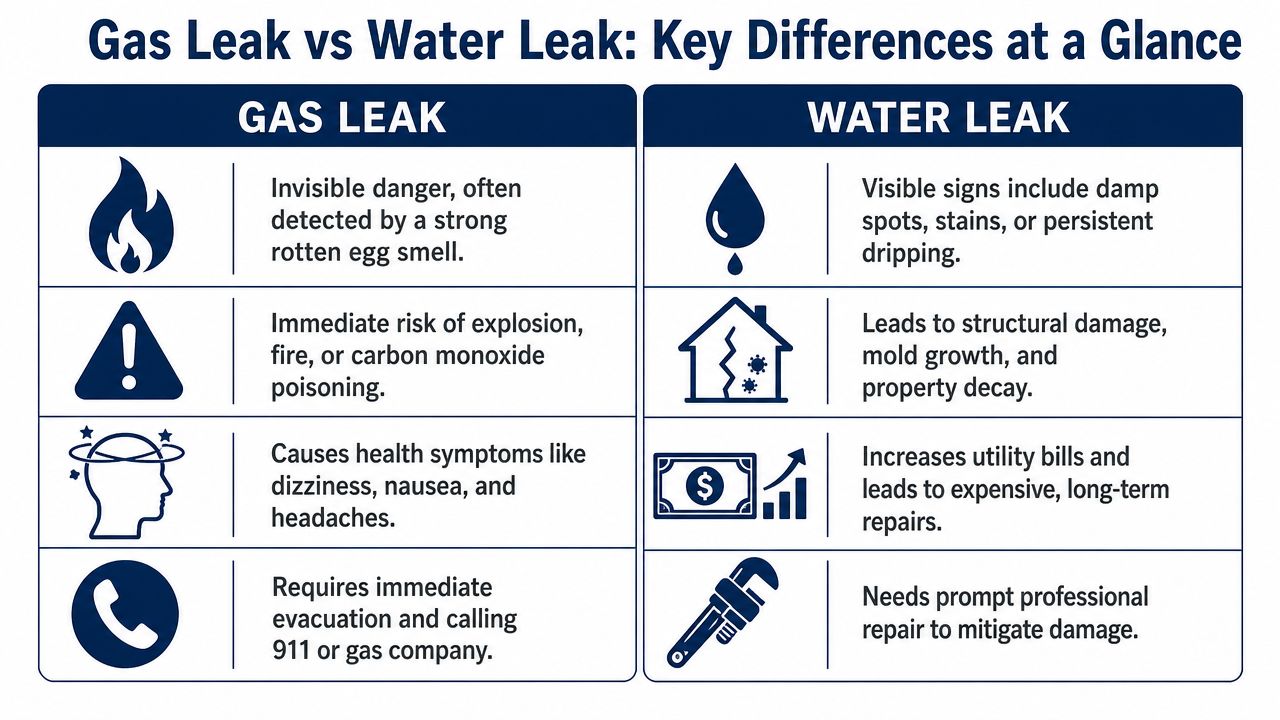
Fast comparison for Las Vegas homeowners
| Symptom | Gas Leak | Water Leak |
|---|---|---|
| Smell | Rotten egg or sulfur odor | Musty odor, damp smell, or no odor at all |
| Sound | Hissing, whistling, rushing near gas line | Dripping, trickling, or running water sound |
| Visible clues | Bubbling outdoors, blowing dirt, dead vegetation | Stains, damp drywall, warped flooring, pooling water |
| Primary risk | Fire, explosion, life-safety emergency | Property damage, mold, material deterioration |
| First action | Evacuate and call 911 and gas provider | Shut off water supply if safe and call a plumber |
| DIY role | None beyond evacuation | Limited to shutoff and basic damage control |
The practical difference
Gas is about immediate danger to people. Water is about fast-moving damage to the structure and finishes. That's the core distinction.
A homeowner can sometimes limit water damage by shutting off a valve and containing the area. A homeowner should never try to diagnose an active gas leak in place. In Las Vegas homes, both situations need professional attention, but the timeline is different. Gas gets an emergency response. Water gets a rapid plumbing response before hidden damage spreads further.
When to Call a Las Vegas Leak Detection Professional
A hidden leak in Las Vegas rarely stays small for long. With our porous desert soil, water can travel away from the break instead of surfacing where the pipe failed. Homeowners often look for a puddle and never see one. Meanwhile, the slab, foundation soil, drywall, or flooring keeps taking damage.
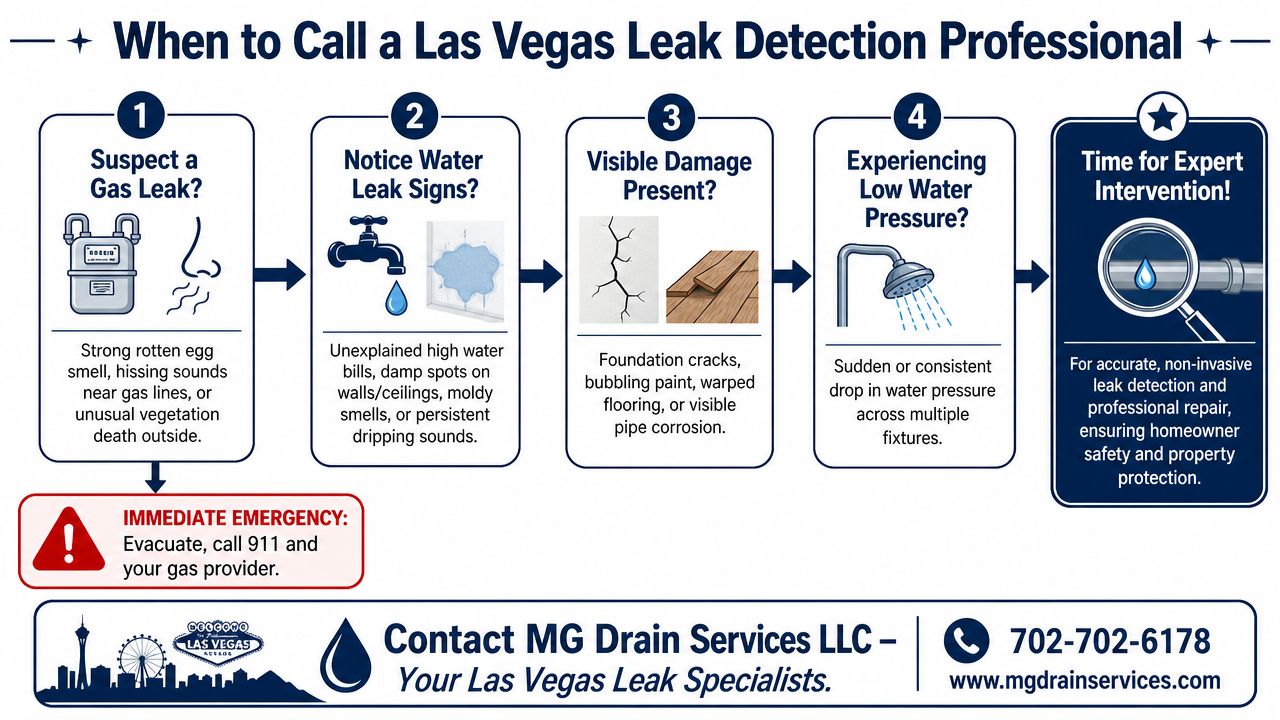
Professional leak detection makes sense once the problem stops being visible and straightforward. If the source is behind a wall, under a slab, out in the yard, or connected to gas piping, guessing gets expensive fast.
Cases where you shouldn't wait
Call a professional if you notice any of the following:
- A leak you can't pinpoint: Hidden wall leaks, slab leaks, and underground yard leaks need diagnostic equipment, not exploratory demolition.
- Recurring damage: A stain dries and returns, flooring keeps lifting, or your water pressure keeps changing without a clear cause.
- Signs in more than one area: Two or more fixtures losing pressure at the same time can point to a larger supply issue.
- Unexplained outdoor moisture: In Las Vegas, porous soil can absorb and spread water before it reaches the surface, so soft spots, settling, or a higher water bill can matter even without standing water.
- Any gas piping concern: Gas leak work is a safety call, not a trial-and-error repair.
Local code matters too. Under Las Vegas amendments, gas piping installed under a slab must be in gastight conduit so it can be removed and replaced, and exposed gas piping must be at least six inches above grade, as stated in the Las Vegas plumbing code amendments. If gas piping is part of the problem, the inspection and repair both need to be code-aware.
What professional leak detection actually uses
A trained plumbing team may use:
- Electronic listening devices to isolate leak noise in pressurized water lines
- Color video cameras for sewer and drain inspection
- Pressure testing equipment when line conditions allow it
- Line locating tools to trace buried piping before anyone starts cutting concrete or digging
That equipment matters in Las Vegas because leak paths can be misleading. Water may migrate through soil, show up far from the break, or disappear below grade while the meter keeps spinning. A proper inspection narrows the failure point before repair begins.
If a plumbing leak has already soaked carpet, baseboards, or drywall, drying needs to start right away. Outside expert advice on water leaks can help homeowners understand the extraction side while the plumbing repair is being handled.
Choosing the right help in Las Vegas
Look for a licensed and insured plumber who can explain findings clearly, show you how the leak was confirmed, and lay out repair options based on access, code, and cost. A good contractor should be able to tell you whether the job calls for a spot repair, reroute, wall access, slab work, or a gas-line specialist approach.
For homeowners seeking local service with those capabilities, companies like MG Drain Services LLC provide plumbing repair, drain cleaning, sewer camera inspection, hydro-jetting, and water leak detection in Las Vegas, Henderson, and North Las Vegas. If you want to understand the diagnostic side before booking, review what a leak detection specialist does so you know what questions to ask during the visit.
If the leak is hidden, the cheapest first guess often turns into the most expensive repair.
Proactive Maintenance to Prevent Future Leaks
Leak prevention in Las Vegas isn't fancy. It's mostly about catching wear early and not ignoring small warnings. The desert climate, hot attics, sun exposure, and aging fixtures all put stress on plumbing components over time.
A practical homeowner checklist
- Know your shutoffs: Find the main water valve and know how to close it. Know where the gas shutoff is, but don't treat gas shutoff as a substitute for emergency response if you suspect a leak.
- Inspect appliance connections: Check washing machine hoses, dishwasher lines, and sink supplies for corrosion, bulging, or slow drips.
- Watch exterior signs: Dead patches, unexplained moisture, or shifting soil deserve a closer look in Las Vegas.
- Pay attention to drain behavior: Slow drains and recurring backups can add stress to the system and point to larger problems that need drain cleaning Las Vegas homeowners often postpone.
- Check around water heaters and shutoff valves: Small leaks at fittings tend to start there.
What helps and what doesn't
Annual visual checks help. So does acting on small stains before they become major repairs. What doesn't help is waiting for a dramatic failure. Most hidden leaks announce themselves subtly.
For a broader home envelope perspective, these expert tips for water damage protection are useful because leak prevention isn't only about pipes. Water often moves through the house after the first failure, and secondary damage is what turns a manageable repair into a long cleanup.
If you own rental property in Henderson or North Las Vegas, routine inspections matter even more. Tenants may notice a smell, stain, or soft spot but not recognize what it means.
Las Vegas Homeowner Leak Safety FAQs
How can I tell whether I have a gas leak or a water leak before a plumber arrives?
Start with the risk level. A suspected gas leak gets treated as an emergency every time. If you smell rotten eggs, hear hissing near a gas appliance or line, or suddenly feel lightheaded indoors, leave the house and call 911 and your gas utility from outside.
A water leak usually gives you more time to act, but it can still do serious damage. Watch for a sudden drop in water pressure, a meter that moves when no fixtures are running, warm spots on the floor, staining that keeps returning, or a water bill that rises without a clear reason.
Is it safe to stay home if I only smell gas outside?
Sometimes the odor is coming from a nearby source, but homeowners should not make that call on smell alone. If the odor is strong near your meter, along an exterior wall, or around the yard, keep people and pets away from the area. Do not flip switches, start a car in the garage, or use anything that could create a spark nearby. Call your gas provider and follow their instructions.
Why do some Las Vegas water leaks stay hidden for so long?
Las Vegas soil is part of the problem. In many neighborhoods, the ground absorbs and disperses leaking water instead of forcing it straight to the surface. That means a yard line or slab leak can run for a long time before you see pooling. By the time the signs show up, the leak may already have washed out soil, affected the slab, or spread moisture under flooring.
That local detail gets missed in a lot of generic leak advice.
If my water bill jumps but I do not see any damage, should I still call?
Yes. A higher bill with no clear usage change often points to a hidden leak. In Las Vegas, that may mean water is escaping into porous soil, under a slab, or behind a wall where it stays out of sight. Waiting to “see if it gets worse” usually turns a location job into a repair job plus restoration.
Can I use my house shutoffs myself?
For water, yes, if you know where the main valve is and can reach it safely. Every homeowner should know that location before there is a leak.
For gas, know where the shutoff is, but do not treat that as your first response plan during a suspected leak. Evacuation and emergency calls come first. Gas shutoff is a task for the utility or emergency personnel unless you have been specifically trained and the situation is clearly safe.
Do small signs like one soft floorboard or a faint stain matter?
They do. Small signs are often the first warning you get with hidden plumbing leaks. One soft baseboard, a cabinet floor that swells, or a stain that dries and returns can point to an active problem that is traveling along framing or under finished surfaces. Those are the calls I recommend making early, because the repair is usually simpler before materials start failing.
When should I skip troubleshooting and call a professional right away?
Call immediately for any gas odor, hissing, unexplained dizziness indoors, active water coming through ceilings or walls, or signs of a slab or yard leak with no visible source. Call the same day for unexplained pressure loss, a fast-moving water meter, repeat staining, or a bill spike you cannot account for.
If you need fast, professional plumbing in Las Vegas, Henderson, or North Las Vegas, call MG Drain Services LLC at 702-480-8070. The team is licensed and insured and handles leak detection, plumbing repairs, drain cleaning, sewer camera inspections, and emergency plumbing.