
If you're in an older Las Vegas, Henderson, or North Las Vegas home and you're dealing with weak shower pressure, brown water at the tap, or one small leak after another, you're probably past the point of a simple repair. Repiping is often the fix that stops the cycle for good. In Las Vegas, hard water and aging plumbing put steady stress on supply lines, and the longer those pipes stay in service, the more likely you are to face water damage, wall openings, and repeat service calls.
Homeowners usually don't start out looking for a whole-house pipe replacement. They start with a stain under a cabinet, a noisy wall, or a faucet that never seems to run clear. Then the same problems keep returning. That's when it makes sense to look at the full system instead of treating each symptom one at a time. If you're trying to budget the job, a detailed local plumbing cost estimate helps you compare repair versus replacement before the next leak decides for you.
Is It Time to Replace the Pipes in Your Las Vegas Home
A common call in Las Vegas goes like this. The kitchen sink starts running with a brown tint in the morning, the guest bathroom has noticeably lower pressure than the master bath, and a small leak showed up behind a vanity a few months after another repair in the laundry room. None of those problems feels like a full-system issue at first. Together, they usually are.
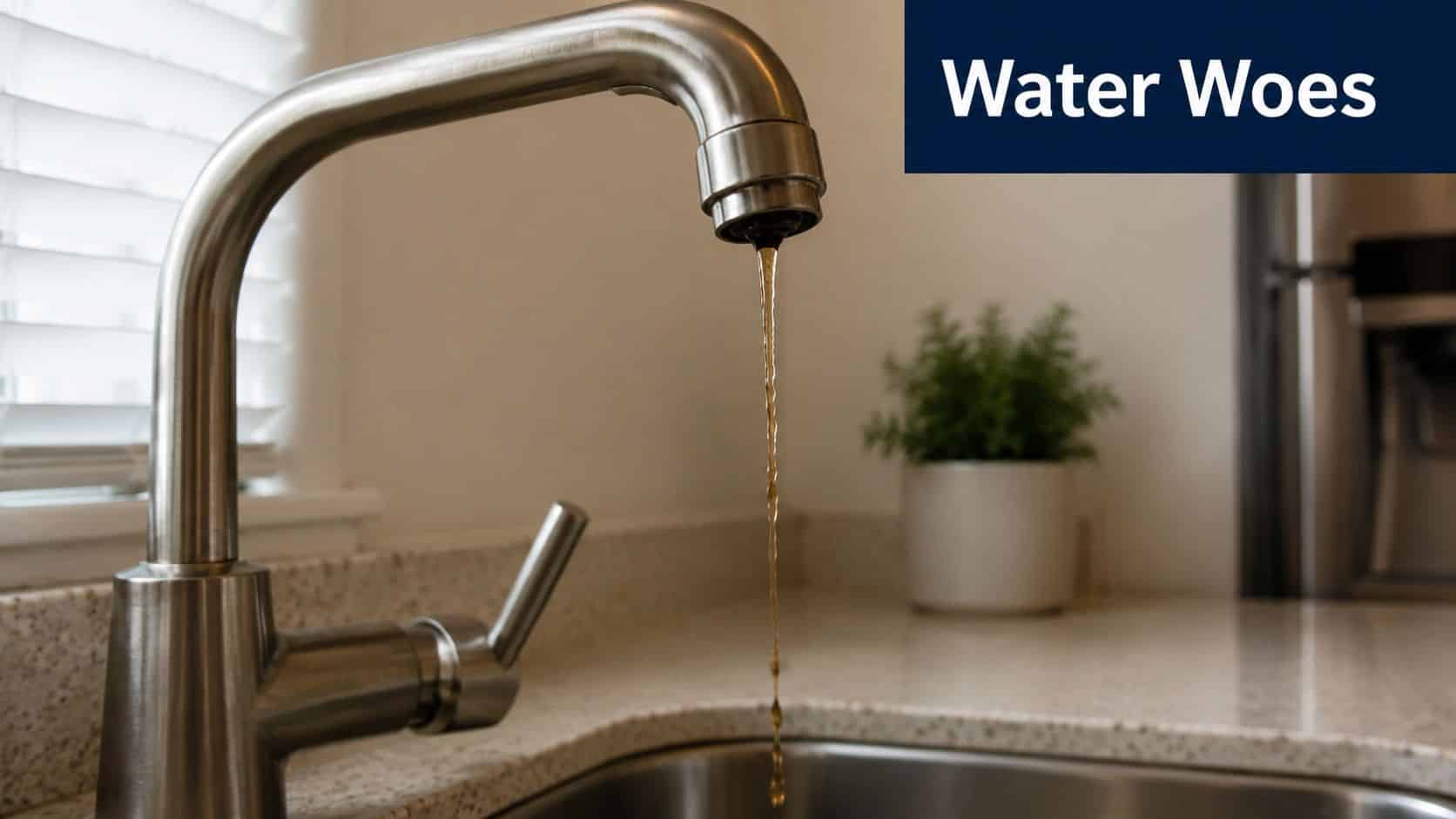
In older parts of Las Vegas and Henderson, that pattern often points to aging supply lines that have reached the stage where spot repairs stop making financial sense. One leak can be repaired cleanly. Two or three leaks in different parts of the house usually mean the pipe walls are failing in more than one place. Hard water doesn't help. Mineral buildup narrows the inside of the pipe, and restricted flow puts the weakness on display every time someone turns on a fixture.
What repiping actually fixes
Repiping replaces the aging water distribution lines so the home stops relying on worn material hidden in walls, ceilings, and crawlspaces. That changes the conversation from "Which leak is next?" to "How do we get this house back to reliable water service?"
Homeowners usually notice improvements in day-to-day use right away:
- More consistent pressure at showers, sinks, and hose bibs
- Cleaner-looking water when discolored flow was tied to deteriorating pipes
- Fewer emergency calls for pinhole leaks and hidden wall damage
- Less guesswork about whether the next repair is worth paying for
Practical rule: If plumbing problems are showing up in multiple rooms, treat the house like a system. Isolated repairs don't fix system-wide pipe wear.
A repipe sounds big because it is a real construction project. But done correctly, it's a controlled project with a start, a schedule, and a final walkthrough. For many Las Vegas homeowners, that's a much easier path than living around recurring leaks for another year.
Warning Signs You Need a Repiping Service
You turn on the shower and the pressure drops when someone opens the kitchen faucet. A week later, there is a damp spot under a bathroom cabinet. Then the water at one sink starts coming out yellow or brown for a few seconds. That pattern usually points to more than a single bad fixture or one isolated leak.
The key question is whether the problem stays in one place or shows up across the house. A clogged aerator, a worn stop valve, or a bad cartridge can cause local trouble. A whole-house pattern usually means the supply piping itself is aging, scaling up, corroding, or failing at multiple points.
Signs the piping system may be wearing out
Watch for symptoms that involve more than one room or keep coming back after repairs:
- Low pressure at multiple fixtures. If the shower, lavatory, and kitchen sink all feel weak, the restriction may be inside the water lines. In Las Vegas, hard water often leaves mineral buildup that cuts down the inside diameter of older pipe.
- Discolored water. Brown, yellow, or rusty-looking water that returns after flushing the line can point to pipe deterioration inside the system.
- Repeat leaks in different areas. One leak can be repaired and monitored. Leaks showing up in separate bathrooms, ceilings, or walls usually mean the pipe material is breaking down in more than one location.
- Noise in the walls. Banging, rattling, or whistling can come from pressure problems, loose supports, or narrowed piping that is forcing water through tighter passages.
- Moisture damage around cabinets or drywall. Bubbling paint, swollen base trim, soft drywall, or musty smells often mean water has been escaping for longer than it first appears.
A single symptom does not always mean the house needs a full repipe. Several of them together change the conversation.
Why homeowners wait too long
Many homeowners do what makes sense at first. They fix the visible leak, dry the area, patch the wall, and move on. The problem is that older piping systems rarely fail all at once. They fail in stages, and each repair exposes the next weak section.
That is where repiping becomes a practical decision, not an overreaction. If you are paying for leak repair, drywall opening, paint touch-up, and time without water every few months, the actual cost is no longer just the pipe repair. It is the repeated disruption to daily life, plus the wall and cabinet repairs that follow every new leak.
That second concern matters. Homeowners often ask who repairs the walls after access is opened. In many repipe projects, the plumbing crew handles the pipe replacement and any necessary access cuts, but drywall patching and finish work may be handled separately unless it is clearly included in the scope. Ask that question before the job starts, not after the walls are open.
If the same house keeps having water line problems in different places, treat it like a system issue.
What you can check before calling
A few simple checks can help you describe the problem clearly:
- Test several fixtures at the same time. Run water in two or three areas and note whether pressure drops across the house.
- Compare hot and cold water. If one side performs worse, that helps narrow down where the restriction or deterioration may be.
- Track where leaks have happened. A kitchen leak and a separate bathroom leak matter more than the same loose connection repaired twice.
- Look inside cabinets and at wall bases. Staining, swelling, or odor often shows up before major visible damage.
If the signs point beyond one fixture or one accessible repair, water leak detection in Las Vegas can help confirm whether you are dealing with an isolated failure or a house-wide piping problem that makes repiping the smarter fix.
PEX vs Copper The Best Materials for Repiping
Material choice affects more than price. It affects how much wall access the crew needs, how long the work takes, and how well the new system holds up under Las Vegas water conditions. For most whole-home repipes here, the decision is between PEX and copper.
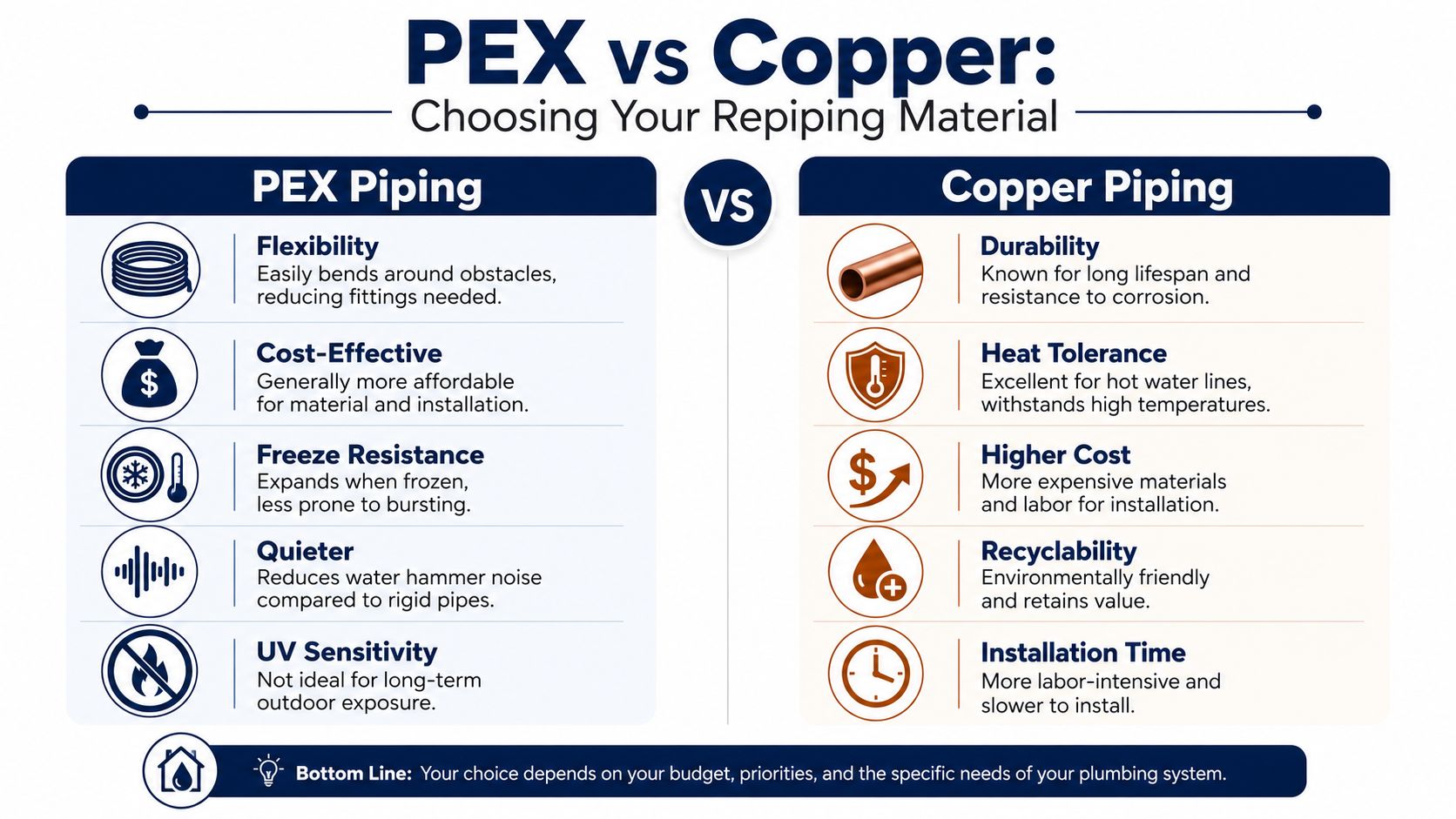
Side-by-side comparison
| Material | What it does well | Trade-offs that matter in Las Vegas |
|---|---|---|
| PEX | Flexible routing, fewer fittings, faster installation, good resistance to scale buildup | Not a good choice where pipe will be exposed to sunlight for long periods |
| Copper | Long service life, handles heat well, familiar material to many homeowners | Higher material cost, more labor to install, can develop pinhole leaks under some water conditions |
PEX usually makes the job easier to route through an existing house. That matters in repiping because easier routing often means fewer access openings and less time with crews moving through the home. Homeowners feel that difference in real life, not just on the estimate.
Copper still has a place. Some owners prefer it because it is a traditional material with a long track record, and some layouts are well suited to it. The trade-off is cost and labor. Copper is rigid, every change in direction needs more precision, and installation takes longer.
Las Vegas water conditions matter here too. Hard water can be rough on plumbing systems over time. PEX generally handles scale-related issues better, while copper can be more vulnerable in homes where water chemistry contributes to corrosion. If the project also involves supply problems before water even reaches the house, a main water line replacement in Las Vegas may need to be reviewed separately from the interior repipe.
Cost matters, but so does disruption
Homeowners often focus on the pipe price first. In practice, labor and access work usually drive the bigger difference between these two options.
PEX is flexible, so crews can often run it with fewer fittings and less cutting into finishes. Copper takes more time because it must be measured, cut, and joined in a more rigid layout. That extra labor can raise the price, and it can also add to the inconvenience inside the home during the project.
That is one reason PEX has become common in residential repiping. Analysts expect continued growth in its use, with the global PEX pipe market projected to be valued at $2.20 billion in 2025 and to grow substantially over the following decade. Homeowners are not choosing it because it is trendy. They are choosing it because it often gives them a practical balance of cost, installation speed, and performance.
Which one makes sense for most homes
For many Las Vegas homeowners, PEX is the more practical repipe material. It usually costs less to install, works well with local water conditions, and helps reduce the amount of time the house is under construction.
Copper is still a valid choice. It makes sense for homeowners who strongly prefer it, for certain system designs, or for projects where its higher cost is not a concern. The right answer is the one that fits the house, the budget, and the owner's expectations about disruption and finish repair. Those details should be settled before the first hole is cut, not after the work starts.
The Repiping Process From Start to Finish
You can live through a repipe, but you should know what the week looks like before anyone cuts into a wall. Homeowners usually ask the same practical questions first. How long will the water be off each day, how much drywall will be opened, and who handles the repair work after the plumbing is done.
What happens before the first wall is opened
A proper repipe starts with a walk-through of the home, a fixture count, and a route plan for the new lines. The layout matters. A single-story house with easy attic access is a very different project from a two-story home with multiple bathrooms and long pipe runs.
That planning stage should spell out where access holes are likely, how the crew will stage the work, and when the final tie-in will happen. If the property also has trouble on the incoming service line, the inside repipe may not be the whole answer. In that case, main water line replacement in Las Vegas may need to be handled as part of the same project.
Daily water shutoffs. What to expect
This is the part many homeowners are most anxious about, and they are right to ask. In most repipe jobs, the house is not without water for days at a time, but there are scheduled shutoff periods while the crew reroutes lines and makes tie-ins.
A good contractor explains that schedule clearly before work starts. In many homes, water is off during part of the workday and restored before the crew leaves. That lets families stay in the house, but it still takes planning.
For a smoother week, homeowners should:
- Fill a few containers in the morning for drinking and basic cleanup
- Use showers and bathrooms before the day's shutoff window
- Ask for the daily tie-in schedule, not just the total project length
- Mention medical needs, small children, or anyone in the home who cannot go long without running water
Clear scheduling lowers stress. People handle disruption much better when they know exactly when the water goes off and when it comes back on.
Wall access and who repairs it afterward
Repiping requires access to the pipe routes. That usually means opening drywall in selected walls or ceilings. Careful routing and clean cuts keep the damage controlled, but no honest plumber should promise a whole-house repipe with zero finish disruption.
The important question is not whether walls will be opened. It is who is responsible for putting them back.
Some plumbing companies do the pipe work only and leave patching to the homeowner. Others include basic wall patching in their scope, while paint and texture matching may still be separate. Those details need to be written into the estimate before the job begins. That avoids the common surprise at the end of the project, when the plumbing is finished but the house still needs drywall, texture, or paint work.
MG Drain Services LLC is a local licensed and insured plumbing company that handles plumbing repairs, leak diagnosis, and pipe replacement work with experienced technicians and clear quotes. Homeowners planning larger pipe upgrades sometimes also look at related protection steps, including the benefits of insulating home plumbing in exposed areas.
Final testing and walkthrough
At the end of the job, the new system should be pressure-tested and run fixture by fixture. Plumbers should check shutoff valves, confirm hot and cold are properly connected, and verify that flow is consistent throughout the house.
The final walkthrough should also cover cleanup, any wall openings that still need repair, and what happens next if patching or paint is not part of the plumbing contract. A repipe goes much smoother for the homeowner when those last details are settled before signoff.
Comprehensive Plumbing Solutions for Your Property
Repiping solves supply-line failure, but it's only one part of protecting an older Las Vegas property. Homes in Las Vegas, Henderson, and North Las Vegas often have more than one aging-plumbing issue at the same time. A house with tired water lines may also have scale inside drain lines, sewer concerns, or a hidden slab leak.
The services that support a smarter repair plan
Before a major pipe project, sewer diagnostics can reveal whether the home's drain system has its own problems. A color camera inspection helps confirm whether slow fixtures are related to supply pressure, drain condition, or both. Hydro-jetting can also clear heavy buildup from drain lines where years of grease, soap, and mineral debris have narrowed the pipe.
Other properties need a broader maintenance plan, not just one repair. That may include leak detection, fixture replacement, shutoff valve upgrades, or evaluating older cast iron and ABS transitions. On the prevention side, homeowners who want to reduce temperature-related stress on exposed lines can review the benefits of insulating home plumbing as part of a more complete plumbing protection plan.
A house with aging plumbing usually doesn't have one isolated weakness. It has a pattern. The right contractor looks for the pattern before recommending the fix.
That wider view matters for landlords, small commercial owners, and property managers across Las Vegas. The immediate job may be a leak, but the long-term savings often come from solving the underlying plumbing picture once instead of dispatching repeated repairs all year.
How to Choose a Repiping Plumber in Las Vegas
A repipe is not the job to buy on the lowest number alone. In Las Vegas, the right contractor is the one who answers the uncomfortable questions clearly before work starts. If a company gets vague about access cuts, restoration, scheduling, or pricing, expect problems once the walls are open.
Questions worth asking before you sign
Use these questions when you're comparing plumbers in Las Vegas:
- Are you licensed and insured in Nevada? If the answer isn't immediate and clear, keep looking.
- Will I get a detailed written quote? You want material scope, access expectations, exclusions, and cleanup spelled out.
- Who will perform the work? Ask whether the crew are company technicians or subcontractors.
- How will daily water shutoffs be handled? A serious contractor should tell you when water will be off and when it will be restored.
- What happens to the walls afterward? This matters more than many homeowners realize.
- Do you offer clear communication in English and Spanish if needed? In Las Vegas, bilingual support can make the project much easier for many households.
Don't gloss over cosmetic restoration
One of the biggest homeowner complaints after repiping isn't the plumbing. It's the finish work. Cosmetic restoration can exceed $1,000 when it's left unresolved, while top-tier plumbers often include patching and minor painting in their labor warranty to return walls to their pre-job condition, as explained in this repiping house guide covering wall restoration expectations.
That's why the wall question belongs in the estimate conversation, not in a follow-up call after the crew is gone.
What a solid local company should offer
Look for a local Las Vegas plumbing company that is licensed and insured, uses experienced technicians, responds quickly, and gives honest pricing without hidden fees. Family-owned companies often stand out here because they depend on reputation, not one-time volume. If you're in Henderson, North Las Vegas, Summerlin, or elsewhere in the valley, local knowledge matters. So does straightforward communication.
If your home has recurring leaks, poor pressure, or discolored water, don't keep paying for temporary fixes that don't last.
Call MG Drain Services LLC for fast, professional plumbing in Las Vegas. To discuss a repiping project, ask questions about water shutoff planning, or book an inspection for your home in Las Vegas, Henderson, or North Las Vegas, call 702-480-8070 or visit mgdrainservices.com. Licensed and insured, with experienced technicians, honest pricing, and real field expertise, the team can help you solve the problem correctly the first time.