A Las Vegas morning gets busy fast. You're getting ready for work, the kitchen sink won't drain, the toilet makes a low gurgling sound, and now you're wondering if this is a simple clog or the start of a much bigger plumbing mess. That's exactly why a Plumbing Maintenance Checklist for Las Vegas Homeowners matters. In Las Vegas, Henderson, and North Las Vegas, plumbing problems don't behave like they do in milder, softer-water cities.
Desert heat, hard water, and older plumbing in established neighborhoods create a different set of risks. Some are annoying. Some get expensive fast. The good news is that the right maintenance routine can catch the small problems before they turn into sewer backups, slab leak damage, or emergency weekend calls.
Your Essential Plumbing Maintenance Checklist Starts Here
A lot of homeowners in Las Vegas wait until the drain is already backing up. That's understandable. A slow sink or tub doesn't feel urgent until it starts affecting the rest of the house. The trouble is that plumbing systems in the valley usually give warnings before they fail. Slow drains, phantom toilet refills, water spots, and recurring stoppages are those warnings.
This checklist is built for local conditions, not generic advice copied from colder states. Las Vegas homes deal with mineral-heavy water, intense summer heat, and older sewer systems in many neighborhoods. If you've been battling chalky residue on fixtures, it's worth understanding how mineral deposits behave in the home. This guide on removing hard water stains helps explain what buildup looks like at the surface. Inside drain lines, that same kind of scale can turn a minor clog into a recurring one.
What to check every month
- Listen for fixture changes: A toilet that starts gurgling or a sink that drains slower than usual is often the first clue that flow is restricted.
- Watch the water bill: A higher bill with no change in usage can point to a leak or a toilet that's running.
- Check under sinks: Look for damp cabinet floors, corrosion on supply stops, or staining around the trap.
- Run every fixture: Guest bathrooms and unused tubs should still get regular use so traps stay sealed and odors don't come back through the drain.
Practical rule: In Las Vegas, recurring plumbing symptoms rarely fix themselves. They usually get louder, slower, or more expensive.
What to check seasonally in Las Vegas
Before the hottest part of the year, inspect exposed plumbing, shutoff valves, outdoor hose bibs, and drain performance. Summer amplifies weaknesses. What worked in spring can fail in heat.
If your home is older, especially in parts of Las Vegas, Henderson, or North Las Vegas with original drain lines, add sewer maintenance to the list. That's where the big savings usually happen.
Why Las Vegas Drains Get Clogged So Often
Drain problems in Las Vegas are rarely just about “something stuck in the pipe.” The underlying issue is usually what the pipe has been dealing with for years. Mineral content, pipe age, grease, hair, soap residue, and desert heat all combine to make clogs harder and more frequent.
Hard water changes how clogs form
Las Vegas hard water leaves scale behind. Over time, that mineral layer narrows the inside of the pipe and roughens the surface. Once the wall of the drain line gets rough, debris catches more easily. Grease sticks faster. Soap scum hangs on. Hair binds up where a smoother pipe might have let it pass through.
Current guidance for Las Vegas properties often misses an important local detail. Hard water in this market is listed at approximately 140–180 ppm, and industry data cited in this market says quarterly to semi-annual hydro-jetting may be necessary to stop grease-mineral bonding that leads to recurring blockages, while basic snaking can't remove that scale buildup, according to Greater Nevada Mortgage's home maintenance manual.
That's the part many homeowners don't hear until after they've paid for the same clog to be cleared more than once.
Older neighborhoods have a second problem
If your home was built before the 1990s, there's a good chance the drain system includes cast iron. That matters. Cast iron doesn't fail like newer plastic piping. It corrodes from the inside, scales up, and develops rough spots that hold debris. In valley soil, it can also develop low spots, often called bellies, where waste and water sit instead of flowing out cleanly.
One of the biggest gaps in typical local checklists is cast iron maintenance. In Las Vegas, these older lines need annual video camera inspections to catch internal rust and scaling before the pipe thins toward collapse, especially in older neighborhoods where replacement costs can exceed $15,000 if the slab is breached, as noted by Leak Experts USA.
A drain that “keeps clogging in the same spot” usually isn't bad luck. It's often a pipe wall problem, a belly, or buildup a basic snake never removed.
Why chemical cleaners often make things worse
Chemical drain cleaners are a poor match for older Las Vegas plumbing. They don't remove mineral scale. They don't fix bellies. They don't diagnose corrosion. What they often do is sit in the line, generate heat, and leave the obstruction in place.
That creates two problems. First, the clog comes back. Second, the next person opening that line has to work around caustic chemicals.
DIY Plumbing Triage What to Try Before You Call
Not every plumbing problem needs a service call in the first five minutes. Some do. Some don't. The key is knowing the difference and sticking to low-risk steps that won't damage the system or hide the underlying issue.
Safe first steps for a single slow drain
Start with the simplest question. Is it one fixture or more than one? If only one sink or tub is slow, the blockage is often local.
Try these in order:
- Remove visible debris: Pull hair and soap buildup from the stopper or strainer.
- Check the trap if it's accessible: Place a bucket under the P-trap, remove it carefully, and clear buildup if you're comfortable doing that.
- Use hot water for grease in kitchen lines: For grease-related slowdown, hot water can help loosen soft buildup. It won't solve scale or deep blockage, but it may improve flow enough to confirm what you're dealing with.
- Use a plunger correctly: A sink plunger or toilet plunger works when there's enough water to form a seal. Weak plunging usually does nothing.
Don't pour harsh chemical drain cleaner into older Las Vegas pipes. That's especially risky if the home has aging metal drains.
The toilet flapper test every Las Vegas homeowner should know
Toilet leaks are one of the easiest problems to miss and one of the easiest to test. In Las Vegas homes, toilet flappers wear out faster because of hard water mineral buildup, typically 10–12 grains per gallon, and they should be replaced every 5 years to help prevent silent leaks that can waste 200+ gallons daily. The EPA says the dye test works like this: add food coloring to the tank, wait 10 minutes without flushing, and if color appears in the bowl, the flapper seal has failed, according to the EPA WaterSense home maintenance page.
If you suspect a hidden supply leak instead of a toilet problem, professional water leak detection in Las Vegas is the safer next step.
DIY Fix vs. Call a Pro in Las Vegas
| Symptom | Safe DIY Action | When to Call MG Drain Services Immediately |
|---|---|---|
| Single slow bathroom sink | Clean stopper, clear visible hair, check trap | If it returns quickly or backs up after cleaning |
| Kitchen sink draining slowly | Remove debris, flush with hot water, check for grease buildup | If disposal side and sink both back up or water comes up in another fixture |
| Running toilet | Perform food dye flapper test, inspect fill valve operation | If replacing the flapper doesn't stop water loss |
| Gurgling toilet | Stop using nearby drains and note whether other fixtures are affected | Call right away if another drain is slow or backing up too |
| Foul drain odor | Run water in unused fixtures, inspect for dry traps | Call if odor persists or smells like sewer gas |
| Sudden pipe burst or active leak | Shut off water at the nearest valve or main | Call immediately after shutdown and review this AMPM Restoration emergency pipe guide for immediate damage-control steps |
If more than one fixture is acting up, stop troubleshooting it like a small clog. That's when homeowners lose time and make cleanup worse.
Red Flags Warning Signs of a Serious Plumbing Problem
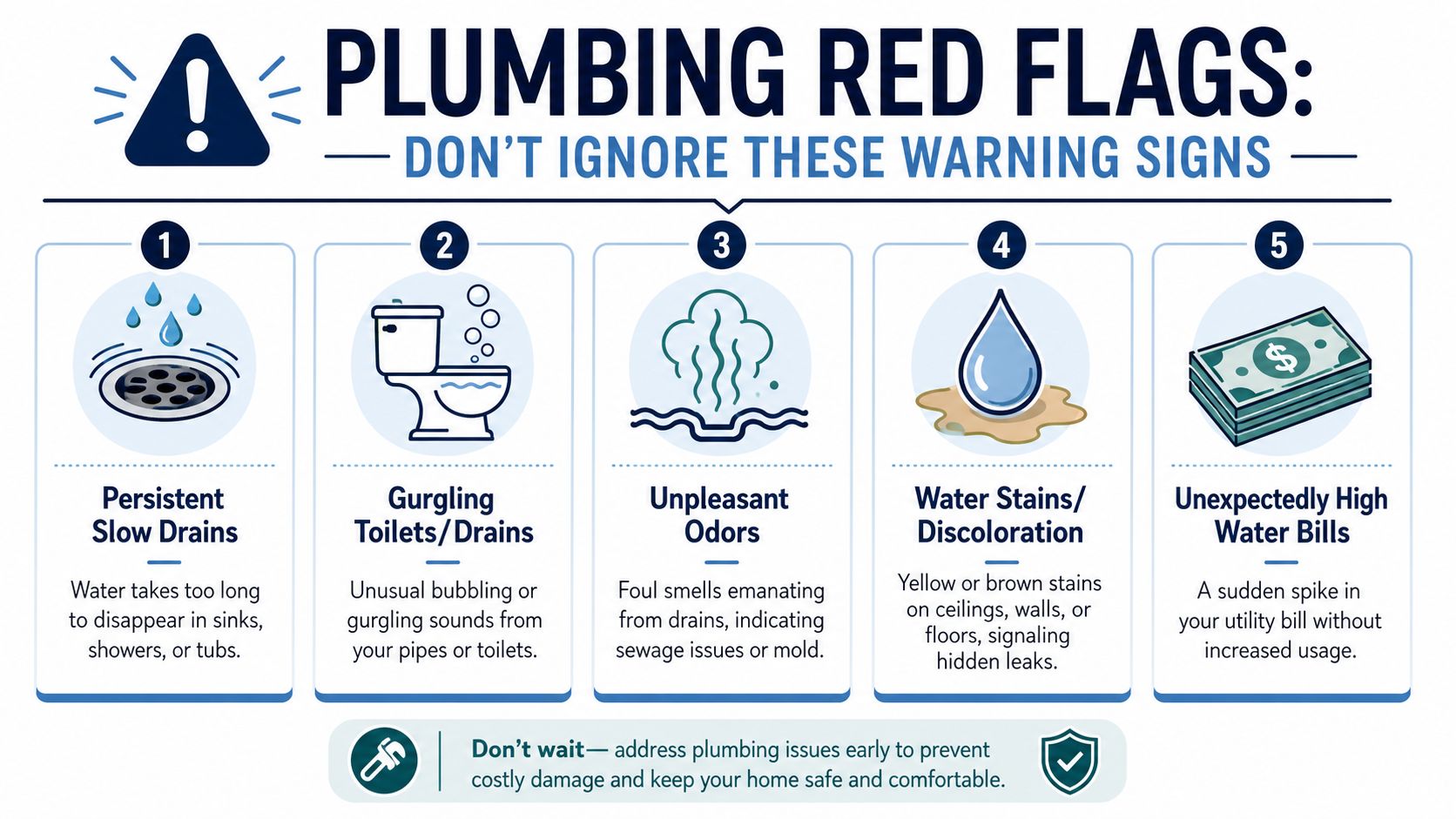
A serious plumbing problem rarely starts with dramatic flooding. More often, it starts with a symptom people try to work around. A toilet that bubbles once. A shower that drains a little slower every week. A stain on the baseboard that doesn't seem urgent. In Las Vegas, those are the kinds of warning signs that deserve attention.
The symptoms that usually mean more than a clog
When multiple drains back up at the same time, the problem usually isn't sitting under one sink. It's often farther down the system. The same goes for gurgling toilets, sewer odors indoors, or water appearing where it shouldn't, such as around a shower base or near the slab edge.
Watch for these signs:
- Multiple fixtures slowing together: Sink, shower, and toilet issues happening together point toward a main line issue.
- Sewer smell inside the home: Persistent odor often means a drain, vent, or sewer problem, not just a dirty sink.
- Water sounds when nothing is running: If you hear movement in the walls or slab with fixtures off, that can point to a hidden leak.
- Unusually green areas outside: A patch of yard that stays greener than the rest can mean underground leakage or sewer trouble.
- Stains on walls or flooring: Yellowing, darkening, or swelling materials usually mean water has been present longer than you think.
Why delay costs more in Las Vegas
In Las Vegas, approximately 80% of homes experience at least one significant plumbing issue within a 10-year period, with slab leaks and cast iron sewer line failures among the most prevalent. The average cost to repair a slab leak ranges from $5,000 to $12,000, and full sewer line replacement can exceed $15,000. The same source notes that preventative maintenance can be up to 70% more cost-effective than emergency repairs, according to NRS Vegas.
Those numbers are why “wait and see” is usually the most expensive plumbing strategy.
Sewer odors, slab moisture, and repeated backups are not nuisance issues. They are investigation issues.
When not to use the fixture again
Stop using the affected plumbing if sewage is coming back up, if the toilet bubbles when a sink drains, or if water is showing up around flooring seams. Continued use can spread contamination, increase water damage, and make diagnosis harder.
How Professionals Clear Clogs The Right Way
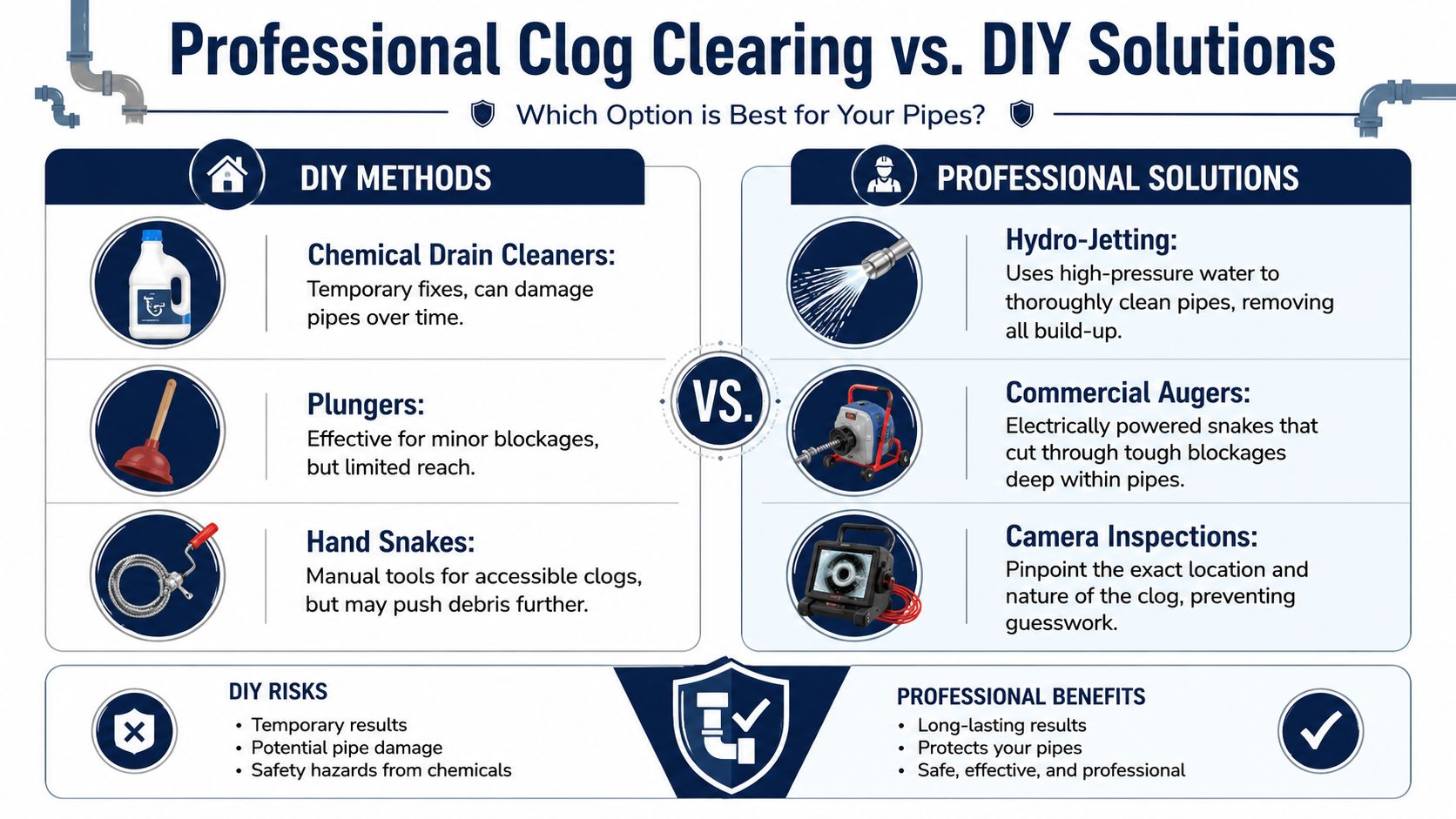
A professional drain cleaning visit should answer two questions. First, what is blocking the line right now? Second, why did that blockage happen in the first place? If the second question never gets answered, the problem often comes back.
Snaking has a role, but it has limits
A professional auger or rooter machine is the right tool for many stoppages. It's effective for localized clogs, paper buildup, some grease obstructions, and certain soft blockages in branch lines. It restores flow quickly.
What it usually does not do is clean the pipe wall. If the line is narrowed by heavy scale or packed with layered grease and mineral deposits, the snake may punch a hole through the blockage and leave most of the material behind. That's why some drains seem fixed for a week, then slow down again.
Hydro-jetting solves a different problem
Hydro-jetting uses high-pressure water to scrub the inside of the pipe. In Las Vegas, that matters because local hard water contributes to rapid calcium buildup. Current guidance specific to this market notes that with approximately 140–180 ppm hard water mineral content, quarterly to semi-annual hydro-jetting may be needed in hard water conditions to stop grease-mineral bonding and recurring blockages, while basic snaking can't remove that scale buildup, according to the same local guidance cited earlier from Greater Nevada Mortgage's home maintenance manual.
For homes with recurring kitchen backups, older lines, or long-term buildup, hydro-jetting service in Las Vegas is often the method that thoroughly resets the pipe instead of temporarily reopening it.
Field rule: If a line clogs repeatedly and each cleaning seems to “work” for less time, the pipe probably needs cleaning, not just reopening.
Camera inspections remove the guesswork
A sewer camera inspection is what separates real diagnosis from educated guessing. A color video camera can show whether the problem is grease, scale, roots, a separated joint, cast iron corrosion, or a belly in the sewer line.
That matters for homeowners in Las Vegas, Henderson, and North Las Vegas because the repair decision changes based on what the camera shows. A line packed with buildup may need cleaning. A line with structural failure may need repair or replacement. Without a camera, people often spend money treating the wrong problem.
What works and what doesn't
- Works well for isolated soft clogs: Professional snaking.
- Works well for wall buildup and recurring blockages: Hydro-jetting.
- Works well for identifying pipe condition: Sewer camera inspection.
- Doesn't work as a long-term fix for scale: Basic hand snaking.
- Doesn't diagnose anything: Chemical drain cleaner.
Your Trusted Plumber in Las Vegas Henderson and Summerlin
When it's time to bring in a plumber, homeowners usually want the same things. They want somebody local. They want the problem explained clearly. They want honest pricing, not a low quote that changes once the job starts. And they want the technician to show up prepared.
For plumbing in Las Vegas, Henderson, and Summerlin, those basics matter more than flashy marketing. A licensed and insured local company with experienced technicians can usually spot the difference between a quick fixture issue and a system problem before time and money get wasted. Fast response times help, but clear diagnosis matters just as much.
What homeowners should expect from a good plumbing company
- Licensed and insured service: That protects the homeowner and sets a professional baseline.
- Experienced technicians: Drain and sewer problems are easier to solve when the technician has seen the same failure pattern in older Las Vegas neighborhoods before.
- Honest pricing: Good companies explain the work, the options, and the cost without hidden fees.
- Local knowledge: Las Vegas plumbing has its own patterns. Henderson and Summerlin homes can have very different plumbing histories depending on age and build type.
- Communication that's easy to follow: Homeowners shouldn't need a trade background to understand what's wrong.
If you need service in the southeast valley, working with Henderson plumbers who already know the local housing stock saves time.
Good plumbing service isn't just about clearing today's clog. It's about telling you whether the pipe is healthy, failing, or about to cost you a weekend.
Don't let a small drain problem become a major disaster. For fast, professional plumbing in Las Vegas, call MG Drain Services LLC today at 702-480-8070 or book your appointment online at mgdrainservices.com.
Frequently Asked Questions About Plumbing Maintenance
How much does drain cleaning cost in Las Vegas
The exact price depends on what's clogged, how far in the blockage is, and whether the line needs snaking, hydro-jetting, or camera inspection. The best approach is a clear estimate after diagnosis. That's especially important with recurring clogs, because the cheapest short-term clearing method isn't always the cheapest overall fix.
Do emergency plumbing calls cost more in Las Vegas
Yes. In Las Vegas, the average hourly rate for plumbing services is $73, but emergency calls after 4 PM or on weekends can cost 40–50% more, with emergency service fees ranging from $125 to $175 depending on time and company, according to Active Plumbing's Las Vegas heat and piping article. That's one reason proactive maintenance saves money even when nothing looks urgent yet.
How often should toilets be checked for silent leaks
Monthly is a smart habit in Las Vegas homes. Toilet flappers wear faster in local hard water, and a simple dye test catches leaks before they show up as wasted water or a surprise bill.
What areas do local plumbers in Las Vegas usually cover
Most established local companies serve Las Vegas, Henderson, North Las Vegas, and Summerlin. If you own rental property or manage a small commercial building, it's smart to confirm service areas before you need urgent help.
When should I stop trying DIY fixes
Stop when more than one drain is affected, when sewage odor is present, when water appears around flooring or walls, or when the same clog keeps returning. DIY is fine for simple triage. It's a bad plan for recurring drain failures, hidden leaks, or suspected sewer line issues.
For dependable help with drain cleaning, sewer inspections, leak detection, and professional plumbing repairs in Las Vegas, contact MG Drain Services LLC. Call 702-480-8070 for fast service, honest pricing, and experienced local plumbers who know what works in Las Vegas homes.