A clean kitchen in Las Vegas can go sideways fast when the garbage disposal starts humming, draining slowly, or throwing a foul smell back into the room after dinner. Most homeowners don't think much about the unit under the sink until it jams, leaks, or backs up the basin. That's why Garbage Disposal Maintenance Tips for Las Vegas Kitchens matter more here than in a lot of other cities.
Las Vegas kitchens deal with two local problems generic advice usually skips over. Hard water leaves mineral residue behind, and long hot summers make grease and odor issues nastier. Add older plumbing in parts of North Las Vegas and older central neighborhoods, and a small disposal mistake can turn into a drain problem that needs professional service.
Keeping Your Las Vegas Kitchen Running Smoothly
The usual call starts the same way. Dinner's done, the sink looks clean, the switch flips on, and instead of a smooth grind you hear a heavy hum or a rough rattling noise. Sometimes the unit still spins but the sink drains slowly. Other times it smells fine one day and awful the next.
In Las Vegas, that pattern usually points to maintenance habits, not bad luck. A disposal isn't just a blade in a box. It's part of the full drain system under your sink, and that system reacts differently in homes with hard water, heat, grease residue, and aging pipes. What works in a newer home in Henderson may be a bad habit in an older house with tighter, rougher interior drain walls.
Homeowners often wait until the kitchen sink is fully blocked before taking it seriously. By then, the disposal may not be the only issue. The branch drain, trap, or line farther down can already be coated with grease and food residue.
Practical rule: If your disposal sounds different, smells different, or drains slower than normal, treat that as an early warning, not a minor annoyance.
Good daily habits prevent a lot of emergency calls. Better cleaning habits help even more. When buildup has already moved into the line, that's when drain cleaning in Las Vegas becomes a fix instead of another round of sink-side troubleshooting.
Why Las Vegas Disposals Face Unique Challenges
National home tips usually treat every kitchen the same. Las Vegas plumbing doesn't play by those rules.
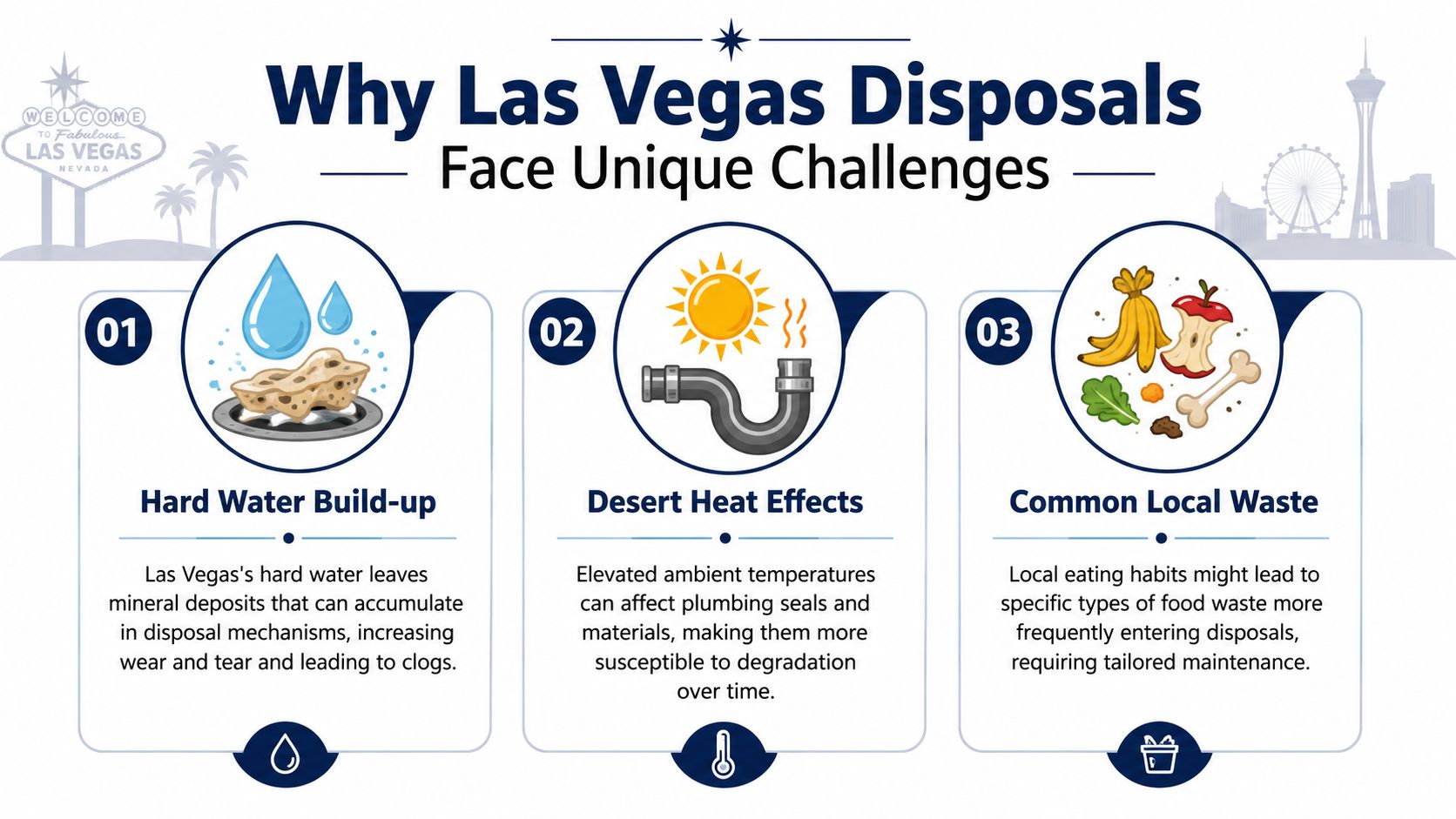
Hard water changes how your disposal wears
In the Las Vegas Valley, tap water contains exceptionally high levels of calcium and magnesium, often exceeding 150 ppm, which accelerates corrosion and reduces blade efficiency over time. Most maintenance articles treat all water sources as functionally identical, ignoring regional water chemistry data from the Southern Nevada Water Authority.
That matters because mineral scale sticks to more than faucets and shower glass. It also builds inside disposal components and along the drain path, where food residue can grab on more easily. A disposal that should clear scraps cleanly starts working harder, sounding rougher, and flushing less effectively.
Heat makes grease problems worse
Las Vegas heat creates another problem inside the kitchen. Warm conditions don't cause clogs by themselves, but they make odor and residue issues easier to trigger and harder to ignore. Food waste breaks down faster, and grease behavior becomes more deceptive. It may look washed away when it's warm, then settle and stick farther down the line.
A lot of homeowners think the disposal failed when the problem is a drain line that has been slowly collecting grease and soft food residue over time.
Older pipes raise the risk
In older parts of Las Vegas and North Las Vegas, the pipe material under and beyond the sink matters. Many older homes still have cast iron sewer lines, and those lines narrow as corrosion and buildup accumulate. Data from the Clark County Regional Flood Control District shows that 30% of sewer backups in older residential zones stem from organic buildup in cast iron pipes, which disposals exacerbate.
Here's the trade-off:
| Home condition | What it means for disposal use |
|---|---|
| Newer PVC drain lines | Usually more forgiving if you follow good disposal habits |
| Older cast iron lines | Less forgiving, more prone to buildup and recurring blockage |
| Hard water scaling present | Cleaning needs to be more consistent |
| Frequent grease-heavy cooking | Risk rises fast, especially in summer |
If you live in an older Las Vegas neighborhood, the disposal may need to be used more selectively than a generic how-to guide would suggest.
The Everyday Do's and Don'ts of Disposal Use
Small daily habits do more to protect a disposal than deep cleaning alone. Most failures start with routine misuse.
What to do every time
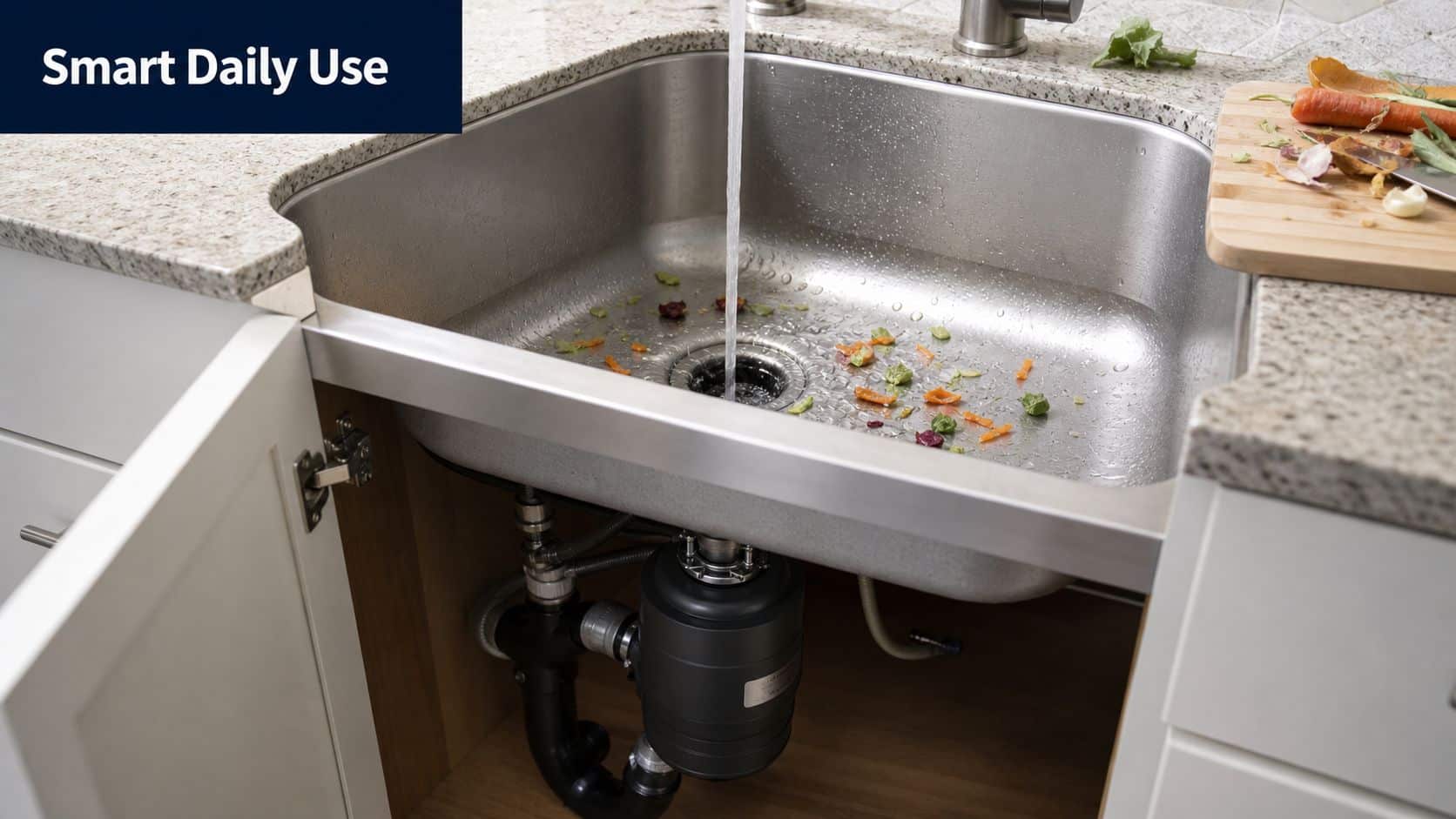
The most important rule is simple. Always use cold water before, during, and after disposal operation because cold water solidifies fats and oils, preventing them from melting and building up in pipes where they can cause clogs, whereas hot water would liquefy fats and increase the risk of blockages downstream according to this garbage disposal maintenance guidance.
A second good habit is timing. In Las Vegas kitchens, plumbing guidance recommends running cold water for 15 to 30 seconds before, during, and after use, and running the disposal for about one full minute after grinding food to clear residual particles from the chamber and drain line, as explained in this disposal care article for Las Vegas homeowners.
Use these habits:
- Feed scraps gradually. Don't stuff the chamber full and hope brute force handles it.
- Use plenty of cold water. Water is what moves the ground waste through the line.
- Listen for changes. A lower hum, uneven grind, or delayed drain is an early clue.
- Scrape grease into the trash first. The sink is not a grease disposal system.
What to keep out of the unit
Some items don't belong in a disposal no matter how powerful the label on the box sounds.
- Fats and oils: These create the mess most likely to coat the pipe wall.
- Gristly meats: They leave residue and stringy material behind.
- Fibrous scraps: Celery-like strands and similar material can wrap and snag.
- Expandable foods: Rice and pasta swell and turn into paste.
- Coffee grounds: They settle densely and add to sludge.
If you want a better way to cut kitchen waste without sending all of it through the disposal, this guide on composting kitchen scraps is useful for homeowners trying to reduce what reaches the drain.
Don't judge disposal safety by whether the unit can grind something. Judge it by whether your drain line can carry it away cleanly.
Your Monthly Maintenance Routine for a Clog-Free Kitchen
A Las Vegas disposal can smell fine one week, then turn sour fast after a stretch of 105-degree days and a few greasy dinners. Hard water leaves mineral scale inside the chamber, and that scale gives food residue more places to stick.
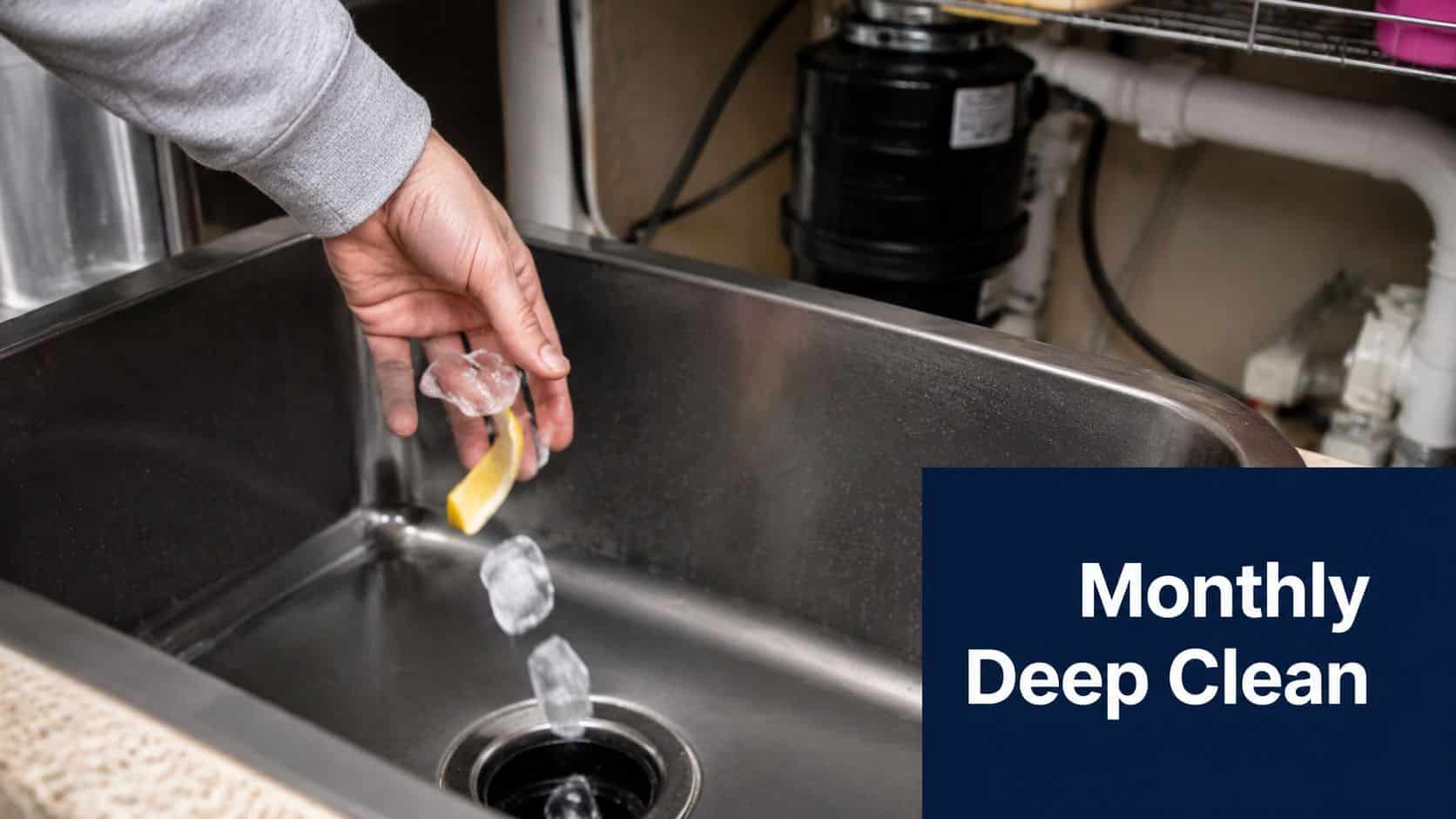
Use ice and kosher salt to scrub the chamber
This is the monthly step I recommend most often in Las Vegas homes because it addresses two local problems at once. Ice helps knock loose soft buildup, and kosher salt adds abrasion without the kind of harsh contact that can beat up the chamber.
The basic method in CLR's disposal cleaning guidance is simple. Use about 2 cups of ice and 1 cup of kosher salt, then run cold water while the unit grinds. That cold-water piece matters here because grease that softens in a hot kitchen can smear farther down the line before it hardens.
Follow this order:
- Add the ice.
- Pour in the kosher salt.
- Run a steady stream of cold water.
- Turn on the disposal until the grinding sound clears.
Do not expect this to remove a true blockage in the pipe. It cleans the chamber well. It does not replace line cleaning.
Use baking soda and vinegar for odor control
For odor, keep the method simple and realistic. Bob Vila's garbage disposal cleaning guide recommends baking soda and vinegar as a basic deodorizing step, and that is a fair fit for monthly upkeep.
Use 1/2 cup of baking soda followed by 1 cup of white vinegar. Let it fizz for several minutes, then flush with cold water. The fizz helps loosen residue near the splash guard and upper chamber, which is often where odors hang on.
This works best for smell. It is not a cure for grease packed into the drain arm or a branch line already narrowing from buildup.
For homeowners who like practical maintenance reading beyond disposals, SouthRay's homeowner insights are worth a look because drain behavior in one fixture often hints at habits affecting the rest of the plumbing system.
If the disposal smells better for a day or two but the sink still drains slowly, the problem is usually farther down the pipe. In that case, professional hydro jetting for kitchen drain buildup can clear grease and mineral residue that chamber cleaning will never reach.
When DIY Isn't Enough Recognizing Signs of Trouble
Some disposal issues are maintenance problems. Others are warning signs that you need diagnosis, not another cleaning cycle.
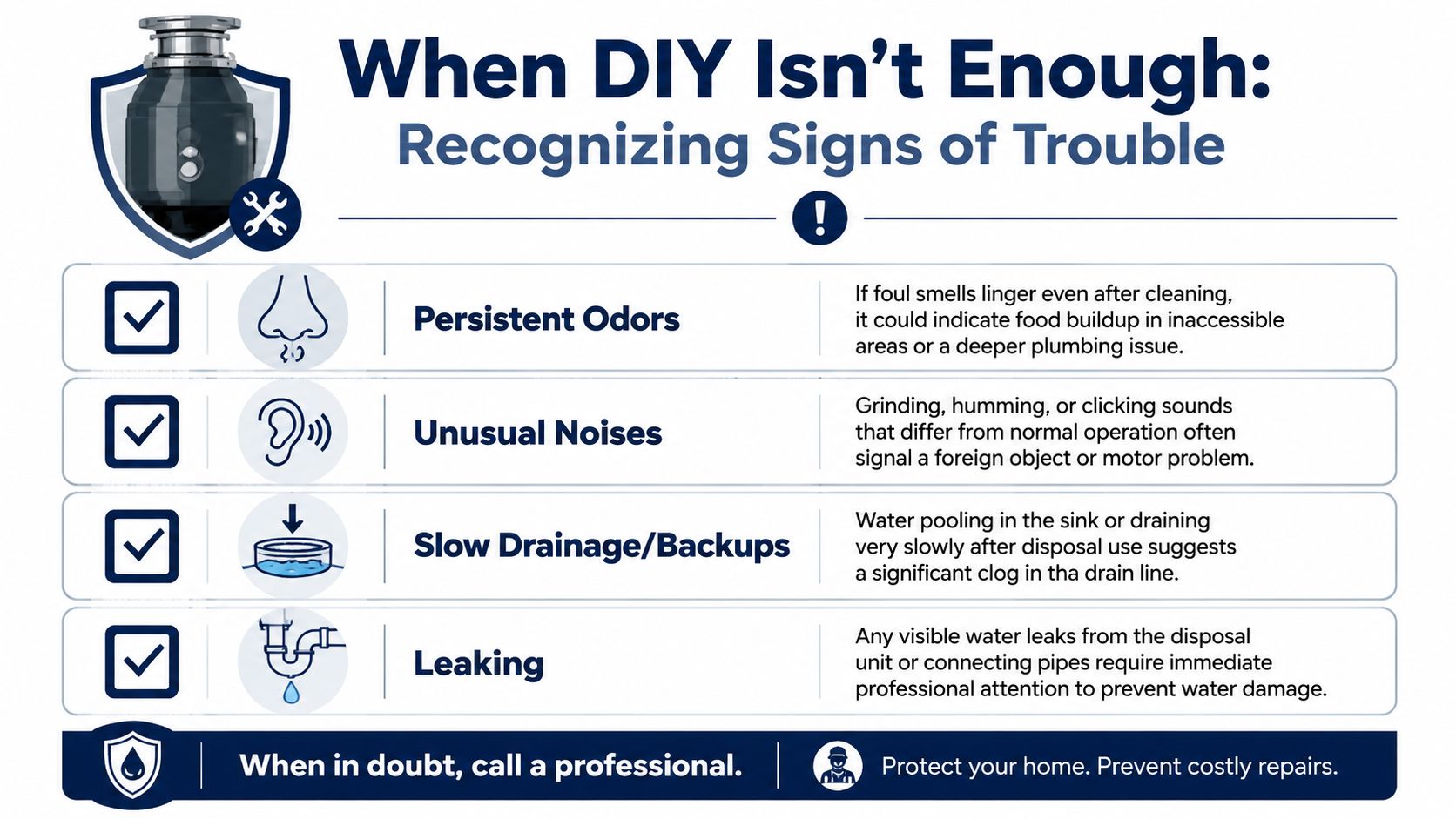
Signs you shouldn't ignore
If any of these are happening in your Las Vegas, Henderson, or North Las Vegas home, stop guessing:
- Persistent humming with no grinding: The motor may be seized or obstructed.
- Frequent reset button trips: The unit is straining, overheating, or nearing failure.
- Slow drainage after cleaning: The problem may be in the branch line, not the disposal.
- Leaks under the cabinet: Even a small drip can damage the cabinet floor and invite mold.
- Metallic clanking: Something hard may be inside the chamber, or internal parts may be damaged.
- Recurring backups in an older home: The disposal may be feeding an already compromised line.
Data from the Clark County Regional Flood Control District shows that 30% of sewer backups in older residential zones stem from organic buildup in cast iron pipes, and disposals make that risk worse in those systems.
What a pro can see that DIY can't
A homeowner can clean, reset, and inspect what's visible. A plumber can determine whether the disposal is the problem or whether the line beyond it is restricted, scaled, or partially collapsed.
That kind of distinction matters. Replacing a disposal won't fix a drain line problem. Running cleaner through the sink won't fix narrowing cast iron.
If you like practical repair reading in other home systems, Star Cleaner's repair solutions show the same basic truth: repeated performance problems usually mean the issue is deeper than surface cleaning.
A proper line check with a sewer camera inspection in Las Vegas is often the fastest way to stop wasting time and money on the wrong fix.
A disposal that keeps acting up is usually reporting a problem. The mistake is treating the symptom over and over instead of finding the restriction.
Common Garbage Disposal Questions in Las Vegas
How long should a garbage disposal last in a Las Vegas home
In Las Vegas, lifespan depends less on the name on the box and more on how the unit is used in hard water conditions. A disposal that sees grease, starchy scraps, and inconsistent cleaning usually wears out sooner because mineral scale and food residue build up together on moving parts and inside the drain path. In homes that run cold water properly, keep grease out, and stay on top of cleaning, a disposal often lasts many years. Ignore scale and sludge here, and service life drops fast.
Heat plays a role too. During long summer stretches, grease stays softer in the kitchen but starts sticking farther down the line as it cools, which makes the disposal work harder and leaves more residue behind.
What's the black slimy residue around the drain opening
That residue is usually biofilm mixed with grease and fine food particles. In Las Vegas kitchens, hard water leaves a mineral film that gives that slime more surface to cling to, especially under the rubber splash guard.
Clean the baffle by hand with dish soap and a brush or rag. If you only grind ice or run cleaner through the chamber, the underside of that rubber guard often stays dirty, and that is where a lot of the smell starts.
Should I use a disposal if my home has older cast iron lines
Use it cautiously. Older cast iron lines already tend to have a rough interior, and in Las Vegas that roughness often collects scale from hard water along with grease and food paste. Ground waste does not move through those pipes as easily as it does through newer ABS or PVC.
If your kitchen sink has a history of slow draining, backups, or recurring odor, cut back on disposal use. In some older homes, the better habit is scraping plates into the trash first and treating the disposal as light-duty equipment, not a catch-all.
Is a bad smell always a disposal problem
No. Odor can come from the splash guard, the trap, the horizontal drain arm, or buildup farther down the kitchen line. A disposal gets blamed first because that is where the smell is strongest, but the actual source is often a coated drain line.
A simple test helps. If you clean the guard and chamber thoroughly and the smell returns quickly, the problem may be sitting past the unit, not inside it.
MG Drain Services LLC is a licensed and insured local Las Vegas company serving homeowners in Las Vegas, Henderson, North Las Vegas, and surrounding areas with experienced technicians, honest pricing, and fast response times. If your disposal is humming, backing up, leaking, or causing recurring kitchen drain problems, call 702-480-8070 or visit MG Drain Services LLC to book professional help. For urgent drain cleaning Las Vegas service, sewer diagnostics, hydro jetting, and plumbing repairs that protect your time and your home, contact MG Drain Services LLC today.