You clear the sink, the water drops for a bit, and you think the problem's gone. Then the same drain slows down again, sometimes worse than before, and now there's a bottle of chemical cleaner sitting under the cabinet with a half-empty cap and a bigger mess in the pipe. That's the part homeowners in Las Vegas run into all the time, especially with kitchen grease, bathroom hair clogs, and older drains that already have mineral buildup from hard water.
Chemical drain cleaners feel like the fast answer because they work right away on the surface. The trouble is that they don't always remove the clog, and they can leave behind heat, caustic liquid, and damaged pipe material that sets up the next failure. In my trade, that's where a simple stoppage turns into a leak, a repeated backup, or a repair that's harder to work on safely.
MG Drain Services LLC works residential calls across Las Vegas, Henderson, and North Las Vegas, and the pattern is familiar. A homeowner tries a store-bought cleaner, the drain briefly improves, then the line backs up again or the clog moves deeper. The right fix depends on what's in the pipe, not what the label promised.
Introduction Why That Quick Pour Often Backfires
A slow drain usually starts with a small inconvenience. The sink takes longer to empty, the tub holds water around your feet, or the kitchen line gurgles after dinner, and a chemical cleaner looks like the easiest way out.
That quick pour feels productive because you can hear and see movement for a little while. But if the clog is heavier than a thin ring of hair or grease, the cleaner often burns a channel through the blockage instead of removing it. The rest stays in place, and the pipe has already taken a chemical hit.
Practical rule: if the drain improved for a short time and then slowed down again, that's often a sign the cleaner only opened a partial path.
The risk is that the cleaner can make the pipe weaker while the clog is still there. That's a bad trade in any home, but it shows up more often in older lines, cast iron, galvanized steel, or plastic pipe that's already been stressed by age and heat. In Southern Nevada, hard water and mineral scale give the debris something to cling to, so a partial fix doesn't stay fixed for long.
If you're dealing with a recurring clog, the question isn't whether the bottle worked for a minute. The question is what condition the line is in now, and whether the next step is snaking, camera inspection, or a full cleaning through a licensed residential plumber.
How Chemical Cleaners Attack Pipes Instead of Just Clogs
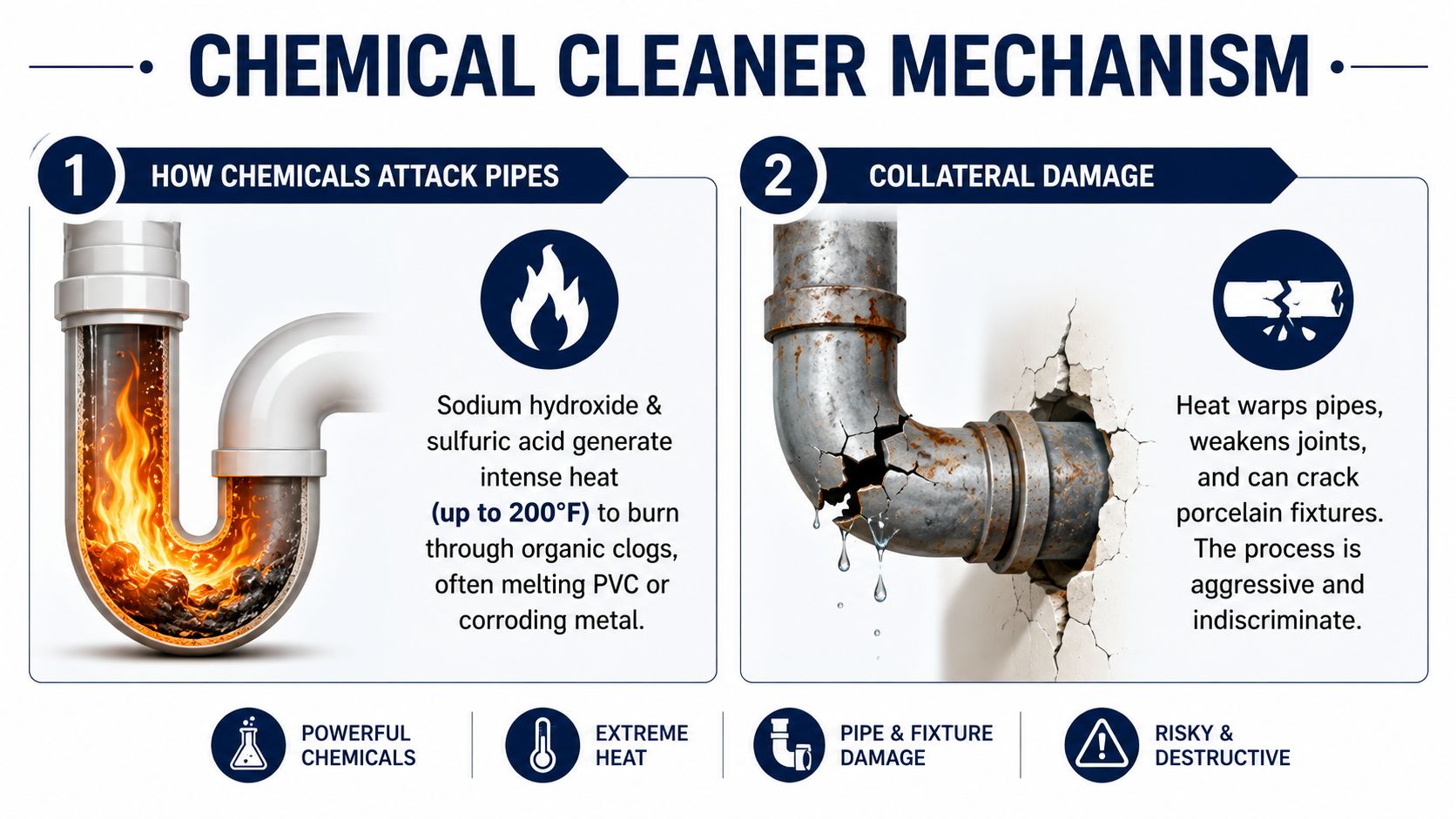
Chemical drain cleaners usually rely on sodium hydroxide or sulfuric acid. Those ingredients don't just dissolve grease and hair, they also create a violent reaction that generates heat, and that heat is what starts damaging the plumbing itself. Some plumbing guidance describes reaction temperatures reaching 200°F or higher during the process, which is hot enough to create real material stress inside the line. Pilot Construct explains the heat and corrosion mechanism here.
Different pipe materials react differently
PVC can soften, warp, or crack when exposed to heat and caustic chemicals. Copper and galvanized steel can corrode. Cast iron can lose protective coatings, which leaves the pipe more exposed to rust and future damage. The cleaner may seem aggressive toward the clog, but it's often just as aggressive toward the pipe wall and the joints that hold the line together.
That matters in Las Vegas homes because lots of drains already have wear from age, dry desert conditions in attics or garages, and mineral scale from hard water. A pipe that's still hanging on doesn't need much help to start leaking once the surface is weakened. In the field, I see the failure show up at a fitting, under a sink trap, or at a section that was already thin before the cleaner ever went in.
Why partial cleaning creates repeat problems
Chemical cleaners often burn a narrow path through grease or hair. Water can move through that channel for a while, so the homeowner thinks the clog is gone. The debris around the opening stays in place, though, and that leftover material becomes a fresh catch point for soap scum, more grease, or hair.
A plumber in another market puts it in a useful blocked-drain guide, signs of a blocked drain Sydney, and the same logic applies here. If the line is still coated and narrowed, the blockage isn't solved, it's waiting.
The bottom line is simple. Chemical cleaners don't diagnose the problem, they react to it. If the clog is deeper than the drain opening, the cleaner can weaken the pipe before it does anything meaningful to the blockage.
Plumbing Problems That Get Worse After Chemical Cleaner Use
A bottle of drain cleaner changes the job only when the clog sits close to the opening and the pipe can still move liquid. Once the water is already standing in a sink, the toilet is slow to clear, or several fixtures in the house start acting up, the problem is usually deeper in the line than the homeowner can reach from the top. In the field, that is the point where the cleaner stops being a fix and starts getting in the way of the proper repair.
The clogs that cleaners usually don't solve
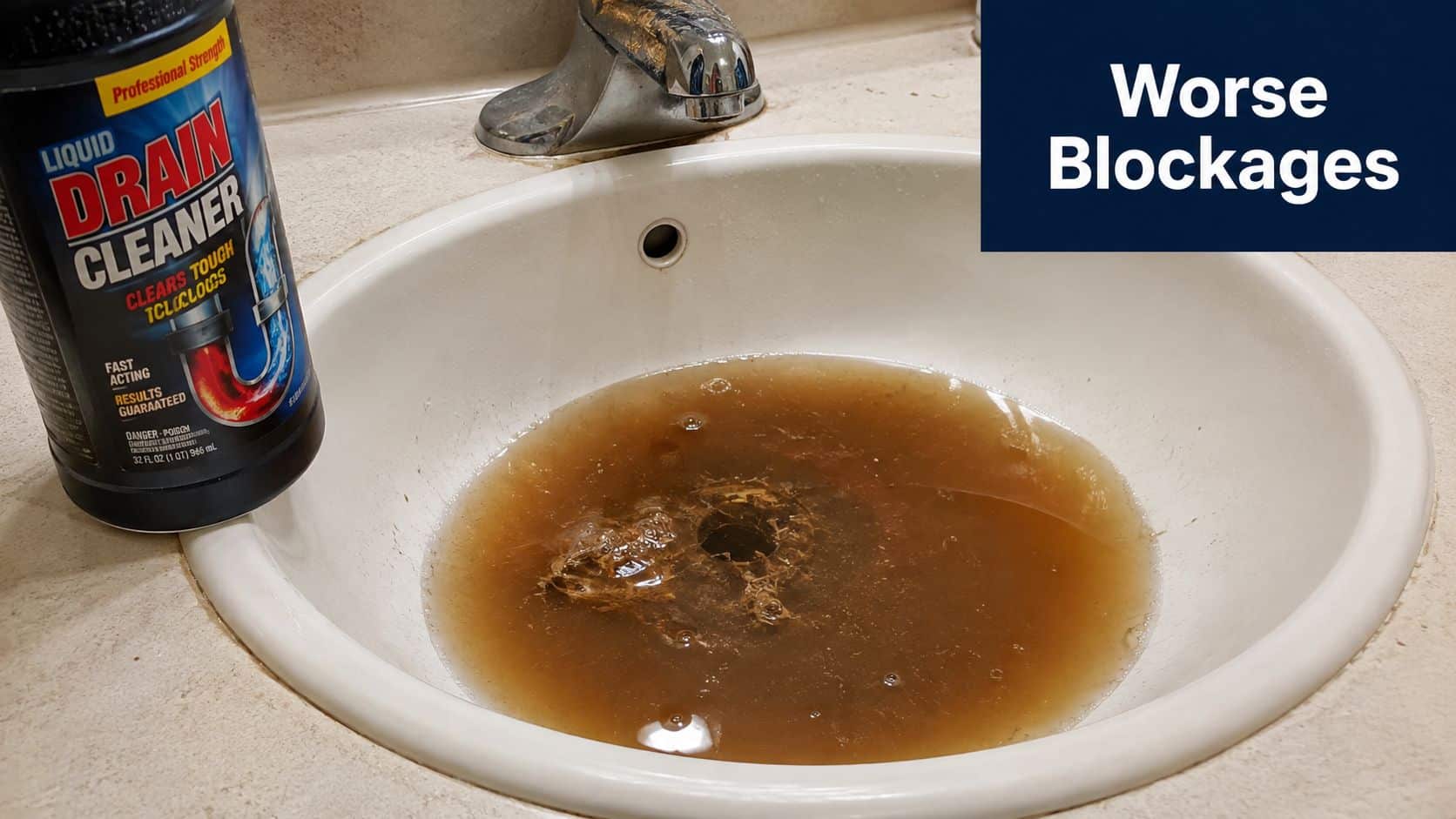
A fully blocked drain is a dead end for chemical cleaner. If the liquid cannot travel, it just sits there and keeps working on the same small section of pipe. Main sewer line trouble is a different kind of problem, because the blockage is far from the fixture and the cleaner may never get to the restriction in any useful way.
Toilet complaints also need a different read. A toilet can back up because the trap is restricted, the branch line is loaded with buildup, or the main line is partially blocked, and the bottle on the shelf does not tell you which one you have. The same is true for grease-heavy kitchen lines. The cleaner may change the surface behavior for a while, but it does not show whether the line is holding a larger blockage, a sag, or a venting issue. For a homeowner trying to sort that out, Melbourne plumbing support from Ring Hot Water is the kind of troubleshooting resource that points to the right next step.
Deciding whether the problem is near the drain or buried farther out in the system is key. A single sink that drains slowly after hair and soap buildup looks different from a line that sends water back into a tub when the washing machine dumps, or a toilet that gurgles every time another fixture runs. Those are field clues, not guesses.
Warning signs that mean the problem is deeper
If more than one fixture slows down, the issue is usually shared somewhere in the piping, not trapped at one sink basket or one toilet bowl. Gurgling, sewer odor, and a clog that seems better for a short time before returning all point to a line that needs more than another pour. Tree roots can also take over a sewer line, and no chemical cleaner is breaking that apart in a useful way.
For homeowners in the valley, MG Drain Services drain cleaning in Las Vegas is the kind of help that makes sense when the same drain keeps showing the same symptoms. A pro looks for where the failure starts, what fixtures are tied together, and whether the blockage is local or part of a larger drain system problem.
A plumber is trying to separate a close-in clog from a deeper line issue before any repair starts. That call changes the whole job, because a surface blockage may need a simple cleanout, while a main line problem may need inspection, clearing, or repair access. Pouring in another bottle usually just adds more heat, more residue, and more corrosion to a line that already needs proper work.
The Hidden Residue Problem That Makes the Next Repair Harder
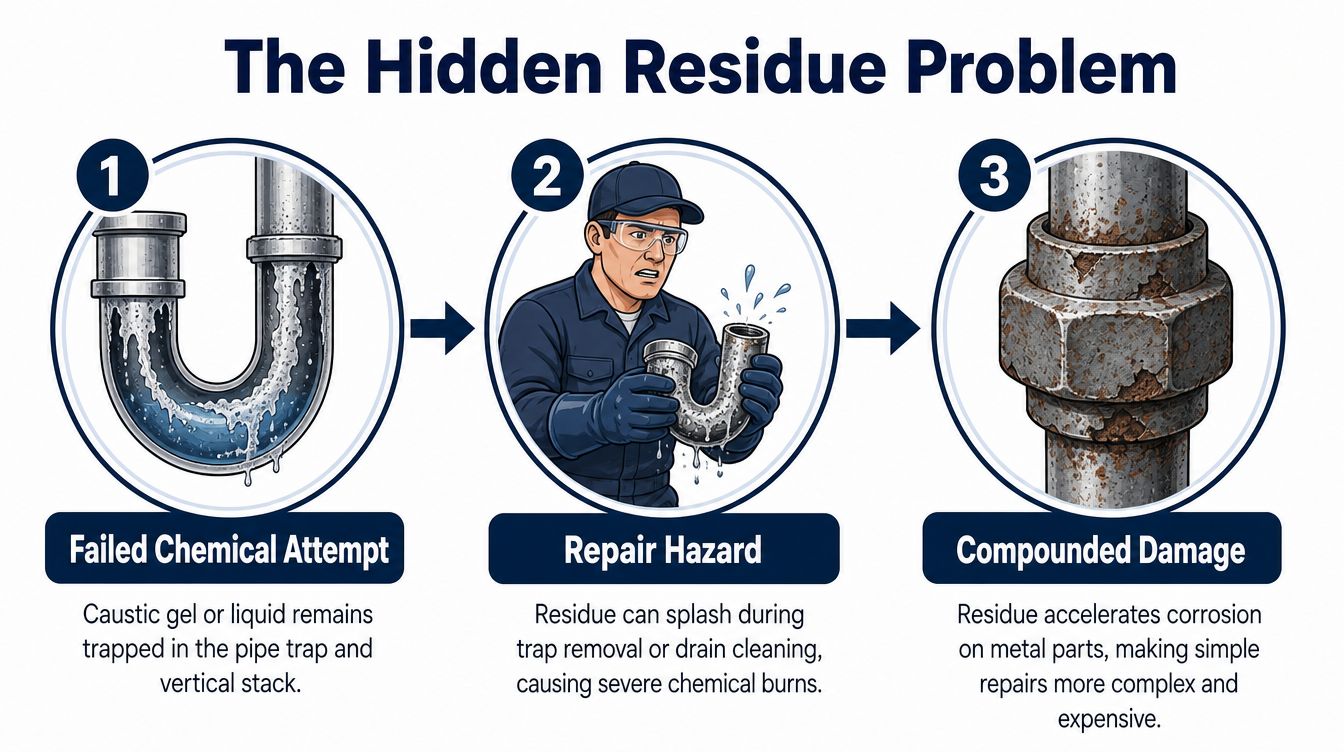
What gets skipped in most advice is what stays in the line after the cleaner “fails.” The pipe may still hold caustic liquid, softened debris, and a slick residue that's hard to see from the outside. That leftover material is what makes the next repair riskier for the person opening the drain and more complicated for the plumber who has to figure out what's going on inside the pipe.
Why residue changes the repair job
When a plumber pulls a trap or starts mechanical cleaning, trapped cleaner can splash out. That means gloves, goggles, flushing, and a slower setup before the actual work starts. If the line is still partially blocked, the residue may sit in a trap, vertical stack, or low spot and keep attacking the pipe until it's removed.
That's also where camera work gets more complicated. A sewer camera can show buildup, cracks, offsets, or roots, but caustic liquid and softened sludge can blur the picture or make the pipe unsafe to inspect until the line is managed properly. Apollo Home points out the residue issue here, and that's the part most homeowners never hear about.
Why repeated dosing makes the situation worse
Each time someone adds more cleaner, the line gets another hit of heat and chemical exposure. The residue that stays behind becomes a new spot for grease and hair to catch, so the clog returns faster. That's how a homeowner ends up with a recurring drain that seems mysterious, when the problem is compounding damage.
Tell the plumber exactly what product was used and how long ago. That changes how we open the line, what PPE we use, and how fast we can get to the real blockage.
Mechanical clearing or hydro jetting is usually the next step when a chemical attempt has already failed. The goal isn't to push more chemistry at the problem, it's to remove the residue, clear the blockage, and see what the pipe looks like underneath.
Safe Homeowner Steps and Smarter Alternatives to Try Instead
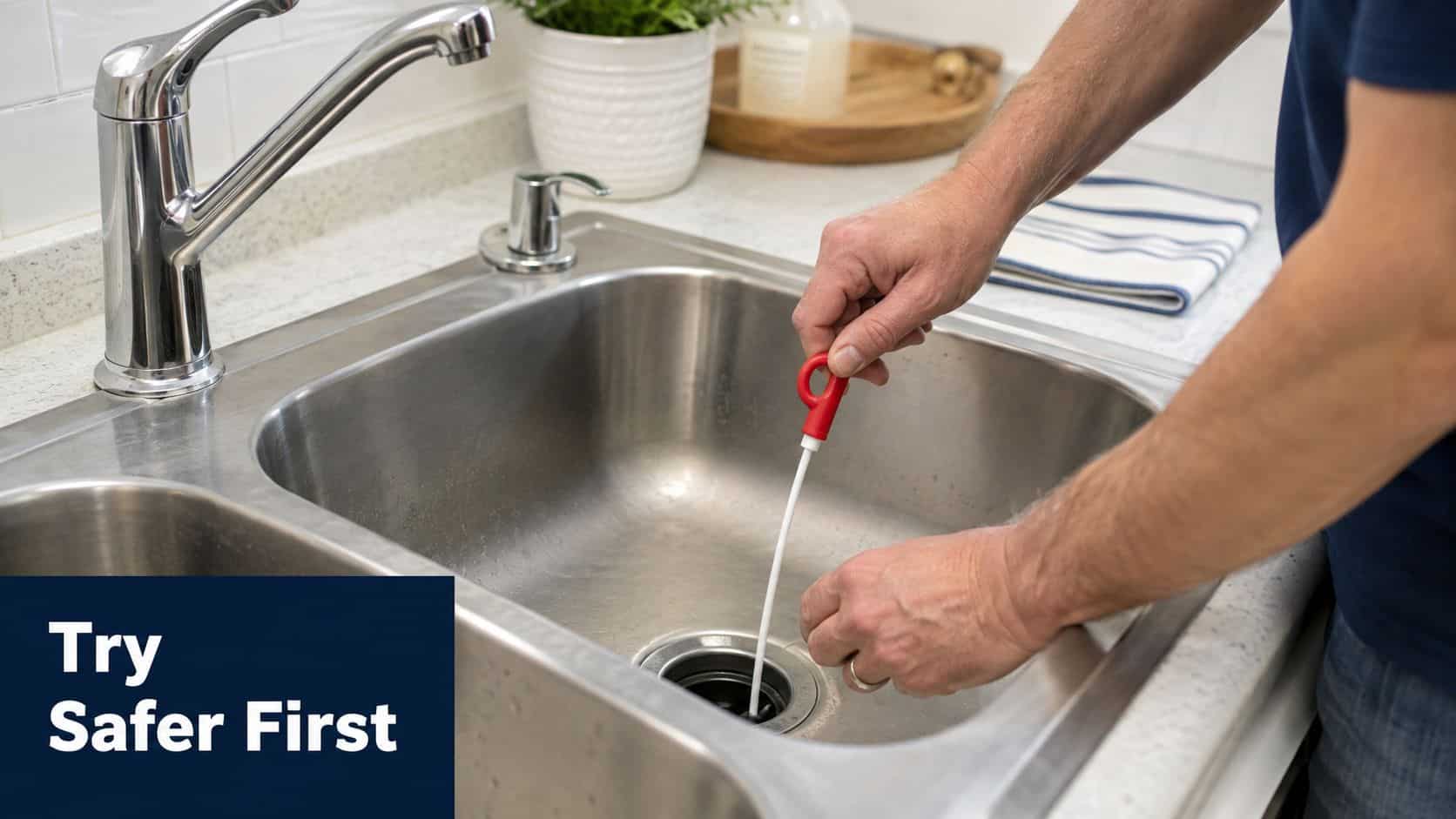
If the drain is still moving a little and you haven't poured chemicals in, a few simple steps are worth trying. Start with the part you can reach. Pull the stopper, remove visible hair or food debris, and clean the trap if it's accessible and you know how to set up a bucket under it.
What's reasonable to do at home
A proper plunger can work on a simple near-drain clog if you create a good seal and keep the overflow covered on a sink or tub. For kitchen sinks, a flush of hot water and dish soap can help move light grease, but only when the line is still draining and you're not forcing chemicals through standing water. A simple plastic drain tool can also pull out hair from shallow bathroom clogs.
For a homeowner who likes a natural approach, DIY natural cleaning recipes from Evo Dyne Products may be useful for routine cleaning, but those recipes aren't a fix for a backed-up line or a deeper blockage. They're for maintenance, not for pushing against a serious stoppage.
What you should not do
Don't mix chemical cleaners. Don't follow them with vinegar or bleach. Don't add more product into a standing-water drain and hope the extra amount breaks through. That's the kind of mistake that turns a clog into a burn hazard or a damaged pipe.
The safety side isn't minor. A plumbing safety review cited by industry reporting estimated about 3,000 drain-cleaner-related injuries per year in the U.S., and about one-third involved heat burns, which lines up with what happens when caustic product splashes back or sits in the pipe too long Plumbing Joint's reporting on drain-cleaner injuries. That's not a reason to panic, it's a reason to stop guessing.
What a plumber may use instead
When the clog is deeper, the next tools are mechanical. MG Drain Services hydro jetting in Las Vegas is one option when grease, scale, or stubborn buildup keeps coming back. A cable machine, camera inspection, and proper diagnosis are the other common steps, depending on the line condition.
If the drain is completely blocked, smells like sewer gas, or you've already poured in chemicals, stop there and call a licensed plumber instead of trying a second method at random.
When to Call a Las Vegas Plumber and How to Prevent Repeat Clogs
Recurring clogs are the clearest sign it's time for professional diagnosis. So are whole-home slowdowns, toilet backups, standing chemical in the line, and older cast iron or galvanized piping that's already vulnerable to corrosion. If more than one fixture is acting up, the issue is usually beyond a simple sink stop.
A licensed plumber will usually check the line with a camera, trace the problem, and decide whether the right fix is cleaning, locating, or repair. MG Drain Services emergency plumber in Las Vegas is one route when the backup has become a serious residential plumbing problem and the line needs immediate attention. The key is matching the repair to the condition of the pipe, not just clearing the symptom.
Prevention is mostly basic discipline. Keep grease out of the kitchen drain, use hair catchers in showers, and don't let a slow drain sit for weeks before dealing with it. In Southern Nevada, mineral scale and hard water can narrow lines over time, so water treatment can be part of the long game when the home has recurring buildup. Tree roots and irrigation-related movement also matter in some yards, especially where older sewer lines run under mature landscaping.
If you're tired of repeating the same cycle, have the line inspected before the next bottle goes in. Call MG Drain Services LLC at 702-480-8070 if you're in Las Vegas, Henderson, or North Las Vegas and want a real diagnosis instead of another temporary fix.
If you've already used chemical drain cleaner and the clog keeps coming back, MG Drain Services LLC can inspect the line, clear it the right way, and tell you whether the pipe is damaged or just packed with buildup. Visit MG Drain Services LLC or call 702-480-8070 to schedule residential drain service in the Las Vegas Valley.