
A faucet aerator clogs with white grit. The shower loses pressure. Then a warm patch appears on the floor, or the main sewer backs up again after a recent cleaning. These problems can look unrelated, but common plumbing problems in Las Vegas often share the same local causes: very hard water, slab foundations, desert conditions, mature landscaping, and aging residential pipework.
The right repair starts with diagnosis, not guesswork. A surface symptom may come from scale inside a valve, a leak beneath concrete, or a failing private sewer lateral. The following guide explains what homeowners can check safely, what a plumber should test, and which repairs address the cause instead of temporarily masking it.
Why Las Vegas Plumbing Problems Are Different
A homeowner in Summerlin notices that the shower stream has weakened and finds chalky deposits around the fixtures. In Henderson, another hears water moving after every faucet is closed. In North Las Vegas, a family deals with a sewer backup that returns after each basic drain cleaning. Those symptoms deserve different investigations, even though all three are common residential complaints.
Las Vegas plumbing systems operate under a combination of conditions that generic plumbing advice often misses. Hard water loads fixtures, valves, pipes, and water heaters with mineral scale. Slab-on-grade construction can conceal a leaking hot or cold line beneath the foundation. Desert heat stresses exposed plumbing and irrigation components, while established landscaping can send roots toward sewer lines carrying moisture. Older homes may also contain worn piping and aging sewer laterals that no longer tolerate repeated blockages.
Field rule: A recurring symptom is a reason to investigate the system, not simply repeat the same repair.
Slow drains may indicate grease or hair in a fixture branch, but repeated backups can point farther downstream. A crusty aerator may be easy to replace, while widespread low flow suggests restriction inside valves or supply piping. A warm floor can be a slab-leak warning, particularly when no fixture is running.
Diagnosis should follow the symptom. MG Drain Services approaches residential plumbing problems by identifying the source with appropriate equipment, whether that means pressure testing, leak detection, sewer camera inspection, locating, or hydro jetting. That process helps homeowners avoid paying for a temporary clearing when the actual defect is deeper in the system.
Hard Water Scale and Mineral Buildup
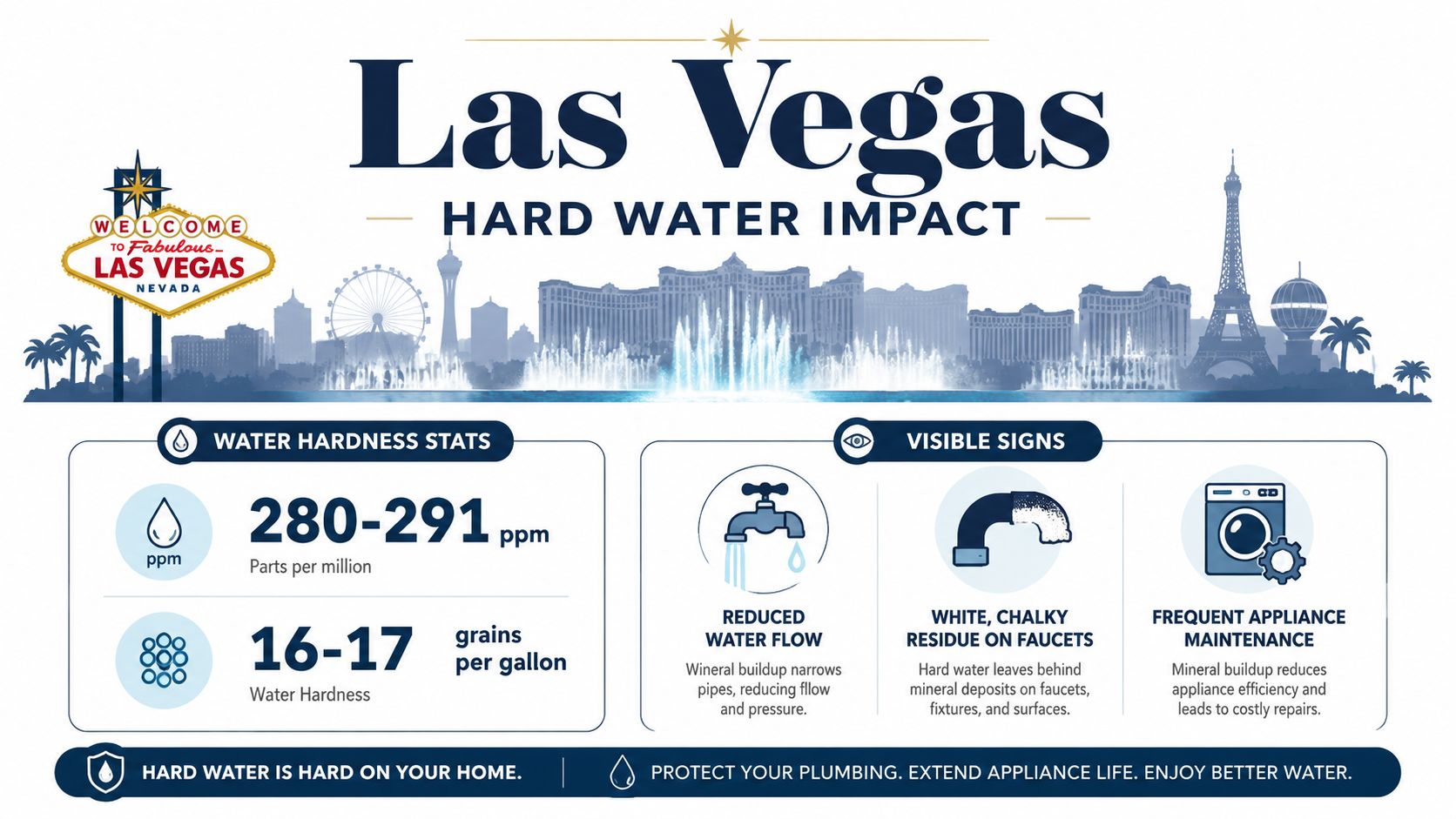
Las Vegas water is not merely moderately hard. The Las Vegas Valley Water District reports approximately 280 to 291 parts per million, or 16 to 17 grains per gallon, a classification of very hard water (local hardness data for Las Vegas homes). Another local water-softening source reports about 278 ppm, or 16 grains per gallon, also placing the water in the very hard category (Las Vegas water softening and filtration guidance).
What the minerals do inside a home
Calcium and magnesium enter the local water supply from the mineral-dense Colorado River watershed and Lake Mead. The Las Vegas Valley Water District states that these minerals don't pose a health risk, but safe drinking water can still create mechanical problems for plumbing components (Las Vegas Valley Water District information on water hardness).
Scale forms where water heats, slows, or changes direction. That makes faucet cartridges, showerhead openings, shutoff valves, recirculation components, and water-heater passages especially vulnerable. Homeowners may notice:
- Reduced flow: Deposits narrow small openings and restrict passages.
- White residue: Fixtures, aerators, showerheads, and sink edges collect chalky buildup.
- Appliance strain: Mineral deposits make heated-water equipment work harder and can reduce usable performance.
- Recurring service calls: A cleaned fixture may clog again if the restriction is inside the valve or supply piping.
Soaking a removable aerator in an appropriate descaling solution can be a reasonable DIY step. Removing a showerhead and cleaning its screen is also usually manageable if the connection comes apart without force. Don't pry at a cartridge, valve, or pipe connection when scale has bonded the parts together, because a small fixture repair can become a supply-line leak.
Practical treatment choices
A properly selected water softener addresses hardness at the home's incoming supply. Whole-house filtration serves a different purpose, so homeowners should understand what each system is designed to treat rather than assume one device solves every water concern. Water-heater flushing and inspection of high-heat components can also reduce accumulated sediment, although maintenance won't remove a restriction already embedded inside an aging valve.
Professional attention makes sense when multiple fixtures lose flow, a water heater develops unusual operating symptoms, or valves no longer shut off cleanly. Those patterns suggest system-wide scale or component wear, not a dirty screen.
Slab Leaks Under the Foundation
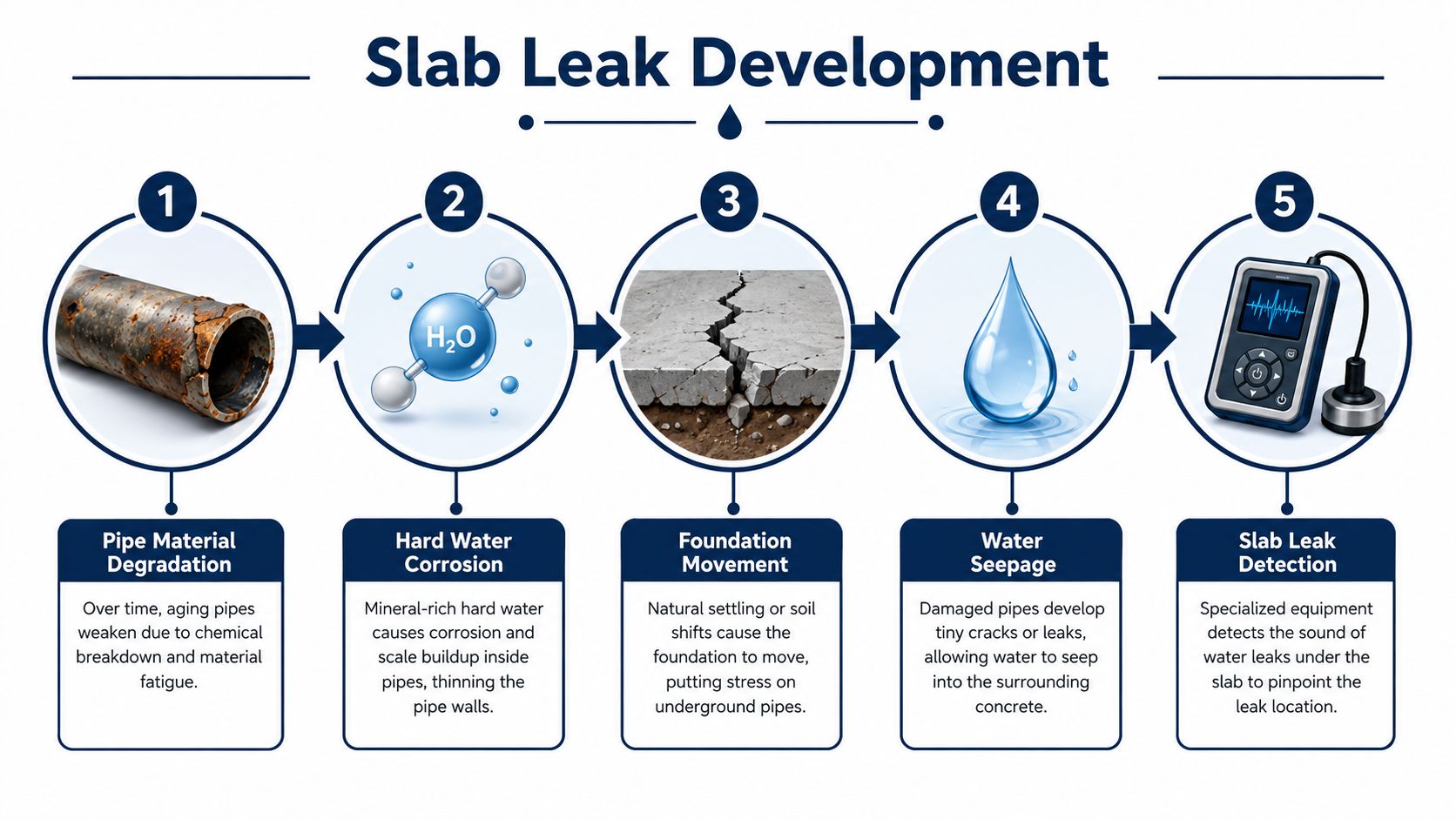
A slab leak is a leak in a water line beneath a concrete foundation. It may develop gradually as pipe material wears, with hard-water deposits and long-term degradation contributing to the failure. The problem isn't always a dramatic break. A localized damaged line can leak slowly and remain hidden until the floor, meter, pressure, or water bill provides a clue.
Common warning signs include:
- Unexplained water use: The meter indicates flow when every fixture is off.
- Warm flooring: A hot-water leak can heat concrete or flooring above the damaged line.
- Audible movement: You may hear hissing, rushing, or running water without an open tap.
- Damp areas: Moisture, staining, or a musty smell can appear near the leak.
- Pressure changes: Fixtures may lose pressure when the hidden leak is active.
- Foundation symptoms: Cracking or moisture around the slab warrants prompt evaluation, although those signs alone don't prove a plumbing leak.
Start with a simple meter check. Turn off faucets, appliances using water, and any irrigation, then observe whether the meter continues to register movement. Don't cut concrete based only on a warm spot. A plumber needs to determine which line is leaking and where the leak is located.
How professional detection narrows the search
The diagnostic sequence generally begins by isolating hot and cold lines independently. A pressure-decay test shows whether pressure loss occurs on the hot side, the cold side, or both. Meter readings with all fixtures off help distinguish a supply-side leak from a drain-side issue.
Once testing confirms a concealed leak, the technician may use acoustic listening equipment, thermal imaging, ground-penetrating radar, or tracer gas to locate it. These tools reduce unnecessary concrete removal. The water leak detection service is designed for that type of targeted investigation.
Repair decisions depend on the failure
A localized defect may be repaired at the leak location. If the line is difficult to access or repeated failures suggest a broader piping problem, rerouting a line through an accessible path may be more practical than opening large areas of slab. Full repiping isn't automatically required when one line has failed, and a professional assessment should weigh the pipe condition, access, layout, and recurrence risk.
Prompt detection matters because hidden water can damage flooring, encourage moisture problems, and affect the foundation area. If the meter moves with the home shut down, close the main shutoff if appropriate and arrange professional testing.
Recurring Drain and Sewer Line Backups
A slow bathroom sink and a backing-up main sewer are not the same problem. A fixture clog often sits in the trap or nearby branch line, where a hand auger or targeted cleaning may solve it. A backup affecting several fixtures, returning after cleaning, or appearing at a low drain suggests a downstream restriction that deserves a different diagnosis.
Las Vegas homeowners also need to understand responsibility. City guidance explains that private property owners are responsible for sewer laterals up to the connection with the main line, and North Las Vegas describes homeowner responsibility for blockage and breakage on the private line through the boundary connection (Las Vegas sewer backup guidance). That makes it important to identify the defect before authorizing repeated work.
What keeps causing the backup
Grease can narrow a kitchen branch. Mineral scale can roughen the inside of older piping and collect debris. Mature landscaping may contribute root intrusion, particularly where sewer joints have opened or deteriorated. Aging cast iron or clay lines can also develop breaks, offsets, separations, or heavy internal buildup.
Root management is a landscaping and plumbing issue at the same time. Homeowners who want broader background on how roots interact with underground infrastructure can review this resource on managing tree roots on commercial property, while recognizing that residential sewer diagnosis still requires inspection of the actual line.
When cleaning isn't enough
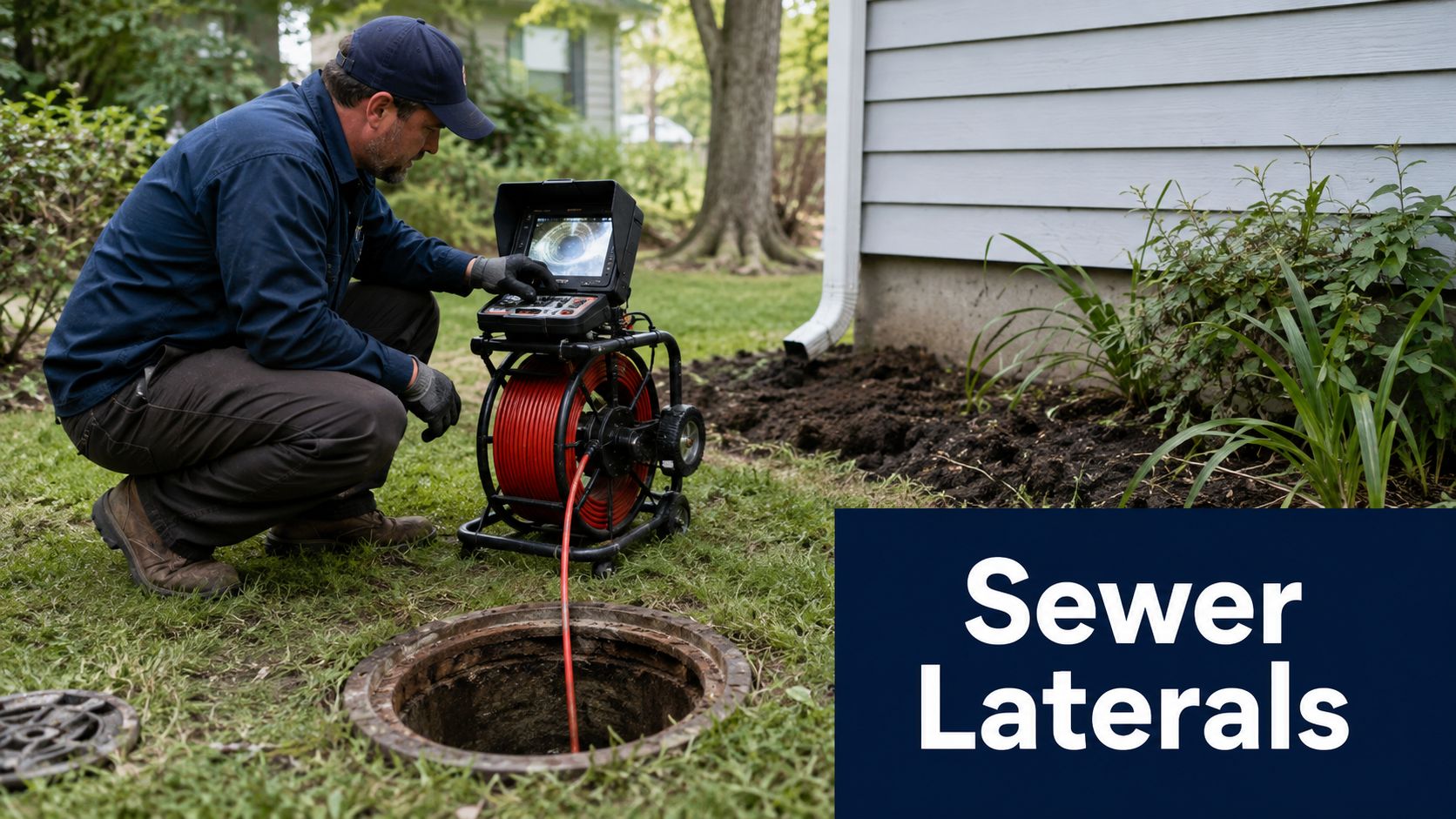
A cable machine may restore flow without correcting a broken or root-filled pipe. If the same line backs up again, a sewer camera can show the condition of the interior and help locate the defect from the property side. The camera may reveal grease, scale, roots, a belly, a separated joint, or a collapsed section. Locating equipment then identifies where the problem sits, which helps determine whether excavation, spot repair, lining, or another option is appropriate.
Hydro jetting can be useful against grease and mineral accumulation when the pipe is structurally sound. It isn't a substitute for repairing a broken line. For recurring main-line symptoms, a sewer camera inspection in Las Vegas provides more useful information than another blind cleanout.
Repeated cleaning treats the blockage. Camera inspection helps determine why the blockage keeps returning.
Water Heater Problems from Sediment and Scale
Hard water affects water heaters most aggressively where heat and minerals meet. Sediment settles in the tank, while scale can coat internal surfaces and heating components. Over time, the heater may deliver less usable hot water, take longer to recover, or make popping and rumbling sounds as water moves through deposits.
A homeowner may also notice fluctuating temperature or higher energy use. Those symptoms don't identify a single failed part, so replacing a thermostat without checking the tank and heating surfaces can waste time. The technician should inspect the tank, heating elements or burner area, connections, relief components, sediment condition, and anode rod where applicable.
Maintenance that fits local conditions
Flushing the heater removes loose sediment, but it should be done safely. The water can be hot, and an older drain valve may leak after being disturbed. Annual flushing is often discussed for maintenance in hard-water homes, but the right schedule depends on the equipment, water treatment, age, and prior service history.
Anode rod inspection matters because the rod protects the tank from internal corrosion. Temperature settings should balance hot-water needs with safe operation, and adjustments should follow the manufacturer's guidance. A softener or suitable treatment system can reduce new mineral loading, but it won't reverse a tank that has already suffered severe corrosion or structural damage.
Repair or replacement
Repair may make sense when the tank is sound and the fault is limited to a serviceable component. Replacement becomes more practical when the tank leaks, corrosion is widespread, or deposits have reduced performance beyond a reasonable repair. Tank and tankless systems each have installation and maintenance considerations, so sizing should reflect household demand, available space, fuel or electrical service, and the home's water-treatment plan.
For diagnosis or repair, homeowners can review water heater repair and replacement service. A plumber should explain whether flushing, component replacement, treatment, or full replacement addresses the actual failure.
Exterior Plumbing and Irrigation Issues
Outdoor plumbing takes the full force of Southern Nevada conditions. Sun exposure dries and weakens hose bibb washers and seals. Heat causes exposed materials and joints to expand, while sudden winter cold can damage vulnerable above-ground components even in a desert climate. Irrigation valves, backflow components, sprinkler connections, and underground supply lines can fail without producing an obvious indoor symptom.
Mature landscaping creates another pathway for trouble. Tree and shrub roots seek moisture, and a small opening in a sewer joint or irrigation line can attract intrusion. A root-filled sewer may drain normally for a while, then restrict again as the roots collect paper, grease, and sediment. Chemical root treatments may offer limited maintenance value in some situations, but they won't repair a separated joint, cracked pipe, or collapsed section. Hydro jetting and structural repair require an inspection first.
Warning signs outside the house
Check for unusually wet soil, areas of lush growth, soft spots, sinking ground, broken irrigation boxes, or water moving near the foundation. A hose bibb that drips after shutoff may need a washer or full replacement, while a valve that fails to close can waste water and conceal a larger irrigation fault.
Don't let irrigation run during a plumbing investigation. Separate irrigation from domestic plumbing where possible, then observe the meter with all water use stopped. When upgrading a water-conscious outdoor area, homeowners may find this expert guide to Las Vegas artificial turf useful for understanding yard choices, but artificial turf doesn't eliminate the need to inspect existing irrigation lines.
A professional should evaluate underground leaks, persistent root intrusion, main water-line symptoms, and any pipe that requires excavation. The correct repair might be a valve replacement, line repair, hydro jetting, or a new section of piping.
Prevention Strategies and When to Call a Plumber
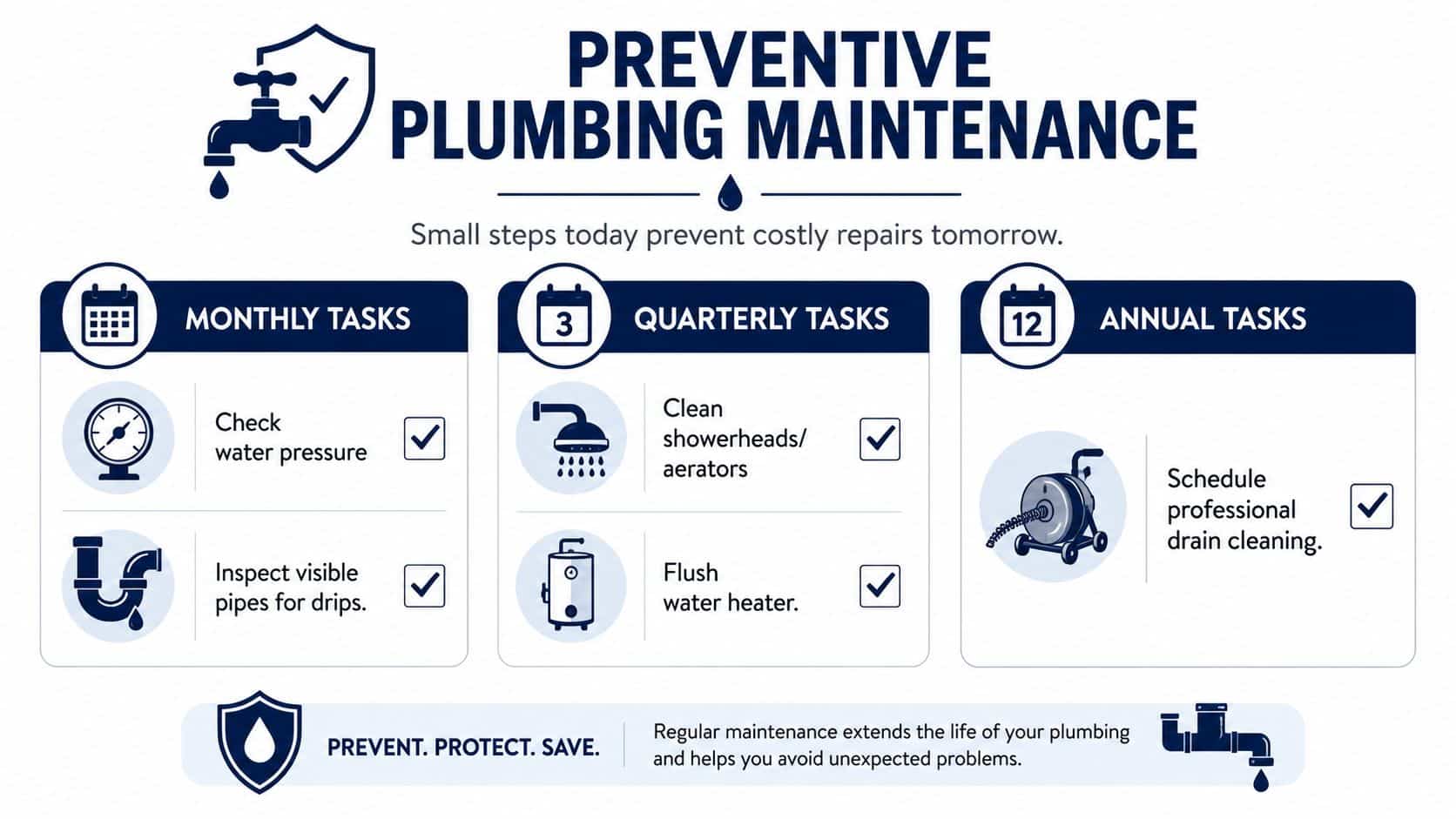
Prevention works best as a short routine rather than a single annual scramble. Check visible connections for drips, confirm that shutoff valves operate, watch for unexplained changes in water use, and inspect water-treatment equipment. Knowing where the main shutoff is lets you limit damage while waiting for service.
What homeowners can handle
Replacing a faucet aerator, cleaning a removable drain trap, and adjusting a toilet component are reasonable tasks when the parts are accessible and the water can be shut off safely. Avoid chemical drain cleaners in recurring or unknown blockages, and don't open a water heater or cut a slab without understanding the hazard and repair consequences.
Problems that need diagnosis
Call a licensed, insured plumber for suspected slab leaks, hidden water loss, recurring main-line backups, water-heater leaks, significant pressure changes, and underground supply or irrigation failures. A sewer camera inspection can also be valuable before buying or selling an older home, because visible fixtures don't reveal the condition of the private lateral.
For local residential service, drain cleaning in Las Vegas should be matched to the problem, whether that means a basic clearing, hydro jetting, camera inspection, or line repair. Choose a licensed and insured professional with direct experience in Southern Nevada homes, not someone offering the quickest temporary fix.
MG Drain Services LLC provides residential drain cleaning, sewer camera inspections, hydro jetting, leak detection, water-heater service, and plumbing repairs in Las Vegas, Henderson, and North Las Vegas. Call 702-480-8070 or visit MG Drain Services LLC to schedule a diagnosis for recurring backups, hard-water damage, hidden leaks, or other plumbing problems.