The smell hits you first—a foul, rancid odor coming from the drains. Then, your sinks start draining slower and slower. If you’re a Las Vegas homeowner or business owner, these aren’t just minor annoyances; they are urgent warning signs that your grease trap is failing. Neglecting it can lead to disgusting backups, costly plumbing repairs, and even health code violations.
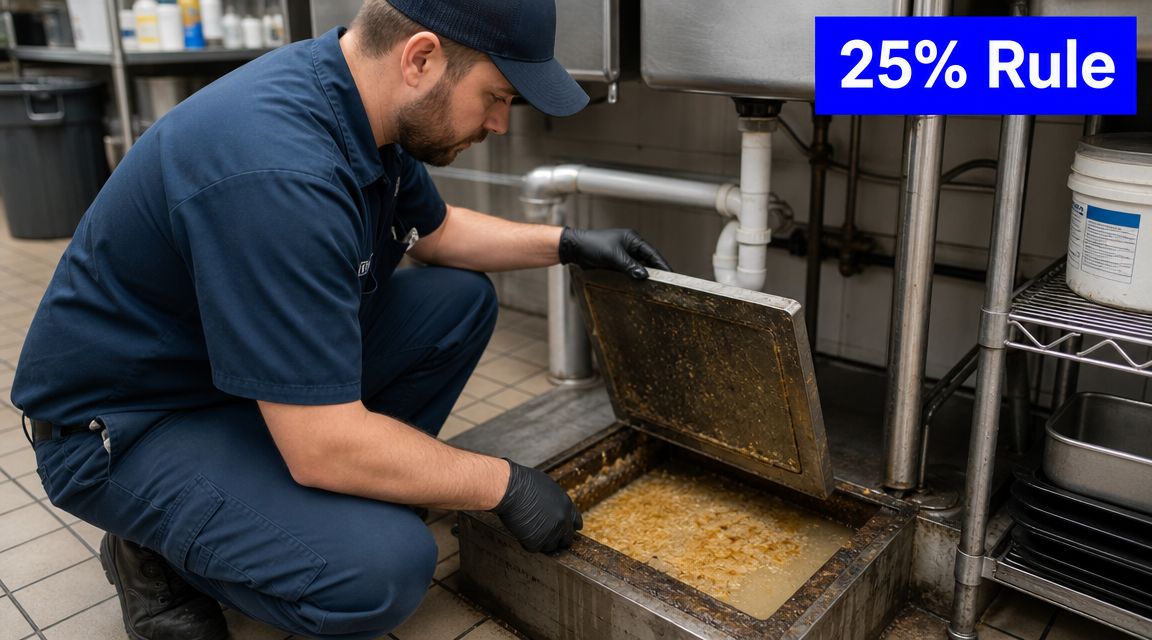
So, how often to clean a grease trap to avoid this nightmare? The professional standard isn’t a guess on a calendar. It's about following the “25% Rule.” Once your trap is one-quarter full of fats, oils, and grease (FOG), it’s time to call in the professionals. At MG Drain Services, we see firsthand what happens when Las Vegas properties ignore this rule—and the consequences are always messy and expensive.
Why the 25% Rule Beats a Calendar
Some businesses in Las Vegas try to schedule a cleaning every one to three months, but that's just guesswork. Your actual cleaning schedule depends entirely on how much FOG your kitchen produces.
A high-volume restaurant on the Strip will fill its trap way faster than a small cafe in Henderson or a residential home. A fixed schedule just doesn't account for your busy seasons, slow weeks, or menu changes. This is why the 25% Rule is the only metric that really matters for drain cleaning in Las Vegas.
What Is the 25% Rule?
It's a simple, non-negotiable standard in our industry. Once the combined layer of FOG and settled food solids takes up about a quarter of your trap's total liquid depth, it’s time to call in licensed & insured professionals like MG Drain Services.
Why is this specific number so important? Because beyond this point, your grease trap simply can't separate FOG from wastewater effectively.
Expert Insight from a Las Vegas Plumber: A grease trap that is more than 25% full isn't trapping grease anymore—it’s just letting it flow straight into your pipes and the city sewer system. This is where the worst clogs and backups begin. We see it every day in local homes and businesses.
This table shows why hitting that 25% level is the critical signal for maintenance.
The 25% Rule At a Glance
| Fill Level | Trap Efficiency | Recommended Action |
|---|---|---|
| Less than 25% | High. The trap is working as designed, effectively separating FOG from wastewater. | Monitor regularly, but no immediate action is needed. |
| At or Over 25% | Low to None. The trap can no longer separate grease, allowing it to escape into the sewer lines. | Schedule a professional pump-out immediately. You are at high risk for clogs, odors, and fines. |
This 25% threshold isn't arbitrary; it’s widely adopted in municipal codes because it’s the point where efficiency plummets. For any commercial kitchen or property manager in Las Vegas, Henderson, or North Las Vegas, ignoring this can lead to serious headaches.
Relying on a calendar instead of inspections can quickly cause:
- Foul Odors: Decomposing grease and food solids create a rancid smell that can drive away customers and tenants.
- Slow Drains: The first warning sign is often water taking forever to drain from sinks and floor drains in Las Vegas homes.
- Costly Clogs: That escaping grease hardens inside your pipes, creating stubborn blockages that require serious tools like the hydro-jetting services we offer at MG Drain Services.
- Fines and Violations: Local health and sanitation departments in the Las Vegas area don't mess around. Neglecting your grease trap is a fast track to non-compliance fines.
Ultimately, routine inspections are far more effective than just picking a date. It's about knowing what's actually happening inside your trap. To dig deeper into this standard, you can read up on the 25% rule's importance.
What Is a Grease Trap and Why Is It Essential
Think of a grease trap as the gatekeeper for your plumbing system. It has one critical job: to catch and hold all the fats, oils, and grease (FOG) that go down your drains before they wreak havoc on your pipes and the city's sewer lines.
This simple box is installed in the drain line of both homes and businesses all over Las Vegas. As wastewater from your sinks flows in, the trap slows it down. Since grease and oil are lighter than water, they float to the top. Heavier food scraps sink to the bottom. This allows the cleaner water in the middle to flow out safely to the main sewer.
The Two Main Types of Grease Traps
Not all grease traps are the same, and knowing the difference is key to keeping your property running smoothly. The right one for you depends entirely on the amount of grease you produce.
- Small Under-Sink Interceptors: You'll find these compact units tucked away under sinks in small cafes, coffee shops, and even some residential kitchens throughout Las Vegas. They're built for low-volume use and need to be cleaned out frequently.
- Large Outdoor Interceptors: These are the big, in-ground concrete tanks you see behind restaurants and major commercial kitchens. Capable of holding hundreds or thousands of gallons, they are designed for high-volume operations and require a professional with specialized pump trucks to service them.
Why This Matters: In a place like Las Vegas or Henderson, one person's plumbing problem can quickly become everyone's problem. A single neglected grease trap won't just back up your building—it can unleash a solid plug of hardened grease into the main sewer line, causing a massive blockage that affects the whole neighborhood.
Without a working grease trap, that hot liquid FOG cools down and hardens inside your pipes, forming clogs as tough as concrete. These are the kinds of blockages that a simple drain snake can't touch, often resulting in disgusting and incredibly expensive sewer backups.
For any restaurant owner or property manager in Southern Nevada, a well-maintained grease trap isn't just a suggestion—it’s a non-negotiable part of doing business responsibly. It protects your property, keeps you compliant with local codes, and prevents you from causing a major headache for the community. Keeping this device clean is the single best way to avoid the most catastrophic plumbing emergencies.
Factors That Determine Your Cleaning Schedule
While the 25% Rule is a great guideline for when to call for a cleaning, it doesn’t tell you how fast your trap will get there. The real answer to how often you should clean your grease trap isn't a simple one-size-fits-all number. It’s all about your specific situation.
Think of it this way: a packed steakhouse on the Las Vegas Strip is going to need service far more often than a quiet coffee shop in Henderson. Several key factors come into play, and understanding them is the first step to building a smart maintenance plan that keeps you out of trouble.
Business Volume and Kitchen Output
The single biggest factor is how much FOG (fats, oils, and grease) your kitchen actually produces. A restaurant that’s busy from open to close, running deep fryers, grills, and woks, will fill its grease trap in a fraction of the time compared to a place serving mostly salads and sandwiches.
Here in Las Vegas, seasonal tourism is a huge deal. When a major convention rolls into town or the holidays hit, that means more customers, more food being cooked, and a lot more grease heading for your drains. Experienced restaurant and property managers know this and schedule extra cleanings during these peak periods.
Grease Trap Size and Type
It’s simple math: a larger, 1,000-gallon outdoor interceptor can hold more grease than a small 20-gallon trap tucked under a sink. The size of your trap, measured in gallons, sets its total capacity.
But here’s the catch—a bigger trap isn't a free pass to put off service. A large interceptor at a high-volume kitchen might still hit its 25% limit just as quickly as a small trap at a low-volume café. It’s all relative to the amount of FOG you're producing.
This infographic gives a quick look at the two main types of grease traps and what they’re used for.
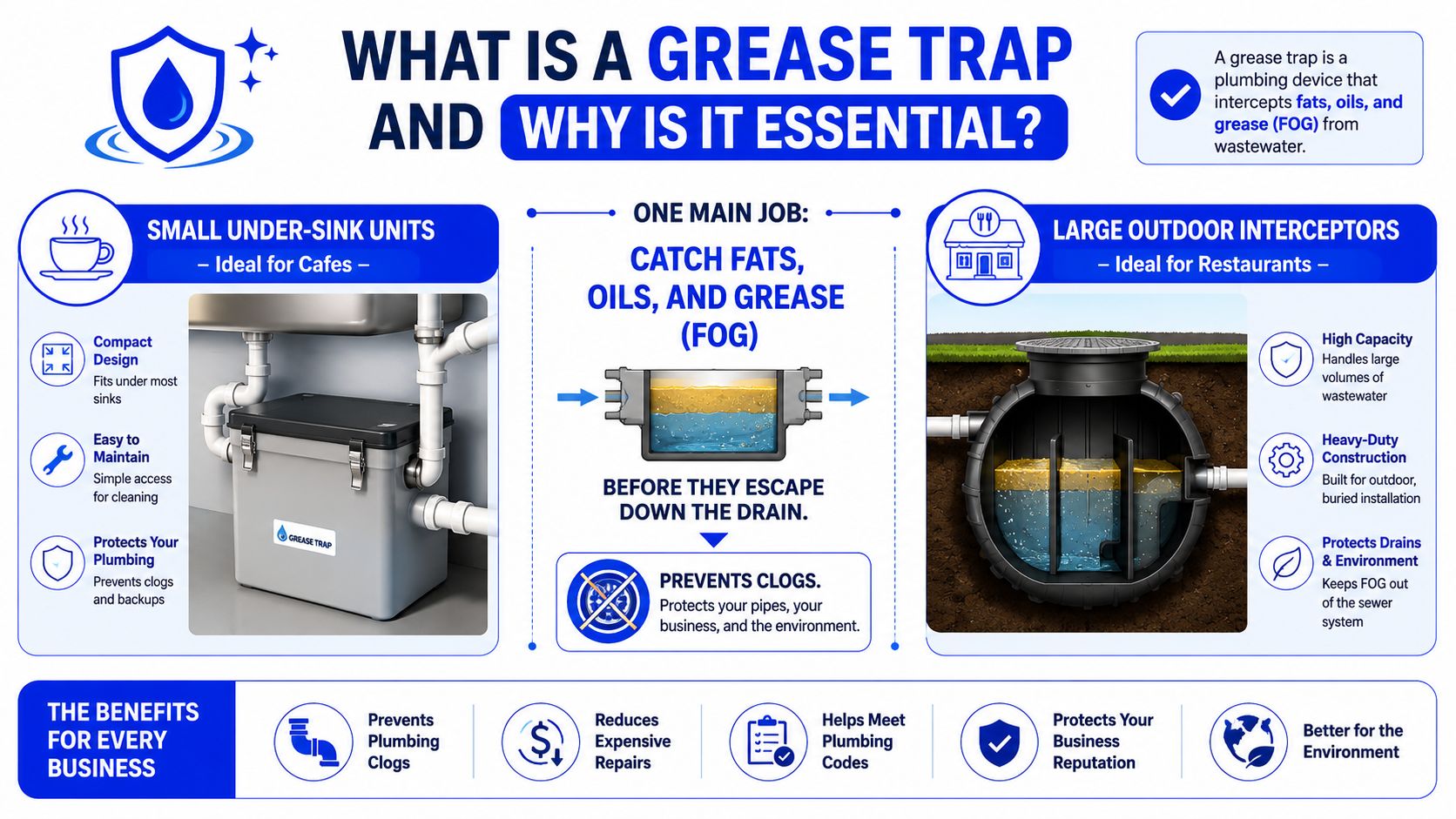
Whether it’s a small unit under the sink or a massive concrete tank buried outside, they both have the same critical job: protecting your pipes by stopping FOG in its tracks.
Menu Items and Cooking Methods
Your menu is a crystal ball for predicting grease output. Just look at what you’re cooking and how you’re cooking it.
- High-Grease Foods: Anything with red meat, bacon, butter, heavy cream, or cheese is going to produce a lot of FOG.
- Cooking Styles: Deep frying, griddling, and sautéing generate way more grease than baking or steaming.
Your cleaning frequency ultimately comes down to a few key variables. This table breaks down what pushes your schedule forward versus what gives you a little more breathing room.
Grease Trap Cleaning Frequency Factors
| Factor | Requires More Frequent Cleaning | Allows for Less Frequent Cleaning |
|---|---|---|
| Kitchen Output | High-volume kitchens, constant use of fryers & grills | Low-volume kitchens, focus on boiling or baking |
| Menu Items | Fried foods, red meats, dairy, heavy sauces | Salads, sandwiches, steamed items, baked goods |
| Trap Size | Small under-sink units (less holding capacity) | Large outdoor interceptors (more holding capacity) |
| Best Practices | Pouring excess grease down drains, poor scraping | Diligent scraping of plates, use of drain screens |
As you can see, your daily habits and the type of food you serve have a direct impact on how often you'll need to call for a pump-out.
Pro Tip: Treating your grease trap cleaning as a non-negotiable part of your routine is key. It’s just as important as any other scheduled drain servicing and is your best defense against messy backups.
By looking closely at these factors, you can stop guessing and start building a maintenance plan that works for your business. Taking these proactive steps is one of the smartest ways to prevent clogged drains and shield your property from the nightmare of a plumbing emergency.
Warning Signs Your Grease Trap Needs Cleaning
Your grease trap isn't the silent type. When it’s getting full and needs service, it will absolutely let you know. For any Las Vegas property owner, learning to spot these red flags is the difference between a routine cleaning and a messy, expensive plumbing disaster.
Think of it as your plumbing system giving you a heads-up before a small problem turns into a catastrophe.
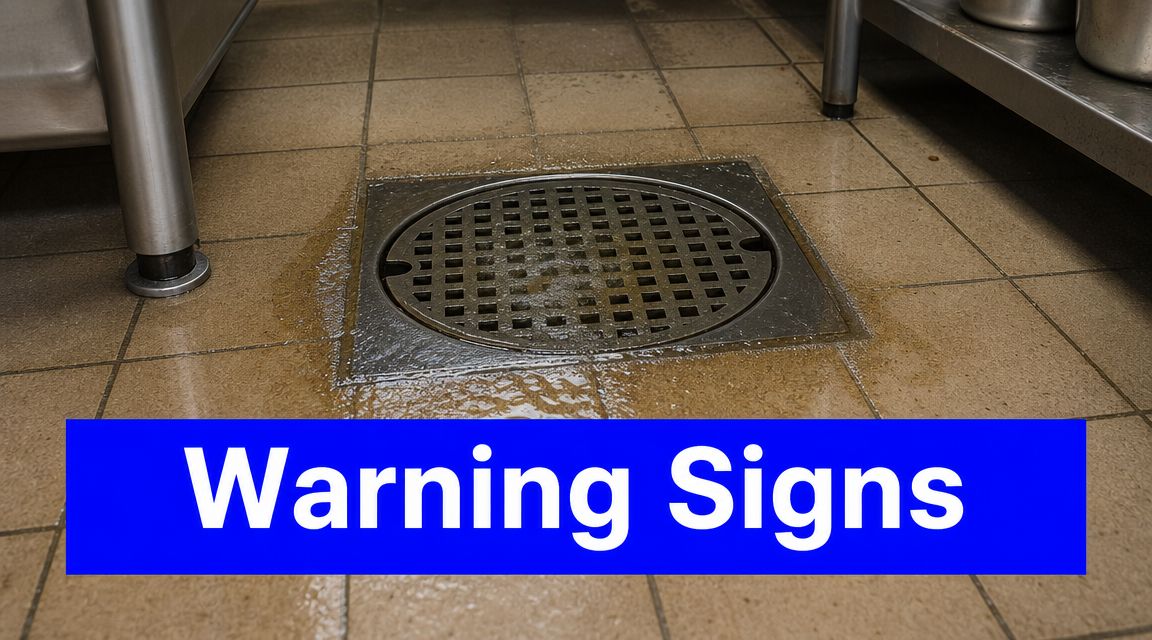
Catching these symptoms early is the key to preventing a full-blown sewer backup. Here’s what you need to look out for.
Foul and Unmistakable Odors
One of the very first signs of a full grease trap is a powerful, nasty smell coming from your drains. This isn't just a bit of sink funk; it's a deeply rancid odor from all the decomposing fats, oils, and old food bits that have been sitting in the trap.
If you, your staff, or your customers start noticing a rotten smell that just won't quit, your grease trap is the prime suspect.
Slow Draining Sinks and Fixtures
Are your kitchen sinks, floor drains, or other fixtures taking forever to drain? That's a classic symptom of a grease trap that’s already passed its 25% full mark.
Once the trap gets too full, it can't separate grease from water effectively anymore. This causes blockages to form in the outlet pipe, slowing drainage all across your plumbing system.
Expert Insight: A slow drain is more than just an inconvenience—it's a warning that a total clog is just around the corner. Ignoring it is like hearing a smoke alarm and just hoping the problem goes away. As local plumbing professionals, we know a bigger issue is almost guaranteed to follow.
Gurgling Sounds and Frequent Clogs
If you hear strange gurgling noises coming from your pipes as water goes down, that's a sign that air is getting trapped in the lines because of a blockage. As grease builds up and hardens, it narrows the pipes, forcing water to struggle its way through.
This pressure buildup often leads to frequent clogs in your sinks and toilets that seem to come back no matter what you do to clear them.
For a restaurant, ignoring these signs doesn't just risk a messy backup; it can lead to serious health code violations. Knowing these essential tips for restaurant owners can help you steer clear of expensive fines and protect your business's reputation.
DIY Maintenance vs Professional Pumping
When it comes to your grease trap, you might wonder what you can handle yourself versus when it's time to call in the pros. It's smart to draw a clear line between simple checks you can do and a full, professional pump-out. Knowing the difference isn't just about best practices—it’s about keeping your business safe, compliant, and running smoothly.
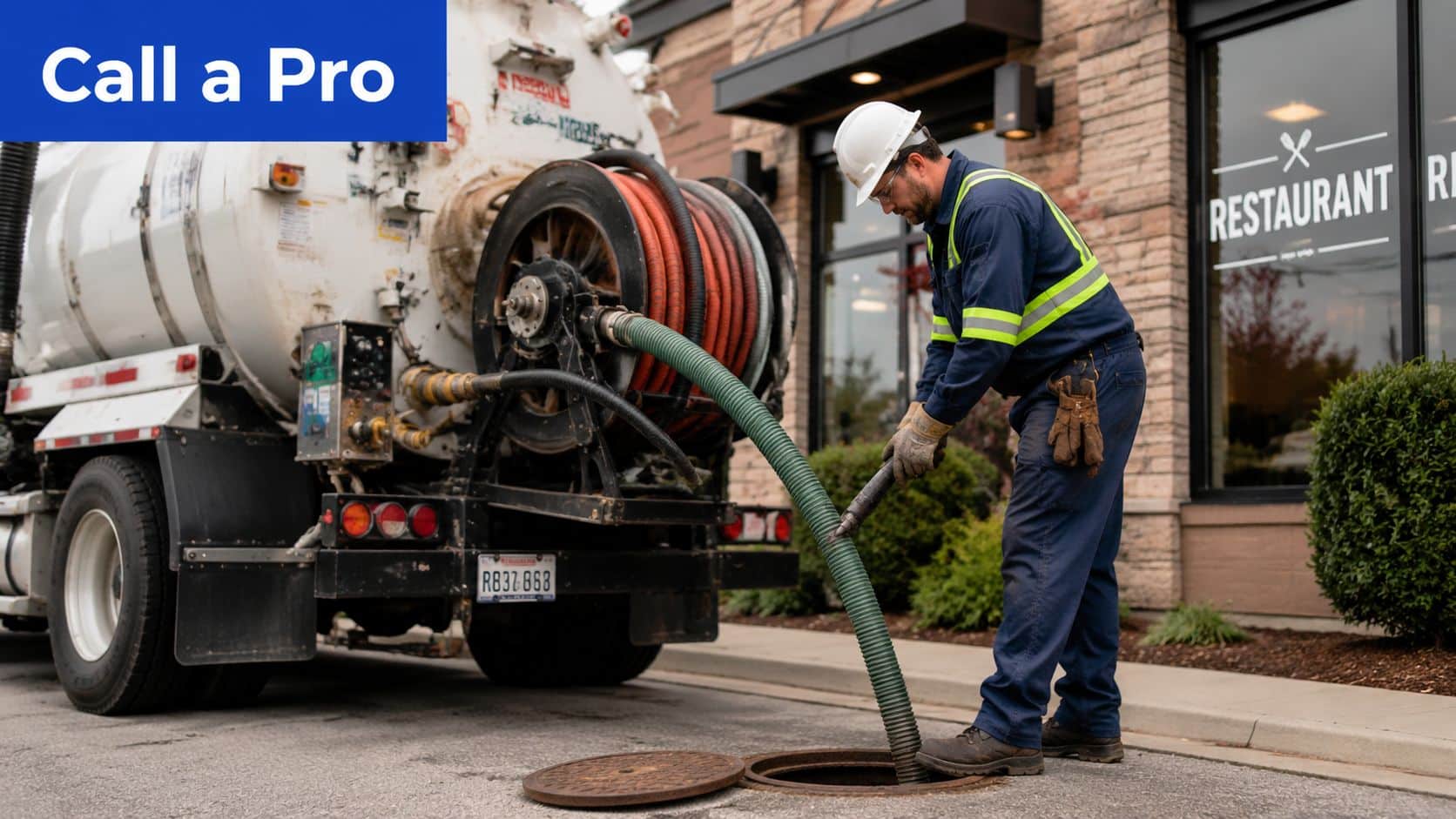
Let's be clear: trying to pump out a grease trap is not a weekend DIY project. It’s a hazardous job that requires specialized equipment and an understanding of legal disposal methods.
What You Can Do Yourself
For most Las Vegas business and homeowners, your role is about regular, simple inspections. This is how you stay on top of the 25% Rule and know exactly when it’s time to schedule a cleaning.
Here’s what you can safely handle:
- Check Your FOG Levels: Carefully open the lid and use a measuring stick to see how thick the top layer of grease and the bottom layer of solids have become.
- Watch for Warning Signs: Keep an eye (and nose) out for those tell-tale foul odors, slow drains, or gurgling sounds we talked about earlier.
- Keep a Simple Log: Jot down the date and the levels you measured. This data is your best friend for predicting when you'll need service.
These quick checks only take a few minutes, but they give you the power to call for a professional cleaning before you have a messy, expensive emergency on your hands.
When to Call a Professional
A full pump-out is a complex and potentially dangerous task that should only be handled by a licensed and experienced company like MG Drain Services. Here in Clark County, attempting this yourself is not just a bad idea—it can be illegal due to strict waste disposal laws.
Professional Standard: Proper grease trap cleaning isn't just skimming the grease off the top. It means completely pumping out everything inside—grease, water, and solids—and then scraping the walls and baffles to get rid of hardened gunk.
This is a job that demands:
- Specialized Equipment: Professionals use powerful vacuum trucks designed to safely remove and transport the waste.
- Regulatory Compliance: We have to dispose of all FOG waste at a licensed processing facility, following every environmental rule set by Las Vegas and Southern Nevada.
- A Thorough Inspection: While we're there, our experienced technicians will also inspect the trap's baffles, walls, and lid for any damage or wear that could cause problems down the road.
If a trap isn't cleaned completely or the waste is disposed of improperly, you're just setting yourself up for major clogs. For the really tough blockages that build up over years, even more powerful tools are sometimes needed. You can see how we tackle the worst clogs by reading about our hydro-jetting services in Las Vegas.
Bottom line: trusting a professional is the only way to know the job is done right—safely, legally, and effectively.
Your Trusted Las Vegas Grease Trap Service
Knowing how often to clean your grease trap is one thing, but finding a reliable partner to do the job right is another. At MG Drain Services, we’re a local, family-owned company built right here in Las Vegas. We’ve built our reputation on years of hands-on expertise and a commitment to honest, straightforward service.
Our licensed and insured technicians know the ins and outs of both commercial and residential systems across Clark County. We don't do guesswork. Instead, our team creates practical, preventative maintenance plans that ensure your trap is serviced exactly when it should be—never too early and certainly not too late.
Why Choose MG Drain Services?
Hiring a local expert makes all the difference. We live and work in the same community we serve, so we have firsthand knowledge of the specific plumbing challenges Las Vegas properties face.
Here’s what sets us apart:
- True Local Expertise: We proudly serve Las Vegas, Henderson, and North Las Vegas, making sure our work always meets local regulations and your specific needs.
- Seasoned Technicians: Our team is made up of experienced professionals who treat every job with the precision and care it deserves.
- Honest, Upfront Pricing: We give you a clear, transparent quote before starting any work. You’ll never have to worry about hidden fees or surprises.
- Fast, Reliable Service: We know that plumbing issues can’t wait. Our crew responds quickly to get your system back to normal without unnecessary delays.
For business owners, a properly maintained grease trap is non-negotiable for staying compliant and keeping operations running smoothly. To see how we keep all kinds of drains flowing freely, take a look at our guide to professional drain cleaning in Las Vegas.
Don't wait for a clog, a foul odor, or a costly fine to disrupt your home or business. You can take proactive control of your maintenance with a team that genuinely cares about your peace of mind.
Call MG Drain Services LLC for fast, professional plumbing in Las Vegas. Our experienced technicians and honest pricing make us the trusted local choice for homeowners and property managers.
Call 702-480-8070 now for a fast response.
Grease Trap Cleaning FAQ
When it comes to grease traps, a little knowledge goes a long way in preventing big, expensive problems. We get a lot of questions from Las Vegas business and homeowners about proper maintenance, so we've put together answers to the issues we see most often.
What Is the 25% Rule for Grease Traps?
The 25% Rule is the golden rule in our industry for a reason. It's a simple guideline: once your grease trap is 25% full of fats, oils, grease, and solids (we call this FOGS), it's time for a pump-out.
Think of it like a filter that's getting clogged. Once it hits that one-quarter mark, its ability to separate grease from your wastewater plummets. Grease starts escaping into your pipes and, even worse, the city sewer system. Sticking to this rule is far more effective than just picking a random date on a calendar.
Are There Local Regulations for Grease Trap Cleaning in Las Vegas?
Yes, and they are strictly enforced. Both Southern Nevada and the City of Las Vegas have health codes that demand all food service establishments install and regularly maintain their grease traps.
Local Compliance Is Mandatory: These aren't just suggestions; they're in place to protect our public sewer system from disastrous clogs. Ignoring them can lead to hefty fines, shutdowns, and a lot of lost business. Working with a licensed pro like MG Drain Services keeps you on the right side of the law.
How Much Does Grease Trap Cleaning Cost in Las Vegas?
The price for a professional cleaning in the Las Vegas area really comes down to a few specifics of your setup.
- Trap Size: This is the biggest factor. A larger, higher-capacity trap will naturally cost more to service than a small under-sink unit.
- Accessibility: Is your trap easy to get to? An outdoor interceptor with clear access is usually quicker—and therefore less expensive—to pump than an indoor one tucked away in a cramped space.
- FOGS Volume: If a trap hasn't been serviced in a while, the grease can become a hardened, solid mass. That requires a lot more labor and time to clean out properly, which affects the cost.
At MG Drain Services, we believe in straightforward, honest pricing. We'll give you a clear quote for your specific system, with no surprises.
Can I Pour Hot Water and Soap Down the Drain to Clear Grease?
Absolutely not. This is a common myth that actually creates a bigger headache down the road. Pouring hot, soapy water down the drain just temporarily melts the grease, allowing it to travel deeper into your plumbing.
Once that greasy water cools down further in the system, it solidifies again. Now you have a blockage that's much deeper and harder to reach. The only real solution is to keep grease out of the drains to begin with and have your trap professionally pumped on a regular schedule.
Don't wait for a foul odor, slow drain, or messy backup to disrupt your business or home. For expert grease trap cleaning and all your drain service needs in Las Vegas, Henderson, and North Las Vegas, trust the local professionals who have seen it all.
Call MG Drain Services LLC today at 702-480-8070 or book your appointment online. Se habla español.