
A bathroom sink that drains in slow motion is one of those problems people put off until the basin starts holding dirty water every morning. If you're searching for how to fix a slow draining bathroom sink in Las Vegas, Henderson, or North Las Vegas, the right move is to diagnose the clog before you start pouring random products down the drain. Most slow sinks come down to buildup near the stopper or in the trap, but not every slow sink is a simple top-side cleanup.
In Las Vegas homes, I see the same mistake all the time. People try the quickest trick they found online, the sink improves a little, and then the problem comes right back. The better approach is to figure out what kind of blockage you're dealing with, use the least risky fix first, and know when to stop before a minor drain issue turns into a cabinet leak or a deeper plumbing problem.
That Annoying Slow Drain A Familiar Problem in Las Vegas
A slow bathroom sink usually starts small. Water lingers around the drain. Toothpaste foam hangs around longer than it should. Then one day the basin takes so long to empty that everyone in the house notices it.
That's common in Las Vegas homes, and it's frustrating because the sink still sort of works. That makes people delay the repair. In reality, a slow drain is an early warning. The line is restricting flow, and the buildup is usually getting thicker, not better.
Hard water can add to the headache in this valley. Even when the main blockage is hair and bathroom residue, mineral scale can make the inside of the drain less forgiving and help debris stick faster.
Practical rule: If a bathroom sink is draining slower week after week, treat it like a clog in progress, not a harmless annoyance.
The fix depends on where the restriction sits. Some homeowners can clear it in minutes. Others are dealing with a blockage farther down the branch line, and that takes a different toolset.
Uncovering the Culprits Behind Your Slow Sink
The most common bathroom sink clogs aren't mysterious. They're a mix of hair, soap scum, toothpaste, and debris that collect around the stopper and in the P-trap. A practical first line of defense is mechanical removal of the clog, because bathroom sinks are one of the most clog-prone fixtures in a home and recurring slow drainage can signal buildup beyond the visible drain opening, as noted in this slow-draining sink plumbing guide.
What usually builds up first
A bathroom sink clogs differently than a kitchen sink. In the bathroom, the blockage often forms in layers.
- Hair catches first: Even short hair grabs onto the pop-up assembly.
- Soap and toothpaste stick next: They coat the trapped hair and narrow the flow path.
- Personal care residue hardens the mess: Creams, shaving residue, and general grime help turn a soft clog into a stubborn one.
That's why a sink can go from “a little slow” to “barely draining” without a single dramatic event.
What homeowners often miss
A lot of people look straight down the drain, don't see much, and assume the line is clear. It often isn't. The stopper assembly can hold a surprising amount of sludge, and the P-trap under the sink is a common holding point.
If you've also noticed odors, this related guide on a sewer smell in a bathroom sink can help you separate a simple clog from a drain system issue.
For sink odors tied to slime and organic film near the drain opening or overflow channel, some homeowners also look into effective biofilm removal products as part of surface cleaning. That can help with residue, but it's not a substitute for physically removing a hair-heavy clog.
Slow drainage that keeps returning usually means some material is still sitting in the system. You didn't solve it. You only opened a narrow path through it.
First-Response Fixes Safe and Simple DIY Methods
The safest DIY work starts with mechanical cleaning, not harsh chemistry. If the sink is only recently slowing down, there's a good chance the problem is close to the drain opening.
Start at the stopper
Remove the pop-up stopper if your sink has one. Pull off the hair, sludge, and paste-like residue stuck to it. Then look down into the drain body with a flashlight. If you can reach visible debris with a plastic zip tool or small hand tool, remove it.
A lot of homeowners skip this and go straight to liquids. That's backwards. If hair is wrapped around the stopper assembly, liquid treatments rarely solve the actual restriction.
Use a plunger the right way
A sink plunger can work, but only if you use it correctly. Cover the overflow opening with a wet cloth, then add enough water to cover the plunger cup and give it several controlled plunges.
If you don't seal the overflow, pressure escapes and plunging feels useless even when the setup is the problem.
Be careful with hot water and home remedies
Many guides recommend boiling water, baking soda and vinegar, or repeated hot-water flushing. The issue is that boiling water may damage plastic pipes, it isn't a durable fix for hair-based clogs or pipe-scale buildup, and repeated chemical treatment can be less effective than mechanical cleaning for recurring clogs, as explained in this slow bathroom sink drain overview.
Comparing Common DIY Drain Fixes
| Method | Best For | Risk Level |
|---|---|---|
| Cleaning the stopper | Hair and sludge near the drain opening | Low |
| Plastic drain snake | Shallow hair clogs | Low |
| Plunging with overflow sealed | Soft blockage near the trap | Low |
| Hot water flush | Light soap or greasy residue | Moderate |
| Baking soda and vinegar | Minor residue, light maintenance | Low to Moderate |
| Repeated chemical drain cleaner use | Not a good first choice for recurring clogs | Higher |
For homeowners dealing with different fixture types, this guide on how to unblock a kitchen sink is useful because it shows how drain strategy changes when the clog material changes. Bathroom sinks usually need a different approach than grease-heavy kitchen lines.
If you want a more detailed look at tool-based clearing from the drain opening, this walkthrough on how to snake a sink drain is a solid next step before opening pipes under the cabinet.
Don't confuse a temporary improvement with a real repair. If water drains a little faster but still pools, there's still material restricting the line.
The P-Trap Cleanout A Plumber's Step-By-Step Guide
If the sink still drains slowly after you've cleaned the stopper and tried the basic opening methods, the P-trap is the next honest checkpoint. This step is not just about removing gunk. It tells you what kind of clog you're dealing with. A trap packed with hair sludge points to a local blockage under the sink. A mostly clear trap with poor drainage points farther down the line.
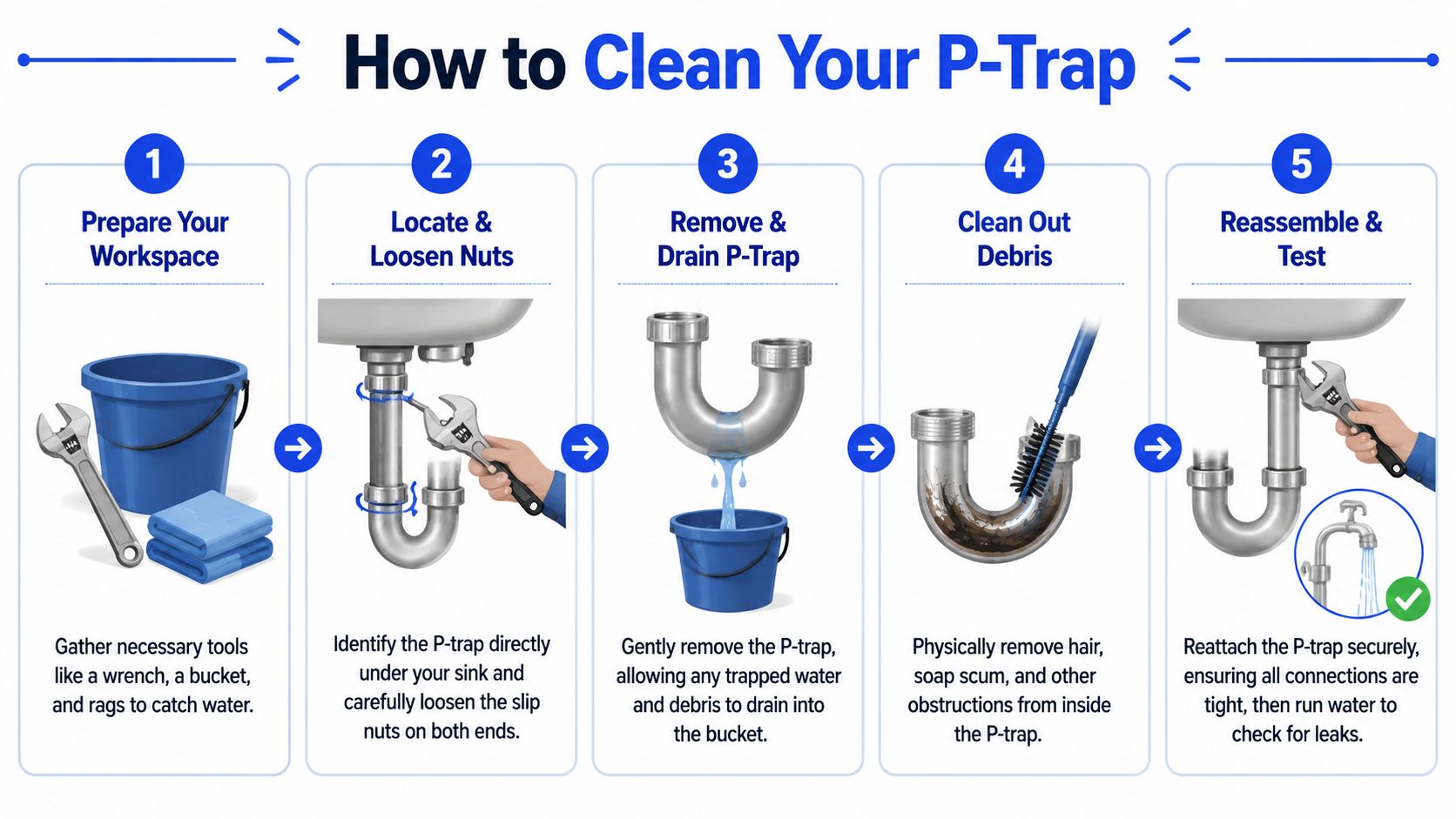
What you need before you start
Set the area up properly so you can work cleanly and put it back together without leaks.
- Bucket: Place it directly under the trap before you loosen anything.
- Channel-lock pliers or a wrench: Some slip nuts come off by hand. Others are stuck.
- Rags or paper towels: You will have dirty water and sludge.
- Gloves: Recommended for both cleanup and grip.
How to clean the trap correctly
- Empty the cabinet first. Give yourself room to work and room to catch water.
- Set the bucket under the U-shaped bend. The trap always holds water.
- Loosen the slip nuts carefully. Support the trap with one hand so it does not drop and splash.
- Remove the trap and dump it into the bucket. Check for hair, black buildup, toothpaste paste, and anything solid that should not be there.
- Scrub the inside of the trap. A bottle brush works better than just rinsing it.
- Look into both adjoining pipe openings. If buildup continues into the wall side or tailpiece, the trap was only part of the problem.
- Reassemble it square and snug. Hand-tight is often enough on plastic fittings. Over-tightening can warp washers or crack nuts.
- Run water while watching the joints. Dry the fittings first so even a small drip shows up.
Many DIY projects derail at this stage. While clearing out the debris is straightforward, putting everything back together frequently triggers unexpected leaks. A misaligned washer or a cross-threaded nut can easily trade your slow-draining pipe for a ruined vanity cabinet.
A visual walkthrough helps some homeowners more than written instructions. This video shows the general process clearly:
What this step tells you
The trap contents help you diagnose the next move.
If the trap is loaded with debris and the sink drains normally after cleaning, you likely fixed the actual restriction. If the trap is fairly clear and flow is still poor, stop guessing. The blockage may be in the wall arm or branch drain, where a hand auger, machine cable, or a stronger cleaning method is the right tool. In heavier buildup cases, especially where soap residue has narrowed the pipe over time, a professional hydro jetting service in Las Vegas may be the better fix.
MG Drain Services LLC handles that kind of deeper drain diagnosis and cleaning when an under-sink cleanout does not solve the problem.
When to Stop DIYing Signs You Need a Drain Expert
You clear the stopper, clean the trap, put everything back together, and the sink still drains like it is half closed. That is the point where a plumber stops treating it like a simple under-sink clog and starts asking what kind of restriction is in the line.
Some slow bathroom sinks are not caused by hair and toothpaste sitting in the trap. The trouble may be in the wall arm, the branch drain, or the vent serving that fixture. That distinction matters because the wrong DIY method can waste an hour and make the next repair harder. A recurring slow drain after a trap cleaning usually means the restriction is farther in, not that you need more force.

Signs the clog is beyond basic DIY
A drain expert is the safer call when you see patterns like these:
- The sink improves for a day or two, then slows again: That usually means you punched a small opening through buildup but left most of the blockage behind.
- You hear gurgling after the water drains: That can point to a restriction deeper in the line or a venting issue that needs proper diagnosis.
- Nearby fixtures are acting strange too: If the tub, toilet, or another sink in the same area starts draining poorly, the problem may be in a shared branch line.
- There is a sewer odor under or around the vanity: That can come from a drain problem that goes beyond routine sink debris.
- The trap is clean but the wall side still backs up: At that point, the clog is likely past the area most homeowners can reach safely.
The diagnostic question is simple. Did the problem stay under the sink, or did it continue in the piping inside the wall? That is how plumbers decide whether a hand auger might work, whether a machine cable is needed, or whether the line has heavy residue that calls for professional hydro jetting for stubborn drain buildup.
Why pushing further can backfire
Homeowners usually get into trouble after the easy access points are already ruled out. They force a cable into thin tubular piping, damage the pop-up linkage, cross-thread slip nuts during another teardown, or keep pouring drain chemicals into a line that needs mechanical cleaning. I see that a lot in Las Vegas homes, especially older bathrooms with fragile chrome traps or plastic fittings that have already been overtightened once.
If you have already cleaned what you can reach and the sink is still slow, more guessing usually adds risk, not progress.
A qualified drain plumber can test whether the issue is a partial clog, a vent problem, or a branch line restriction before opening the wall or recommending stronger cleaning. If you are comparing companies, this guide on reliable plumbers for homeowners gives a good checklist for what to look for.
Your Trusted Las Vegas Drain Cleaning Solution
You clear the stopper, rinse the trap, and the sink still drains like it has a kink in the line. That is the point where a proper diagnosis matters more than another guess.
A good drain plumber should be able to tell you what type of problem they are seeing before they start selling equipment or extra work. In Las Vegas area homes, a slow bathroom sink can trace back to residue in the branch line, a restriction farther down the drain, or a venting issue that makes the sink act clogged when the pipe is only partly blocked. The fix depends on the cause.
Homeowners in Las Vegas, Henderson, and North Las Vegas usually want the same things. Clear communication, fair pricing, clean work, and a repair that holds up after the plumber leaves. That is a reasonable standard.
If you are comparing companies, articles about choosing reliable plumbers for homeowners can help you sort out who explains the problem well, who gives a real scope of work, and who is just quoting the fastest upsell. I tell people to pay attention to how a company talks through access, risk, and likely next steps. That usually tells you more than a sales pitch.
Call MG Drain Services LLC at 702-480-8070 or book service at mgdrainservices.com. For a stubborn bathroom sink clog, getting the right diagnosis early can save you from repeat backups, cabinet water damage, and paying twice for the same drain problem.
Frequently Asked Questions About Slow Drains
How can I prevent my bathroom sink from clogging again
Keep hair and debris out of the drain as much as possible. Clean the stopper regularly, especially if people in the home shave or use a lot of grooming products at that sink. If you wait until the water is already draining slowly, buildup has usually been collecting for a while.
For recurring maintenance issues, professional drain cleaning services in Las Vegas can help remove the residue that casual DIY cleaning leaves behind.
What is hydro jetting and is it right for my home
Hydro jetting is a professional drain cleaning method that uses high-pressure water to clear buildup inside drain lines. It's not the first tool for every slow bathroom sink, but it can be the right option when a line has recurring blockage farther downstream or heavy residue that keeps causing problems.
It's usually a decision made after a plumber evaluates the drain condition and the likely cause of the restriction. That service is commonly grouped under sewer and hydro jetting solutions when a standard top-side fix isn't enough.
How much does it cost to have a professional unclog a sink in Las Vegas
There isn't one flat answer because the price depends on what's wrong. A simple stopper or trap cleaning is different from a clog in the wall, a venting issue, or a line that needs camera inspection.
The honest way to price this is after a plumber identifies the location and severity of the blockage. Property managers and homeowners should be cautious of vague one-price promises before anyone has looked at the line.
Is baking soda and vinegar enough for a slow sink
Sometimes it helps with minor residue. It usually doesn't solve a real hair clog by itself. If the sink is repeatedly slow, physical removal is generally the smarter path.
That's especially true when the stopper or trap is holding the blockage. In those cases, the material needs to come out.
What if my sink still drains slowly after I cleaned the trap
That points to a blockage farther down the drain line or a vent-related issue. At that stage, deeper diagnosis matters more than repeating the same DIY step. A professional may recommend snaking, camera inspection, or stronger cleaning depending on what the symptoms suggest.
For more practical upkeep advice, homeowners can also explore home maintenance tips from MG Drain Services to stay ahead of drain and plumbing issues before they turn into backups.
If your bathroom sink is still slow, keeps clogging, or you're dealing with odors, gurgling, or repeated backups, call MG Drain Services LLC for professional help in Las Vegas. Licensed, insured, and locally based, the team serves Las Vegas, Henderson, North Las Vegas, and surrounding areas with experienced technicians, honest pricing, and fast response times. Call 702-480-8070 or book online at mgdrainservices.com.