

You open the water bill, stare at the number, and know something's off. In Las Vegas, that usually means one of two things. Either water use crept up without you noticing, or water has been running somewhere in the system when nobody was using it.
That's why every homeowner should know how to read a water meter for leaks. It's one of the fastest ways to confirm whether you're dealing with a hidden plumbing issue before it turns into wall damage, slab trouble, or another painful SNWA bill. In Las Vegas, Henderson, and North Las Vegas, this is one of the first checks any plumber should make because it gives you a clean yes-or-no answer.
A meter check won't fix the leak. But it will tell you whether you need to keep looking, shut off the water, or schedule professional leak diagnosis right away.
That Shocking Water Bill A Clue to a Hidden Problem
A lot of Las Vegas homeowners don't start with the meter. They start with the bill.
One month looks normal. The next month jumps for no obvious reason. Nobody's taking longer showers, the irrigation schedule hasn't changed, and there's no puddle in the house. That's when a hidden leak becomes the most likely suspect, especially in homes where the plumbing runs through walls, slabs, and buried yard lines.
The practical move is simple. Before tearing into drywall or guessing which fixture is causing the problem, check the meter. If you're already worried about a hidden line issue, water leak detection in Las Vegas is the right service to keep in mind, but the meter test comes first because it tells you whether water is passing through the system when the property should be quiet.
What this check tells you fast
A water meter won't tell you the exact broken fitting on its own. It will tell you whether the property is using water when it shouldn't be.
That matters because many leaks in Las Vegas homes aren't dramatic. They're small toilet leaks, slow irrigation line leaks, seepage under a slab, or a service line issue between the meter and the home. You may not hear them. You may not see them. You still pay for them.
When the meter moves with everything off, the plumbing system is telling you something. Listen to that before the damage spreads.
Why plumbers start here
This test is quick, safe, and high value. It helps separate a usage problem from a plumbing problem.
For homeowners, landlords, and small commercial property owners, that means less guesswork. For plumbers in Las Vegas, it's the fastest way to decide whether the next step is fixture troubleshooting, shutoff isolation, or a professional leak search.
Why a Small Leak Is a Big Deal for Las Vegas Homeowners
In Southern Nevada, wasted water isn't just a billing issue. It's a property issue and a conservation issue.
Las Vegas homes deal with hard water, irrigation systems, exposed outdoor heat, and plumbing layouts that can hide trouble for a long time. A tiny leak can stay out of sight while it stains drywall, weakens flooring, damages cabinets, or keeps soil wet around the house. By the time it becomes obvious, the repair often involves more than replacing one part.
The leak you barely notice can still cost you
A small drip sounds harmless until you look at the water loss. A small faucet drip can waste about 30 gallons per day, roughly 900 gallons per month, while a 1/8-inch leak can waste about 3,600 gallons per day, according to Southside Water's leak guide.
Those numbers matter in a desert city. They also explain why a water bill can climb even when your daily routine feels unchanged.
Why this gets worse over time
Leaks rarely stay convenient.
A toilet that runs off and on can keep feeding water into the bowl. An irrigation leak can soften soil and create settlement problems. A buried line can wash out ground below the surface while giving you very little visible evidence above it. Inside the house, slow leaks often show up late, after trim, flooring, or drywall has already taken the hit.
Here's what makes hidden leaks expensive:
- Water charges keep building: You pay for every bit of metered water that passes through the system.
- Damage spreads beyond the pipe: Cabinets, baseboards, ceilings, flooring, and paint often suffer before the leak is found.
- Repairs become less targeted: The longer a leak runs, the more areas a technician has to inspect and the more materials may need replacement.
In Las Vegas, a leak isn't only about wasted water. It can turn into a building problem if you wait too long.
That's why learning the meter is such a useful home maintenance skill. It gives you a reliable first check without opening walls or digging up the yard.
Finding and Reading Your Water Meter Like a Pro
Most residential water meters are outside, not inside the garage or next to the water heater. In many Las Vegas Valley neighborhoods, the meter sits near the curb or sidewalk inside a concrete or plastic box.
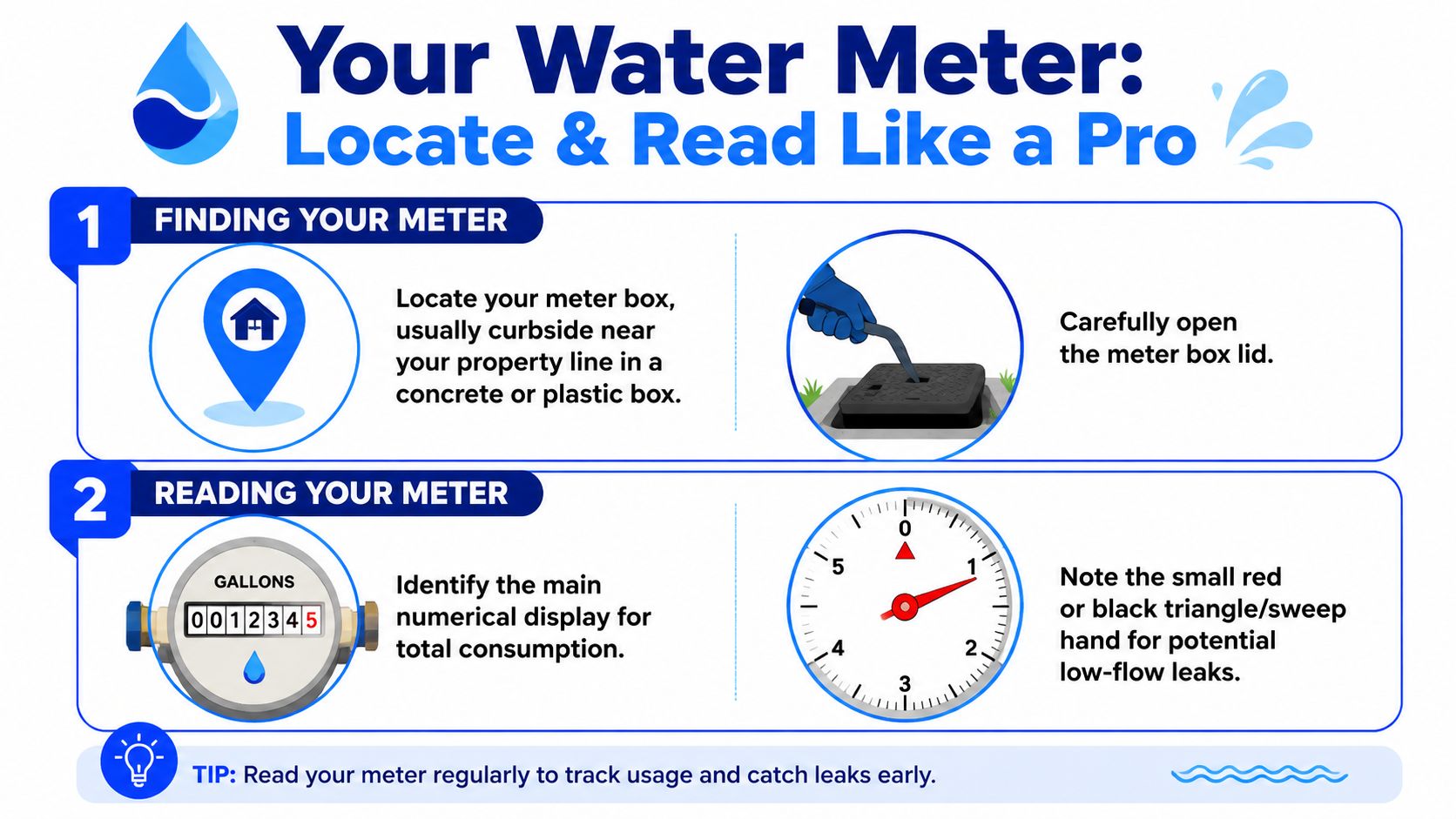
If the box lid is stuck or heavy, use care. Don't jam your fingers into a tight gap and force it. Open it carefully and look before reaching in.
What you're looking at
Once the lid is open, focus on two parts of the meter.
The first is the main numerical display. That's the usage register. Mountain View notes that the numbered register is the billing usage display and that many residential meters include a small leak-detector triangle or asterisk that should not move when no water is being used. If it does move, a leak exists somewhere on the property, as explained in the City of Mountain View water meter guide.
The second is the low-flow indicator. Depending on the meter, it may look like a small triangle, star, or sweep pin. That tiny marker is what helps catch slow leaks that don't jump out on a quick glance.
Analog and digital meters
In the field, homeowners usually run into one of two styles.
- Analog meter: You'll see a dial face with numbers and a small indicator that reacts to flow.
- Digital meter: You'll see a digital display instead of a traditional dial. The layout varies by model, but the job is the same. Read the total usage and watch for flow when the property should be quiet.
If you're not sure where the house-side shutoff is, it's worth understanding that before you need it in a hurry. This guide on how to install a shut off valve also helps homeowners understand the role that valve plays in isolating plumbing problems.
A quick visual walkthrough helps if this is your first time checking a curbside box.
Read the meter without overthinking it
You do not need to decode every marking to find a leak. For leak checking, the goal is simpler than billing analysis.
Use this approach:
| Meter part | What it tells you | What matters for leak checking |
|---|---|---|
| Main register | Total water used | Compare the starting reading to the later reading |
| Leak indicator | Tiny ongoing flow | If it moves with all water off, water is passing through |
| Meter location | Where service enters property | Helps you work back toward the house and shutoff |
Practical rule: Don't stare at the dial for a few seconds and guess. Record a reading, wait with verified zero usage, then compare the numbers.
That method prevents false alarms from brief needle movement or normal pressure fluctuation.
Performing a Definitive Leak Detection Test
Once you know which part of the meter is the register and which part is the low-flow indicator, you can run the definitive test. This is the same logic plumbers use before they start chasing fixtures or discussing slab leaks.
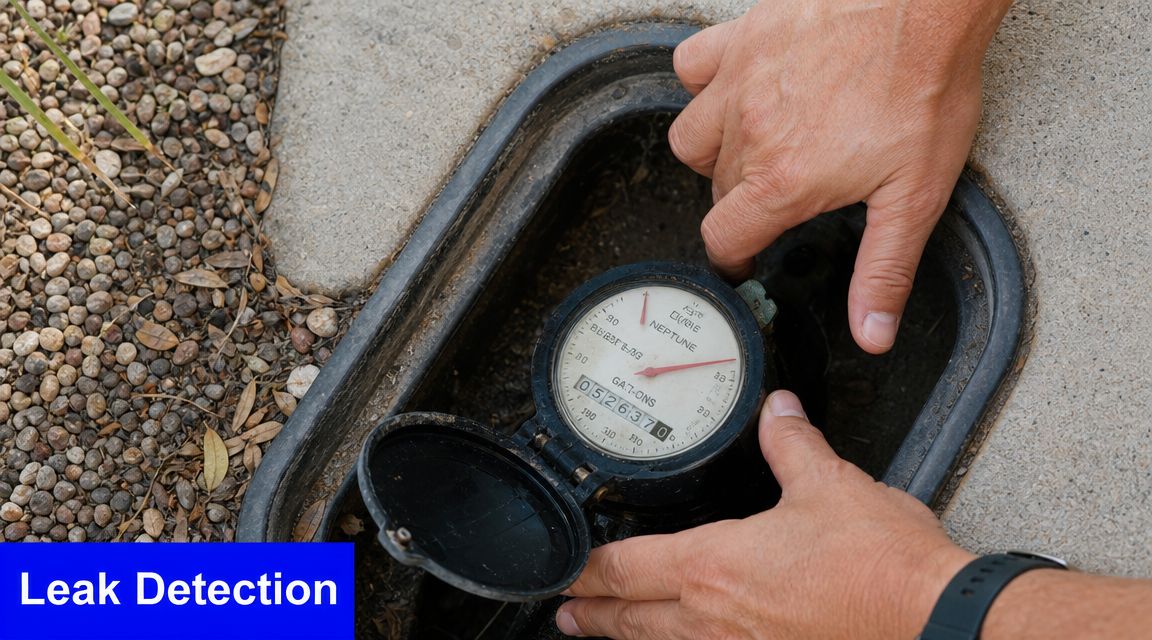
The quiet house test
Get the house as close to zero water use as possible. That means no faucets, no showers, no dishwasher cycle, no washing machine fill, no toilet flushing during the test, and no irrigation running outside.
Then look at the meter and do two things. Watch the low-flow indicator for immediate movement, and record the main reading so you can compare it later. Utility guidance says a strong leak check involves shutting off all water, watching the low-flow indicator for about 10 minutes, then re-reading the register after 30 to 60 minutes. If the numeric reading changes, that is strong evidence of a leak, as outlined in SAWS meter-reading guidance.
Shut everything off. Watch the leak indicator. Write down the reading. Wait. Compare the second reading to the first.
That simple sequence works better than taking one quick look and hoping the meter stays perfectly still in the moment.
What to avoid during the test
Homeowners get bad results when the house isn't quiet.
Common problems include:
- Automatic fixtures: Ice makers, water treatment equipment, and appliance refill cycles can create flow you forgot about.
- Outdoor demand: Drip irrigation or a controller running in the background can make the meter look like a house leak.
- Momentary needle wiggle: Some meters can twitch from pressure changes. That's why the two-reading comparison matters more than a split-second glance.
If your property has a pool and you're trying to sort out whether the water loss is in the plumbing system or outdoors, this guide on finding leaks in your swimming pool is a useful companion check.
Overnight can reveal what a short test misses
If the short test is inconclusive, an overnight reading is often more revealing. Record the meter before bed and again first thing in the morning with water-using appliances off. Small intermittent leaks often show up better over several hours than they do in a shorter window.
Interpreting Results and When to Call MG Drain Services
Once you've run the test, the meter usually gives you a clean direction.
If the reading didn't change and the leak indicator stayed still, there may not be an obvious continuous leak during the test window. That doesn't rule out every intermittent problem, but it does suggest you should review recent water use patterns, irrigation timing, and appliance operation before assuming a hidden pipe failure.
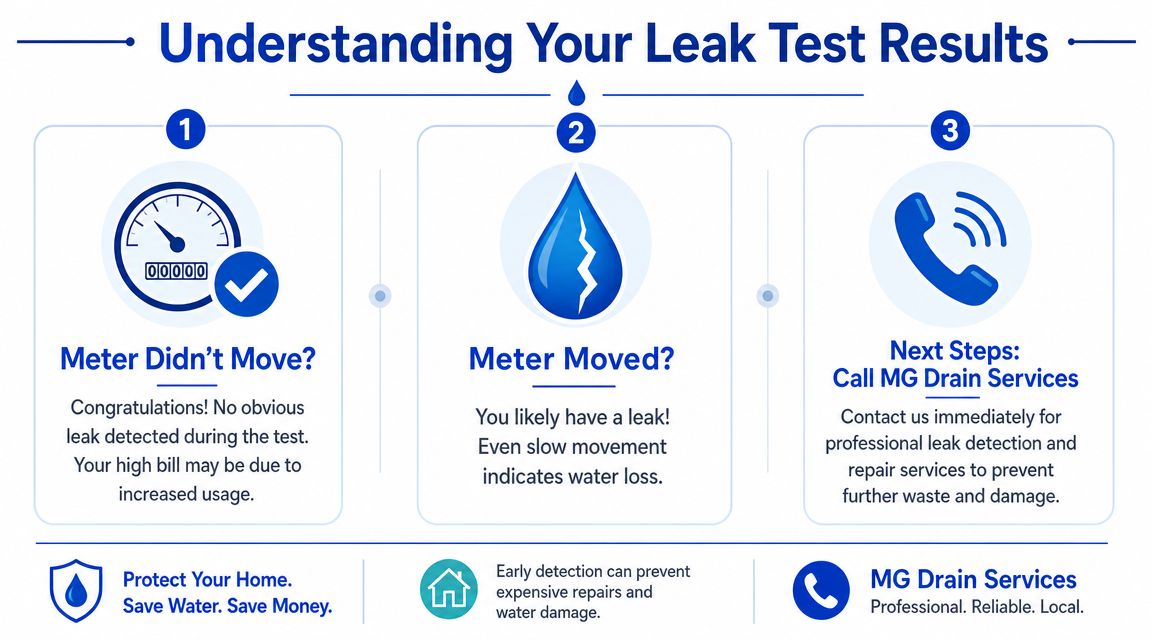
If the meter moved
If the reading increased or the leak indicator kept turning, start with the easiest likely sources inside the property. Toilets, hose bibs, irrigation valves, and appliance supply lines are common places to check.
After that, the next smart move is isolation. Close the home's main shutoff valve and watch the meter again. If the meter is still moving after the house shutoff is closed, the leak is likely between the meter and the house, which points toward a service-line problem that usually needs professional diagnosis, as noted in Portland's leak-finding guidance.
Where DIY stops making sense
A lot of homeowners lose time struggling with this uncertainty. They know water is moving, but they don't know whether they should rebuild a toilet, cut into drywall, or dig outside.
A few situations usually call for a plumber right away:
- The meter moves with the house shut off: That points to a buried service line issue.
- You suspect a slab leak: You need targeted diagnosis, not random demolition.
- You see staining or hear water but can't find the source: Hidden leaks need proper tracing.
- The problem affects a rental or commercial property: Delays increase liability and disruption.
For that kind of diagnostic work, a leak detection specialist in Las Vegas is the right next step. MG Drain Services LLC handles leak detection and repair work in Las Vegas, Henderson, and North Las Vegas, including situations where the meter confirms ongoing flow but the source isn't visible.
If your meter says water is moving and you can't identify a simple fixture leak quickly, guessing gets expensive fast.
Frequently Asked Questions About Las Vegas Water Leaks
Could a running toilet make my meter move
Yes. Toilets are one of the most common causes of quiet, steady water loss. If the flapper doesn't seal or the fill valve cycles on and off, the meter can show movement even when the rest of the house seems inactive.
Is a leak always visible
No. Many serious leaks are hidden in walls, ceilings, under slabs, or in buried service lines. That's why the meter is so useful. It shows water movement even when you can't see the leak.
How often should I check my meter
A regular check is smart any time the bill rises unexpectedly, after plumbing work, when you hear unexplained water sounds, or if a property sits vacant. Property managers and landlords in Las Vegas should also check when tenants move out or before new occupancy.
If the meter doesn't move, am I in the clear
Not always. Some leaks are intermittent. If the short test is clean but you still suspect a problem, try an overnight test or have the system inspected.
Should I open walls or dig right away
Usually no. The meter helps narrow the problem first. Once you know whether water is still passing through the system, you can make a better decision about fixture repair, shutoff isolation, or calling a plumber.
If your water bill suddenly jumped or your meter shows movement when the house is quiet, call MG Drain Services LLC for professional plumbing in Las Vegas. The company is licensed and insured, serves Las Vegas, Henderson, North Las Vegas, and Summerlin, and provides experienced leak detection, honest pricing, and fast response when hidden leaks need real diagnosis. Call 702-480-8070 or book service at mgdrainservices.com.