Shut off the main water supply valve immediately by turning it clockwise until fully closed, then go straight to the breaker box and cut power to the flooded area. In the first 30 minutes, that water shutoff can stop approximately 90% of immediate water flow and prevent an average of 10,000 gallons of water damage per hour in systems left running.
If you're dealing with a burst pipe in Las Vegas right now, speed matters more than anything else. A soaked hallway, water under cabinets, a ceiling stain that suddenly turns into a stream, or pooling water near an appliance can go from stressful to dangerous fast. The good news is that the first few steps are simple, and if you handle them in the right order, you can limit damage, protect your family, and make the repair easier when a plumber arrives.
This guide on Burst Pipe Las Vegas: First Steps Before the Plumber Arrives is written the way plumbers in Las Vegas walk customers through emergencies. No filler. Just what works, what doesn't, and the local issue many homeowners in older Las Vegas houses run into when the shutoff valve won't move.
A Homeowner's Worst Nightmare in Las Vegas
It usually starts with a sound. A hiss behind the wall. A sudden bang in the garage. Water spreading across tile where it shouldn't be. In Las Vegas, homeowners often expect plumbing trouble from hard water, aging fixtures, or slab leaks. They don't always expect a pipe to let go without warning.
A burst pipe changes the mood in a house immediately. One minute you're making coffee or getting ready for work. The next, you're grabbing towels, moving boxes, and trying to figure out whether the water is coming from a supply line, a wall cavity, or the ceiling.
In Henderson and North Las Vegas, I've seen the same pattern play out over and over. Panic makes people lose time. They start cleaning before shutting off utilities. They try to tighten a random valve under a sink. They stand in wet flooring near plugged-in appliances. That's where good intentions start making the situation worse.
Practical rule: Don't start with cleanup. Start with control. Water first. Power second.
A burst pipe isn't just a wet-floor problem. It can soak drywall, swell cabinets, damage flooring, ruin rugs, affect electrical safety, and create mold conditions quickly. The fix starts with isolating the system, then reducing pressure, then protecting what's still dry.
For emergency plumbing in Las Vegas, this is the part that saves the most money and prevents the worst secondary damage. The plumber fixes the pipe. Your job in the first minutes is to stop the spread.
Your First 5 Minutes Water and Electrical Safety Protocol
When a pipe bursts, homeowners need a checklist, not a theory lesson. Do these steps in order.
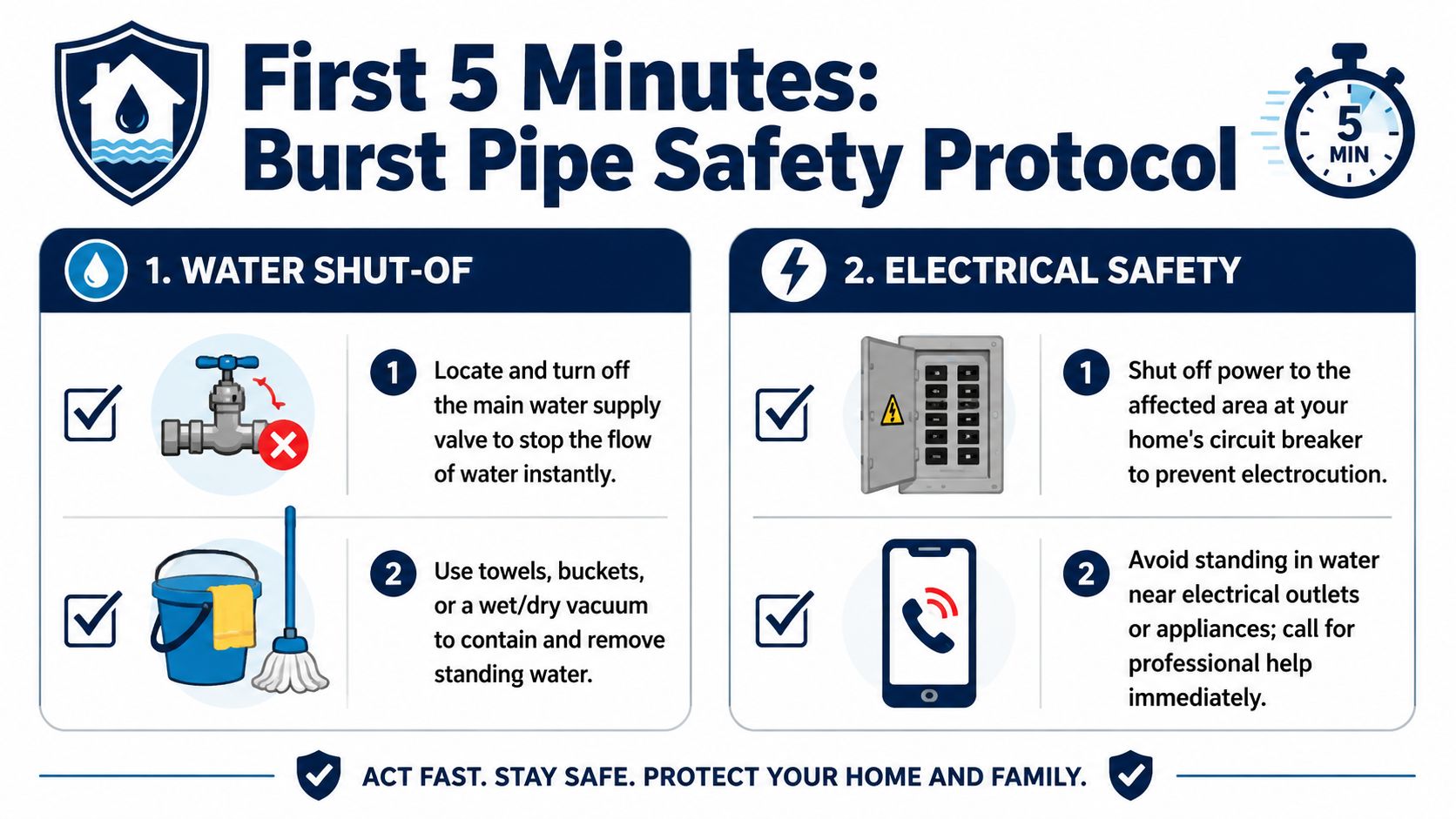
Shut off the water first
In the first 30 minutes after discovering a burst pipe, homeowners need to locate and shut off the main water supply valve by turning it clockwise until fully closed. That step stops approximately 90% of immediate water flow and prevents an average of 10,000 gallons of water damage per hour in unshut systems, according to RestorePro's burst pipe emergency guidance.
In Las Vegas homes, the main shutoff is often:
- Near the water meter outside or close to the front of the property
- In a utility room if the house has an interior service area
- Along an exterior wall in warmer regions like Las Vegas
- In a crawl space or basement in homes built with that layout, though that's less common locally
Turn the valve firmly clockwise until it won't turn anymore. Partial closure isn't enough. If the handle still feels loose or water keeps coming with full force, treat that as a failed shutoff.
For homeowners who want a plain-language walkthrough on identifying shutoff points before an emergency, this guide on how to install a shut off valve helps you understand what you're looking at.
Then kill power to the wet area
Once the water supply is shut down, go to the electrical panel. If water is near outlets, switches, appliances, or cords, turn off power to the affected area. If you're not sure which circuit controls that area, use the main breaker.
- Do not step into standing water to unplug anything
- Do not touch wet appliances
- Do not start mopping around energized outlets
If a room has both flooding and electrical exposure, the power shutoff is not optional. It's the difference between a plumbing emergency and a life safety emergency.
Water near electricity changes the job immediately. A soaked floor around a washing machine, water heater, or kitchen outlet means the breaker panel is part of your plumbing response.
If you want another homeowner-focused reference that mirrors what plumbers tell people over the phone, what to do if a pipe bursts is a useful supplemental read.
What not to waste time on
The first five minutes are not the time for trial-and-error repairs. Skip these:
- Wrapping tape over an actively pressurized split
- Opening cabinets and hunting for a local fixture valve first
- Using a shop vacuum before checking electrical safety
- Calling family before shutting off the main
Fast action beats perfect action here. Get the house safe first. Then deal with the mess.
Contain the Damage and Document Everything
Once the main water is off and the electrical risk is handled, shift into damage control. This is the stage where calm, boring steps save a lot of money later.
Relieve pressure in the plumbing system
Water doesn't stop moving the second the main valve closes. Residual pressure stays in the lines. According to Ready Rooter AZ's guidance on burst pipe emergencies, opening all faucets, both hot and cold, and flushing toilets helps drain the remaining system water, reduce internal pressure, and limit outflow from the damaged section.
If the burst involves the hot water side, shut off the water heater and open hot taps to drain that part of the system. That helps prevent thermal expansion from making the leak worse.
Protect what you still can
Focus on moving vulnerable items, not everything in the room.
- Lift electronics first because even a little water can ruin them
- Move rugs and soft goods before they stay saturated
- Get furniture legs out of standing water with blocks, towels, or relocation
- Pull boxes, papers, and stored items away from baseboards and wet walls
If a rug took on water, drying it properly matters. Homeowners looking for post-loss textile care can review professional rug restoration services to understand what a salvage process may involve.
For related plumbing issues that often show up before or after a burst, this article on how to detect water leaks is worth bookmarking.
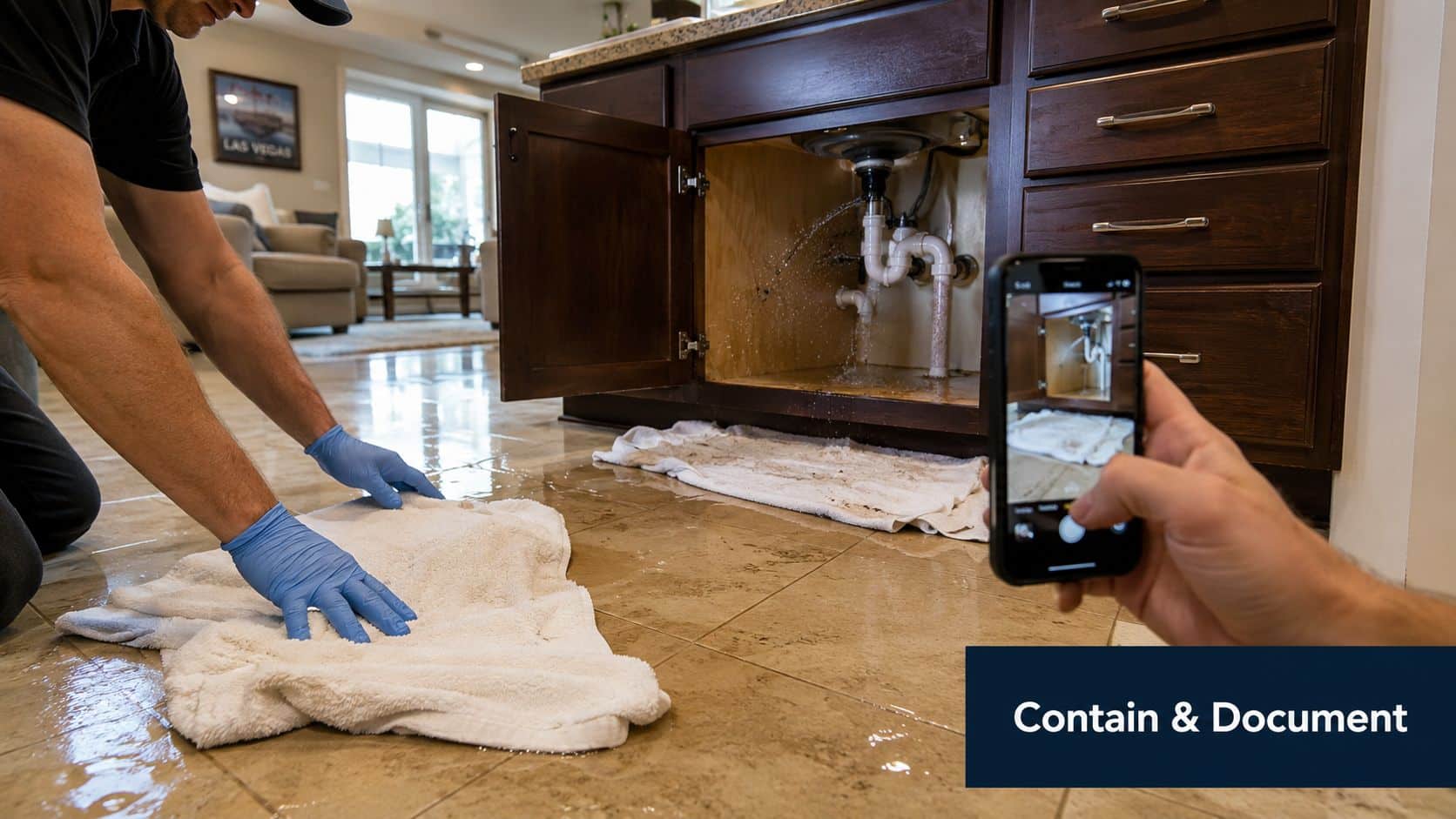
Document before cleanup gets too far
Take photos and short videos before you remove everything. Get wide shots of the room, then close-ups of:
- The damaged pipe area
- Wet flooring and baseboards
- Ceiling stains or collapsed drywall
- Affected furniture, cabinets, and stored property
The insurance conversation goes smoother when you can show where the water started, where it traveled, and what it touched before cleanup changed the scene.
Don't wait until after fans are set up and soaked items are piled in the driveway. The first condition is the one you want recorded.
When DIY Fails Common Las Vegas Pipe Problems
Some burst pipe situations are straightforward. Many are not. In Las Vegas, one of the biggest complications isn't the broken pipe itself. It's the shutoff valve that should have worked and didn't.
Older Las Vegas homes have a local weak point
A lot of generic burst pipe articles say the same thing. Turn the main valve clockwise and you're done. That advice misses a very real local problem in older homes.
According to Larkin Plumbing's analysis of why pipes burst in Las Vegas homes, 22% of Las Vegas homes over 30 years old have non-functional internal shut-offs due to sediment buildup and mineral corrosion. The same source notes that in pre-1990s Clark County housing, municipal pressure spikes can exceed 80 PSI, which contributes to valve failure during thermal stress.
That's the detail many homeowners need to hear in plain English. If your house is older and the shutoff hasn't been exercised in years, the valve may be seized, corroded, or one hard turn away from breaking.
What doesn't work
Homeowners usually make one of three mistakes when the valve resists:
- They force it with a wrench
- They keep trying the same stuck handle while water keeps running
- They assume a small fixture valve under a sink will solve a whole-house supply break
Forcing a corroded main shutoff can create a second failure point. If the stem breaks or the valve body gives way, the situation can get worse fast. At this point, contractor judgment matters. Not every valve should be muscled open or shut.
If the shutoff feels frozen, don't treat it like a stubborn jar lid. Plumbing valves fail in ugly ways when corrosion is involved.
What works in older Las Vegas houses
The often-missed move is the street-level shutdown. If the internal shutoff is inaccessible or seized, the water meter valve outside near the street becomes the emergency alternative. In a multi-unit property, the right move is to contact property management or maintenance immediately so they can isolate the system.
This is especially relevant in older Las Vegas neighborhoods where hard water scale and age work against every unused valve. In those houses, losing time on a stuck interior shutoff can flood cabinets, walls, and flooring while the ultimate answer sits out by the meter.
A homeowner can do basic emergency control. A homeowner should not gamble on a corroded main valve, hidden wall leak, or pipe damage tied to pressure issues. Once DIY stops being safe or effective, it stops being cheap.
What to Expect from Your Las Vegas Plumber
When the plumber gets there, the first job is to take control of the situation. On a burst pipe call, that means confirming where the water is off, checking whether the failed line is the only problem, and making sure the repair area can be opened without creating more damage.
First the plumber confirms control of the leak
In older Las Vegas homes, I pay close attention to how the water was shut down. A stuck interior main valve is common here because hard water scale and age can lock it up. If the inside shutoff would not move, the plumber should verify whether the home was isolated at the meter and whether the valve itself needs replacement after the emergency repair is done.
Electrical risk still matters around wet cabinets, garage walls, utility rooms, and laundry areas. If water reached outlets, switches, or appliances, the plumber may pause active repair work until the area is safe to access. Homeowners dealing with cold-weather pipe breaks can also review the best way to thaw frozen pipes safely if freezing was part of what caused the line to fail.
Then the plumber finds the actual failure point
The visible spray or drip is not always the whole story. Good plumbers trace the failed section, check nearby fittings, and look for signs that pressure, corrosion, or movement in the line contributed to the break.
| What they check | Why it matters |
|---|---|
| Visible split or failed fitting | Confirms the immediate repair point |
| Water pressure symptoms | Shows whether the pipe failed from stress, not bad luck |
| Nearby valves and connectors | Identifies parts that may fail next |
| Wall, cabinet, ceiling, or slab involvement | Determines whether access work is needed before the line can be repaired |
That step saves time and arguments later. A quick patch on the wrong section is how homeowners end up calling again after the wall is closed.
You should get a clear repair plan before work starts
A professional plumber should explain the repair in plain language and tell you what can be fixed today versus what may need a follow-up visit. On burst pipe jobs, that usually falls into a few categories:
- A localized repair on one damaged section
- Replacement of a longer run because the surrounding pipe is weak
- Access work inside a wall or ceiling before the pipe can be repaired
- A valve replacement if the shutoff itself is seized, leaking, or unsafe to trust again
You should also expect honest pricing, clear limits, and straight answers about drying and restoration. Plumbing repair stops the water. It does not always fix soaked drywall, swollen cabinets, or flooring damage. A good plumber will tell you where the plumbing scope ends so you can make the next call fast if other trades are needed.
How to Prevent Future Pipe Bursts in the Las Vegas Climate
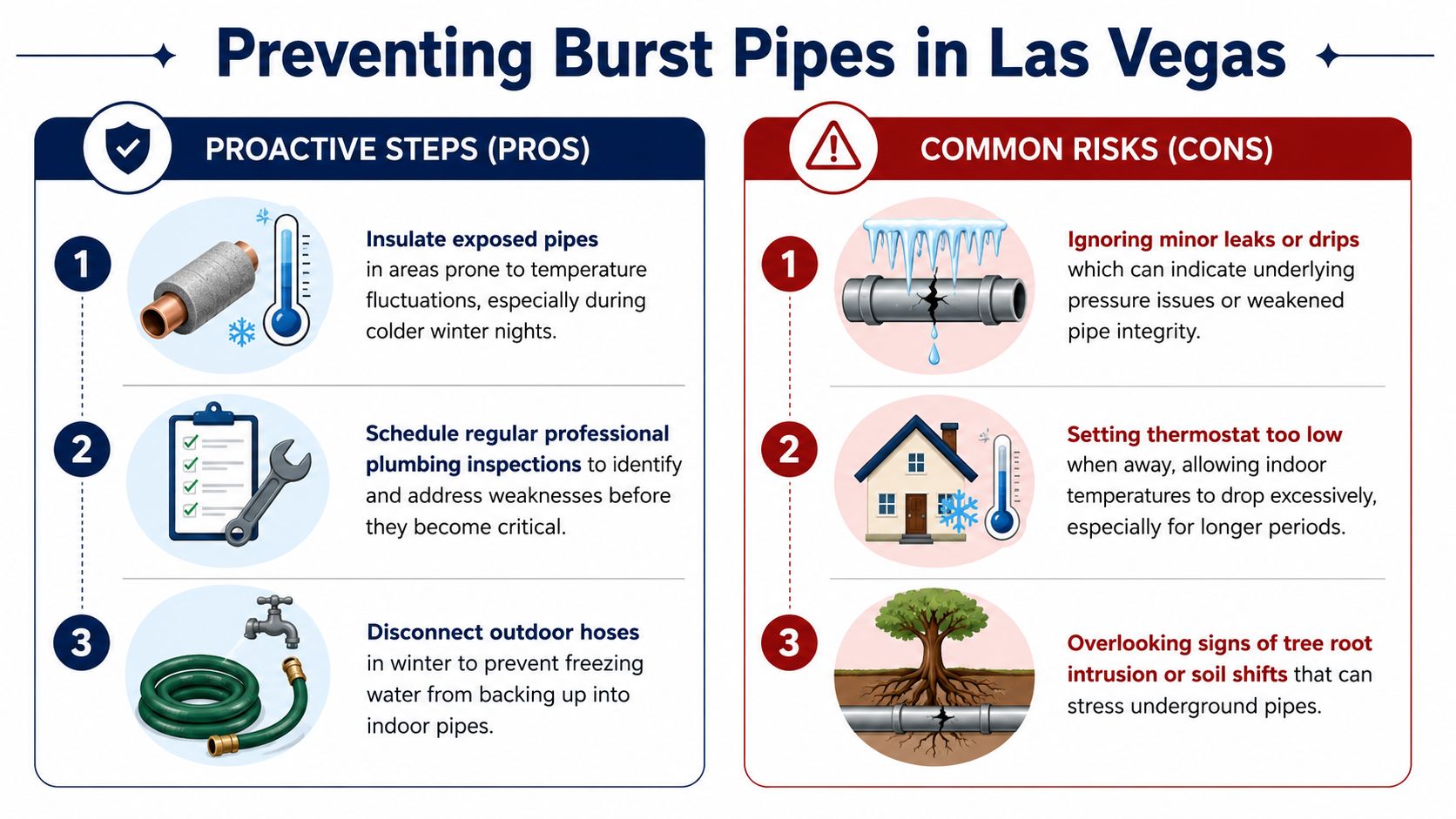
Las Vegas plumbing doesn't fail for the same reasons as plumbing in colder climates. Here, prevention is more about pressure, mineral buildup, aging valves, and exposure than deep freeze conditions.
Focus on the weak points Las Vegas homes actually have
Hard water leaves scale inside valves and fittings. High municipal pressure can stress older supply lines. Exterior pipe runs and garage plumbing can also take a hit during cold snaps, even in the desert.
The best prevention plan is simple:
- Exercise shutoff valves periodically so you know they move before an emergency
- Have pressure evaluated if fixtures hammer, leak, or fail early
- Watch for minor drips and recurring seepage because small leaks often show where a larger failure is developing
- Inspect exposed piping in garages, utility areas, and exterior walls
Maintenance beats emergency repair
A pressure-reducing valve can make sense when a home has recurring pressure-related symptoms. Routine inspections also help catch weak fittings, aging connectors, and corrosion before they become a flood event.
Cold weather still matters here, just differently. If you have exposed lines vulnerable to winter temperature swings, this guide on the best way to thaw frozen pipes is a useful local maintenance reference.
Most burst pipes give some kind of warning. The warning just doesn't always look dramatic. A stiff valve, a recurring drip, white mineral crust, or a hammering line is often the early version of the emergency.
Frequently Asked Questions About Burst Pipes
Will homeowner's insurance cover a burst pipe
It depends on your policy and on what caused the damage. Many homeowners are covered for sudden water damage from a burst pipe, but policies often treat long-term neglect differently. The safest move is to document the damage immediately, keep records of emergency steps taken, and call your insurer as soon as the situation is stable.
What is the average cost to repair a burst pipe in Las Vegas
The cost varies widely based on access, pipe material, whether the burst is behind a wall or under a slab, and how much water damage occurred before shutdown. A simple exposed repair is different from opening drywall, isolating electrical hazards, and replacing damaged sections. Any plumber who gives a firm price before seeing the job is guessing.
How quickly can a plumber get to Henderson or Summerlin
Response time depends on call volume, time of day, and how severe the emergency is, but local companies that already serve Las Vegas, Henderson, North Las Vegas, and Summerlin can usually dispatch faster than out-of-area contractors. If you're calling, tell them whether the water is off, whether power is off in the wet area, and whether the leak is still active.
Can I patch a burst pipe myself
A temporary patch may slow a minor leak on an exposed pipe after the system is fully shut down and depressurized. It won't replace a proper repair. If the pipe is inside a wall, near electrical components, tied to a corroded valve, or part of a pressure issue, DIY isn't the right move.
Contact a Las Vegas Burst Pipe Expert Immediately
If you're standing in a wet kitchen, garage, laundry room, or hallway in Las Vegas, you've already done the two most important things by shutting off the water and securing the electrical hazard. The next step is getting the pipe diagnosed and repaired before hidden damage spreads.
The most critical first move in any burst pipe emergency is to immediately locate and turn the main water shutoff valve clockwise. It's typically near the water meter, in a basement or crawl space, or along an exterior wall in warmer regions like Las Vegas. If that shutoff isn't fully closed, water keeps flooding the property and mold risk can start rising within minutes, as noted in Ease Fix's burst pipe guidance.
Call 702-480-8070 or visit mgdrainservices.com for fast, professional plumbing in Las Vegas. MG Drain Services serves Las Vegas, Henderson, and North Las Vegas with licensed and insured technicians, honest pricing, experienced field service, and practical help when time matters.
If you need immediate help, call MG Drain Services LLC. They provide burst pipe response, plumbing repairs, leak detection, drain cleaning, and sewer diagnostics across Las Vegas, Henderson, North Las Vegas, and surrounding areas.