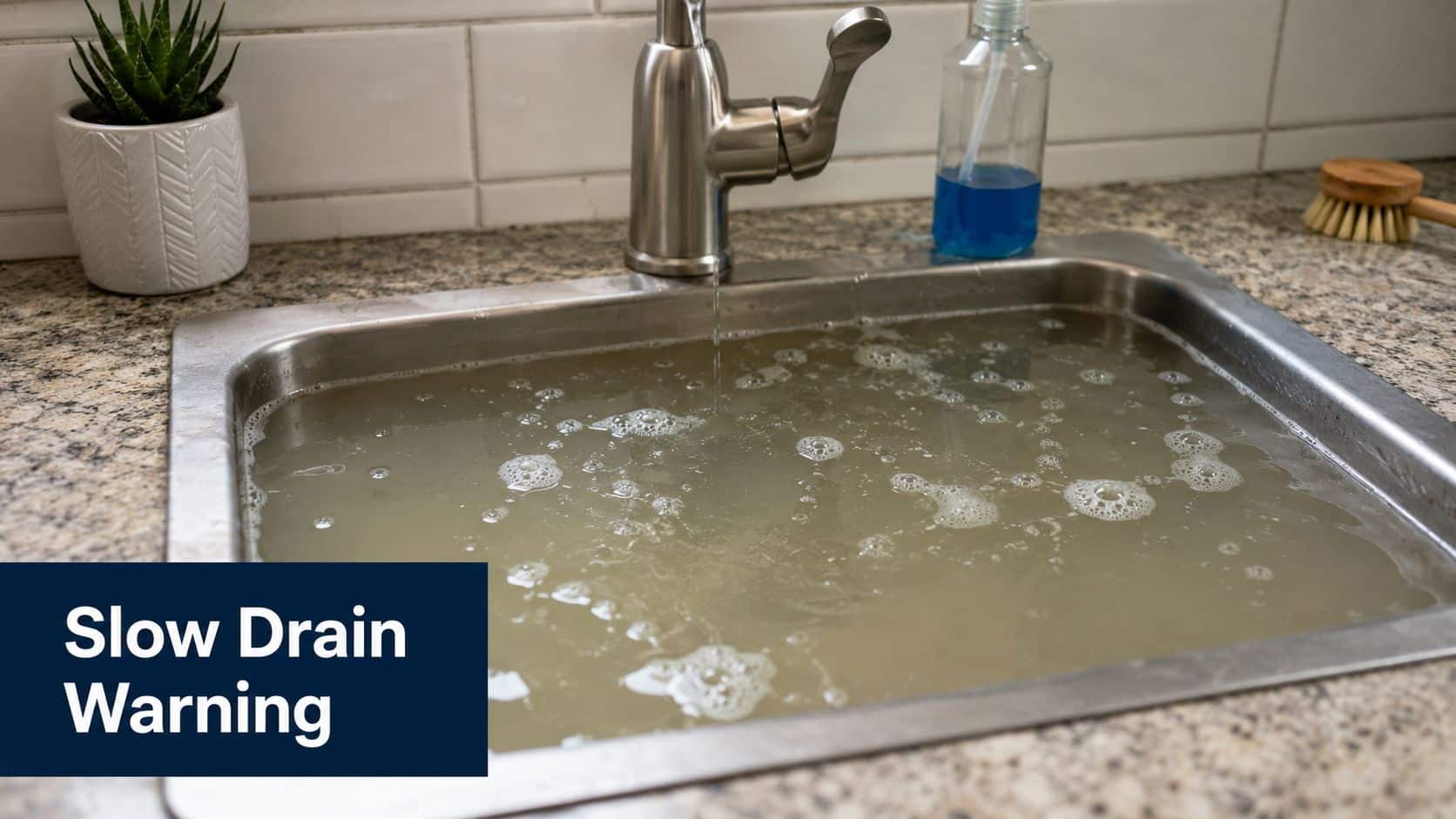
A kitchen sink that starts draining slower each week. A shower that leaves you standing in dirty water. A toilet that gurgles when someone runs the bathroom sink. Those are the calls plumbers in Las Vegas get every day, and they usually mean more than “just a clog.”
A good drain plumber doesn't show up to poke a hole through buildup and leave. The core of the job is figuring out why the drain failed in the first place, whether that's grease, scale, a main line blockage, a belly in the pipe, a bad slope, or damage that keeps catching debris. If you own a home in Las Vegas, Henderson, or North Las Vegas, understanding that diagnostic process can save you time, frustration, and repeat service calls.
That Slow Drain Is Trying to Tell You Something
When a drain slows down, most homeowners try the same sequence. Hot water. A plunger. A bottle from the hardware store. Sometimes that gets temporary movement. Often it doesn't. Even when it does, the problem tends to come back.
That's where a drain plumber comes in. In real service work, the question isn't just “How do we get water moving today?” It's “What is this drain trying to tell us?” A kitchen line may be packed with grease and food residue. A shower line may be loaded with hair and soap buildup. A laundry drain may be carrying more water than the branch is handling well. If multiple fixtures are acting up at once, the trouble may be deeper in the system.
Why this is skilled trade work
Drain service isn't a side job inside plumbing. It sits inside a major trade category. IBISWorld projects the U.S. plumbers industry at $191.4 billion in 2026, and notes that drain-related work is a core part of that market, including drain cleaning, repair, and emergency unclogging work in homes and businesses across the country (IBISWorld plumbing industry overview).
That matters because homeowners often underestimate what's happening behind the wall or under the slab. A recurring drain issue can involve fixture drains, branch lines, vents, cleanouts, and the building sewer. Solving it correctly takes more than a bottle opener and guesswork.
What homeowners usually notice first
Most drain problems start small, then get louder:
- Water draining slowly: Not stopped, just sluggish.
- Noise from nearby fixtures: Gurgling, bubbling, or air sounds.
- Bad smells: Especially from kitchen, floor, or bathroom drains.
- Repeat clogs: The same sink, tub, or toilet keeps acting up.
Practical rule: A drain that keeps coming back is rarely asking for the exact same fix twice.
In Las Vegas homes, speed matters. Wastewater issues don't improve on their own, and once a backup starts, damage, odor, and cleanup get more expensive fast.
What a Professional Drain Plumber Actually Does
A lot of people think drain work starts and ends with a cable machine. That's only one part of it. A professional drain plumber works on the drain, waste, and vent system, which means the goal is to restore proper flow and verify why that flow was interrupted.
The difference between clearing and diagnosing
A basic clear-out means opening a path through a blockage. That can get a sink or tub usable again. It does not automatically explain why the line clogged, whether the pipe walls are still coated, or whether the system has a design issue that will trap debris again.
A diagnostic-focused drain plumber looks at questions like these:
- Is this a local fixture clog or a branch line issue?
- Is the main sewer line involved?
- Is the pipe damaged, offset, sagging, or holding water?
- Is venting affecting how the fixture drains?
- Is the line sized and laid out in a way that matches the fixture load?
That last point matters more than many homeowners realize. Under code-style sizing logic, a drain line has to carry the fixture drainage load, not just fit physically. In the expert example cited in this plumbing sizing discussion, a horizontal trap arm that might seem acceptable at a smaller size has to be increased to 2 inches because the fixture value exceeds the smaller pipe's capacity. In service terms, some repeat backups aren't “stubborn clogs.” They're hydraulic problems.
What the work often includes
A true drain service call usually involves some combination of inspection, cleaning, and verification.
| Task | What it means for the homeowner |
|---|---|
| Visual symptom review | The plumber checks which fixtures are affected and when |
| Drain access | Cleanout, trap, roof vent, or fixture-level access may be used |
| Mechanical clearing | An auger or rooter machine breaks through or extracts blockage |
| Camera inspection | The inside of the pipe is checked for buildup, damage, or slope issues |
| Flow testing | Fixtures are run to confirm the line is actually draining properly |
Clearing the blockage without understanding the cause is how homeowners end up paying for the same drain twice.
What DIY can and can't do
DIY methods can help with very minor fixture-level issues. A sink plunger, trap cleaning under a bathroom sink, or removing hair from a shower stopper can work when the blockage is close and obvious.
DIY usually fails when:
- more than one fixture is slow
- the toilet reacts when another drain is used
- sewage odor is present
- water backs up at the lowest drain
- the clog keeps returning after simple cleaning
That's the line between a nuisance and a system problem.
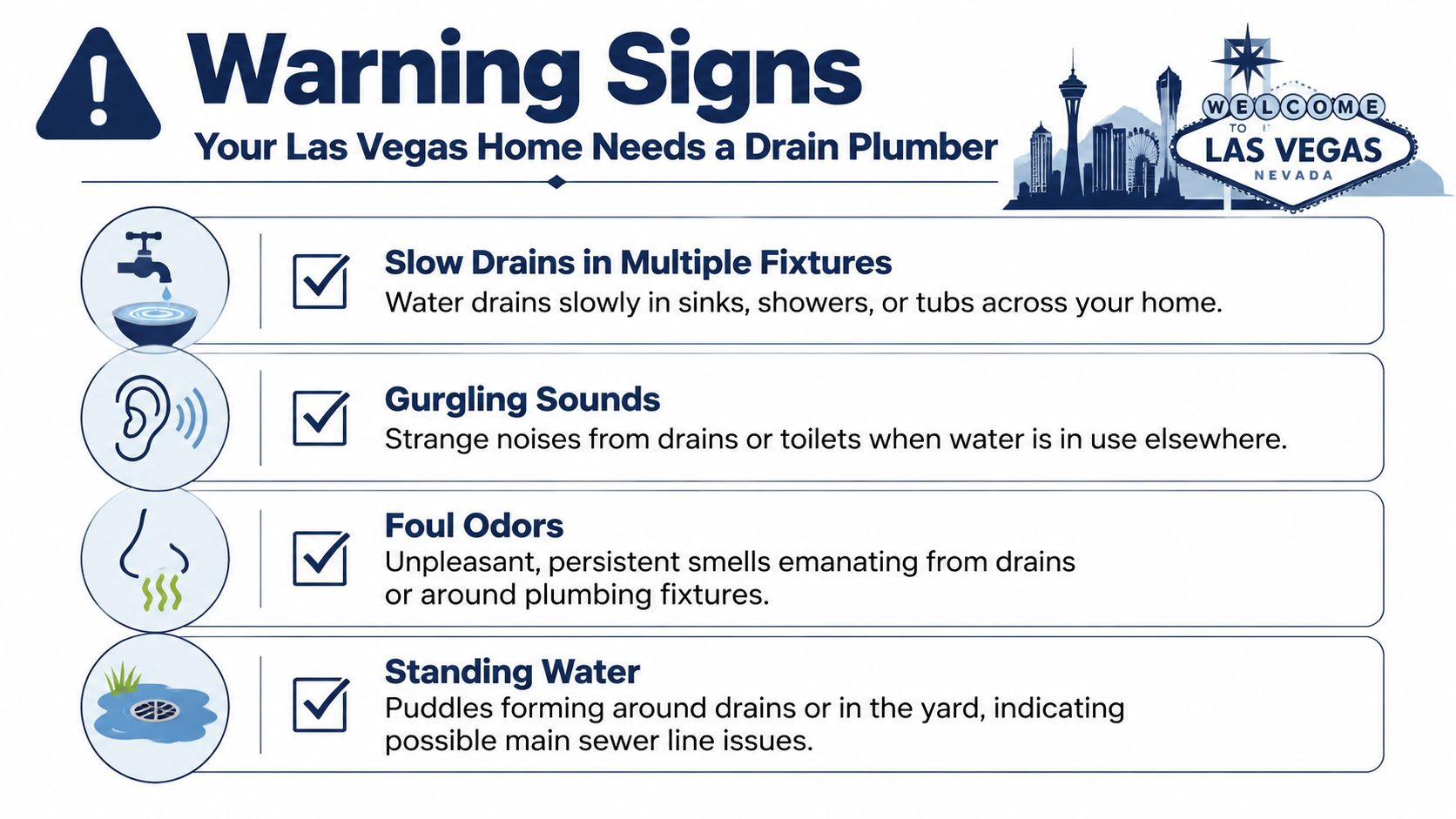
Warning Signs Your Las Vegas Home Needs a Drain Plumber
The first clue is usually inconvenience. The second clue is pattern. Once you start seeing related symptoms in different parts of the house, it's time to stop treating each fixture as a separate problem.
Slow drains in more than one fixture
A single slow sink can be a local blockage. A slow sink, tub, and toilet together usually points to a branch or main line restriction. That's because wastewater from different fixtures is trying to share the same downstream path.
In the field, this is one of the biggest misreads. Homeowners clear one bathroom fixture, then another, while the actual restriction sits farther downline.
Gurgling sounds and bubbling water
When a toilet bubbles or a tub gurgles while another fixture drains, trapped air is moving through the system because water isn't flowing cleanly where it should. That can indicate a blockage, a venting issue, or a partial obstruction that forces air to find another path.
A line can still “sort of” drain while building pressure and turbulence inside the piping. This often occurs right before a fuller backup.
Odors and repeated foul smells
A bad odor near a drain is never something to ignore. It can come from buildup inside the pipe, standing wastewater in a low section, or a larger sewer problem that's beginning to announce itself before visible backup happens.
For property managers, this is especially important. Odor complaints often arrive before a more disruptive failure.
A drain smell that comes and goes is still a warning sign. Intermittent symptoms often mean the restriction hasn't fully closed the pipe yet.
Standing water indoors or outside
If water is pooling near a floor drain, shower, cleanout, or yard area, the problem may be beyond basic fixture cleaning. Exterior drainage conditions can also affect how water behaves around the property, and homeowners trying to sort out grading or runoff questions may benefit from reading about hardscapes drainage and site foundation to understand how site conditions and water movement can overlap around a home.
Still, wastewater backup inside the plumbing system needs plumbing diagnosis first. Yard drainage and sewer drainage are not the same thing.
The overlooked cause of recurring clogs
One of the most missed causes of repeat stoppages is improper slope. Independent plumbing guidance describes improperly sloped drain pipes as one of the most common and most overlooked plumbing problems, and notes that a camera inspection is often needed to find hidden low spots or “bellies” that require more than simple cleaning. That same guidance points to code-style slope targets such as 1/4 inch per foot for smaller residential drains when repairs are made to restore proper pitch (guidance on improperly sloped drain pipes).
If a pipe holds water because of a sag, debris settles there. The line clogs again. Then it clogs again after that. Snaking may restore flow temporarily, but it won't remove the low spot from the pipe.
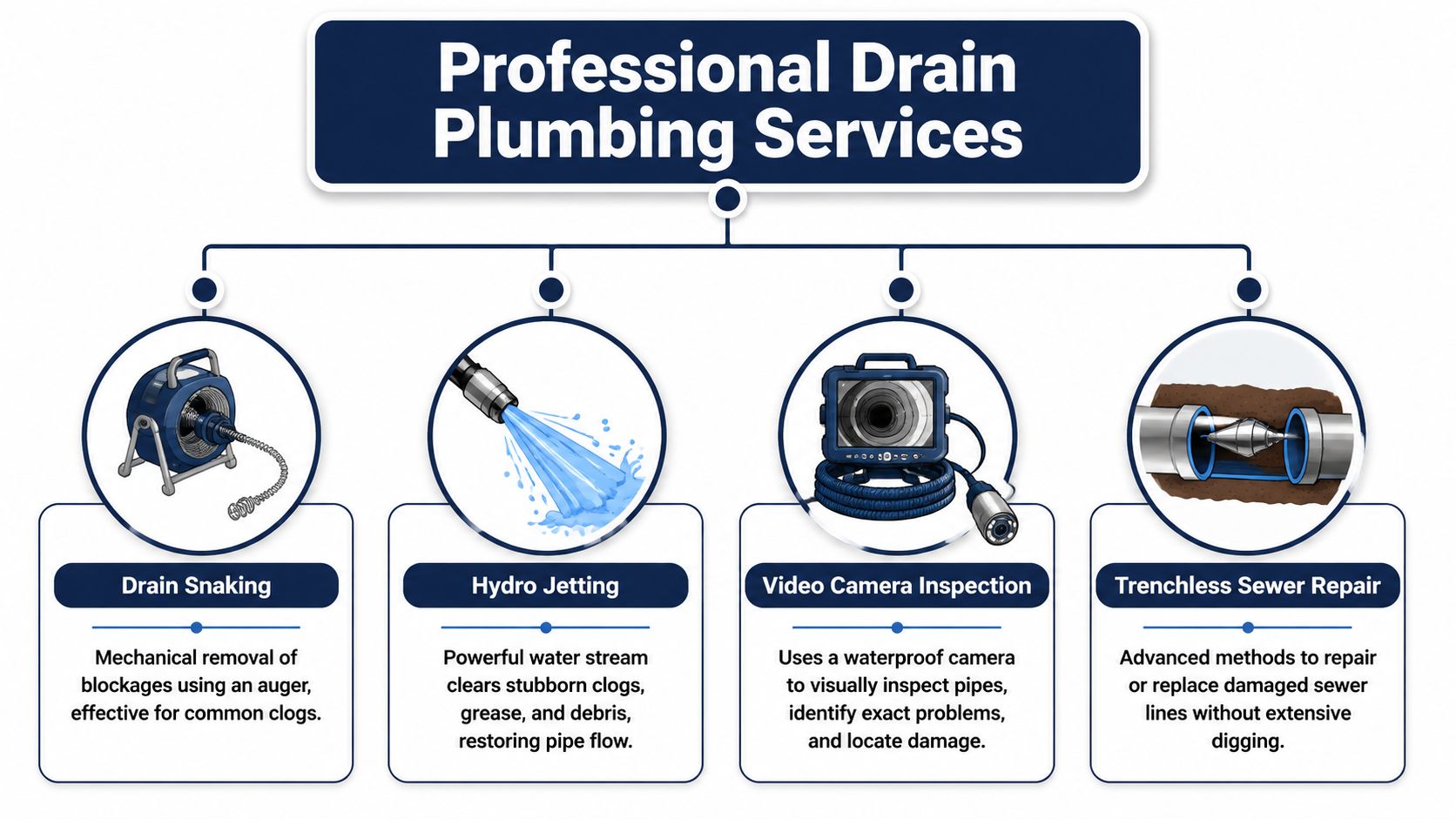
Professional Drain Plumbing Services Explained
A good drain service call follows a sequence. First, identify where the restriction is and what is causing it. Then choose the tool that clears the line without damaging the pipe. In Las Vegas homes, that matters because recurring clogs often come from buildup, roots, scale, or pipe defects that a basic snake will only punch through for a while.
Sewer camera inspection
A color sewer camera shows the inside of the drain line in real time. That lets the plumber confirm whether the problem is grease, roots, scale, a separated joint, a belly, or a cracked section of pipe. It also answers an important question after clearing. Is the line clean, or is there still heavy buildup on the walls waiting to catch debris again?
That is how recurring clogs get handled correctly. The goal is not just to restore flow for today. The goal is to see why the stoppage keeps coming back and decide whether cleaning, repair, or replacement makes the most sense.
A camera inspection is especially useful when:
- The same drain keeps backing up: repeated stoppages usually point to an underlying condition in the line
- Several fixtures are slow at once: that often means the problem is in a shared branch or the main drain
- The home has an older sewer line: seeing the pipe condition helps avoid paying for the wrong service
If you want a homeowner-friendly overview before approving work, this guide on understanding sewer line issues gives a solid basic framework.
Hydro jetting
Hydro jetting uses high-pressure water to clean the full inner diameter of the pipe. A cable machine opens a path through a blockage. Jetting scrubs the pipe walls and carries loosened residue out of the line. That difference matters when the underlying problem is grease, soap, sludge, or soft buildup spread along the pipe wall instead of one isolated obstruction.
In practice, hydro jetting is often the money-saving option for recurring kitchen and main line clogs because it addresses the cause of the repeat call. If the pipe is in good enough condition for jetting, a thorough cleaning can buy much more time than another quick opening.
For a closer look at the process, how hydro jetting works explains why water-based cleaning often solves problems that simple snaking leaves behind.
Field note: If a cable restores flow but the pipe walls are still loaded with grease or sludge, the clock on the next clog has started.
Rooter and mechanical drain cleaning
Mechanical cleaning still has an important place in drain work. A rooter machine or sectional cable is often the right first step for toilet stoppages, tougher obstructions, and lines that need cutting action to get water moving again. It is also commonly used to open a main line so the plumber can run a camera and see what is still in the pipe.
This method works well for:
- localized sink and tub stoppages
- toilet blockages
- tougher obstructions that need cutting action
- opening a main line for inspection and follow-up cleaning
The trade-off is straightforward. Mechanical cleaning restores flow fast, but it does not always leave the pipe walls clean. In many repeat-clog situations, snaking gets the system usable and hydro jetting finishes the job properly.
Leak detection and deeper system evaluation
Some drainage complaints involve more than a clog. Wet cabinets, slab moisture, wall staining, or repeated damage around one area can point to a hidden leak near the drain system or a failure at a joint. In multi-story buildings, pipe support and movement can also affect long-term performance. Copper drainage design guidance notes that stack anchoring frequency is tied to anticipated temperature rise, and that static water-pressure test height for a vertical segment is calculated using the relationship that 2.3 feet of water equals 1 psi when determining permissible test height (copper drainage design guidance).
Homeowners do not need to calculate test heights during a backup. They do need a plumber who can tell the difference between a line that needs cleaning and a system that needs repair. That diagnostic step is what prevents wasted money on repeat service calls.
How to Choose the Right Drain Plumber in Las Vegas
The hardest time to shop for a plumber is when wastewater is backing up into the house. That's why it helps to know what to look for before the emergency happens.
The labor market also explains why availability can be uneven. The U.S. Bureau of Labor Statistics says plumbers, pipefitters, and steamfitters earned a median annual wage of $62,970 in May 2024, projects employment growth of 4% from 2024 to 2034, and estimates about 44,000 openings per year over that period. The same BLS profile notes that evening and weekend emergency work is common in the trade (BLS plumber occupation profile). For homeowners in Las Vegas, that means choosing a responsive, organized company matters.
What to verify before you book
Use a practical checklist, not just the first ad you see.
- Licensed and insured: If the company is working on your drainage system, especially a sewer line, this is essential.
- Actual local presence: A local Las Vegas company understands the service area, travel logistics, and scheduling realities in Henderson, North Las Vegas, and nearby neighborhoods.
- Diagnostic capability: Ask whether they have camera inspection and hydro-jetting available, not just a basic snake.
- Clear pricing process: You want honest quotes and approval before work expands.
- Experienced technicians: Drain diagnosis gets better with trade judgment. Tools help, but interpretation matters.
Good questions to ask on the phone
A short call can tell you a lot.
| Ask this | Why it matters |
|---|---|
| Do you handle recurring clogs, not just basic drain cleaning? | This separates diagnostic work from simple dispatch work |
| Can you inspect the line with a camera if needed? | Repeat problems usually need confirmation |
| Do you offer transparent pricing before work begins? | Prevents surprises |
| Do you service Las Vegas, Henderson, and North Las Vegas? | Confirms local coverage |
| Do you offer bilingual support? | Helpful for many households and property teams |
If the company can only describe one solution for every drain problem, keep looking.
Signs of a customer-focused company
Fast response matters, but so does how the company communicates. Online booking, clear service windows, straightforward explanations, and bilingual support all point to a team that has built its process around real homeowners, tenants, and property managers.
For Las Vegas homes, that's what you want. Not mystery pricing. Not vague answers. Not someone who treats every recurring clog like bad luck.
Book Your Service and Prevent Future Clogs
If your sink, shower, floor drain, or sewer line is already showing warning signs, don't wait for a full backup. Call early, get the line diagnosed properly, and fix the cause before water ends up where it shouldn't.
Prevention still matters, especially after the line has been restored. Small habits reduce the amount of buildup moving into the system.
Simple habits that help
- Keep grease out of the kitchen drain: Let it cool, contain it, and throw it away.
- Use strainers where they matter most: Kitchen sinks, showers, and utility sinks catch a lot before it enters the line.
- Watch for repeat symptoms: If the same drain slows down again, treat it as a system issue, not bad luck.
- Be careful with chemical cleaners: They often fail to solve the cause and can make diagnosis messier.
- Stay ahead of known problem lines: If your home has a history of recurring stoppages, a preventative approach is cheaper than emergency cleanup.
For more homeowner maintenance guidance, how to prevent drain clogs is worth reading before the next problem starts.
Frequently Asked Questions
| Question | Answer |
|---|---|
| How much does drain cleaning cost in Las Vegas? | It depends on the fixture involved, the access point, whether the line needs mechanical cleaning or hydro jetting, and whether camera inspection is needed to diagnose a recurring problem. The right way to price drain work is after identifying the affected line and method. |
| Is it safe to use chemical drain cleaners? | They usually aren't the best answer for recurring clogs. They may create temporary movement, but they typically don't fix slope issues, heavy buildup, or sewer line defects. |
| When is a clog an emergency? | If wastewater is backing up, multiple fixtures are affected, a toilet is overflowing, or you smell sewage inside the home, treat it as urgent. |
| Do recurring clogs always mean the pipe is broken? | No. Some lines need proper cleaning, not replacement. Others have slope problems, bellies, or damage. That's why camera inspection is so useful. |
| Should I snake the drain myself first? | For a simple hair clog near a shower stopper, maybe. For repeat stoppages, toilet gurgling, or multiple slow fixtures, it's better to stop and get the line diagnosed correctly. |
If you need a drain plumber in Las Vegas, Henderson, or North Las Vegas, call MG Drain Services LLC at 702-480-8070 or book online through the MG Drain Services LLC website. They're a licensed and insured local company with experienced technicians, honest pricing, modern drain diagnostic tools, and fast service for clogged drains, sewer backups, hydro-jetting, rooter work, and leak detection.