A drain problem usually starts small in Las Vegas. The bathroom sink takes longer to empty. The shower makes a gurgling noise. The kitchen side backs up once, then seems fine again.
That's where a lot of homeowners lose money.
They treat it like a one-time clog when the plumbing system is already warning them that something deeper is going on. A good drain service in Las Vegas isn't just about punching a hole through a blockage and leaving. It's about figuring out whether the line is dealing with grease buildup, root intrusion, a damaged section of pipe, or a main-line issue that keeps coming back.
If you're in Las Vegas, Henderson, or North Las Vegas and you're trying to decide whether you need a simple cleaning or a full inspection, this guide will help you make that call without guessing.
What Is Professional Drain Service and Why It Matters
A homeowner notices the upstairs tub draining slowly for a few days. Then the downstairs toilet bubbles when the washing machine runs. Later that night, there's an odor near the shower drain. On the surface, those seem like separate annoyances. In the field, they often point to one system that isn't moving wastewater the way it should.
That's what professional drain service is really about. It's not only clearing one fixture. It's evaluating the health of the line serving the home.
More than a quick unclog
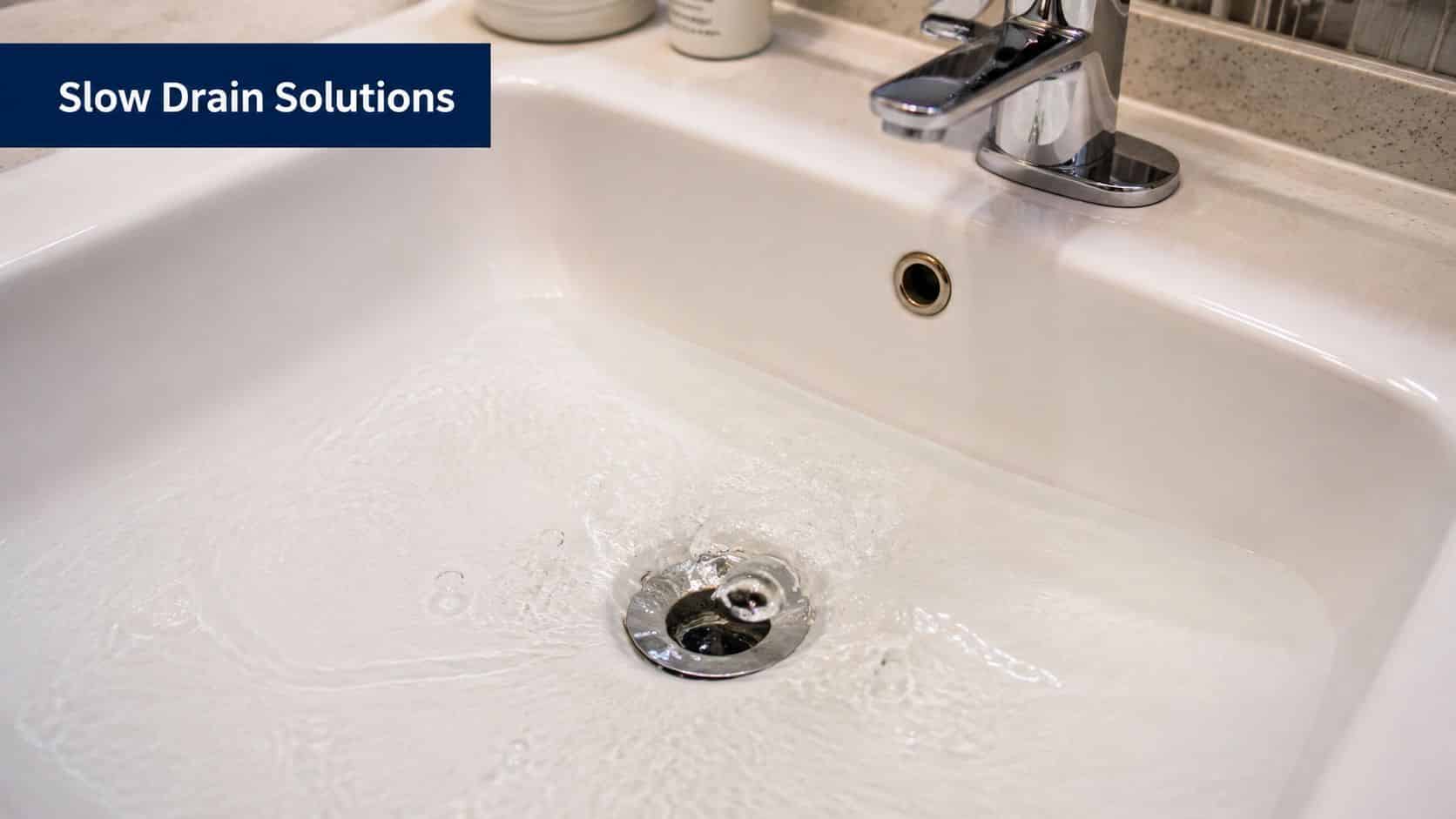
A plunger can help with a simple stoppage at a toilet. A hand snake can sometimes open a shallow blockage in a bathroom sink. But when a problem repeats, spreads to more than one fixture, or shows up with odor and noise, the right approach changes.
Professional drain service may involve:
- Clearing a blockage with rooter equipment when debris, paper, buildup, or roots are obstructing flow
- Inspecting the line with a color sewer camera when symptoms suggest damage, a shift, a belly, or recurring intrusion
- Cleaning the pipe wall with hydro-jetting when the issue is buildup throughout the line, not just one plug
- Separating symptom from cause so you don't keep paying for the same temporary fix
Why this matters in Las Vegas homes
Las Vegas homes vary a lot by age, layout, landscaping, and drain usage. Older neighborhoods can have more pipe wear and mature roots. Busy family homes put more load on kitchen, laundry, and shower drains. Rental properties often have hidden history, which means the first clog you see may not be the first one the system has had.
A recurring clog is rarely the real problem. It's usually the symptom homeowners can see.
This is one reason drain service continues to be a major maintenance category. The global plumbing drain cleaning service market was valued at USD 5,845.9 million in 2025 and is projected to reach USD 10,370.8 million by 2035, which equals 77.4% total growth at a 5.9% CAGR according to Future Market Insights research on plumbing drain cleaning service.
When homeowners understand that a slow drain can be a system-health issue, they make better decisions. They stop chasing the same clog and start fixing the actual problem.
Signs You Need Drain Cleaning in Las Vegas
Some drain problems are obvious. Others look minor right until they turn into a backup. The key is to pay attention to the pattern, not just the single event.
The warning signs below matter because they help separate a simple fixture clog from a bigger line issue affecting the house.
Early signs homeowners often ignore
A sink that drains slowly once isn't always a crisis. A sink that drains slowly every week is different.
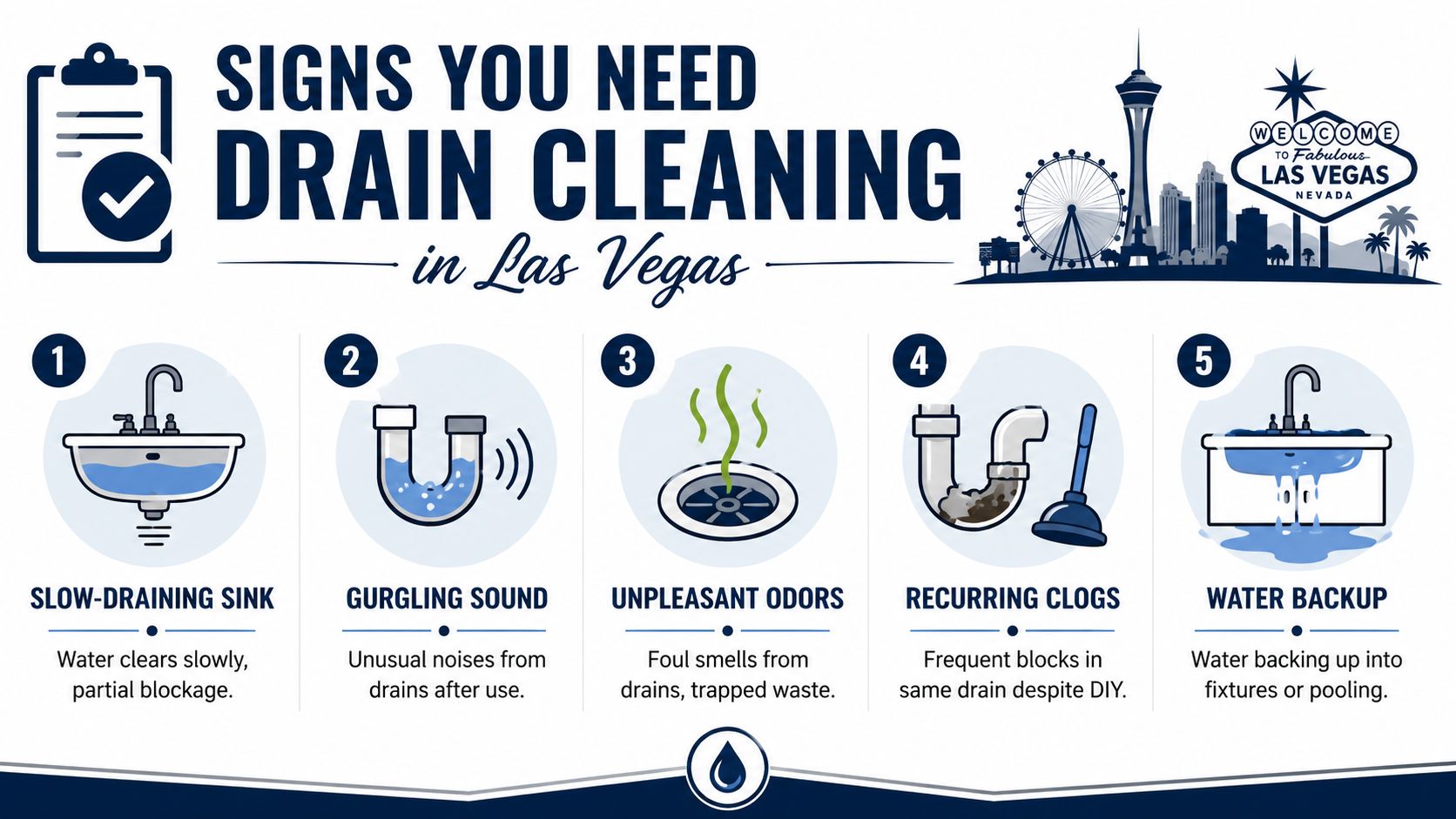
Watch for these smaller warnings:
- Slow drainage: Water lingers in the sink, tub, or shower because a partial blockage is restricting flow.
- Gurgling sounds: Air gets trapped and displaced when wastewater can't move cleanly through the line.
- Localized odor: Waste and buildup can sit in the drain path long enough to create a sewer-like smell.
- Frequent plunging: If you keep needing the same tool for the same fixture, the obstruction usually isn't fully removed.
Stronger signs that the problem may be broader
When more than one fixture starts acting up, the issue may be beyond that one drain opening.
Common examples include:
| Symptom | What it may mean |
|---|---|
| Toilet bubbles when tub or washer drains | Pressure imbalance from restriction in a shared line |
| Multiple drains slow at once | Main branch or sewer line issue |
| Sewage odor in more than one area | Wastewater isn't moving out properly |
| Backups after heavy water use | The line may handle small flow but fail under normal household demand |
If several fixtures react to one appliance or one drain event, stop thinking fixture by fixture. Start thinking line by line.
Why these problems get worse
Drain issues usually build. Grease narrows a kitchen line. Hair catches on soap residue in a shower trap and branch line. Roots enter where a joint gives them moisture. A damaged pipe section collects waste more easily than a smooth one.
Once flow is restricted, each use adds more material to the problem.
This is why demand for drain work depends so much on trained local labor. In the United States, the Septic, Drain & Sewer Cleaning Services industry employed 37,045 people in 2024 and 38,638 people in 2025, an increase of 1,593 jobs, and IBISWorld reports a 6.7% CAGR between 2020 and 2025 for the industry according to IBISWorld employment data for septic, drain, and sewer cleaning services.
For homeowners in Las Vegas, Henderson, and North Las Vegas, the practical takeaway is simple. If the symptoms repeat, spread, or involve odor and backup, don't keep treating it like a nuisance. Get the line evaluated before it becomes a cleanup job.
Beyond the Plunger Your Guide to Professional Drain Service
You clear a sink on Saturday, everything seems fine, and by Tuesday the tub gurgles when the washer drains. That is the point where a homeowner should stop treating the issue like a one-time clog and start looking at the condition of the line itself.
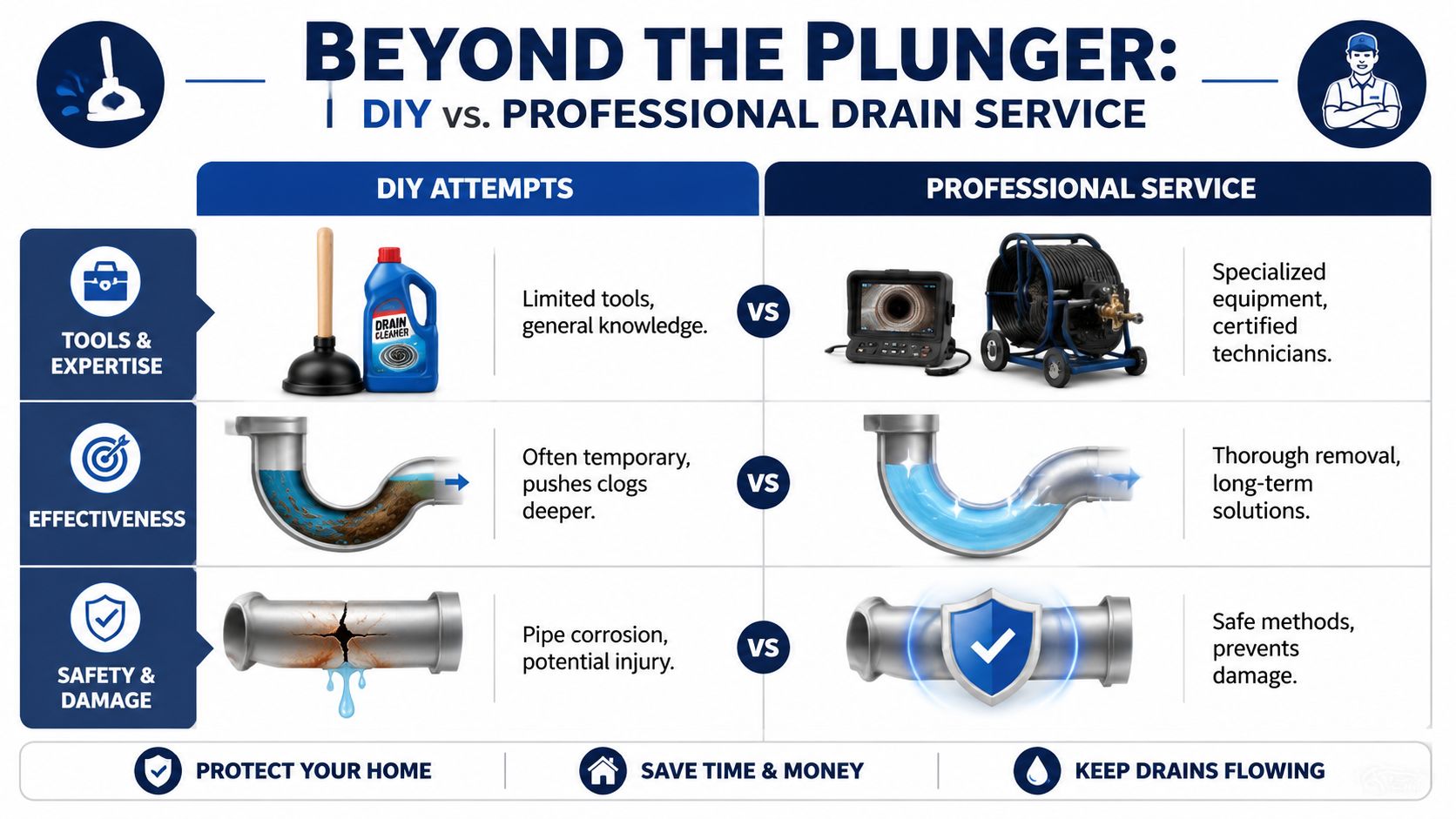
A professional drain service does more than reopen a pipe. It helps determine whether the blockage is ordinary buildup, root intrusion, a damaged section of pipe, or a problem in the main line. In Las Vegas, Henderson, and North Las Vegas, that distinction matters. Many homes have aging drain lines, shifting soil conditions, or landscaping that can put pressure on buried piping over time.
When a camera comes first
If a drain has been snaked before and the same symptom keeps returning, cleaning alone may not be the right first step. A camera inspection is often the smarter call because it shows what is happening inside the pipe, especially when there is odor, gurgling, repeat backups, or signs that more than one fixture is involved, as noted by this drain service guidance on recurring blockages and sewer camera inspection.
What the camera finds changes the plan:
- Grease or sludge coating the pipe walls usually calls for a cleaning method that clears the full inside surface
- Roots entering at joints usually need cutting first, then a plan for repair or future prevention
- Cracked, offset, or separated pipe can explain why the line keeps catching waste
- Standing water in a low section can limit how much improvement any cleaning will deliver
That is the difference between getting water to go down today and protecting the system from another service call next month.
Rooter service versus hydro-jetting
These services solve different problems.
A rooter machine uses a cable and cutting head to break through a blockage and reopen the path. It is often the practical choice when a line is stopped and access is straightforward.
Hydro-jetting uses high-pressure water to wash buildup off the pipe walls. It is usually the better option for grease, sludge, soap residue, and recurring buildup that a cable may punch through without fully removing.
A simple way to look at it:
- Rooter equipment restores flow through a concentrated blockage
- Hydro-jetting cleans the pipe more thoroughly when buildup is spread along the line
- Camera inspection helps confirm which method fits the pipe condition and whether cleaning alone makes sense
I tell homeowners the same thing on repeat calls. If the drain worked for a short time after the last clearing, the first visit may have opened a path through the blockage without addressing the underlying issue in the pipe.
For homeowners considering drain cleaning and sewer camera inspection through MG Drain Services, the main decision is not which machine sounds stronger. It is which method fits the line condition, the pipe material, and the likelihood of repeat trouble.
What DIY can and can't solve
A plunger is useful for a basic toilet stoppage. A hand auger can help on a nearby sink or tub clog.
Problems start when people keep forcing the issue without knowing what is in the line. Chemical cleaners can damage certain pipes and create a safety hazard for anyone who opens the drain afterward. Repeated blind snaking can leave buildup behind, miss a broken section, or push material deeper into the system.
DIY work makes sense for a minor, isolated clog near the fixture. Once the problem repeats, spreads, smells like sewer gas, or comes back after heavy water use, the job shifts from clearing a drain to diagnosing a drainage system. That approach usually saves money because it reduces repeat service and helps avoid cleaning a damaged line over and over.
What to Expect During Your Drain Service Appointment
Most homeowners feel stressed before a plumbing visit for one reason. They don't know whether they're about to hear “simple fix” or “major issue.” A good service call removes that uncertainty step by step.
The appointment should start with a clear conversation about what you're seeing. Which drain is slow. When it backs up. Whether other fixtures react. Whether there's odor, noise, or overflow. Those details help narrow down whether the problem is local to one drain or affecting a larger section of the system.
The first part of the visit
A professional technician should arrive ready to inspect, protect the work area, and verify the symptom before recommending a method. In a clean home, that means taking care around flooring, cabinets, and bathroom surfaces, not just focusing on the pipe.
After that, the work usually falls into one of two paths:
- Straight clearing visit when the symptom strongly points to an accessible blockage.
- Diagnostic-first visit when the pattern suggests the line needs to be viewed before more cleaning.
What thorough service is supposed to accomplish
Professional drain service isn't just about hearing the water go down once and calling it done. Industry guidance states that sewer line cleaning should restore line capacity to a minimum of 95% of its original carrying volume, using high-velocity hydro-jetting or mechanically powered rooter equipment, according to this sewer line cleaning specification explaining restoration standards.
That standard matters because partial clearing is what leads to repeated calls.
If equipment can't successfully pass through the line after attempts to clear a major blockage, the next move should be diagnosis, not brute force. Video inspection helps locate the obstruction before more removal is attempted. That's especially important when roots or a damaged section may be involved.
The job isn't finished when water trickles through. It's finished when the line has been properly restored or the real obstruction has been identified.
Before the technician leaves
A professional appointment should end with plain-language findings. You should know what was found, what was done, what condition the line appears to be in, and whether there's a risk of repeat problems.
You should also know what doesn't need to be done. Honest plumbing advice isn't just about recommending work. It's about ruling out unnecessary work when the line condition doesn't justify it.
That kind of clarity is what helps Las Vegas homeowners make calm, cost-effective decisions instead of reacting to the next backup.
How to Prevent Clogged Drains in Your Las Vegas Home
The cheapest drain problem is the one you prevent. Most clogs don't happen in one day. They build from habits, missed warning signs, and long gaps between maintenance.
For Las Vegas homes, prevention works best when you think by fixture and by property type.
What homeowners should do room by room
In the kitchen, the biggest mistake is treating the sink like a disposal path for grease. Even when grease goes down hot, it cools in the piping and sticks to the wall of the line. Food scraps catch on it and the restriction grows.
In the bathroom, hair and soap residue are the usual pairing. A drain screen helps because it stops the material before it enters the line. If a shower starts slowing, deal with it early. Waiting usually means the branch line gets denser and harder to clean.
For laundry drains, pay attention to how the line behaves during a full discharge cycle. If a laundry drain gurgles nearby fixtures or backs up under heavy use, treat that as a warning that the system may already be restricted.
Habits that reduce emergency calls
- Keep grease out of drains: Let it cool, containerize it, and throw it away instead of rinsing it into the sink.
- Use drain screens: They're simple, but they catch the hair and debris that create common bathroom stoppages.
- Watch the pattern: One isolated slow drain may be minor. Repeated symptoms across fixtures aren't.
- Skip harsh chemical cleaners: They often don't solve the underlying blockage and can complicate later service.
- Act early on odors and gurgling: Those are often system warnings, not annoyances.
For landlords, restaurants, and multi-unit properties
High-use properties need a different mindset. Waiting for a full backup is expensive because it affects tenants, customers, and daily operations.
For restaurants and multi-tenant buildings, preventative service is often the smartest form of drain service. Scheduled hydro-jetting and camera inspections can be cheaper over time than repeated emergency calls for grease buildup and recurring partial blockages, as explained in this commercial drain maintenance guidance focused on preventative service.
That's especially relevant for:
- Restaurants and small commercial kitchens with grease-heavy discharge
- Rental properties where turnover hides usage history
- HOAs and multi-unit buildings where one blocked line can affect several occupants
If you manage property in Las Vegas, Henderson, or North Las Vegas, prevention usually costs less than disruption. The right schedule depends on usage, fixture load, and what the line has done in the past.
Your Trusted Las Vegas Drain Service Partner
A kitchen sink that clogs once after a holiday meal is one kind of call. A kitchen sink that backs up every few months, especially if a shower or toilet starts acting up too, is a different problem. In Las Vegas homes, that pattern often points to more than buildup at one fixture.
Good drain service starts with that distinction. Repeating the same cable cleaning on a line with root intrusion, a belly, grease buildup deeper in the run, or a damaged section usually buys temporary relief and another bill later. A careful plumber should decide whether the line needs clearing, inspection, or both before treating it like a routine clog.
What local homeowners should look for
Choose a drain company that can explain what it sees and why it recommends a certain step. Clear communication matters as much as the equipment.
A solid drain service visit usually includes:
- Licensed and insured work: That protects your home and gives you a clear standard for the work being performed.
- Drain cleaning and camera capability: If symptoms keep returning, inspection matters. Seeing the inside of the pipe helps separate a simple stoppage from a line condition problem.
- Clear pricing before work begins: Homeowners should understand the difference between basic cleaning, diagnostic work, and repair.
- Experience with older and newer valley homes: Pipe materials, yard trees, slab layouts, and past repairs all change the likely cause.
- Practical recommendations: The right answer is not always the biggest job. Sometimes a targeted cleaning is enough. Sometimes cleaning a damaged line again is wasted money.
Local knowledge helps. Homes in Las Vegas, Henderson, North Las Vegas, and Summerlin can have very different drain histories. Older neighborhoods may have aging sewer lines or root intrusion. Rental properties often come with unknown usage patterns. Busy family kitchens can build up grease slowly until the line starts warning you with odors, gurgling, or repeat backups.
Why local context matters
Drain problems can escalate fast in our area because people often wait, hoping a slow line will clear on its own. Then a partial blockage becomes an overflow, water damage, or a sewer cleanup. The lower-cost move is usually early diagnosis.
MG Drain Services LLC handles plumbing repairs, rooter work, hydro-jetting, sewer camera inspections, and leak detection for homeowners and property managers across Las Vegas, Henderson, North Las Vegas, and Summerlin. The company also offers bilingual support and online appointment scheduling.
If your drains are slow, noisy, smelly, or backing up, treat it as a system question, not just a clog. Call 702-480-8070 or book online with MG Drain Services LLC. The goal is to identify the underlying cause, fix what needs fixing, and avoid paying twice for the same recurring problem.