A backed-up kitchen sink usually starts the same way. Water pools a little longer than it should, the disposal hums, the drain gurgles, and then somebody in the house says, “It'll probably go down in a minute.” In Las Vegas homes, that minute often turns into a real plumbing problem once grease, soap, hair, food waste, and mineral buildup have had time to stack up inside the line.
Homeowners in Las Vegas, Henderson, and North Las Vegas usually want the same things when they search for drain services. They want the clog cleared fast, they want to know what the technician is doing, and they want pricing explained before the work starts. That's fair. Drain problems are stressful enough without vague answers or surprise charges.
The Complete Guide to Las Vegas Drain Services
A lot of drain calls start with something small. A shower that drains slowly. A kitchen sink that smells off. A toilet that seems fine until the washing machine runs and another fixture burps or backs up. Those are the moments when homeowners start looking for plumbers in Las Vegas and trying to figure out if they need a simple cleaning, a sewer inspection, or a bigger repair.
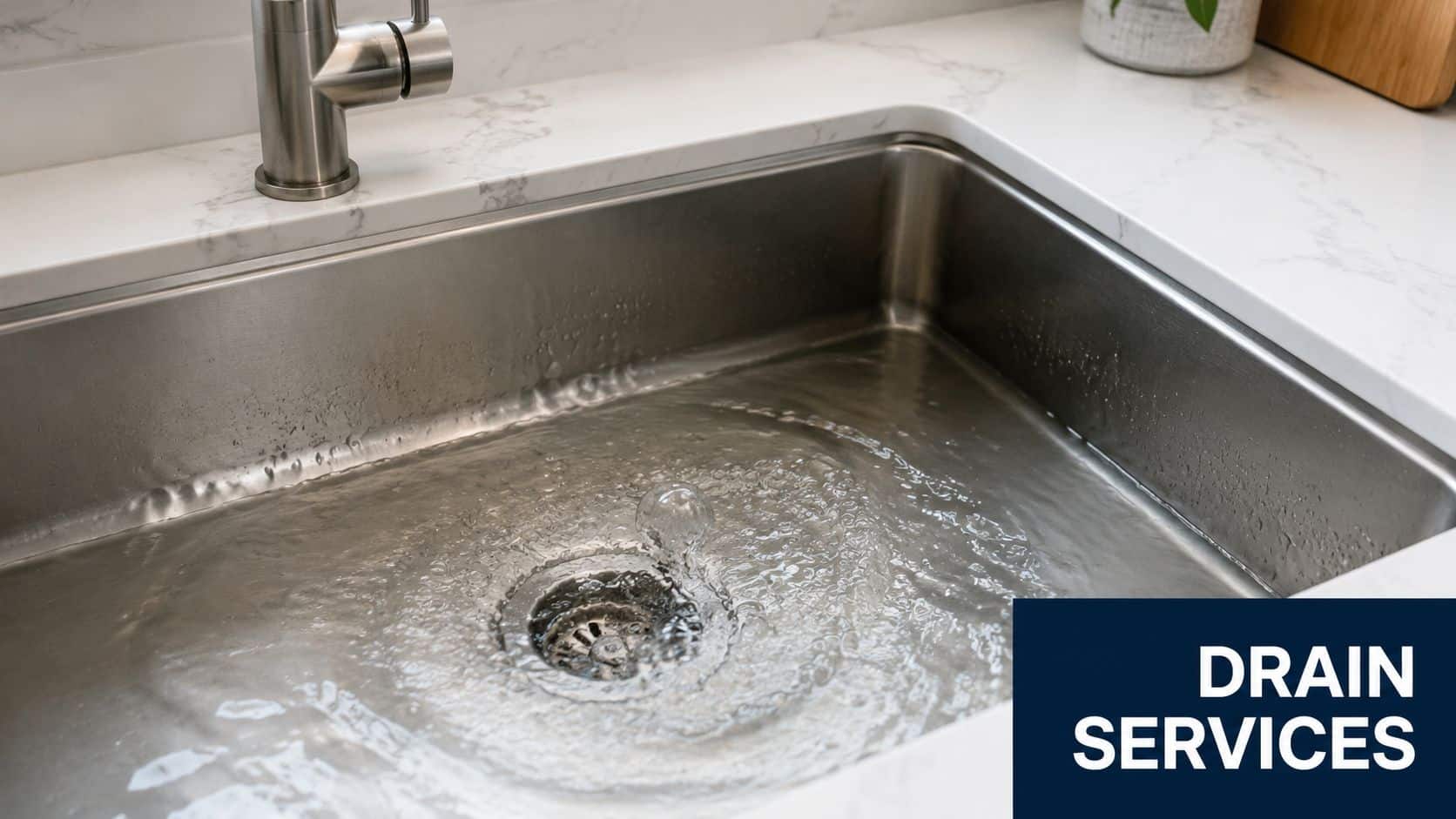
Las Vegas homes deal with a mix of everyday drain problems and local wear factors. Hard water leaves mineral scale behind. Older piping can hold buildup more easily. High-use kitchens and rental properties tend to see repeat stoppages when drains only get opened up halfway instead of cleaned properly.
Why drain work matters more than people think
Drain work isn't a niche side service. The U.S. septic, drain, and sewer cleaning services industry was estimated at $8.1 billion in 2025, up from $7.8 billion in 2024, with 6.7% CAGR from 2020 to 2025 and 4.3% growth in 2025, according to IBISWorld market size data for septic, drain, and sewer cleaning services. That tells you two things. First, drain services are a routine part of property maintenance. Second, professional companies can justify investing in the cameras, jetting machines, and training that basic DIY methods can't match.
What homeowners usually want to know first
Most callers aren't asking for technical jargon. They want plain answers.
- Is this an emergency: If water is backing up into tubs, toilets, or sinks, it needs attention quickly.
- Can a plunger fix it: Sometimes, yes. Repeating clogs usually mean no.
- What will happen on the visit: A proper service call should include diagnosis, an explanation, and upfront pricing before work begins.
- Do you serve my area: Local drain cleaning in Las Vegas often extends to Henderson and North Las Vegas too.
- Can I get help in Spanish: Many households prefer clear bilingual communication. Se habla español matters.
A slow drain is rarely “just slow.” It's usually the early warning before a full stoppage.
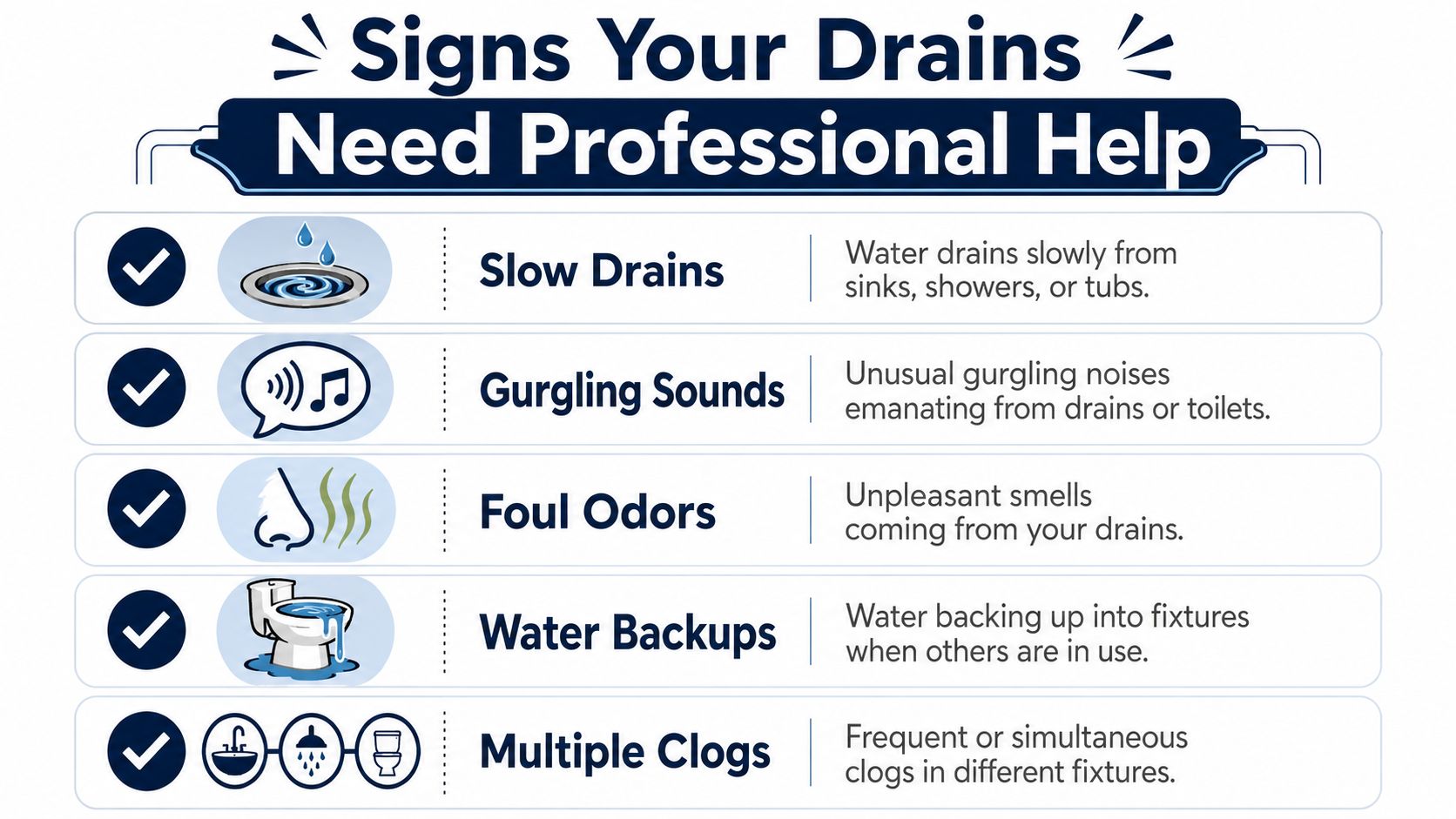
Signs Your Drains Need Professional Help
Some drain problems are obvious. Others hide behind noises, smells, or recurring minor clogs that homeowners put up with for too long. If you know what each symptom means, you can usually tell the difference between a quick fixture clog and a deeper line issue.
Slow drains that keep coming back
A bathroom sink that drains slowly often has hair, soap residue, and toothpaste buildup near the trap or branch line. In kitchens, grease and food waste are common causes. In Las Vegas, hard water can add mineral scale to that buildup, which narrows the inside of the pipe and gives debris more surface to cling to.
One slow drain doesn't always mean a major sewer problem. But if you clear it once and it slows down again soon after, the clog usually extends farther into the line than a homeowner can reach with a plunger or a short handheld tool.
Gurgling, odors, and strange behavior
Drains and toilets gurgle when air gets trapped or displaced by a partial blockage. That sound is a warning, not a quirk. The line is telling you flow isn't moving freely.
Foul drain odors come from one of two places in most homes. Either debris is rotting inside the line, or sewer gas is finding a way back through the system because drainage and venting aren't working the way they should. A surface cleaner won't fix either one.
Field note: If a sink smells bad right after you run water, the problem is usually inside the drain assembly or branch line, not on the countertop.
Multiple fixtures acting up at once
Homeowners should stop guessing. If the tub backs up when the toilet flushes, or the washing machine affects a nearby drain, you may be dealing with a main line obstruction rather than an isolated clog.
Watch for these combinations:
- Toilet and tub problems together: Often points to a shared drain line issue.
- Kitchen sink and dishwasher backup: Usually means the kitchen line is restricted.
- Several drains slowing at once: Often signals a deeper system blockage.
- Repeated plunging with short-term relief: Means the obstruction is still there, just shifted.
A single clogged fixture is annoying. Multiple fixtures are a system problem.
When waiting makes the repair harder
Drain blockages almost never get better by themselves. Water keeps carrying more grease, lint, soap, and solids into the same restricted area. On top of that, repeated use of harsh chemical cleaners can damage some piping and still leave the obstruction in place.
That's usually the moment to call local plumbing professionals. The goal isn't just to poke a hole through the clog. It's to find where it is, what it's made of, and whether the line needs cleaning, jetting, or camera inspection.
Your Guide to Professional Drain Service Options
Not every clog needs the same tool. That's one of the biggest misunderstandings homeowners have about drain cleaning Las Vegas calls. A bathroom sink stoppage, a grease-packed kitchen branch line, and a root-packed sewer line may all look like “slow drainage” from the outside, but they're different jobs.
The main service types homeowners should know
Drain snaking works well when the goal is to break through or pull out a localized blockage. Hair clogs, paper stoppages, and many common fixture backups respond well to a cable machine or auger. It's often the right starting point because it's efficient and less invasive for straightforward clogs.
Rooter service is what people usually mean when a drain line has a more stubborn obstruction deeper in the system. The exact tool can vary, but the point is to cut through or remove the material that standard hand tools can't reach.
Hydro jetting is different. Instead of just opening a path through the blockage, it uses pressurized water to scour the pipe interior. Professional sewer cleaning specifications often target restoring a line to at least 95% of its original carrying capacity, and that level of cleaning typically requires high-velocity jetting or other mechanically powered equipment, as described in these sewer line cleaning specifications. That's why jetting is often the right call for grease, sludge, sand, and heavy buildup.
Sewer camera inspection answers the question homeowners really need answered before spending money. Is this grease, roots, scale, a break, a belly, or a repeat backup caused by line damage? A camera lets the technician verify the cause instead of guessing.
Comparing Professional Drain Services
| Service | Best For | Method | Key Benefit |
|---|---|---|---|
| Drain cleaning and snaking | Common sink, tub, shower, and toilet clogs | Cable or auger breaks through blockage | Fast relief for straightforward stoppages |
| Rooter service | Deeper or tougher line obstructions | Heavier-duty mechanical clearing | Reaches farther into the system |
| Hydro jetting | Grease, sludge, scale, and recurring buildup | High-pressure water cleaning | Cleans pipe walls, not just a small opening |
| Sewer camera inspection | Unknown or recurring problems | Video inspection inside the pipe | Confirms the real cause before more work is done |
What works and what doesn't
A lot of homeowners try chemicals first because they're on the shelf and easy to grab. They can soften some organic material, but they don't diagnose anything, and they rarely solve recurring backups. If the line has grease layered along the walls, root intrusion, or a structural issue, store-bought chemicals won't fix it.
A better way to think about it is this:
- Use snaking when the problem is likely isolated and mechanical removal makes sense.
- Use jetting when buildup coats the pipe and keeps causing repeat stoppages.
- Use a camera when you need proof before choosing the repair.
- Use a licensed plumber when backups affect more than one fixture or the problem keeps returning.
If you want a clearer breakdown of one of the most misunderstood options, this guide on how hydro jetting works is useful. For homeowners in Las Vegas comparing service options, MG Drain Services LLC offers drain cleaning, hydro-jetting, and sewer camera inspection as separate services because the right method depends on what the line needs.
The cheapest drain service is the one that fixes the actual cause the first time.
What to Expect During Your Service Visit
A plumbing visit can often elicit unease for a single reason. The uncertainty lies in whether the appointment will be simple, messy, expensive, or all three. A professional drain call should feel organized from the first phone conversation through the final test.
Before the technician arrives
Have a short description ready. Which fixture is clogged. When it started. Whether another drain backs up when you run water. Whether you've already used a plunger, auger, or chemical cleaner. That information helps the office and the technician prepare for the right kind of call.
In Las Vegas, good scheduling also means clear communication. You should know when the technician is expected, what type of issue they're coming for, and whether access is needed to a cleanout, under-sink area, or exterior line.
What the appointment should look like
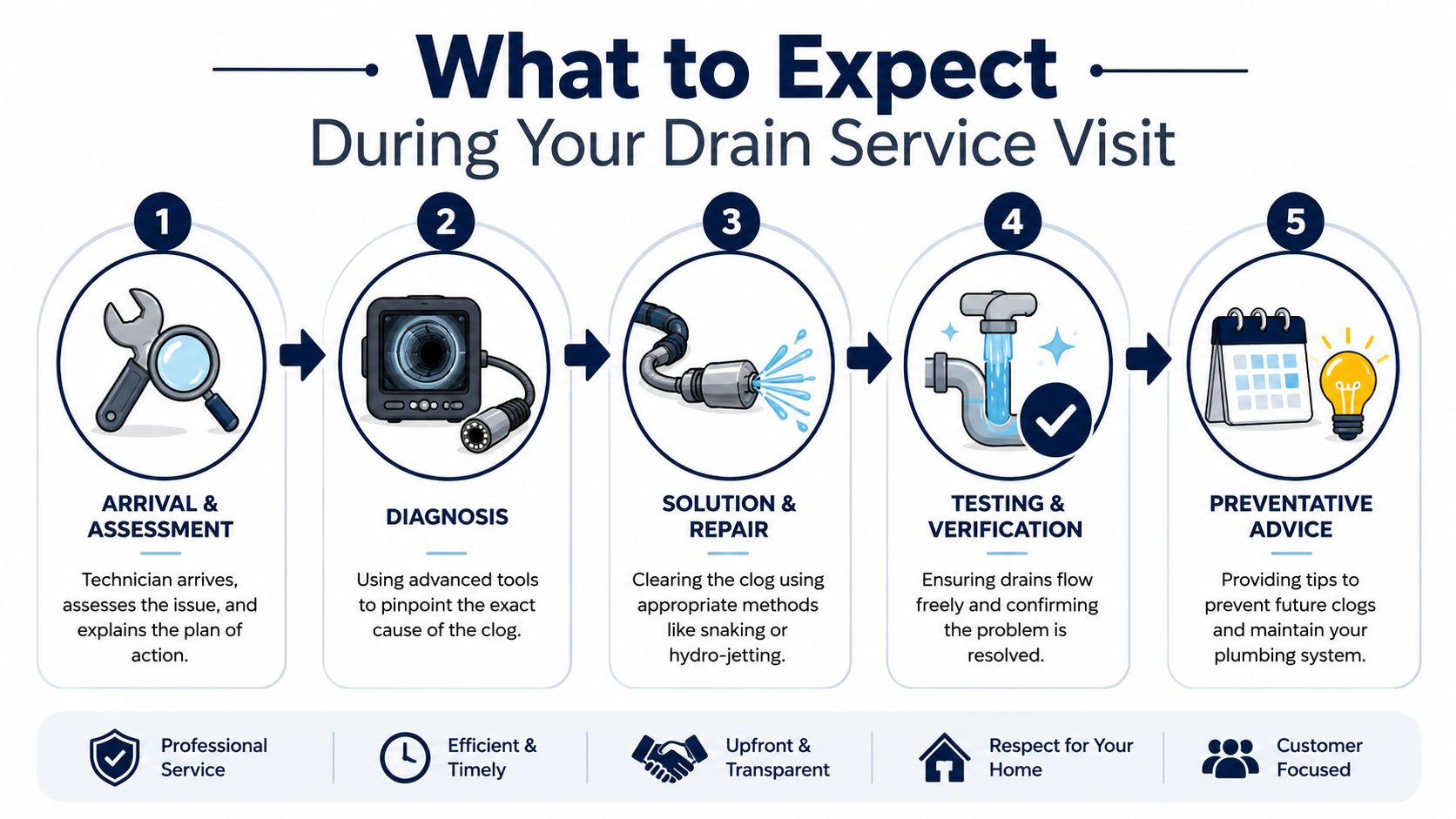
A proper visit usually follows this sequence:
Arrival and assessment
The technician checks the affected fixtures, asks what you've noticed, and looks for clues that point to a local clog or a larger drainage issue.Diagnosis
If the cause isn't obvious, professional tools come into play. That might include testing fixture behavior or using a camera to inspect the line.Upfront explanation
You should get a clear explanation of what was found, what method is recommended, and why.Honest pricing before work
A licensed and insured company should present pricing before starting, not after the line is already opened.Work, testing, and cleanup
The technician clears the line, runs water, checks drainage, and makes sure the area is left clean.
What transparent service actually means
Transparent service isn't fancy language. It means the invoice shouldn't surprise you. If the problem turns out to be more involved than the original symptom suggested, the technician should explain that before changing the scope.
If a drain company can't explain why it chose snaking, jetting, or camera inspection, you're paying for a guess.
Experienced technicians also give practical advice at the end. That may include what not to put down the drain, whether the line should be rechecked later, or whether recurring clogs point to a repair issue instead of a cleaning issue.
A Transparent Look at Drain Service Costs
Homeowners usually ask about cost before they ask about equipment. That makes sense. Nobody wants to schedule drain services in Las Vegas and then get hit with a number they never saw coming.
What affects the final bill
Drain pricing depends on three main things. Location, severity, and method.
A small bathroom sink clog near the trap usually takes less time and less equipment than a main sewer line blockage. A line that only needs basic snaking is different from a line that needs hydro jetting because the buildup is heavier and the cleaning is more intensive.
A 2025 analysis of 30,000+ customer projects found a national average of $242 for standard residential drain cleaning, with a typical range of $100 to $800. That same analysis reported kitchen sink cleaning averages $110 to $215, main sewer line cleaning ranges from $200 to $800, basic snaking usually falls between $100 and $275, and hydro jetting runs about $250 to $800. Those figures come from this 2025 drain cleaning cost analysis.
How to use those numbers without getting misled
National averages are a benchmark, not a guaranteed quote for your house. Access matters. Clog location matters. Whether the line needs inspection before cleaning matters. Honest pricing means the company explains what level of service your situation requires.
That's especially important for landlords and property managers. If you're planning maintenance across multiple units, this guide to budgeting for rental property upkeep is a practical resource because drain issues rarely happen in isolation from the rest of property maintenance planning.
Here's the practical way to think about cost:
- Lower end pricing usually applies to accessible, routine fixture clogs.
- Mid-range pricing often reflects tougher branch line work or more time on site.
- Higher pricing usually means main line work, hydro jetting, or a more involved blockage.
What honest pricing should include
A good quote should tell you what service is being performed, not just toss out one flat number with no explanation. If a company says a drain cleaning is one price no matter what line is clogged, what tool is used, or how severe the blockage is, ask more questions.
For a closer breakdown of what homeowners may pay and why, this article on drain cleaning service cost helps frame the usual variables. In most cases, paying for the right diagnosis upfront is cheaper than paying twice for a temporary opening that doesn't solve the actual restriction.
Preventative Maintenance to Protect Your Plumbing
Emergency calls are part of plumbing work, but a lot of backups are preventable. The households and properties with the fewest ugly surprises usually follow basic drain habits and deal with warning signs early.
Simple habits that keep drains moving
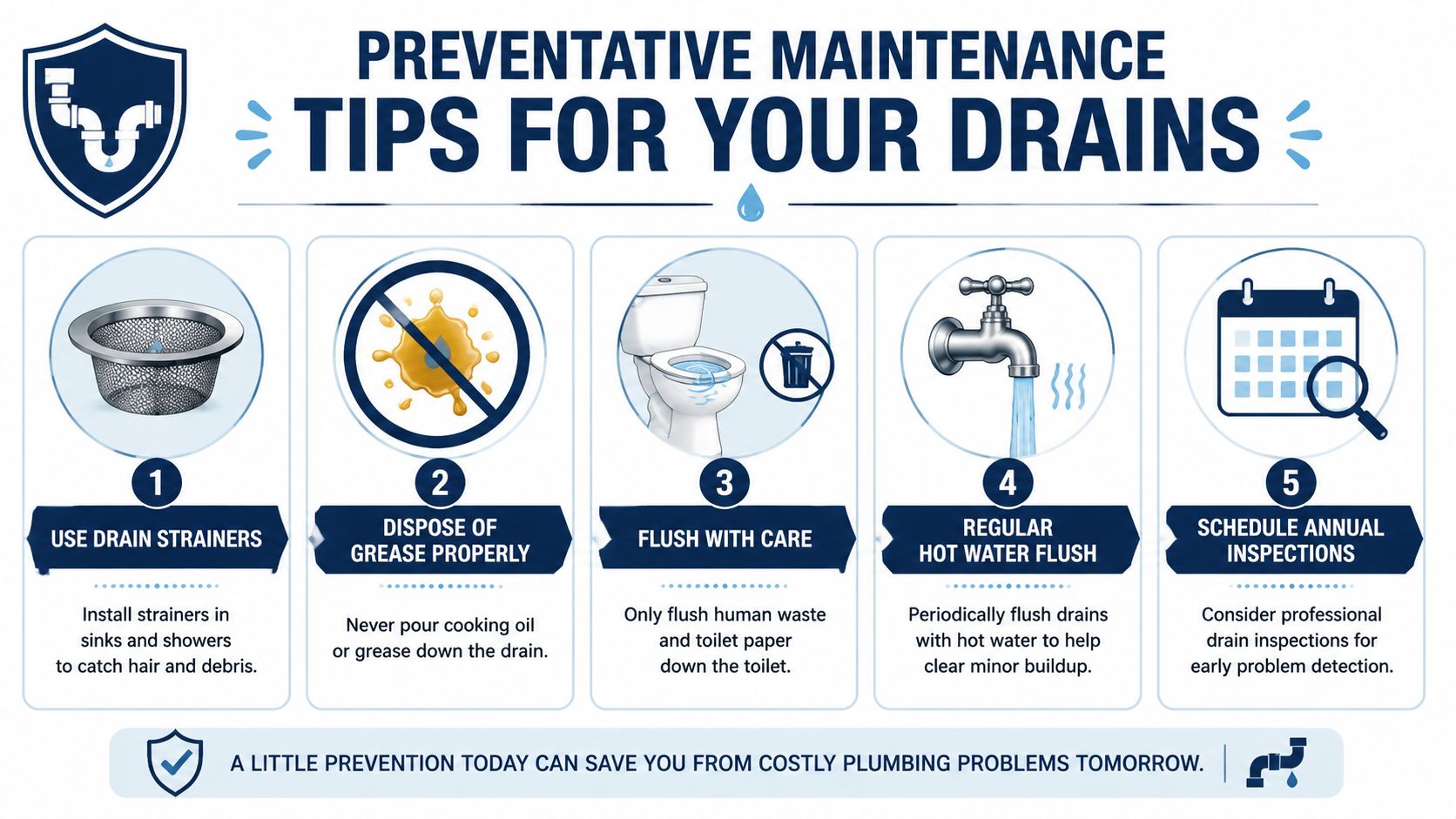
You don't need specialized equipment to lower your risk. You need consistency.
- Use strainers where debris starts: Hair in showers and food scraps in kitchen sinks are easier to stop at the opening than remove from the line later.
- Keep grease out of the drain: Liquid grease cools, sticks, and collects more debris as it moves through the pipe.
- Be strict about toilets: “Flushable” wipes are one of the most common causes of repeat stoppages.
- Use hot water thoughtfully: A hot water flush can help with light residue in some lines, especially kitchen drains, but it won't solve heavy buildup.
- Skip harsh chemical overuse: If a drain keeps slowing, chemicals usually mean delay, not repair.
Different properties need different maintenance
Single-family homes usually need better daily habits and prompt attention to early symptoms. Commercial kitchens and multi-unit buildings are different. They push a lot more grease, soap, food waste, and paper through the system, and the lines tend to foul faster.
A major gap in typical drain-service advice is guidance for commercial kitchens and multi-unit properties, where recurring grease and high use often call for scheduled preventive hydro-jetting rather than emergency snaking after the line is already blocked, as noted in this discussion of drain and sewer maintenance needs. For restaurants, landlords, and property managers, downtime often costs more than the maintenance visit.
Regular maintenance is cheaper than a closed kitchen, an angry tenant, or water on the floor at midnight.
If you own rental property or manage a small commercial building in Las Vegas, ask a plumber about a maintenance schedule based on use patterns, not just after-hours emergencies. That approach is usually what keeps “surprise” backups from becoming routine.
Your Local Las Vegas Drain Experts
Homeowners usually have a few last questions before they call, especially when the problem hasn't turned into a full backup yet. Straight answers help.
Frequently Asked Questions
| Question | Answer |
|---|---|
| How do I know if it's an emergency? | If water is backing up into more than one fixture, sewage odors are strong, or you can't use key plumbing fixtures without overflow risk, treat it as urgent. |
| Should I try a plunger first? | For a simple sink or toilet stoppage, yes. If the clog keeps returning or affects multiple fixtures, stop there and have the line evaluated. |
| Is hydro jetting always better than snaking? | No. They do different jobs. Snaking is often right for a localized clog. Jetting is better when buildup coats the pipe wall and needs thorough cleaning. |
| Do recurring clogs usually mean pipe damage? | Not always. They can also mean grease, scale, or debris is still left in the line. A camera inspection helps separate buildup from structural problems. |
| How often should drains be cleaned? | That depends on usage, what goes down the line, and whether the property has a history of backups. High-use kitchens and multi-unit properties usually need more attention than a lightly used single-family home. |
| Do you serve outside Las Vegas? | Many local plumbing professionals also serve Henderson and North Las Vegas, so it's worth confirming your exact area when you call. |
The right drain company should make the process feel clear, not confusing. You should know what's wrong, what tool is being used, what it will cost before work begins, and what to do if the issue returns. That's what people are really looking for when they search for drain cleaning in Las Vegas.
Licensed and insured service matters. Experienced technicians matter. Clear communication matters just as much. If you're in Las Vegas, Henderson, or North Las Vegas and your sink, shower, toilet, or sewer line is giving you trouble, get it looked at before a slow drain becomes water damage, downtime, or a full backup.
Need clear answers and fast help with drain services in Las Vegas? MG Drain Services LLC provides professional plumbing and drain help for homeowners, landlords, and small businesses across Las Vegas, Henderson, and North Las Vegas. For scheduling, honest pricing, and bilingual support, call 702-480-8070 or book online through the website.