
If you opened your bill and thought, “Why is my water bill suddenly this high?”, you're not alone. For many homeowners in Las Vegas, Henderson, and North Las Vegas, the problem isn't extra laundry or a few longer showers. It's a hidden leak. This High Water Bill in Las Vegas? Hidden Leak Checklist gives you a practical way to check the common causes first, understand when the problem is more serious, and avoid paying for the wrong repair.
A high water bill in Las Vegas usually means one of two things. You have an obvious fixture leak you haven't noticed yet, or you have water escaping somewhere you can't see. The difference matters because the cheap fixes are simple, while the expensive ones usually involve concealed plumbing, slab leaks, irrigation failures, or a main water line problem.
That Shocking Water Bill A Las Vegas Homeowner Story
The call usually starts the same way. A homeowner in Las Vegas or Henderson says the bill doesn't make sense. Nobody changed their routine. Nobody filled a pool. Nobody had guests for weeks. But the usage climbed anyway, and now there's real concern that something is wrong behind a wall, under a floor, or out in the yard.
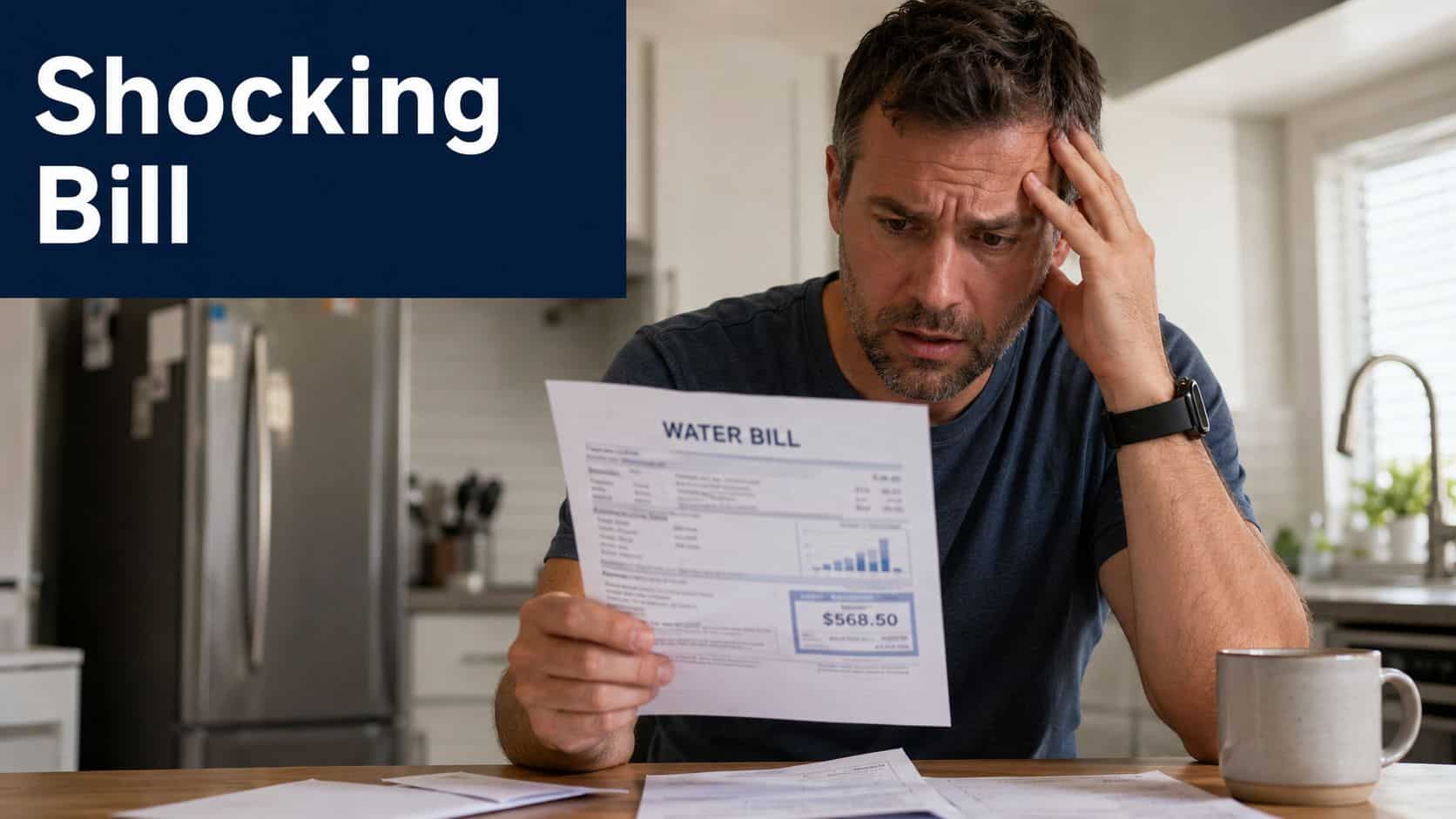
In Las Vegas, that kind of bill should get your attention fast. Hidden leaks often stay quiet until the bill is the first warning sign. A toilet can leak without noise. A faucet drip can look minor. A line under the slab can run for days before you see any staining or floor damage.
What homeowners usually notice first
Calls typically aren't made due to a visible pipe burst. Instead, they occur because of one of these:
- The bill jumps for no clear reason and normal water use hasn't changed.
- A fixture seems fine at a glance but still wastes water slowly all day.
- There's no visible puddle even though the meter or bill suggests water is moving somewhere.
- The property feels normal and that false sense of normal delays action.
A high water bill is often the first symptom, not the last one.
That's why a checklist matters. The right checks can save you from chasing the wrong cause, and they can also tell you when it's time to stop guessing and bring in a licensed plumber in Las Vegas.
Why Las Vegas Water Bills Spike Unexpectedly
Las Vegas adds a financial penalty that many homeowners don't see coming. If your usage crosses the district's seasonal threshold, the Las Vegas Valley Water District applies an Excessive Use Charge of $9 per 1,000 gallons, and in the first half of 2024, nearly 60,000 Southern Nevada residents were hit with excessive use charges totaling over $12.8 million according to the LVVWD Excessive Use Charge FAQ.
That changes the conversation. This isn't just about wasting water. It's about paying a premium while the leak keeps running.
Why the bill climbs so fast in Las Vegas
A hidden leak adds cost in layers:
- Base water usage goes up because water is escaping around the clock.
- The surcharge can kick in once use pushes past the allowed threshold.
- The leak often worsens over time because worn parts and damaged pipe walls don't repair themselves.
A homeowner might look at one large bill and think it's a one-time mistake. In practice, that's risky. If the leak is active, the next billing cycle can be worse.
What doesn't work
Some homeowners try to wait for visible damage before acting. That's a bad trade-off.
- Waiting for stains or cracks means the leak has had more time to run.
- Resetting irrigation timers without testing can hide the underlying issue for a few days but won't solve indoor leaks.
- Replacing random parts first can waste money if the problem is under the slab or in a buried line.
In Las Vegas, a leak can cost you twice. Once on the bill, and again on the repair if you wait too long.
That's why the first step is diagnosis, not guesswork.
Your High Water Bill Hidden Leak Checklist
A high bill does not always mean a major pipe break. In Las Vegas, it often starts with a small leak that runs all day, every day, long enough to push the bill higher and put you at risk for an excessive use charge.
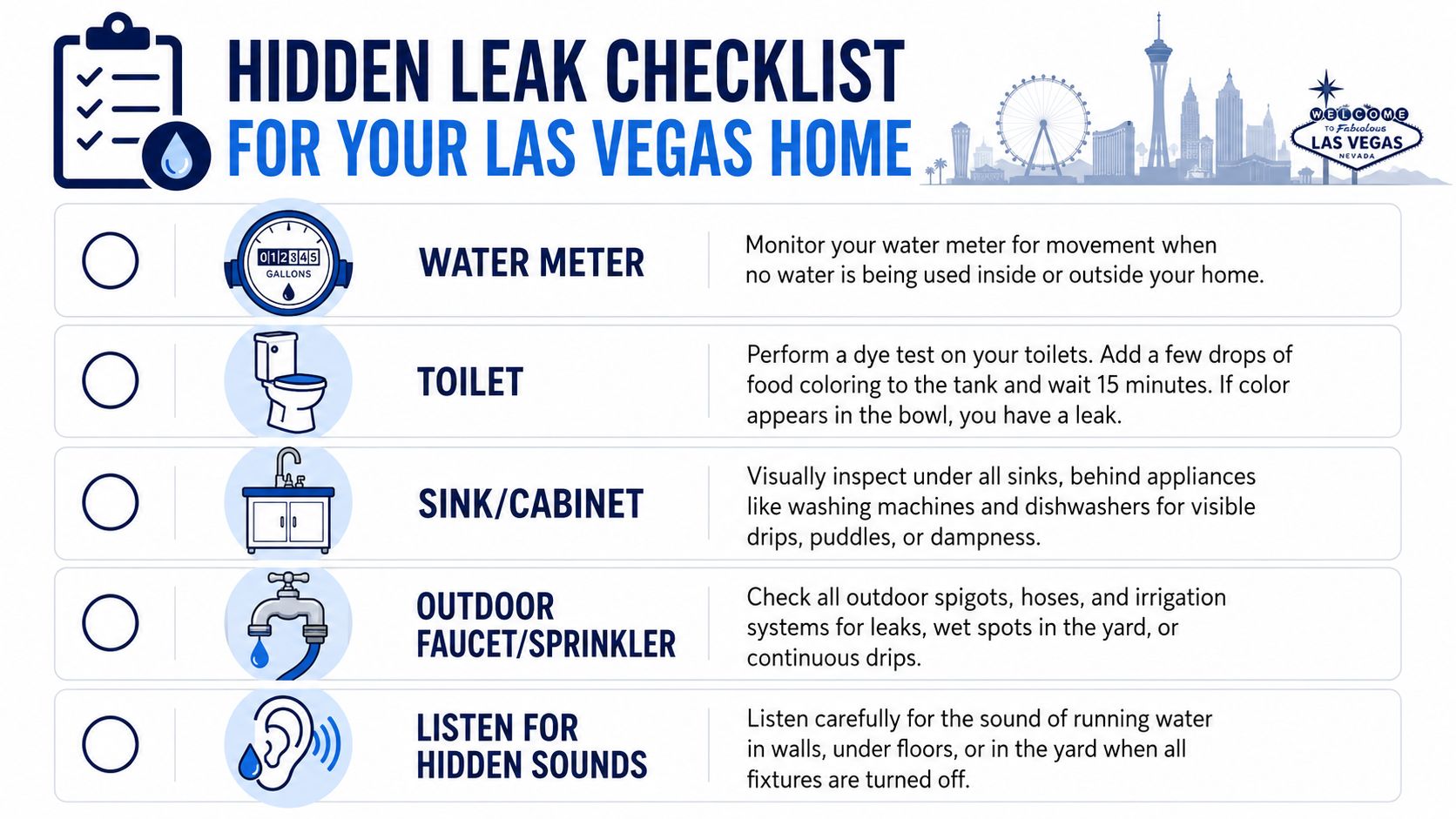
Start with the checks that cost nothing but a few minutes. Use a flashlight, food coloring, and your water meter. The goal is to find out whether the problem is a fixture you can address quickly or a concealed leak that needs proper testing before the next bill lands.
Check the water meter overnight
The meter gives the cleanest answer first. If no one is using water and the reading still changes, water is going somewhere.
Take a photo of the meter at night after all indoor use stops. Check it again first thing in the morning before anyone showers, flushes, or starts laundry. Make sure irrigation is off for that window, or the test is useless.
If the reading changed, treat that as active loss, not a billing glitch. Save the photos. They can help if you end up documenting the leak for repair records or reimbursement paperwork later.
Test every toilet before replacing anything else
Toilets are one of the cheapest problems to confirm and one of the easiest to miss because they often make no obvious noise.
Put a few drops of food coloring in the tank and wait 15 to 20 minutes without flushing. If color shows up in the bowl, the flapper is leaking. The U.S. Environmental Protection Agency leak detection guidance recommends this test because silent toilet leaks are common and easy to overlook.
A worn flapper, a chain that hangs up, or a fill valve that does not shut off cleanly can keep water moving around the clock. That is a small repair compared with another month of inflated usage.
Check the fixtures that leak slowly
Slow leaks usually leave clues before they leave damage.
Look under sinks for damp cabinet floors, staining, mineral buildup, or swollen particleboard. Check washing machine hoses, dishwasher connections, tub spouts, showerheads, and outdoor hose bibs. A steady drip outside matters in Las Vegas because wasted water is expensive, and it can keep the meter moving long after the rest of the house is quiet.
Do not skip the pressure relief line at the water heater if your setup has one. I have seen minor discharge there add enough usage to confuse homeowners who were searching everywhere else.
Listen for water where there should be none
Turn off TVs, fans, and anything else making background noise. Then stand still and listen near bathrooms, the laundry area, and the base of walls.
A faint hiss behind drywall or a steady water sound near the floor usually means the leak is hidden from view. At that point, random part swapping gets expensive fast. A proper water leak detection in Las Vegas service can narrow the source before you open walls or tear into flooring.
Check outside before you assume the problem is indoors
Las Vegas homes often lose water in places homeowners do not inspect often enough. Walk the yard and look for soft soil, unusually green patches, pooled water near valves, or sprinkler heads that keep weeping after the cycle ends.
If the bill jumped during a hot stretch, irrigation is a fair suspect. If the meter moves overnight with the sprinklers disabled, focus back on the house or the buried supply line.
The point of this checklist is simple. Find the low-cost leaks first, document what you see, and stop guessing early. That cuts down the chance of paying for excess water use while the actual leak keeps running.
When the Leak Is Hiding Under the Floor
A lot of Las Vegas homeowners reach this point the same way. The easy checks come up empty, the meter still shows unexplained use, and the bill is high enough that the Excessive Use Charge becomes part of the problem.
That is often when a slab leak moves to the top of the list.
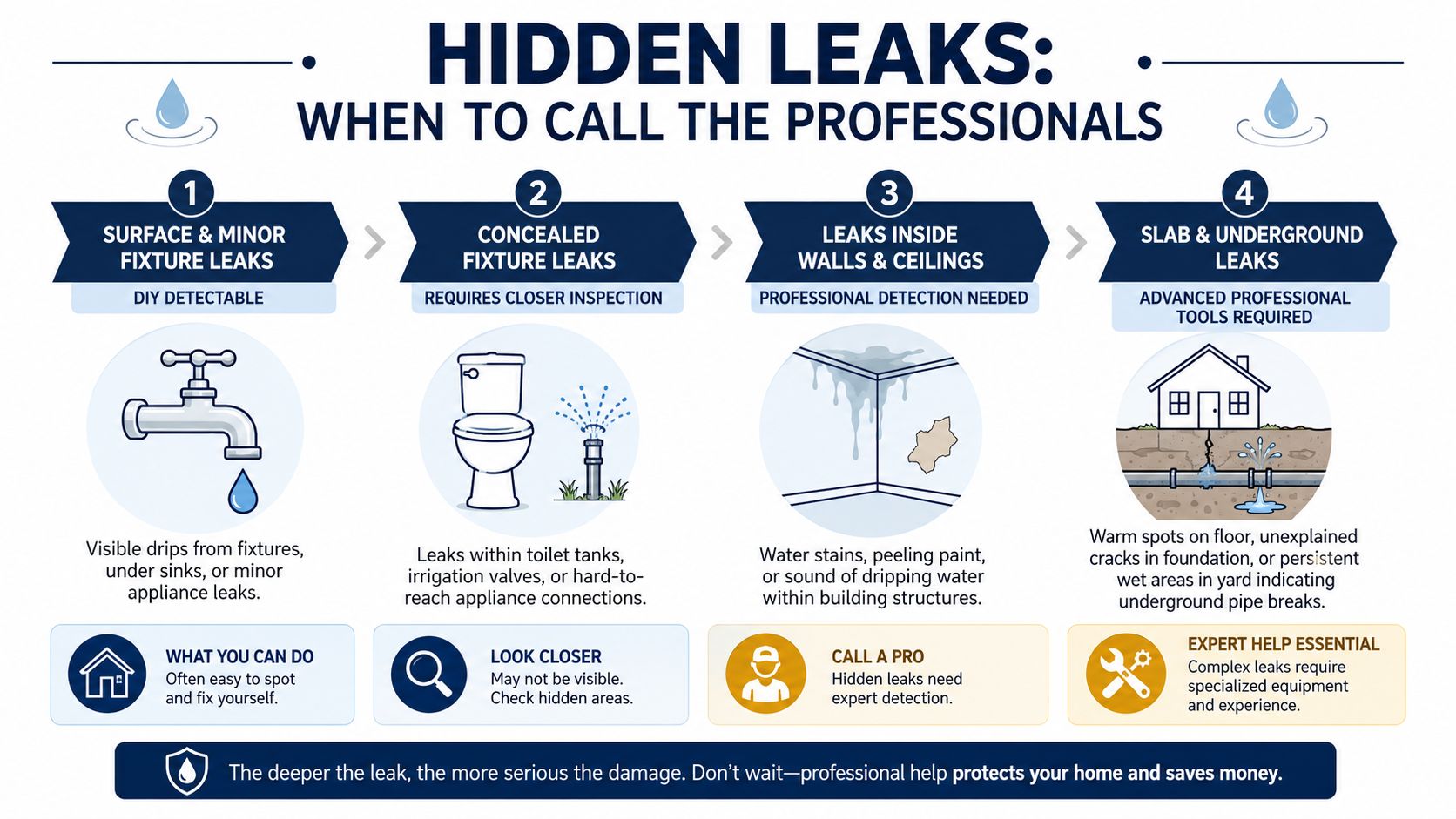
A slab leak happens in the water line under the concrete foundation, so the water never shows up where people expect it. No dripping faucet. No obvious puddle. Just steady water loss, rising charges, and in some cases a floor that feels different from one room to the next.
The pattern that points below the slab
The red flag is not one symptom by itself. It is the combination. Usage stays high after you have already checked toilets, fixtures, irrigation timing, and visible plumbing. The meter keeps moving. The house sounds quiet, but the bill says otherwise.
In Las Vegas, that matters for two reasons. First, hidden leaks can push usage into a much more expensive billing range. Second, if you want a fair shot at reimbursement through the local leak repair relief program, you need to find the leak, document it, and repair it before the waste keeps stacking up.
Signs that fit a slab or concealed supply line leak
These are the symptoms that usually justify professional leak detection instead of more guessing:
- A warm area on the floor that does not make sense, especially over a hot water line
- A soft hissing or rushing-water sound near the floor or inside a wall when no fixture is on
- Flooring changes, such as lifting, cracking, or damp edges with no spill history
- Meter movement that continues after the house has been isolated as much as possible
- High usage with no visible source inside or outside
One sign alone can mislead you. Two or three together usually means the leak is hidden and active.
What to do before you approve any teardown
Start with documentation. Take a photo of the meter, note the date, and keep the bill that shows the spike. If the problem turns out to be under the slab or in a buried supply line, that paperwork can matter later.
Then limit water use to what the household needs. That will not stop the leak, but it can slow the cost while the problem is being confirmed.
Do not start breaking tile, drywall, or concrete based on suspicion. I have seen homeowners spend money opening the wrong area, then still pay for actual leak detection after the damage is done. The cheaper move is to confirm location first and open only what needs to be opened.
If testing shows the problem is in the buried service line instead of a short branch under the slab, main water line replacement in Las Vegas may be the more durable repair instead of repeated spot fixes.
How MG Drain Services Pinpoints Hidden Leaks
Professional leak detection is about narrowing the problem before anyone opens concrete, drywall, or soil. That's the value. Good diagnosis reduces unnecessary damage.
The field approach in Las Vegas usually starts with meter confirmation, fixture isolation, and a pattern check. After that, trained technicians use listening equipment, thermal tools, and inspection methods that help locate the leak without relying on guesswork. That matters because once demolition starts, the bill can grow quickly even before the pipe repair begins.
What professional detection actually changes
A licensed and insured plumbing team with experienced technicians brings three things a DIY process can't:
| Question | Why it matters |
|---|---|
| Is the leak active right now | Active leaks are easier to trace and prioritize |
| Is it in the supply line or drain system | The repair path changes completely |
| Can the location be narrowed before opening surfaces | This protects floors, walls, cabinets, and concrete |
One practical example is using a camera when the symptoms suggest a sewer or drain-side issue instead of a pressurized water leak. In that situation, sewer camera inspection in Las Vegas can help confirm the condition inside the line before the repair plan is chosen.
The cheapest repair is often the one you diagnose correctly the first time.
For homeowners in Las Vegas, Henderson, and North Las Vegas, that's the trade-off. Paying for precise detection can prevent the much larger cost of tearing into the wrong area.
Get Reimbursed for Your Leak Repair
One of the most overlooked parts of a high water bill in Las Vegas is that repair help may be available. The LVVWD Leak Repair Reimbursement Program can cover up to 50% of repair costs up to $2,000, or up to $10,000 for income-eligible homeowners, and it requires professional verification, according to the LVVWD customer assistance and leak repair program information.
That requirement matters. If a homeowner pays for work without the right documentation, they can create problems for the reimbursement process.
The practical order of operations
Use this order if you think a hidden leak is behind your Las Vegas water bill:
- Confirm the leak with the checklist and meter test.
- Get professional verification before approving major repair work.
- Keep records of the diagnosis, invoice, and repair details.
- Check reimbursement eligibility before assuming the full repair cost is on you.
Honest pricing and clear paperwork matter just as much as the repair itself.
Las Vegas Leak Detection FAQ
| Question | Answer |
|---|---|
| How quickly should I call a plumber in Las Vegas after a high bill? | If the bill is clearly outside your normal pattern and the meter shows movement when no water is being used, call right away. Waiting usually increases both water charges and repair cost. |
| Do you service Henderson and North Las Vegas too? | Yes. Leak detection and plumbing repair service commonly covers Las Vegas, Henderson, North Las Vegas, and surrounding areas in the valley. |
| Can I fix a hidden leak myself? | Sometimes. A bad toilet flapper, dripping faucet, or loose visible connection may be a DIY repair. A slab leak, buried line, wall leak, or anything that needs specialized detection should be handled by a licensed plumber. |
| Is hydro-jetting the answer to a high water bill? | Not usually. Hydro-jetting is useful for drain and sewer cleaning, not for every type of water usage problem. The correct service depends on whether the issue is on the water supply side or the drain side. |
| What makes local plumbers in Las Vegas different for this problem? | Local experience matters because Las Vegas billing rules, common property layouts, and valley-specific leak patterns change how the problem should be diagnosed and handled. |
If your bill jumped and you can't find the cause, call MG Drain Services LLC at 702-480-8070 for fast, professional plumbing in Las Vegas. The company is local, licensed and insured, with experienced journeyman plumbers, transparent pricing, modern diagnostic tools, and service across Las Vegas, Henderson, and North Las Vegas. You can also book online through the MG Drain Services homepage or read more local home maintenance advice on the MG Drain Services blog.