For most local clogs, the safest place to start is to remove the stopper, then use a plunger for 20 to 30 seconds. If that doesn't clear it, move to a drain snake or wet/dry vacuum before you ever reach for chemical cleaners, because those should be a last resort in Las Vegas homes.
A backed-up sink in Las Vegas has a way of showing up at the worst time. You wash dinner dishes, the basin fills, the water sits there, and now you're deciding whether to pour something harsh down the drain or try to save the pipe. The right move is usually the slower, more controlled one, especially in older homes where plumbing has already been through a lot of heat, mineral buildup, and wear.
Why Las Vegas Drains Clog Differently
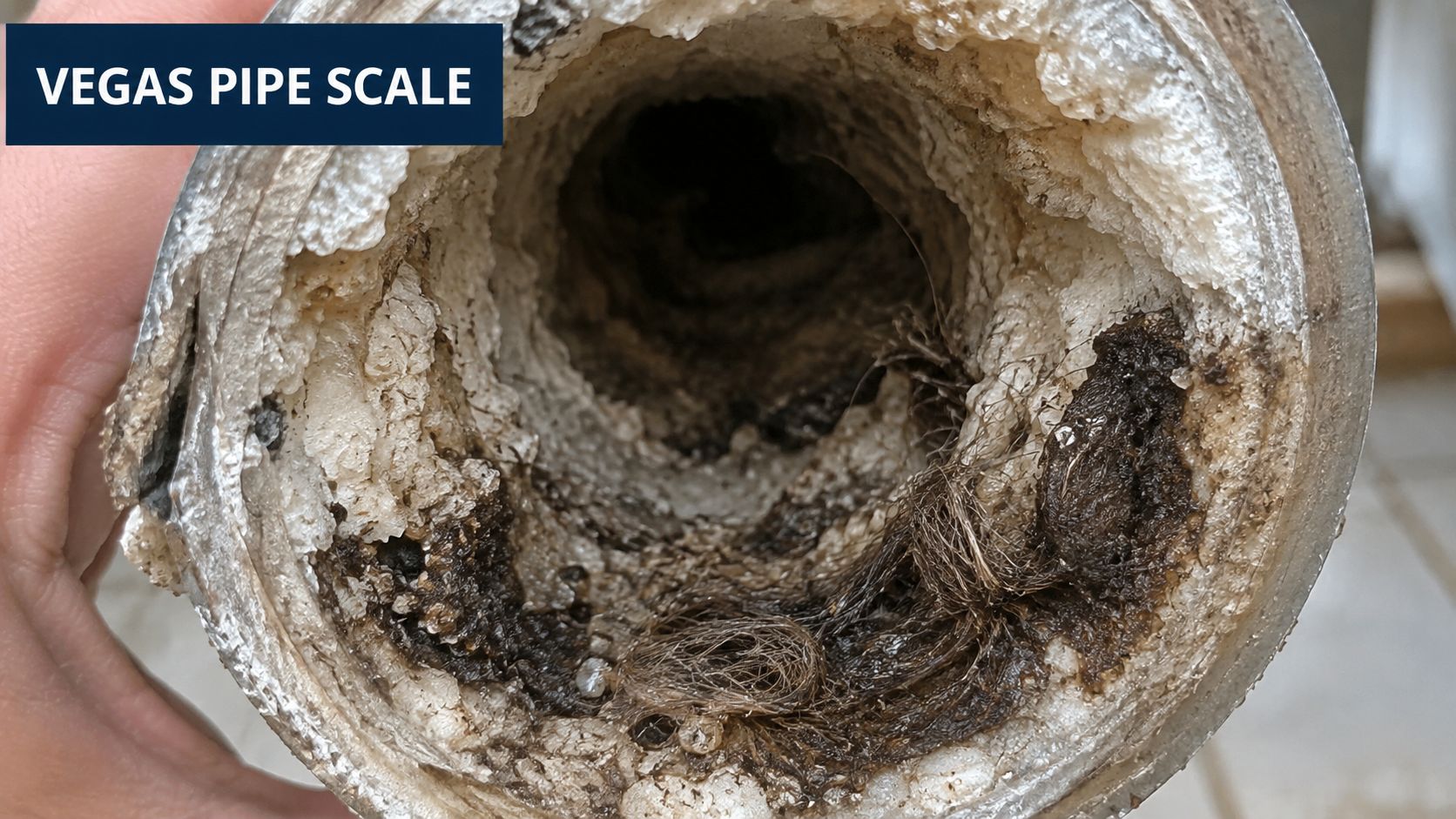
A Las Vegas homeowner can do everything “right” and still keep getting the same slow drain. Hard water leaves mineral scale behind, and that scale gives grease, hair, and soap residue a rough place to stick. In older parts of Las Vegas and Henderson, that buildup often happens inside aging cast-iron lines, where corrosion creates more texture for debris to grab onto.
The local plumbing mix matters
Desert heat changes how plumbing behaves over time. Pipes hidden in walls and slabs stay warm for long stretches, and that kind of constant exposure makes aggressive treatment riskier on tired materials. In practical terms, a chemical cleaner that seems harmless in a newer home can be a bad bet in an older Las Vegas property with weakened seals or brittle joints.
Monsoon runoff adds a different problem. When surface drainage isn't managed well, sediment can work its way into floor drains and cleanouts, especially in homes and properties that sit lower than the street. That's why a drain issue in Las Vegas isn't always a simple kitchen or bath problem, it can be a symptom of what's happening farther down the line.
A clog that keeps coming back is often telling you the pipe is collecting debris faster than it can move it out.
The useful mindset here is source control. Keep solids out of the pipe, clear blockages with low-force methods, and reserve stronger intervention for situations that call for it. That's the difference between solving a fixture clog and creating a repair job.
Safe Step-by-Step Methods to Unclog Drains
The safest approach follows the least aggressive path first. That matters in Las Vegas because the goal isn't just to move water today, it's to keep a stressed pipe from turning into a leak or a collapsed joint tomorrow. The order is simple, clear the visible blockage, create controlled pressure, use a non-corrosive flush, then escalate only if the line still resists.
Start with what you can remove
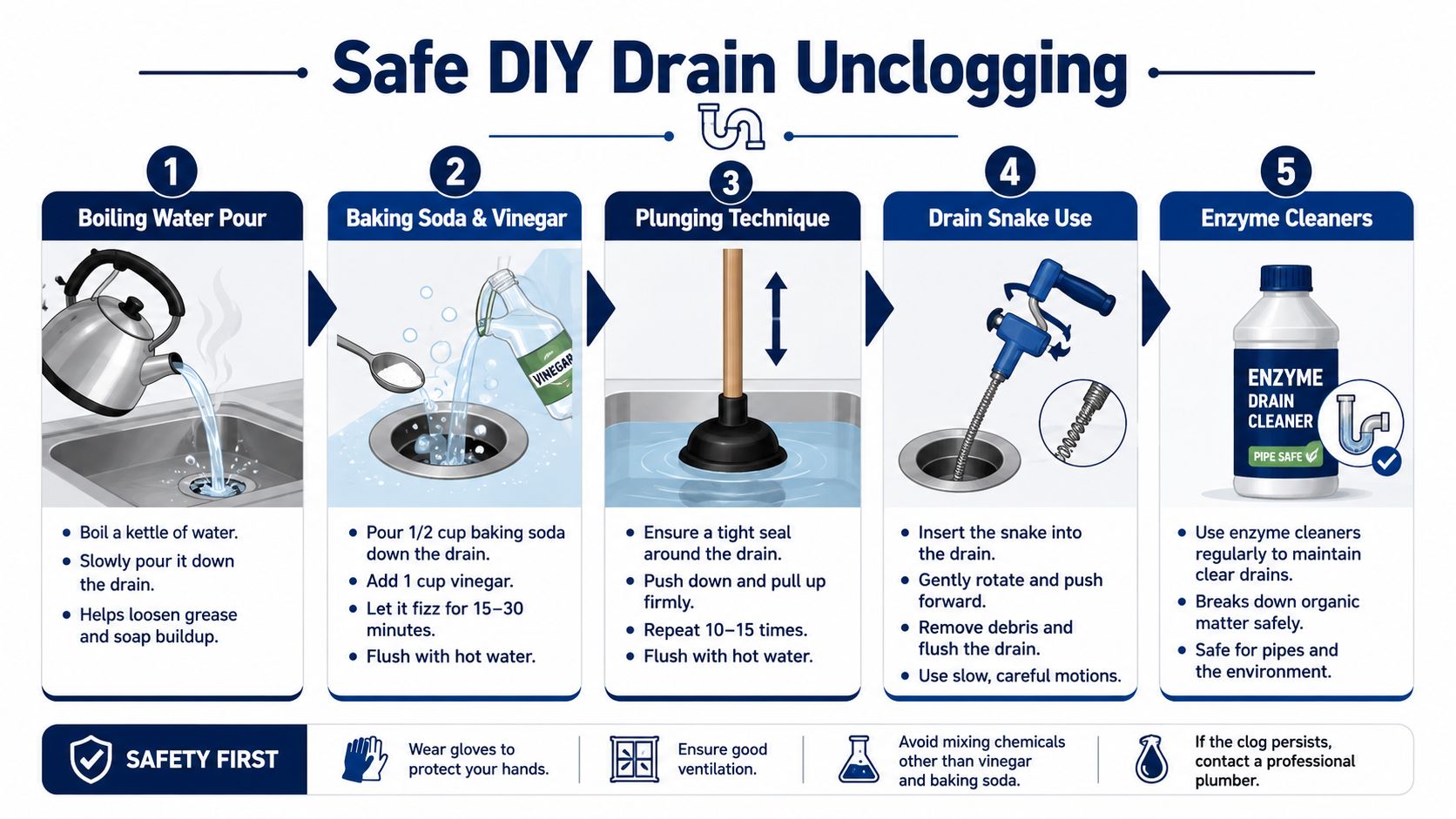
Pull the stopper or strainer and remove any visible hair, food scraps, or soap chunks by hand. It sounds basic, but in a lot of Las Vegas sinks and tubs, that's the whole problem. If the fixture drains normally after that, you've solved it without touching the pipe walls.
If the drain still sits slow, seal a plunger over the opening and work it with steady force for 20 to 30 seconds. Short, controlled suction is safer than yanking on the line, and it often breaks up soft clogs near the trap.
Use a non-corrosive flush before tools
A safer maintenance mixture is half a cup of baking soda followed by half a cup of vinegar, then flush the drain after about 30 minutes with hot water. That combination is useful for light grease, residue, and mild buildup without introducing corrosive chemicals into older pipes.
A hand-crank snake or auger is the next step if the clog stays put. Feed it gently past the P-trap and rotate it with care, not force. For stubborn sink clogs, a wet/dry vacuum in liquid mode can pull the blockage back out if you get a tight seal.
For readers who want a deeper look at professional-grade clearing, the hydro-jetting service page explains the high-pressure option plumbers use when buildup is too heavy for hand tools.
Matching Your Clog to the Right Method
A bathroom sink that drains slowly and a kitchen sink that backs up after dinner usually need different responses. Hair and soap scum tend to sit near the trap, so a plunger, hand snake, or the baking-soda-and-vinegar flush often works first. Grease behaves differently, it cools, stiffens, and grabs onto other debris, which is why kitchen clogs often resist the quick fixes that work fine in a bath.
The main clue is pattern. If one fixture clears and stays clear, the blockage was probably local. If you're seeing repeated slow drains across separate rooms, that's not a simple fixture clog anymore, it's the kind of problem that needs inspection and, in many cases, professional equipment.
| Clog Symptom | Likely Cause | Safest First Method |
|---|---|---|
| Slow bathroom sink | Hair and soap scum near the trap | Remove stopper, then plunge |
| Slow shower drain | Hair mixed with body oils | Hand snake or drain strainer cleanup |
| Kitchen sink standing water | Grease and food solids | Baking soda and vinegar, then gentle snake |
| Gurgling in more than one fixture | Deeper line restriction | Stop DIY and inspect the main line |
| Clog returns soon after clearing | Scale or recurring buildup | Professional camera inspection |
A useful hard-water reference for fixture care is the guide to hard water stain prevention, because the same mineral issues that mark tile and fixtures also help sludge cling inside drain lines.
The temptation in a clogged drain is to grab the strongest tool first. That's usually backwards. In Las Vegas homes, a smaller, cleaner intervention often protects the pipe better and gets the line open faster.
Common Mistakes That Damage Pipes
Chemical drain cleaner is the mistake I see most often in older Las Vegas homes. People reach for it because it feels fast, but those products can damage pipe interiors and make weak joints, seals, and old lines even more vulnerable. If the home has aging cast-iron, thin ABS, or other tired material, the risk is not worth it.
Another mistake is forcing a snake instead of letting it work. A snake should rotate through the blockage, not ram into the pipe wall. Brute force can scratch the pipe, shove the clog deeper, or puncture a fragile section that was already close to failure.
What to avoid when the drain is already stressed
- Don't use chemical cleaner as a first response. It can make an older line worse instead of better.
- Don't pour boiling water into PVC. Heat can soften plastic pipe and create a new problem.
- Don't keep plunging a fully sealed drain without pause. Pressure has to be released intermittently, or fragile fittings can crack.
- Don't skip the trap. The P-trap is often where the blockage sits, and it's usually the easiest place to start.
- Don't push a snake hard through resistance. Rotate gently and let the tool do the work.
If a clog fights back hard, the pipe may be telling you the problem is deeper than a fixture blockage.
For homes that battle repeated hard-water residue, the problem isn't just what's in the drain today. It's the pattern that keeps leaving new material behind. That's why a quick chemical blast can feel satisfying and still leave the underlying buildup untouched.
When to Call a Licensed Las Vegas Plumber
Once more than one drain slows at the same time, the job changes. If water backs up into a shower when you run the kitchen sink, that's a main-line symptom, not a single drain issue. The same is true if toilets gurgle, sewer odor shows up, or the clog returns soon after you clear it.
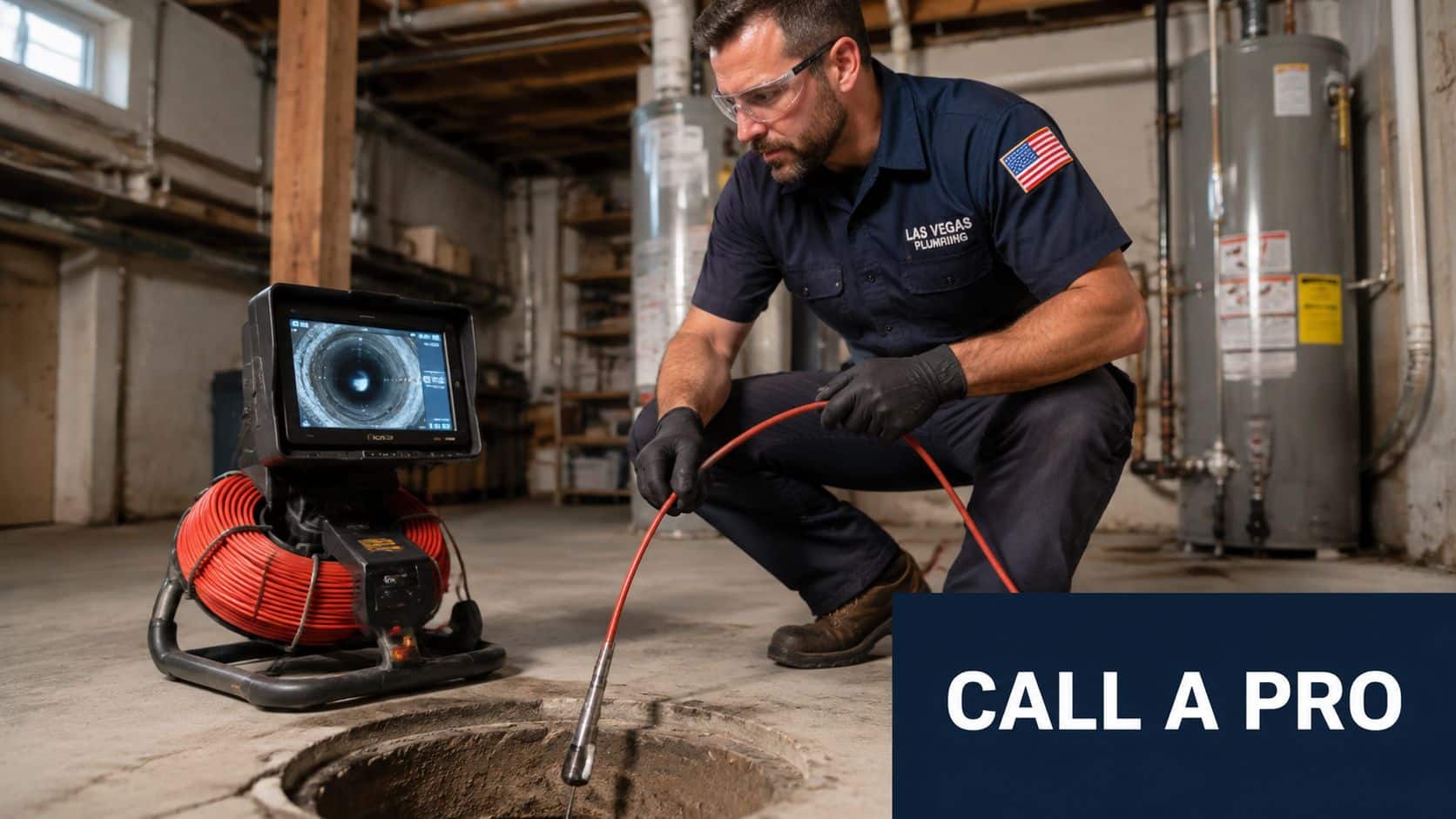
A licensed plumber can put a color camera into the line and see whether the issue is buildup, root intrusion, a belly in the pipe, or a damaged section that needs repair. That matters in Las Vegas because older cast-iron sewer lines and hard-water scale can mimic a simple clog while hiding a larger problem. A snake may punch a path through, but it doesn't tell you what caused the blockage in the first place.
If you want a closer look at that diagnostic process, the sewer camera inspection service shows how video inspection helps identify the exact failure point before anyone starts tearing into the line.
For recurring backups in Las Vegas, hydro-jetting is often the more complete answer because it clears buildup through the pipe instead of just poking a hole in it. That's the point where do-it-yourself stops being a money saver and starts becoming a gamble.
Trusted Local Drain Care for Las Vegas Homes
If you've got a drain that keeps slowing down in Las Vegas, Henderson, or North Las Vegas, the safest move is to clear it the right way and stop before the pipe gets damaged. MG Drain Services LLC handles drain clearing, sewer camera inspections, hydro-jetting, and repair work with licensed and insured technicians who know the plumbing conditions common across the Las Vegas Valley. They also handle drain cleaning in Las Vegas when a clog needs more than a household fix.
A lot of drain problems are tied to moisture, residue, and hidden buildup, which is why keeping bathrooms dry and ventilated matters too. For homeowners dealing with repeated odor or moisture issues around sinks and tubs, the bathroom moisture solutions resource is a useful complement to drain maintenance.
MG Drain Services LLC serves Las Vegas, Henderson, North Las Vegas, Summerlin, Enterprise, and Spring Valley with fast response, transparent pricing, and experienced fieldwork. If the clog keeps returning, smells bad, or affects more than one fixture, that's the point to stop guessing and get the line inspected by a local pro.
Call MG Drain Services LLC for fast, professional plumbing in Las Vegas when you need a clog cleared without risking your pipes. Visit MG Drain Services LLC to book service, or call 702-480-8070 for help in Las Vegas, Henderson, or North Las Vegas.