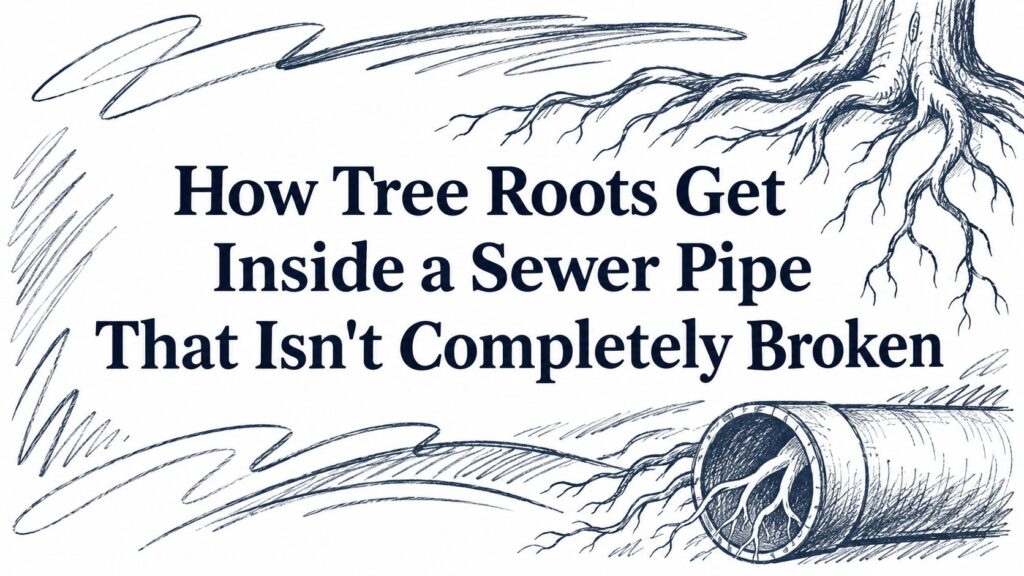
The popular advice says roots “break” sewer pipes. In practice, that's usually backwards. Sewer roots almost always get in through a defect that was already there, then they turn a small leak into a bigger blockage as they grow, trap paper, and collect grease and solids. For a homeowner, that distinction matters because a line can look fine from the surface and still be vulnerable underground.
If you've ever had a drain cleared only to see the backup come back, you already know the limits of guessing. The pipe doesn't have to be shattered for roots to use it. A hairline crack, a loose joint, or a tired seal is enough, which is why a camera reading beats assumptions every time.
Roots Don't Break Pipes, They Find the Weak Spots
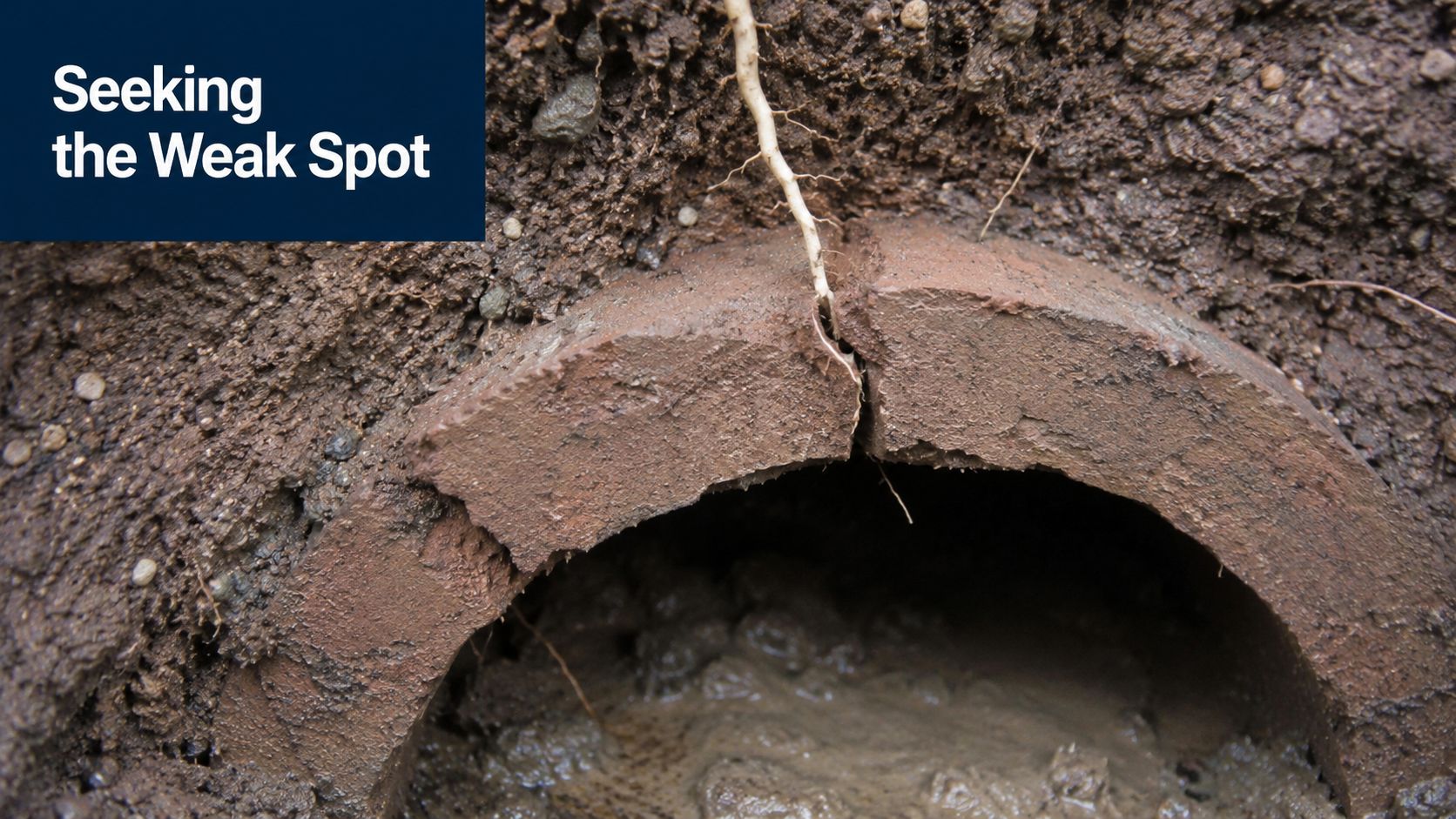
Roots are opportunists, not wrecking balls. They don't need to punch through a sound pipe wall, they need moisture escaping from a weak point. Once they find that leak path, they follow it and widen the problem over time as the opening catches more debris.
What the root is actually doing
The cleanest way to think about it is the same way plant owners think about a pot-bound plant. If you need a simple comparison, what root bound means shows how roots keep pushing into available space when they've got a reason to. Sewer roots behave the same way, except the “reason” is water and nutrients leaking from the pipe.
That's why a pipe can be structurally weakened without being visibly broken. A tiny defect creates a wet signal in the soil, and feeder roots respond to that signal. As they thicken, they hold back waste and turn an early seep into a recurring clog.
Practical rule: if roots are inside the pipe, the pipe was already compromised somewhere.
In older Las Vegas neighborhoods, especially where landscaping has matured and lateral lines have been in the ground for decades, that weak point often sits at a joint or seam instead of a dramatic collapse. A plumber looking only at the surface can miss that. A plumber looking at the line with a camera can't.
Why that changes the repair
This is why cutting roots out without finding the defect is only half a job. You may get the line flowing again, but the entry point is still there. If the homeowner wants a lasting fix, the question isn't “how did the roots get so strong,” it's “where did the pipe start leaking.”
How Roots Detect Moisture and Enter Tiny Openings
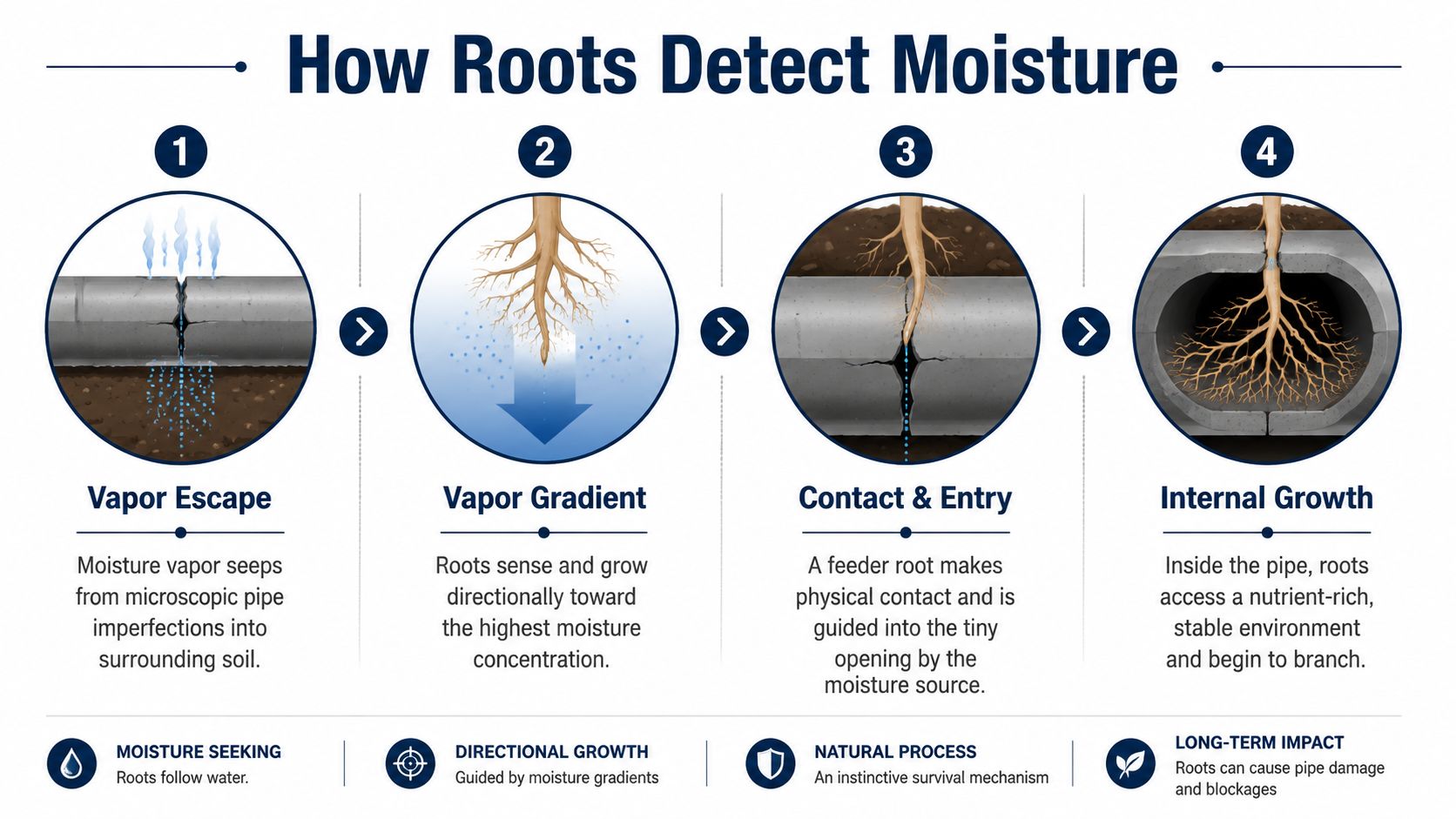
Roots grow toward moisture vapor in the soil. That is the hidden mechanic most homeowners never hear about. Moisture escaping from a sewer line creates a signal around the pipe, and feeder roots grow toward that warmer, nutrient-rich area long before a backup becomes obvious.
The opening can be tiny
Roots find weakness rather than force their way in. A controlled PVC experiment in the verified data shows feeder roots can enter openings as small as 0.04 mm (Traverse City sewer and water root FAQ). A field description also notes that sewer roots can exploit gaps around 0.5 mm (National Sewer Authority root intrusion explanation). The pipe does not need a visible hole to be vulnerable.
Once a feeder root reaches that defect, it starts growing where the moisture is most consistent. It follows moisture escaping from a weak point instead of breaking through intact pipe wall. That is why recurring slow drains often show up before a full backup. The intrusion starts small, but the pipe is already advertising the leak.
What the root is doing
A root does not need a dramatic opening. It only needs a steady signal from damp soil and a path that keeps feeding it water.
If you are tracking moisture signals in your yard, our guide to water leak detection explains the same principles that draw roots underground. The same wet spot that sends a plumber looking for a leak can keep a root growing in the same direction for months.
In a lot of homes, the first sign is not sewage on the floor. It is a toilet that backs up again after a cleanout, or a tub that drains fine one week and sluggishly the next. That staged pattern fits a line that has been infiltrated but not yet fully blocked.
A camera often shows the problem long before the house does.
That matters in Southern Nevada because dry soil, mature irrigation, and aging residential plumbing can hide the early stages. If you are only snaking the line, you may be restoring flow without ever seeing the defect that invited the roots in.
A pipe can look intact from above and still be failing at one joint below grade. Recurring problems deserve a camera inspection, because that is the only way to see whether the underlying issue is a root mass, a seep at a seam, or a damaged spot the cable never found.
Why Older Pipes and Modern Joints Both Fail
Older clay and cast-iron lines are classic root targets because time works against the joints. Clay-pipe installation largely stopped in the 1980s, and older clay and concrete lines are more vulnerable because their seams can weaken with settlement and corrosion, according to the plumbing explanation in the brief (YouTube source on clay pipe history). The pipe material may still be in place, but the connection between sections gets worn down.
Old pipe risk is about the seams
A lot of homeowners assume a pipe only becomes a problem after it collapses. Roots exploit an existing defect and can make it worse as they grow. They enter through loosened joints, hairline cracks, and deteriorated seals, then the fibers expand and push the sections farther apart, which enlarges the original opening (North Carolina State Extension on root intrusion).
That pattern shows up often in older neighborhoods with clay or cast-iron laterals. The pipe may still hold water, which is why the line can seem “good enough” until one more layer of debris finally tips it into backups.
Modern pipe isn't magic
PVC and newer plastic systems are better, but they are not invincible. Fine roots can still get into vulnerable joints, transitions, connections, or cleanouts, especially if there is a small flaw that is not obvious from the yard (NexGen explanation of root entry into sewer lines). A newer pipe can still be compromised if one fitting was not seated right or a connection has shifted.
Pipe material lowers risk, it does not erase it. Any place where two sections meet gives roots a chance to exploit a defect.
What I look for on site
When I'm diagnosing a line, I am not just asking what the pipe is made of. I'm looking at how many transitions it has, whether offsets are visible, and whether the roots are concentrated at one point or spread across the run. That tells me if the issue is a localized defect or a broader deterioration problem.
How a Plumber Diagnoses Root Intrusion
The wrong move is to cut the roots and stop there. The right move is to confirm exactly where they entered and how much pipe is affected. That takes two tools in sequence, a camera and a locator, not a guess from the cleanout.
What the camera actually tells you
A sewer camera inspection shows the inside of the pipe in real time. It lets a plumber see root masses, cracks, offset joints, deteriorated seals, standing water, and the general condition of the line before anyone decides on a fix. MG Drain Services offers this kind of inspection on its sewer camera service page, and that's the right starting point when backups keep returning.
The camera doesn't just say “roots found.” It shows whether the roots are sitting at one joint or whether several sections are compromised. That difference drives the repair plan. One bad connection may call for a targeted repair, while widespread deterioration can point toward lining or replacement.
Why locating matters underground
Once the camera identifies the problem spot, electronic locating equipment pinpoints where that section sits under the yard or slab. That matters because homeowners need to know whether a spot repair is realistic or whether the issue runs under a driveway, walkway, or interior slab. In Las Vegas homes, that distinction can save a lot of unnecessary digging.
Good diagnosis answers two questions, where are the roots, and what pipe defect let them in?
The camera can also show whether the line is still structurally sound after root removal or whether the roots have already done enough damage to deform the pipe. That's the difference between maintenance and repair.
What not to trust
A quick cable job without footage tells you the line was blocked. It doesn't tell you why. If a plumber can't show you the defect, you're being asked to treat a symptom blind. For a homeowner, that's a bad bet, especially when the same backup keeps coming back.
Why Root Cutting Alone Won't Solve the Problem
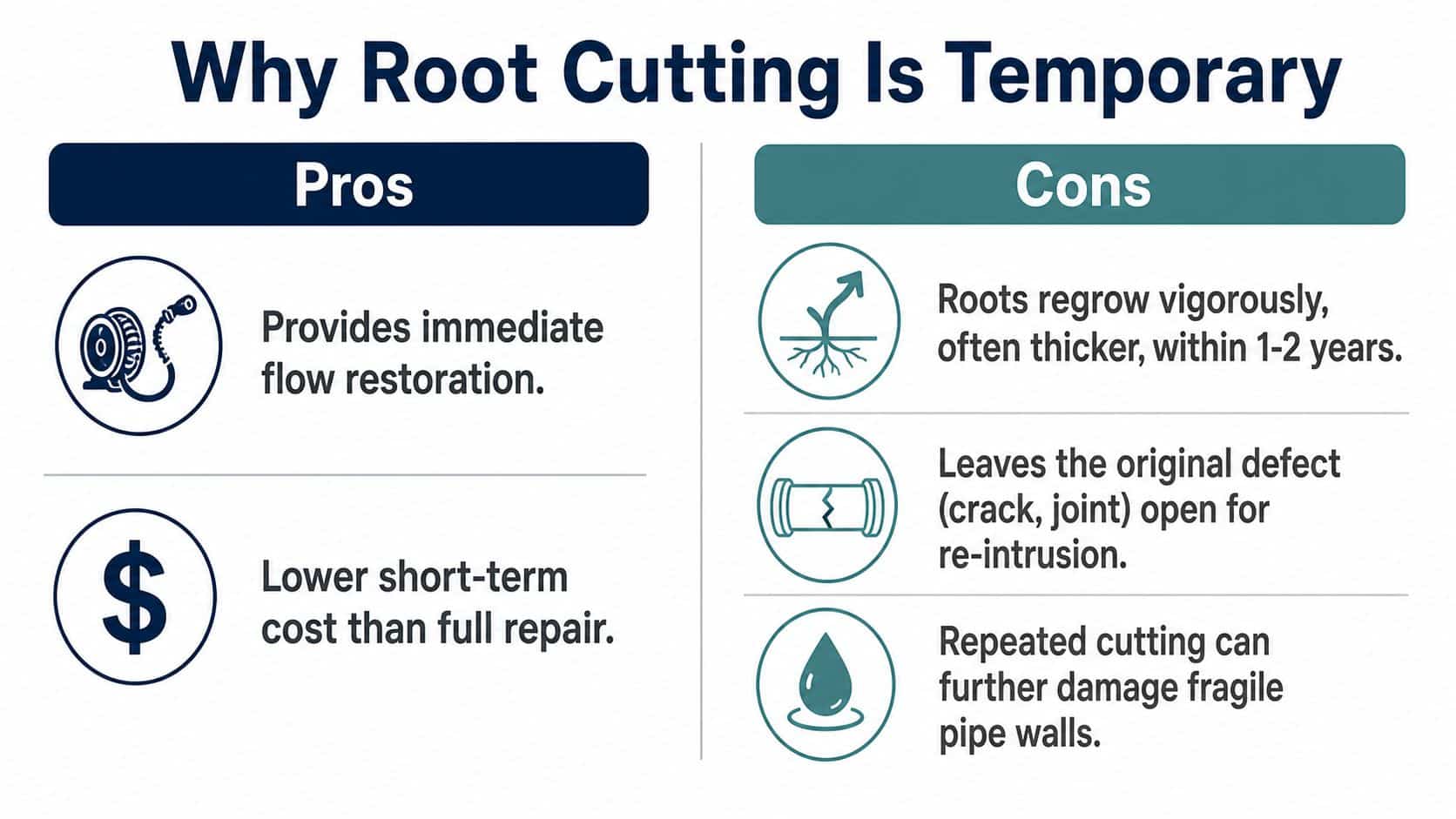
Mechanical cutting helps when a line is backing up, and thorough cleaning helps too. The problem is that root cutting only clears what is inside the pipe. If the crack, offset joint, or bad seal is still there, the moisture source stays in place and new roots grow back toward it.
What cutting does well
Root cutting restores flow. That is the immediate value. It clears the blockage fast, and when a line is packed with fibrous growth, the plumber can often pair cutting with hydro-jetting to strip remaining debris and grease from the pipe wall. MG Drain Services offers that kind of cleaning through its drain cleaning service, which fits a line that is actively restricted.
Cleaning clears the line but leaves the entry point open, which is why the roots return.
Why the roots come back
Once roots have found a leak path, they usually return through the same defect. If the pipe has not been rehabilitated, the opening still leaks moisture vapor into the soil. That keeps the invitation open. In brittle or older pipe, repeated aggressive cutting can also stress the walls further, which is one more reason to avoid treating the cutter as a permanent answer.
When repair beats repeat service
A camera reading helps sort the next step:
- Spot repair: makes sense when one section is cracked or offset and the rest of the line is stable.
- Hydro-jetting: helps when the line needs a deep clean before or after root removal.
- Full line replacement or rehabilitation: becomes the better option when defects are spread through the run.
In some cases, a plumber may recommend a structural repair approach instead of endless clearing. That is especially true when the same line keeps backing up after short intervals. The goal is to stop buying temporary relief from a pipe that still leaks.
Preventing Root Intrusion in Las Vegas Homes
Prevention starts with knowing what your sewer line is made of and where it runs. In Las Vegas, mature landscaping, desert heat, and older housing stock all work together to make hidden line defects more likely to show up as recurring backups. A line that survives the summer doesn't necessarily stay sealed.
What homeowners can control
The smartest prevention steps are straightforward:
- Map the sewer route: a camera inspection report helps you know where the line runs before planting or excavating.
- Watch the early signs: slow drains, gurgling fixtures, and repeated main-line backups deserve attention.
- Choose landscaping carefully: roots from large trees are easier to manage when they're planted away from sewer laterals.
- Don't rely on chemicals alone: root killers can slow regrowth, but they don't seal the crack or joint that let the roots in.
For people planning new trees, a resource like Pool & Landscaping of Vistancia tree selection is useful because it encourages thinking about mature root behavior before a tree ever goes in the ground.
Why older homes need a routine check
Homes with older clay, cast-iron, or mixed-material laterals benefit from periodic camera inspections because surface conditions don't tell the whole story. You can have a pipe that still drains today and still has a weak joint waiting to be found. That's especially true where irrigation has kept the soil around a sewer line consistently moist.
Prevention is less about stopping roots from existing and more about removing the conditions that let them keep coming back.
MG Drain Services can also pair camera findings with hydro-jetting service when a line needs a thorough clean before a repair decision is made. That's the practical part of prevention, knowing when cleaning is enough and when the pipe itself needs attention.
Common Questions About Sewer Roots
Homeowners usually ask the same questions after the camera reveals root intrusion, and they're good questions. The short answer is that roots are a symptom of a compromised pipe, not proof that the whole sewer is failing everywhere.
Can roots break a pipe?
Not usually in the way people imagine. They don't normally crack a sound pipe wall from nothing, they exploit an existing defect and can worsen it as they grow. That's why the camera matters more than a cable run.
How often should a sewer line be inspected?
If the home has older pipe, mature trees, or repeat backups, regular camera checks make sense. The right interval depends on what the camera already showed, because a clean line and a line with one compromised joint don't need the same follow-up.
What if roots show up during a home inspection?
Treat that as a warning, not a panic button. It means the line needs a real diagnosis before closing or before the problem becomes a surprise backup. A homeowner should ask for camera footage, not just a verbal note.
Do root killer products work?
They can help slow regrowth, but they don't fix the leak path. If the line already has roots in it, root killer alone won't solve the actual problem. Mechanical cleaning and a camera inspection come first.
What's the biggest mistake people make?
They assume clearing the blockage fixed the cause. It didn't. If the line still has a defect, the roots are waiting for the next wet season, the next irrigation cycle, or the next bit of settling.
If your main sewer keeps backing up after repeated cleaning, MG Drain Services LLC can inspect the line, show you exactly where roots entered, and recommend the right repair instead of another temporary fix. Call 702-480-8070 or visit MG Drain Services LLC to schedule a sewer camera inspection in Las Vegas and get a clear answer before the next backup hits.