
A water heater dies on a Tuesday night in Las Vegas, the kitchen sink starts backing up again after the “quick fix” last month, or a buyer's inspector finds an old sewer repair that was never permitted. That's when homeowners learn the hard part of plumbing isn't always the pipe problem, it's whether the work fits the Las Vegas plumbing code that inspectors, lenders, and sellers use.
In Las Vegas, Henderson, and North Las Vegas, the code shapes what can be repaired, what needs a permit, who can do the work, and whether the job closes cleanly for resale. MG Drain Services LLC approaches every recommendation with that reality in mind, because a repair that looks fine on the surface can still fail inspection if the permit, license, or installation details don't match the current rulebook.
Why Las Vegas Plumbing Codes Matter to Homeowners
A homeowner calls about a slow kitchen drain in Las Vegas, thinking it's just a clog. The tech snakes it, the sink drains for a while, then the backup returns. Underneath that symptom, the actual question is whether the drain layout, venting, and discharge path were ever built to code, because that's what decides whether the fix lasts or just buys time.
That's why plumbing code matters in the Las Vegas Valley. It doesn't just tell contractors how to install pipe, it tells homeowners whether the work is legal, inspectable, and resale-ready. The region's adoption of the 2024 Plumbing and Mechanical Code means the rules in force at the time of the permit filing control the job, not the age of the home or what a neighbor did years ago, and that affects remodels, water heater swaps, and sewer work across Las Vegas, Henderson, and North Las Vegas. Kingdom Plumbing's summary of the Clark County code change makes the date issue especially clear for homeowners tracking a project across year-end.
Practical rule: if the work needs a permit, the code cycle matters as much as the fixture itself.
For homeowners, that means the code is not paperwork for someone else's desk. It's the rulebook that determines whether the job passes inspection, whether a future buyer accepts it, and whether you avoid expensive rework later.
The 2024 Plumbing Code Update Las Vegas Just Adopted
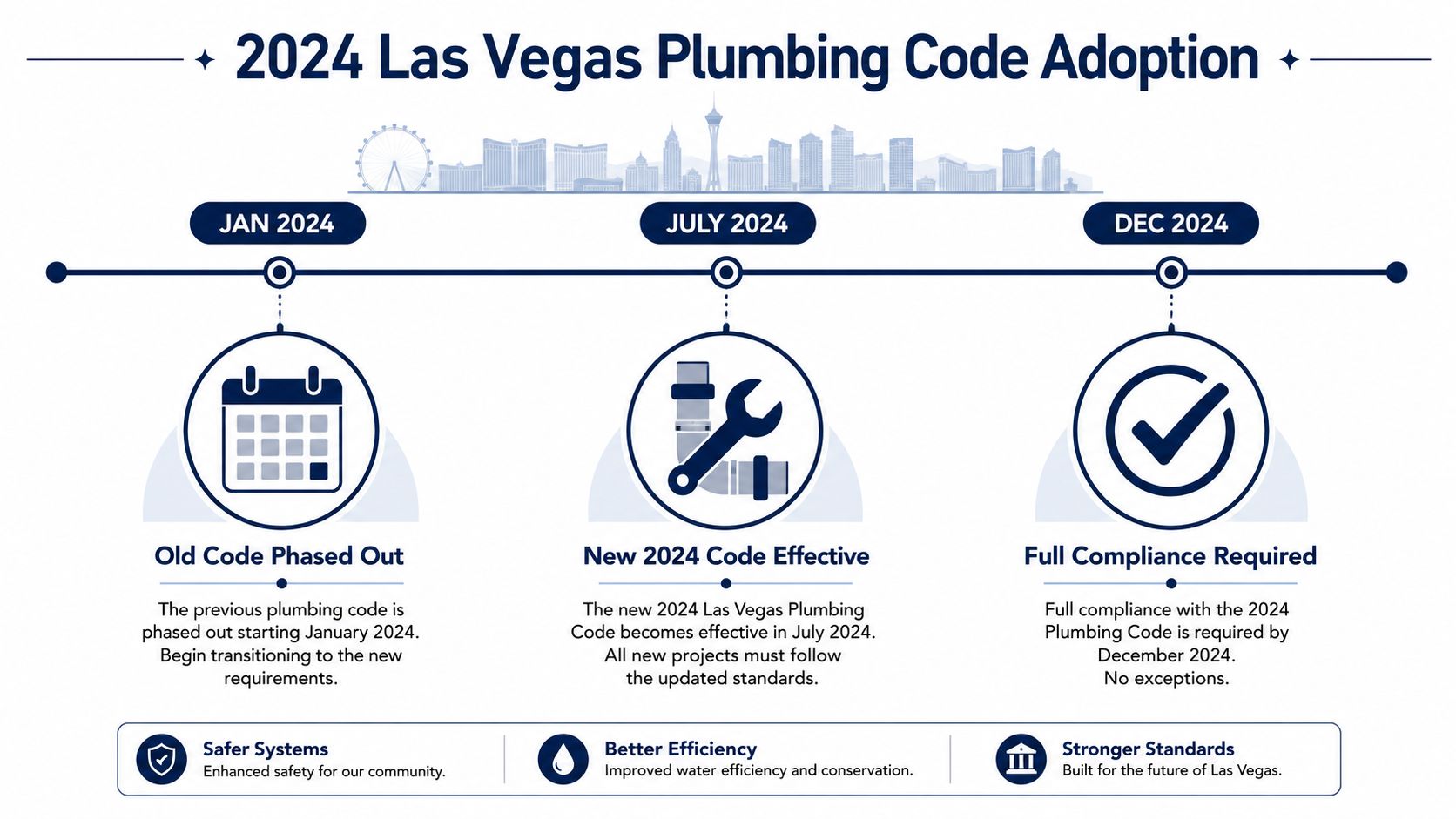
A permit for a water heater swap can be straightforward on one street and a code review headache on the next if the filing date lands on the wrong side of the transition. The region's move to the 2024 Plumbing and Mechanical Code is the change homeowners need to watch, because local cutover dates land between January 1 and January 11, 2026, and permits filed after the effective date are reviewed under the new code instead of the older 2018 edition. The code transition notice from Kingdom Plumbing spells out why the filing date controls the rulebook, not the age of the house.
That matters in real service work. A homeowner can schedule a water heater replacement early in January and a sewer-line repair later that same month, and if the permits are filed on opposite sides of the cutover, those jobs can land under different code cycles even though they're happening in the same home. I see that kind of timing issue come up when contractors price work in Las Vegas, because the permit window affects what gets inspected, how it gets reviewed, and what gets listed in the paperwork.
What homeowners should watch for
- Permit filing date. That date usually controls which code cycle applies.
- Inspection closeout. An open permit can slow down a sale or leave a file incomplete.
- Resale paperwork. Buyers, insurers, and title teams often ask for proof that the work was permitted and closed under the right code.
For homeowners planning plumbing work in 2026 in Las Vegas, Henderson, or North Las Vegas, the first question is simple, which code cycle will the permit be filed under? That answer affects the estimate, the inspection path, and whether the job lines up cleanly with the rest of the home's records.
Which Plumbing Projects Trigger a Las Vegas Permit
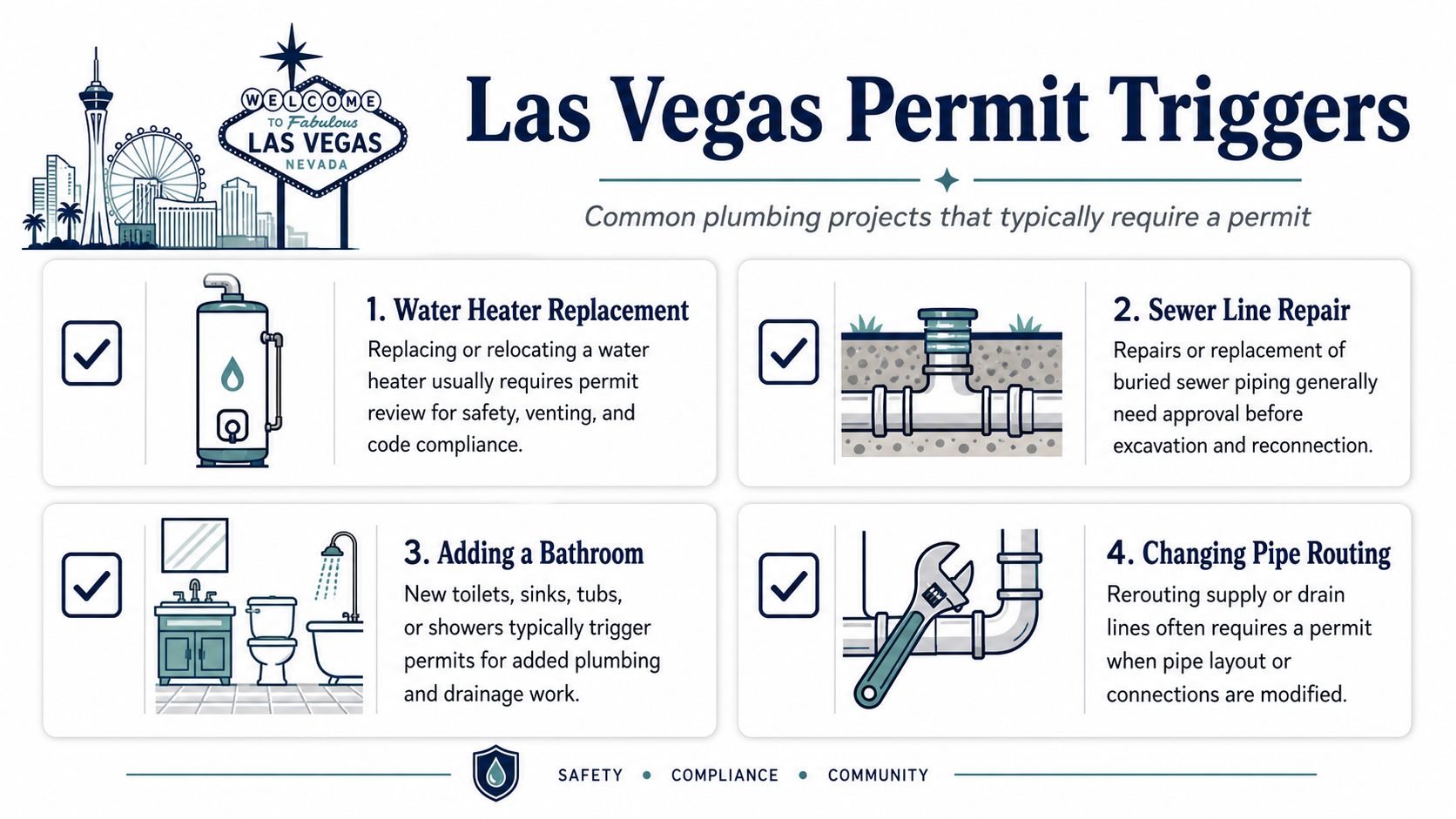
A lot of homeowners in Las Vegas assume only a full remodel needs a permit. That assumption causes trouble. City code summaries list water heater installs, replacements, relocations, and removals, along with relocating drains or stacks and other work that changes a building's plumbing system, as permit-triggering jobs. The City of Las Vegas code summary also distinguishes those from minor repairs that don't alter system capacity.
A good mental test is whether the work changes the system, not just the fixture. Swapping a faucet washer, replacing a like-for-like trap, or tightening a fitting is one thing. Moving a drain line, replacing a water heater, or altering a sewer connection is different, because those jobs can affect slope, venting, clearances, and inspection visibility.
A permit protects the homeowner when the job is visible at resale, because the paper trail shows what was built, when it was built, and under which code.
The risk of skipping the permit is practical, not theoretical. Unpermitted work can get rejected at inspection later, and it often becomes the homeowner's problem during a sale when a buyer asks for records. If the wall has already been closed, somebody has to open it again to prove the work was done right.
For homeowners planning a larger sewer project, the scope matters from day one. A main line replacement, for example, belongs in the permit conversation before the first trench is dug. MG Drain Services' main water line replacement page is a useful reference point for the kind of plumbing work that needs proper planning, inspection, and closeout in the Las Vegas Valley.
Las Vegas Water Softener Rules and Conservation Codes
Las Vegas plumbing rules don't stop at pipes and drains. The region restricts traditional salt-based, self-regenerating water softeners when they discharge salt brine into the sewer system, especially for new installations, because water policy and plumbing policy are tied together here. Focus Plumbing's water regulation overview puts that in the broader Southern Nevada conservation context, along with citywide deadlines to remove nonfunctional turf and replace it with desert landscaping.
That matters because a softener that's common in other markets can create a compliance problem in Las Vegas. A homeowner buying equipment in 2026 should ask whether the unit is salt-free, whether it's demand-initiated, and how any discharge would be handled before the unit goes in the garage. If the answer isn't clear, the better move is to ask a licensed Las Vegas plumber before installation, not after.
A practical way to think about it is this. In Las Vegas, the plumbing code and water-use rules are written to reinforce each other. That means the appliance choice itself can affect compliance, operating cost, and whether the city views the installation as acceptable.
Why Las Vegas Requires a Licensed Journeyman on Site
The City of Las Vegas doesn't treat the supervising plumber as a courtesy detail. The administrative code says the minimum job-site requirement for an individual leading or directing plumbing installation is a Southern Nevada licensed journeyman plumber, and a plumbing contractor must hold both a Nevada contractor license and a city business license. The city administrative code puts the responsibility where it belongs, on the person directing the work.
That rule exists for a reason. A lot of homeowner-visible failures start as code mistakes, wrong slope, poor venting, bad fittings, or an installation that looks tidy until the drain starts backing up or the slab develops a leak. When a licensed journeyman is on site, the odds of those hidden defects drop, and the inspection process is cleaner because the work is being supervised by someone who knows what the inspector will check.
Quick verification before you sign
- Ask for the license numbers. Don't take a logo truck as proof.
- Confirm the city business license. The contractor should be able to show it.
- Confirm who is on site. A salesperson is not the same thing as a supervising journeyman.
For Las Vegas homeowners, that check is simple and cheap compared with tearing into a finished wall later to fix a mistake that should've been caught on day one.
Drain Cleaning and Hydro Jetting Under the Las Vegas Code
A clogged kitchen sink in Las Vegas looks like a drain problem, but it often turns into a code conversation fast. The Nevada residential plumbing code source notes that drainage pipes for washing or bathing fixtures cannot receive indirect waste piping discharge, which means a drain can't just be rerouted into any nearby fixture line. The Nevada plumbing fixture code source is a good reminder that drain paths have limits, not just destinations.
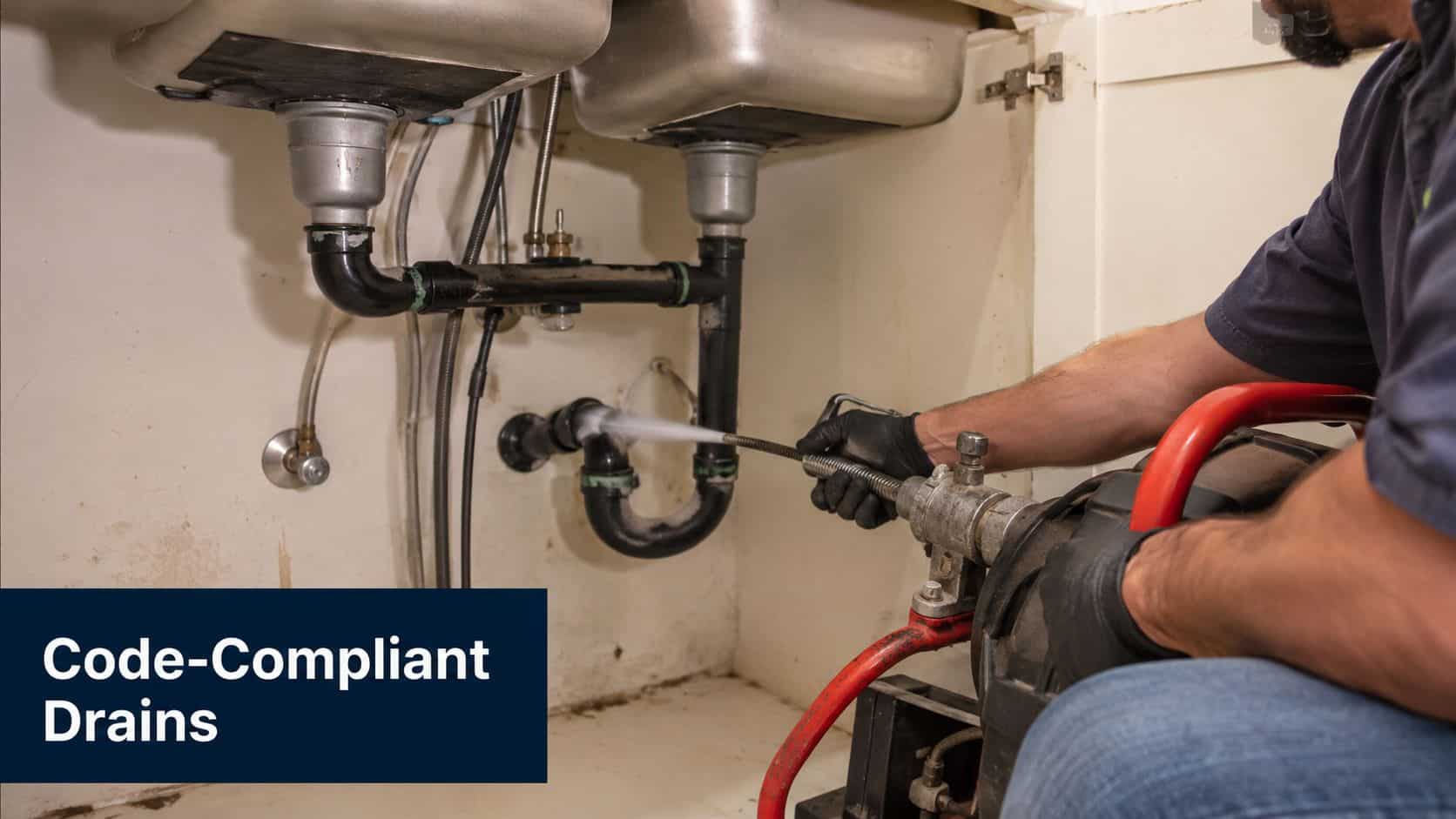
A code-aware hydro jetting job starts with a camera, not a guess. The tech checks the line, confirms the cleanout access, and watches for slope problems, offsets, roots, grease, or a pipe section that's holding water. If the blockage is just punched through with a snake and the pipe is still flat or misrouted, the backup usually comes right back.
After the line inspection, the cleaning can move to the right tool. MG Drain Services' hydro jetting service is the kind of work that fits this model, because the cleaning and the diagnosis happen together instead of as two separate guesses.
The difference shows up in the field. A Las Vegas homeowner can clear a recurring kitchen backup three times with a snake and still end up with the same problem, while a camera-and-jet combination may reveal a flat section that needs a code-compliant repair, not another round of temporary clearing. That's why hydro jetting isn't just a stronger snake, it's a cleaner way to find out what the pipe is doing.
A Homeowner Checklist Before Any Plumbing Work Starts
A good plumbing job in Las Vegas starts before the truck pulls up. First, confirm whether the work triggers a permit and who is pulling it, because that decision controls the code cycle and the inspection trail. Then verify the contractor's Nevada license and City of Las Vegas business license, because the name on the estimate should match the name on the permit.
Next, make sure a Southern Nevada licensed journeyman plumber is supervising the work on site, not just listed somewhere in the office. That matters if something has to be explained to an inspector later or if the job is tied to a home sale.
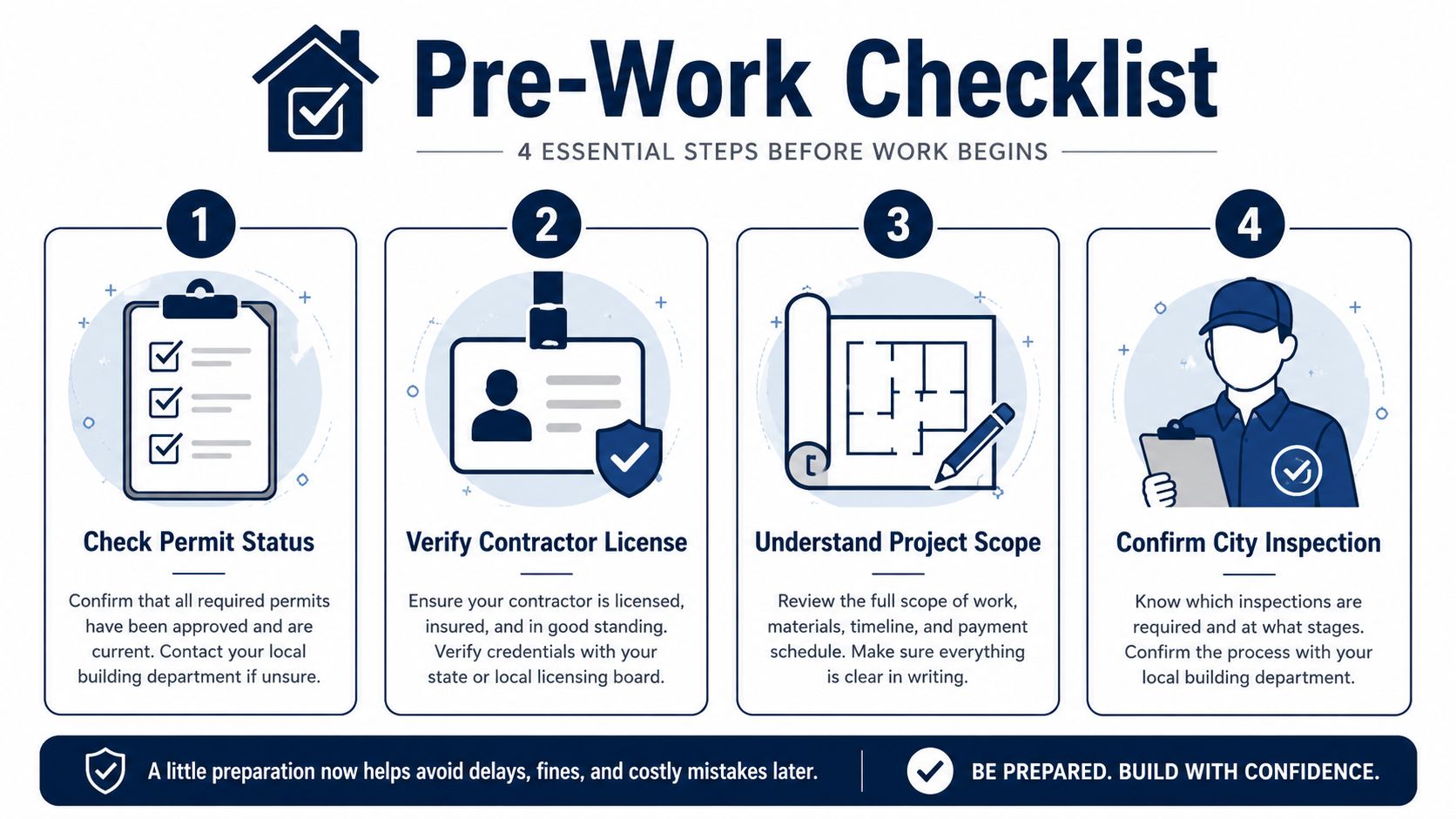
Keep a simple job file
- Photos of existing conditions. Take them before walls are closed.
- Short videos of the problem. Capture leaks, backups, or slow drains.
- Permit and inspection records. Save them for resale and insurance.
- The code cycle used. Ask whether the permit was filed under the 2024 or 2018 rules.
Homeowner rule: the cheapest plumbing job is the one that gets permitted, inspected, and closed the first time.
That rule saves money because it avoids the two most common expensive surprises, failed inspection and tear-out work. It also gives you a clean record if a lender, buyer, or insurer asks later.
Local Answers and How to Book Code-Compliant Plumbing in Las Vegas
How do you check whether a Las Vegas plumbing permit has been closed? The cleanest route is to keep the permit number and ask the city or the contractor for the final inspection record. If the paperwork is missing, the work may still be sitting open, which is a problem at resale.
What happens if you sell a house with unpermitted plumbing work in Las Vegas? A buyer's inspection can flag it, and then the sale can stall while someone verifies the work, opens walls, or retroactively permits the job. That's why closeout matters as much as the repair itself.
Can a homeowner DIY a water heater replacement in the City of Las Vegas? The city's residential water-heater requirements state that a permit is required before starting work and a final inspection is mandatory after completion. That means DIY work that skips the permit can become a rejection, a delay, or a costly correction when the safety details are checked.
How often should a Las Vegas home get a sewer camera inspection? Older homes, repeat backups, and properties that are being bought or sold are the ones most likely to benefit from a camera check, especially when the drain history suggests slope, root, or pipe-condition issues. The inspection becomes most useful when it's tied to a known symptom, not just a calendar reminder.
For homeowners who want code-compliant drain cleaning, hydro jetting, sewer camera inspection, water heater work, or leak detection, plomeros en Las Vegas can help when the job needs licensed, local supervision and a clean inspection trail. MG Drain Services LLC serves Las Vegas, Henderson, North Las Vegas, and Summerlin with licensed journeyman plumbers, transparent pricing, and bilingual English and Spanish support, so the fix lines up with the code and the paperwork lines up with the sale.
If you need plumbing work in Las Vegas done the right way, MG Drain Services LLC can handle drain cleaning, hydro jetting, sewer camera inspections, water heater projects, and leak detection with code-aware planning from start to finish. Visit MG Drain Services LLC to book service, ask about permits, and get a straight answer before the work starts.