
You're staring at a higher-than-usual water bill, but nothing is dripping under the sink and the toilets look fine. In Las Vegas, that's often the start of a hidden leak, the kind that wastes water inside a slab, behind a wall, under irrigation, or in an underground line long before you see a puddle.
A real leak detection call starts with diagnosis, not guesswork. The goal is to find where water is escaping, confirm whether it's inside the home or outside it, and avoid tearing into concrete or drywall until there's a reason to do it.
Why Hidden Water Leaks Are a Serious Problem in Las Vegas
A hidden leak in this market can hide longer than most homeowners expect. Desert heat dries out surfaces quickly, slab construction keeps piping buried out of sight, and mineral buildup can make older valves, toilet parts, and softeners less forgiving over time. That means a leak doesn't always announce itself with a visible puddle. Sometimes the first clue is a bill that doesn't make sense.
The scale of the water loss can be surprising. According to EPA WaterSense, the average U.S. household leaks nearly 10,000 gallons of water per year, and 10% of homes have leaks wasting 90 gallons or more per day. In a dry climate like Southern Nevada, those numbers can turn into a real utility and property problem fast. Hidden leaks also create the slow damage homeowners hate most, damp materials, warped flooring, stained ceilings, and in slab situations, soil movement under the foundation.
Practical rule: if you can't see the leak, assume the damage is happening where you can't inspect easily.
Hidden leaks usually show up in a few places. That includes slab lines, toilets, irrigation piping, water softeners, and buried lines between the meter and the home. Roof leaks can confuse the picture too, which is why a separate resource like commercial roof leak repair is useful when the stain or damp area is coming from above instead of from the plumbing system.
For Las Vegas homeowners, the important shift is this, leak detection is a diagnostic process. The plumber isn't just looking for water, the plumber is trying to identify the path, the pressure loss, and the system that's feeding the loss before the repair starts.
How to Isolate a Hidden Leak Before Calling a Plumber
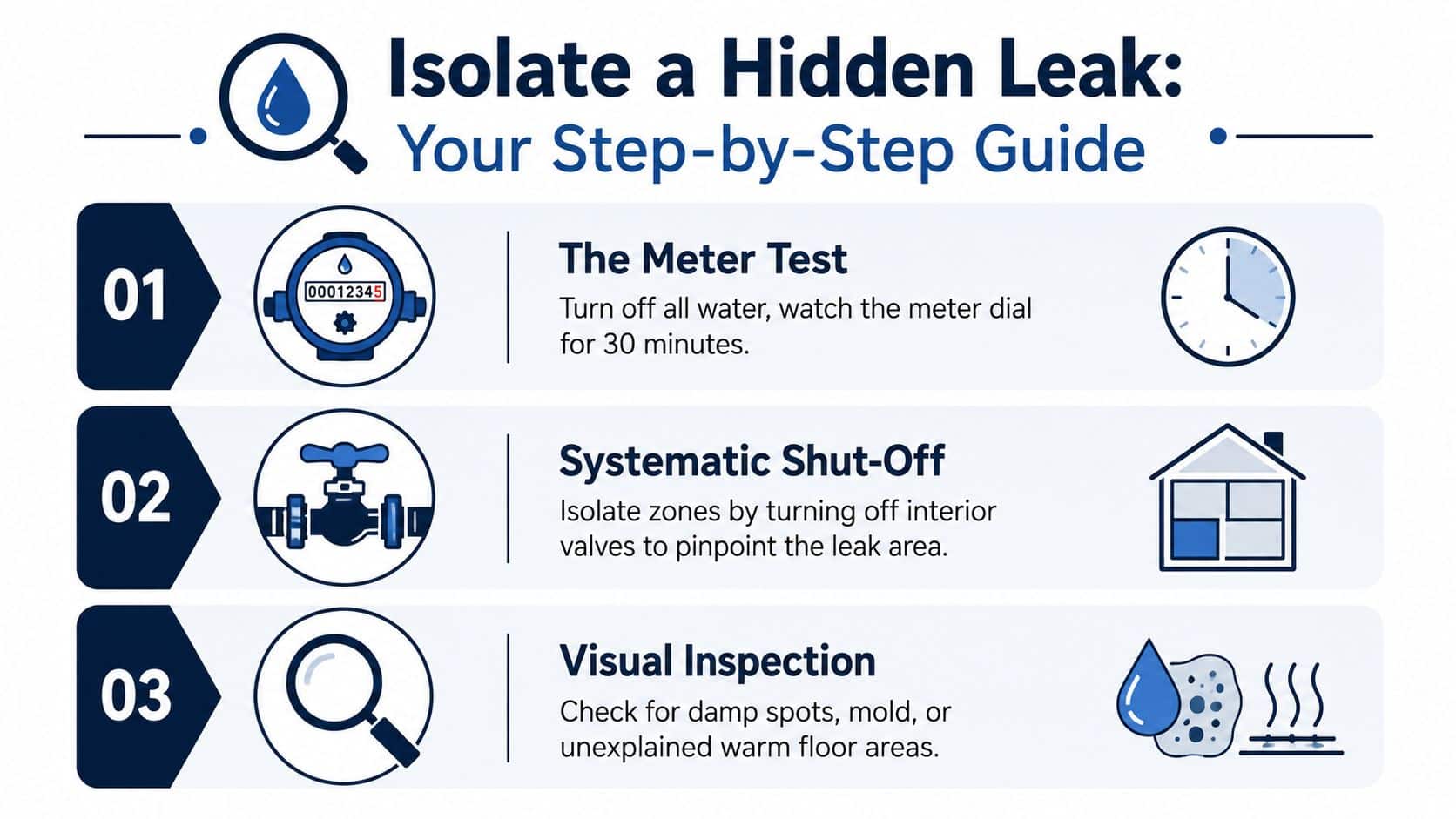
Start with the simplest test, because it tells you the most. Shut off every indoor and outdoor fixture you can, then check the water meter's flow indicator. The Las Vegas Valley Water District recommends that same meter-indicator method, and if the indicator still moves with everything off, you've confirmed there's unwanted water movement somewhere in the system.
Work through the shutoffs in order
Don't jump straight to the main line. First isolate irrigation, then the home's main shutoff if the meter still moves. That sequence helps separate a outdoor leak from an interior plumbing leak or an underground service line between the meter and the house. If the meter stops moving when irrigation is off, the problem is outdoors. If it keeps moving after the house shutoff is closed, that points harder toward the underground segment.
Shutoffs are a decision tree. The order matters because a running toilet or a failed outdoor valve can look like a much bigger leak than it is.
Next, isolate the usual suspects inside the house one at a time, toilets, softeners, swamp coolers, ice machines, reverse-osmosis units, and pools if the property has one. Toilets deserve special attention because a silent flapper leak can waste water without any sound. A food-coloring test is the fastest homeowner check, a few drops in the tank, wait 10 to 15 minutes without flushing, and if color shows up in the bowl, the flapper is leaking and needs replacement.
A good homeowner pass also includes a visual sweep. Look for damp trim, mildew smells, unexplained warm flooring, and valve boxes that stay wet after the system is off. If you can isolate the leak to one zone, you've already saved the plumber time and reduced the chance of unnecessary demolition.
Professional Leak Detection Tools and What They Reveal
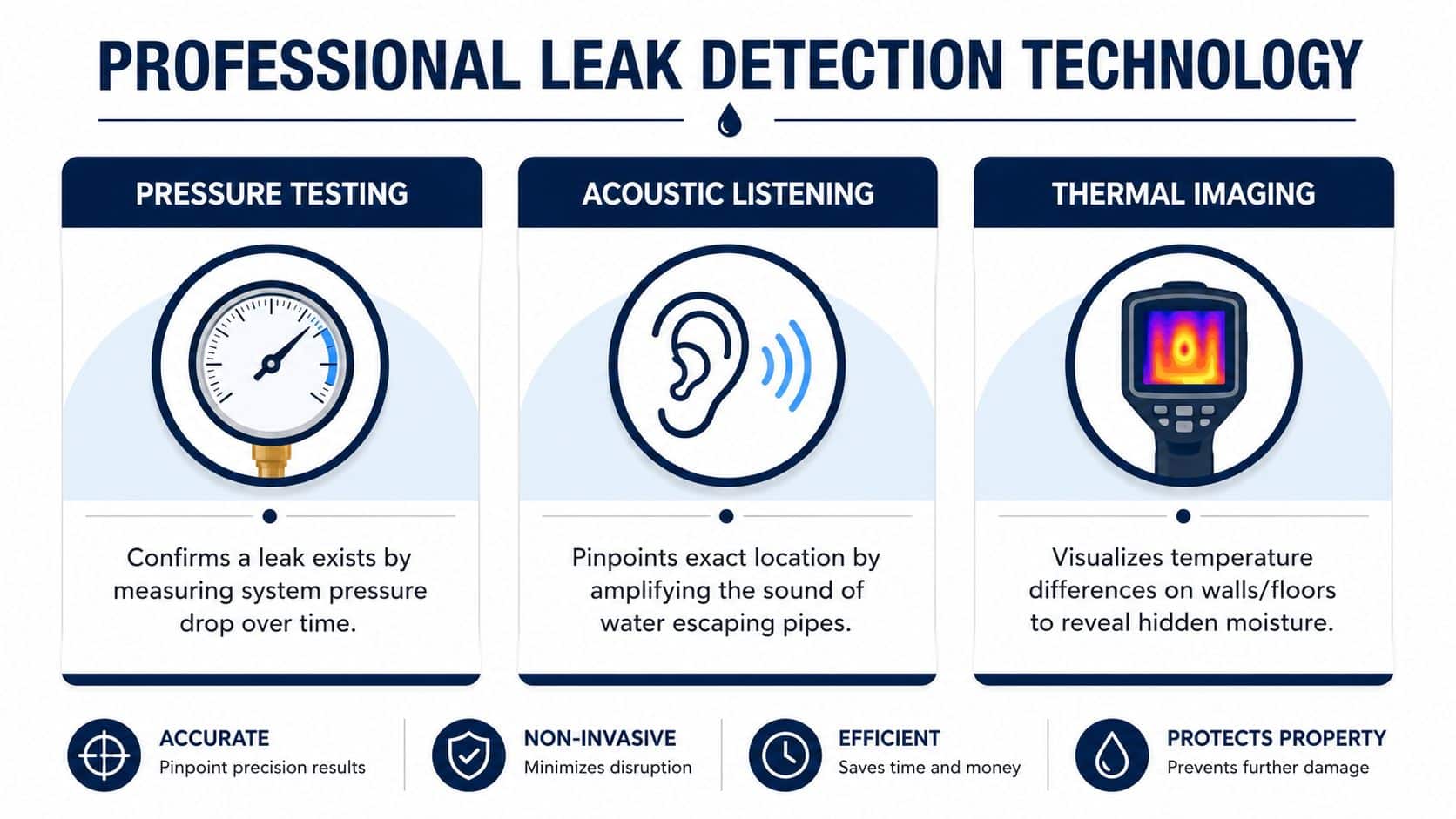
A plumber's tools answer different questions, and that's why the best leak diagnosis usually layers methods instead of relying on one gadget. Pressure testing confirms whether a closed section is losing pressure. Acoustic listening equipment then helps localize the leak by amplifying the sound of water escaping from the pipe. Infrared thermography looks for temperature changes on walls, floors, or ceilings when a hot or cold line affects the surrounding surface.
What each tool does well
Pressure testing is the gatekeeper. If a section holds pressure, that section may not be the source of the problem. If it drops, the plumber knows the leak is in that isolated run. Acoustic gear does the narrowing work, especially on buried or behind-wall piping, because it listens for the signature sound of escaping water. Thermal imaging is useful when the temperature contrast is strong enough, especially on hot-water lines.
The limitation is important. Thermal scans are not universally definitive, because they need enough contrast to show a problem. Acoustic instruments can be affected by ambient noise and pipe material. If a plumber skips layout mapping first, the repair can drift back into trial-and-error. That's why good field work starts with plumbing layout, access points, and a clear sense of what the meter already proved.
One practical example is a sewer or camera inspection before opening walls in a complicated chase. A targeted look through sewer camera service in Las Vegas can help separate a drain issue from a supply-side leak when symptoms overlap. The right tool doesn't just find water, it reduces the chance of opening the wrong section of the home.
Common Hidden Leak Sources in Las Vegas Homes
The symptom matters as much as the source. A warm floor, a moving meter, or a damp patch near a valve doesn't mean the same thing, and a good plumber reads those clues before reaching for a saw or jackhammer.
What the symptom usually points to
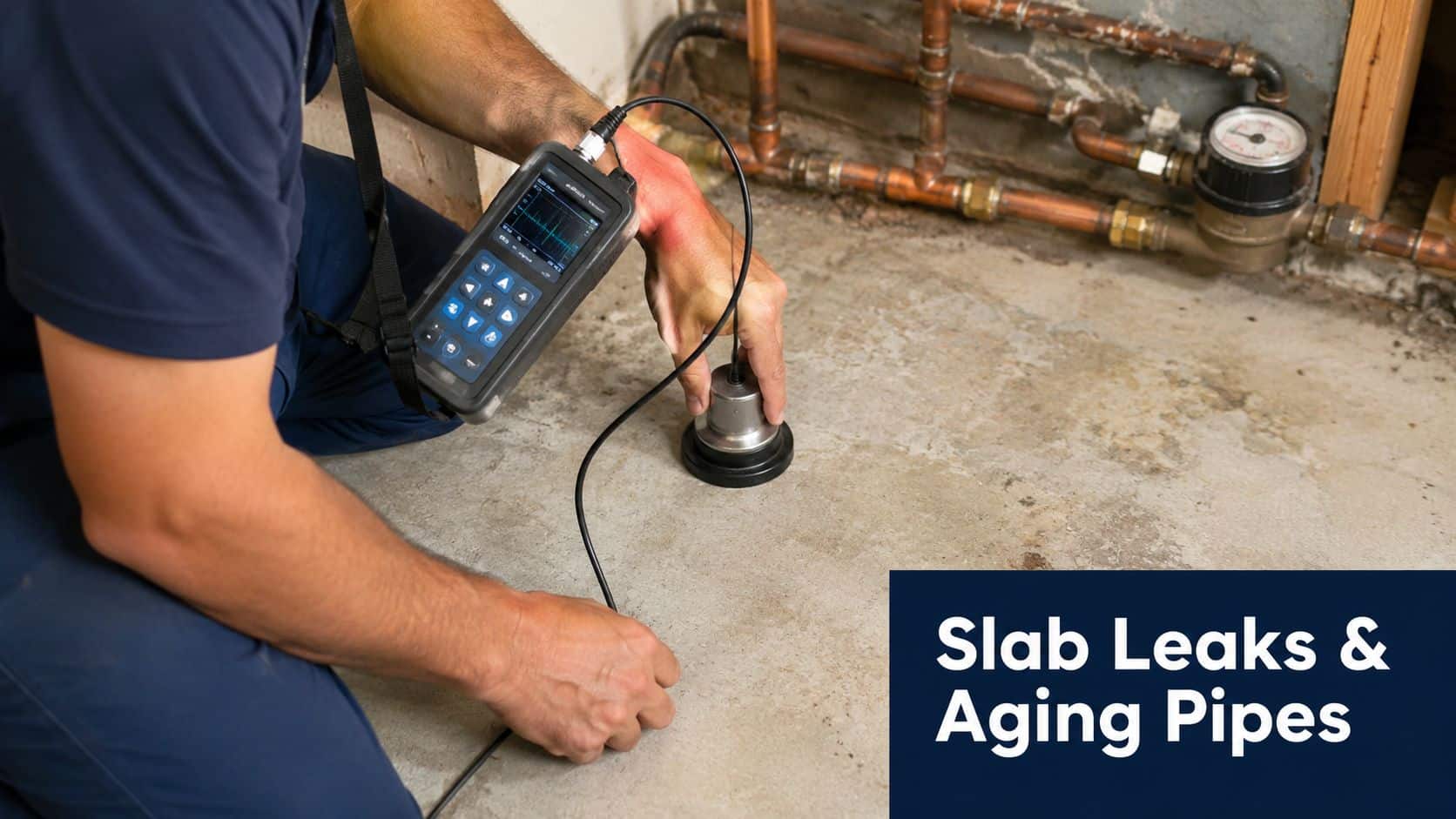
A slab leak often shows up as warm flooring, isolated moisture, or sounds that seem to come from under the house. In older Las Vegas homes, aging supply piping under the slab is a common concern because the line can fail without any visible sign at the surface.
A toilet leak behaves differently. It usually doesn't soak the floor right away, but it can keep sending water through the bowl without making a sound. That's why the dye test matters. If the bowl changes color without a flush, the flapper or another tank component is letting water pass.
An irrigation leak often shows itself through unexplained wet spots in the yard, weak zones in the spray pattern, or a meter that moves when everything inside the house is off. The same kind of logic applies to water softeners, swamp coolers, pools, and appliances tied into the supply system. A failure in one of those components can mimic a hidden plumbing leak until the isolation steps sort it out.
The underground service line between the meter and the house is another key suspect. When the meter still moves after the home shutoff is closed, the Water District's guidance points to that buried segment. For homeowners choosing replacement components during related plumbing work, it helps to think about the whole system, not just the leaking part. A resource like selecting valves for tile projects is useful when a repair touches trim, fixtures, or finish work that needs the right hardware selection.
For related residential problems, leak detection often sits alongside other service decisions. If the issue overlaps with hot water equipment, water heater repair in Las Vegas may be part of the diagnosis when the symptoms lead back to a hot-side line, valve, or connection.
When Non-Invasive Detection Still Requires Excavation
Non-invasive tools can narrow a leak to a small area, but they can't always remove the need to open something. That's the trade-off homeowners need to understand before they book a service call. If the leak sits in an accessible line, the repair can stay targeted. If it's under slab, buried in a line that can't be reached, or trapped behind finished surfaces, some level of access work may still be the right repair.
The deciding factors are straightforward. A continuously moving meter after shutoffs, visible damage near a floor or wall, and layout clues that point to a buried service line all push the diagnosis toward a slab or underground problem. If the plumbing can't be reached without breaking concrete or cutting into drywall, the plumber has to choose between direct access and rerouting the line.
A clean diagnosis doesn't promise no disruption. It promises the disruption is justified.
That's where experience matters. Sometimes the smartest repair isn't to patch the exact failed spot in place. Rerouting a line can make more sense if the line is severely compromised or if access would create more damage than the repair itself. The same logic appears in main water line replacement in Las Vegas, where the issue is not just finding the leak but deciding whether the line should be replaced, accessed, or rerouted.
Visible symptoms help justify escalation too. Warm flooring, wall damage, or foundation cracking are not just cosmetic complaints. They tell the plumber the leak has likely been active long enough to affect surrounding materials, which is exactly when a non-invasive test may lead to a slab opening or a more involved repair plan.
When to Call a Licensed Plumber for Leak Detection
Call a plumber when the meter still moves after every shutoff is isolated. That's the cleanest sign that the problem is still active and that the next step needs professional equipment, not more guessing. The same is true if the water bill keeps climbing even after you've checked toilets, irrigation, softeners, and appliances one by one.
Warm spots, damp areas, and repeated patch repairs are other clear lines in the sand. At that point, the issue is no longer just about finding a drip, it's about protecting the structure and preventing a small hidden leak from becoming a larger repair. If the homeowner doesn't have the tools to pressure test, listen, or trace the line layout, bringing in a licensed plumber usually saves time and avoids unnecessary damage.
For residents in Las Vegas, Henderson, and North Las Vegas, MG Drain Services LLC handles residential leak diagnosis with the kind of field process that starts at the meter and works inward or outward based on what the system shows. If the problem is urgent or the leak is spreading into finished space, emergency plumber service in Las Vegas is the right starting point for a fast diagnosis.
The biggest mistake is waiting for the leak to become obvious. Hidden water loss rarely fixes itself, and the earlier the source is isolated, the less invasive the repair usually is.
If you've got a meter that won't stop moving, a floor that feels warm for no reason, or a bill that doesn't match your water use, call MG Drain Services LLC at 702-480-8070. We handle residential leak detection across the Las Vegas Valley, and we'll trace the problem to the source before recommending the next repair. You can also visit MG Drain Services LLC to request service and get the leak diagnosed the right way.