
A sudden spike on the water bill, a warm tile floor in the middle of a Las Vegas summer, or the sound of water moving when every fixture is off usually means one thing, hidden water loss somewhere in the system. In Las Vegas, that problem shows up fast in slab homes, older valley properties, and irrigation lines that run all day without anyone noticing. The good news is that a plumber doesn't need to guess, there's a clear diagnostic path that starts with the meter and narrows the leak before walls or floors get opened.
Why Las Vegas Homeowners Call About Hidden Leaks
A lot of leak calls in Las Vegas start the same way. Someone in Summerlin opens a bill that looks wrong, or a homeowner in Henderson feels a hot patch on tile during a stretch of brutal heat and starts wondering whether the slab is sweating or the plumbing is failing. By the time they call, the leak has usually been running long enough to make them nervous about water damage, not just usage.
That concern is justified because hidden leaks don't announce themselves the way a dripping faucet does. They often stay out of sight, under concrete, behind tile, inside a wall cavity, or in a service line between the meter and the house. In slab-on-grade homes, that means the leak can keep feeding into the ground or the foundation area while the inside of the house looks mostly normal.
In Las Vegas, the first clue is often not a puddle. It's an unexplained change, a meter that won't sit still, a floor that feels different, or a bill that doesn't match the household's habits.
Professional leak detection in Las Vegas is built around finding that clue quickly and turning it into a location you can repair. That matters because the right fix depends on whether the problem is under the slab, in a wall, on the irrigation side, or in the main line. If you're searching for Leak Detection Las Vegas: How Plumbers Find Hidden Water Leaks, you're probably already past the point where guessing helps.
What Counts as a Hidden Water Leak in Las Vegas Homes
A hidden leak is any leak you can't see from normal use, which is why it causes so much confusion. A running toilet or a dripping faucet is obvious. A slab leak under a concrete foundation, a pinhole leak in copper, or a line leaking behind tile can hide for weeks before the signs show up somewhere else.
The leak types I see most in the valley
In Las Vegas, slab leaks are common because so many homes sit on concrete foundations with pressurized lines below the floor. Older 1970s and 1980s homes can also have copper lines that wear out from long-term mineral exposure. In shower walls, leaks often show up as loose tile, damp drywall, or a musty smell before anyone sees the source.
Outdoor systems cause their own trouble. Irrigation lines and service lines between the meter and the house can leak underground, which is especially frustrating because the water disappears into dry soil before it reaches the surface. That's one reason hidden leaks often go unnoticed in the desert longer than they would in wetter places.
Why the desert makes the problem worse
Las Vegas heat doesn't create every leak, but it does make damage move faster. Hot conditions stress fittings, dry out building materials, and let water loss spread before a homeowner gets a visual warning. Once water starts moving where it shouldn't, the repair cost can climb because the surrounding materials also need attention.
A practical way to think about it is simple. If the leak is out of sight and under pressure, it's a hidden leak. If it changes the meter, affects the floor, or shows up as unexplained moisture, it deserves a proper diagnostic visit, not a guess.
The Meter Test You Can Run Before Calling a Plumber
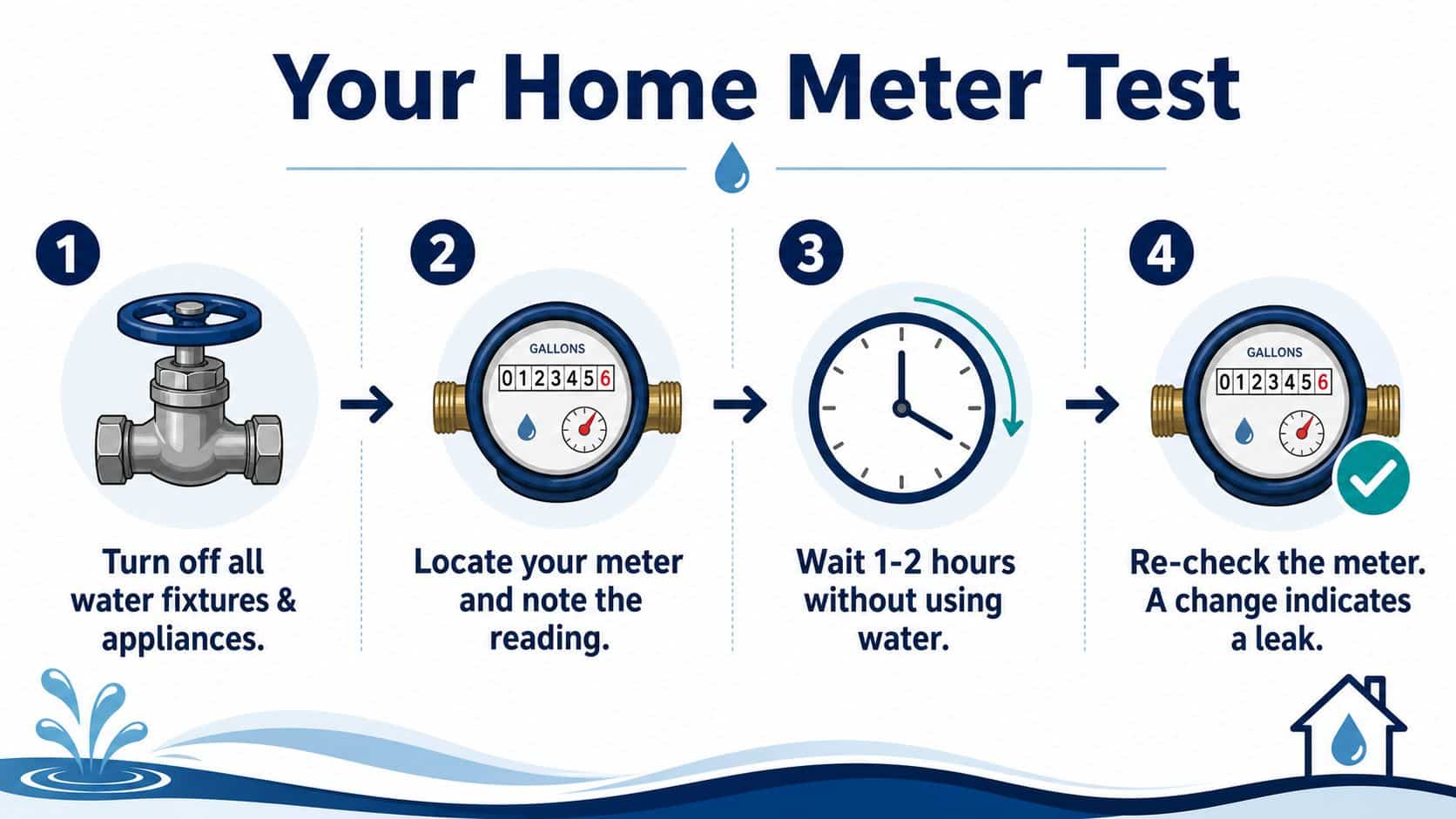
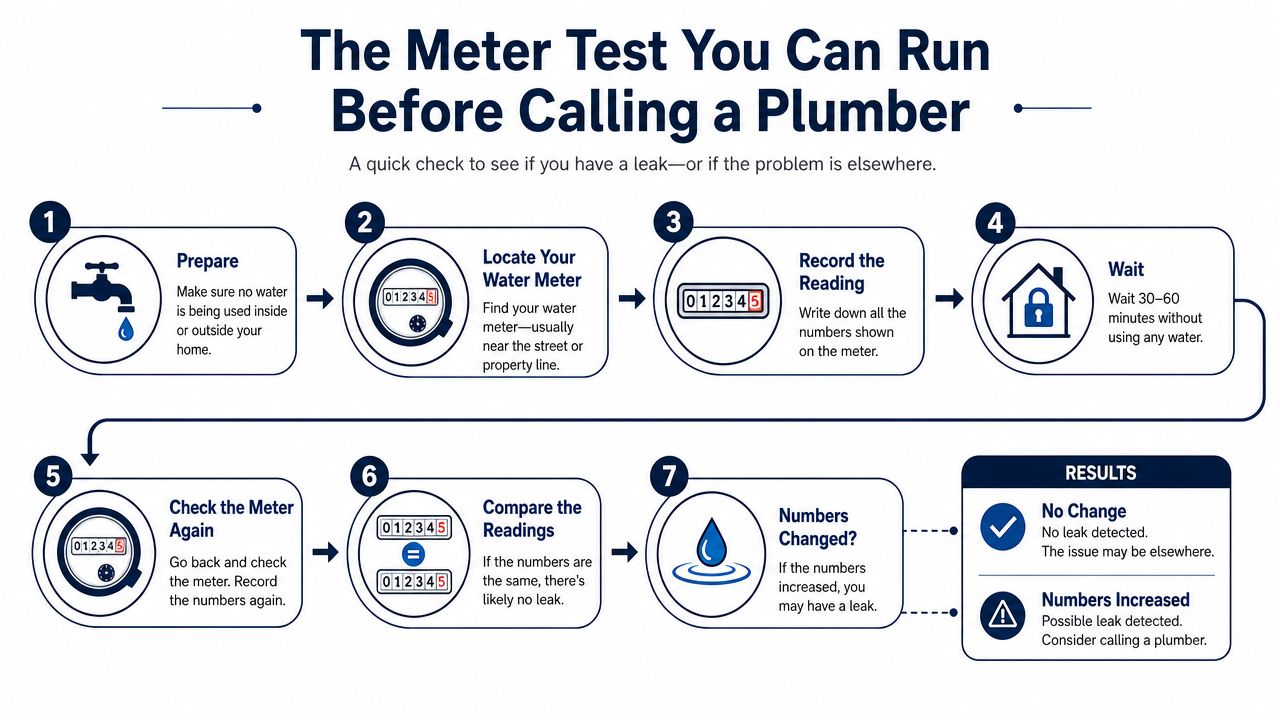
The first thing I'd tell a homeowner in Las Vegas is to start with the meter. Shut off all indoor and outdoor water, including fixtures, appliances, ice makers, and irrigation, then look at the meter's flow indicator. The Las Vegas Valley Water District says that if the indicator keeps moving after the home shutoff valve is closed, the leak is most likely underground between the shutoff valve and the meter, which is a strong clue for hidden water loss without opening anything up. You can use that same logic in Henderson and North Las Vegas when the problem feels mysterious.
A quick way to quantify the loss
A Nevada Las Vegas leak-detection guide gives homeowners a simple estimate method. Record the starting meter reading, wait 30 minutes, then check again. If the reading changed, subtract the two numbers and multiply by 48 to estimate gallons wasted per day, using the local guide's method for turning a small meter movement into something you can discuss with a plumber. That's useful because it takes the mystery out of “is this serious?” and gives you a rough sense of how active the leak might be.
This test is worth doing because it tells you whether you're looking at an actual leak or just a suspicion. It also helps a plumber move straight into the right diagnostic track when they arrive. If the meter doesn't move, the problem may be intermittent or isolated to a fixture. If it does move, you've already narrowed the field.
Practical rule: if the meter moves with every fixture off, stop treating it like a minor annoyance. That's a real leak signal, and in Las Vegas it can save time to call before the problem spreads.
If you're already checking the meter and still want a second opinion on the plumbing side, the service line and sewer-side tools used for locating concealed problems are described on the MG Drain Services sewer camera inspection page, which is useful when a leak overlaps with drainage or underground line concerns.
How Las Vegas Plumbers Actually Find the Leak
A good leak job in Las Vegas doesn't start with a saw. It starts with narrowing the problem until there's only one section left worth opening. The workflow is usually meter test, isolation, acoustic scan, thermal confirmation, pressure check, then a targeted repair. That's the difference between a controlled diagnosis and tearing into a house on a hunch.
The four tools that matter most
Acoustic listening is the first tool I trust when the leak is under concrete or soil. Ground microphones can pick up the sound of pressurized water escaping, which is especially helpful on slab leaks where the leak itself is hidden but the sound travels. Infrared thermal imaging comes next when the leak affects surface temperature, because warm or cool anomalies can show up on floors and walls.
Moisture meters verify what the eye and camera suggest. If a wall section or floor area is reading damp, that confirms the pattern instead of relying on appearance alone. Pressure testing adds another layer by showing whether a section of pipe holds or drops pressure, which helps isolate the defect without opening every possible path.
How the workflow gets used on site
In practice, the plumber uses these tools together, not one at a time in isolation. A meter test points to active loss. Isolation checks rule out fixtures and branches. Acoustic and thermal tools narrow the location. Moisture readings confirm the zone. Pressure testing tells you whether the suspect line is compromised.
That's why the best leak work feels methodical, not dramatic. The goal is one targeted repair, not exploratory demolition. If you want to see how another trade views hidden access points, HIBCO ROOF LLC leak detection is a useful comparison because roof leaks and plumbing leaks both depend on tracing the path from symptom to source, not just guessing where the water ended up.
Good leak detection saves the homeowner from opening a wall twice. The right test sequence is worth more than a fast guess.
What Leak Detection Costs in Las Vegas
Leak detection pricing in Las Vegas usually depends on access, complexity, and the kind of equipment the job requires. The industry pricing data in the brief shows that a professional leak-detection job can range from about $400 to $900, with some single diagnostic visits around $120 to $400 depending on the situation and whether specialized tools are needed. That spread makes sense when you've worked enough homes to know how different a slab leak is from a visible wall issue.
The cost changes because the work changes. A slab-access problem can take more tracing than a wall leak. A one-story house may be simpler to map than a two-story property with multiple branches. Pressurized irrigation adds another test point, and hot-line leaks can show up differently from cold-line leaks because thermal tracing behaves differently.
| Service Type | Typical Price Range | Main Cost Drivers |
|---|---|---|
| Single diagnostic visit | $120 to $400 | Access, complexity, need for specialized equipment |
| Professional leak-detection job | $400 to $900 | Slab access, wall access, irrigation, line tracing, confirmation testing |
A lot of homeowners focus on the number on the invoice and miss the bigger picture. A careful diagnostic visit can keep you from opening the wrong part of the house, replacing flooring that didn't need to come out, or chasing a problem for days. In a desert market where water damage can keep spreading fast, a properly targeted detection visit is usually cheaper than the cleanup that follows a missed leak.
For local pricing context and service planning, the MG Drain Services cost estimates page is the best place to compare leak work with other common plumbing visits before you commit.
What You Can Safely DIY and When to Call MG Drain Services
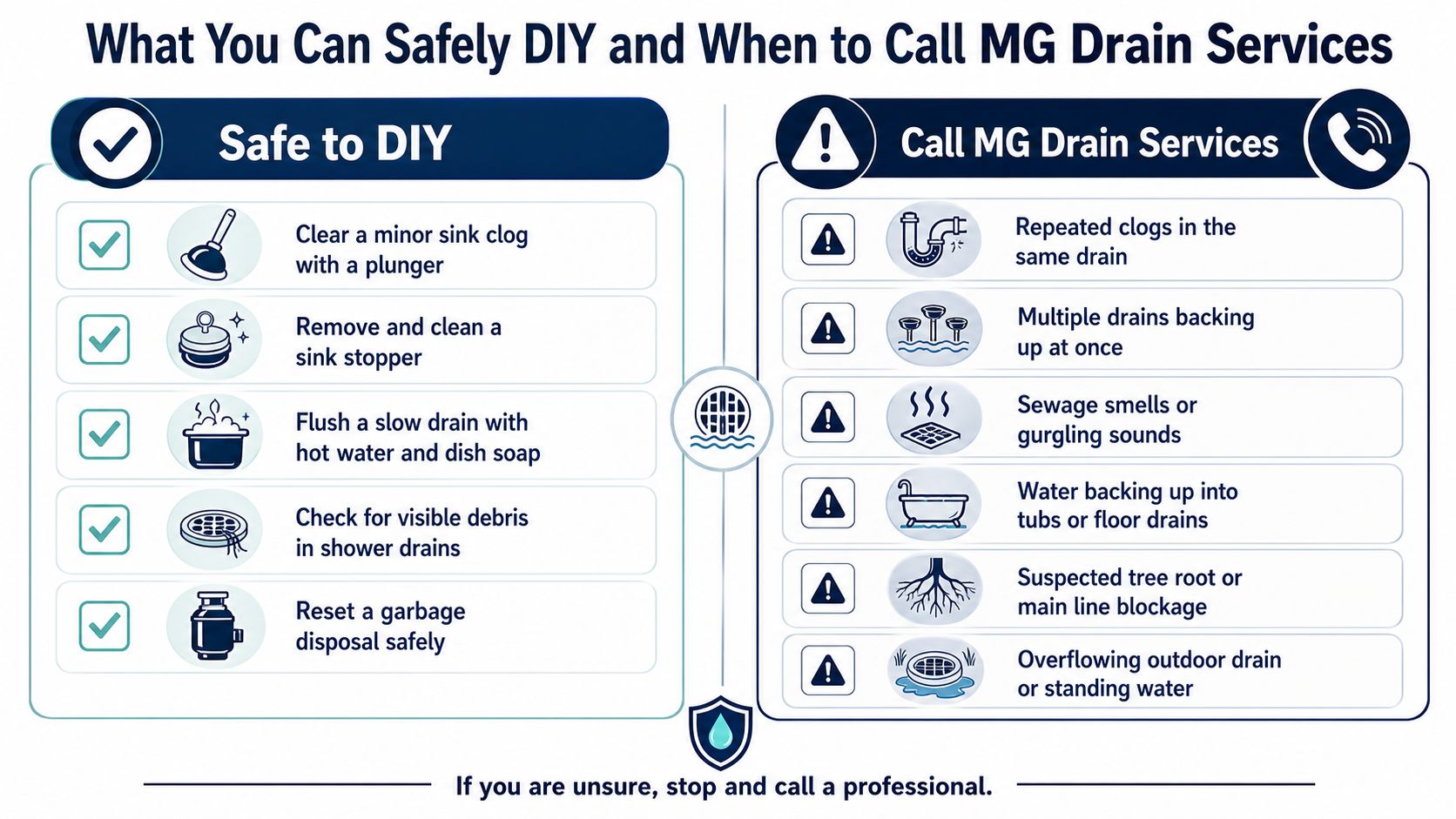
There are two safe things a homeowner in Las Vegas can do tonight. First, run the meter test with every fixture off and the irrigation shut down. Second, walk the visible plumbing, look at shutoff valves, supply lines, and irrigation manifolds for drips, wet fittings, or pooling around the base of the equipment.
Signs that mean stop and call
If you hear running water with everything shut off, that's not a “wait and see” situation. If you feel a warm spot on the floor, especially over tile or slab, that's another reason to call. Unexplained mold, damp drywall, or a meter that keeps moving for 30 minutes straight means the leak is active and needs a licensed plumber.
Don't start opening floors or cutting walls just to confirm what the meter already told you. In older Las Vegas homes, that usually turns a diagnosis into a repair plus restoration bill. In summer, the heat can make small leaks move faster through building materials, so delay works against you.
If the problem is active and you want one company to trace it, repair it, and keep the communication simple, MG Drain Services LLC is a licensed, family-owned option in Las Vegas that handles leak detection with journeyman-level experience, transparent pricing, and bilingual English and Spanish support through the booking tools on the company site. The main services page is where homeowners can see the broader plumbing and drain work available alongside leak detection.
How MG Drain Services Handles Leak Detection in Las Vegas
When a leak call comes in from Las Vegas, Henderson, North Las Vegas, or Summerlin, the process should be straightforward. You call 702-480-8070, book online through mgdrainservices.com, or request a quote through the customer portal, then a technician uses the same meter-first diagnostic logic, followed by the right test sequence for the property. Honest pricing matters on leak work because people are already stressed before anyone opens a wall.
The service model is built for real valley properties, not generic plumbing calls. That means fast response, experienced technicians, and a diagnostic approach that matches what hidden leaks do in slab homes and older neighborhood layouts. If it's after hours and the meter is still moving or water is surfacing where it shouldn't, treat it as urgent.
For homeowners who want local plumbing help without the sales runaround, call MG Drain Services LLC for fast, professional plumbing in Las Vegas. Book now at mgdrainservices.com or call 702-480-8070 before the leak gets bigger.
Las Vegas Leak Detection Questions Homeowners Ask
How can I tell if a leak is under the slab?
The strongest clue is a meter that keeps moving after all water is shut off, especially if the home's shutoff valve is closed and the indicator still won't stop. Warm flooring, unexplained dampness, and pressure issues can also point that way in Las Vegas slab homes. A plumber will usually follow that up with acoustic listening and pressure testing before opening anything. If you're seeing that pattern, call MG Drain Services LLC at 702-480-8070.
Should I turn off the water before the plumber arrives?
If the leak is active and you can safely do it, yes, turn off the water at the main shutoff. That can slow damage while the plumber is on the way, especially if the leak is obvious or the meter is still spinning. Don't force a stuck valve or start removing panels unless you already know where the shutoff is. If you're unsure, keep the area clear and book service through mgdrainservices.com.
Does insurance cover leak detection and repair?
Coverage depends on the policy and the type of damage, so homeowners need to check their own plan. In many cases, the leak itself, the repair, and the resulting damage are treated differently. The smartest move is to document the symptom, the meter reading, and the affected area before any work starts, then have the plumber give you a clear diagnostic report. For leak detection in Las Vegas, schedule through MG Drain Services LLC so you have a professional assessment to work from.
How fast can a plumber respond to an emergency leak in Las Vegas?
Response time depends on the schedule and the severity of the call, but a true emergency leak should be treated the same day whenever possible. If you have active water movement, visible floor damage, or water reaching drywall or cabinets, don't wait for the problem to spread. Call MG Drain Services LLC at 702-480-8070 and book immediately through mgdrainservices.com.