If you're hearing a drip in the wall, seeing a new stain on the ceiling, or wondering why your water bill in Las Vegas suddenly jumped, don't ignore it. Leaking pipe repair Las Vegas calls often start with something small that looked easy to patch. A little tape under the sink. A clamp on an exposed line. A wait-and-see decision because the leak seems minor.
Sometimes that works for a very short window. Often, it doesn't.
Las Vegas homes deal with hard water, aging fittings, and a lot of slab-on-grade construction. That combination changes the risk. A simple visible drip might stay simple. A hidden leak behind tile, drywall, or concrete usually gets more expensive the longer it sits. The right move is knowing what you can safely do yourself, what should stay temporary, and when a licensed plumber needs to step in before the repair bill turns into a restoration project.
That Drip You Hear Could Be a Serious Problem
A lot of leak calls in Las Vegas start the same way. Someone hears a faint tapping at night, notices soft paint near a baseboard, or finds a damp cabinet floor under the kitchen sink. They tighten a fitting, wipe it dry, and hope that solves it. Then the stain grows, the flooring starts to lift, or the smell changes from "musty" to "something is definitely wrong."
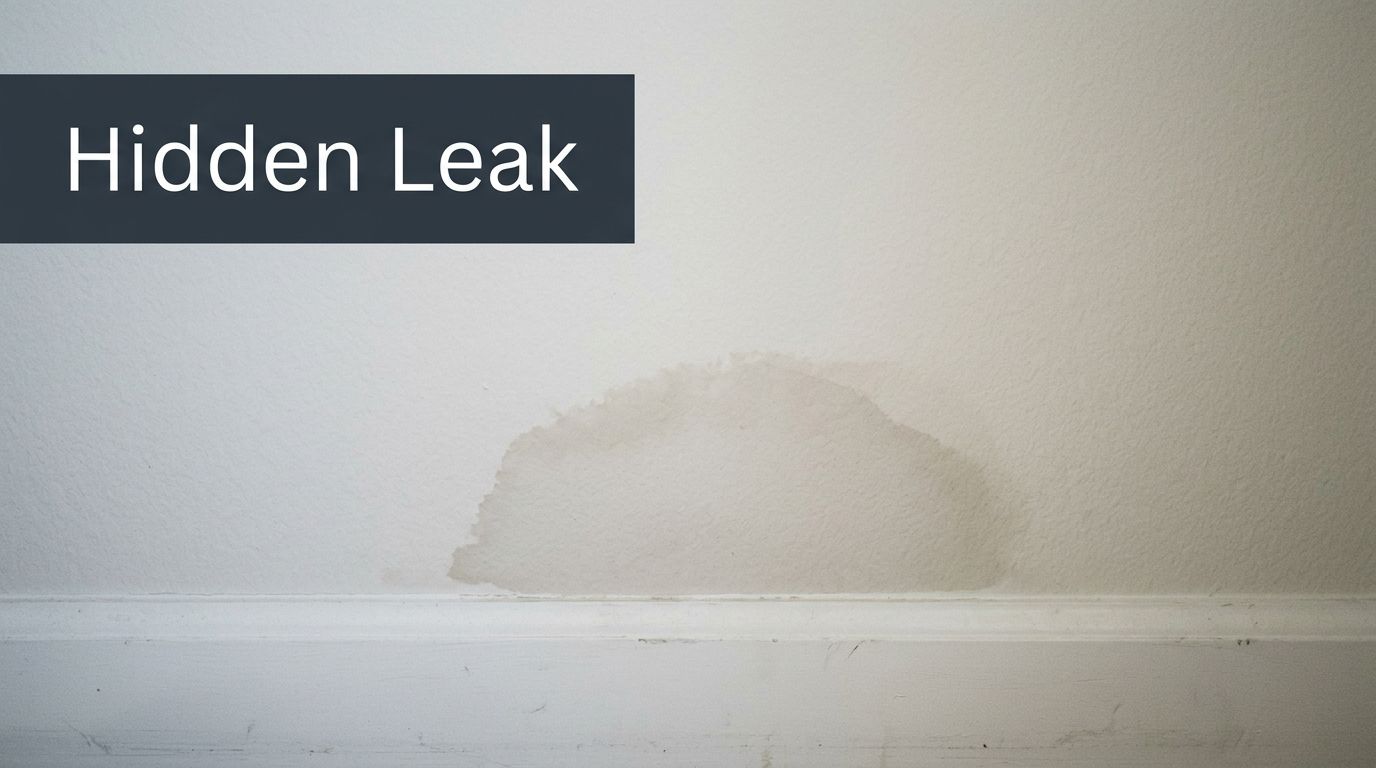
When water gets loose inside a wall, under flooring, or near a slab, the pipe repair is only part of the problem. Drywall, cabinets, trim, and flooring can all get involved. If water has already reached finished surfaces, it also helps to understand what proper restoration looks like. This overview of North Georgia water damage solutions gives a useful outside example of how flooring damage can spread after plumbing leaks.
Why Las Vegas leaks get missed
In Las Vegas, Henderson, and North Las Vegas, hidden leaks often stay hidden longer because the first signs aren't dramatic. Homeowners notice warm spots on the floor, slightly reduced pressure, or a meter that doesn't seem to stop moving. They don't always connect those signs to a pipe leak.
Practical rule: If you can hear water when nothing is running, treat it like an active problem until proven otherwise.
The main question isn't whether every leak needs emergency service. It doesn't. The primary question is whether the leak is visible, accessible, and isolated, or hidden, pressurized, and already affecting the structure.
Confirming a Leak Signs and Initial Triage
Before you touch a wrench, confirm what kind of leak you're dealing with. That tells you whether you're handling a minor nuisance or the start of a bigger repair.
Start with the water meter
If all faucets, toilets, appliances, and irrigation are off, the meter should stop moving. If it's still turning, water is going somewhere. That's one of the fastest checks a homeowner in Las Vegas or Henderson can do without opening walls.
A good next step is learning your shutoff points before you need them in a rush. This guide on understanding water flow control gives a practical overview of shutoff valve basics. For local leak clues, this MG Drain article on how to detect water leaks is also worth reviewing.
What to look for inside the house
Walk the house slowly and check:
- Cabinet interiors for pooled water, rust marks, and swollen wood
- Baseboards and drywall for bubbling paint, staining, or soft spots
- Ceilings for dark rings or active drips under bathrooms or upstairs lines
- Exposed piping for green corrosion, white mineral buildup, or wet joints
- Flooring for warping, loose tile, or unexplained warm or damp areas
Not every leak has the same repair path. Pipe leak repairs generally cost between $150 and $4,700 with an average of $500, where repairing a leaky pipe inside a wall starts at $150 and can reach $350 or more, while a ceiling leak can cost $700 to $2,500 depending on severity and access difficulty according to Angi's leaking pipe cost guide.
Triage before repair
Use this quick decision guide:
| Situation | Safe first step | Stop and call |
|---|---|---|
| Small drip under sink | Shut off local valve, dry area, inspect fitting | If valve won't shut off or drip continues |
| Ceiling stain with no visible source | Shut off water if stain is active | Yes, hidden source |
| Wet wall or baseboard | Check meter, isolate fixtures | Yes, likely concealed leak |
| Water near slab floor | Check meter and hot water use | Yes, possible slab issue |
If you can't see the exact leak point, you shouldn't assume a patch product will fix it.
Safe DIY Pipe Repairs for Minor Issues
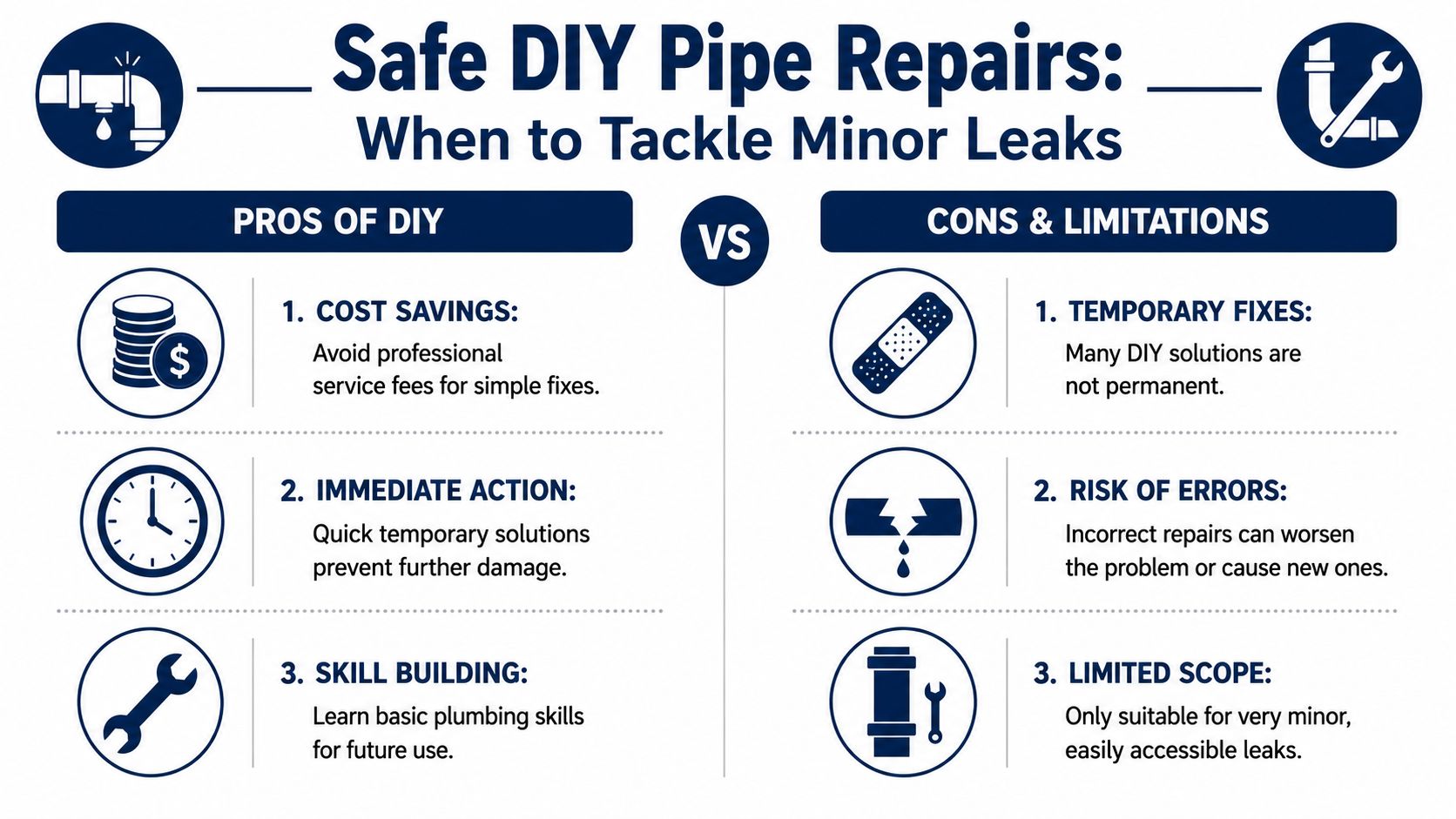
Some DIY plumbing work is reasonable. The key is staying inside a very small lane. If the leak is exposed, slow, and easy to isolate, a temporary repair can buy time. If it's hidden, on a main line, or under pressure, DIY usually turns into rework.
What a homeowner can safely do
A careful homeowner can usually handle these limited situations:
- Tighten a loose compression nut under a sink if the leak is clearly at the fitting
- Replace a worn supply line to a faucet or toilet if the shutoff valve works and the connection is accessible
- Use a pipe clamp or repair sleeve on an exposed non-hidden section as a temporary measure
- Shut off the correct valve and dry the area so you can monitor whether the leak returns
If you're keeping basic repair gear at home, this list of tools for tackling home projects is a practical reference. And if the issue starts with a bad shutoff point, this MG Drain article on how to install shut-off valve explains why valve condition matters before any leak work starts.
What DIY is bad at
DIY gets risky fast in these situations:
- Copper pinhole leaks on pressurized lines
- Leaks inside walls or ceilings
- Main water line issues
- Anything under slab flooring
- Repeated leaks at the same spot
- Drain or sewer problems that might be structural
A lot of homeowners reach for epoxy putty or silicone tape because it's cheap and available. The problem is that those products rely on surface adhesion, not the same bond you get from a properly soldered or press-fitted copper repair. DIY pipe repairs using epoxy putty or silicone tape often fail under sustained water pressure, and 70% of DIY leak repairs on main water lines fail within the first year, leading to average additional costs of $450 to $900 due to water damage and rework according to Maas and Sons on DIY plumbing fixes vs professional repairs.
Temporary means temporary
A clamp is not a finished repair. Tape is not a finished repair. A tightened fitting only counts as a solution if the leak was caused by that fitting and the pipe itself is sound.
A repair that holds for one day but fails inside a wall on day ten is not a money saver.
In Las Vegas homes with hard water, I see fittings and pipe walls that look stable from the outside but are already compromised by mineral buildup and corrosion. That's why the smartest DIY move is often not "fix it completely." It's "stop the water, limit the damage, and avoid making access worse."
The Hidden Dangers and Costs of DIY Fails in Las Vegas
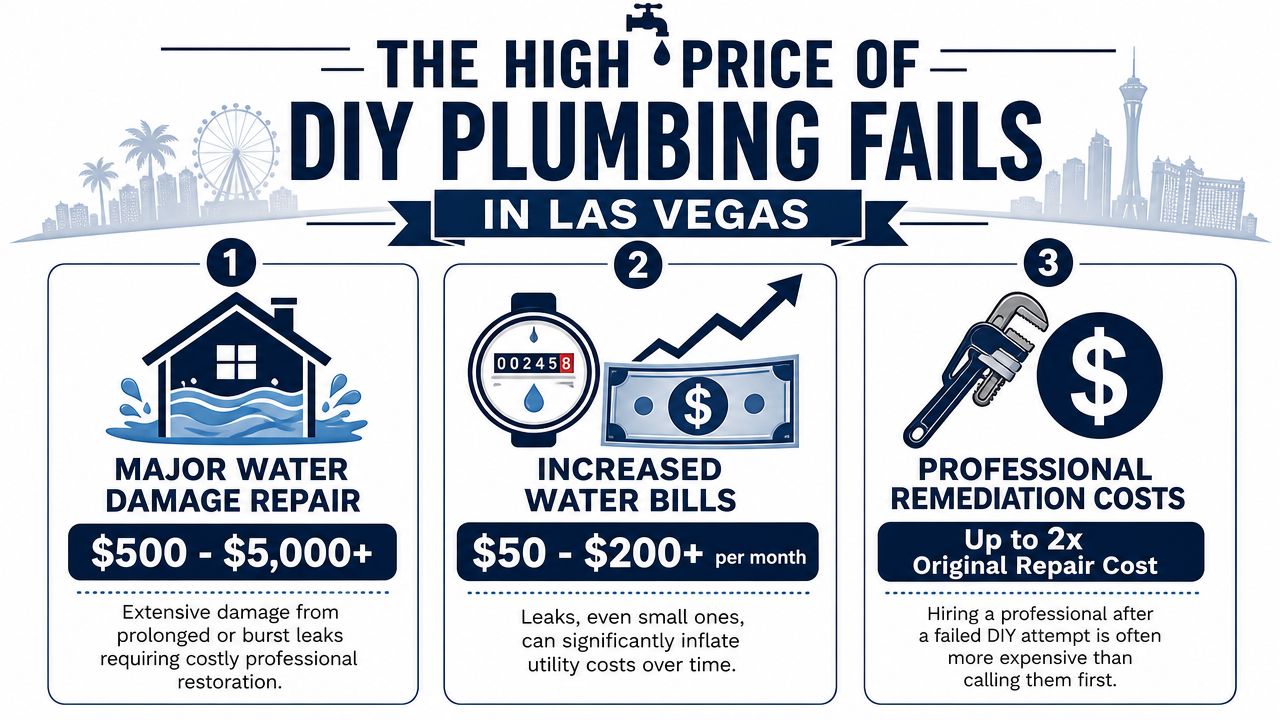
A leaking pipe can go from a $50 hardware store patch to a $5,000 cleanup job faster than homeowners expect. In Las Vegas, I see that jump most often when a temporary fix slows the visible drip but leaves the actual leak active under a slab, behind tile, or inside a wall cavity.
Hard water is a big reason. Mineral scale coats the pipe, hides pitting, and makes a small leak look isolated when the line is already worn in other spots. In homes with slab foundations and older copper, that mistake gets expensive because the repair is only part of the bill. Drywall removal, cabinet damage, flooring replacement, drying equipment, and mold prevention can end up costing more than the plumbing work.
Why slab leaks change the math
A slab leak changes the job from simple repair to detection, access, and restoration. Water under concrete does not stay neatly under one point. It can travel, soak adjacent materials, and keep causing damage long after the original leak starts.
In Las Vegas, the estimated cost for slab leak repair ranges from $1,500 to $4,000 for spot repairs, while slab tunneling can cost over $10,000 according to MG Drain's own local guide on slab leak repair in Las Vegas. Once a homeowner tries to patch the symptom instead of confirming the source, those access costs often become unavoidable.
How costs escalate after a failed repair
Homeowners try a cheap fix for a good reason. They want to stop the problem without turning it into a major project. In the field, the trouble starts when that patch buys a few days of false confidence.
In my experience, a failed $50 epoxy or clamp repair often turns into thousands in added cost once water reaches flooring, baseboards, drywall, or cabinetry. If the leak is hidden and active, restoration can easily pass $5,000, and serious cases can climb much higher. The plumbing invoice is only one line item. Dry-out, demolition, material replacement, and possible rerouting drive the total up fast.
That is the financial trap with DIY leaks in Las Vegas. The first repair looks cheap. The second repair includes access, moisture damage, and finished materials.
What professional access changes
A licensed plumber approaches the job differently. The first step is confirming the leak location and deciding whether the best fix is a direct repair, a reroute, or opening a specific area without tearing up more of the house than necessary.
In Las Vegas, one option homeowners use is MG Drain Services LLC for leak detection, color video camera inspections, hydro-jetting, and plumbing repairs when the problem goes beyond a visible fitting. That matters because the wrong access decision can add unnecessary demolition, while the right one can keep a plumbing problem from becoming a restoration project.
Water under a slab or inside a wall follows the easiest path, and the stain you see is often not where the leak started.
Failed DIY repairs in Las Vegas usually cost more because they delay diagnosis and let hidden moisture spread. That is the risk homeowners need to weigh. Saving a little on day one can cost a lot more by the time the source is found.
Red Flags When You Must Call a Plumber Immediately
Some leak situations aren't DIY decisions. They're call-now situations because the risk isn't just water loss. It's hidden damage, contamination, or a line failure you can't properly diagnose without professional tools.
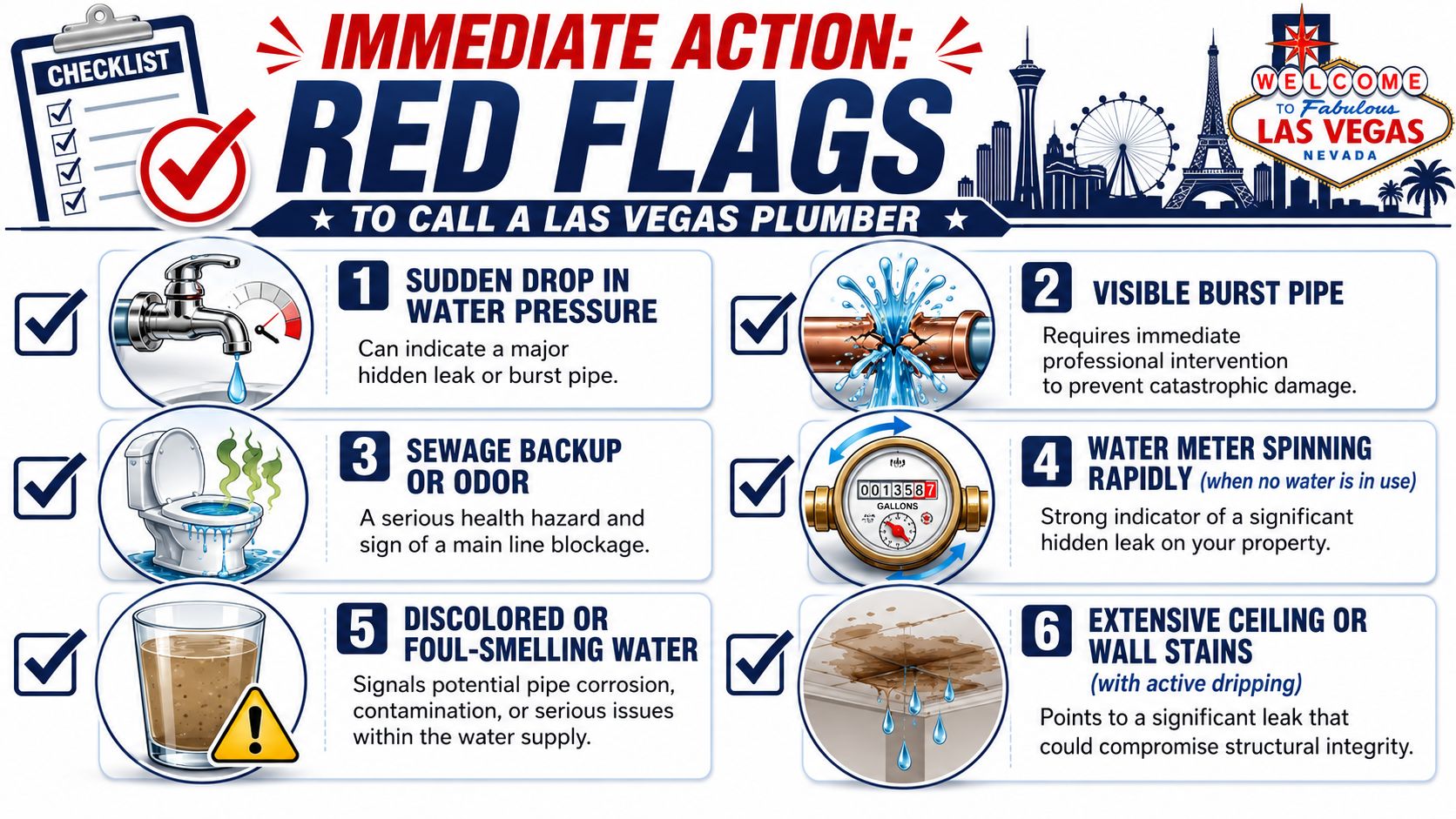
Six red flags that need a plumber
Your water meter keeps moving when nothing is on
That points to an active hidden leak somewhere on the property.You hear running water but can't find the source
This often means the leak is behind drywall, in a ceiling cavity, or below the slab.A ceiling or wall stain is growing, soft, or actively dripping
Once finished materials are wet, you're already beyond a simple fixture repair.Water pressure drops across more than one fixture
A single faucet issue is one thing. Whole-house pressure changes can point to a larger line problem.You smell sewage or see backup around drains
That's a health issue, not just a plumbing inconvenience.The leak involves the main water line
Main lines need correct materials, proper isolation, and a repair that can handle pressure.
Why visual checks miss too much
DIY inspection usually stops at what a homeowner can see. That isn't enough for buried, concealed, or sewer-related leaks. Professional plumbers use color video cameras to identify tree roots or pipe fractures in sewer lines, which account for 40% of recurring blockages, and benchmark data shows that 85% of water leaks originating behind walls or under slabs are missed by DIY visual checks according to The Seattle Times sponsored plumbing perspective.
Tools matter in hidden leak work
When plumbers in Las Vegas diagnose concealed leaks, they may use:
- Color video camera inspections for sewer and drain lines
- Acoustic leak detection for hidden water movement
- Pressure testing to confirm isolation zones
- Hydro-jetting when blockage and pipe condition need proper clearing before diagnosis
Hidden leaks don't care whether the wall still looks fine. By the time stains appear, water has usually been moving for a while.
If you're in Las Vegas, Henderson, or North Las Vegas and any of those red flags show up, skip the patch products and get a licensed plumber involved.
How to Hire a Reputable Las Vegas Plumber You Can Trust
Once you know the issue needs professional help, the next decision is who to let into the house. That matters just as much as the repair itself.
Questions worth asking on the first call
Ask these right away:
- Are you licensed and insured in Nevada
- Do you give honest pricing before work starts
- Will an experienced technician perform the diagnosis
- Do you handle leak detection as well as repair
- Do you warranty the work
Those questions filter out a lot of bad experiences. A real plumbing company should answer them clearly.
Why diagnosis is part of the repair
Leak repair in Las Vegas isn't only about replacing pipe. The first step is finding the right failure point. Leak detection services in Las Vegas typically cost between $120 and $400 for basic rates, but thorough diagnostics can reach $900. In extreme cases involving slab leaks with disintegrated plumbing, repair expenses may reach $5,000 according to Homeyou's Las Vegas leak detection cost guide. That's why cheap guessing can get expensive.
For a local hiring checklist, this article on how to find a good plumber covers what to verify before booking service.
What separates solid plumbers in Las Vegas
A reputable local company should offer:
| What to verify | Why it matters |
|---|---|
| Licensed and insured | Protects you and confirms trade accountability |
| Modern diagnostic tools | Hidden leaks need more than visual checks |
| Experienced technicians | Better judgment on repair vs reroute vs replacement |
| Transparent pricing | Reduces surprises during urgent calls |
| Local knowledge | Las Vegas hard water and slab homes change repair strategy |
Look for plumbers in Las Vegas who understand slab foundations, hard water wear, and the difference between a simple exposed leak and a concealed system issue. Fast response times help, but experience matters more when the leak isn't obvious.
Your Next Steps for Fast and Reliable Pipe Repair
A small drip at 9 p.m. can turn into soaked baseboards, damaged drywall, and a much larger bill by morning. In Las Vegas homes, that risk is higher than many owners expect. Hard water eats away at fittings, and slab construction makes hidden leaks harder and more expensive to reach. A temporary $50 patch can turn into a repair and restoration job in the thousands if it fails behind a wall or under the floor.
Use this section as a quick decision guide.
Quick answers homeowners often need
What should I do first if I find an active leak
Shut off the nearest valve if you can identify it fast. If the leak is coming from a wall, ceiling, or floor, shut off the main water supply and stop using fixtures until the source is confirmed.
Is it ever worth trying a DIY fix first
Yes, but only for an exposed, slow leak at an accessible connection where you can see exactly what failed. A clamp, tape, or bucket is a short-term measure. It does not solve corrosion, pressure problems, or a crack that is spreading.
Why do DIY pipe repairs fail so often in Las Vegas
Hard water leaves mineral buildup that wears threads, valves, and supply lines over time. In slab homes, the visible water is often not the actual leak location. Homeowners patch the symptom, water keeps moving, and the actual damage continues under flooring or behind finishes.
How expensive can a missed leak get
The plumbing repair is often only part of the bill. Once water reaches drywall, cabinets, flooring, or the slab area, cleanup and restoration costs rise fast. That is why fast diagnosis usually costs less than repeated patch attempts.
Can I wait until the weekend or my next day off
Waiting makes sense only if the leak is fully isolated and the area is dry. If the meter is still moving, pressure has dropped, or materials are getting wet, delay raises the chance of mold, structural damage, and a more invasive repair.
Will insurance cover any of this
It depends on the cause and your policy. Sudden damage may be treated differently than a leak that has been active for weeks. Document what you see, take photos, and call your carrier early if water has affected walls, floors, or contents.
When should I stop troubleshooting and call a plumber
Call right away for slab leak signs, recurring leaks, water stains, warped flooring, ceiling spots, unexplained high water bills, or any leak on a pressurized line that you cannot fully isolate.
If you need service now, call MG Drain Services LLC at 702-480-8070. The company is licensed and insured, serves Las Vegas, Henderson, and North Las Vegas, and handles leak detection, plumbing repairs, sewer camera inspections, drain cleaning, and emergency plumbing.