A need for main drain cleaning near me in Las Vegas often indicates a plumbing problem affecting the whole house. The toilet gurgles when the washer drains. The shower gets standing water. The kitchen sink slows down, then another fixture acts up right after it. That pattern usually means the problem isn't one sink or one toilet. It's farther down the line.
In Las Vegas homes, that kind of backup creates stress fast. People worry about sewage coming up, damage to flooring and cabinets, and whether this is going to turn into a major repair. Those concerns are valid. A main drain issue can start with slow drainage, but it rarely stays small if the line keeps getting used. If backup has already caused interior damage, this guide on Help for water damage in Bellevue is a useful example of what restoration work can involve after water gets where it shouldn't.
That Sinking Feeling When Every Drain Is Slow
A main line clog feels different from a normal clog because the symptoms show up in more than one place. You flush one toilet and hear another fixture react. You run the kitchen sink and the tub starts burping air. In homes across Las Vegas, Henderson, and North Las Vegas, that's the point where homeowners stop thinking "annoying drain" and start thinking "something is wrong with the sewer."
That instinct is usually right. The main sewer line is the path everything uses to leave the house. When that line narrows or blocks, water and waste don't move out the way they should. They stack up in the system and start pushing back through the lowest or weakest points first.
Main drain problems are house-wide plumbing problems. Treating them like a simple sink clog usually wastes time.
Drain service has changed a lot over time. Industry sources note that, since the late 20th century, drain cleaning has moved beyond basic snaking to include camera inspection, specialized sewer maintenance, and high-pressure cleaning as part of proactive sewer care in more complex urban systems, as described by a Los Angeles drain cleaning provider. That's the practical shift homeowners need to understand. A cable machine can restore flow, but it doesn't always answer why the problem happened.
What Las Vegas homeowners usually notice first
- Toilets acting strangely: Gurgling, low flushing power, or bubbling after another fixture drains.
- Low fixtures backing up first: Showers, tubs, or floor drains often show the problem before an upstairs sink does.
- More than one drain slowing down: That's the clue that points away from an isolated branch line clog.
When people call plumbers in Las Vegas for this, they often want immediate relief. That's understandable. But the better goal is solving the cause, not just getting one drain to move for the night.
Warning Signs Your Main Sewer Line Is Clogged
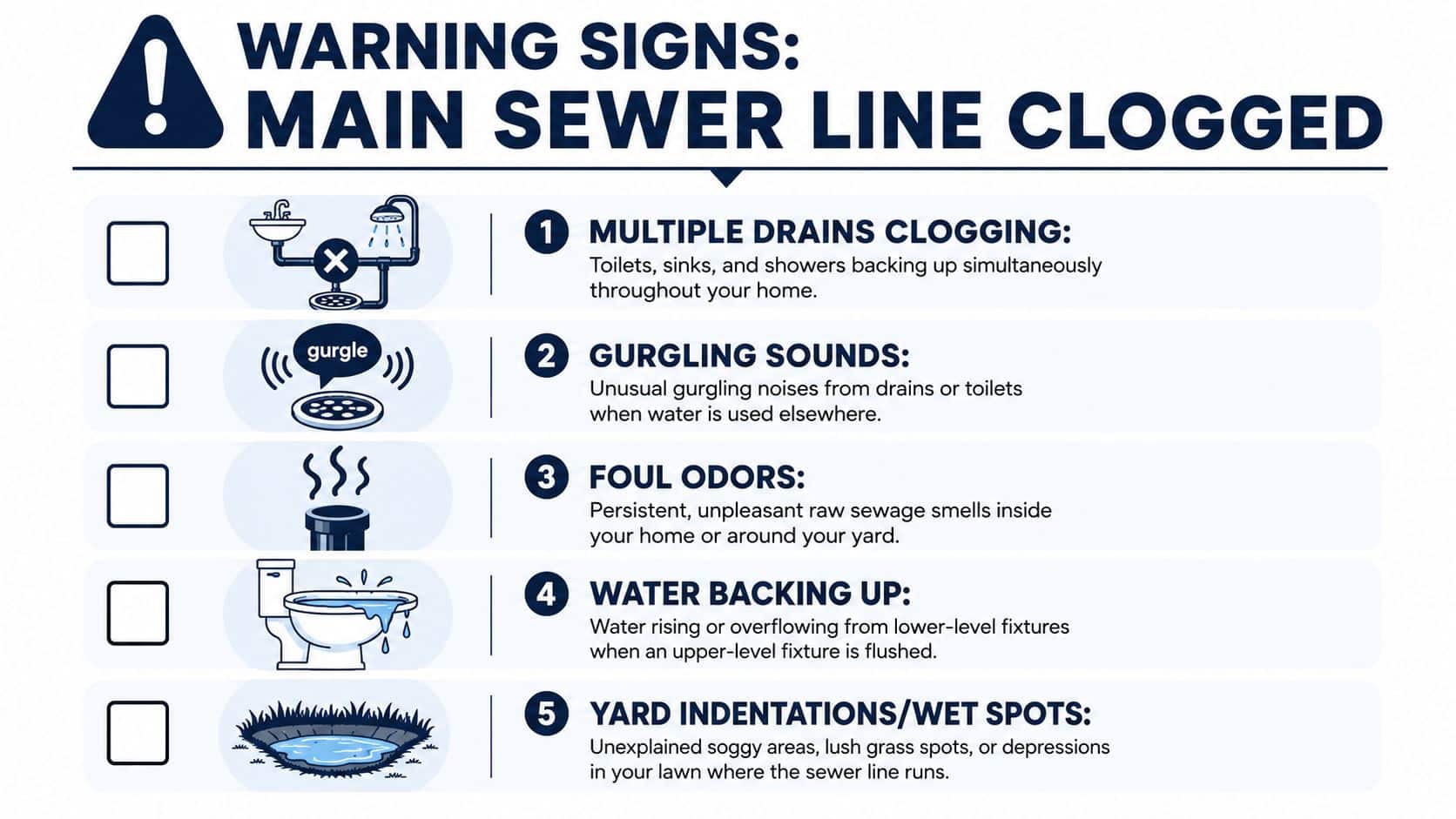
The clearest warning sign is multiple plumbing fixtures reacting at the same time. A clogged bathroom sink by itself is one thing. A toilet, tub, and sink all showing symptoms together is different. That pattern usually means the restriction is in the main drain or sewer line.
Signs that point to a main line issue
- Several drains are slow at once: If the kitchen, bathroom, and laundry are all affected, the blockage is likely farther downstream.
- Toilets or drains gurgle: Air gets trapped and pushed around when wastewater can't move freely.
- Water shows up where it shouldn't: Flush a toilet and water rises in the shower, or run the washer and a nearby drain starts backing up.
- Sewer odor inside or outside: Raw sewage smell near drains, cleanouts, or in the yard deserves attention.
- Wet spots or depressions outdoors: If the line outside is compromised, the ground above it can start changing.
Why these signs matter
A fixture-specific clog usually stays local. A main line problem spreads because every drain in the home depends on that same exit path. That creates a chain reaction. The more water you use, the more pressure builds behind the blockage.
If you're seeing backup in the lowest fixture in the house, stop using water until the line is checked. Running dishwashers, showers, laundry, or repeated toilet flushes can turn a manageable drain problem into a cleanup job.
If one drain is slow, you troubleshoot that drain. If the whole house reacts, think main line.
A lot of homeowners lose time with plungers and over-the-counter chemicals. Those may help a shallow stoppage. They won't tell you whether the problem is grease, roots, scale, or a damaged sewer pipe.
Common Causes of Main Drain Backups in Las Vegas
Las Vegas plumbing has its own patterns. The problems aren't random. In the field, the same causes come up again and again, especially in older homes, houses with mature landscaping, and properties that have had repeat drain service.
Grease and food sludge
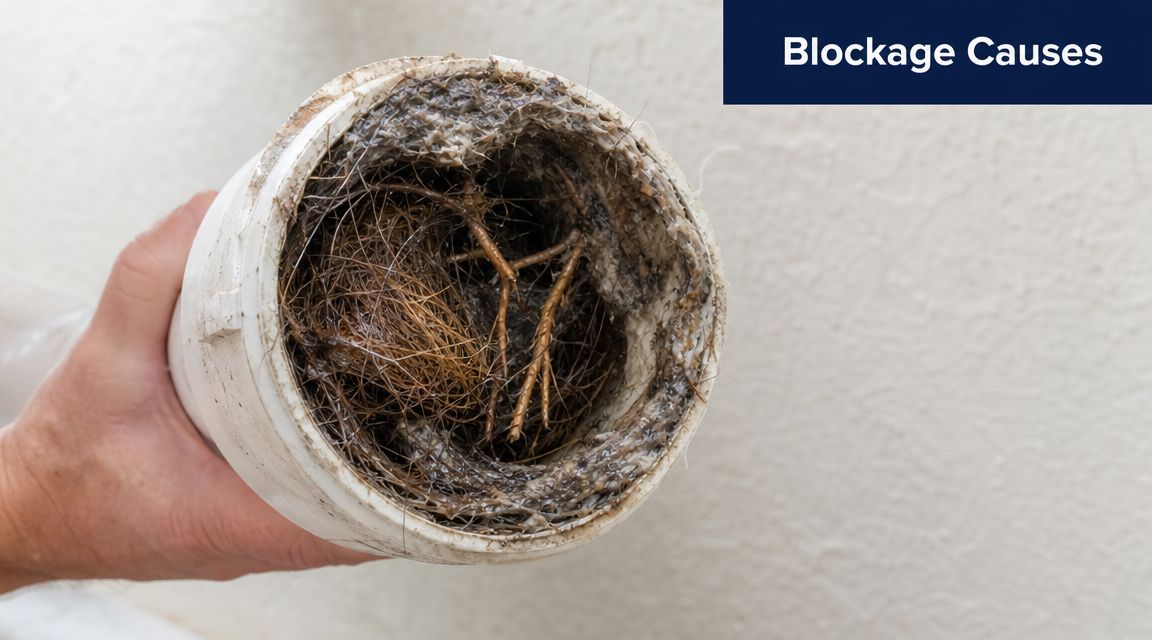
Kitchen lines feed into the main drain. Over time, grease, fats, and oily residue stick to pipe walls. Once that layer starts building, it catches more debris and narrows the pipe. The clog doesn't always happen right away. It forms gradually until a busy day in the kitchen or a large discharge from the washer pushes it into failure.
Tree root intrusion
Roots go where moisture is. In parts of Henderson, older Las Vegas neighborhoods, and homes with established trees, roots can work into small openings in sewer lines and keep expanding inside the pipe. Once that happens, paper and waste hang up on the root mass and the line starts backing up.
Hard water scale
Southern Nevada water is hard, and that matters for drains. Mineral scale can build on the inside of older piping and reduce the inside diameter. The pipe may still technically be open, but not open enough to carry waste the way it should. Scale also creates a rough surface that traps sludge faster.
Improper items getting flushed
"Flushable" wipes are one of the biggest troublemakers. Paper towels, hygiene products, and other non-toilet-paper items don't break down the same way. They catch in rough spots, roots, offsets, or existing buildup and create a blockage that keeps growing.
Why the cause changes the fix
A soft grease clog and a root-packed sewer line aren't the same job. Neither is a scaled line with years of buildup. That's why guessing the cleaning method is a mistake. You need to know what is in the pipe and what condition the pipe is in before deciding how to clear it.
Diagnosing and Clearing Your Main Drain The Right Way
A backed-up main line is expensive when the first step is guesswork. The right first step is finding out what is in the pipe and what shape the pipe is in before anyone chooses a machine.
For a recurring sewer problem, a camera inspection usually saves money. It shows whether the blockage is grease, roots, scale, wipes, or a broken section of pipe. It also shows location, which matters. A stoppage near the cleanout is a different job from a belly or offset farther out in the yard. Homeowners who want to understand that process can review this sewer camera inspection guide for Las Vegas homes.
That diagnostic-first approach is what separates a temporary opening from a repair plan that fits the line. I have seen plenty of drains reopened with a cable machine, only to back up again because the underlying issue was heavy hard water scale or roots growing through a joint.
What the camera helps answer
- Where is the blockage? Near the house, under the slab, in the yard, or at a connection point.
- What is causing it? Grease, roots, mineral buildup, wipes, sludge, or a combination.
- Is the pipe still sound? Cracks, offsets, bellies, and collapses change the next step.
- Will cleaning solve it? Some lines need cleaning. Some need repair. The camera tells you which one you are paying for.
MG Drain Services LLC offers sewer camera inspection, rooter service, and hydro-jetting in Las Vegas. That matters because the cleaning method should follow the findings, not the other way around.
Auger vs. Hydro-Jetting: Which Is Right for Your Clog?
| Feature | Mechanical Auger (Rooter) | Hydro-Jetting |
|---|---|---|
| Best use | Opening a blockage fast, cutting some roots, restoring flow | Cleaning pipe walls, removing grease, sludge, and scale more thoroughly |
| What it does well | Reaches a stoppage quickly | Clears buildup across more of the pipe interior |
| Limits | Often leaves residue behind | Should wait until pipe condition is confirmed |
| Good fit | Isolated clogs, targeted root cutting, immediate relief | Recurring backups, grease-heavy kitchen lines, mineral scale, heavy debris |
| Main drawback | The line may clog again if buildup remains | A damaged line may need repair instead of jetting |
A cable machine has its place. If sewage is backing up and the goal is to get the home usable again, an auger can restore flow fast. But in many Las Vegas homes, that only opens a path through the blockage. It does not clean the pipe wall. Grease, scale, and root fragments can stay behind and start catching debris again within weeks or months.
Hydro-jetting is often the better choice when the camera shows heavy buildup and the pipe is structurally sound. It washes the inside of the line far more completely. The trade-off is simple. Jetting usually costs more upfront than a basic snake service, but it can reduce repeat stoppages and emergency calls. If the camera shows a cracked or collapsed section, though, cleaning alone is money spent on the wrong fix.
If a backup has already spilled into the home, cleaning the line is only part of the job. Drying and sanitizing the affected area matters too. AMPM Restoration's cleanup tips outline the safety side of a sewage event after the drain problem is brought under control.
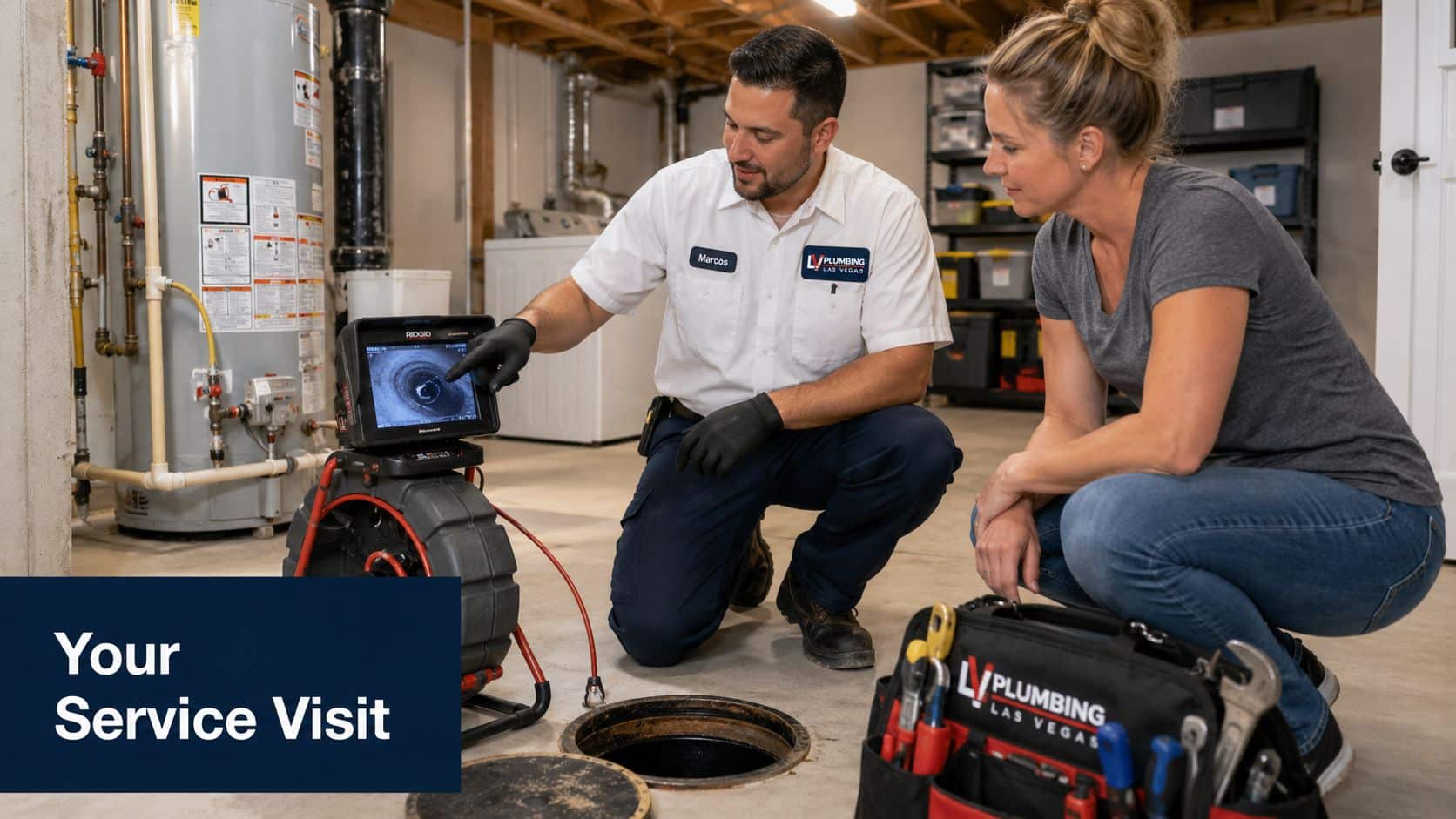
What to Expect During Your Service Visit
Most homeowners are anxious before a sewer service call because they don't know if they're dealing with a simple cleaning or a major sewer problem. A professional visit should reduce that uncertainty, not add to it.
The first step is a conversation about what's happening in the home. Which fixtures are backing up. When it started. Whether the issue is constant or comes and goes. That history helps narrow down whether the problem looks like a one-time blockage or a repeating main line failure.
What happens on site
- Initial assessment: The technician checks the affected fixtures, asks about previous drain issues, and identifies the best access point.
- Camera inspection when needed: If the problem is recurring or the symptoms suggest a deeper issue, the line is inspected to see what is causing the blockage.
- Clear explanation of findings: You should hear plain language, not vague guesses. For example, heavy grease buildup calls for a different solution than root intrusion or pipe damage.
- Cleaning or next-step recommendation: The method should match the condition of the line.
A lot of homeowners also want to know what service may cost before they commit. Recent Southern California pricing guides place standard main sewer line cleaning with a drain snake at about $200 to $450, hydro-jetting at $350 to $800, and full line replacement at $2,000 to over $10,000 if the pipe is damaged according to this drain cleaning cost guide. The exact local price in Las Vegas depends on access, severity, and what the inspection shows, but the important trade-off is clear. Cleaning is usually far less expensive than letting a damaged or heavily blocked line turn into a replacement job.
What good service looks like
- Protective setup: Clean work areas, careful access, and respect for the home.
- Honest options: Not every line needs the same method.
- Clear follow-up: If hydro-jetting is recommended, this overview of how hydro-jetting works helps explain why it's chosen for some lines and not others.
A homeowner shouldn't have to guess what was found in the sewer line or why one cleaning method was recommended over another.
Preventing Future Backups and Protecting Your Home
The biggest mistake homeowners make is treating every sewer backup like a random event. Many aren't random at all. They're maintenance problems that keep showing up until someone addresses the cause and the condition of the line. Public-facing infrastructure guidance also supports that bigger picture. Drain issues are often preventative and system-related, not just one-time emergencies, as reflected in Rockford's Adopt-A-Drain program.
Habits that help
- Keep grease out of drains: Let it cool, contain it, and throw it away.
- Be selective about flushing: Toilet paper only is the safest rule.
- Watch recurring patterns: If the same symptoms return, stop treating them like isolated clogs.
- Skip harsh chemical drain cleaners: They don't diagnose the problem and can create bigger issues around damaged piping or hazardous cleanup.
For homes with older sewer lines, mature trees, or a history of backups, scheduled inspection and cleaning makes more sense than repeated emergency calls. That's especially true for landlords and property managers in Las Vegas who want to avoid tenant disruption and interior damage.
If backup has already happened
If sewage has entered the home, cleanup needs to be handled carefully. For practical safety steps after a contamination event, AMPM Restoration's cleanup tips are a useful resource.
A planned maintenance visit costs less stress than an after-hours backup when the bathroom, shower, and laundry all go down at once.
Your Trusted Main Drain Experts in Las Vegas
A main drain problem is not the time for guesswork. If several fixtures are slowing down at once, or backups keep coming back after a basic clearing, the smart move is to inspect the line first and find out what is happening inside the pipe.
That matters in Las Vegas. Around here, I see the same trouble patterns over and over. Hard water scale narrows older lines. Kitchen grease builds up in low spots. Tree roots find small joints and turn them into recurring sewer problems. In some homes, the underlying issue is a cracked or offset line, and no amount of snaking will solve that for long.
MG Drain Services LLC works with homeowners, landlords, and small commercial properties across Las Vegas, Henderson, North Las Vegas, and Summerlin. The company is licensed and insured, and the service approach is straightforward. Start with a clear diagnosis, usually with a color video inspection when the symptoms point to a main line issue, then choose the cleaning method that fits the cause and pipe condition. That may mean rooter work for a localized stoppage or hydro-jetting when the line is loaded with grease, sludge, or scale.
That diagnostic-first approach saves money more often than homeowners expect.
A temporary opening can get water moving today and still leave roots, heavy buildup, or pipe damage behind. A proper inspection gives you a better answer about whether you need cleaning, maintenance, or a repair plan before the next backup damages flooring, drywall, or cabinets. Bilingual support is also available for Spanish-speaking customers.
Frequently Asked Questions About Main Drain Cleaning
How much does main drain cleaning cost in Las Vegas
The exact price depends on access, severity, and the method used. A useful benchmark is that standard main sewer line cleaning with a drain snake is often $200 to $450, while hydro-jetting is commonly $350 to $800. The bigger financial point is that cleaning is usually much less expensive than replacement when a sewer line is damaged.
How long does a main drain cleaning service take
That depends on what the camera finds, how easy the line is to access, and whether the line needs snaking or hydro-jetting. A straightforward stoppage is usually faster than a recurring main line issue that needs inspection and a more thorough cleaning.
Can I use chemical drain cleaners for a main line clog
No. Chemical cleaners don't tell you whether the problem is roots, heavy scale, pipe damage, or a structural defect. They can also make the situation messier and riskier to handle.
Why does one method cost more than another
Because snaking, hydro-jetting, and camera inspection do different jobs. Consumer pages often leave that vague, but the key issue is this: the cheapest immediate fix can become the most expensive long-term if the actual problem is a damaged main line that cleaning alone won't solve, a point reflected in this consumer-focused sewer service discussion.
How often should I have my main drain cleaned
There isn't one schedule that fits every house. If your home has repeat backups, older piping, root issues, or heavy grease exposure, a preventive maintenance plan is worth discussing. Homes with no history of trouble usually don't need the same frequency as homes with chronic main line issues.
If your toilets are gurgling, your shower is backing up, or every drain in the house seems slow, call MG Drain Services LLC for fast, professional plumbing in Las Vegas. Reach out at 702-480-8070 to schedule service, request an honest quote, or book help for your home in Las Vegas, Henderson, or North Las Vegas.