
You've got a sink that keeps slowing down, a toilet that gurgles, or a buyer asking for answers before closing on a home in Las Vegas. A quick cable job may get water moving again, but it doesn't tell you why the line keeps failing. A Sewer Camera Inspection Las Vegas service gives you the part homeowners can't see, the condition of the pipe itself, so you're not guessing at the next repair.
What a Sewer Camera Inspection Actually Solves for Las Vegas Homeowners
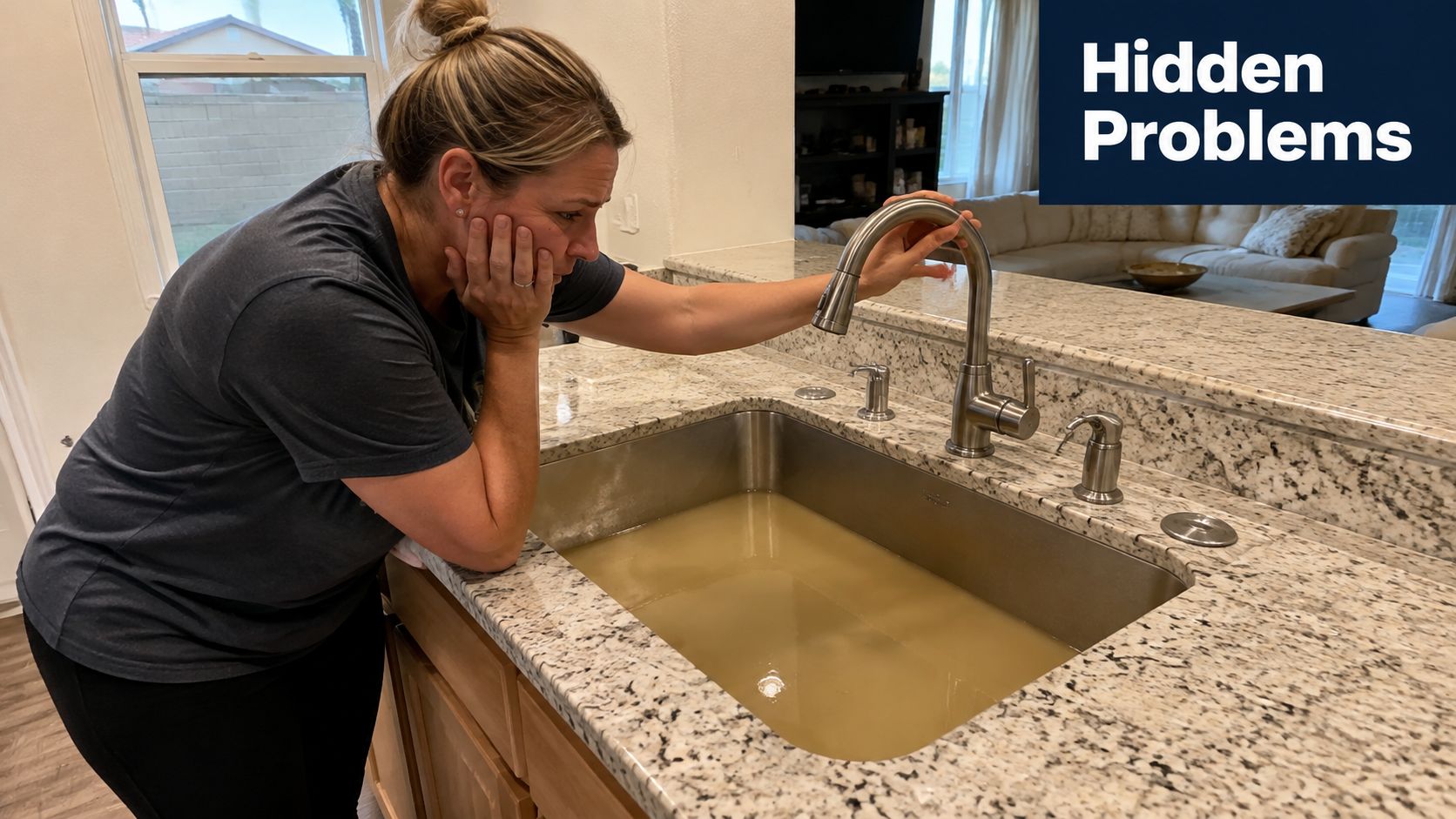
A kitchen sink clears, then backs up again a week later. That's the moment most Las Vegas homeowners realize they're not dealing with a one-off clog, they're dealing with a line that's hiding a bigger problem.
Why repeat drain cleaning stops being enough
If you're in an older Las Vegas neighborhood, especially one with pre-1980s plumbing, recurring clogs often point to cast iron deterioration, root intrusion, or a sagging line that keeps collecting waste. A cable can punch through a blockage, but it can't tell you whether the line is cracking, offset, or settling out of grade. That's why repeated cleaning without a camera inspection fixes the symptom and leaves the cause in the ground.
For homeowners in Las Vegas, Henderson, and North Las Vegas, the big value is clarity. A camera scope can show whether the problem is a single localized blockage or a longer run of damage that needs a bigger plan. That matters before you spend more money on drain cleaning that buys a few weeks, then fails again.
Practical rule: if the same fixture backs up twice, or several fixtures start acting up together, the problem usually deserves a scope instead of another guess.
A sewer camera inspection also helps buyers and sellers avoid surprises. In older homes, hidden sewer defects can sit quiet until a heavy use day, a storm, or a holiday gathering pushes the system past its limit. The inspection gives you a direct look at what's underground before you commit to another cleaning, a repair, or a purchase.
How the Inspection Equipment Works From Your Front Cleanout to the City Tap
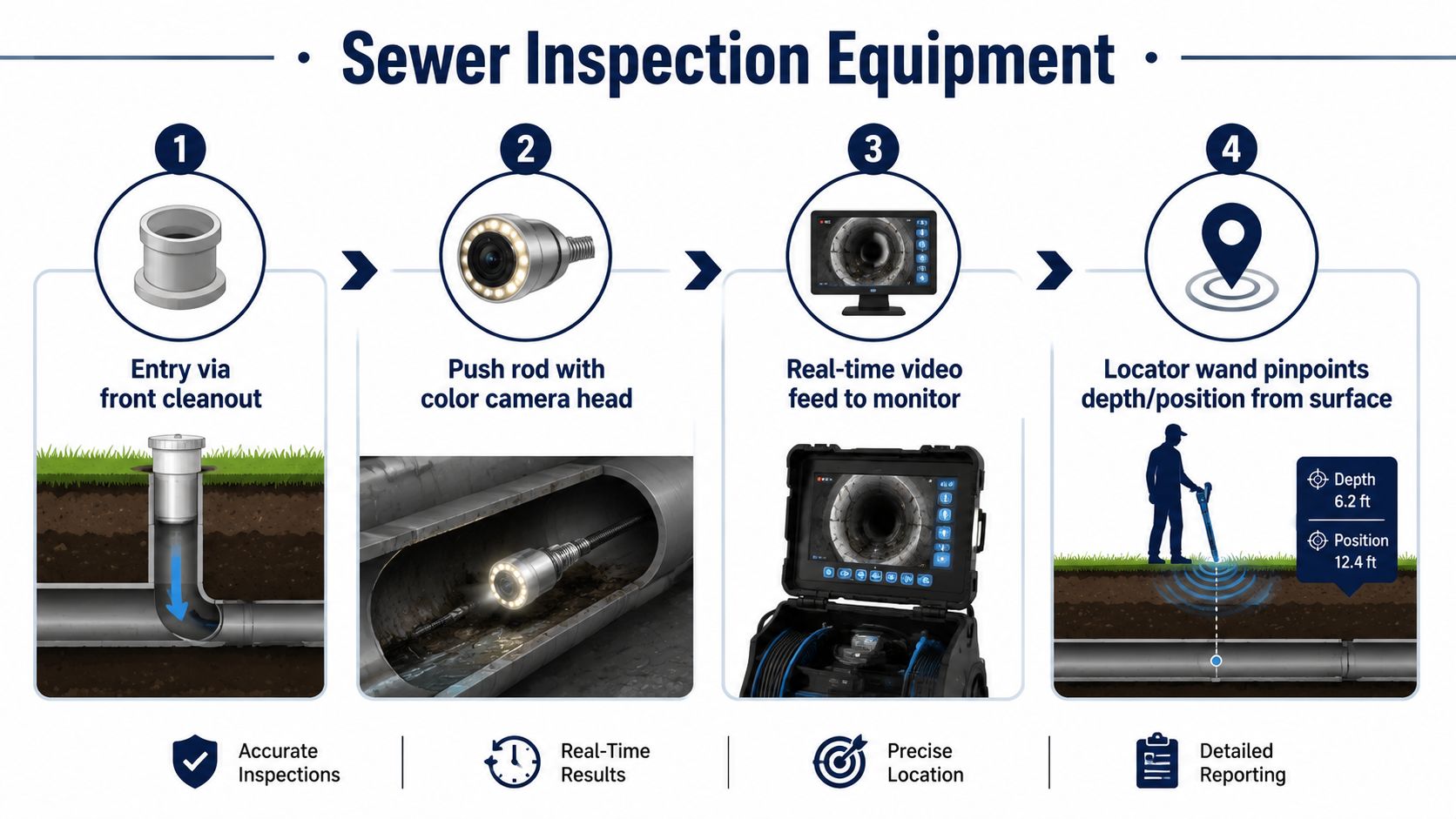
A proper scope starts at an access point, usually the front cleanout if the home has one. From there, a flexible push rod carries a high-resolution color camera head through the line while the plumber watches a live feed and marks what the camera is seeing.
What you're paying for on the job
The screen isn't just a movie. A good system shows distance, lets the technician record footage, and pairs with a locator wand that reads the camera's position from the surface. In practical terms, that helps the plumber mark where the problem sits without digging blind, and it gives the homeowner a record for future repairs or a real estate file.
A usable cleanout gives the best view, but it's not the only access route. If no cleanout exists, technicians may need to pull a toilet or use a roof vent, and that can change how much of the lateral is visible. If the access plan looks awkward, it usually is, because a poor setup limits confidence in the diagnosis.
Most residential scopes are completed in about 45 minutes to 2 hours per industry guidance. During that time, the technician is watching for changes in pipe shape, standing water, cracks, offsets, and places where the camera stops moving normally.
A good inspection doesn't just find a problem, it tells you where the problem is and whether there's enough pipe left to save.
If the footage is being used for a pre-sale decision, ask for the recorded segment and the exact location notes. That's the difference between “there's a problem somewhere” and “here's the section that needs work.”
What Plumbers Look for on the Monitor
On the screen, a sewer line tells a very specific story. In Las Vegas, that story usually comes back to the same handful of failure modes, but each one means something different for the homeowner.
The patterns a plumber flags first
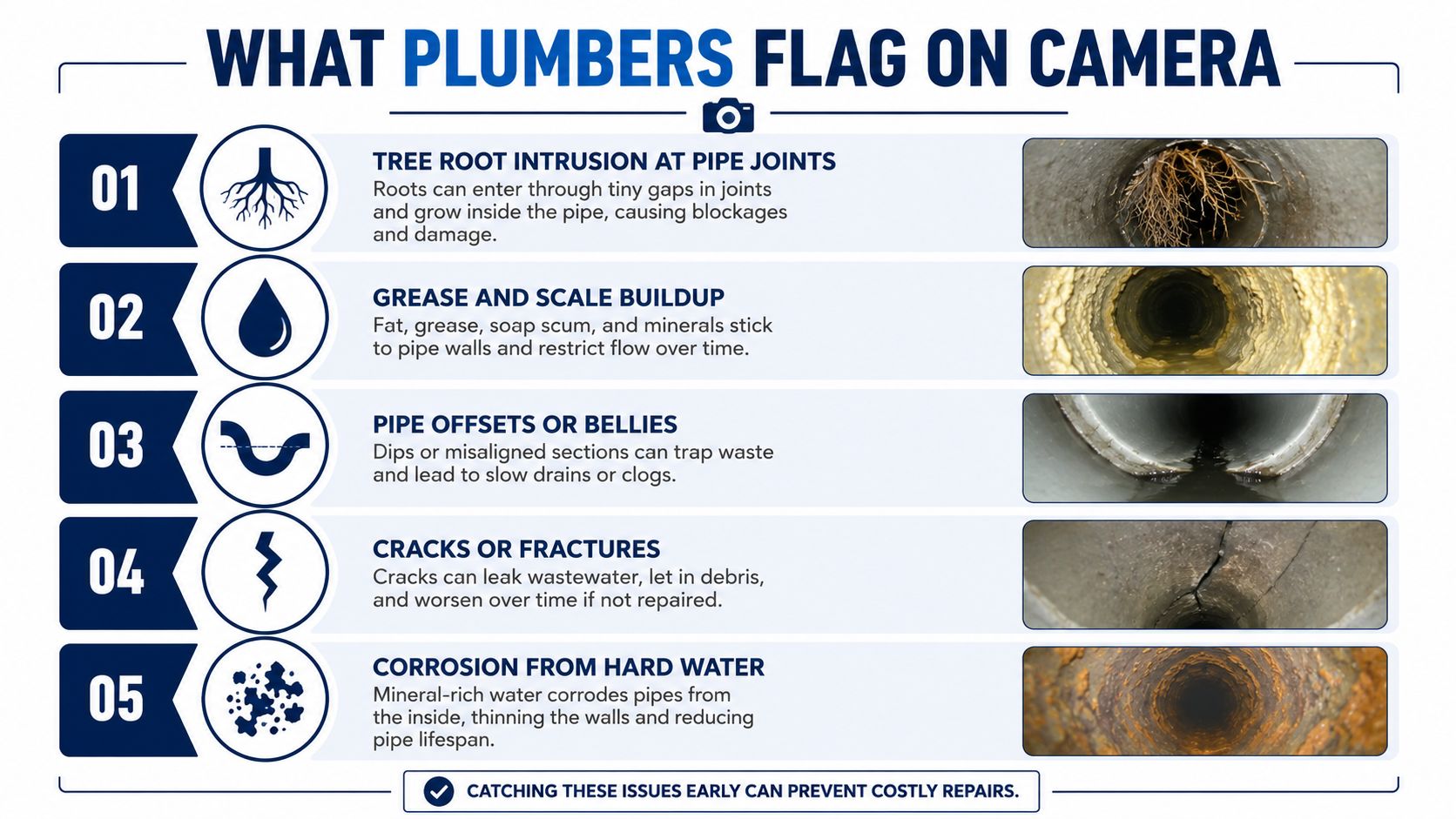
Tree-root intrusion usually shows up at joints or small cracks. On camera, it looks like fine white or dark strands pushing into the pipe, and it often means the line has a weak point, not just a one-time clog. In older Las Vegas neighborhoods with mature landscaping, that can keep happening until the joint or section is repaired.
Grease and scale buildup looks like a narrowed pipe with rough, sticky buildup clinging to the walls. In a city with hard water, scale gives grease a place to hold on, so a line that once flowed fine can start choking itself over time.
Standing water or a belly is easy to spot because the camera sits in a low spot where water doesn't drain away. That can come from soil movement or poor slope, and it's one of the findings that usually pushes the conversation beyond cleaning.
Cracked or fractured pipe appears as breaks, visible splits, or jagged openings in the pipe wall. When the camera catches this, the technician is usually deciding whether the damage is isolated enough for a spot repair or severe enough to replace the section.
Offset or separated joints show up when two pipe ends no longer line up cleanly. That can let waste snag, let roots in, or create a recurring blockage that keeps coming back after service.
Corrosion in older cast iron looks rough, pitted, or flaking. In many older Las Vegas homes, that's not cosmetic, it's a warning that the pipe wall is thinning and the line is trending toward repeat problems.
Partial or full collapse is the most obvious failure on camera, because the line is crushed, blocked, or no longer round. That usually points toward excavation or replacement, not another cleaning.
For homeowners who want a broader background on root behavior, this tree root remover guide is a useful outside reference on how roots invade and why repeated intrusion often means the pipe itself has a defect.
When a Camera Inspection Is Not Enough
A clean video doesn't always mean a healthy sewer line. It only means the line looked serviceable at that moment, from that angle, with that access point.
What the camera cannot tell you
A camera can't see inside a line that's fully blocked, so sometimes the problem area only becomes visible after cleaning or jetting opens the pipe. It also can't measure pipe wall thickness, which matters when old cast iron looks intact but is worn thin. And it won't predict whether a line that looks passable today will fail six months from now.
That's why a visible bellied section needs judgment, not just a clip of footage. A shallow dip might be mostly nuisance buildup, or it might be a slope problem that keeps the same debris trapped no matter how often the line gets cleaned. The same is true with roots, because fresh regrowth often points to an open joint, not just a stray root mass.
For recurring backups, the camera is only one step in the diagnostic chain. If the system keeps backing up after service, plumbers often compare the footage with the home's age, pipe material, and the pattern of use before deciding whether more cleaning will help.
If hydro-jetting is part of the plan, the reason matters. You can read more about the service on the hydro-jetting service page, but the core idea is simple. Cleaning removes buildup. It does not repair a pipe that's failing structurally.
Turning the Findings Into a Repair Decision
The video should point to a repair choice, not just a label on the problem. In Las Vegas, the screen usually sends you down one of a few paths, and the right call depends on how the line looks, where it sits, and how the failure matches the home's age and pipe material.
A simple homeowner decision tree
If the camera shows minor roots or grease, cleaning is usually the first move. On older Las Vegas lines, especially where hard water scale has left the pipe rough, that cleaning often needs to be paired with a maintenance plan so the same buildup does not return right away.
If the screen shows a single cracked section or offset joint, a spot repair may be the practical fix. That can mean excavation or a trenchless repair, depending on depth and access, and access matters more when the bad section sits under a driveway, slab, or tight landscaping.
If the camera shows a belly, severe corrosion, or a collapse, replacement or rerouting becomes the serious option. That usually comes up when the line has more than one weak spot, because patching one defect does not solve a pipe that is failing in multiple places.
| Common Sewer Findings and Typical Las Vegas Response | ||
|---|---|---|
| Finding | Typical Response | Rough Las Vegas Cost |
| Minor grease or root buildup | Hydro-jetting or cleaning | $300 to $1,500 for grease hydro-jetting, per the cited industry source |
| Improper slope or line reroute | Repair planning, sometimes rerouting | $5,000 to $20,000 |
| Undetected sewer damage found after backup | Repair or replacement planning | $7,500 average repair cost for undetected damage, per a cited cost guide |
Las Vegas pricing changes with depth, surface conditions, and whether the pipe runs under concrete, landscaping, or a driveway. Permits and access can shift the final number too, especially on homes with deep burial or a narrow excavation path. For excavation planning, see our guide to residential excavation for homeowners, which helps explain why access conditions change the scope of the job.
For homeowners weighing repair options, a sewer camera inspection is still a modest decision point compared with the damage it can prevent. Independent pricing guides put the U.S. average at about $996, with a typical homeowner range of $271 to $1,727, while standard camera inspections often run $150 to $300 per the cited cost guide. In Las Vegas, residential pricing is commonly reported around $200 to $350 for a standard inspection.
Why Las Vegas Sewers Keep Failing After a Cleaning
A sewer can look clear on the camera right after service and still fail again a few weeks later. In Las Vegas, that usually means the line is carrying more than one problem, hard water scale roughens the pipe, grease clings to that rough surface, and root hairs find weak joints or hairline openings.
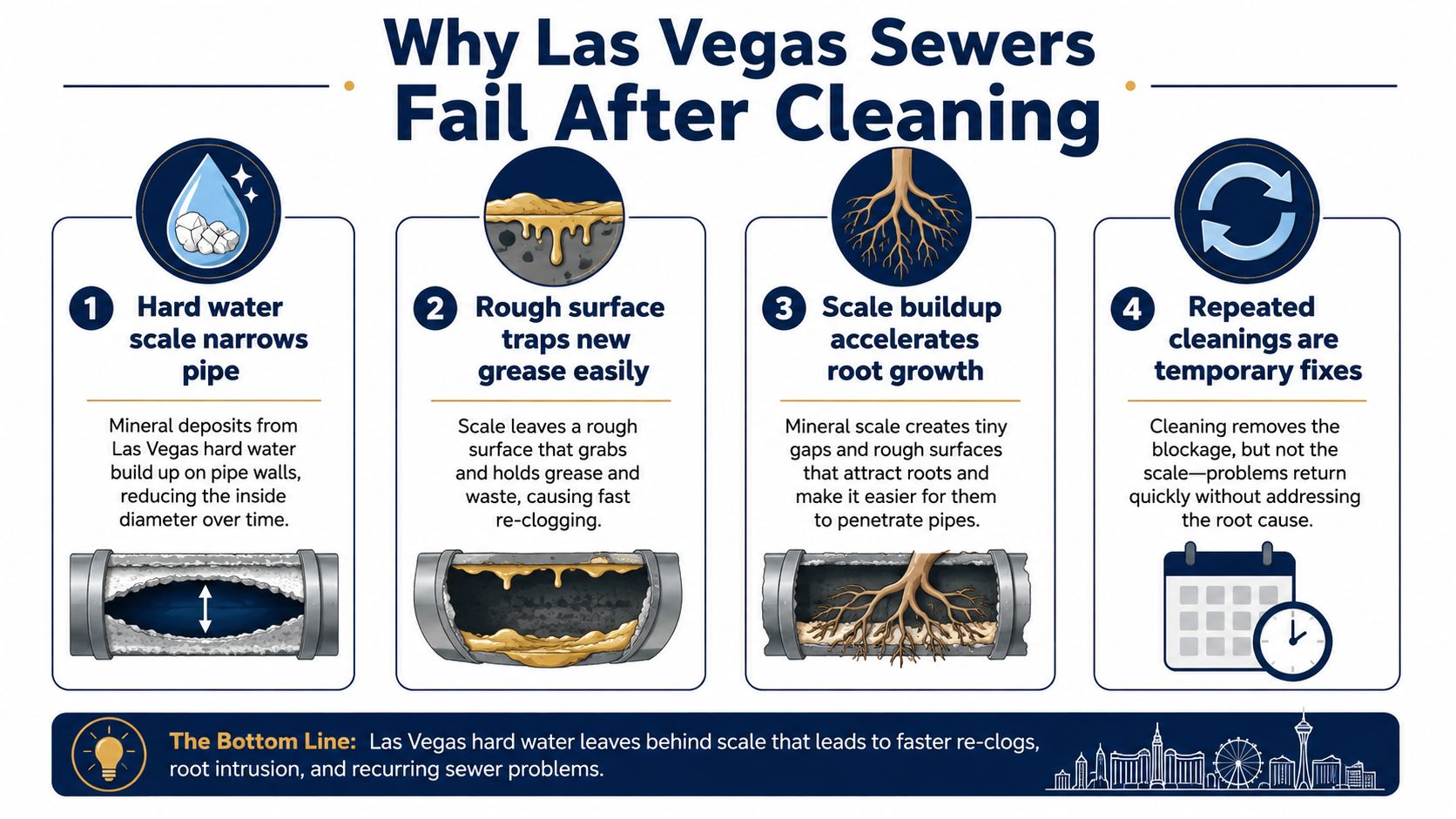
The local failure loop
On the monitor, this shows up as a line that drains better after cleaning, then starts collecting debris again because the pipe wall never returned to smooth. The water moves, but the camera still shows scale, pitting, offset joints, or root intrusion waiting to catch the next buildup. In older Las Vegas homes, especially in Henderson, North Las Vegas, and older Summerlin-adjacent neighborhoods, I see that pattern often enough to treat a cleanout visit as a pause, not a finish.
Field reality: if a line has scale, roots, and old cast iron all working together, cleaning only resets the clock. It doesn't change the pipe's condition.
What matters next is how the footage gets read. A line with light buildup may only need maintenance cleaning, but a line with heavy scale, repeated root intrusion, or broken cast iron needs a repair plan before the same blockage returns. For a house with recurring grease or residue, our drain cleaning Las Vegas page helps with the service side of the problem, but the camera still tells you whether cleaning is enough or whether the pipe is too far gone for another round.
That is why a camera inspection after cleaning is useful in Las Vegas. The technician is not just checking whether the clog is gone, he is looking at whether hard water buildup, aging pipe material, and landscaping roots have already set up the next backup. per the cited Las Vegas-focused source
When to Call MG Drain Services LLC for a Las Vegas Sewer Scope
Call a licensed plumber when the same fixture backs up again, when multiple fixtures slow down at once, or when sewage shows up at the cleanout or in the yard. Pre-purchase and pre-listing inspections also make sense on older homes, especially those built before 1985 in Las Vegas, Henderson, North Las Vegas, or Summerlin.
MG Drain Services LLC is a licensed and insured, family-owned Las Vegas company with experienced journeyman plumbers, fast response times, transparent pricing, and bilingual English and Spanish service. A sewer scope gives you the footage and a written recommendation, not a guess.
Call 702-480-8070 or visit mgdrainservices.com to book a sewer camera inspection in Las Vegas and get a clear read on what's happening in your line.
If you're dealing with recurring backups or buying an older home in Las Vegas, MG Drain Services LLC can inspect the sewer line, explain the footage, and recommend the right next step. Visit MG Drain Services LLC to book service, or call 702-480-8070 and get a real diagnosis before you spend money on the wrong repair.