If you're dealing with a gurgling toilet, a shower that backs up when the washer drains, or a sewer smell that won't leave the house, you're probably searching for sewer line cleaning near me because the problem has moved beyond a simple sink clog. In Las Vegas homes, that usually means the main line needs real diagnosis, not another bottle of drain cleaner.
Homeowners in Las Vegas, Henderson, and North Las Vegas often wait too long because the symptoms come and go at first. Then one day the lowest drain in the house fills with sewage, and now it's an emergency. The right fix depends on what's inside the pipe: grease, wipes, hard water scale, root intrusion, or pipe damage.
Your Guide to Sewer Line Cleaning in Las Vegas
A main sewer problem feels different from an ordinary drain clog. One fixture acts up, then another. You flush a toilet and hear the tub talk back. You run the kitchen sink and the bathroom starts gurgling. That's when homeowners stop searching for a quick drain opener and start looking for a plumber in Las Vegas who can tell them what's really happening underground.
In this valley, sewer issues often build slowly. Las Vegas homes deal with heavy daily use, aging sections of piping in some neighborhoods, root intrusion around buried lines, and mineral buildup that narrows pipe walls over time. A clog that seems random usually isn't random at all. It has a cause, and the best repair starts with identifying that cause before anyone starts cutting, snaking, or jetting.
Practical rule: If more than one drain is affected, treat it like a main sewer issue until proven otherwise.
Good sewer work isn't just about getting water to move for a few hours. It's about restoring function, confirming the line is clear, and reducing the chance you'll be dealing with the same backup again next month. For homeowners and property managers, that's the difference between a temporary opening and a real solution.
Warning Signs You Need Professional Sewer Cleaning
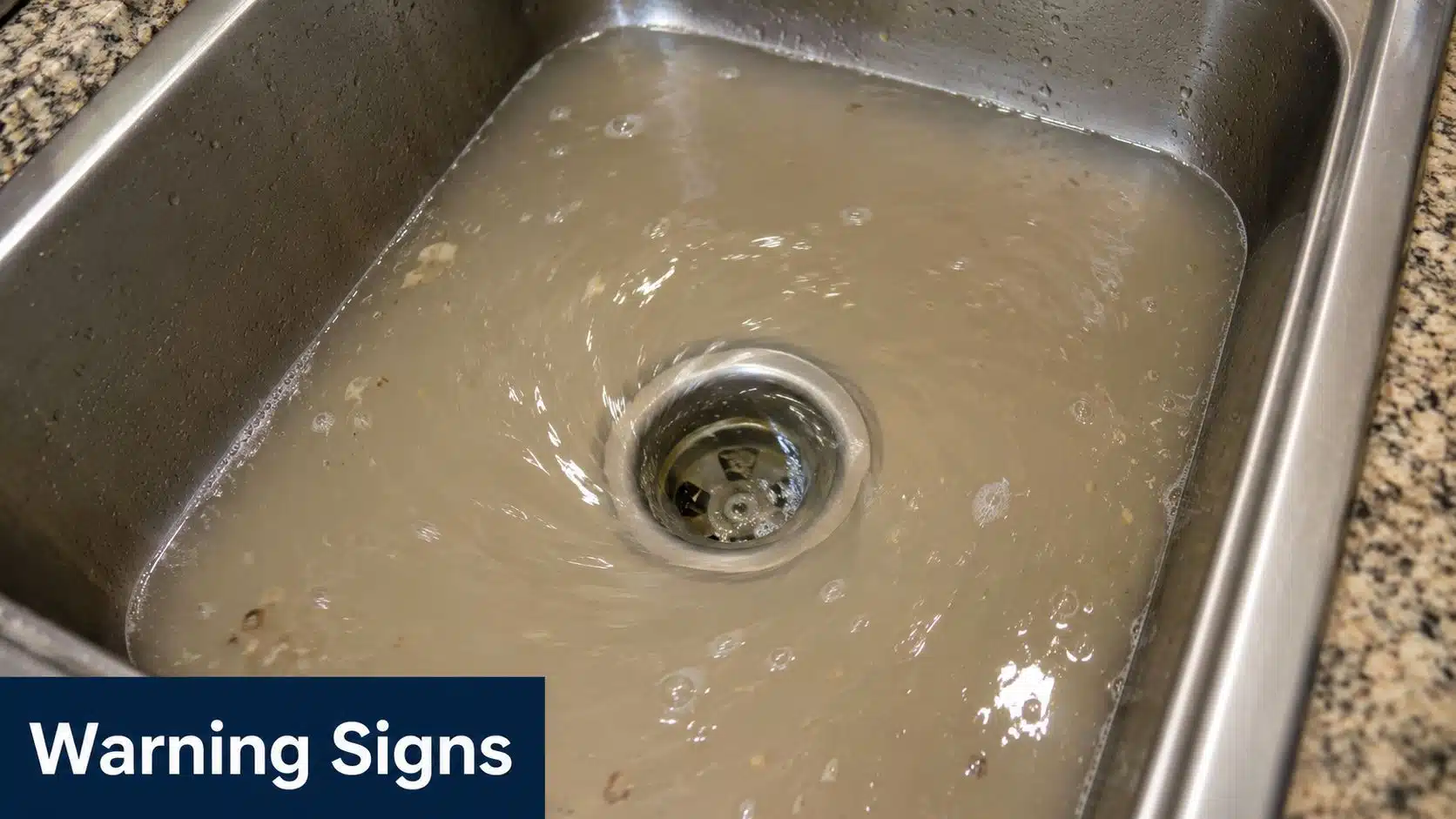
The biggest mistake homeowners make is treating a main line problem like a single clogged fixture. A sewer line usually gives warning before it fully blocks. The signs matter because they tell you where the problem probably is.
Multiple fixtures are acting up
If the kitchen sink is slow, that could be a local drain clog. If the kitchen sink is slow and the shower backs up and a toilet bubbles, that's a different conversation. Wastewater from several fixtures shares the main line. When that line narrows or blocks, the whole house starts showing symptoms.
This is one of the clearest signs that DIY won't get you far. Homeowners often clear one branch line and think they solved it, but the backup returns because the obstruction is farther downstream.
Gurgling means trapped air
A toilet that gurgles when another fixture drains isn't just being noisy. Air gets displaced inside the drainage system when water tries to move past a blockage. If the sewer line can't breathe and flow correctly, you hear that air escaping through nearby fixtures.
Common examples include:
- Toilet gurgling after sink use: Pressure is moving through the system instead of wastewater moving cleanly through the pipe.
- Tub or shower noise during a flush: The main line may be partially obstructed, forcing air and water to seek the path of least resistance.
- Intermittent bubbling: A partial clog is often worse than a complete one because it tricks people into waiting.
Odors and backups need fast action
A persistent sewer odor inside or outside the home usually means waste isn't moving out as it should. Sometimes the line is holding debris. Sometimes sewage is sitting in a low spot. Sometimes roots or scale are catching waste and creating a repeating blockage.
The most urgent sign is sewage appearing in a floor drain, shower, or tub. Those lower fixtures usually show the problem first because wastewater backs up to the lowest opening. At that point, the job isn't about convenience. It's about sanitation, property damage, and getting the system under control before the mess spreads.
If sewage comes up in the shower or floor drain, stop using water in the house until a plumber checks the line.
Common Causes of Sewer Clogs in Las Vegas Homes
Sewer clogs don't usually start with one dramatic event. Most of the time, homeowners are looking at years of buildup or an outside condition that kept getting worse. In Las Vegas, a few causes show up again and again.
Grease, wipes, and everyday buildup
Kitchen grease is one of the most common offenders. It goes down warm, cools inside the line, and starts catching food particles and sludge. Over time, the inside diameter of the pipe gets smaller and smaller. Then one heavier-use day pushes it over the edge.
Wipes are another problem. "Flushable" on the label doesn't mean friendly to your sewer line. They snag, twist together, and collect debris. The same goes for paper towels, hygiene products, and anything else that doesn't break down fast.
Tree roots and buried pipe joints
Roots don't need a broken pipe to become a problem. A small opening at a joint can be enough. Once roots find moisture, they grow into the line and start trapping paper, waste, and grease. Homeowners are often surprised by this in desert landscaping, but roots follow water wherever they can find it.
Hard water also matters in the Las Vegas Valley. Mineral scale can build along the interior of older piping, especially where flow isn't ideal. That rough surface catches more debris, and the line gets progressively less efficient.
A useful way to think about it is this: city sewer systems are massive and require constant monitoring because blockages can affect long pipe networks. Spartanburg Water describes a wastewater collection system with 940 miles of sewer line and says its sewer-emergency line is answered 24 hours a day at its sewer emergency and disruptions page. On a smaller scale, your home's service line works the same way. A neglected blockage doesn't stay neatly contained.
Rental homes and recurring use patterns
Property managers and landlords see another version of this problem. A line may work acceptably for months, then fail under heavier use or after a turnover. If you're managing a rental, sewer maintenance belongs in the bigger picture of property care. A practical resource is this annual rental property upkeep plan, especially for owners trying to stay ahead of expensive surprise repairs.
Here are the causes I tell homeowners to take seriously:
- Slow accumulation: Grease, soap residue, paper buildup, and food solids rarely cause trouble on day one.
- Intrusion from outside: Roots exploit weak points and turn a minor pipe opening into a major stoppage.
- Pipe wall restriction: Hard water scale makes the pipe rougher and narrower, which invites recurring clogs.
Professional Sewer Cleaning Methods Explained
Professional sewer work should follow a sequence. Guessing wastes time and money. The most reliable workflow is camera inspection first, then targeted cleaning, then re-inspection, with the goal of restoring the sewer to at least 95% of its original condition or cross-sectional capacity according to Brewer Sewer's guidance on sewer line cleaning.
Camera inspection before cleaning
A color sewer camera shows whether you're dealing with grease, wipes, roots, heavy scale, or a damaged section of pipe. Without that step, a homeowner can pay to clear a line that really needed a different approach from the start.
A good inspection answers practical questions:
- Where is the blockage?
- What is the blockage made of?
- Is the pipe structurally sound enough for aggressive cleaning?
- Did the cleaning solve the full problem?
If you want a closer look at that process, this guide on when to schedule a sewer camera inspection near you helps explain what plumbers are looking for and why.
Mechanical snaking and rooter service
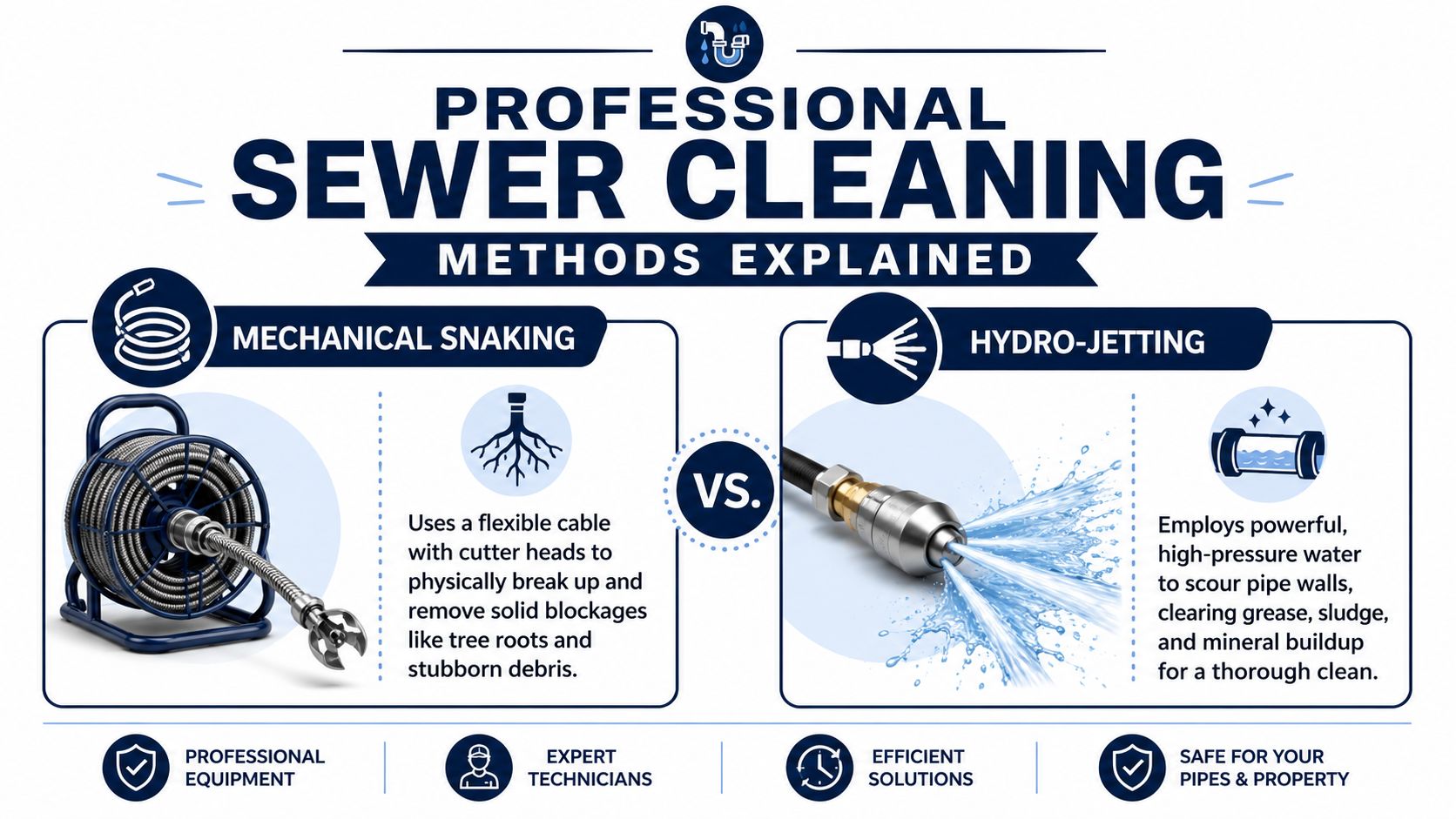
Snaking has a place. A cable machine with the right head can break through a stoppage and restore flow. For a localized obstruction, that's often enough. If the line is packed with soft blockage or a small wad of roots, a rooter service may reopen the pipe quickly.
But snaking usually creates a path through the clog. It doesn't always clean the full pipe wall. Imagine punching a hole through packed snow so you can walk through. You have a path, but the sides are still there.
Hydro jetting for deeper cleaning
Hydro jetting is what plumbers use when the job isn't just "open the line" but "clean the line." Municipal cleaning specifications describe equipment with two or more high-velocity nozzles creating a 15° to 45° scouring action that scrubs the pipe wall and removes grease, sand, rocks, and other obstructions, as noted in Blue Works' sewer line cleaning specifications.
That matters for recurring sewer trouble in Las Vegas homes. Grease layers, sludge, root debris, and mineral residue can all survive a basic cable pass. Water jetting and vacuum-based removal are designed to extract material, not just disturb it.
A sewer line that "drains for now" is not the same as a sewer line that has been properly cleaned.
For homeowners comparing options, the trade-off is straightforward:
| Method | Best use | Limitation |
|---|---|---|
| Camera inspection | Finds the exact problem before work starts | Doesn't clear the blockage by itself |
| Mechanical snaking | Opens many clogs fast | May leave buildup on pipe walls |
| Hydro jetting | Removes hardened residue and recurring buildup | Needs the right diagnosis and a pipe condition check first |
For local service, plumbers may use a cable machine, a sewer camera, or hydro jetting depending on what the line shows. Companies such as MG Drain Services LLC provide those tools in Las Vegas for main line diagnosis and cleaning, which is the type of equipment-based approach homeowners should be asking about instead of requesting a generic unclogging.
Understanding Sewer Line Cleaning Costs in Las Vegas
Most homeowners don't want a broad promise. They want to know what they're likely paying for, and why one sewer job costs far more than another.
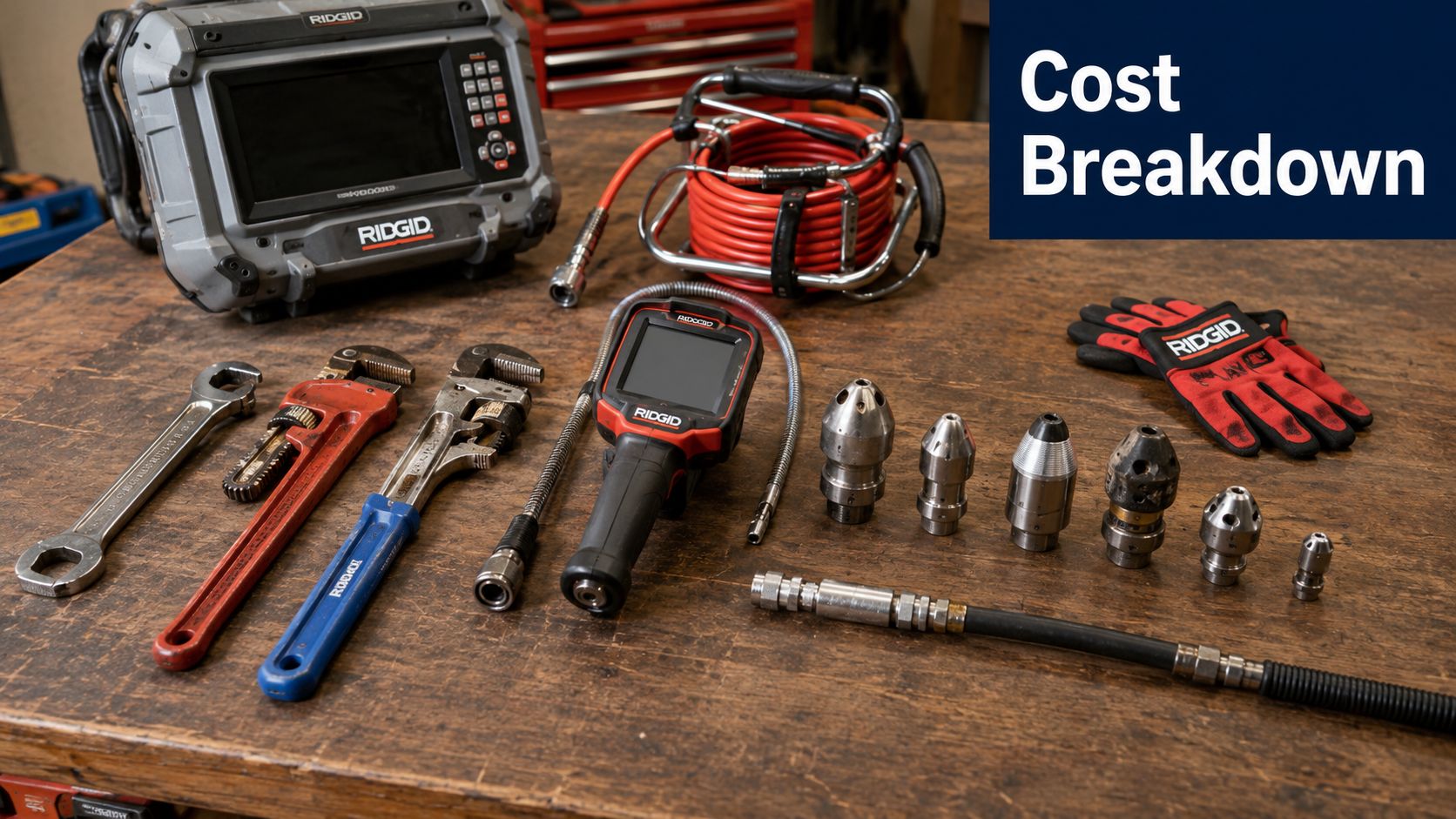
A simple main sewer line snake is reported by Angi at about $250, while more severe unclogging work averages about $3,100, and specialists may charge $45 to $200 per hour according to Angi's sewer cleaning pricing guide. That spread is exactly why diagnosis comes first. "Sewer cleaning" can mean a straightforward cable clearing, or it can mean a much more involved job with heavy blockage, repeated passes, inspection, and condition-related complications.
What changes the price
A Las Vegas sewer cleaning quote usually depends on factors like these:
- Severity of the blockage: A partial obstruction is different from a line that's fully backed up with sewage at the lowest fixture.
- Access to the cleanout: Easy access saves labor. Buried, obstructed, or inconvenient access changes the job.
- Method required: Snaking, camera inspection, and hydro jetting are not the same service.
- What the camera finds: Roots, heavy scale, or damaged piping can move the job from cleaning into repair planning.
For more detail on the value side of jetting versus simpler clearing, this article on the cost of hydro jetting plumbing is worth reading before you approve work.
Price versus value
The cheapest option is only cheaper if it solves the problem. If a low-cost cable pass opens a small pathway and the line backs up again, you've paid twice and lost time. If a camera inspection shows a line packed with buildup, paying for deeper cleaning can save money compared with repeat service calls and water damage cleanup.
Cost question to ask first: Are you pricing a temporary opening, or are you pricing diagnosis plus a real cleaning?
Why DIY Methods Fail on Main Sewer Lines
DIY makes sense for some household problems. A main sewer line usually isn't one of them.
Chemical drain cleaners are a poor match for sewer stoppages. They don't remove roots. They don't scrub scale. They don't pull wipes or heavy sludge out of the pipe. In some situations, they leave caustic liquid sitting in the line while the actual blockage stays put. Then the plumber has to work around that chemical exposure.
Consumer-grade hand snakes have limits too. They may help at a bathroom sink trap or a short branch line, but a main sewer clog often sits farther out and contains more than soft debris. A small store-bought cable rarely has the reach, power, or cutting capability needed for a serious line obstruction.
Recurring backups are the biggest clue that DIY is missing the underlying issue. As noted by Samco Plumbing's hydro jetting page, repeated sewer problems can point to root intrusion, grease buildup, or pipe-condition issues that need more advanced work such as hydro jetting or descaling. That's the practical line homeowners need to draw. If the same symptom keeps coming back, stop treating it as a simple clog.
A professional call at that point isn't giving up. It's choosing diagnosis over guesswork and protecting the house from a much dirtier failure.
Your Trusted Local Plumber in Las Vegas
A sewer problem in Las Vegas rarely stays small for long. A line that starts with a slow shower drain on Friday can turn into a ground-floor backup by the weekend, especially in older neighborhoods where hard water scale has already narrowed the pipe or roots have found a weak joint.
Homeowners need a plumber who understands those local conditions and shows up ready to diagnose the problem correctly. That means licensed and insured technicians, clear pricing before work starts, and equipment that matches the job instead of forcing a one-size-fits-all cleaning approach. In Las Vegas, Henderson, and North Las Vegas, that local experience matters because the right fix depends on whether the blockage is grease, scale, roots, or a damaged section of pipe.
If you're dealing with slow drains, recurring backups, sewer odors, or signs of a main line clog, call 702-480-8070 to book service with MG Drain Services LLC. The company serves the Las Vegas Valley, provides transparent quotes, and offers bilingual support. Early service usually costs less and creates less disruption than waiting for sewage to come back into the house.
Frequently Asked Questions About Sewer Cleaning
How often should a sewer line be cleaned?
There's no one schedule that fits every home. It depends on the age of the pipe, whether roots are present, how often the line has clogged before, and what goes down the drains. Homes with recurring issues, heavy kitchen use, or older sewer lines usually benefit from preventive inspection and maintenance instead of waiting for a backup.
Is hydro jetting safe for older pipes?
Sometimes yes, sometimes no. That's why the line should be inspected first. A plumber needs to see whether the pipe is sound enough for high-pressure cleaning. When the pipe is in suitable condition, hydro jetting can clean much more thoroughly than a basic cable pass. The equipment uses specialized nozzles with a 15° to 45° scouring action that scrub pipe walls and remove hardened buildup more effectively than mechanical snaking alone, as described in the earlier technical reference.
How do I know if it's a drain clog or a main sewer line clog?
A single slow fixture usually points to a local drain problem. Multiple fixtures clogging together, gurgling toilets, sewage showing up in a tub or shower, or backups that affect the lowest drains in the home usually point toward the main sewer line. If several symptoms show up at once, treat it like a sewer issue and stop adding water to the system until a plumber checks it.
MG Drain Services LLC provides a practical answer to sewer line cleaning near me in Las Vegas, helping with sewer diagnostics, drain cleaning, hydro jetting, and main line service throughout Las Vegas, Henderson, and North Las Vegas. Call 702-480-8070 to schedule service with a licensed and insured local plumbing team that offers honest pricing, experienced technicians, fast response times, and bilingual support.