A tankless water heater makes sense for many Las Vegas homes, but only if the unit is sized right, the gas line and venting can support it, and you're willing to descale it every 6 months because of our hard water. For a home using 41 gallons or less per day, the U.S. Department of Energy says tankless can be 24%–34% more energy efficient than a conventional tank, but that advantage gets a lot smaller in bigger-use households.
You're probably standing in the garage right now looking at a tired tank that's making noise, taking up space, and wondering if it's time to spend real money on a better setup. That's the right question, because in Southern Nevada the answer isn't just about utility bills. It's about hard water, retrofit work, and whether your house can support the swap without creating a new problem.
Why Las Vegas Homeowners Are Asking This Question Right Now
A lot of homeowners start this search when the old tank heater is already acting up. It might be rumbling, slow to recover, or leaking just enough to make you nervous every time you walk through the garage. At that point, tankless water heater Las Vegas searches usually happen fast, because nobody wants to sign off on a big install without knowing if the math makes sense.
The honest issue is that tankless is never a simple like-for-like swap. A tank heater stores hot water and keeps reheating it all day, while a tankless system only heats water when you open a tap. That sounds cleaner on paper, but the actual decision in this market depends on usage pattern, water hardness, and retrofit cost, not just the promise of endless hot water.
Practical rule: if a plumber doesn't ask about your gas line, venting, and household peak demand before talking price, you're not getting a real recommendation yet.
Homeowners also tend to assume three things. First, tankless always lowers the bill. Second, it lasts longer. Third, it solves hot water complaints forever. Those ideas are partly true, but not uniformly true in Las Vegas. The savings are strongest in smaller-use homes, the lifespan depends heavily on maintenance, and the endless-hot-water claim only holds when the unit is sized correctly for simultaneous demand.
That's why a proper diagnosis matters before you touch the wallet. A proper plumber is going to look at the whole setup, not just the heater cabinet. If you're also chasing a leak, a pressure issue, or signs of hidden water damage, a broader inspection like water leak detection can keep you from replacing one appliance while missing the core problem.
How a Tankless System Actually Works
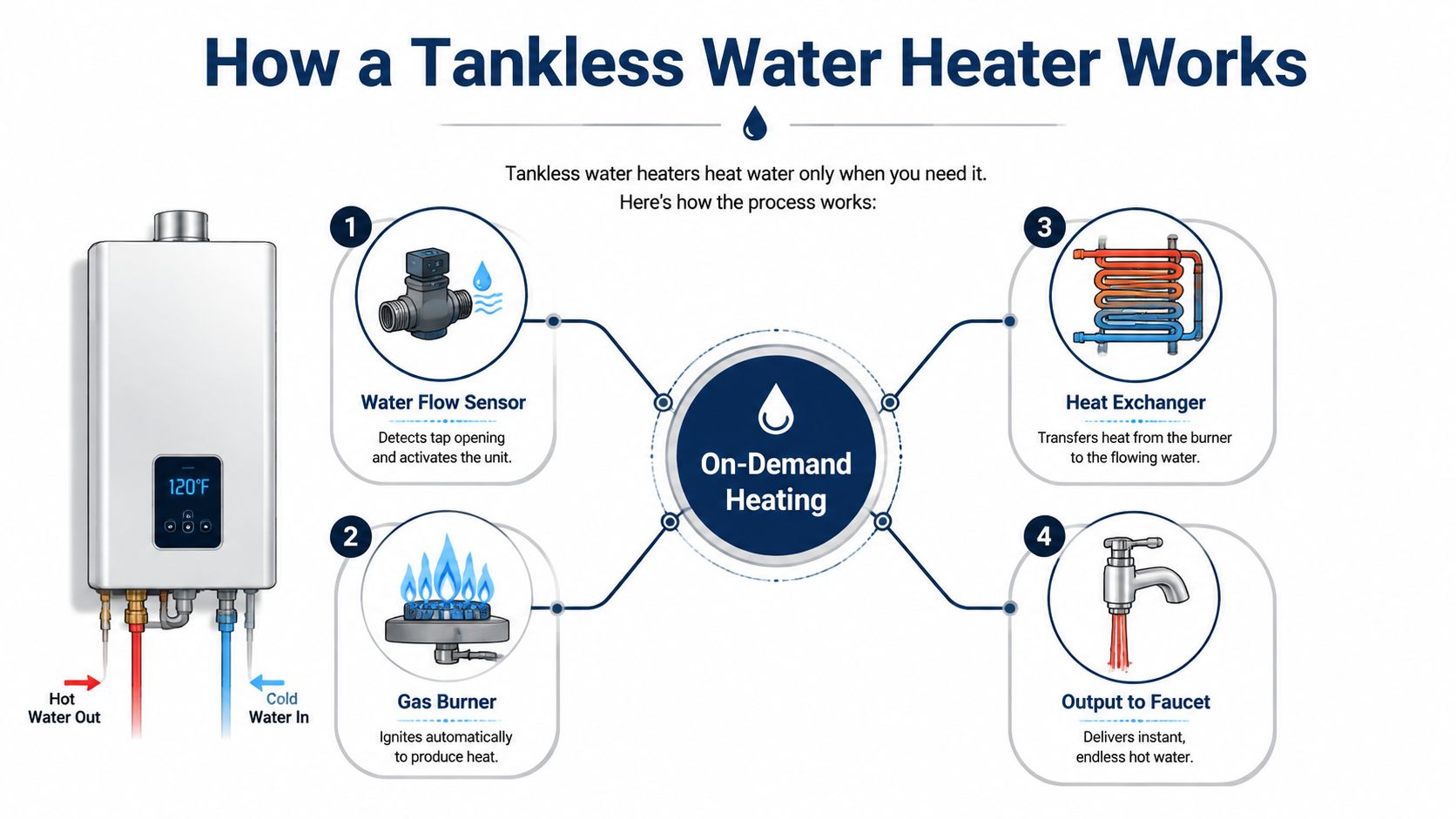
A tankless unit doesn't keep a reservoir of hot water sitting there all day. It waits for flow, senses that someone opened a faucet, and fires the burner or heating element so water gets hot as it moves through the unit. That's the whole trick, and it's why tankless avoids the standby heat loss that a storage tank can't escape.
The parts that matter
A gas tankless system is built around a water flow sensor, a gas burner, and a heat exchanger. The sensor tells the unit water is moving. The burner fires. The heat exchanger transfers that heat to the water, then sends it to the faucet. That design is also why many modern gas tankless units post UEF values around 0.87 to 0.97 in current product and standards coverage, because the system isn't wasting energy maintaining a full tank all day.
Wall mounting is another reason people like the upgrade. Tankless units are physically smaller and usually free up floor space in a closet, garage, or utility area. In a city where a lot of residential utility spaces are tight, that's a real benefit. But smaller doesn't mean simpler.
The install still has to support the unit's needs. Gas models need proper venting and enough fuel supply. Condensing units often need condensate drainage. The controls need power. If any of that is off, the heater can be efficient on paper and disappointing in the house.
A lot of homeowners compare only the box size and miss the system behind it. That's the wrong way to shop. The unit is the easy part. The plumbing, venting, and gas infrastructure are what decide whether the upgrade feels smooth or turns into a retrofit project.
Energy Savings, Lifespan, and Installed Cost
Las Vegas homeowners ask this question for a reason. The promise of lower utility use sounds good, but the decision turns on what your house can support and how much upkeep you are willing to own after the install. In Southern Nevada, hard water and retrofit costs matter more than the glossy efficiency pitch.
The basic comparison is simple. Tankless can use less energy in the right home, last longer when it is maintained, and cost more to install up front because the job often depends on the existing plumbing, gas line, and venting.
| Factor | Tank-Style Heater | Tankless Water Heater |
|---|---|---|
| Energy efficiency in low-to-moderate use homes | Standard storage tank performance | 24%–34% more efficient for homes using 41 gallons or less per day |
| Energy efficiency in higher-use homes | Standard storage tank performance | About 8%–14% gain for homes using around 86 gallons per day |
| Typical annual utility savings | Lower savings potential | Roughly $80–$200 or $100–$200+, depending on the home and source estimate |
| Typical lifespan | Often 6–10 years, and one Las Vegas-focused source notes 6–8 years in hard-water conditions | About 15–20+ years with proper maintenance |
| Installed cost | Lower upfront cost | Roughly $1,400–$6,300+ depending on retrofit needs |
That table is the part a homeowner should read. If you are replacing a like-for-like setup and the house already has the right gas supply and venting, the job stays closer to the lower end. If the install needs corrections to gas, venting, or space planning, the bill climbs fast. For a practical starting point, use MG Drain Services cost estimates before you sit through a sales pitch.
The lifespan difference is real, but it only helps if the system is maintained and the water conditions do not beat it up early. A tankless heater can stay in service longer than a tank, yet that does not turn it into a quick payback. It is a long-term buy, not a shortcut for this month's bill.
Las Vegas water also changes the maintenance math. Hard water shortens equipment life, so a tankless unit that is ignored will lose performance before it fails outright. If you want a more realistic maintenance approach for local water conditions, follow the Water Filter Advisor recommendations and plan the upkeep before you buy.
Bottom line: tankless makes sense when the house can support it, the homeowner accepts regular maintenance, and the install does not trigger expensive gas, venting, or layout work.
The Hard Water Problem Most Articles Skip
Las Vegas water is hard enough to change the whole conversation. One local source cites 16 to 20+ grains per gallon, and that level of mineral load matters more than most sales pitches want to admit. Hard water doesn't just leave spots on fixtures. It leaves scale inside equipment.
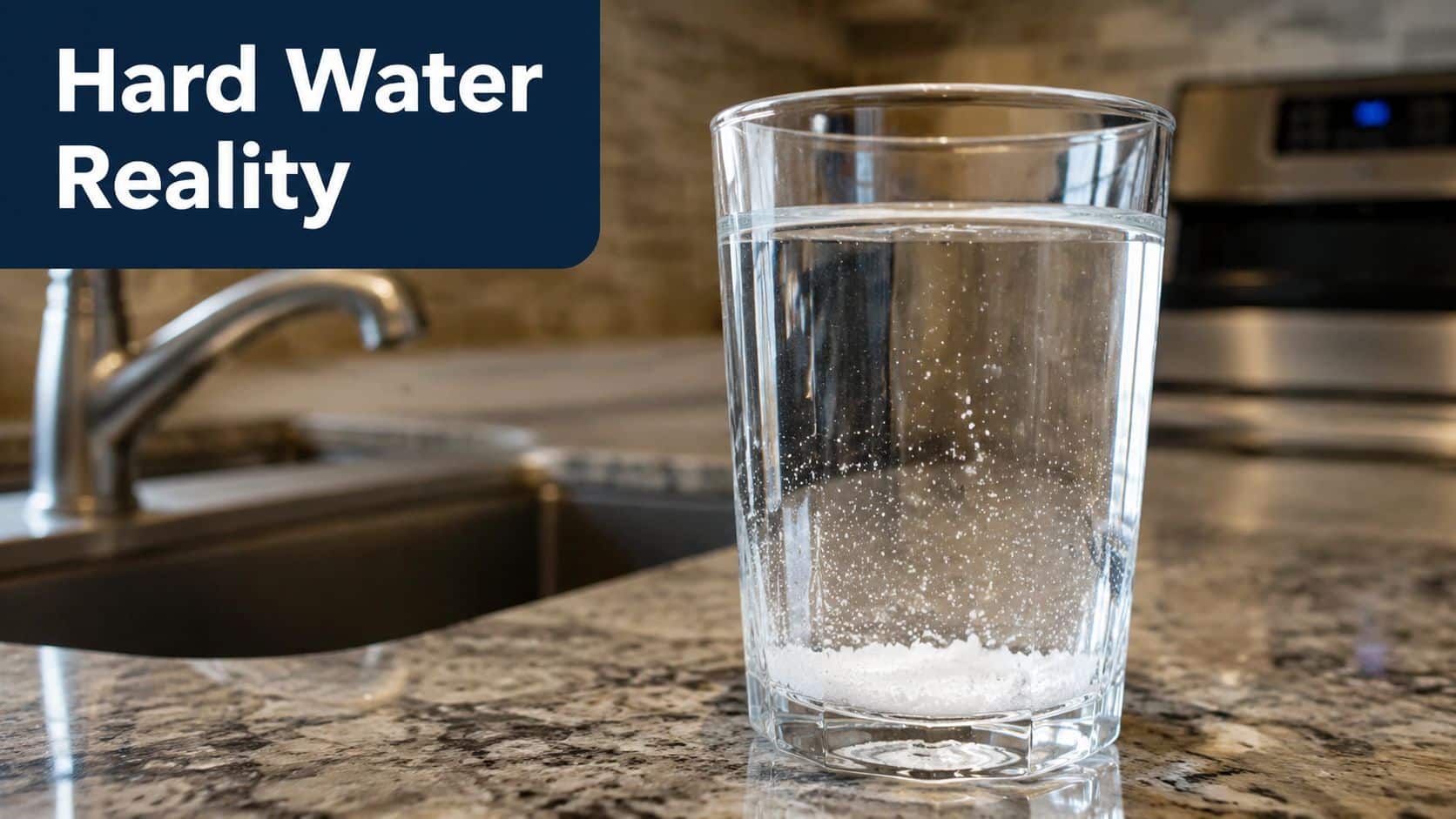
Inside a tankless heat exchanger, scale narrows the flow path and insulates the metal from the water it's supposed to heat. That means less heat transfer, weaker flow, and eventually error codes or shutdowns if the buildup gets bad enough. A tank style heater can often absorb years of abuse before it gives up. A tankless unit is more sensitive because the passageways are smaller and the heat exchanger is doing all the work.
What descaling actually is
Descaling is a service flush, usually done with a pump circulating a cleaning solution through the unit to remove mineral buildup. In hard-water homes, that often needs to happen every 6 months, not once a year. If you skip it, the unit may still run for a while, but performance slips first. Hot water slows down. Flow drops. Then the homeowner calls because the “new” heater already feels old.
A whole-house water softener changes the conversation. Reducing the mineral load before it reaches the heater reduces the amount of scale the unit has to fight. That's not a luxury in this market, it's part of the decision. If you're comparing treatment options, Water Filter Advisor recommendations are a useful place to read through the broader water-quality side of the issue.
The mistake I see most often is treating descaling like optional maintenance. It isn't. In Las Vegas, skipping it is how homeowners end up regretting the upgrade. The better question isn't whether tankless can save energy. It's whether it still makes sense after you add softening, descaling, and service costs in a very hard-water market.
Sizing Venting Gas Lines and the Retrofit Reality
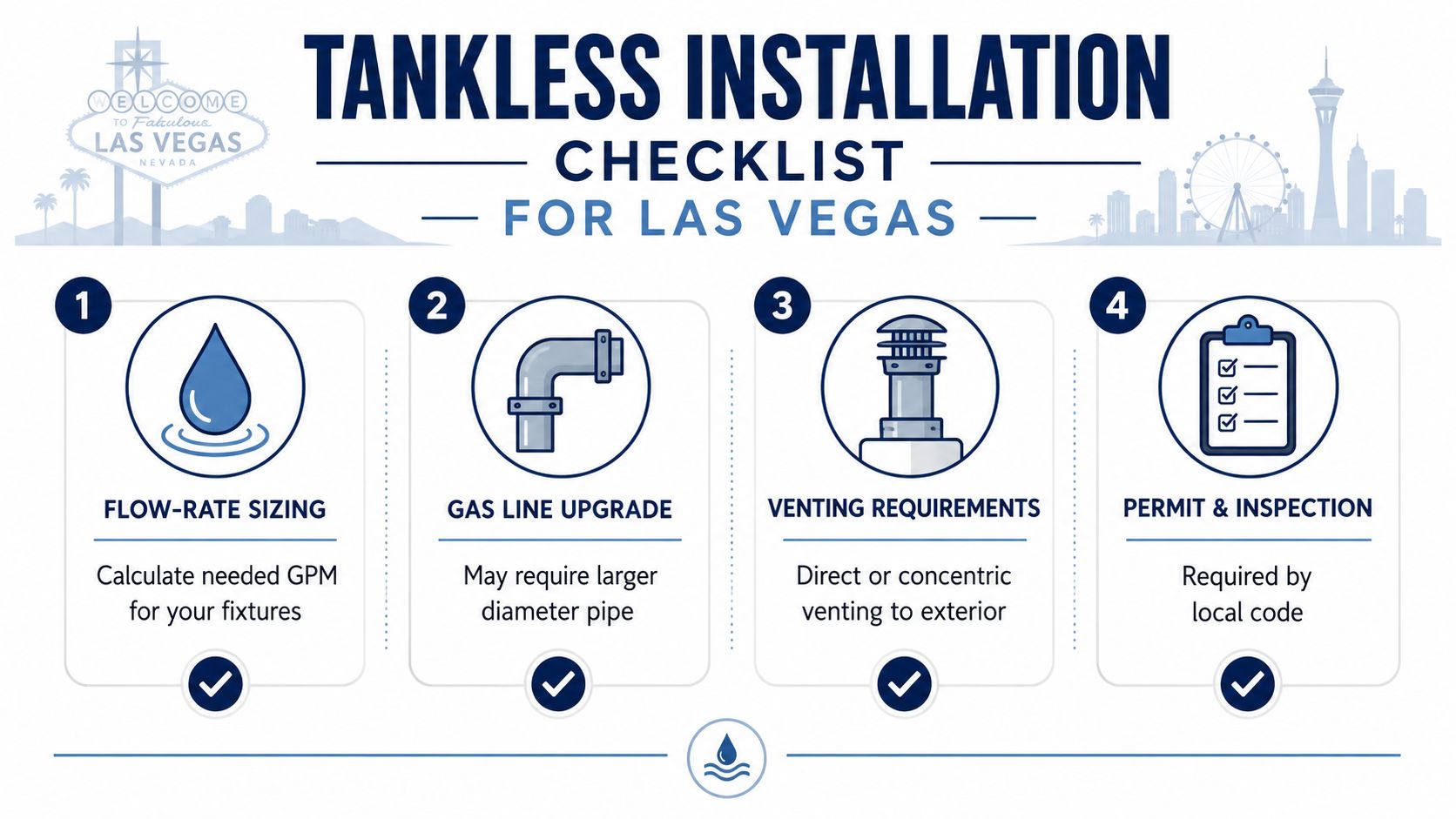
A proper tankless install starts with sizing, not with shopping for a pretty model. Tankless units deliver a fixed flow rate at a given temperature rise, and that matters a lot in a desert climate. In winter, when incoming water is cooler, usable flow can drop compared with summer, which is why a unit that looks fine on a spec sheet can feel weak in real use.
What a good installer checks first
A plumber should look at the household's peak demand. Two showers, a dishwasher, and laundry running at once can overload the wrong unit. If the home layout demands more than one high-use fixture at a time, you may need a larger model or two units cascaded together. Endless hot water only exists when the system can keep up.
The hidden cost drivers are usually the retrofit items. Older homes may need a larger gas line because the tankless unit can demand more fuel than the old tank ever did. Condensing units need proper venting and a condensate drain. Non-condensing models use different vent materials. The electrical feed for controls still has to be right. None of that is glamorous, but all of it decides whether the install goes smoothly.
That's why installed cost can move from roughly $1,400–$3,900 for simpler conversions to $3,500–$6,300+ when upgrades are needed. Those numbers aren't random. They reflect the labor and materials needed to make the system safe and functional.
If you want to see where the utility space, gas, and panel issues can snowball, the right comparison is usually an electrical panel upgrade when the home's capacity has to be corrected alongside the water heater work. For homeowners in the north valley, plumbers in North Las Vegas should be evaluating the whole system before anyone promises a fast swap.
Practical rule: if the installer hasn't talked about flow rate, gas supply, venting, and condensate drainage before giving you a price, the quote isn't finished yet.
Who Should Switch and Who Should Stay With a Tank
If you're a small-to-mid-sized household with moderate hot-water use, tankless is usually the smarter long-term move. If your home can support the gas and venting without a major rebuild, and you're serious about maintenance, I'd lean toward the switch. You'll likely appreciate the space savings, the longer service life, and the better efficiency profile over time.
If your home is large, your hot-water use is high and simultaneous, or your retrofit would require major gas-line and venting work, I'd slow down. A high-efficiency tank can be the lower-risk choice because it costs less upfront and tolerates hard water more forgivingly. That's especially true if you know you're not going to keep up with descaling.
Some cases sit in the middle. Rentals can benefit from fewer tenant hot-water complaints if the owner is ready for proper maintenance. Homes preparing for sale can use a tankless upgrade as part of the presentation. Houses with a soaking tub or a large jetted shower can also make better use of endless hot water, as long as the system is sized correctly.
A good outside comparison is tankless water heater West Michigan, because even in other markets the same rule holds. The house decides. The marketing doesn't.
Your Next Steps and What to Ask Before You Buy
Start with the questions that decide whether the swap makes sense in your house. What is your peak hot-water demand in gallons per minute. Can the existing gas line and venting path support the unit. What upgrades are needed, and what do they cost in writing. What is the descaling schedule, and do you need a water softener too.
Ask for the UEF rating and the warranty terms in writing. Then ask for a real look at the installation, not a sales pitch. If you want a licensed local plumber to check whether your Las Vegas home can handle a tankless switch, including gas-line, venting, and hard-water issues, call MG Drain Services LLC at 702-480-8070 or request service through water heater repair in Las Vegas. A proper site evaluation beats an online calculator every time, because the house decides whether this upgrade is smart or a headache.
MG Drain Services LLC handles residential water heater repair, replacement, and tankless evaluations across Las Vegas, Henderson, and North Las Vegas. If your tank is aging, noisy, or leaking, or you want a straight answer on whether tankless fits your home, visit MG Drain Services LLC and schedule an in-home assessment.