If your toilets are gurgling, the shower is draining slowly, and a sewage smell keeps showing up near the yard or cleanout in Las Vegas, don't assume it's a small clog. Tree roots are one of the most common reasons a sewer line starts acting up, especially in older homes with mature landscaping, aging pipe joints, and steady irrigation around the foundation. The fix is usually a mix of fast diagnosis, the right repair method, and a prevention plan that makes sense for Las Vegas heat and desert soil, not a generic brochure answer.
Why Tree Roots Are a Hidden Threat to Las Vegas Sewer Lines
A Las Vegas homeowner usually notices the problem in a frustrating, ordinary way. One sink slows down, then a toilet gurgles, then a second drain starts acting up, and now the house smells faintly like sewage. That pattern is a red flag because root intrusion often starts and spreads inside the line before anyone sees an actual backup.
The reason roots target sewer lines in Las Vegas is simple. They chase moisture, and a sewer lateral with even a small leak becomes a steady water source in dry soil. Once roots reach that moisture, they don't stop at the outside of the pipe, they work their way into gaps and expand until they trap paper, grease, and debris.
Why the problem gets worse with age
Older pipe materials are far more vulnerable. A USDA Forest Service review reported that pipes built before 1970 had 6 to 11 Class I root intrusions per 1,000 m, while pipes built after 1970 dropped to about 2 intrusions per 1,000 m. That age gap matters in Las Vegas neighborhoods with legacy sewer materials and older joints, because the pipe itself is already more likely to have small defects that roots can exploit. The same review also found that serious root intrusions commonly range from 1 to 5 per 1,000 m of pipe and that some field reports showed roots causing more than 50% of sewer stoppages (USDA Forest Service review).
What this guide helps you decide
The questions are practical. Is it a fixture clog or a main-line issue, should you clean it or inspect it, and who pays if the line is damaged? A licensed Las Vegas plumber can sort that out with a sewer camera and the right cleaning equipment, but you should know what the signs mean before you spend money on the wrong fix.
How Tree Roots Invade Your Sewer Line
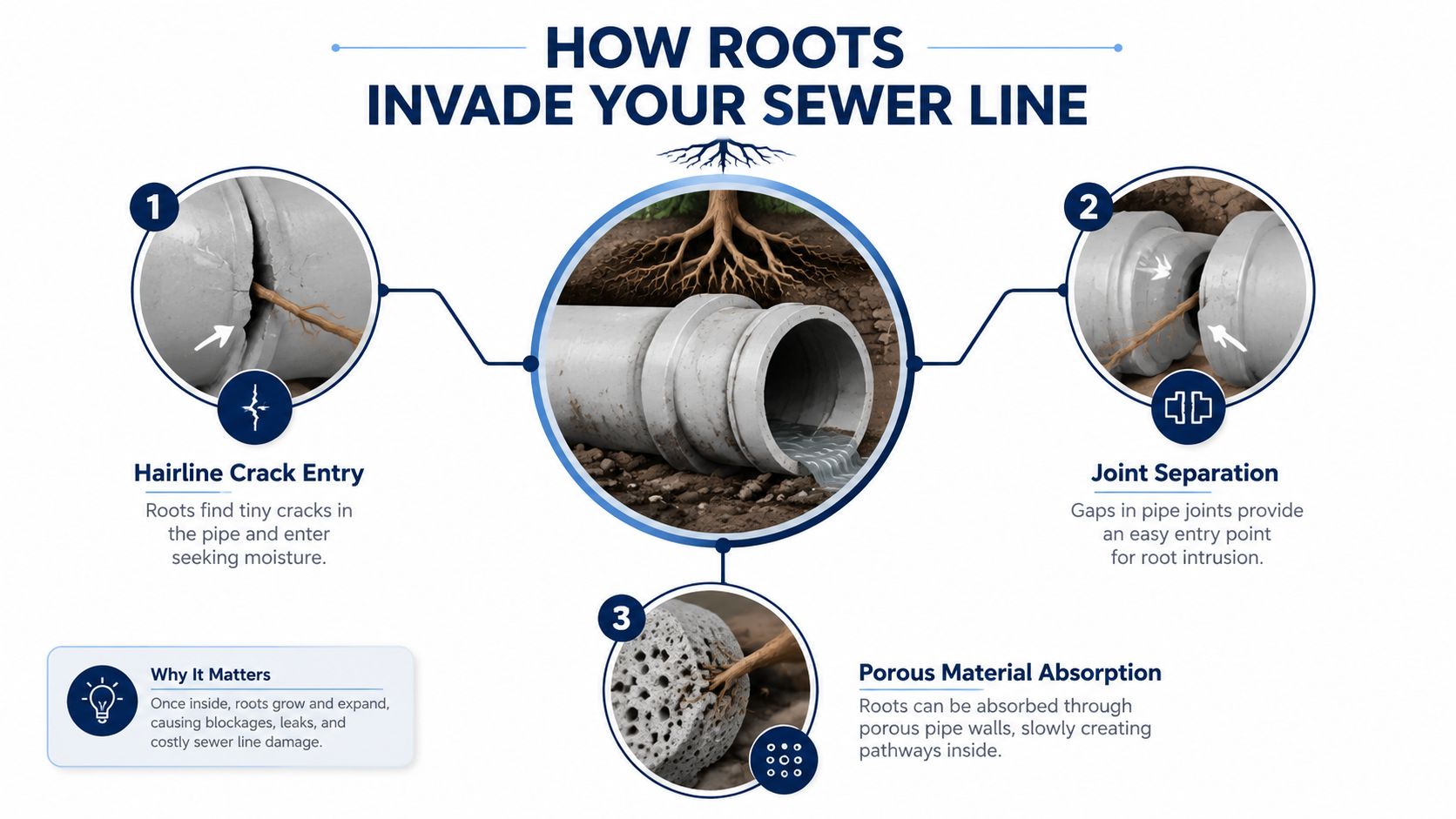
Roots usually don't punch through an intact pipe wall like a hammer through glass. They enter through microscopic gaps around joints, hairline cracks, and slightly separated fittings, then follow the moisture and nutrients inside the line. In Las Vegas, that matters because drought-stressed landscaping and desert dryness push roots toward any available water source, including a leaking sewer lateral.
What happens after the root gets in
Once a feeder root finds the line, it keeps growing inside the pipe. The growth narrows the flow path, and the sewer starts catching toilet paper, grease, and solids that would normally wash through. That's why a line can seem fine for a while and then fail suddenly after a flush, laundry cycle, or heavy water use.
Older homes are the most exposed because age usually brings one or more of these issues together, cracked fittings, settling, and worn joints. Extension guidance notes that even small, slow-growing trees can eventually interfere with sewer lines, while faster-growing species may need replacement every 8 to 10 years if they're planted near utilities (UT Extension guidance). That doesn't mean every tree is a problem, it means the pipe condition and planting location matter as much as the tree itself.
The technical part that homeowners miss
Chemical root treatments can temporarily clear a blockage, but they don't fix the leak that attracted the roots in the first place (UT Extension guidance). That's the main reason root intrusion becomes a recurring maintenance problem instead of a one-time clog. If the pipe still leaks, roots usually come back.
Practical rule: if you're clearing the same sewer line more than once, the pipe condition deserves a camera inspection before you pay for another cleaning.
Warning Signs That Roots Are Blocking Your Sewer Line
A single slow sink usually points to a fixture issue. Multiple drains slowing down at the same time usually point to the main line. In Las Vegas homes, that distinction matters because root intrusion rarely affects just one isolated fixture for long.
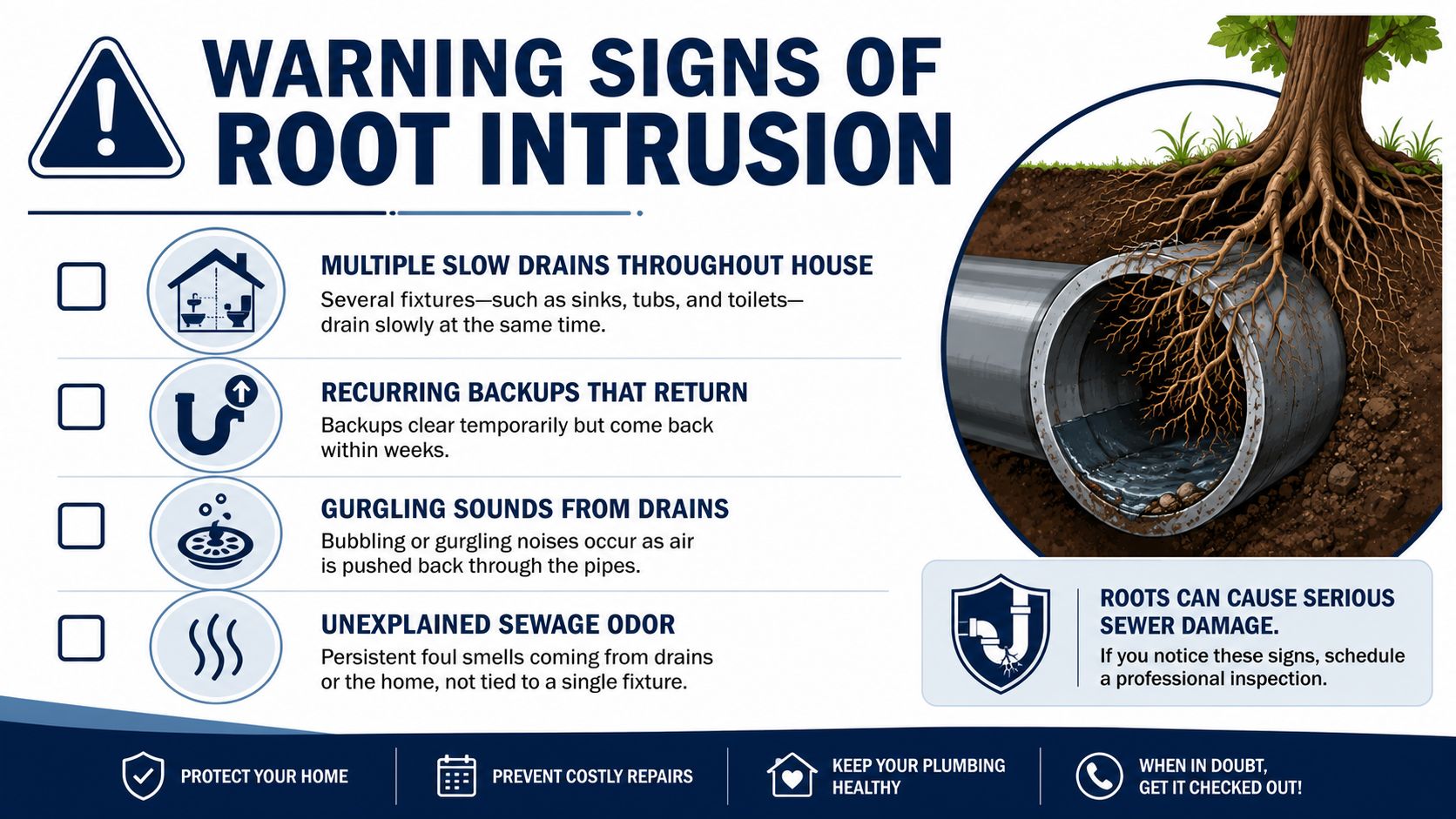
The signs that should make you stop guessing
- Multiple slow drains throughout the house: When the kitchen, bathroom, and shower all drain sluggishly, the blockage is likely downstream of the fixtures.
- Recurring backups that return: If a line clears and then backs up again within weeks, the root mass may still be inside the pipe.
- Gurgling sounds from drains: Air gets pushed back through the plumbing when the main line is restricted.
- Unexplained sewage odor: A persistent odor near a cleanout, yard, or floor drain often points to a sewer line issue rather than a single fixture.
Those warning signs justify a licensed plumber and a sewer camera inspection, not another round of guesswork. Local Las Vegas plumbing guidance says DIY augers or root-killing chemicals may only provide temporary relief if the pipe itself is damaged, and a camera inspection is what confirms the condition inside the line (bestairconditioningplumbingrepair.com, MG Drain Services sewer camera inspection).
What to expect from a proper diagnosis
A camera doesn't just confirm roots. It shows whether the pipe is cracked, offset, sagging, or heavily scaled, which changes the repair plan. That's the point where a plumber can tell you whether cleaning is enough or whether the line needs rehabilitation or replacement.
Repair and Prevention Options for Root-Damaged Sewer Lines
A clogged sewer line does not always call for a full replacement, but a quick cleaning does not always solve the core problem either. The right choice depends on whether the pipe is still structurally sound, how old the line is, and whether the ground keeps sending moisture back to the same weak spot.
Comparing the main options
| Method | Effectiveness | Typical Cost Range | Expected Lifespan | Best For |
|---|---|---|---|---|
| Mechanical root cutting | Good for clearing active roots | Varies by access and line condition | Temporary if the leak remains | Immediate blockage relief |
| Hydro-jetting | Strong for clearing debris and root strands | Varies by line length and buildup | Temporary to moderate, depending on pipe damage | Repeated cleanouts and heavy buildup |
| Chemical root inhibitors | Temporary suppression | Lower upfront, recurring use | Short-term control only | Lines that need a short bridge before repair |
| Root barriers | Helps redirect root growth | Depends on site layout | Long-term if installed well | New planting areas and garden redesign |
| Trenchless pipe rehabilitation | Addresses damaged pipe from inside | Higher upfront than cleaning | Long-term structural fix when feasible | Cracked or leaking sewer laterals |
| Pipe bursting | Replaces failed line with minimal excavation | Higher than cleaning, lower disruption than open trench | Long-term replacement option | Severely damaged lines |
| controlled root grinding from StumpSniper.com | Useful for property-side root control | Project-based | Depends on tree and site conditions | Managing roots outside the plumbing system |
What works effectively in Las Vegas conditions
Hydro-jetting clears the line fast and removes the debris that roots use as a snag point. MG Drain Services LLC offers hydro-jetting in Las Vegas for stubborn sewer and drain lines, which fits well when the line is clogged but still needs a closer look. If the camera shows a cracked or leaking pipe, cleaning alone will not stop the cycle.
Trenchless rehabilitation is the stronger long-term fix when the pipe is still serviceable but compromised. That can mean lining the existing pipe or replacing it with minimal digging. The trade-off is straightforward, repeated cleaning costs less up front, but recurring failures usually cost more over time because the leak stays open.
Las Vegas yards make prevention different from wetter places. Mature trees still send roots toward sewer moisture, while desert soils and irrigation patterns can push that growth toward one weak joint after another. Root barriers, careful irrigation control, and rethinking new plant placement can help keep roots out of trouble spots without tearing up the yard.
For homeowners trying to reduce future line intrusion, the goal is not to fight every root in the ground. It is to dry out the weak points, keep the pipe sealed, and make sure new plantings are placed with the sewer route in mind. That is where controlled root grinding from StumpSniper.com can be useful as part of a property-side plan, especially when tree removal or stump work is part of the fix.
Field logic: clear the blockage if you need water moving today, then repair the pipe if you want the problem to stop returning.
Who Pays When Roots Damage Your Sewer Lateral
A lot of Las Vegas homeowners get caught off guard. The underground sewer line between the house and the city main is usually the homeowner's responsibility, not the city's and not the HOA's in most cases. A Las Vegas Review-Journal HOA Q&A also notes that most homeowner policies do not cover broken sewer line repair (Las Vegas Review-Journal HOA Q&A).
Why that matters financially
That responsibility changes the decision from “clear the roots and move on” to “is this a repair I'll be paying for myself?” If the line keeps failing, you're not just buying another cleaning, you're looking at a likely capital repair on a private line. For older Las Vegas homes, that can turn a nuisance into a budget issue fast.
The practical question is whether repeated cleaning still makes sense. If the line is structurally fine and the root intrusion is small, maintenance may be reasonable. If the camera keeps finding the same leak, offset joint, or cracked section, then you're paying to manage a failure instead of fixing it. MG Drain Services' cost estimates page is useful when you're comparing short-term cleaning against a larger repair decision.
Insurance and coverage reality
Most standard homeowner policies leave sewer lateral repairs uncovered, so it's worth reviewing any separate utility line coverage or sewer endorsement you already carry. Don't assume the policy language protects you just because the damage happened underground. Ask the carrier directly what part of the sewer system is covered, if any, before the next backup turns into an emergency bill.
A Las Vegas Prevention Schedule for Homeowners
A backup rarely starts with a dramatic failure. It usually starts with a slow drain, a faint odor, or a camera reading that shows roots growing where they should never be. In Las Vegas, the smartest prevention plan is built around pipe age, tree placement, and how much irrigation is feeding the ground near the sewer line.
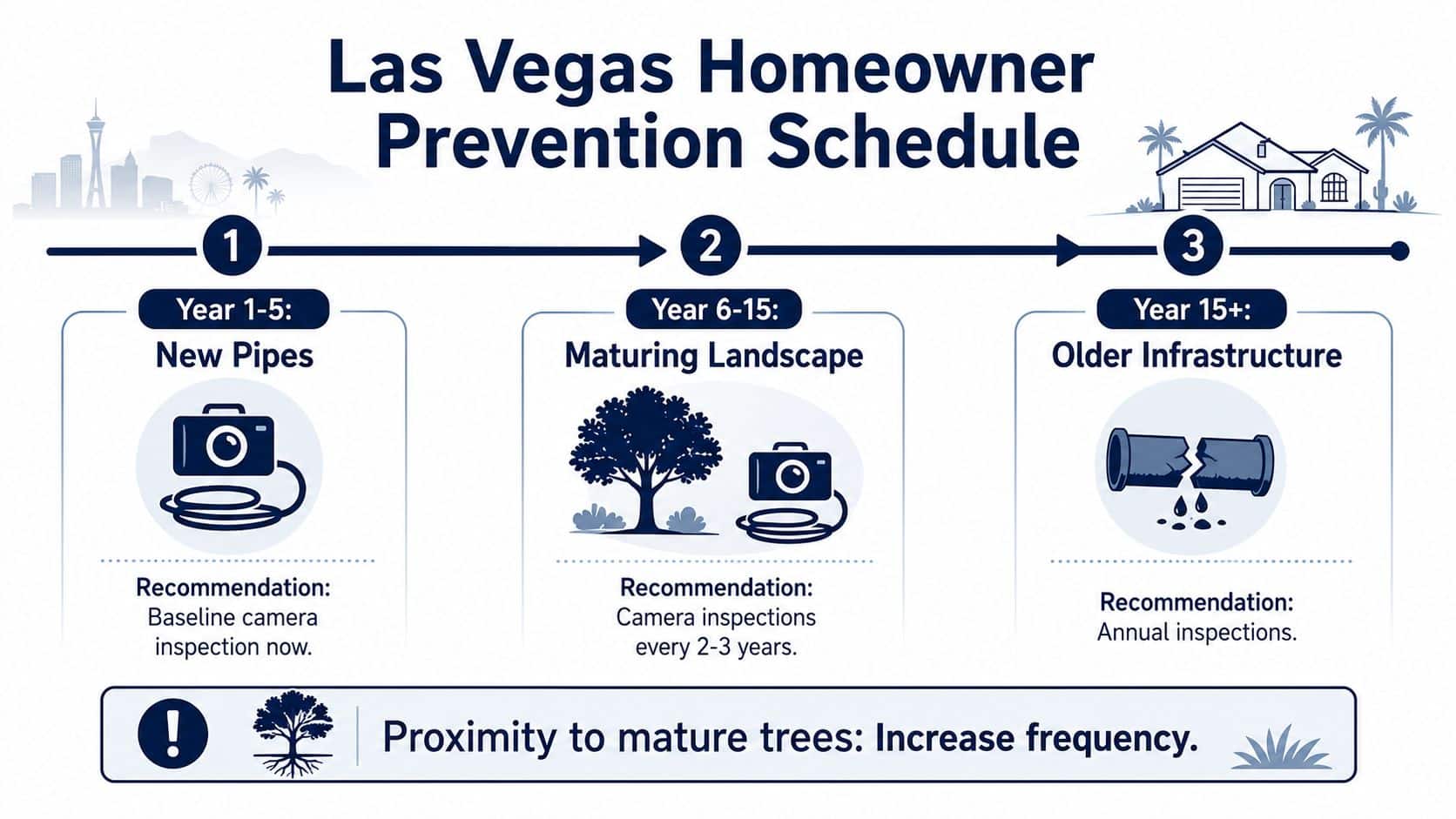
A practical schedule that fits Las Vegas homes
Homes with mature trees close to the sewer line need camera inspections every 1 to 2 years, with April or May being the best window before summer heat puts extra stress on the system. That timing helps catch root growth before it turns into a blockage that backs up into the house (The Cooling Co.).
Homes without nearby trees and with PVC sewer lines built after 2000 can usually stretch inspections to every 3 to 5 years, as long as there are no warning signs like gurgling drains, recurring clogs, or sewer odors. If you see those symptoms, the schedule should move up right away, because the pipe condition matters more than the calendar (The Cooling Co.).
Older infrastructure or repeat backups call for an earlier camera check instead of waiting for the next emergency. That is especially true when irrigation lines or overwatered beds sit near the sewer lateral, since moisture is what pulls roots toward the pipe in the first place.
The trade-off is simple. A planned inspection costs less than an emergency call, but skipping inspections can leave you paying for repeated cleanings while the same crack or offset keeps letting roots back in.
Site choices that reduce risk
Keep new trees away from sewer lines, even if the tree looks small at planting time. Many Las Vegas homes inherit mature mesquite, ficus, or other thirsty plantings that send roots toward every available moisture source, including a leaking lateral.
Water where it belongs, not where the sewer line runs. In dry soil, heavy irrigation near the pipe can keep roots active right at the weak point, so drip lines, sprinkler heads, and planting beds should be set with the utility layout in mind.
Root barriers can help when the layout is right, but they are a control measure, not a fix for a cracked pipe. If the lateral is already broken or separated, trenchless rehabilitation usually makes more sense than trying to manage the problem with repeated cleaning and barrier work.
Protect Your Las Vegas Home with MG Drain Services
Tree roots in sewer lines are manageable when you catch them early and inspect the pipe instead of guessing. MG Drain Services LLC is a licensed and insured, family-owned Las Vegas company with experienced technicians, fast response times, and honest pricing, and they handle sewer camera inspections, hydro-jetting, rooter service, and plumbing repairs across Las Vegas, Henderson, and North Las Vegas. If you're dealing with backups, odors, or repeat slow drains, call 702-480-8070 or visit mgdrainservices.com to schedule an inspection.
If your Las Vegas home is showing signs of root intrusion, MG Drain Services LLC can inspect the line, clear the blockage, and tell you whether the pipe needs repair before the problem gets more expensive. Visit MG Drain Services LLC to book service, request an estimate, or get help now if sewage odors or backups are already showing up.