
No hot water can turn a normal Las Vegas morning into a mess fast. One minute you're planning your day, the next you're staring at a leaking tank, a wet floor, and the realization that replacing it is not as simple as swapping one unit for another. Water Heater Installation Las Vegas: Step-by-Step Process and Pricing involves permits, code rules, safety upgrades, and inspection timing that all affect how quickly the job gets done.
That matters for homeowners in Las Vegas, Henderson, and North Las Vegas. The right installation has to match the home, the fuel source, and the city's approval process. Move too fast and you can end up with a failed inspection, safety issues, or costly redo work. A proper replacement follows a clear sequence, assessment, permit filing, removal, code-compliant installation, and final inspection, so you can see exactly where the time and cost come from.
Why Las Vegas Water Heater Installation Is More Than a Simple Swap
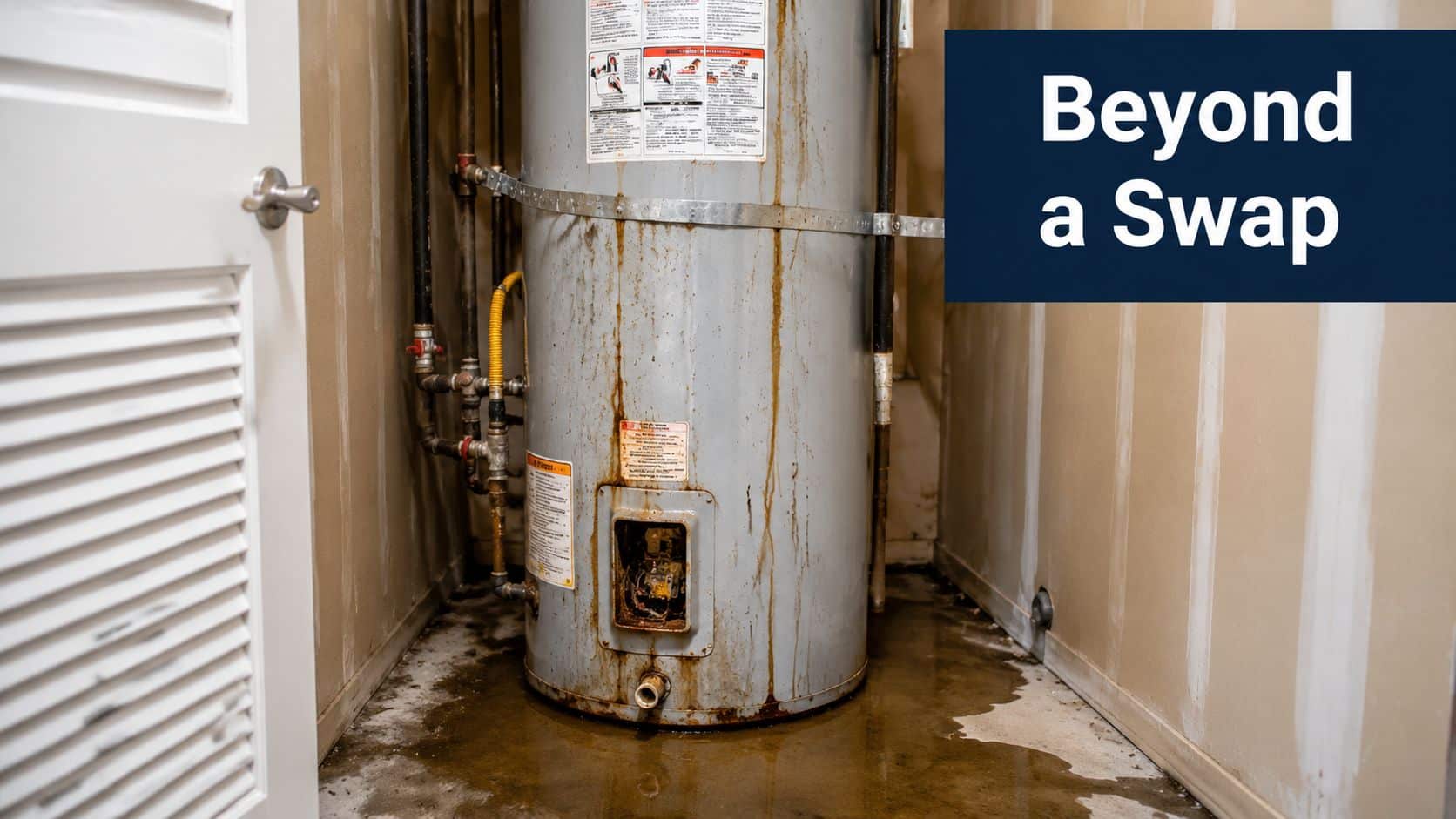
A leaking tank doesn't care if it's a weekday or a holiday. In a typical Las Vegas home, the problem usually shows up as cold showers, a rusty puddle near the closet, or a unit that's been limping along until it finally gives out. The instinct is to replace it fast, but local installs have to satisfy the City of Las Vegas residential guideline, which calls for seismic strapping, expansion tanks, drainage, temperature-and-pressure protection, and an inspection before the job is complete. City of Las Vegas residential water heater installation guideline
Why the local process feels longer than a basic replacement
Las Vegas plumbing work gets complicated because the tank isn't the only thing being replaced. The surrounding code items matter just as much, especially in older homes where the existing setup may not meet current standards. That's why the job often starts with a site assessment instead of a truck pulling up and dropping in a new heater.
Practical rule: if the old heater failed, assume the replacement will need more than a new tank unless a licensed plumber has already verified the existing connections and code items.
Hard water also pushes many local water heaters toward replacement sooner than homeowners expect, because scale and wear build up over time. That's not something to gamble on when the tank is already leaking or losing performance. In Las Vegas, the smartest move is to treat the replacement as a compliance job, not just an equipment exchange.
The rest of the process comes down to knowing what has to happen before anyone turns a wrench. That's where quotes diverge, and that's where homeowners in Henderson and North Las Vegas often get surprised by add-ons they didn't expect.
Pre-Installation Assessment and Permit Requirements
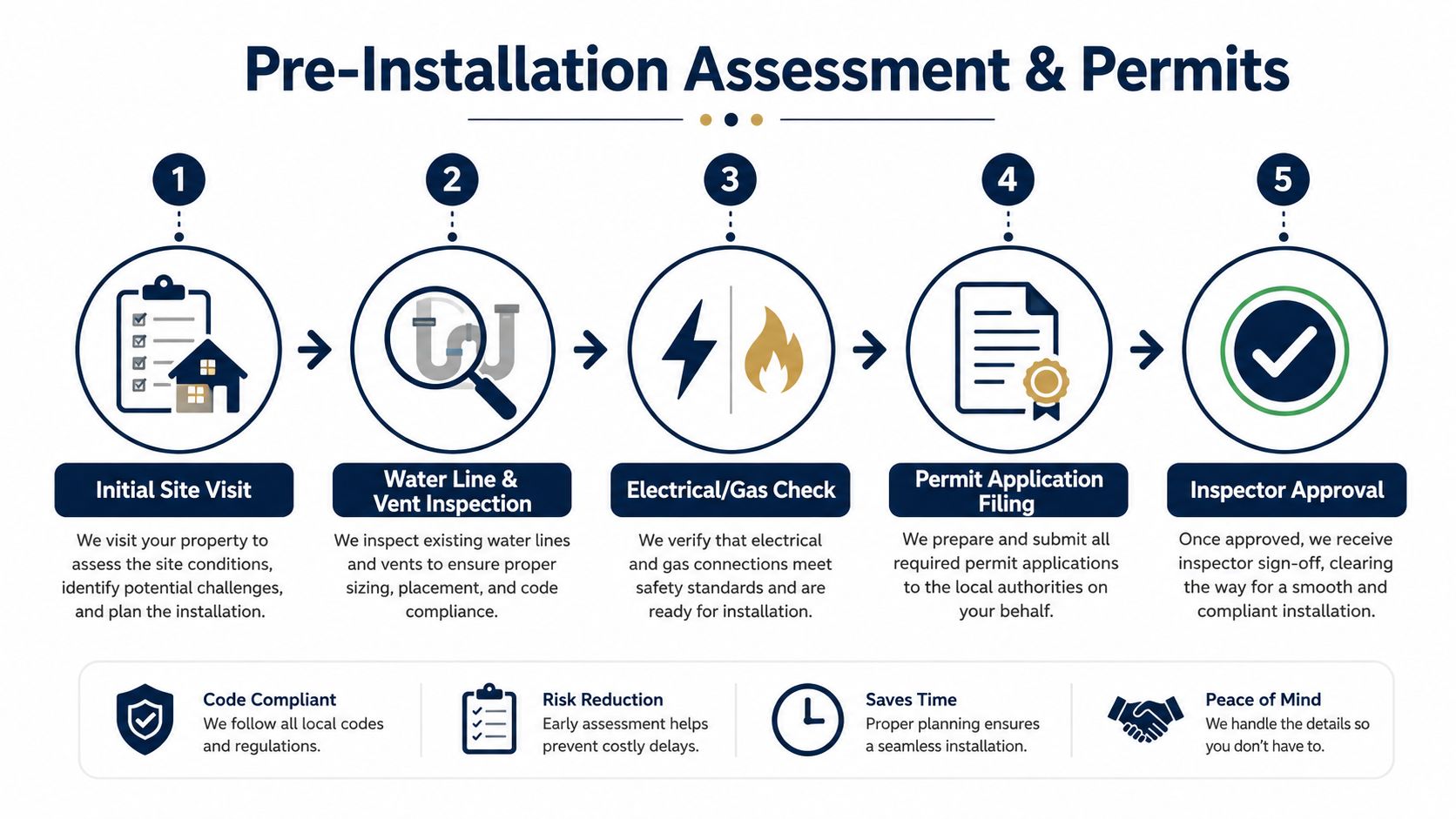
A real installation starts with a walkthrough, not with the new heater out of the box. A licensed plumber checks the gas or electrical connection, the venting, the available clearance, the drain path, and whether the current setup already matches local code. That first visit tells you whether the project is a straightforward replacement or one that needs extra parts and corrections before the new unit can go in.
The permit is mandatory in Las Vegas. The City of Las Vegas requires the permit to be obtained before work begins, and local guidance shows the permit can be issued the same day to 3 business days, with inspection often landing within 24 to 48 business hours after it's requested. Those windows are why a homeowner might get a service appointment booked quickly, but still wait a bit for the compliance steps to finish. City of Las Vegas water heater installation requirements
What a plumber should verify before quoting the job
A solid quote should be based on the actual condition of the house, not on a guess. That means the plumber needs to look at the fuel type, the vent run if it's gas, the shutoff location, and the space around the tank. If any of those pieces are wrong, the replacement may need modifications before the new heater is even set in place.
Homeowners often ask why a permit matters for a “simple” replacement. It matters because the permit and inspection exist to catch unsafe venting, missing pressure protection, or poor installation choices before they become a hazard. If you want a plain-English overview of how approvals move in a construction setting, how to navigate permit approvals is a useful reference.
A leak assessment is smart here too, especially if the old tank failed over time. A hidden drip or moisture damage around the base can tell you whether the failure was isolated or whether the surrounding plumbing also needs attention. For that, water leak detection services can be worth a look before the replacement is finalized.
Permits don't slow a job for no reason. They keep the installation from becoming a hidden safety problem that gets discovered later during an inspection, a sale, or a warranty claim.
The Physical Installation Process From Shutoff to Final Connection
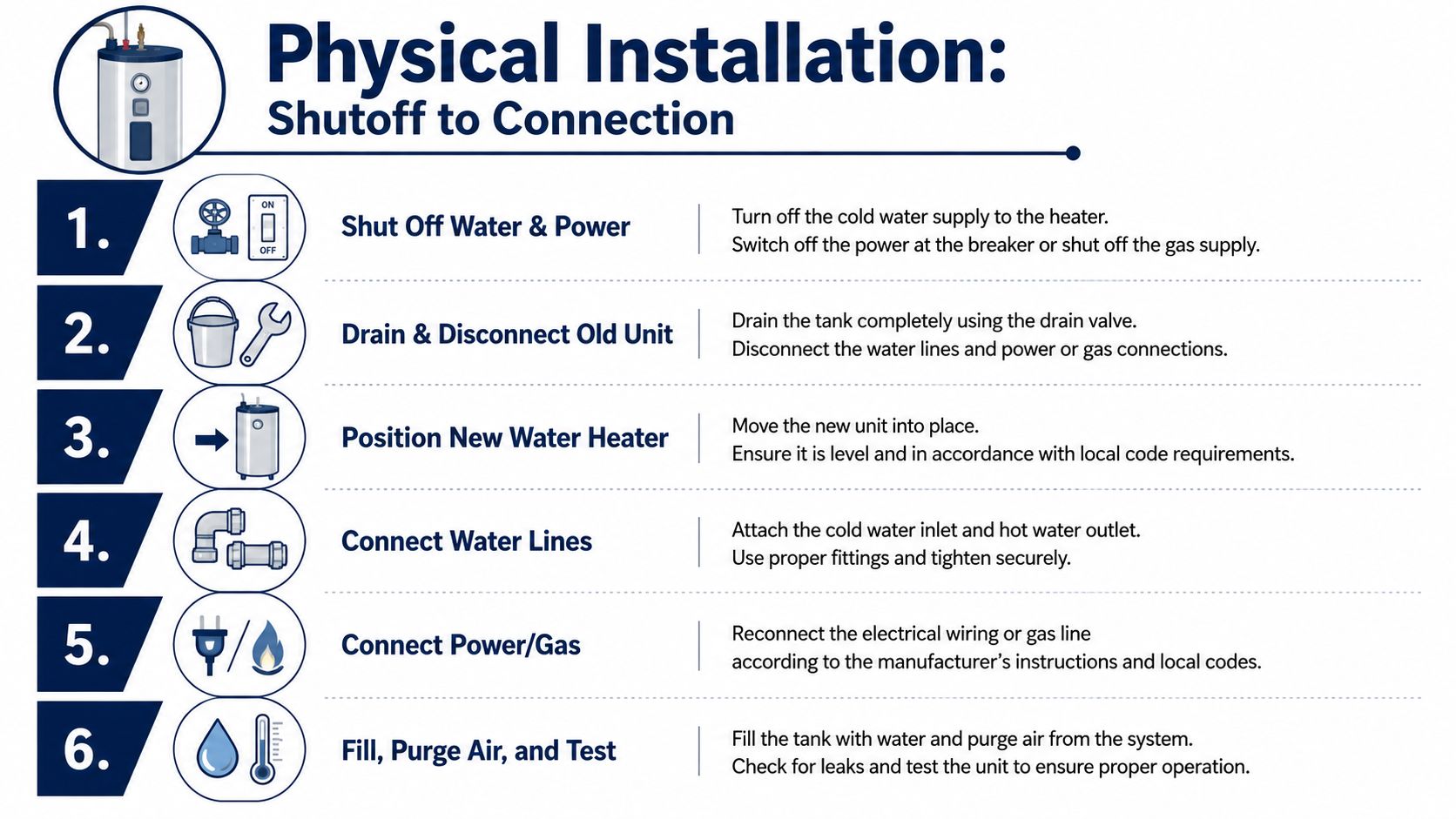
Once the permit is in hand and the site is ready, the work is methodical. A professional install begins by shutting off water, gas, or electrical supply, then draining the old tank so it can be disconnected without flooding the area. After that, the old unit comes out, the space gets cleared, and the replacement is positioned to match the plumbing layout and code requirements.
What the code-compliant connections actually do
Las Vegas installations often require more than hooking up two water lines. Seismic straps secure the tank, expansion tanks manage pressure changes in closed systems, and the T&P relief line gives hot water and pressure a safe discharge path if the system ever overpressurizes. For gas heaters, proper venting isn't optional, it's part of making sure combustion gases leave the home safely.
That's why a licensed installer checks each connection before the unit is filled. The heater gets mounted, water lines are tied in, the gas or electrical connection is completed, and then the system is filled and purged. Air has to come out of the lines, otherwise the first startup can be noisy, uneven, or misleading during leak checks.
A good installer doesn't just “turn it on and hope.” The system has to be tested for leaks, the heater has to operate normally, and the paperwork has to be ready for inspection. That final step is what separates a working heater from a completed job.
In practical terms, the physical portion of the installation is usually a single service visit. The city's compliance steps can stretch the total project timeline, but the labor itself is still a hands-on process that should be done with care, especially in Las Vegas where code issues are common on older homes and remodels.
What a homeowner should see on installation day
- Shutoff and drain: The old tank should be drained cleanly before removal.
- Controlled removal: The unit should come out without damaging nearby valves or lines.
- New connections: Water, gas, or electrical hookups should look organized, not improvised.
- Safety hardware: Straps, relief lines, and expansion protection should be visible where required.
- Testing: The plumber should verify leaks and proper operation before leaving.
If you're comparing companies in Las Vegas, ask whether the job includes all the code-required pieces or just the tank and labor. That question tells you a lot about whether the estimate is complete.
Understanding the Cost of Water Heater Installation in Las Vegas
Most homeowners want one price. In Las Vegas, the quote usually breaks into several parts, equipment, labor, permit fee, and the code-required accessories that often get missed in online estimates, such as an expansion tank, seismic straps, a drain pan, or a T&P relief line. A local permit guide puts permit costs at roughly $65 to $150, and that fee is only one piece of the total job. Local Las Vegas permit and install reference
| Las Vegas Water Heater Installation Cost Breakdown | What It Covers | Typical Range |
|---|---|---|
| Equipment | The new tank or replacement heater | Varies by model and size |
| Labor | Removal, installation, hookup, testing | Varies by job complexity |
| Permit Fee | Required city permit cost | $65 to $150 |
| Code Accessories | Expansion tank, seismic straps, drain pan, T&P relief line | Varies by home and code needs |
| Extra Corrections | Venting changes, shutoff updates, gas or electrical fixes | Varies by existing conditions |
Why the add-ons matter more than the tank price
A low equipment price can turn into a higher job total once the house is opened up and the actual conditions are visible. Gas units may need venting work, garage elevation fixes, or a sediment trap, and closed plumbing systems often make an expansion tank feel standard rather than optional. That is why the final bill in Las Vegas is usually shaped by code compliance more than by the tank itself.
For a useful comparison from outside Nevada, Brisbane hot water heater costs show the same basic pattern, the unit is only part of the spend, and the installation conditions drive the final figure. The exact numbers differ by market, but the structure is familiar to any plumber who has to meet code instead of just replacing hardware.
If a quote looks too low, ask what is missing. In this market, missing permit fees or safety accessories usually means the price is incomplete, not that the installer found a shortcut.
A complete estimate should feel itemized, not vague. That is what helps homeowners in Las Vegas, Henderson, and North Las Vegas compare apples to apples instead of chasing the lowest sticker price.
If you want a second opinion on whether a quote is complete, use a local breakdown like this cost estimate reference and compare it against the permit, accessory, and labor lines in your proposal.
Common Installation Mistakes and Code Violations to Avoid
A lot of water heater trouble starts before the tank is even turned on. I've seen installations fail because someone skipped the permit, used the wrong venting parts, or left out hardware that would have been caught during a proper final check. The result is usually a failed inspection, but the bigger problem is safety and the added repair cost when the job has to be opened up again.
A common mistake is treating the installation like a simple swap. In Las Vegas, the permit, venting, gas sizing, and inspection all have to line up with the work you performed. If one part is wrong, the city can reject the job even if the heater runs.
The mistakes that cause the most trouble
- Improper venting: Gas units can spill exhaust where it does not belong, which is a serious safety issue.
- Incorrect gas line sizing: The heater may underperform or shut down when demand changes.
- Missing T&P valve protection: That leaves the system without the proper pressure relief path.
- DIY electrical work: Loose or incorrect connections can create fire and shock risks.
- No permit: The job may work for now, but it can fail inspection later and create problems during resale.
The professional approach is plain. A licensed installer pulls the permit, uses the right fittings, and checks the final connections against the city's requirements. That does more than satisfy an inspector, it lowers the chance of a callback or an emergency repair later. It also helps when a homeowner is deciding whether to repair or replace, since a bad installation can make the whole system look worse than it really is, which is why a service page like water heater repair in Las Vegas is useful before the work goes forward.
In Las Vegas, these mistakes are expensive because the project is not finished until the inspection clears. Skip that step and the heater might seem done, but the permit and inspection costs are still waiting in the background. That is a bad trade when the water heater is one of the home's most-used appliances, and the fix often means paying for labor twice.
MG Drain Services LLC handles plumbing work across Las Vegas with transparent quotes, and homeowners comparing options can use that local service information to judge whether the job needs repair or replacement before installation starts.
When to Call a Licensed Las Vegas Plumber for Your Water Heater
Call a licensed plumber the moment the situation stops being a simple appliance change and starts looking like a safety or compliance issue. That includes gas smells, active leaks, no hot water at all, or any heater that has to be moved, vented, or reconnected under permit. In Las Vegas, the permit and inspection requirements make professional installation the practical route for most homeowners, not the exception.
If the unit failed suddenly, the house is in use, or the heater is already showing signs of moisture around the base, don't keep pushing it. A plumber can shut it down, assess the site, file the permit, and install the replacement to code. That's the difference between restoring hot water and creating a second problem.
When you're ready to move, MG Drain Services LLC can handle the plumbing side of the job for Las Vegas, Henderson, and North Las Vegas with experienced technicians, honest pricing, and bilingual service. The company's local focus also fits homeowners who want a permit-ready process instead of a guess-and-fix approach.
If you need help with water heater installation in Las Vegas, MG Drain Services LLC can evaluate the site, explain the code-related costs, and handle the work from start to inspection. Call 702-480-8070 or visit MG Drain Services LLC to book service and get a clear quote for your home.