A cold shower in Las Vegas has a way of turning an ordinary morning into a plumbing decision fast. You hear a pop from the utility closet, see a little moisture near the tank, or notice the hot water fading sooner than it used to, and suddenly you're trying to figure out whether this is a cheap fix or the start of a full replacement. Water Heater Repair Las Vegas usually comes down to one question, is the problem a replaceable part, or is the tank itself failing in hard-water conditions?
The answer matters because repair and replacement live in very different cost ranges. Typical repair pricing in Las Vegas often lands around $150 to $700 overall, with common component fixes such as heating elements, thermocouples, igniters, anode rods, dip tubes, or thermostats often running $100 to $350, while a leaking tank usually pushes the job into replacement territory at $600 to $1,800 for a basic installed replacement and $1,400 to $2,800 or more for standard tank units depending on labor, permits, and code upgrades. That's why the right diagnosis in Las Vegas, Henderson, or North Las Vegas can save both time and money, and keep a small issue from becoming a larger water problem.
Why Your Water Heater Is Acting Up in Las Vegas
A Las Vegas homeowner usually notices trouble the same way, hot water runs out too fast, the shower swings from warm to cold, or there's a faint metallic smell when the tap opens. In hard-water homes, that often points to sediment, corrosion, or a part that's been working against mineral buildup for years. The tank can look fine from the outside while the inside is collecting scale, losing efficiency, and stressing the components that heat the water.
What hard water does inside the tank
Las Vegas water conditions make ordinary wear show up sooner. Sediment settles at the bottom of the tank, insulating the heat source from the water and forcing the system to work harder. Over time, that strain shows up as longer recovery times, inconsistent water temperature, rust-colored water, visible leaks, and reduced hot-water capacity, which are some of the most reliable signs that a unit is nearing failure.
Practical rule: if the problem looks like one part failing, a repair may make sense. If the tank body itself is corroding or leaking, the conversation changes quickly, because that's usually replacement territory.
The hard-water factor matters most in older systems. A flush or a part swap can buy time, but it doesn't undo internal corrosion. In Las Vegas, that's why technicians look past the symptom and check what the tank condition is telling them about the next year, not just the next day.
If moisture near the heater has already spread, it's smart to think about prevent water damage from tank leaks before the puddle gets bigger. For homeowners comparing plumbing options, MG Drain Services also offers water leak detection when the source of the moisture isn't obvious.
Warning Signs Your Water Heater Needs Repair
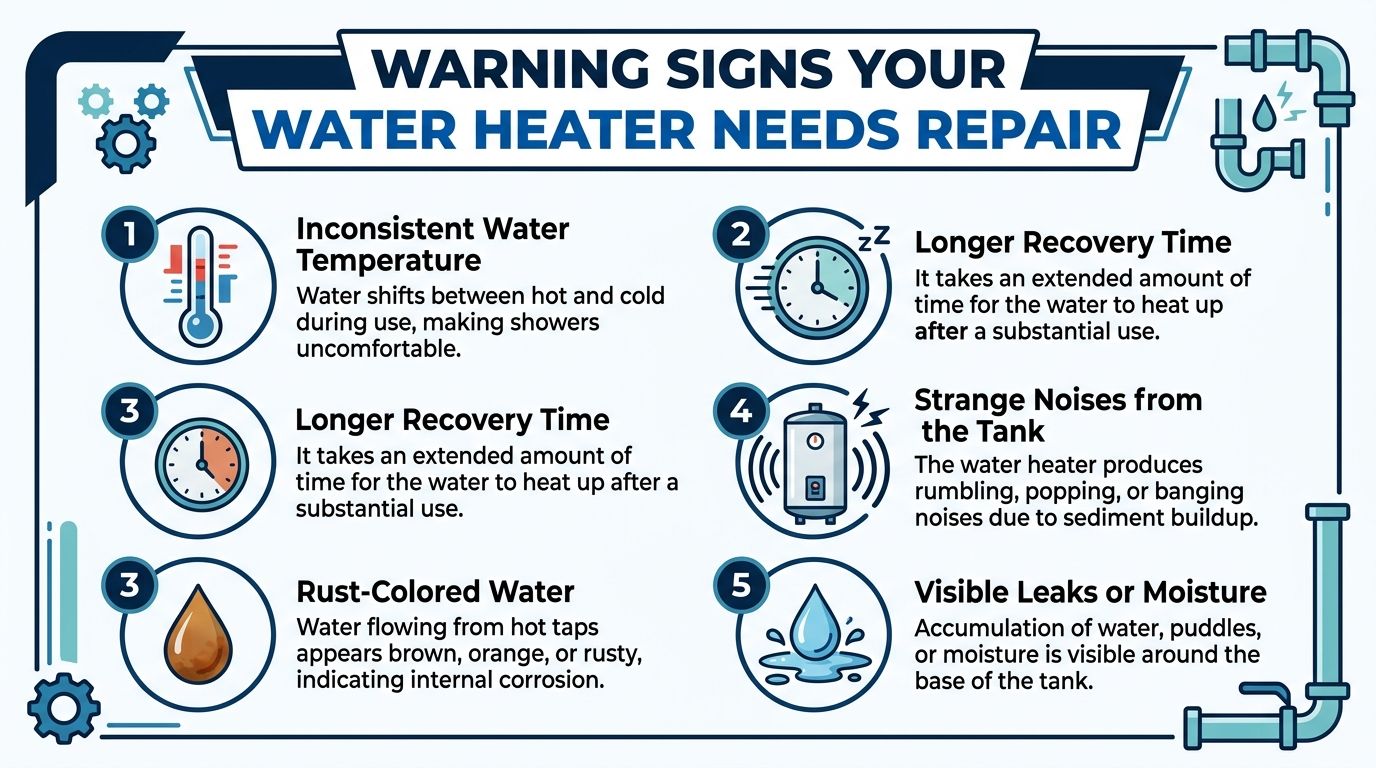
Not every symptom means the tank is dead, but each one points to a different mechanical problem. In Las Vegas, the warning signs show up earlier when sediment and corrosion are involved, so a homeowner who notices a change shouldn't wait for a complete shutdown. The goal is to catch the failure while it's still a component issue, not a full tank failure.
The signs that matter most
Inconsistent water temperature often points to a failing thermostat, heating element, or burner issue. If one shower turns hot and the next one goes lukewarm, the heater isn't keeping up with demand the way it should.
Longer recovery times mean the tank takes too long to heat a new batch of water. In a hard-water market like Las Vegas, sediment on the bottom of the tank can slow heat transfer and make the system feel weaker even before it stops working completely.
Rust-colored water usually signals corrosion somewhere inside the tank or on a connected component. Once corrosion reaches the tank body, the situation gets more serious because the tank shell itself is no longer reliable.
Visible leaks or moisture need immediate attention. A small drip from a fitting can sometimes be repaired, but water around the tank base can also mean the tank is compromised.
Reduced hot-water capacity is one of the clearest signs that the unit is losing efficiency. If the same household habits suddenly leave someone cold, the heater may not be recovering properly anymore.
What the noises and wear patterns mean
Strange popping or rumbling sounds usually come from sediment heating and shifting inside the tank. That noise is more than annoying. It tells you the unit is fighting scale buildup, which shortens remaining life and can damage the system further.
A water heater doesn't usually fail all at once. It gives off clues, and the clues matter more in Las Vegas because hard water speeds up the process.
For a homeowner, the key is to separate a manageable issue from a structural one. A thermostat, igniter, or anode rod can be replaced. A corroded tank can't. That's why a careful inspection beats guessing every time, especially in homes where the heater has already been patched once or twice.
Water Heater Repair Costs in Las Vegas
The cost conversation in Las Vegas is usually straightforward once the actual failure is known. A diagnostic or service call is typically the first bill, then the repair itself depends on what part failed and how much labor the job takes. Some homeowners see labor-only estimates near the low end, while others are quoted a full repair price that includes parts, testing, and startup.
Repair and replacement side by side
| Las Vegas Water Heater Repair vs Replacement Costs | Service Type | Typical Cost Range | Expected Life Added |
|---|---|---|---|
| Diagnosis | Service call only | $75 to $200 | None |
| Common repair | Thermostat, element, or similar part | $100 to $350 | Limited, depends on tank condition |
| Typical repair job | Common fixes and labor | $150 to $700 | Short to moderate extension |
| Severe repair | Major problem beyond a simple part swap | $750 to $1,775+ | Uncertain |
| Basic replacement | Installed new unit | $600 to $1,800 | New system |
| Standard tank replacement | Installed with labor, permits, or upgrades | $1,400 to $2,800+ | New system |
The spread above shows the decision point. If you're only replacing a thermostat or element, the job can stay economical. If the quote climbs toward replacement pricing, especially on a tank with visible corrosion, the better move may be to stop repairing and compare new-unit options instead.
What changes the price in practice
Emergency or after-hours service can add a 15% to 25% premium in Las Vegas, and that matters because a lot of failures happen outside normal business hours. Homeowners in Henderson or North Las Vegas often find the callout itself is manageable, but the timing can make the final bill feel a lot steeper.
For homeowners comparing estimates, MG Drain Services keeps its pricing information organized on its cost estimates page, which is useful when you want to compare repair versus replacement before authorizing work. A separate local service overview can also help if you're weighing multiple plumbing jobs at once, such as a leak, a drain problem, and the water heater issue.
Fair price rule: if the tank is sound and the repair is isolated, repair can be the right financial move. If the tank is leaking or heavily corroded, the cheapest quote on paper may still be the expensive choice long term.
What Happens During a Professional Water Heater Inspection
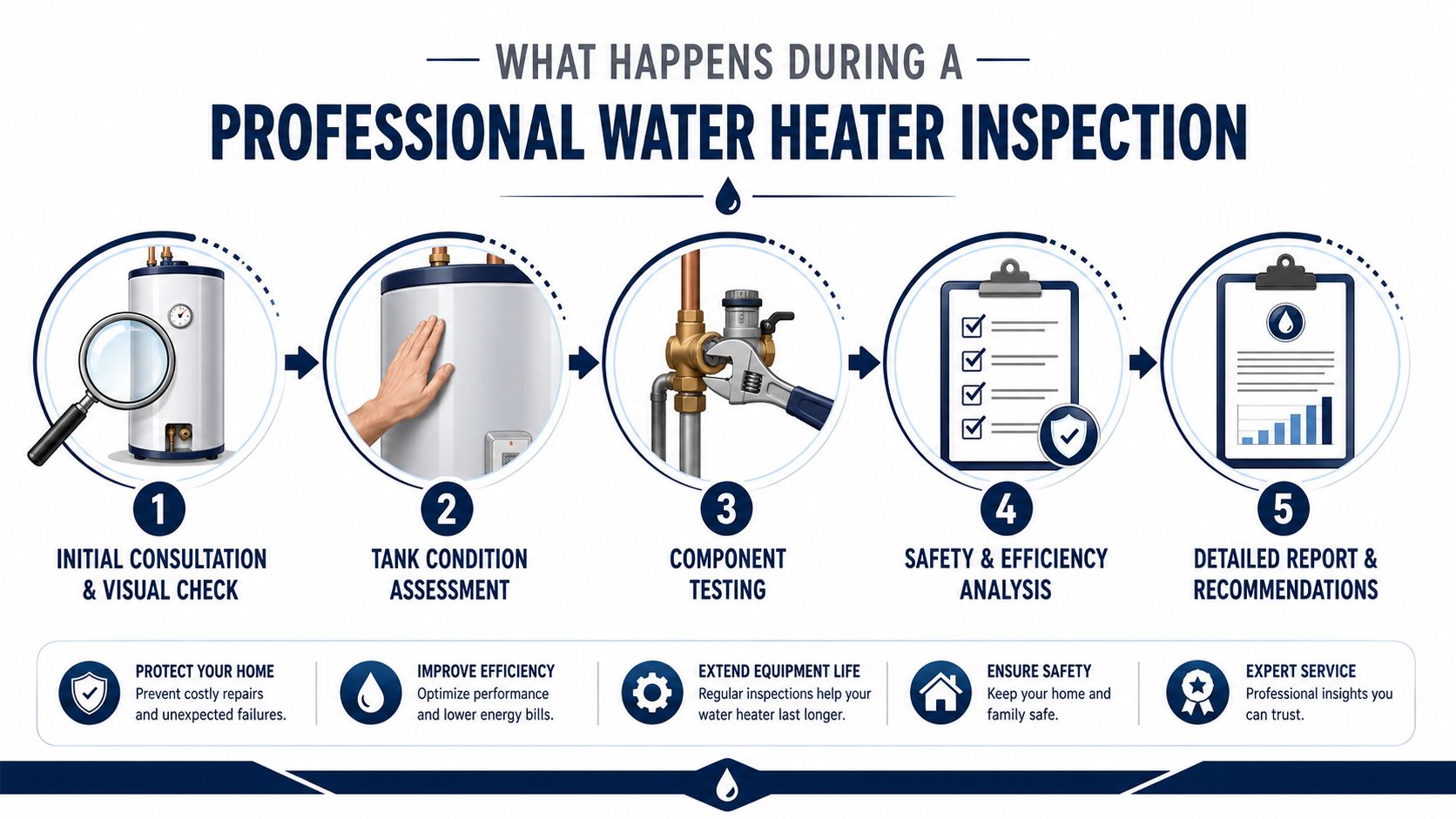
A real inspection should feel methodical, not rushed. The technician starts by checking the tank's outside condition, then works inward to see whether the problem is in the controls, the heating system, the safety devices, or the tank itself. In Las Vegas, that process matters because sediment and mineral scale can hide the root cause until somebody tests the unit properly.
The checks a licensed plumber should make
The first pass is a visual inspection. The plumber looks for moisture, rust streaks, loose fittings, corrosion around the drain valve, and signs that the tank has been sweating or leaking for a while.
Next comes tank condition assessment. That means checking whether the shell looks swollen, corroded, or stained in a way that suggests internal deterioration. If the body of the tank is failing, there's no real repair path left.
Then the technician tests the burner or heating elements, depending on whether the unit is gas or electric. A bad element or burner issue can create the exact symptoms a homeowner feels in the shower, so this step separates a parts problem from a bigger equipment problem.
Safety devices matter too. A proper visit includes temperature-and-pressure valve verification, because a relief valve that isn't working correctly changes the safety picture. The technician should also evaluate sediment buildup, because scale at the bottom of the tank often explains poor heating performance.
Finally, the plumber should inspect the anode rod when access allows. A worn anode rod can leave the tank exposed to corrosion, which is especially relevant in hard-water homes across Las Vegas.
What to ask before the truck leaves
Ask whether the issue is a part, a safety component, or the tank body itself. Ask whether the repair should extend the unit's life meaningfully, or just buy a little time. Ask for the technician's honest read on how the local water conditions are affecting the tank, because that answer changes the value of the repair.
A quick diagnostic can identify the obvious problem. A thorough inspection tells you whether the heater is still worth investing in. That difference matters more than most homeowners realize.
When to Repair and When to Replace Your Water Heater
The decision gets easier when you stop thinking in terms of the immediate fix and start thinking in terms of remaining service life. In Las Vegas hard-water homes, a repair can be a smart move on a younger unit with a clean tank, but it can be a short-lived patch on an older heater that's already been weakened by scale and corrosion. The right answer depends on age, condition, leak history, and how many times the unit has already asked for help.
Repair makes sense when the tank still has life in it
A repair is usually the better bet when the issue is isolated to a fitting, thermostat, element, igniter, or another replaceable component. If the tank is in good condition and the heater hasn't been limping along with repeated problems, the money you spend can still buy meaningful time.
Hard-water markets complicate that math. Routine interventions like sediment flushes are typically $100 to $200 and may add only 1 to 2 years, while heating-element or thermostat repairs around $150 to $350 may add 2 to 4 years; an anode-rod replacement at $150 to $300 can extend life 3 to 5 years. That's useful because it shows why the repair has to be matched to the tank's condition, not just the symptom.
Replacement wins when the tank is the problem
Once the tank body is leaking, replacement is the normal path. Once corrosion is widespread, repeated repair bills usually stop making sense. Several Las Vegas guides point to 8 to 10+ years as the point where many tanks start becoming poor repair candidates in hard-water conditions, especially if they've already needed service more than once.
The decision gets even clearer when the repair quote approaches the cost of a new system. A good rule of thumb is to compare the quote against what replacement will cost over the next few years, not just what it costs today. If a repair buys only a short window and the tank still looks tired, replacement often lowers risk and stress at the same time.
| Decision cue | Repair leans right | Replacement leans right |
|---|---|---|
| Tank age | Younger unit with a clean tank | Older unit with hard-water wear |
| Leak source | Small fitting or component | Tank body leak |
| Repair history | First or second issue | Repeated service calls |
| Budget horizon | Want to extend life without major spend | Want lower risk over the next few years |
For a Las Vegas homeowner, the practical question is simple. Do you want to nurse a tank through another season, or do you want to stop paying for a unit that's already on borrowed time?
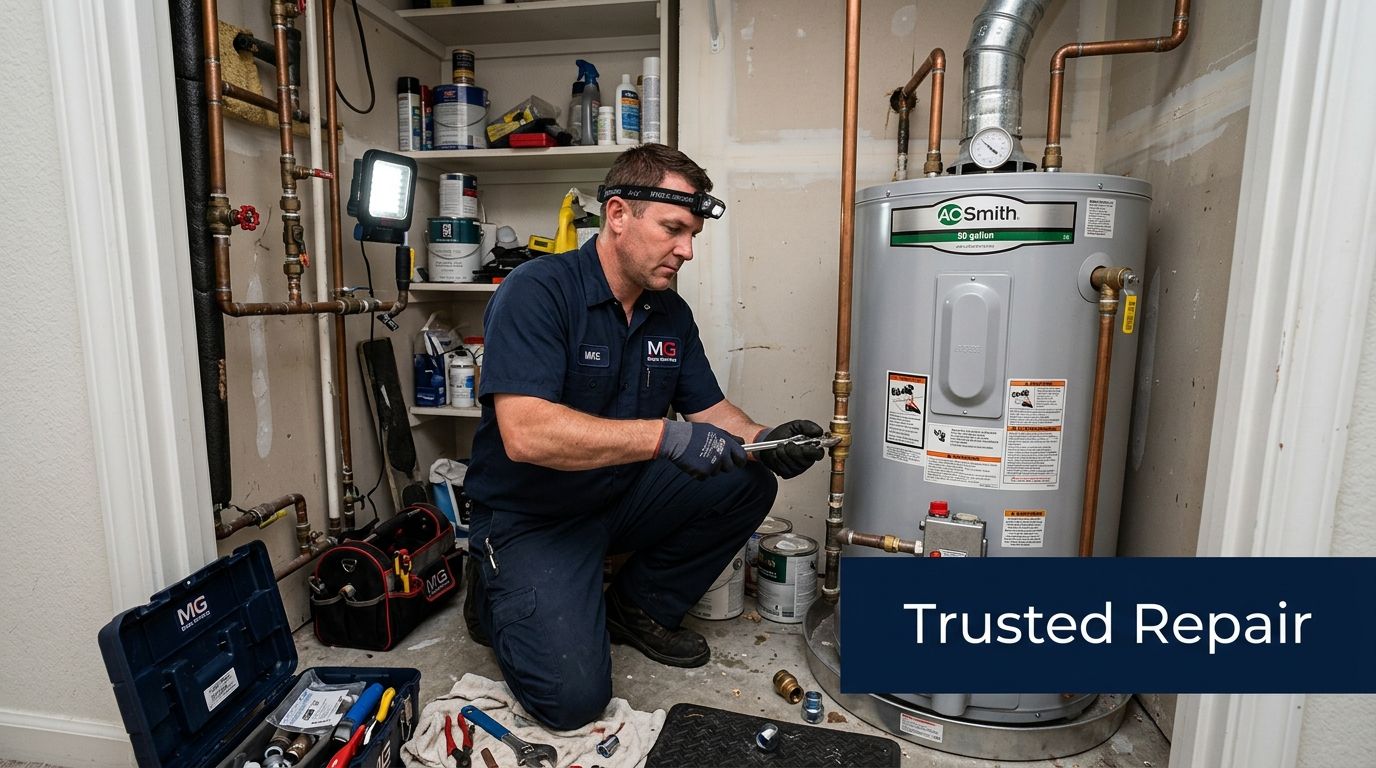
MG Drain Services LLC handles water heater repair and replacement for homeowners in Las Vegas, Henderson, and North Las Vegas, and the company also works on tank and tankless units. Its team is licensed and insured, family-owned, and known locally for transparent quotes, experienced technicians, and fast response when a hot-water problem can't wait.
If your heater is leaking, making noise, or just not recovering like it used to, book a visit through the contact page and get a straight answer on repair versus replacement. A licensed plumber can tell you whether the fix is worth it, whether the tank has enough life left, and what makes sense for your home before you spend money in the wrong direction.
If you're dealing with a water heater issue in Las Vegas, contact MG Drain Services LLC for honest repair recommendations, leak detection, and replacement guidance from a local team that works these hard-water problems every day. Call 702-480-8070 to schedule service and get the kind of straight pricing and practical advice that helps you make the right call the first time.