
If you’re standing in your shower in Las Vegas wondering why the water pressure keeps dropping, why the pipes knock in the wall, or why the kitchen faucet just ran yellow for a few seconds, you’re probably not dealing with a one-time plumbing repair. You may be at the point where a water system repipe in Las Vegas is the right fix.
That’s a stressful place for any homeowner to be. In Las Vegas homes, especially older properties in Las Vegas, Henderson, and North Las Vegas, failing supply lines usually don’t improve with patchwork repairs. One leak gets fixed, then another shows up in a different wall, then pressure problems start affecting daily life. You stop trusting your own plumbing.
I’ve seen that pattern many times. The right response isn’t panic. It’s getting clear on the signs, understanding your material options in our valley’s hard water, and making sure the work is done legally, safely, and with a plan that protects your home.
Is Your Plumbing Keeping Up with Your Las Vegas Life
A lot of repipe calls start the same way. Someone notices the upstairs shower slows down when the washing machine kicks on. A faucet spits out water that looks off-color for a few seconds. Then a small leak gets repaired, and everyone hopes that was the end of it.
It usually isn’t.
Las Vegas homes put plumbing through real stress. Daily use, older pipe materials, heat, mineral-heavy water, and years of pressure changes all add up. What starts as an inconvenience can turn into repeated wall openings, water damage, and a system that never seems to work the way it should.
Homeowners often wait because they don’t want to hear the word “repipe.” That’s understandable. But waiting too long can leave you spending money on isolated repairs while the full system continues to age out behind the walls.
Practical rule: If your plumbing problems are showing up in more than one fixture or more than one area of the house, treat it like a system problem, not just a leak problem.
A full repipe isn’t the answer to every plumbing issue. But when supply lines are deteriorating, it’s often the cleanest way to stop recurring trouble and restore normal water flow throughout the house. That matters whether you’re a homeowner trying to protect your family’s routine or a property manager trying to prevent the next maintenance emergency.
Signs Your Las Vegas Home Needs a Repipe
Some warning signs are obvious. Others are easy to dismiss until they keep repeating. If you live in an older home in Las Vegas, Henderson, or North Las Vegas, these are the symptoms I’d pay attention to first.
Low pressure that keeps coming back
Low water pressure in one fixture can come from a local issue. Low pressure in several areas of the house usually points to something bigger. Older galvanized lines can narrow internally over time, and aging copper systems can develop recurring restrictions or leak-related pressure loss.
If you’ve already replaced angle stops, showerheads, or faucet cartridges and the problem keeps returning, the supply system deserves a closer look.
Discolored water and visible corrosion
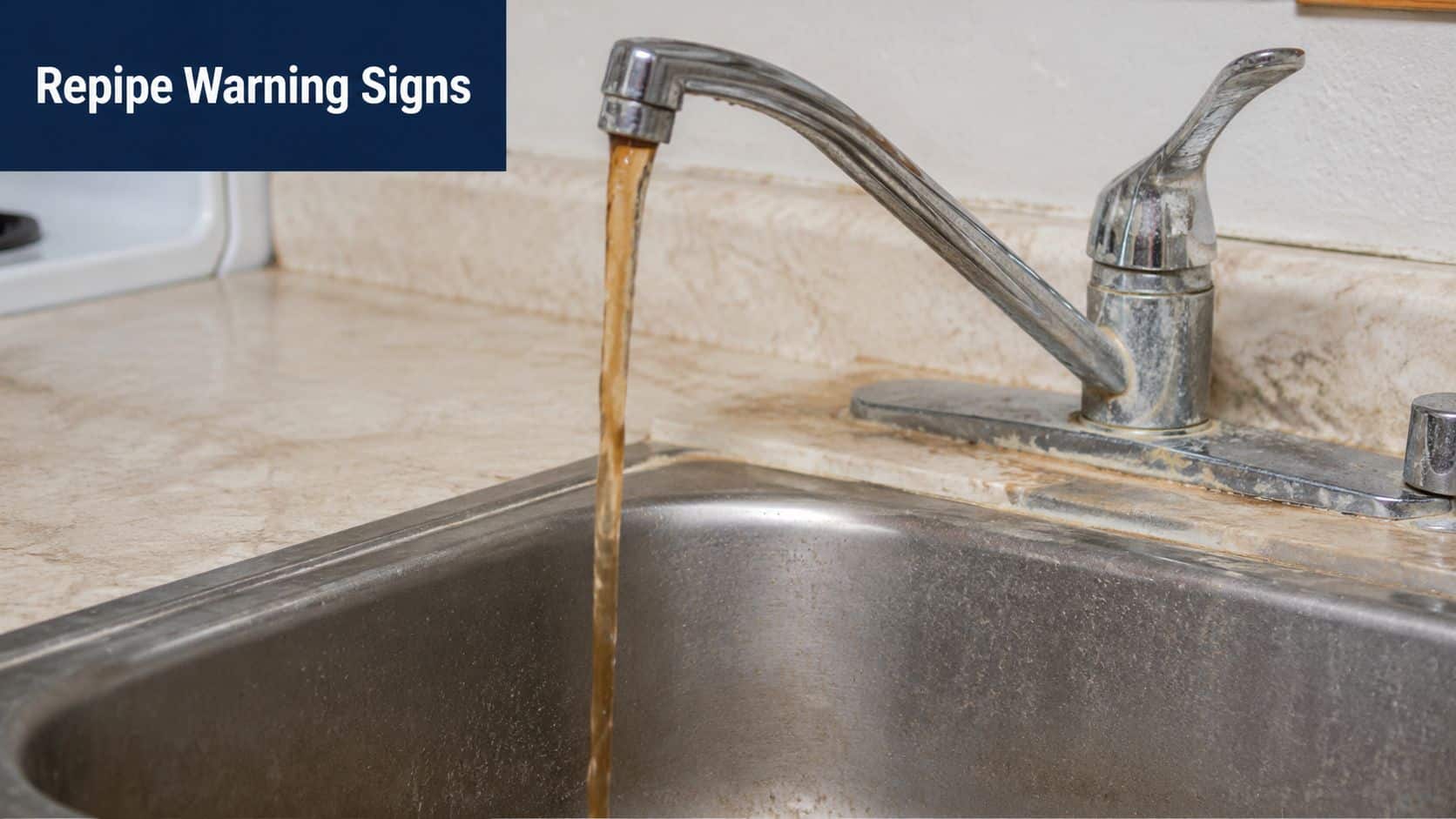
Rusty, brown, or yellow-tinted water often tells you the inside of the pipe system isn’t in good shape. Homeowners usually notice it first after water has been sitting in the lines overnight or after returning home from work.
Look at exposed piping near the water heater, in the garage, or under sinks. Signs that matter include:
- Green or white buildup: Mineral deposits and corrosion around fittings or joints.
- Staining near pipe runs: Evidence that slow leaks may have been happening for a while.
- Flaking or rough pipe surfaces: A warning that the pipe material is deteriorating.
If you’re already seeing those symptoms, a corroded pipe repair guide from our Las Vegas plumbing blog can help you understand what’s happening before the walls are opened.
Repeated leaks aren’t bad luck
A single leak can be repaired. Repeated leaks in different places usually indicate the system is aging overall. That’s especially true with pinhole leaks that show up one after another.
When that happens, it helps to diagnose the house methodically:
- Track the leak locations: One isolated bathroom is different from leaks spread across the house.
- Check the age of the home: Older neighborhoods often have original piping that’s reaching the end of its service life.
- Use proper diagnostics: A plumber may recommend water leak detection services or a sewer camera inspection if there are multiple plumbing concerns at once.
Property managers dealing with older buildings may also find this guide for facility managers useful for thinking through pipe risk before a failure turns urgent.
When the same house keeps producing new leaks, the repair strategy has to change. At some point, replacing the failing sections one by one costs more disruption than replacing the system properly.
Why a Professional Repipe Is Non-Negotiable in Las Vegas
A repipe isn’t a handyman project. It’s not a weekend DIY project either. This work affects the entire potable water system inside the house, the finished walls around it, and the property’s legal status once the job is complete.
Clark County requires permit and inspection
In Clark County, including Las Vegas, Henderson, and North Las Vegas, a building permit and mandatory inspection are required for every home repipe project, and that requirement protects homeowners by making sure new supply lines meet current plumbing standards, as explained in this Clark County repipe permit overview.
That matters for a few reasons:
- Code compliance: The new piping layout, materials, and connections have to meet current standards.
- Property protection: Unpermitted plumbing work can become a problem during resale, insurance questions, or later repairs.
- Safety: Proper pressure testing and inspection reduce the risk of hidden failures after walls are closed.
This is not optional.
The installer matters as much as the material
A good repipe depends on planning, access strategy, fixture reconnections, pressure balancing, and clean finish work around the plumbing scope. A poor install can leave you with noisy pipes, awkward routing, unnecessary wall damage, or callbacks that drag on for weeks.
That’s why homeowners should ask direct questions before hiring anyone:
| Question | Why it matters |
|---|---|
| Who pulls the permit | If the answer is vague, that’s a red flag |
| Who performs the work | You want qualified plumbing technicians, not unknown labor |
| How is the system tested | Pressure testing is part of doing the job responsibly |
| How are access points handled | Wall and ceiling openings should be planned, not improvised |
What DIY can and can’t do
A homeowner can sometimes identify symptoms, shut off water in an emergency, or document recurring issues for the plumber. That’s useful.
What a homeowner shouldn’t do is redesign the supply system, open and reconnect multiple water lines, or try to bypass permit requirements. The risk isn’t just a leak. It’s hidden damage behind walls, failed inspections, and a plumbing system you can’t trust.
A licensed and insured contractor brings structure to the process. In a city where plumbing systems deal with hard water, older housing stock, and strict county requirements, that structure is what keeps a repipe from becoming a bigger problem than the one you started with.
PEX vs Copper The Las Vegas Hard Water Factor
Generic repipe advice often proves inadequate. The appropriate repipe material in another city might not be the correct solution in Las Vegas. Our valley’s water conditions significantly influence this decision.
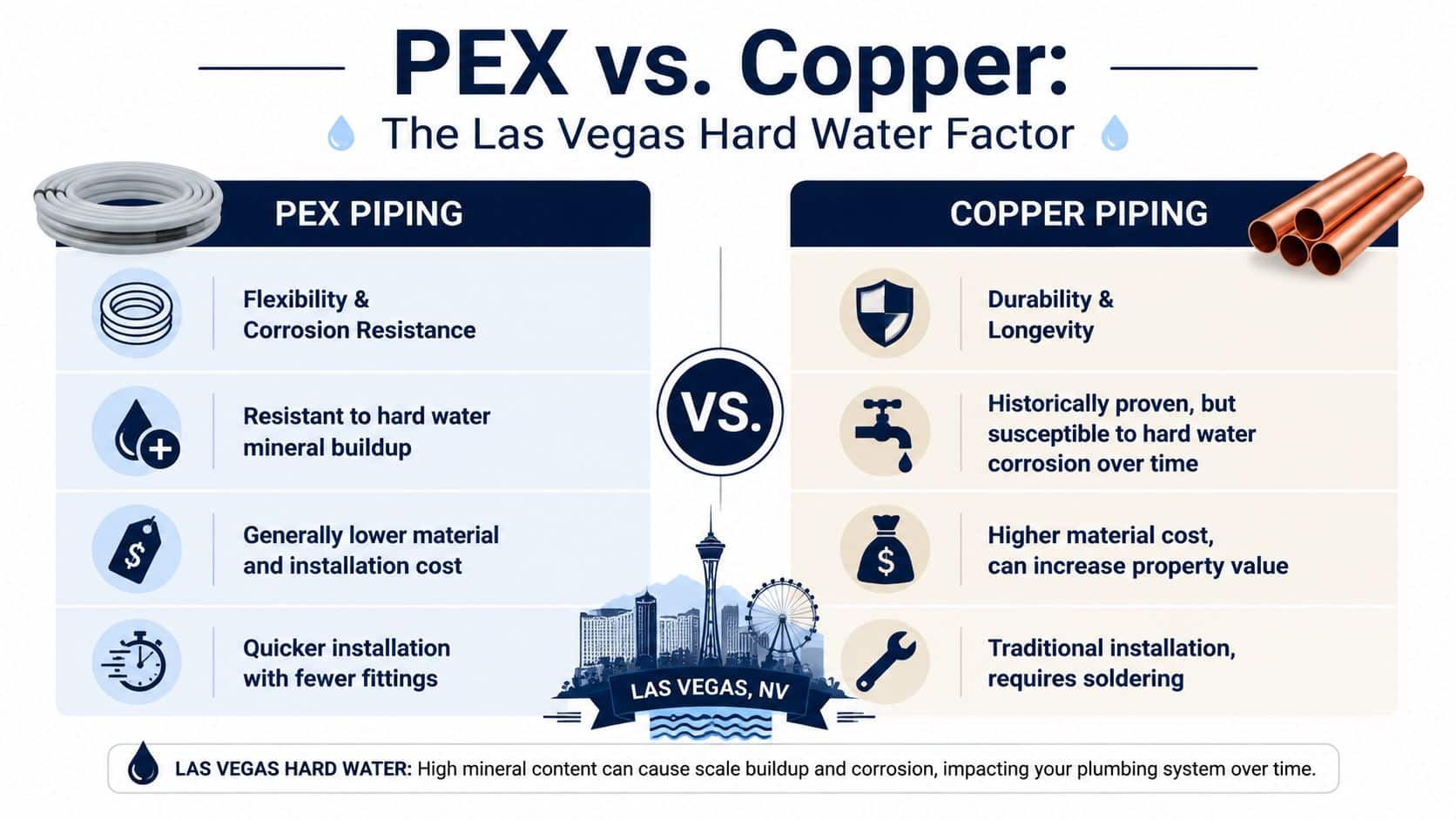
A major gap in most local content is the lack of real analysis around how Las Vegas water hardness of 16 to 18 GPG affects long-term pipe decisions and whether that mineral stress changes the trade-offs between PEX and copper in desert conditions. That’s the decision homeowners need help making.
Where PEX makes sense
PEX is popular for good reasons. It’s flexible, it can often be routed with fewer fittings, and it usually allows a faster installation path through attics, walls, and accessible cavities. In many homes, that means less disruption than a rigid-pipe approach.
PEX is also widely chosen when the homeowner wants a practical balance between performance and budget. In real-world repipe work, it often works well where access is tight and where the layout benefits from flexible routing.
A few practical strengths of PEX in Las Vegas homes:
- Flexible installation paths: Helpful in single-story homes with attic access.
- Lower material cost than copper: That can matter in whole-house work.
- Resistance to the kind of internal rusting homeowners associate with older metal pipe systems.
That said, flexibility isn’t a magic shield. In hard-water environments, pipe performance also depends on water pressure behavior, install quality, support spacing, fitting quality, and heat exposure in attic runs.
Where copper still earns consideration
Copper remains a serious option, especially for homeowners who want a traditional metal piping system and are comfortable with the higher upfront cost. In Las Vegas homes, copper pipes typically last 50 to 70 years before significant deterioration occurs, according to this Las Vegas home repiping overview.
That kind of track record matters. But copper isn’t immune to our local water conditions. Over time, hard water can contribute to wear, scale issues, and the kinds of recurring symptoms homeowners notice before replacement becomes necessary.
Copper may fit best when the homeowner values:
- A long-established material history
- Rigid pipe runs with traditional installation methods
- A willingness to invest more upfront for that preference
The real Las Vegas decision
The wrong way to choose is to ask, “Which material is best?” The better question is, “Which material fits this house, this access situation, this budget, and this homeowner’s priorities under Las Vegas water conditions?”
Here’s a simple comparison:
| Consideration | PEX | Copper |
|---|---|---|
| Installation flexibility | Strong | Limited compared with PEX |
| Material cost | Lower | Higher |
| Traditional feel | Less traditional | Strong |
| Performance in hard water discussion | Often chosen for practical reasons, but install conditions matter | Proven history, but still affected by local mineral stress |
Homeowners who are already dealing with scale often benefit from pairing any repipe discussion with the broader issue of water treatment. If you want a homeowner-friendly overview, this resource on maintaining your water filter is worth reading alongside a professional plumbing evaluation. On the service side, water softener service in Las Vegas often becomes part of the conversation when hard water is contributing to repeated plumbing wear.
The best repipe material is the one that’s installed correctly for your house and matched to local conditions. Material choice matters. Workmanship matters just as much.
The MG Drain Services Repipe Process Step by Step
You wake up to weak shower pressure, then notice a damp wall near the hall bath a week later. In Las Vegas, that pattern usually means the piping system needs a serious look, especially in older homes that have spent years dealing with hard water.
A well-run repipe follows a clear sequence. Homeowners should know what happens before the first wall cut, during installation, and after the water is turned back on.
The visit starts with diagnosis and a plan
The first appointment is about confirming scope. Some houses need a full repipe. Others have one failed section, a bad connection, or a pressure problem tied to a valve, regulator, or fixture.
I start by checking the visible piping, the leak history, the age of the home, and the pattern of complaints. One isolated repair is very different from recurring slab leaks, repeated pinhole leaks, or scale buildup affecting multiple fixtures. In Las Vegas, that distinction matters because hard water often causes system-wide wear, not just one bad spot.
MG Drain Services also handles related water line work, including main water line replacement and AquaPEX water line installation.
The quote should answer the questions homeowners actually have
A repipe estimate needs to show more than a price. It should explain which material is being installed, how the new lines will be routed, what areas of the home need access, and whether permits and inspections are included.
Good planning also addresses the parts that disrupt your week:
- Water shutoff timing: Homeowners need a realistic schedule for when water will be off and when it will be restored.
- Access points: The crew should identify whether runs will go through the attic, walls, or other open paths.
- Home protection: Floors, furniture, and work zones need protection before cutting starts.
- Patch expectations: Homeowners should know whether drywall repair is included or handled separately.
That conversation prevents surprises later.
Installation follows a sequence for a reason
Once the route is approved and permit requirements are handled, the crew shuts down the system and begins opening only the access points needed to run the new lines. In many Las Vegas homes, attic routing is the most practical option, but it depends on layout, accessibility, and the condition of the structure. The goal is to replace the old supply system with the least disruption that still allows clean, code-compliant work.
After the new piping is installed, the system is pressure tested before final connections are closed up. Fixtures are checked, shutoffs are verified, and the water is turned back on in a controlled way so any issue shows up before the job is considered complete.
The last step is the walkthrough.
Homeowners should be shown where the new runs were placed, what was changed, what permits or inspections were involved, and what to expect if finish repairs are being completed afterward. A good repipe is not just new pipe in the walls. It is a house left organized, tested, and understood by the owner.
A repipe goes better when the work is planned carefully, the water shutdowns are communicated clearly, and the homeowner knows exactly what was done.
Understanding Repipe Costs and Financial Options in Las Vegas
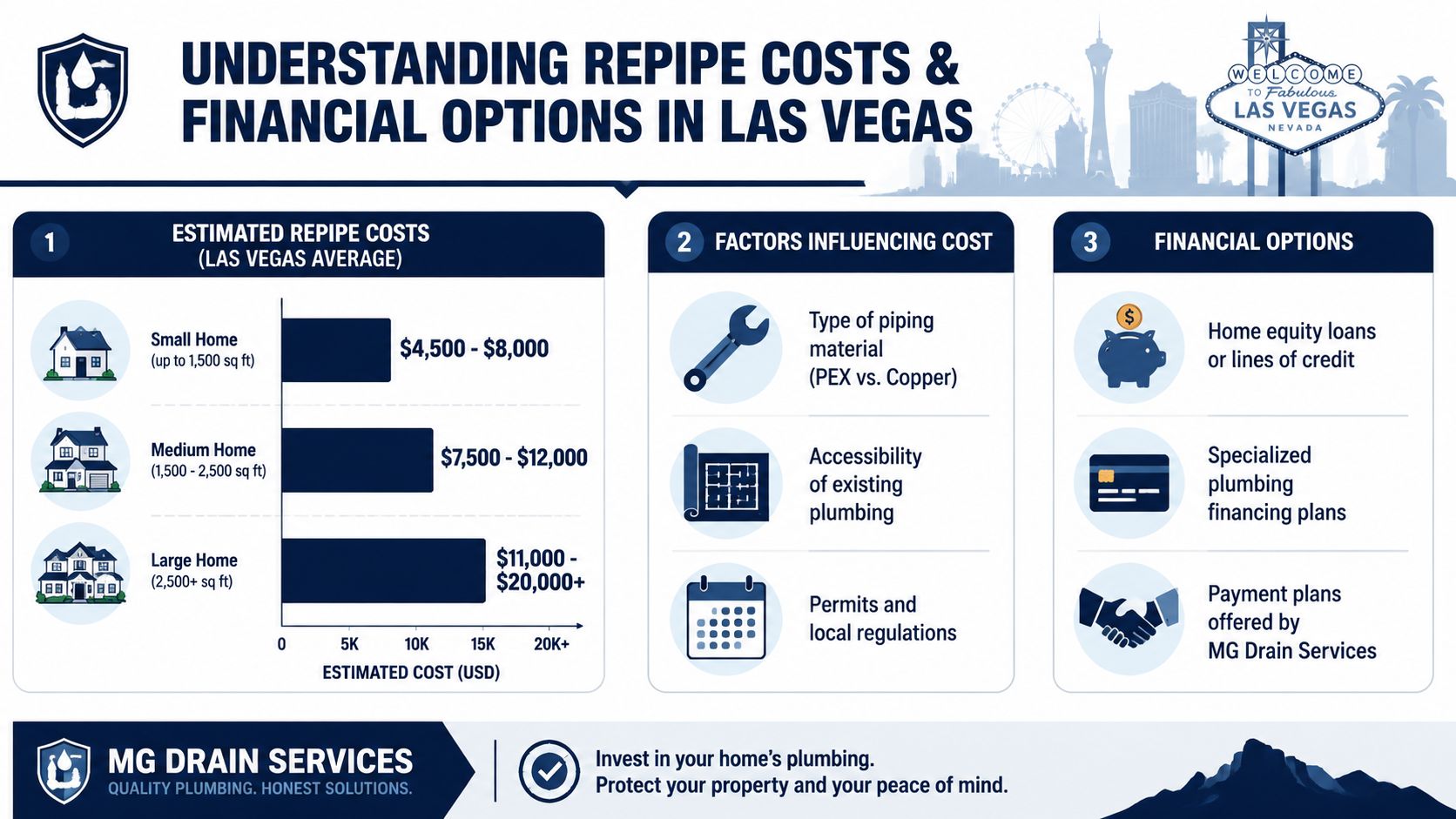
Cost is the first question homeowners ask, and it should be. A repipe is a major investment, so homeowners deserve real numbers without guessing.
In Las Vegas, a typical whole-house repipe with modern PEX costs between $3,000 and $6,000 for an average single-story home, while copper repiping ranges from $4,500 to $8,000 or more, with final pricing changing based on home size and bathroom count, according to this Las Vegas repipe cost breakdown.
What changes the price
Homeowners often hear one repipe number from a neighbor and assume their home should cost the same. That rarely works out. Final pricing moves based on access and complexity.
The biggest factors are usually:
- Pipe material choice: PEX and copper don’t price out the same.
- Home layout: A simple single-story layout is different from a more complicated routing situation.
- Bathroom count and fixture distribution: More connections usually mean more labor.
- Access difficulty: Attic runs, wall access, and finish conditions affect labor time.
- Permit handling and related project requirements: Repipe work in Clark County has formal code requirements.
The grant question homeowners keep asking
A lot of local content skips the question people really care about. Can a homeowner get a repipe covered, subsidized, or partly paid for by a local water district program?
The short answer is that the Las Vegas Valley Water District’s recent low-income leak repair grant program explicitly excludes full-system repiping. That’s important because many homeowners hear about leak assistance and assume it applies to whole-house replacement. It doesn’t.
That doesn’t mean financial planning is impossible. It means you need to approach a repipe as a major plumbing project and ask directly about available payment structures, scheduling options, and whether related repairs can be phased sensibly. What doesn’t work is relying on a grant intended for limited leak repairs and expecting it to cover a full supply-line replacement.
For landlords and property managers, that distinction matters even more. Budgeting for a repipe needs to start from the actual project scope, not from the hope that a local assistance program will absorb the cost.
Your Trusted Las Vegas Repipe Partner FAQs
A whole-house repipe is one of those jobs where trust matters as much as technical skill. Homeowners need clear answers, legal compliance, and workmanship that holds up in real Las Vegas conditions. That’s especially true in older homes where hard water, past repairs, and aging materials all affect what happens once the walls are opened.
Local plumbing professionals should be able to explain the work in plain language, discuss material trade-offs transparently, and handle the process without turning your house into a long-running construction mess. That includes bilingual communication when needed. Se habla español.
Common questions homeowners ask
How long does a repipe take?
That depends on the home layout, pipe routing, access conditions, and finish work around the plumbing. Some homes move quickly. Others take longer because the structure or access is more complicated. The right answer comes from an in-person evaluation, not a blind promise over the phone.
Will my water be off the whole time?
Not always. A well-planned repipe tries to limit shutoff windows where possible. There will be periods when water service is interrupted, but the goal is to organize the work so the disruption is controlled and communicated in advance.
How long will new pipes last in Las Vegas?
That depends on the material selected, installation quality, water conditions, and whether the home has treatment measures in place to help with hard water. Longevity isn’t just about what the pipe is made of. It’s also about how well the system was designed and installed.
Can the local leak repair grant cover a full repipe?
No. That’s one of the biggest misunderstandings in this category. The local low-income leak repair grant people ask about is for limited leak-related help and does not cover full-system repiping.
If your house keeps showing the same warning signs, it’s better to get a real assessment than keep guessing. Fast action can prevent wall damage, fixture downtime, and another round of temporary repairs.
Call MG Drain Services LLC for fast, professional plumbing in Las Vegas. If you need a water system repipe in Las Vegas, honest pricing, experienced technicians, and licensed, insured local service matter. Call 702-480-8070 or book online to schedule an estimate in Las Vegas, Henderson, or North Las Vegas.