The floor is wet, the sound won't stop, and you're trying to decide whether to grab towels or find the main shutoff. In that moment, the plumber's drive time is not the urgent part. The next few minutes decide how far the water travels, how much of the home gets involved, and whether the repair stays a plumbing job or turns into water damage cleanup. For a homeowner searching for What to Do Before an Emergency Plumber Arrives in Las Vegas, the first move is simple, stop the water first, everything else is secondary.
The First Two Minutes When Water Is Going Where It Shouldn't
A real plumbing emergency isn't just a leak. Local service guidance defines it by four things, a critical component failure, no way to shut the water off at the source, immediate repair needed to prevent escalating structural damage, and a health risk. That's why the first two minutes matter so much. Water doesn't wait politely at the cabinet edge, it moves into drywall, flooring, electrical areas, and anything stored low to the ground.
What to do right away
If the problem is a fixture, try the small shutoff valve first. Under a sink, behind a toilet, or at the water heater, that valve can stop the problem without taking down the whole house. If it doesn't close, or the leak is beyond that fixture, move to the main shutoff and then open a nearby faucet to bleed off pressure.
Practical rule: if water is actively spreading and you can't isolate it fast, your job is containment, not heroics.
That's the same reason professional triage starts with source control. Towels, buckets, and a wet vac can limit spread, but they don't fix pressure behind the line. If you want a broader homeowner checklist for water damage control while help is on the way, the steps to stop water damage from pipes guide gives a useful damage-control perspective.
For leaks you can't immediately identify, MG Drain Services' own water leak detection service is the kind of diagnostic help that matters when the water is coming from behind a wall, under a slab, or from a fixture that only leaks under pressure. The point is not to guess. The point is to stop the flow, protect the structure, and wait for the technician with the right tools.
Shutting Off the Water and the Water Heater the Right Way
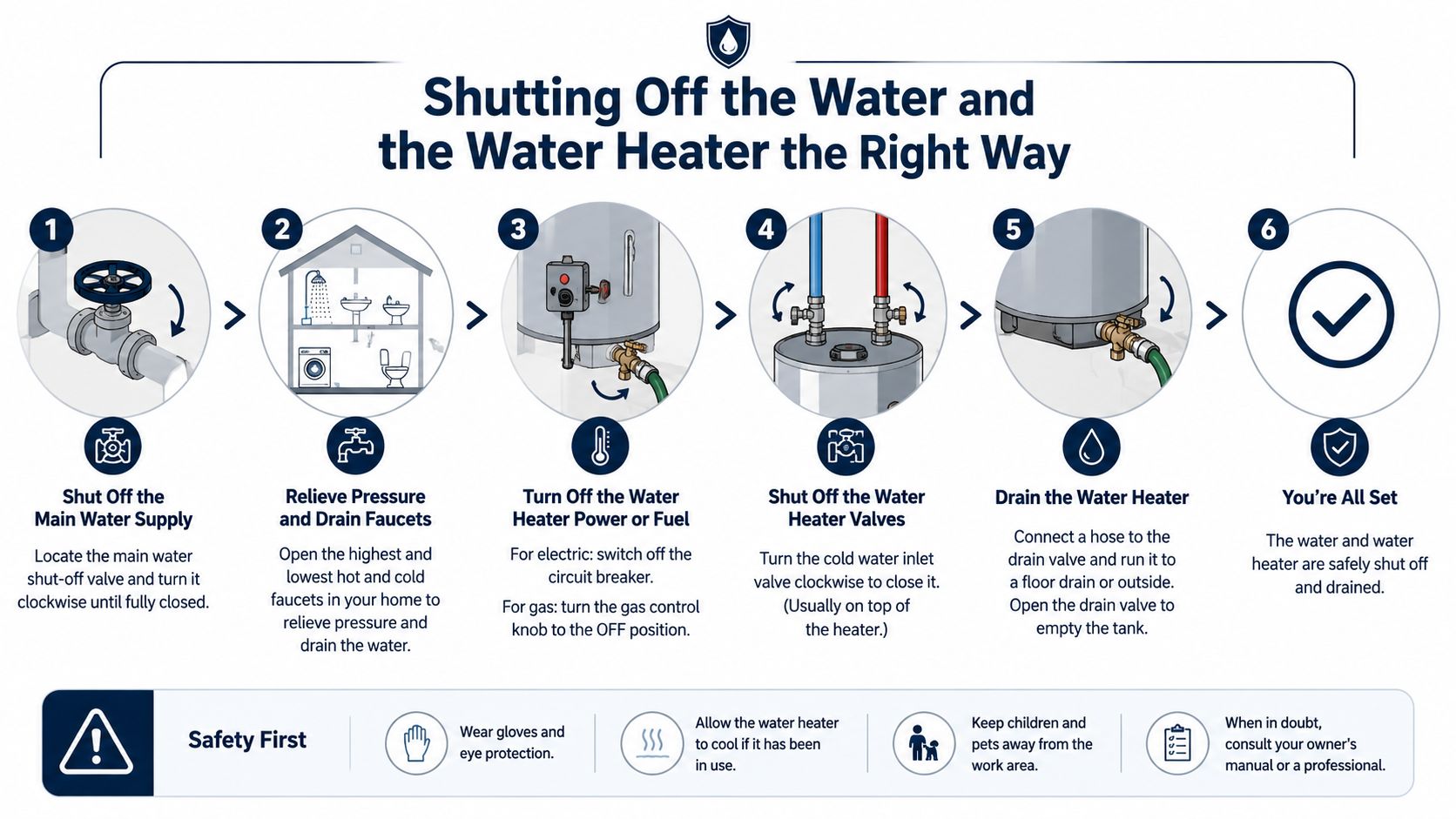
The shutdown order matters. Start at the fixture if you can. If the leak is under a sink, behind a toilet, or at a specific appliance, that local valve is the fastest control point. If the leak keeps going, go to the main shutoff, then open a faucet to relieve remaining line pressure so weak joints aren't still fighting trapped water.
Where the main shutoff usually is
In most Las Vegas homes, the main shutoff is at the meter box near the street. If it's a gate valve, turn it clockwise until it stops. If it's a ball valve, a quarter-turn shuts it off. If the valve is stiff, corroded, or buried under landscaping, don't force it and snap the stem. At that point, the plumber needs to see the valve in the condition it's in.
The water heater needs separate attention if it's involved in the leak or if the home has been shut down for a larger water emergency. Turn off the heater when the unit itself is leaking, when hot water isn't needed during a major shutoff, or if anything about the area smells like gas. For an electric unit, shut off the breaker. For a gas unit, use the gas control on the heater, and if you smell gas, treat that as a safety issue first.
If you need a deeper repair after the immediate shutdown, MG Drain Services' water heater repair page is the right place to look once the active problem is under control.
Opening a faucet after closing the main is one of the most skipped steps, and one of the most useful. It takes pressure off the line and can keep a small failure from becoming a bigger one.
When the Emergency Is a Sewer Backup Instead of a Leak
A sewer backup changes the rules. If water is coming up through a floor drain, tub, or toilet, the instinct to keep using the plumbing can make the problem worse. Don't flush, don't run sinks, and don't use any fixture that drains into the main line. That doesn't relieve the blockage, it pushes contaminated water farther into the home.
Signs you're not dealing with a clean-water leak
Gurgling drains are one clue. Multiple fixtures backing up at once is another. So is sewage appearing in a tub, toilet, or lower drain after someone uses a nearby sink. In older yards, root intrusion and aging line materials can turn a slow drain problem into a backup that looks like a sudden emergency.
Keep people and pets away from the affected area, and ventilate the room if it's safe to do so. Then call for a sewer-and-drain diagnosis, not just a generic “plumbing leak” visit. That matters because the repair path is different when the issue is in the sewer line, not a supply line.
MG Drain Services' sewer camera inspection page fits this situation because a camera can show whether the blockage is a root issue, a break, offset pipe, or recurring buildup. That's the kind of information you need before anyone starts guessing with the wrong fix.
If wastewater is coming back into the home, stop feeding the system. Every flush and every sink cycle can make cleanup harder.
Las Vegas homes require local context. Mature landscaping, tree roots, and aging underground piping are all part of the local setup here. A “plumber emergency” is often a drain-line emergency in disguise, and older properties tend to show it first.
Safety First When Water Meets Electricity or Gas
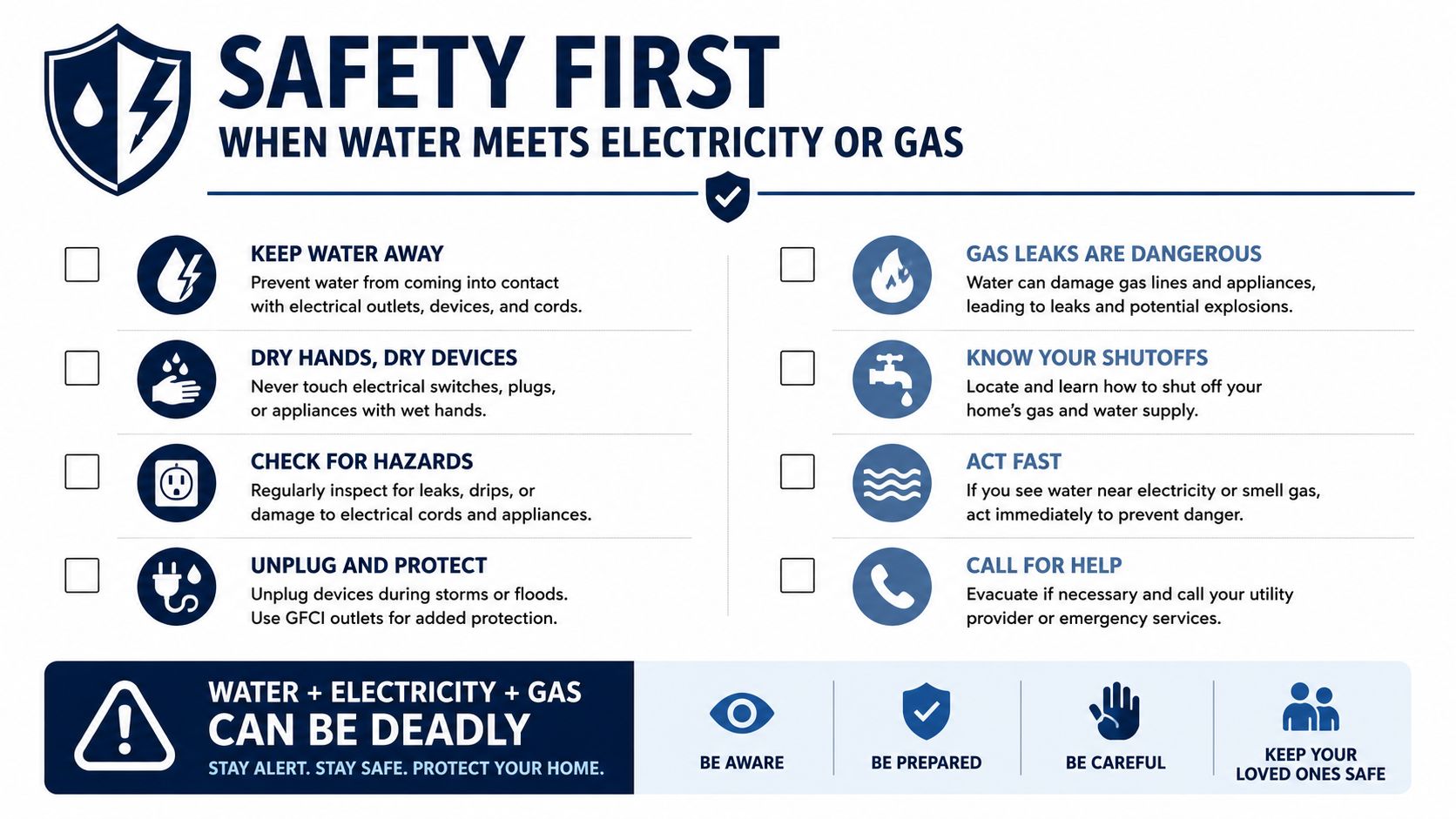
Water near electricity changes the decision tree fast. If the leak is nowhere near the panel and the floor is dry enough to stand safely, shutting off a single affected breaker can make sense. If standing water is near the panel, the outlets, or an appliance, leave the breaker box alone and wait. A wet panel is not the place to improvise.
What's reasonable and what isn't
Moving valuables out of the path of water is reasonable. Opening cabinet doors to let trapped water drain out is reasonable. Touching a corroded shutoff under pressure, wading into a flooded room with a live outlet nearby, or trying to dry out a panel with a towel is not.
If you smell gas, leave the area and get the gas situation handled before you focus on plumbing repair. Don't enter a flooded room where gas is suspected. That's one of those moments where property protection stops mattering for a minute and personal safety takes over.
For electrical context, a homeowner can use a GFCI guide by Lighthouse Energy Services to better understand why ground-fault protection matters in wet areas, but it doesn't replace common sense at the scene. If water is near a receptacle, assume that circuit is compromised until a pro checks it.
What to tell the plumber immediately
Have the condition of the area ready in plain English. Say whether you shut off the main, whether the heater was involved, whether power was affected, and whether any gas odor was present. Also mention pets, alarm systems, and anything that might make entry slower. That information helps the plumber choose the right first move instead of spending the first ten minutes gathering it from scratch.
What to Document and Tell the Plumber Before They Arrive
Photos help more than most homeowners think. Take a picture of the active leak, the valve position, the water meter if the main still seems to be moving, and any visible damage before cleanup starts. If water has already reached cabinets, drywall, flooring, or a hallway, capture that too. Those pictures don't just help with insurance, they help the plumber see whether the problem is still active, already contained, or spreading behind a wall.
The short version of what to have ready
- When it started: Give the first time you noticed the water, the backup, or the noise.
- What changed recently: New appliance, recent repair, irrigation running, heavy rain, or anything else that happened right before the issue.
- Where it's happening: Under a sink, at the water heater, in a bathroom, at a floor drain, or outside near the main line.
- Access details: Clear the cabinet, open gates, and have HOA or gate code information ready if the home needs it.
- Other risks: Pets, alarms, dark access areas, or anything that could slow the technician down.
That prep work shortens the diagnosis because the technician spends less time hunting for the problem and more time solving it. It also matters for price control, because emergency work is commonly billed far above standard service, and every minute lost to avoidable searching adds to the final labor window. MG Drain Services' cost estimates page is useful if you want to understand how the scope of work gets translated into a repair quote.
A clean timeline beats a long story. “It started after the dishwasher ran,” or “the toilet backed up after the shower” tells more than a paragraph of guessing.
If the home is in a gated community or an area with access delays, say that up front. A technician can't fix a leak faster if they're waiting at a gate with no code. The same goes for pets. A loose dog turns a simple repair into a logistics problem.
How After-Hours Pricing Affects Your Repair Bill
Emergency plumbing costs more because the work is happening outside standard hours and the response has to be fast. A Las Vegas cost guide says emergency rates typically run 50% to 100% more than weekday standard visits, with weekday-after-5 p.m. service often billed at +50% to +75%, weekends at +50% to +100%, and holidays at +75% to +100%. The same guide notes that some companies add a flat $150 to $300 emergency call-out fee on top of labor, and gives a simple example where a $250 weekday morning repair can rise to $400 to $500 late on a Saturday. Flacks Flooring after hours scheduling is a different trade, but the basic cost reality is the same, after-hours work is priced around urgency and availability.
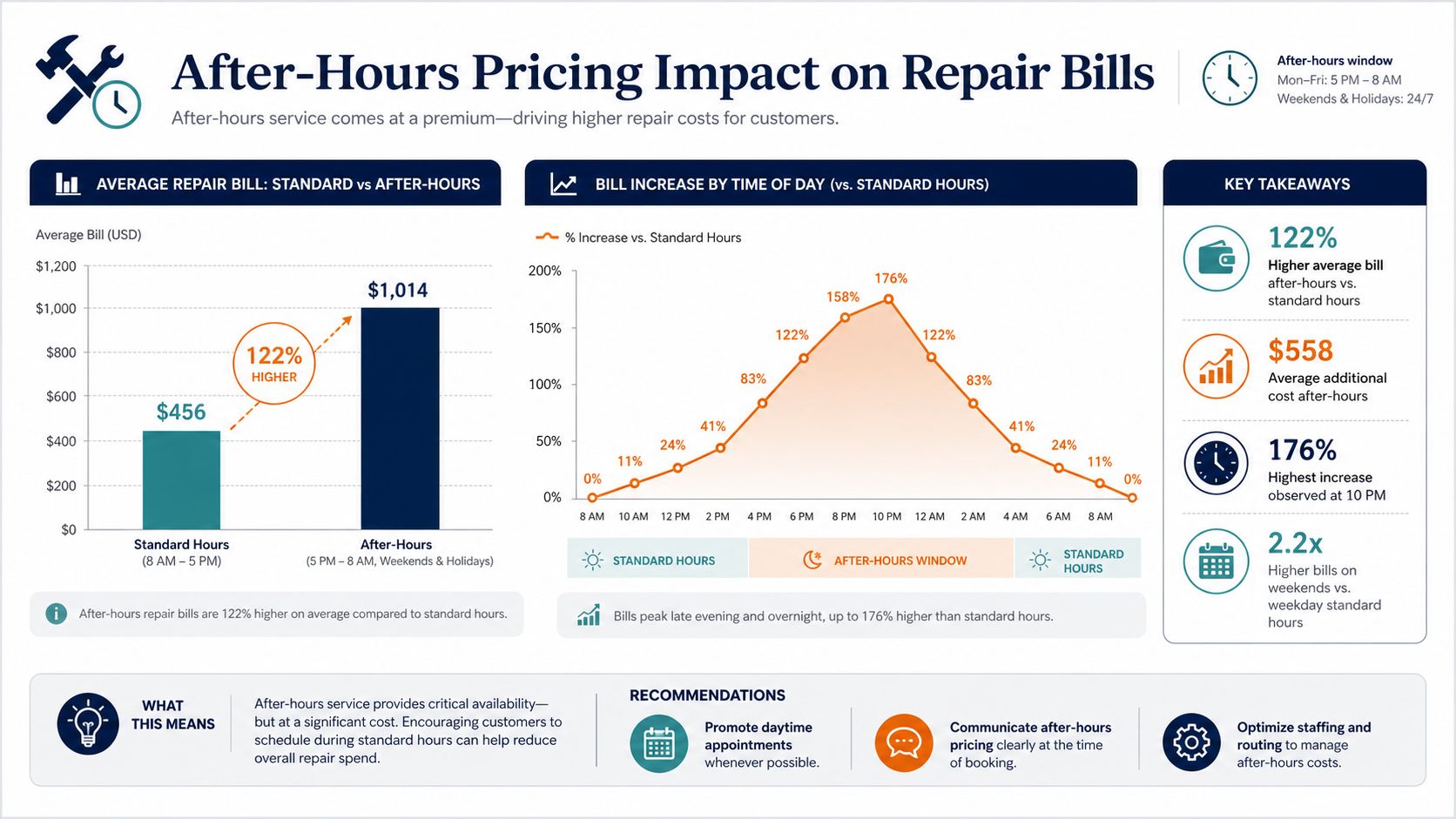
What actually reduces the bill
Preparation. Not guesswork, not arguing about the price at the door. If you know where the shutoff is, document the damage, clear access, and explain the symptoms clearly, the plumber can get to diagnosis faster and spend less billable time sorting through basics. That can matter as much as the repair itself.
The price difference also explains why waiting just to “see if it gets better” is often expensive. If the leak keeps spreading, the home absorbs more damage, and the repair becomes more complicated. That's why the best move before anyone arrives is to stop the source, then help the technician work cleanly and quickly.
For homeowners comparing response options, MG Drain Services' same-day scheduling and service information from the broader market context shows how much the timing affects urgency. The right call is the one that gets the right diagnosis, not the one that sounds cheapest at first.
Your Pre-Plumber Checklist and What Happens Next
Keep this in your head or on your phone while the floor is still wet.
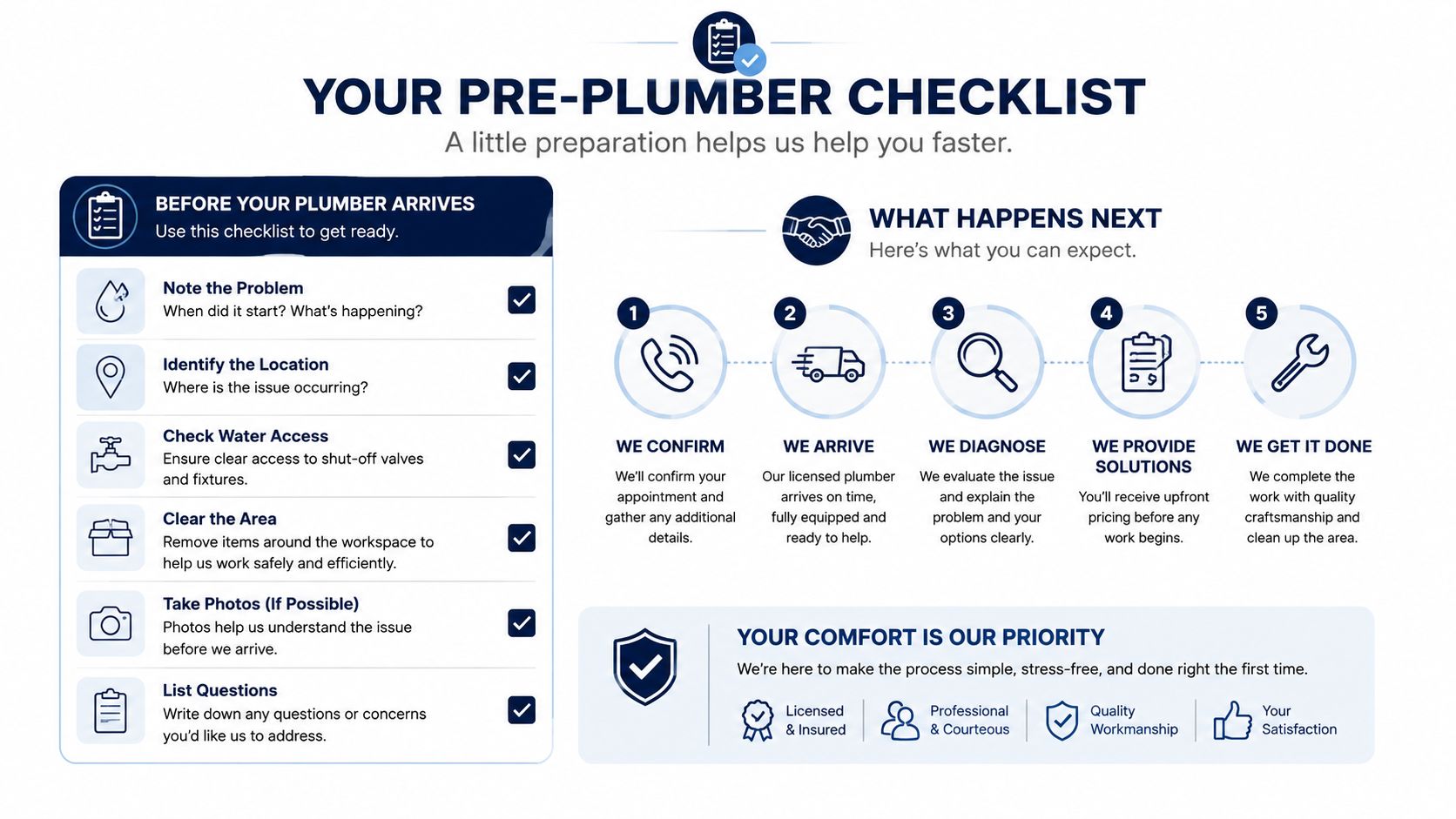
The checklist
- Stop the water: Use the fixture shutoff first, then the main shutoff if needed.
- Relieve pressure: Open a nearby faucet after closing the main.
- Shut down the heater if it's involved: Electric breaker or gas control, depending on the unit.
- Avoid every fixture if it's a sewer backup: No flushing, no sinks, no extra drain use.
- Keep away from electrical and gas hazards: Don't touch a wet panel or enter a space that smells like gas.
- Document the scene: Photos, quick notes, and the water meter if it still seems active.
- Clear access: Open cabinets, move items, open gates, and control pets.
- Report the timeline: Tell the plumber when it started and what changed before it began.
Public emergency-arrival targets in the Las Vegas area vary, with some companies saying under an hour and others saying their local windows are closer to 20 to 45 minutes depending on truck location, access, and HOA or gate delays. That's normal. The important part is being ready when the truck gets there, because the first thing a good plumber does is verify the source, the shutoff, and the type of failure before picking up a tool.
MG Drain Services LLC is local, family-owned, licensed, insured, and owner-operated, and owner Miguel Garcia is a Nevada-licensed C-1d plumbing contractor with more than 25 years of experience. The company serves Las Vegas, Henderson, North Las Vegas, Summerlin, and surrounding areas, with a residential focus on leak diagnosis, drain problems, water heater issues, and sewer line evaluation.
If the water isn't stopping, the backup smells like sewer gas, or the shutoff isn't safe to reach, call MG Drain Services LLC at 702-480-8070 and describe what you're seeing before anyone arrives. For residential diagnosis and repair in the Las Vegas Valley, visit MG Drain Services LLC and get the problem looked at by a local plumber who knows how these homes are built.