Las Vegas water measures 291 parts per million (ppm), or 17 grains per gallon (gpg), according to the Las Vegas Valley Water District, placing it firmly in the very hard category. A separate district reading lists 280 ppm, or 16 gpg, while a 2024 report summarized by local coverage recorded an average of 304 ppm. Those readings vary by source and service area, but they point to the same practical conclusion: mineral buildup is a normal plumbing concern across the valley, not an unusual household problem. (Local explanation of Las Vegas water hardness)
Hard water doesn't usually destroy a plumbing system overnight. Calcium and magnesium gradually leave scale on faucets, restrict aerators and valves, settle in water heaters, and interact with older piping. The right response depends on what you're seeing, how hard the water is in your neighborhood, and whether the existing pipes are still structurally sound.
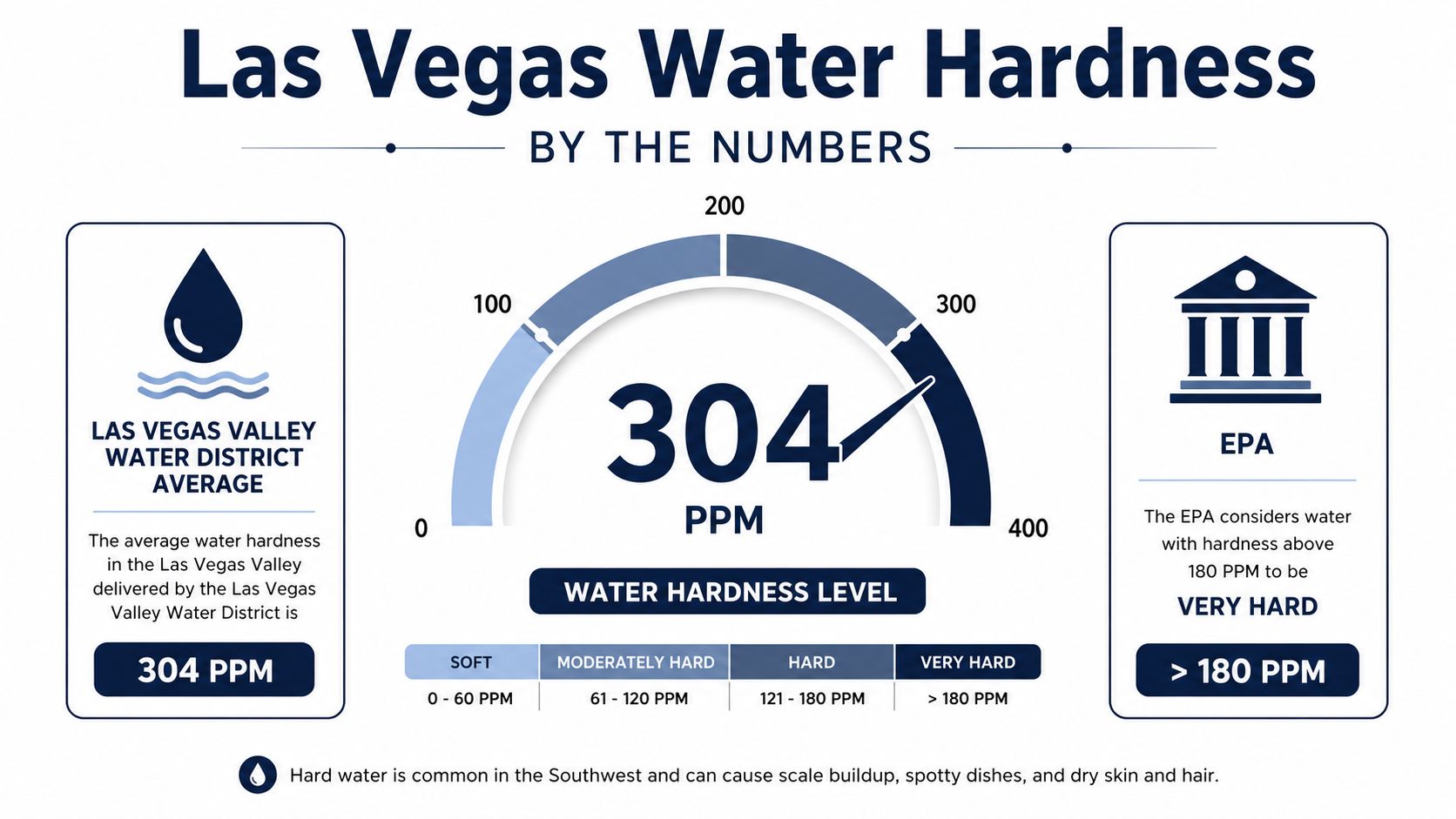
Las Vegas Water Hardness by the Numbers
Las Vegas Valley water measures 291 ppm, or 17 gpg, placing it in the very hard category. Consumer guidance also lists 280 ppm, or 16 gpg, and a 2024 report recorded average hardness of 304 ppm from the valley's two main treatment plants. The readings vary by source and service area, but they all point to the same plumbing reality: scale is a routine maintenance concern, not an isolated household problem. (Las Vegas hardness data and local plumbing context) (2024 hardness report summary)
The U.S. Geological Survey classifies water above 180 ppm as very hard. Las Vegas readings sit well above that benchmark. Dissolved calcium and magnesium can separate from the water when it is heated, evaporates, or passes through areas where flow changes, leaving deposits on plumbing surfaces.
Why the supply creates recurring scale
The reported hardness is an average for regional sources and treatment facilities, not a diagnosis of every home. Inside a residence, temperature, fixture design, plumbing layout, and pipe age determine where deposits appear first. Newer, open piping may respond well to treatment and routine cleaning. Older lines may need camera inspection before anyone recommends a softener or repipe.
Typical collection points include:
- Faucet aerators, where narrow openings catch deposits.
- Showerheads, particularly low-flow models with small passages.
- Valve cartridges, where scale can stiffen handles or affect temperature control.
- Water heaters, where heat promotes buildup on internal components.
- Supply piping, where deposits can gradually reduce the usable opening.
Clear water can still create service problems. A maintenance plan should focus on scale-sensitive parts and the condition of the existing pipes, especially when flow has declined or fixtures repeatedly clog.
How Hard Water Damages Plumbing Parts
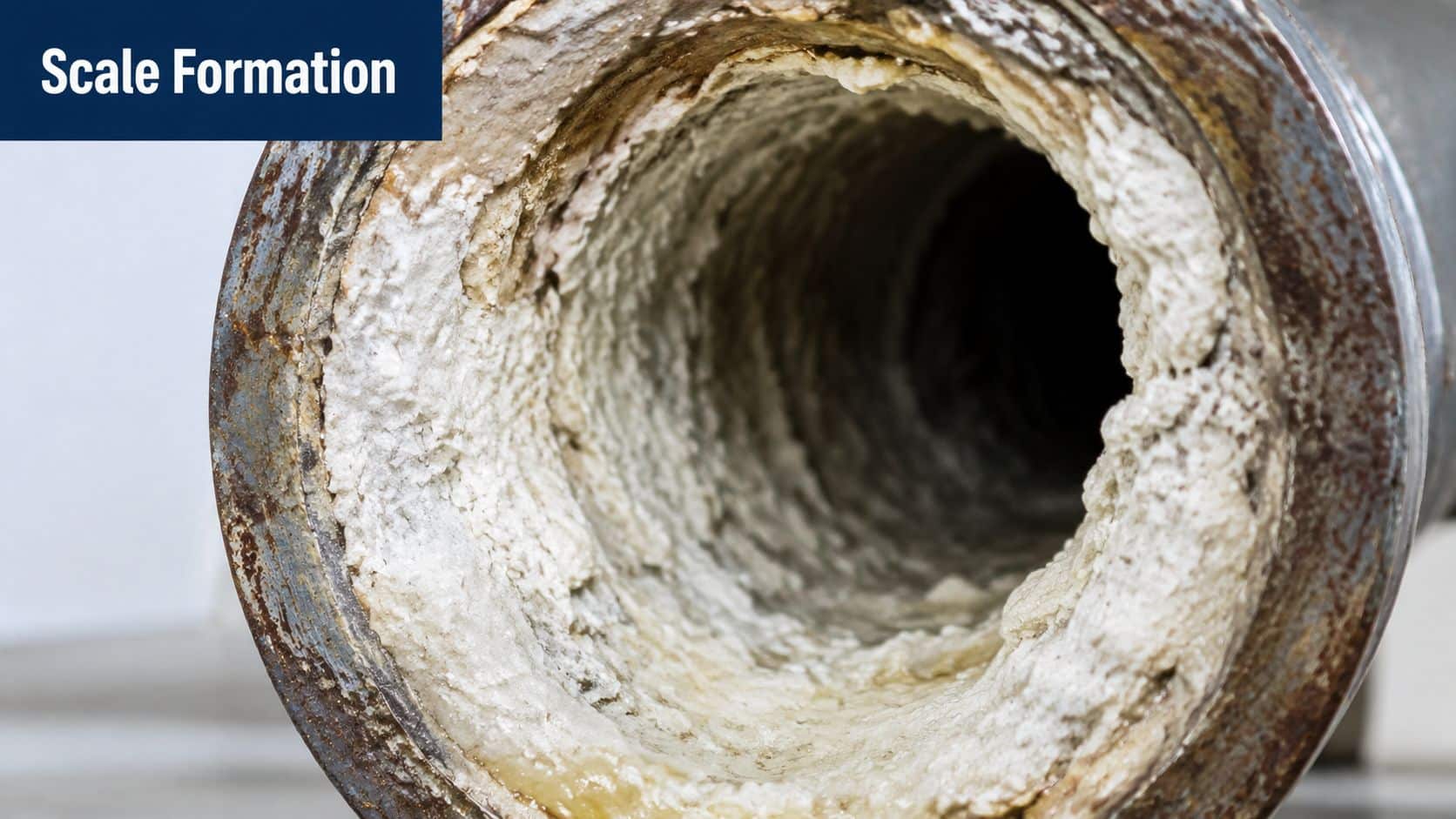
The most visible clue is often a white crust around a faucet or showerhead. That residue forms when water evaporates and leaves calcium and magnesium behind. Inside a fixture, the same minerals can collect in passages that homeowners can't see, gradually restricting flow or interfering with moving parts.
A 2024 Las Vegas Valley Water District report summarized by local coverage recorded average hardness at 304 ppm, based on readings from the valley's two main treatment plants. District consumer materials continue to place local hardness around 291 ppm and 17 gpg, so the exact reading depends on the reporting period and source. (Local summary of the district's 2024 water-quality report)
Those reported readings fall within a 280 to 304 ppm range, compared with the USGS very-hard benchmark of more than 180 ppm. In practical terms, that range represents roughly 55% to 70% more hardness than the benchmark, based on the reported figures. (Las Vegas water hardness explanation)
Where the damage shows up first
Water heaters deserve special attention because heat accelerates deposit formation. Scale can settle around heating surfaces, valves, and tank components, forcing the unit to work less efficiently and making rumbling or popping sounds more likely. If hot water recovery changes or the heater makes unfamiliar noises, water heater repair in Las Vegas can determine whether maintenance, component repair, or replacement makes sense.
Showerheads and aerators often show the problem sooner because their openings are small. Toilets may develop mineral rings or fill-valve problems, while valve cartridges can become difficult to operate. Supply lines and piping present a different concern. Deposits may narrow the passage gradually, so a homeowner experiences reduced flow without seeing a visible leak.
Cleaning the outside of a fixture can improve appearance, but it doesn't remove deposits deeper in the valve or piping. A softener or conditioner can reduce future scale, but it can't automatically restore a passage that's already restricted. That distinction prevents a common mistake, treating every hard-water symptom as an equipment-installation problem.
Hardness Varies by Las Vegas Neighborhood
Las Vegas water hardness isn't a single number at every tap. The utility recommends a softener setting based on 280 ppm, or 16 gpg, while independent local coverage reports that some ZIP codes in Henderson and Green Valley can reach 25 gpg and some areas of North Las Vegas measure closer to 12 to 18 gpg. (Local discussion of hardness by Southern Nevada service area)
That difference changes how a treatment system should be programmed. A generic factory setting may under-treat a home in a harder zone, while an unnecessarily high setting can increase maintenance without solving a different plumbing problem. The useful question isn't only, “Is Las Vegas water hard?” It's, “What hardness reaches this house, and what condition are the pipes already in?”
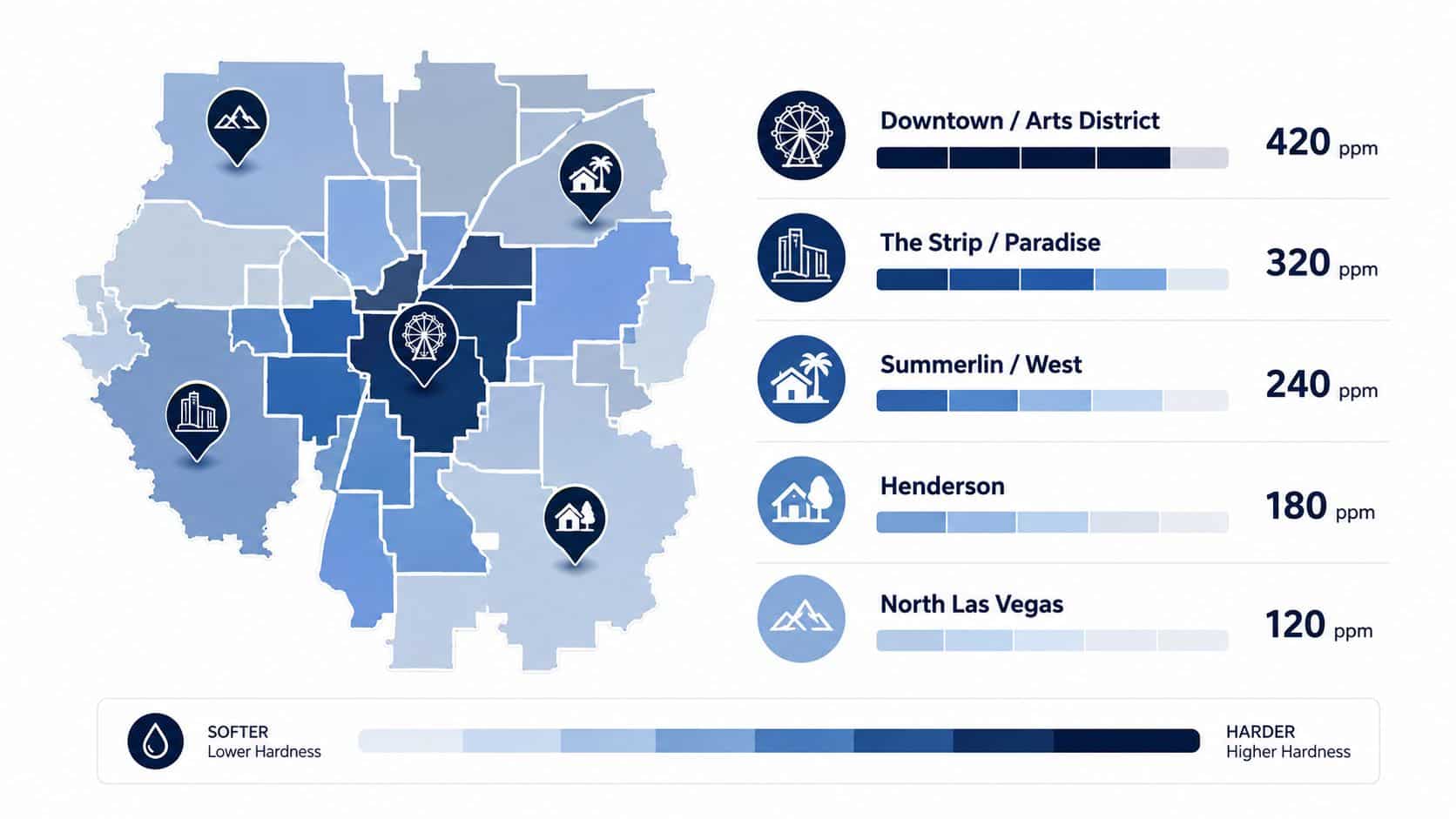
Comparing service areas
| Area | Hardness (gpg) | Plumbing Priority |
|---|---|---|
| Las Vegas Valley utility guidance | 16 | Set treatment equipment accurately and monitor scale-prone fixtures |
| Henderson and Green Valley, some ZIP codes | Up to 25 | Verify the local reading before sizing or programming treatment |
| North Las Vegas, some areas | 12 to 18 | Test at the property and watch heater and fixture performance |
The table isn't a substitute for a property-specific test. Service-area averages don't account for a home's plumbing age, internal corrosion, private treatment equipment, or sediment already in the system.
Why a small setting error matters
A softener uses the hardness setting to calculate how much mineral load its resin must handle. Local guidance notes that even a 1 to 2 gpg error can leave enough calcium and magnesium to continue scale formation on fixtures, heater elements, and valve cartridges. (Local guide to Las Vegas water treatment settings)
Before buying equipment, confirm the hardness used for the home rather than relying only on a national default. For a residence in Henderson or Green Valley, a setting suitable for a lower-hardness North Las Vegas area may not provide the expected protection. Conversely, treatment should also account for the home's actual demand and plumbing condition, not just the highest number found online.
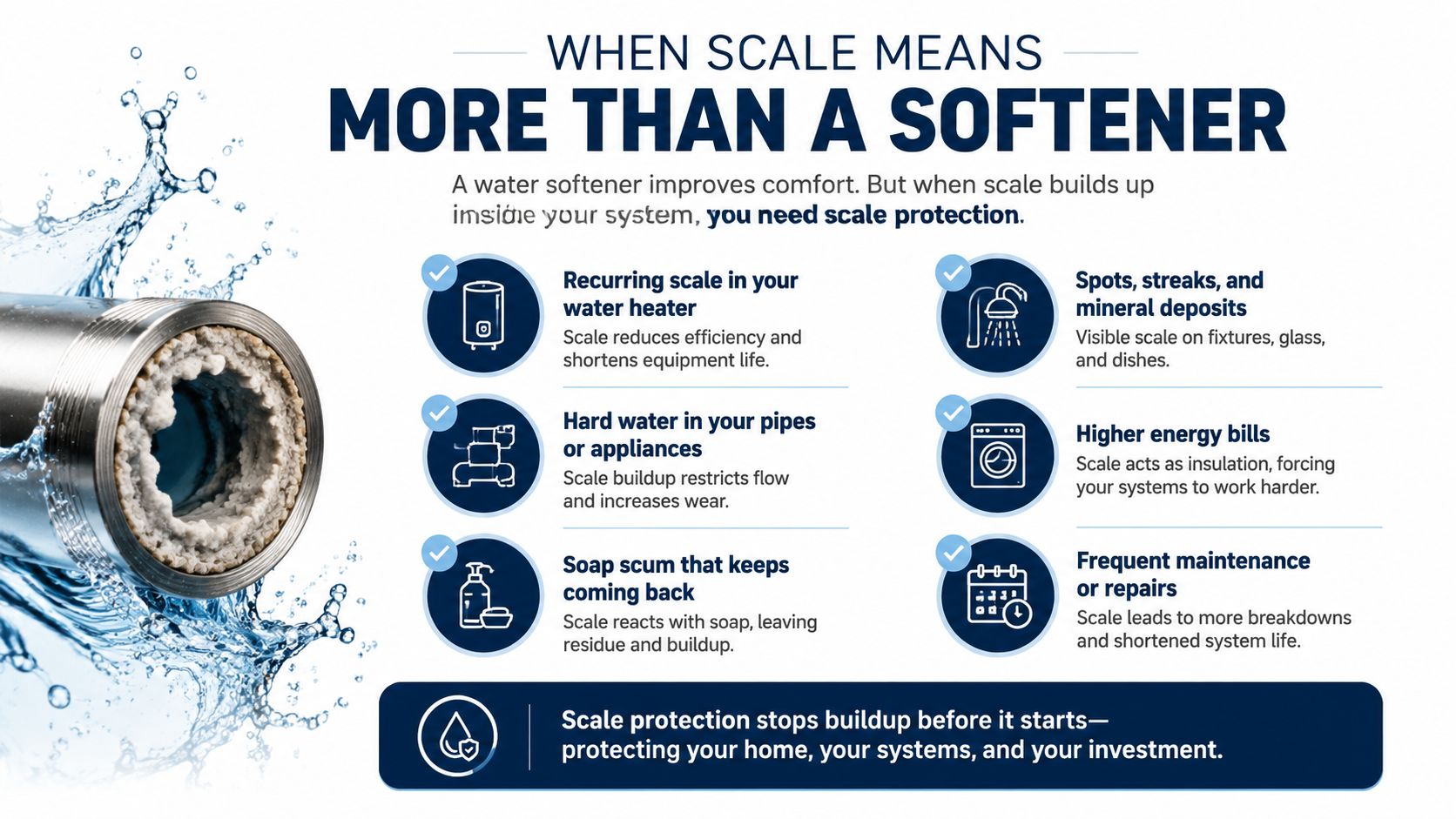
When Scale Means More Than a Softener
In homes built before 1990, mineral scale often sits on aging pipe walls. A softener reduces new deposits, while existing restrictions still require inspection and possibly cleaning or replacement. That distinction matters when older Las Vegas plumbing includes cast iron, galvanized, or aging copper piping.
Hardness describes the water entering the property. It does not show the pipe's interior condition. A slow aerator points to a fixture-level restriction, but weak flow across the home can indicate narrowed piping, a failing pressure component, or another system-wide problem. Pipe age changes the next step: newer, sound piping may respond to descaling, while older lines may need a camera inspection before anyone applies pressure or recommends a repipe.
Recent local plumbing material places Las Vegas hardness around 16 to 18 gpg and connects that condition with shortened tankless water-heater life and quickly clogged low-flow fixtures. It also points to pipe age, prior corrosion, and sediment as factors in the repair decision. (Hard-water effects on Las Vegas plumbing)
Match the fix to the evidence
- Softener or conditioner: Use treatment when the goal is reducing future mineral exposure. A salt-based softener removes hardness minerals, while a salt-free conditioner changes scale behavior without producing the same soft-water result.
- Descaling: Consider it when deposits restrict flow but the pipe remains structurally sound. The method depends on the material, location, and severity of the buildup.
- Camera inspection: Choose inspection when flow is reduced throughout the home, blockages recur, water is discolored, or symptoms vary between fixtures. The camera helps separate deposits from corrosion, breaks, or another obstruction.
- Replacement or repipe evaluation: Older piping with extensive corrosion may not safely withstand cleaning. In that situation, replacement can be more dependable than repeated treatment.
A water softener service Stultz resource provides general background on treatment-system repair. Local installation still needs to account for Southern Nevada plumbing conditions and discharge requirements. For stubborn restrictions in suitable drain lines, hydro jetting service can remove accumulated material, but a professional should confirm that the pipe can tolerate the process first.
Practical rule: Preventing new scale and removing old scale are separate jobs. Inspect first when pipe age or corrosion is part of the picture.
Homeowner Checks and Safe Troubleshooting
You can identify several hard-water clues without opening a wall or disassembling a pressurized valve. Start with the fixture that shows the clearest symptom, then compare it with another faucet or shower in the home.
Remove an accessible aerator. Shut off the faucet, unscrew the aerator by hand or with a cloth-wrapped wrench, and look for white crust or reduced openings. Soaking a removable aerator in an appropriate descaling solution may restore flow, but replace it if the screen or threads are damaged.
Check the showerhead pattern. If some spray openings are blocked while others work normally, surface scale is a reasonable suspect. Clean only the removable head. Don't force deposits into the shower arm or use aggressive chemicals on an unknown finish.
Listen to the water heater. Rumbling, popping, or changes in hot-water performance deserve attention because deposits can collect around heated components. Don't open the tank, remove sealed covers, or work around gas and electrical connections unless you're qualified to do so.
Observe toilets and shutoff valves. A toilet that runs, fills slowly, or has a stiff shutoff may have a scaled fill valve or cartridge. Never force a seized valve. A broken stem or connection can turn a small adjustment into a leak.
If you see moisture near a wall, cabinet, water heater, or slab, stop troubleshooting and arrange professional water leak detection. A home's public history can also help when you're evaluating an older property, and this guide to public records for agents explains how ownership and property records may support broader due diligence.
The safe DIY boundary is simple: clean accessible parts, make basic fixture adjustments, and document symptoms. Don't descale pressurized lines, disassemble sealed valves, or assume low pressure comes from hard water without checking the rest of the system.
Calling MG Drain Services for Hard Water Damage
A proper diagnosis starts by separating a fixture problem from a piping problem. A plumber may compare flow at multiple fixtures, inspect aerators and cartridges, check the water heater, verify visible leaks, and use sewer camera or leak-detection equipment when the symptoms suggest a concealed restriction or damaged line.
MG Drain Services LLC is a licensed and insured, family-owned, owner-operated residential plumbing company serving Las Vegas, Henderson, and North Las Vegas. Owner Miguel Garcia is a Nevada-licensed C-1d plumbing contractor and journeyman plumber with more than 25 years of plumbing experience. The company works with drain-cleaning, hydro-jetting, camera-inspection, locating, and leak-detection equipment to identify the cause before recommending a repair.
The solution may be modest, such as replacing a scaled aerator, valve cartridge, fill valve, or water-heater component. If deposits are present in structurally sound piping, descaling may be considered. If an inspection shows severe corrosion, restricted aging water lines, or a system that won't tolerate cleaning, a repipe evaluation may be more responsible than repeated temporary repairs.
Drain symptoms can also overlap with mineral buildup, especially in older homes and lines exposed to years of sediment. Residential drain cleaning in Las Vegas can address a blockage, but recurring problems should be investigated rather than repeatedly cleared without identifying the underlying condition.
If mineral deposits keep returning, water flow is declining across several fixtures, or the water heater is noisy, call 702-480-8070 to schedule a professional diagnosis in the Las Vegas Valley.
MG Drain Services LLC provides residential plumbing diagnosis and repair for hard-water symptoms, including water-heater problems, restricted fixtures, leaks, drain issues, and aging-pipe concerns. Visit MG Drain Services LLC to request service in Las Vegas, Henderson, or North Las Vegas, or call 702-480-8070 to discuss the symptoms before they become a larger plumbing repair.