
Las Vegas homes face a rare combination of 16 to 17 grains per gallon hard water, slab-on-grade construction, desert soil movement, and a wide mix of older cast iron and newer PVC drains, and those conditions change how fixtures fail and clogs are cleared compared with softer-water cities. A slow tub, rumbling water heater, or toilet that backs up into the shower often needs a local diagnosis, not a generic plumbing trick.
A homeowner in Summerlin may notice a tub draining slowly while a Henderson kitchen sink backs up after dinner. In North Las Vegas, a water heater may sound like a kettle before it leaks. The symptom looks ordinary, but the cause may be scale, buried piping, soil movement, roots, or a drain network that has already narrowed from age.
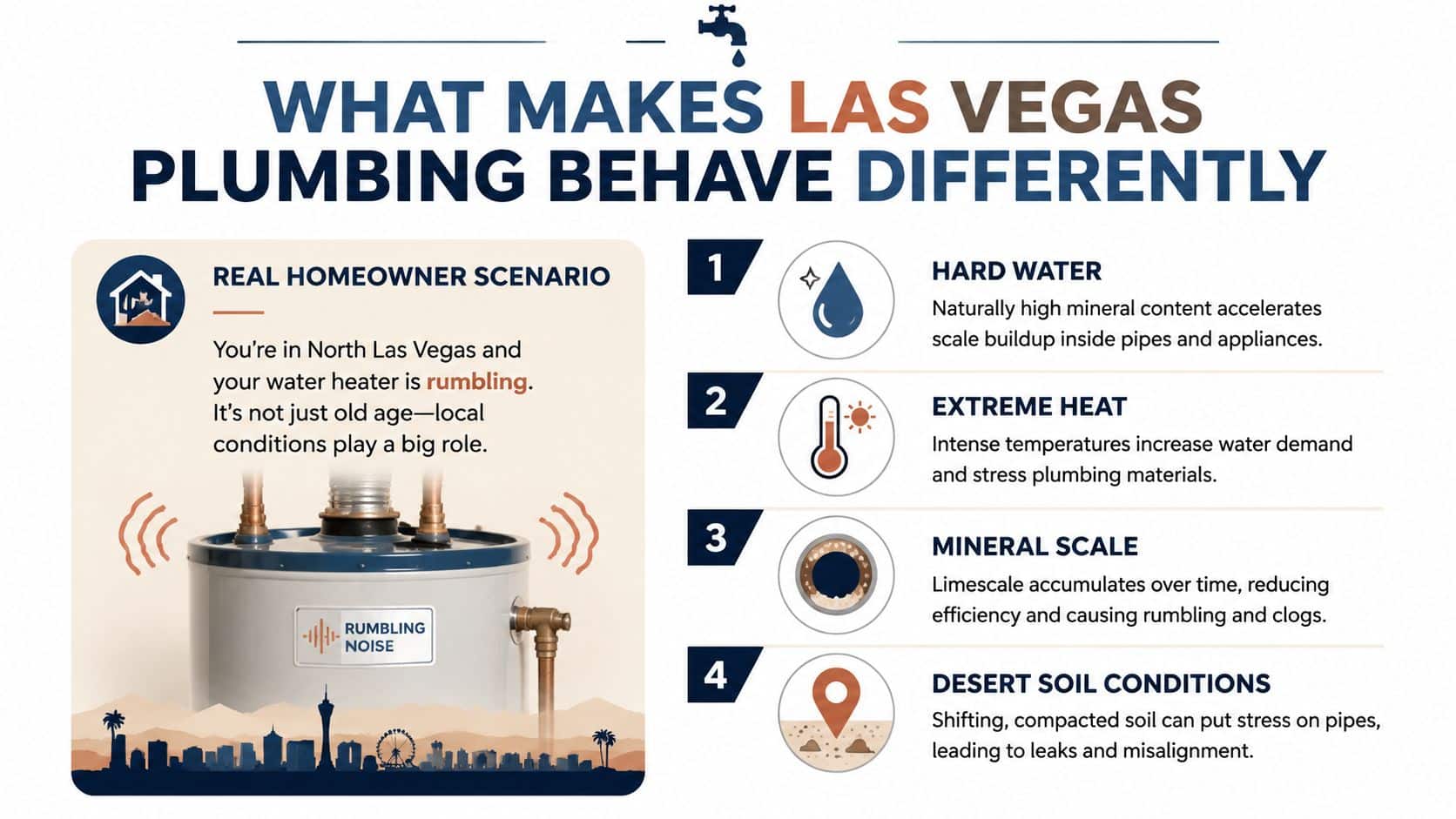
What Makes Las Vegas Plumbing Behave Differently From Other Cities
A North Las Vegas homeowner with a rumbling water heater should suspect local conditions before replacing the temperature setting or pouring in a descaling product. The first factor is very hard water. The Las Vegas Valley Water District reports local hardness at 291 parts per million, or 17 grains per gallon, and its FAQ also cites 280 parts per million, or 16 grains per gallon for the valley. Calcium and magnesium carried through the Colorado River and Lake Mead leave scale inside aerators, valves, water heaters, and pipe interiors. (Las Vegas water quality and hardness background)
The second factor is construction. Slab-on-grade homes hide supply lines beneath concrete and tile, so a pinhole leak may show up as a warm floor, unexplained meter movement, or damp baseboard rather than an accessible drip. The third is desert soil. Seasonal moisture changes and storm runoff can shift soil around older buried piping, stressing joints and connections.
The fourth is the mixed age of local drain systems. Older homes may have cast iron with internal scale, while newer construction commonly uses PVC. The material, home age, landscaping, and symptom determine what gets checked first.
Field rule: Start with the home's age and the location of the symptom. Don't pick up a drain machine until you know whether the obstruction is at the fixture, in the branch line, or under the slab.
For a useful comparison of how plumbing guidance changes between regions, review these Irish household plumbing rules. The principles are useful, but Southern Nevada's mineral load and slab construction require different service decisions. If a water meter moves with every fixture off, schedule water leak detection before opening walls or breaking concrete.
How a Plumber Diagnoses a Las Vegas Home on the First Visit
A proper first visit begins with observation, not a cable. At the water heater, the plumber looks for white calcium crust around the pressure relief valve, shutoff, and connections. A kettle-like rumble usually means sediment has collected around the burner area or heating surface. With hardness in the 16 to 17 grain-per-gallon range, scale and sediment deserve attention before the unit is condemned. (Local hardness and fixture effects)
Under sinks, bluish or chalky crust around angle stops can signal corrosion and a valve that may fail when someone finally needs to shut off the fixture. The plumber then checks water use. With every fixture closed, movement at the meter can point toward a concealed leak. Warm spots on slab floors, cracked flooring, or damp cabinet bases add context, but none proves a slab leak by itself.
At the sewer cleanout, the questions become more specific. Is there an accessible cleanout in the front yard? Has the line been camera-inspected? Was a hydrostatic test performed when the problem began? These answers help separate a toilet trap obstruction from a deteriorating lateral.
| Checkpoint | Las Vegas-Specific Clue |
|---|---|
| Water heater | White scale, rumbling, sediment, or crust around connections |
| Under-sink valves | Bluish mineral residue or a stiff angle stop |
| Water meter | Movement when every fixture is off |
| Slab floor | Warm spots, damp areas, or unexplained flooring damage |
| Sewer cleanout | Difficult access, recurring backups, or unknown line condition |
A camera inspection is especially valuable when multiple fixtures act up or the home has older buried piping. MG Drain Services provides sewer camera inspection in Las Vegas to identify the location and condition of a blockage before a repair decision is made.
Clearing a Toilet Clogged by Paper Towels the Safe Way
Paper towels require restraint. A plunger can clear a blockage near the toilet trap, but repeated force can compact the material farther into the branch line.
Start without creating an overflow
If water is standing high, bail it into a bucket until the bowl is about half full. Keep the supply valve closed while you work. That gives the plunger enough water to transmit pressure without sending contaminated water across the floor.
Use a flange plunger, not a flat cup plunger. The flange seats inside the toilet outlet. Push down slowly to create a seal, then use a controlled sequence of six pushes. Keep the bell submerged, and follow with six firmer strokes. The goal is alternating pressure and suction, not violent pounding.
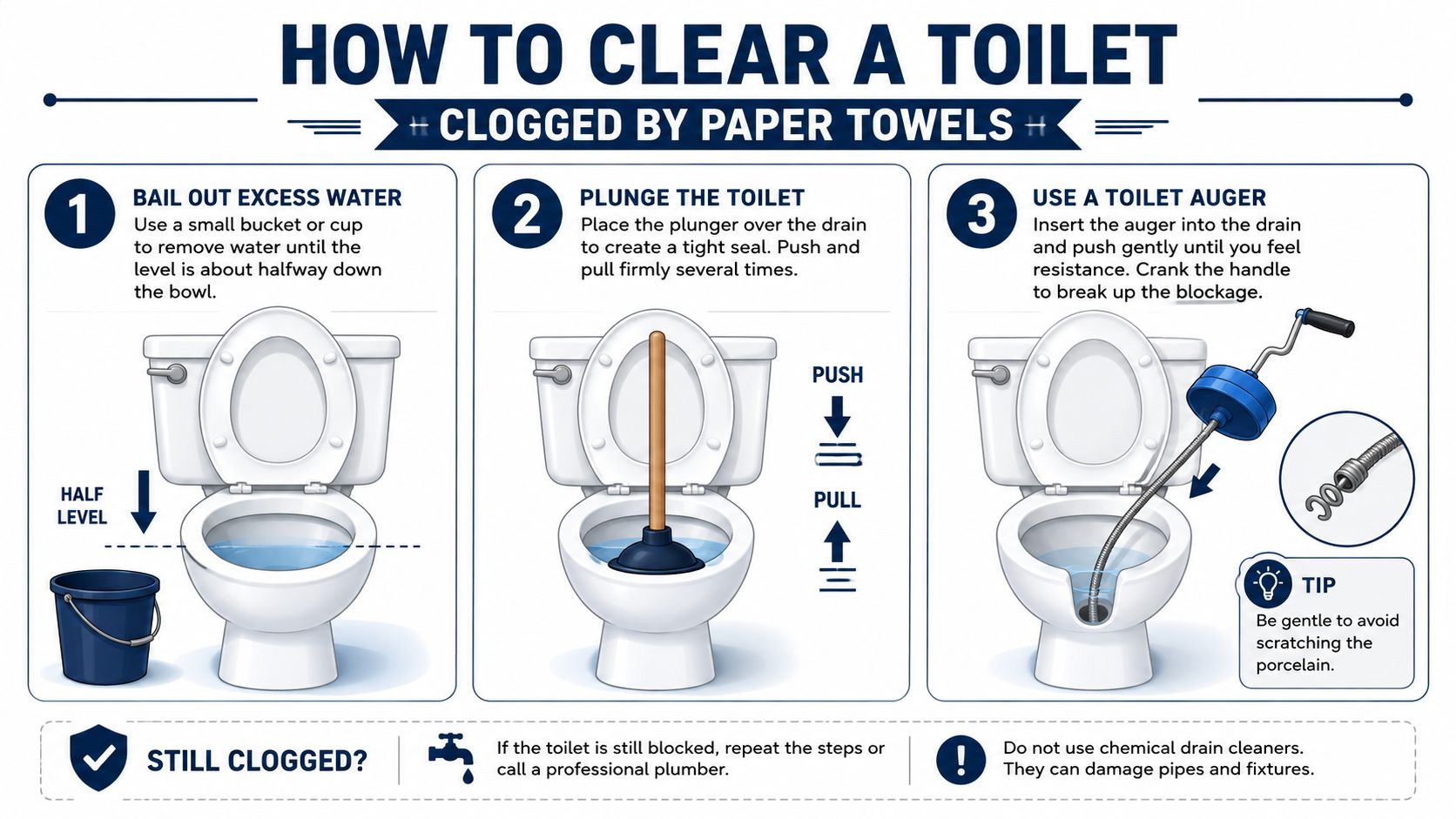
Try no more than two real plunger cycles. If the bowl doesn't clear, switch to a closet auger, which is shaped to protect the porcelain and work through the toilet trap.
Know when the auger has reached its limit
Insert the auger carefully and crank clockwise. Don't force the cable past resistance. If the cable bottoms out, kinks, or won't advance, stop. Paper towels returning after a second attempt suggest the wad has moved beyond the toilet trap into the 3 or 4 inch branch.
Avoid chemical drain cleaners in a toilet. They can remain in the bowl or line, create a splash hazard, and won't dissolve a dense wet-strength wad. Hard plunges can also drive the material deeper. For recurring toilet blockages, a permanent toilet clog solution requires finding the restriction rather than repeatedly opening the same fixture.
If the toilet still won't drain, professional drain cleaning in Las Vegas is the sensible next step.
Why Paper Towels Cause Stubborn Clogs in Las Vegas Drains
Paper towels aren't designed to disperse like toilet paper. Their longer, bonded fibers provide wet strength, so the sheet can stay together after soaking. Inside a toilet trap or the first horizontal closet bend, that sheet catches, folds, and becomes harder to move each time someone flushes.
Older Las Vegas cast iron adds another problem. Internal mineral scale and roughness can snag fibers that might pass through a smooth line. PVC drains in slab homes have different shapes and sweeps, but a low-flow toilet may still lack enough water movement to carry a wad through a restrictive bend. The material and the pipe condition matter together.
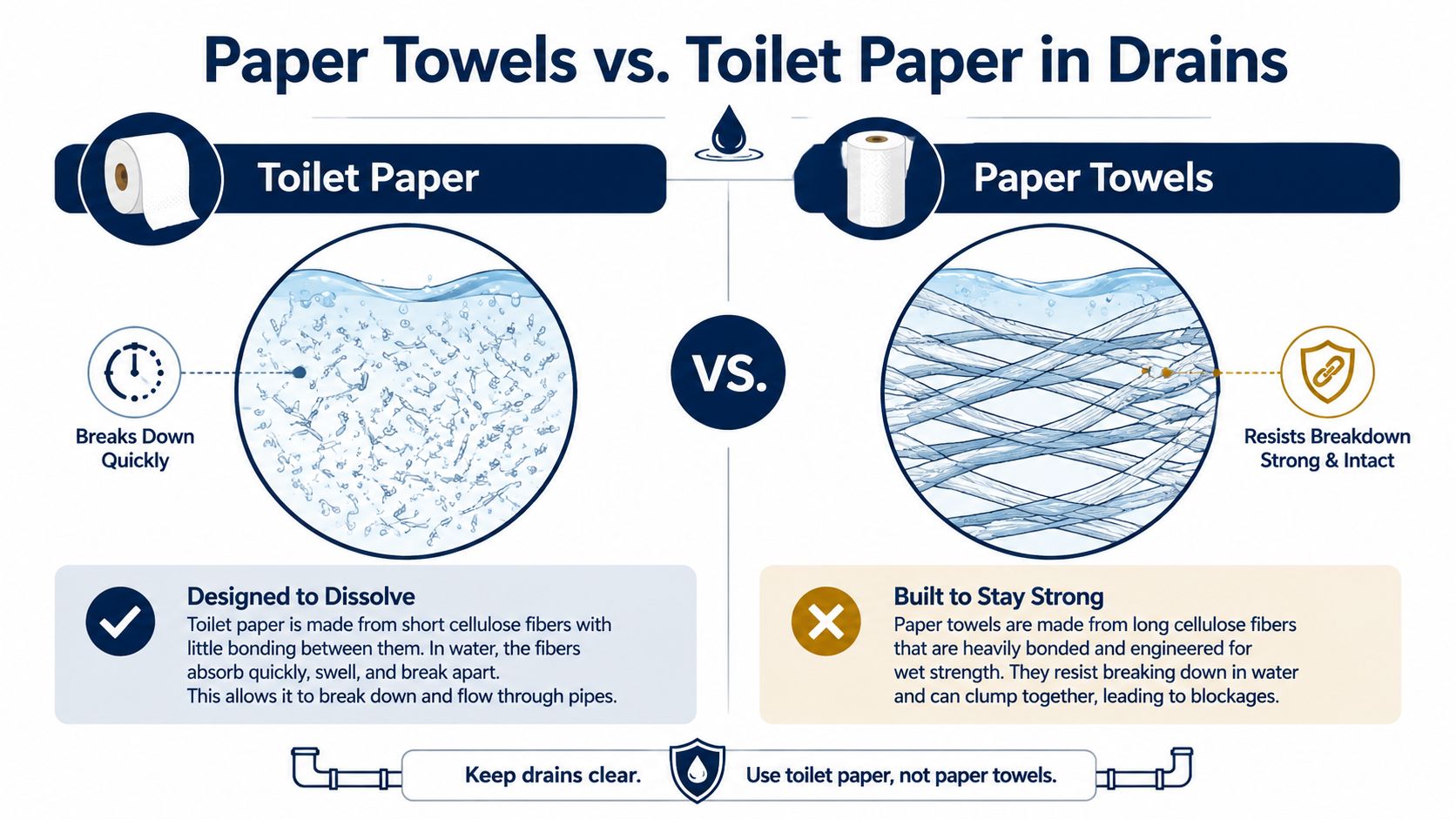
Toilet paper is manufactured to separate in water quickly, while paper towels are made to remain useful when wet. That difference is why a towel can form a dense mat instead of dispersing into smaller pieces.
“Flushable” wipes create the same practical risk. The label describes how the product feels or performs during use, not a guarantee that it will pass every toilet trap, scaled cast iron line, or sewer lateral. Put paper towels and wipes in a covered trash bin, not the toilet.
Signs the Clog Is Really a Main Sewer or Root Problem
A single toilet that drains slowly may have a fixture-level blockage. The diagnosis changes when water appears somewhere else.
Watch for these red flags:
- Shower or tub backup: Water rises in the tub when the toilet flushes.
- Gurgling fixtures: A nearby sink, floor drain, or tub makes bubbling sounds.
- Washing machine discharge: Laundry water pushes into a low fixture.
- Multiple slow drains: Several fixtures lose speed at the same time.
Mature landscaping can contribute to mainline trouble in older neighborhoods. Roots from mesquite, ash, oleander, and other established plants seek moisture around small joints and separated connections. Desert soil movement can offset a coupling just enough to create an entry point, especially in aging clay or cast iron laterals.
You can perform a simple observation test. Run the bathtub for two minutes while watching the toilet bowl. If the bowl rises, the restriction is probably beyond the toilet, and plunging the fixture won't solve the main problem.
Practical rule: A toilet that affects another fixture is no longer just a toilet call.
A camera inspection can show whether the line contains roots, scale, a sag, or a damaged connection. If roots or heavy buildup are visible, hydro jetting service may clean more of the pipe wall than a basic cable, although the line still needs evaluation afterward because cleaning doesn't repair a separated or collapsed pipe.
When to Stop DIY and Call a Licensed Las Vegas Plumber
DIY is reasonable when the water level is controlled, one toilet is affected, and a flange plunger or closet auger produces progress. It stops being reasonable when the toilet overflows instead of draining, two attempts accomplish nothing, or water shows up at a tub or floor drain.
Sewage backup is a hard stop. Close the toilet supply valve, keep children and pets away from the affected area, and avoid chemical products. Contaminated water can spread beyond the visible puddle, while repeated flushing can turn a localized obstruction into a bathroom cleanup problem.
A homeowner also lacks several tools that change the diagnosis:
- Closet auger: Sized to work through a toilet trap without damaging porcelain.
- Drum machine: A heavier cable machine, including a 3/8-inch cable for appropriate main-line work.
- Sewer camera and Sonde locator: Used to identify the blockage and locate its position below ground.
- Hydro-jetting equipment: Designed to scour scale and root mats from suitable cast iron or other drain lines.
A camera matters even more in a slab home. Guessing at a buried blockage can lead to unnecessary concrete removal, while a cable alone may punch a small path through roots and leave the underlying issue in place.
Licensing, insurance, and experience matter for work involving sewage, buried piping, or slab leaks. Homeowners researching standards in another market can also browse qualified plumbers Melbourne, but local diagnosis still has to account for Southern Nevada construction and soil.
Preventing the Next Clog and Knowing Who to Call
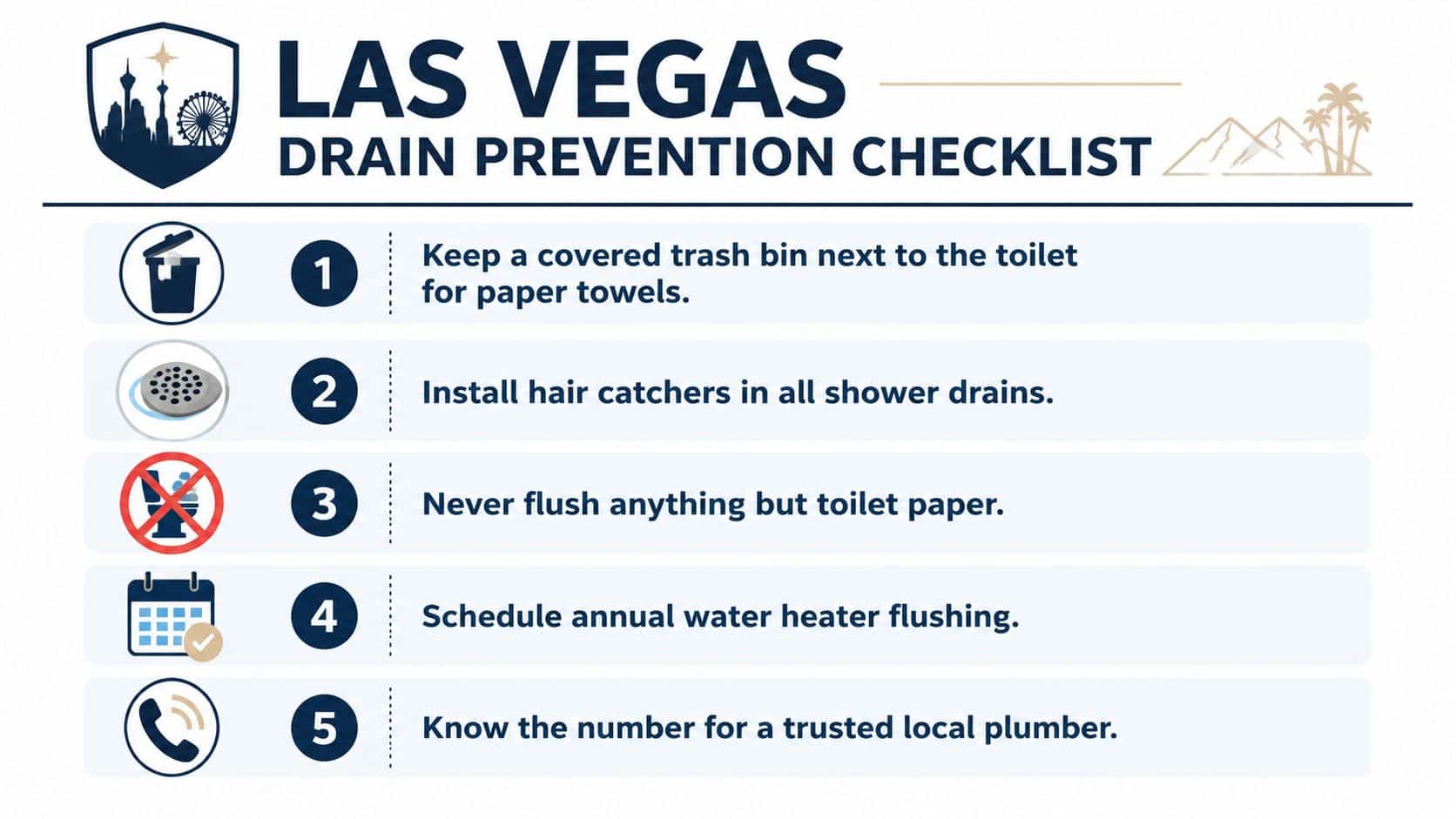
Prevention works best when it matches the conditions in the house. Use this checklist as a practical routine:
- Keep a covered trash bin beside every toilet. Paper towels, wipes, tissues, and cleaning cloths belong there. A lid also keeps the disposal habit clear for guests and children.
- Use a shower-drain catcher. Hair combines with soap residue and mineral deposits, creating a restriction that a light surface cleaning may not remove.
- Flush only toilet paper. A product marketed as flushable can still collect in a rough or narrowed line. Treat the toilet as a single-purpose fixture.
- Run hot water through bathroom sinks weekly. Let it flow long enough to soften residue around the drain opening, but don't use boiling water in a fixture or pipe system unless the manufacturer permits it.
- Plan a camera inspection for older homes with mature landscaping. For homes built before 1990, a whole-home drain camera inspection every 2 to 3 years can reveal developing roots, scale, or joint problems before a backup. (Historical Southern Nevada scaling evidence)
Water heaters deserve their own maintenance plan. Annual flushing can remove loose sediment before it hardens around the heating area, while a plumber can inspect the anode rod, connections, shutoff, and relief valve. A softener or treatment system may reduce incoming mineral load, but it won't remove scale that already exists inside old fixtures or drains.
MG Drain Services LLC handles residential toilet and drain clearing, mainline root work, hydro jetting, sewer camera inspections, leak detection, and water heater service for homeowners in Las Vegas, Henderson, North Las Vegas, Summerlin, and nearby communities. The company is local, family-owned, owner-operated, licensed, and insured, with diagnosis focused on finding the cause instead of repeating a temporary cleanout.
If a paper-towel clog keeps returning, several fixtures back up, or a Las Vegas water heater is rumbling and scaling, call MG Drain Services LLC at 702-480-8070 to arrange a professional diagnosis. Visit MG Drain Services LLC to request residential plumbing service for the drain, sewer, leak, or water-heater problem before it causes a larger repair.