
That strange gurgling noise you hear from the toilet isn't just your house settling; it's a warning flare shot up from your plumbing system. For homeowners in Las Vegas, Henderson, and North Las Vegas, these signs are all too common. When you notice multiple drains slowing down at once or see water backing up in weird places, you’re almost certainly dealing with a clog in your main sewer line. This isn't your average sink blockage, and it demands a specific game plan.
Learning how to clear main sewer line issues starts with spotting these critical signals early—before a small headache explodes into a messy, expensive emergency that could flood your home. At MG Drain Services, we've seen it all, and our goal is to empower Las Vegas homeowners with the knowledge to protect their property.
The First Signs of a Main Sewer Line Clog
Long before a full-blown sewage backup ruins your floors, your plumbing will give you some pretty clear warnings. You just have to know what to look for. Unlike a simple clog in a single sink or shower, a main line blockage impacts your entire home’s drainage network.
I like to explain it this way: think of your plumbing like a tree. Every drain—from the kitchen sink to the upstairs shower—is a small branch. All those branches connect to one big trunk, which is your main sewer line. When that trunk gets blocked, wastewater has nowhere to go but back up the branches.
Telltale Symptoms in Your Las Vegas Home
A main line clog creates some strange, often confusing symptoms that might seem unrelated at first. If you spot any of these signs, especially a few at the same time, it’s a huge red flag for a central blockage.
- Multiple Drains Are Slowing Down: This is the classic giveaway. It's not just the kitchen sink that's slow; suddenly the bathtub, shower, and toilets are all taking their sweet time to drain.
- Water Backs Up in Unexpected Places: Flushing a toilet and seeing water gurgle up into your shower drain is a dead giveaway. The blocked water is being forced to find the lowest possible exit point in your home.
- Gurgling Sounds from Drains and Toilets: Do you hear gurgling noises from a nearby toilet or floor drain when the washing machine or dishwasher runs? That sound is trapped air being violently pushed through the water by the blockage.
- Foul Odors from Multiple Drains: A persistent sewer gas smell wafting up from several drains means those gases can't vent properly due to the clog. They have no choice but to come back into your house.
We see these issues all the time, especially in older Las Vegas and Henderson homes where original pipe materials are more prone to blockages. Recognizing these signs early is everything. The American Society of Civil Engineers has warned we'll need over $105 billion by 2025 just to upgrade the country's aging sewer systems. That number highlights just how proactive homeowners need to be to avoid costly disasters.
Here in our local communities, ignoring slow drains is a risk you just can't afford to take, with residential properties under constant threat from grease buildup and invasive tree roots.
Expert Insight: In all my years serving Las Vegas, the most overlooked sign is what I call the "chain reaction." A homeowner starts a load of laundry, and suddenly the downstairs toilet overflows. They immediately assume it's a toilet problem, but it's really the main line failing to handle that sudden, large volume of water. You can explore our guide on other common signs of sewer line problems for more details.
So, What's Actually Clogging Your Main Sewer Line?
Before you can fix the problem, you have to understand what’s causing it. A main sewer line clog is rarely a single, sudden event. It's usually a slow-motion disaster, a gradual buildup of junk that eventually brings your home's entire plumbing system to a grinding halt.
Knowing the why is crucial because it dictates the how—the right way to clear the line and, just as importantly, how to keep it from happening all over again.
Here in Las Vegas, our desert environment adds a few unique twists to the story. The combination of our arid soil and some of our beautiful, yet very thirsty, trees creates a perfect storm for blockages you might not see in other parts of the country.
Invasive Tree Roots on the Hunt for Water
This is, hands down, the #1 reason for serious main line clogs we deal with across Las Vegas, Henderson, and North Las Vegas. Think about it: your sewer lines are a constant, reliable source of water and nutrients in the middle of a desert. For a tree root, it’s like an underground oasis.
Trees common to our area, like palms and mesquites, have incredibly aggressive root systems. They can sense the smallest amount of moisture vapor escaping from tiny cracks or loose pipe joints.
- The Intrusion: All it takes is a crack no thicker than a human hair for a tiny rootlet to sneak inside your pipe.
- The Expansion: Once inside, it's a perfect environment. The root grows and expands, creating a dense, web-like mass that acts like a net, catching everything that comes down the drain.
- The Damage: As these roots grow thicker and stronger, the pressure can crack, shift, or even completely crush older pipes. What started as a simple clog has now become a major structural failure.
The Slow Buildup of Grease, Fats, and Oils
What you pour down your kitchen sink has a direct and massive impact on the health of your main sewer line. That hot bacon grease or cooking oil might look like a harmless liquid, but it's a ticking time bomb for your plumbing.
As these substances, often called FOG (Fats, Oils, and Grease), travel down your pipes, they cool off. When they cool, they solidify and cling to the inner walls of the line. This sticky gunk acts like flypaper, grabbing food scraps, soap scum, and other debris. Over months and years, this layer gets thicker and thicker, slowly choking the pipe's diameter until it's completely blocked.
A Plumber’s Perspective: We often pull out solid chunks of grease that have molded perfectly to the inside shape of a pipe. It’s a disaster that builds up in slow motion, completely out of sight until your drains stop working. A single holiday meal can contribute a shocking amount of grease to an already struggling line.
Flushing Things That Should Never Be Flushed
Your toilet is a simple machine designed for exactly two things: human waste and toilet paper. That’s it. Anything else, no matter what the marketing on the package says, is a potential catastrophe for your main line.
These items simply don't break down in water the way toilet paper does. Instead, they get snagged on existing buildup or tangled in tree roots, quickly forming the seed of a major blockage.
The Usual Suspects We Find in Pipes:
- "Flushable" Wipes: This is the most notorious offender. They're made with synthetic fibers and absolutely do not dissolve. They are a plumber's nightmare.
- Feminine Hygiene Products: These are literally designed to absorb liquid and expand, which is the last thing you want happening inside a pipe.
- Paper Towels & Tissues: They are engineered to be much stronger than toilet paper and don't disintegrate properly.
- Dental Floss: It’s like throwing a tiny, non-biodegradable net into your drain system. It wraps around debris and cinches clogs together.
The Pipes Themselves Are the Problem
Sometimes, the blockage has less to do with what you're putting down the drain and more to do with the condition of the pipes. This is a common issue in older Las Vegas homes that still have their original cast iron or clay sewer lines.
Our shifting desert soil can cause pipes to sink over the decades, creating a low spot called a "belly." Instead of flowing downhill, waste and water pool in this sagging section, leading to constant, recurring blockages.
On top of that, years of corrosion and natural deterioration can create rough, pitted surfaces inside the pipe that snag debris easily, speeding up how fast clogs form. The only way to know for sure if you have a structural problem is with a professional sewer camera inspection, which gives us a clear look at what's really going on down there.
Safely Diagnosing a Main Line Blockage Yourself
Before you grab a wrench or pour a bottle of chemicals down the drain, let's talk about playing detective. Taking a few smart, safe diagnostic steps can save you a world of trouble and expense down the line. It's not about trying to fix the problem yourself—it's about gathering solid intel so you know what you’re up against.
Your entire investigation hinges on one critical component: the sewer cleanout. This is your direct access point to the main sewer line, a capped pipe that’s your window into the system. You’ll usually find it in the yard near your home's foundation, but it can also be tucked away in a basement or crawl space. Honestly, it’s the most important diagnostic tool a homeowner has.
Locating and Inspecting Your Sewer Cleanout
First things first, you have to find it. Look for a short, capped pipe—usually white PVC or black ABS plastic—sticking a few inches out of the ground. In some of Las Vegas's older homes, you might be looking for a cast iron cap that sits flush with the dirt or concrete.
Having trouble spotting it? We've put together some detailed tips in our guide on how to find your sewer line.
Once you've located the cleanout, it’s time for a very careful look inside.
Safety is Non-Negotiable:
- Gear Up: Always, always wear heavy-duty gloves and safety glasses. You're dealing with raw sewage, which is full of nasty bacteria you want no part of.
- Stand Clear: When you go to open the cap, use a pipe wrench and turn it slowly. Pressure can build up behind a clog, and the last thing you want is to be in the splash zone.
- Secure the Area: Make sure kids and pets are safely inside and well away from where you're working.
After you've safely removed the cap, grab a flashlight and take a look inside. What you see—or don't see—is going to tell you everything you need to know.
MG Drain Services Field Tip: We always tell clients to open that cleanout cap like they're defusing a bomb—slow and steady. If you hear a hissing sound or feel any real resistance, back off immediately. That’s a clear sign of serious pressure, and you don’t want a sewage geyser in your yard.
Interpreting What You See
What you find at the cleanout gives you a clear fork in the road. It tells you exactly where the clog is located in relation to that access point, which is crucial for figuring out the next steps.
You See Standing Water: If you look down into the pipe and see water or sewage just sitting there, the blockage is downstream. It’s somewhere between your cleanout and the city's main sewer connection out by the street. This is a confirmed main line clog. Stop using all water in the house immediately to keep it from backing up inside.
The Pipe is Clear and Dry: If the pipe is empty when you open the cap, the problem is upstream. The clog is somewhere in the plumbing inside your house, between a drain and the cleanout. It’s still a headache, but it’s likely a more isolated issue, not a full-blown main line stoppage.
This one simple check turns a plumbing mystery into a clear diagnosis. It's a "look-don't-touch" situation that any homeowner can handle safely.
DIY Diagnosis vs Professional Camera Inspection
While checking the cleanout confirms that there's a problem, it doesn't tell you what the problem is. That's where a professional inspection makes all the difference.
| Diagnostic Step | DIY Method & Limitations | MG Drain Services Professional Method |
|---|---|---|
| Problem Confirmation | Look into the sewer cleanout for standing water. | Use a high-resolution camera to get a live video feed from inside the pipe. |
| Location Pinpointing | Can only determine if the clog is "upstream" or "downstream" of the cleanout. | Pinpoints the clog's exact location down to the foot, saving on unnecessary digging. |
| Cause Identification | No way to see the cause. Is it roots? Grease? A collapsed pipe? | Identifies the exact cause: tree root intrusion, grease buildup, pipe damage, or foreign objects. |
| Condition Assessment | Cannot see the overall health of the pipe. | Assesses the pipe's overall condition, checking for cracks, bellies, or offsets that could cause future issues. |
Ultimately, a sewer camera inspection is the professional step that removes all guesswork. It's a game-changer that lets us see exactly what's happening and develop a precise plan to fix it right the first time.
Effective Methods for Clearing a Main Sewer Line
Alright, you've confirmed the problem is in the main line. Now what? When every drain in your house is backed up, it’s tempting to reach for the fastest, cheapest fix on the hardware store shelf. Right there is where many Las Vegas homeowners make a costly mistake.
Not all clearing methods are created equal, and some can cause a whole lot more harm than good.
The goal isn't just to poke a little hole through the gunk to get things moving temporarily. We want to restore the full flow of your pipe and make sure you’re not dealing with the same mess again in a few weeks. Understanding the difference is everything.
The diagnostic process we use on every single call is methodical for a reason. It removes the guesswork so we can apply the right solution from the get-go.
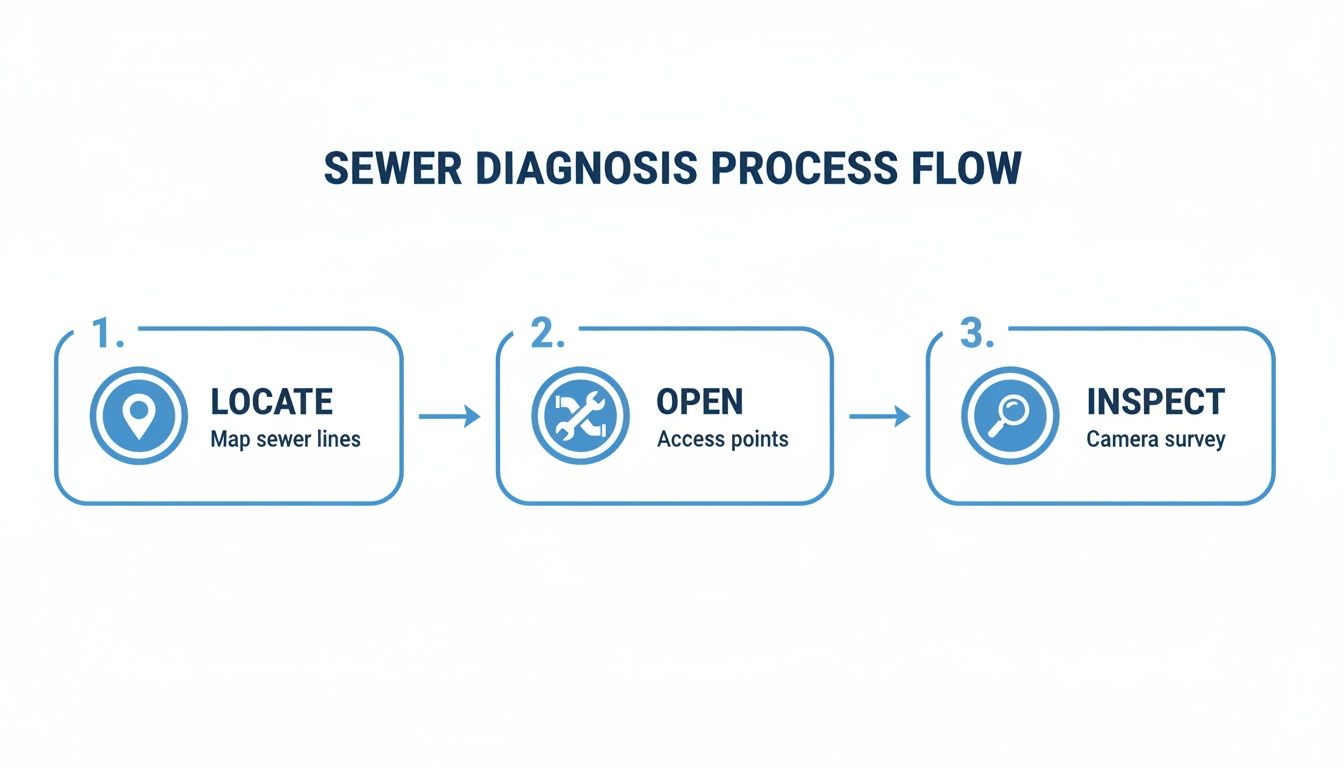
By locating the access point, opening it safely, and putting a camera inside, we know exactly what we're up against. This ensures the clearing method we choose actually targets the root cause of the clog.
Why Chemical Drain Cleaners Are a Dangerous Gamble
Let’s get this out of the way immediately: chemical drain cleaners have no place in a main sewer line. They might seem like a quick fix for a slow bathroom sink, but they are completely outmatched by the serious blockages found in a main line, like invasive tree roots or a solid mass of grease.
These products work by using a powerful chemical reaction to generate intense heat, designed to melt organic matter. The big problem? When that reaction isn't strong enough to clear the clog—and it rarely is for a main line—all you’ve done is create a pool of corrosive sludge that’s now sitting in one spot, actively eating away at your pipes. This can turn a simple clog into a nightmare scenario requiring expensive pipe replacement.
A Plumber's Warning: We’ve seen firsthand how chemical cleaners can soften old PVC pipes or accelerate corrosion in cast iron lines. Pouring them down a drain with a main line clog is like pouring acid on the problem and hoping for the best—it’s a risk that never pays off.
Mechanical Augers: The Standard (But Limited) Tool
When most people picture drain cleaning, they think of a mechanical auger, or what's commonly called a drain snake. A professional-grade auger is a heavy-duty machine with a long, flexible steel cable and various cutting heads designed to bore through obstructions.
Snaking can be effective for certain clogs, but it comes with some serious limitations you need to be aware of.
- It Just Pokes a Hole: An auger often just punches a path right through the center of a soft blockage, like grease or sludge. It doesn’t actually clean the pipe from wall to wall. This gives you temporary relief, but the clog will quickly reform as waste builds up on the remaining sludge.
- Limited Against Roots: While specialized root-cutting heads can tear through some roots, they often leave plenty behind. Those remaining roots will just regrow, often coming back even thicker and more aggressive than before.
- Risk of Pipe Damage: In inexperienced hands, a powerful auger can easily get stuck. Worse, it can crack, puncture, or otherwise damage older, brittle pipes, turning a clog into a major leak.
An auger is a valuable tool in our arsenal, but for many of the main line issues we see in Las Vegas homes, it’s more of a temporary patch than a permanent solution.
Hydro Jetting: The Definitive Professional Solution
For a truly deep, comprehensive clean, nothing comes close to hydro jetting. This is the gold standard for clearing main sewer lines, especially when dealing with stubborn grease, roots, or recurring blockages. Instead of just punching a hole, hydro jetting restores your pipes to a practically new condition.
The process uses a specialized hose and nozzle to blast water at extremely high pressures—up to 4,000 PSI—directly into the sewer line. This isn't your weekend pressure washer. The nozzles are engineered with rear-facing jets that propel the hose deep into the pipe while forward-facing jets obliterate the clog.
Benefits of Hydro Jetting:
- Total Pipe Cleaning: It scours the entire inner surface of the pipe, stripping away years of accumulated grease, scale, soap scum, and sludge.
- Obliterates Tree Roots: The high-pressure water acts like a surgical tool, pulverizing dense root masses and washing them completely out of the system.
- Long-Lasting Results: Because it leaves the pipe so clean, hydro jetting provides a much, much longer-lasting solution than snaking ever could.
Industry data shows that chemical cleaners can fail 65% of the time on deep clogs. In contrast, hydro jetting removes virtually 100% of scale and roots. For restaurants and commercial properties battling fats, oils, and grease (FOG)—which cause nearly half of all backups—professional hydro jetting can slash the recurrence of clogs by 80%.
A huge part of the effectiveness comes down to the equipment, and choosing the right sewer jetter nozzle for the job is critical. At MG Drain Services, our technicians are trained to select the perfect tool for your specific problem, ensuring a safe and complete cleaning every time. If you're tired of fighting the same old drain issues, our professional hydro jetting services are the definitive answer.
When You Need to Call a Plumber Immediately
Having a can-do attitude is great, but when it comes to a main sewer line clog, there's a clear line between a DIY project and a major disaster. Trying to go it alone can turn a manageable problem into a catastrophic and hazardous emergency. Knowing when to put down the wrench and pick up the phone is the most important skill a homeowner can have.
Some red flags aren't just suggestions—they're giant, blinking signs telling you it's time for professional help. These aren't minor inconveniences; they're symptoms of a severe blockage that amateur methods simply can't handle safely or effectively.
Unmistakable Signs of a Plumbing Emergency
If you spot any of the following, your very next move should be calling an experienced Las Vegas plumber. Pushing forward on your own risks serious water damage, costly mistakes, and exposure to dangerous waste.
Sewage is Backing Up Inside Your Home: This is ground zero for a plumbing emergency. If you see raw sewage coming up from a shower drain, bathtub, or floor drain, you have a biohazard situation. Stop using all water immediately and call for emergency service.
Your Clog Keeps Coming Back: Did you manage to get things flowing, only for the same drains to slow down or back up a few days later? That's a classic sign of a deeper issue, like invasive tree roots or a "bellied" pipe, that a simple consumer-grade snake will never truly fix.
You Notice Soggy Patches or Sinkholes in Your Yard: Unexplained wet spots, patches of grass that are suddenly lush and green, or depressions forming in your lawn are all tell-tale signs of a broken or collapsed sewer line. This is a structural failure, not just a clog.
Multiple Fixtures Are All Clogged at Once: As we covered earlier, when every drain in your house slows to a crawl at the same time, the clog is deep in the main line. This is well beyond the scope of any DIY tool you can rent or buy.
When you realize the problem is bigger than you can handle, the search for a qualified professional begins. Many people start online, looking for reputable services from reliable providers like these local plumbers.
The Investment Mindset: Calling a professional isn't just an expense; it's a critical investment in damage prevention. The cost of a professional drain clearing is a fraction of what you would spend on replacing flooring, drywall, and furniture after a major sewage backup.
Why Professional Help Is the Smartest Choice
Bringing in a licensed and insured company like MG Drain Services is about more than just getting access to bigger tools. It’s about leveraging experience to solve the problem the right way—safely, and for good. Our technicians arrive with industrial-strength augers and high-pressure hydro jetting equipment that are worlds apart from anything available for rent.
We don’t just poke a hole in the clog; we use sewer camera inspections to find out why it happened in the first place. This diagnostic step ensures we apply the right solution, whether it's clearing grease buildup or cutting out tree roots. This approach saves you from the endless cycle of recurring clogs and gives you genuine peace of mind.
For a fast, professional response to any plumbing emergency in Las Vegas, call MG Drain Services LLC at 702-480-8070.
Keeping Your Sewer Lines Clear and Healthy

Finally getting that main sewer line cleared brings a huge wave of relief. But let me tell you, the smartest homeowners in Las Vegas know the real win is preventing the clog in the first place.
Solving an emergency is great, but avoiding one altogether saves you a ton of time, money, and a massive headache. It just takes a few simple, proactive habits to dramatically cut down your risk of future blockages and keep everything flowing the way it should.
Think of it like an oil change for your car. You wouldn't skip that, right? Your sewer line is one of your home's most critical systems, and it deserves the same kind of routine care to head off a complete breakdown.
Daily Habits for Healthy Pipes
The best defense starts right at the drain. What you send down your pipes every single day directly impacts their long-term health. Honestly, just being a little more mindful is the biggest step you can take.
These aren't complicated rules, just simple adjustments that make a world of difference:
- No Grease Down the Drain: This is the big one, and it's non-negotiable. Cooking oils, bacon grease, and any kind of fat will solidify inside your pipes, creating a sticky mess that grabs onto everything else. Just pour it into a can, let it cool, and toss it in the trash.
- Only Flush Human Waste and Toilet Paper: I can't tell you how many clogs are caused by products marketed as "flushable." They aren't. Wipes, paper towels, and feminine hygiene products simply don't break down and should always go in the bin.
- Use Drain Strainers: A cheap little mesh screen in your kitchen sink and shower is an incredibly powerful tool. It catches all the food scraps and hair before they can team up to cause trouble deeper in your system.
Our Proactive Plumbing Philosophy: At MG Drain Services, we want to be your long-term plumbing health partner, not just the guys you call in a panic. We’re here to give you the knowledge you need to maintain a healthy home and steer clear of future disasters.
Strategic Professional Maintenance
For a lot of homes here in the valley, especially in places with mature trees like Summerlin or parts of Henderson, proactive professional cleanings are a seriously smart investment. In our dry climate, those tree roots are always on the hunt for water, and they can be relentless.
Scheduling a professional hydro-jetting service every 18 to 24 months is the best way to keep your pipes free of early-stage root intrusion and grease buildup before they turn into a full-blown backup. It's a simple preventative measure that buys you peace of mind and protects the value of your home.
Answering Your Questions About Main Sewer Line Clogs
When your main line is acting up, you've got questions. As the go-to experts in Las Vegas, we hear the same concerns from homeowners all the time. Let's get you some clear, honest answers so you know exactly what you're dealing with.
How Much Will It Cost to Clear My Main Sewer Line in Las Vegas?
This is usually the first question people ask, and the honest answer is: it depends. The final cost comes down to what's causing the clog and what it takes to clear it for good. A simple clog we can bust through with a mechanical auger is going to be less expensive than a full hydro-jetting service.
But think about long-term value. An auger might poke a hole in the blockage and get things moving temporarily, but hydro-jetting blasts the pipe clean, preventing that same clog from coming right back. At MG Drain Services, we give you firm, upfront pricing only after we’ve done a proper diagnosis. No surprises, no games.
If You Clear Out Tree Roots, Will They Just Grow Back?
Yes, they absolutely will try. Tree roots are stubborn. Once they find a reliable source of water and nutrients (like the inside of your sewer pipe), they’ll always try to get back in.
This is exactly why we lean on hydro-jetting for serious root problems. A snake or auger just rips a hole through the root ball, leaving plenty of smaller tendrils behind that grow back fast. Hydro-jetting scours the pipe walls clean, obliterating the roots and making it much harder for them to return. For Las Vegas homes with a chronic tree root problem, we can even set up a preventative maintenance plan to keep them out for good.
How Long Does It Take to Clear the Main Line?
Most of the time, we can have a main line clog diagnosed and cleared within a few hours. A typical job involves running a camera down the line to see what we're up against, followed by the clearing itself. We know how disruptive a backup is, so we work efficiently to get your home back to normal fast.
Are Chemical Drain Cleaners a Good Idea for My Main Line?
No. Absolutely not. We can't stress this enough: please stay away from chemical drain cleaners for a main sewer line clog. They simply don't have the power to dissolve a serious blockage like a massive root intrusion or years of caked-on grease.
What’s worse is that these harsh, corrosive chemicals often get stuck behind the clog, where they can sit and eat away at your pipes. This can cause severe damage, especially to older lines, turning a simple clog into a very expensive pipe repair. For a main line, a professional mechanical solution is always the safest and most effective choice.
Don't let a main sewer line clog ruin your day. For fast, reliable drain and sewer services anywhere in the Las Vegas area, trust the experts at MG Drain Services LLC.
Call us today at 702-480-8070 or book your appointment online to get things flowing again.