If you're hearing a sharp bang when the washing machine shuts off, the dishwasher stops filling, or a toilet finishes its cycle, you're probably dealing with water hammer. In Las Vegas homes, that noise gets brushed off as “just old pipes” all the time. It usually isn't. It's a pressure shock problem inside the plumbing, and if it keeps happening, it can put stress on valves, fittings, and supply lines.
That's where what is a water hammer arrestor becomes more than a definition question. It's the practical fix many homeowners need, but it's also not the whole story. In some Las Vegas, Henderson, and North Las Vegas properties, the banging is coming from a missing arrestor. In others, it's a warning sign that the home has a broader water pressure issue that needs to be checked before damage shows up.
That Sudden Bang in Your Walls What It Means for Your Home
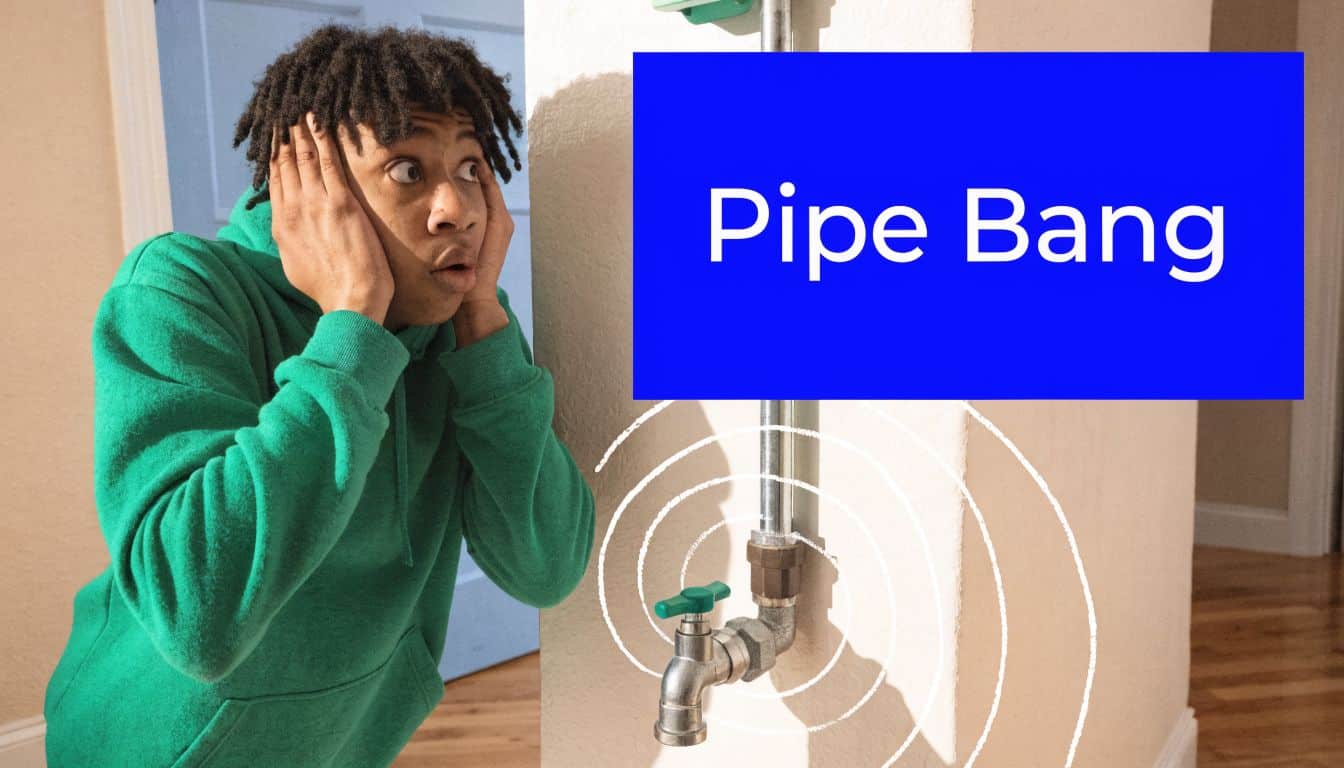
The call usually starts the same way. A homeowner says the pipes “slam” when the washer finishes or there's a hard knock in the wall when someone shuts a faucet quickly. In a lot of Las Vegas homes, that sound shows up suddenly and then starts happening more often.
That noise is commonly called water hammer. It happens when moving water is forced to stop or change direction suddenly. A water hammer arrestor is the device plumbers use to absorb that pressure surge before it rattles through the piping.
Why Las Vegas homeowners shouldn't ignore it
Some people live with the noise for months. That's a mistake. Repeated shock in a plumbing system can loosen weak connections, wear on fixture valves, and turn a noise complaint into a leak repair.
A lot of homeowners first notice it around:
- Washing machines that stop filling abruptly
- Dishwashers with fast-closing valves
- Ice makers that click on and off quickly
- Toilets that thump when the fill cycle ends
If your house has other plumbing symptoms too, this roundup of common plumbing issues in Las Vegas homes can help you tell whether the noise is an isolated problem or part of a bigger pattern.
Practical rule: If the sound happens at the same fixture every time, start by suspecting a localized water hammer issue. If it happens in multiple rooms, think bigger.
What the device actually does
At a homeowner level, the simplest answer is this. A water hammer arrestor acts like a shock absorber for plumbing. It gives that sudden pressure spike somewhere to go besides back through your pipes.
That's why this isn't just about quieting noise. It's about protecting the plumbing system inside the walls.
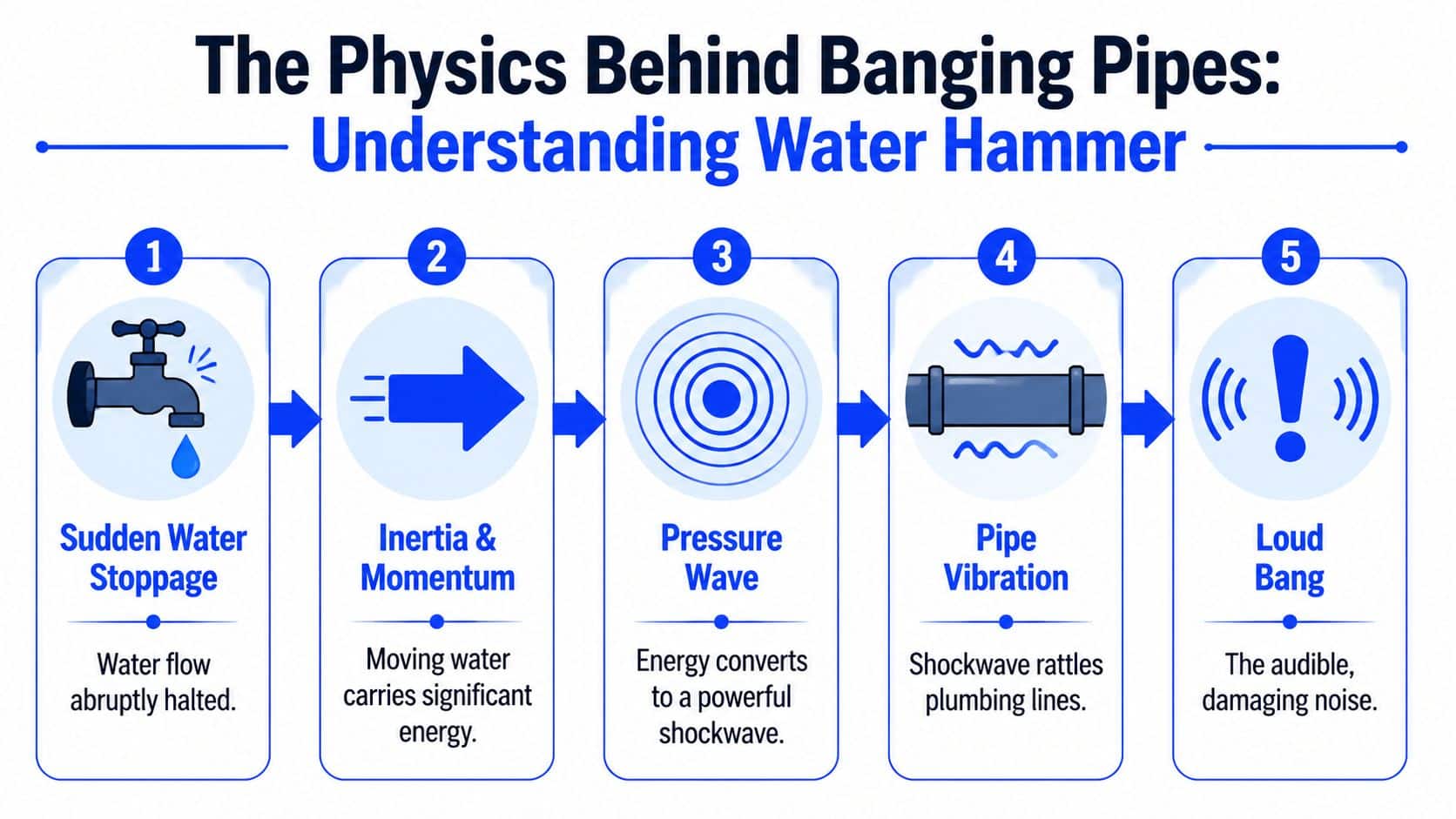
The Physics Behind Banging Pipes Understanding Water Hammer
Water doesn't look powerful when it's moving through a half-inch supply line. But once it's in motion, it has momentum. When a quick-closing valve stops that movement abruptly, the force has to go somewhere.
That force turns into a pressure wave inside the pipe. Manufacturers describe water hammer as a shock wave transmitted through the fluid in the pipe, created when flowing water is stopped abruptly by a fast-closing valve, as explained in this manufacturer overview of how water hammer works.
What causes the bang
A simple way to think about it is a moving line of force meeting a closed door. The water was traveling normally. Then a solenoid valve or other fast-acting valve shuts, and the energy reflects back through the system.
Common triggers include:
- Appliances with fast-closing valves such as dishwashers and washing machines
- Ice maker supply lines that open and close quickly
- Toilet fill events that end abruptly
- Faucets or fixture valves that are snapped shut
Why the noise matters
The bang is only the part you hear. The part you don't see is pipe movement, strain at threaded joints, and stress on shutoff valves and supply connections.
There's another point many DIY articles skip. A persistent water hammer problem may signal a system-wide pressure control issue, not just a missing arrestor. Excessive water pressure is a major factor in the premature failure of piping, water heaters, and valves, which is why this industry explanation of water hammer arrestors and pressure problems matters.
If the house is hammering in more than one place, adding one small arrestor may quiet one symptom while the real pressure problem keeps stressing the rest of the system.
For a homeowner-friendly outside reference, this guide on fixing noisy plumbing for homeowners gives a useful overview of the kinds of noises people often confuse with water hammer.
How a Water Hammer Arrestor Solves the Problem
A water hammer arrestor absorbs the pressure spike before that force reaches the rest of the branch line. In plain terms, it gives the moving water somewhere to spend its energy other than your pipes, stops, and appliance valves.
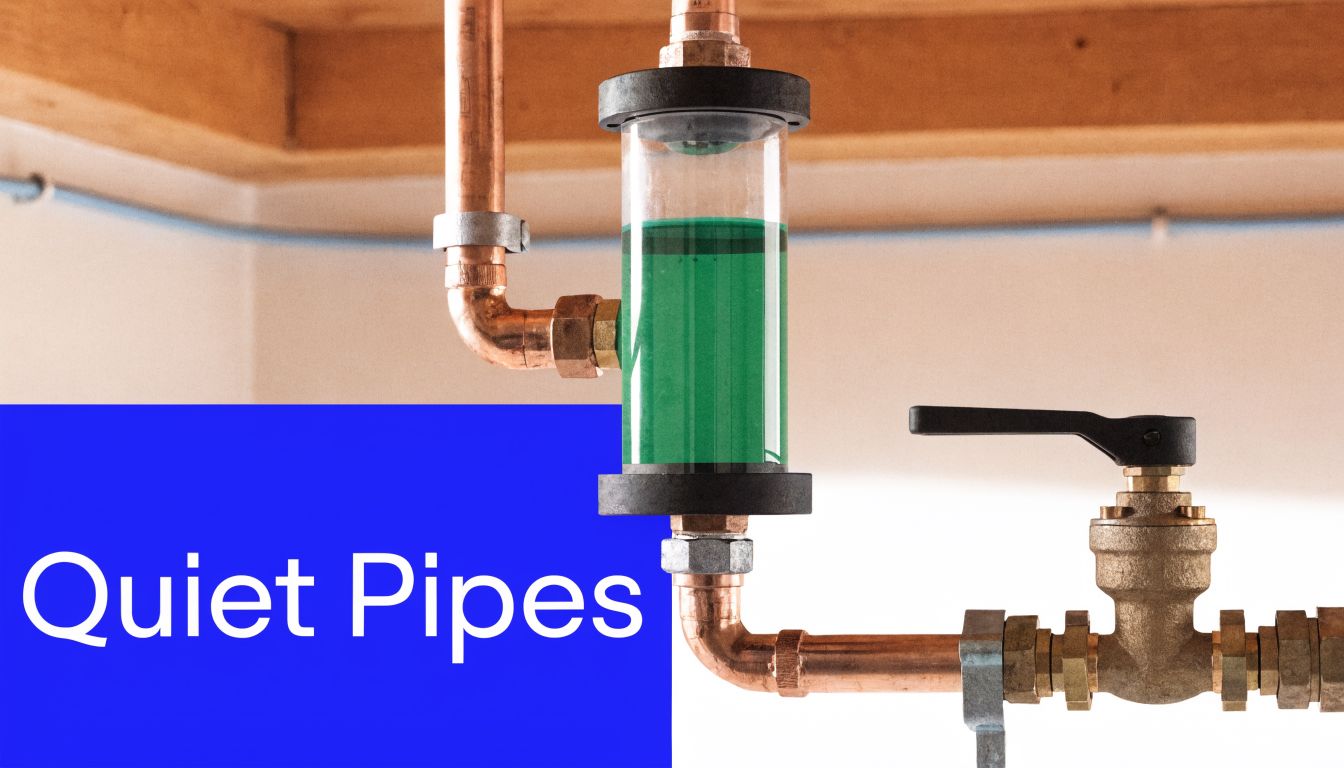
Inside a modern arrestor
Modern arrestors use a sealed chamber separated from the water by a piston or diaphragm. When the shock wave reaches the device, that internal piece moves and compresses the trapped air cushion. The result is a controlled slowdown instead of a hard rebound through the piping.
Caleffi's technical sheet for the 525 series shows how these devices are built for transient surge conditions, with a piston, dual O-ring seals, and operating limits intended for plumbing shock loads rather than normal day-to-day flow changes, as described in the Caleffi 525 series technical sheet.
That design matters because the air cushion stays separated from the water. In older homemade air chambers, the trapped air often gets absorbed over time, and the protection fades.
Why the right fix is not always just one arrestor
A properly placed arrestor works well when the problem is tied to a specific quick-closing valve, such as a dishwasher, washing machine, ice maker, or toilet fill valve. It handles the local shock at the point where it starts.
In Las Vegas homes, I also look at the bigger picture. If the house bangs in multiple rooms, if pressure feels high at several fixtures, or if valves and supply lines seem to fail early, the arrestor may only be part of the repair. High incoming pressure, a failing pressure reducing valve, poor strapping, or a combination of issues can keep stressing the system even after one noisy fixture gets quieter.
That is the part many DIY guides miss. Quieting one branch does not always solve the pressure problem affecting the whole house.
A quick visual helps if you want to see the concept in motion:
Where they're typically installed
Plumbers usually install arrestors close to the fast-closing valve that is creating the shock. Common locations include a washing machine outlet box, the dishwasher supply under a sink, or the stop serving a problem toilet.
Placement matters. An arrestor installed too far from the closing valve may reduce some noise and still leave enough shock in the line to keep pipes moving.
MG Drain Services LLC handles this type of plumbing repair and component installation in the Las Vegas Valley.
Signs Your Las Vegas Home Needs Water Hammer Arrestors
The obvious sign is a bang in the wall. But that's not the only clue. Some homes show smaller warnings before the noise gets loud enough to scare anyone.
The signs people miss
Watch for these symptoms:
- Vibrating supply lines after a fixture shuts off
- Recurring drips at fittings that seem to loosen over time
- Appliance valve problems around a dishwasher or laundry hookup
- A toilet thump right as the tank finishes filling
- A problem that started in an older house that used to be quiet
Those details matter because repeated shock loads don't always announce themselves with one dramatic noise. Sometimes they show up as movement, minor seepage, or hardware that seems to wear out too soon.
A pipe that jumps when a valve closes is telling you the system is absorbing force mechanically instead of controlling it hydraulically.
Why old fixes stop working
A lot of older systems used simple air chambers. Over time, those chambers can lose their air cushion because the air gets absorbed into the water. That's why a house may have been quiet years ago and now suddenly bangs. The old method stopped doing its job.
The better long-term fix is a manufactured arrestor that uses a piston or disc to permanently separate the air cushion from the water, as described in this American Society of Home Inspectors article on water hammer arrestors.
When it might not be only an arrestor issue
If the noise is happening at several fixtures, or if leaks and valve failures are showing up with it, don't assume the answer is just adding one device. At that point, the arrestor question becomes part of a larger diagnosis.
That's especially true for landlords and property managers in Las Vegas who need a repair to last instead of coming back as a repeat call.
DIY Installation vs Calling a Professional Plumber
There are situations where DIY makes sense. There are also a lot of situations where it only masks the problem.
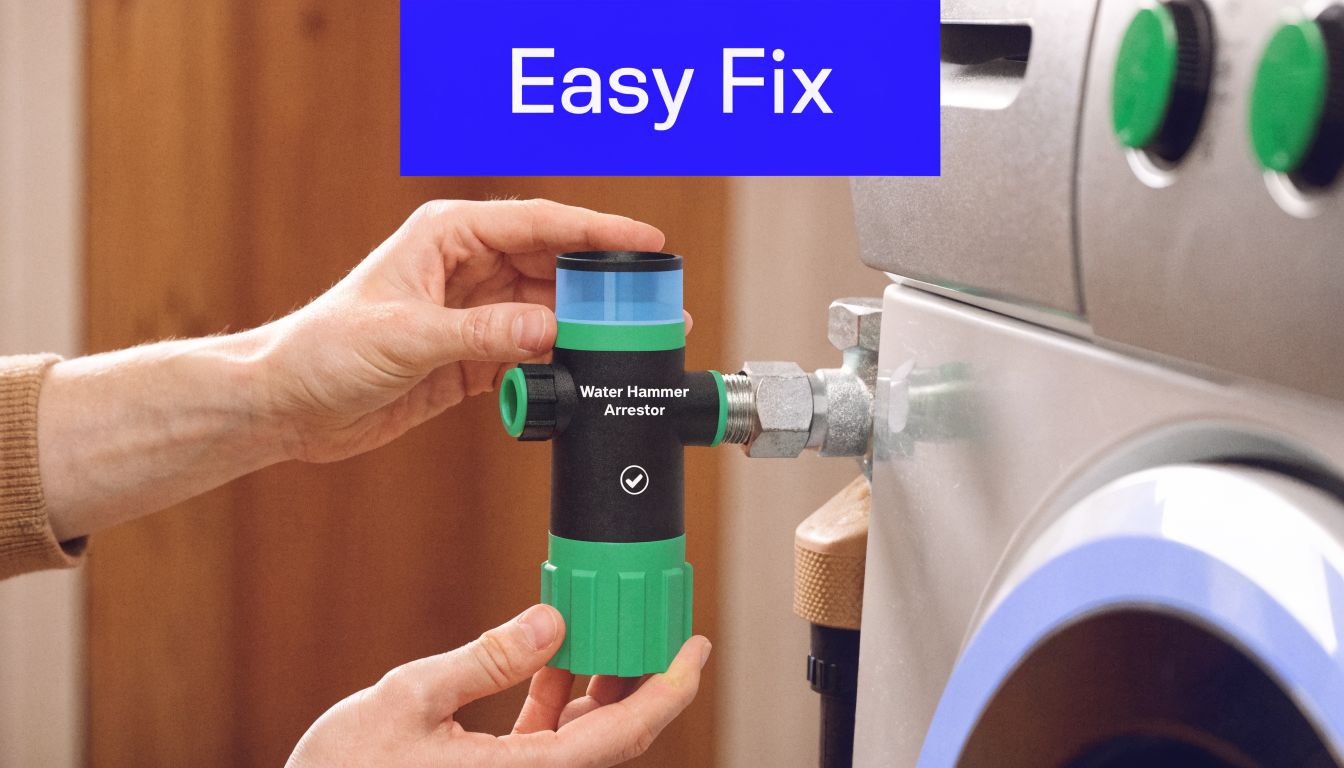
When DIY can work
If the hammer only happens at one washing machine or one dishwasher connection, a homeowner may be able to install a compatible arrestor at that fixture. That can be a reasonable small-scale fix when the source is clear and accessible.
DIY is most realistic when:
- The problem is isolated to one appliance connection
- The shutoff valve is accessible and in good condition
- There's no sign of wider pressure trouble elsewhere in the home
If you're already working around fixture shutoffs, this practical article on how to install a shut off valve is relevant background, especially if the existing valve is old or questionable.
Where DIY falls short
A screw-on arrestor at one appliance doesn't diagnose the rest of the house. It won't tell you whether branch line layout, fixture grouping, or pressure conditions are contributing to the issue.
Manufacturer guidance shows arrestors are most effective when they're placed close to the source of the transient, typically within 6 feet of the fixture or valve causing it, and they can be mounted vertically or horizontally depending on the model, as shown in this SharkBite installation guidance for water hammer arrestors.
That placement detail matters more than homeowners often realize. Close is effective. Random is not.
What a plumber checks that a homeowner usually doesn't
A professional approach is less about adding a part and more about confirming the cause. That usually includes:
| Check | Why it matters |
|---|---|
| Fixture pattern | Shows whether the problem is local or system-wide |
| Valve type | Fast-closing valves create stronger transients |
| Existing pipe movement | Reveals whether supports or connections are already stressed |
| Arrestor location options | Determines where the device can actually do its job |
Field note: If the sound moves from one room to another depending on which fixture is used, the diagnosis needs to go beyond a single add-on fitting.
For Las Vegas homeowners, that distinction saves time. More important, it helps avoid spending money on a partial fix when the house is telling you something broader is going on.
Costs and When to Call MG Drain Services in Las Vegas
It's tempting to ignore banging pipes because the house still “works.” The problem is that plumbing damage often shows up later. By then, you're dealing with leak repairs, wall damage, or fixture replacement instead of one targeted correction.
What affects the real cost
The final price depends on the layout and what the diagnosis turns up. A simple appliance connection is one type of job. A whole-house assessment with multiple problem points is another.
The main cost factors are:
- How many fixtures are involved
- Whether access is easy or behind walls
- Whether the issue is localized or system-wide
- Whether the existing valves and connections are still sound
Many municipalities require water hammer arrestors near quick-closing valves, and sizing is based on the total fixture-units on a line. Guidance also notes that multiple arrestors may be needed on branch lines longer than 20 feet, which is one reason professional sizing and placement matter, according to this Oatey guide on banging pipes and arrestor sizing.
When to make the call
Call a plumber if any of these apply:
- The banging is getting worse
- You hear it at more than one fixture
- You've noticed drips, valve issues, or pipe movement
- A DIY arrestor didn't solve it
- You manage a rental or commercial property and need a durable repair
If you're buying, selling, or evaluating a property, broader ownership planning matters too. For example, this article with insights on home warranties for real estate can help frame what home systems issues may or may not be worth addressing before they become a claim dispute.
If you're not sure whether this is still a maintenance issue or already a repair issue, this guide on when to call a plumber is a good checkpoint.
For homeowners in Las Vegas, Henderson, and North Las Vegas, this is one of those problems where early action is usually cheaper than waiting for visible water damage.
Frequently Asked Questions About Water Hammer Arrestors
Can a water hammer arrestor stop all pipe noise
No. It helps with pressure shock caused by sudden valve closure. It won't fix every plumbing noise, especially if the underlying issue is loose piping, worn valves, or broader pressure problems.
Do old homes already have them
Some older homes have simple air chambers instead of manufactured arrestors. Those older chambers can lose their air cushion over time and stop working properly.
Where should a water hammer arrestor be installed
Close to the fixture or valve causing the transient is usually best. Placement matters. Random installation farther away often gives disappointing results.
Is banging always an emergency
Not always, but it shouldn't be ignored. Repeated hammering can stress plumbing parts over time, and persistent noise may point to a larger pressure-control problem.
If your pipes bang when appliances shut off, don't guess. MG Drain Services LLC is a licensed and insured local Las Vegas plumbing company serving Las Vegas, Henderson, and North Las Vegas with experienced technicians, honest pricing, and fast response times. Call 702-480-8070 or visit MG Drain Services LLC to book professional plumbing help and protect your home from repeat pressure damage.