
A slow shower drain usually shows up at the worst time. You're getting ready for work, water starts pooling around your feet, and you already know what's waiting under that pop-up stopper: hair, soap residue, and the kind of buildup that turns a normal shower into a cleanup job.
In Las Vegas homes, this is a common service call. The good news is that learning how to remove pop up shower drain hardware is often enough to clear the mess and get water moving again. The part most homeowners worry about is making the problem worse. That's a fair concern, especially if the stopper is older, corroded, or the wrong type for the method you're trying. If you're also planning a bigger bathroom update, some of the same practical layout and finish considerations show up in expert advice on Altona bathrooms from Melbourne Tiling Services P/L, particularly where drainage access and fixture choices affect long-term maintenance.
Your Frustratingly Slow Shower Drain Problem
A pop-up shower drain seems simple until it doesn't come out. You twist, it resists, and now you're wondering whether to keep going or stop before you damage the drain.
That hesitation is smart. In a lot of Las Vegas and Henderson homes, the blockage sits just below the stopper. Hair wraps around the lower stem, soap scum hardens around the sides, and old mineral buildup can lock the assembly in place. If you force the wrong part, you can scratch the trim, strip threads, or turn a basic cleaning into a drain repair.
Why this gets worse if you leave it alone
A partially blocked drain rarely fixes itself. Water keeps carrying more debris into the same restricted opening, and each shower adds another layer.
Common signs the stopper area is the problem:
- Water pools quickly: The drain is still moving water, just not fast enough.
- You smell buildup: Organic debris often collects right under the cap.
- The stopper feels rough or sticky: That usually means residue or corrosion is building around the moving parts.
A slow shower drain is often a mechanical cleaning problem first, not a chemical cleaner problem.
If the stopper comes out cleanly, many homeowners can handle the cleanup themselves. If it doesn't, that's where knowing the hardware type matters.
First Identify Your Type of Pop-Up Shower Stopper
Before you grab pliers or a screwdriver, look at how the stopper operates. That's the difference between a clean removal and a damaged drain.
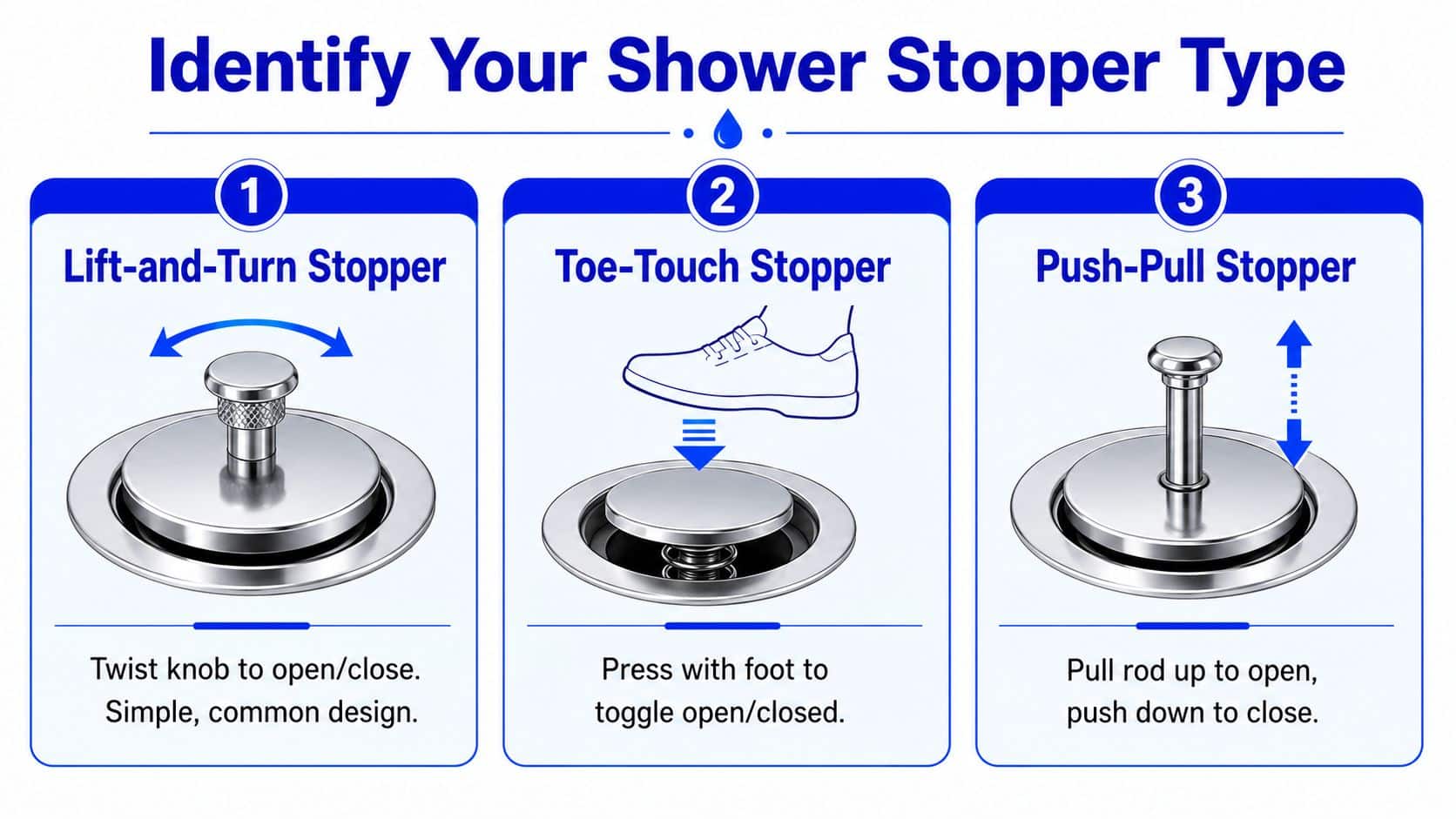
A lot of homeowners call every removable stopper a "pop-up," but the attachment method varies. If you're dealing with a tub-shower combo instead of a dedicated shower base, this related guide on how to remove a bathtub drain is useful because some assemblies overlap.
Lift-and-turn
This style usually has a small knob on top. You lift it into the open position, then rotate the top.
The key detail is underneath. Many lift-and-turn stoppers are threaded onto a center post, and some hide a small retainer or set screw below the top cap. If you twist only the decorative top and ignore the body, you can end up spinning parts against each other without removing anything.
Push-pull
This one pulls up to open and pushes down to close. It looks simple, and usually it is.
These often remove by opening the drain fully and unscrewing the stopper counterclockwise. If it lifts but doesn't back out, don't assume it's seized yet. Sometimes the cap and lower body need to be held separately so the correct threaded section disengages.
Toe-touch
Toe-touch stoppers open and close with foot pressure. They're spring-loaded, so they feel different from lift-and-turn hardware.
Some unscrew from the top. Others need the cap removed first. What matters is that you don't treat a spring unit like a fixed threaded assembly and crank on it too hard.
One mistake that causes damage fast
Misidentifying the stopper is where DIY jobs go sideways. A field guide on drain removal notes that friction-fit or chain-style pieces can be mistaken for threaded pop-ups, which can strip brass inserts or deform internal parts if you force them with the wrong method. That risk is why I always tell homeowners to identify first, then turn.
Simple Removal Steps for a Working Drain Stopper
A working stopper should come out with control, not force. If you need to strain on it, stop and reassess before you turn a simple cleaning job into damaged trim or a broken drain body.
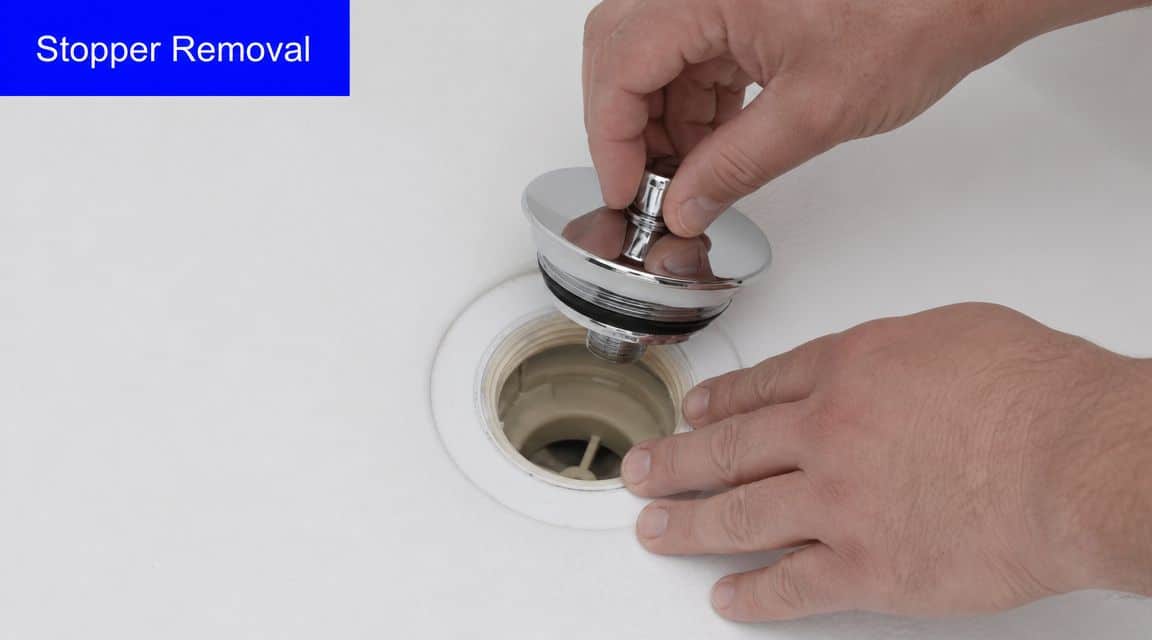
A common method is to open the drain fully, then unthread the stopper counterclockwise or remove the cap first, depending on the design. That lines up with the standard removal approach shown in Home Depot's bathtub drain removal guide.
Before you start
Set yourself up so the job stays simple.
- Dry the stopper and surrounding trim. Wet chrome slips in your hand, especially if there's soap film on it.
- Cover the drain opening or overflow if small parts are exposed. A dropped screw can turn a ten-minute task into a retrieval job.
- Keep a rag nearby. It helps with grip and protects the finish if you need light tool assistance.
If you're dealing with a stopper that still clicks, lifts, or turns the way it should, hand removal is usually enough.
Remove it based on how it operates
Use the open position first. That gives you the best access and reduces pressure on the internal parts.
- Lift-and-turn: Raise the stopper. Hold the lower body if it wants to move with the cap, then turn the top counterclockwise. If only the decorative top comes off, check underneath for the center fastener before pulling anything higher.
- Push-pull: Pull it up to the open position and turn the stopper counterclockwise by hand. If the full assembly backs out, lift it straight up without rocking it side to side.
- Toe-touch: Click it open first. Many models unthread from the center post with a steady counterclockwise turn. If the cap separates and the base stays put, stop there and inspect the connection instead of continuing to twist.
One field rule matters here. Watch for upward movement. If the stopper turns but does not rise at all, you may be rotating the wrong piece.
A visual walkthrough can help if you're comparing what you're seeing in your shower to a typical removal process.
Methods that help, and methods that cause damage
Homeowners get into trouble when they grab pliers too early. Finished metal scratches fast, and once the cap is chewed up, even a plumber has fewer clean options.
| Approach | Usually works | Usually causes trouble |
|---|---|---|
| Hand removal with stopper open | Yes, on free-moving threaded stoppers | Low risk |
| Rag for grip and finish protection | Yes, for slick chrome | Low risk if pressure stays light |
| Pliers on visible trim | Rarely | Scratched or deformed metal |
| Twisting the flange before the stopper is out | No | Damage to crossbars or drain body |
If the stopper comes out cleanly and the drain is still slow, the blockage may be lower in the line than the hair sitting near the opening. At that point, manual cleaning may not reach it, and a licensed plumber is the safer call than blindly feeding tools into the drain.
Troubleshooting a Stuck Corroded or Stripped Stopper
At this point, most online guides stop being helpful.
A stopper that won't unscrew isn't always being stubborn. In Las Vegas, hard water deposits, corrosion, old soap residue, and previous bad repair attempts can all lock the assembly in place. The most frustrating version is when the stopper just spins.
Delta identifies a major DIY gap here. When the stopper is spinning instead of unscrewing, the threads are likely stripped, and the next step may require upward pressure while turning or even removing the bath waste flange from under the tub. Their guidance is explained in this Delta Faucet troubleshooting page.
If it spins but won't back out
Try controlled upward pressure with your fingers while turning counterclockwise. The goal is to help the worn threads catch just enough to disengage.
If that doesn't work, inspect for these issues:
- A hidden set screw: Some tops come off first and expose the fastener below.
- Mineral crust at the base: This can lock the stopper to the flange opening.
- A separated cap: You may be turning the decorative top, not the threaded body.
Don't yank hard. Upward pressure is different from prying against the trim.
If corrosion has seized the stopper
At this stage, restraint matters. A cloth-wrapped grip can protect the finish if you need a little more control, but this is not the stage for aggressive twisting.
What I see most often in the field:
- Homeowner uses pliers on chrome: The finish gets chewed up immediately.
- Body starts moving, then binds: Threads are dirty, damaged, or partially stripped.
- Crossbars below are already weak: Extra force can shear them, which makes flange removal much harder.
If the stopper has corrosion and won't move with controlled hand pressure, the risk shifts from cleaning a drain to replacing drain parts.
When the job has escalated beyond stopper removal
Once you move from stopper removal to flange extraction, the tool set changes. Drain keys and tubular wrenches engage the internal crossbars only after the stopper is out. If the assembly is seized and normal hand force fails, field repair videos show the proper escalation is controlled seating of the removal tool, then apply force with a dedicated drain wrench or pipe wrench. That's very different from basic pop-up removal.
At that point, continuing without the right tool or access can loosen hidden connections below the drain body. That's when a straightforward clog turns into a leak problem.
Properly Cleaning Reinstalling and Preventing Clogs
Once the stopper is out, clean everything you can reach. Pull out the hair mat by hand or with needle-nose pliers. Wipe the stopper stem, the underside of the cap, and the inside edge of the drain opening where soap film tends to collect.
For ongoing maintenance in a busy household, this guide on how to prevent shower drain clogs is worth keeping handy because prevention is easier than removing a seized stopper later.
Reinstall it the right way
When reinstalling, plumbers use fresh putty or a gasket to prevent leaks. A repair demonstration also notes that success means a clean installation with no cross-thread damage, because a cracked flange can turn a simple swap into a full drain replacement, which is a high-risk DIY failure point according to this installation and removal video reference.
Use a light touch on reassembly:
- Start threads by hand: If it doesn't catch smoothly, back it out and restart.
- Keep the stopper aligned: Crooked threading damages brass quickly.
- Don't over-tighten: Snug is enough for most stopper assemblies.
Clean threads and straight alignment matter more than brute force.
Better habits for Las Vegas homes
Shower drains in Las Vegas deal with regular hair buildup and mineral residue. A simple hair catcher helps, and so does removing visible debris before it washes deeper into the drain.
A good maintenance routine looks like this:
- Check the stopper regularly: If movement feels rough, clean it before it seizes.
- Remove visible buildup early: Fresh debris is easy. Packed debris isn't.
- Avoid repeated chemical cleaner use: It doesn't remove wrapped hair from the stopper stem.
When You Should Call a Las Vegas Drain Expert
You start with a stopper that will not lift out. Then it just spins. Then the metal underneath starts flexing, and that is the point where a simple cleanup can turn into a broken drain body or a leak under the shower.
Call a pro if the stopper is stuck from corrosion, the top cap spins without backing out, the flange is cracked, or the crossbars inside the drain look thin or bent. Those are the jobs that go bad fast in the field, especially in older Las Vegas homes where hard water leaves mineral buildup on threads and metal parts. I have seen plenty of drains where one more hard twist would have snapped the crossbars or loosened the shoe below the pan.
Deep clogs are another line you do not want to cross blindly. If the stopper comes out but the shower still drains slowly, the blockage may be farther down the trap arm or branch line. At that point, a hair clump at the top is no longer the only problem.
A good cutoff is simple. If the repair goes beyond careful hand removal, checking for a hidden set screw, and light cleaning at the drain opening, stop there and read this guide on when to call a plumber.
This matters even more if the bathroom has older trim, tile around the drain that cannot be easily matched, or signs of past repairs. In remodel situations, forcing out damaged drain parts can create finish damage that spreads the job well beyond the drain itself. If you are already planning updates, Pacific Builders bathroom remodels can give you a sense of how drain work and finish work often overlap.
MG Drain Services LLC serves Las Vegas, Henderson, North Las Vegas, and nearby areas with licensed and insured service, experienced technicians, bilingual support, and fast response for drain and plumbing problems. If you would rather avoid cracking a flange or creating a leak below the shower base, call 702-480-8070.
Frequently Asked Questions About Shower Drains
A few drain questions come up again and again after the stopper is removed.
Are chemical drain cleaners safe for a pop-up shower drain
Usually not my first recommendation. They may open a soft clog temporarily, but they don't physically remove hair wrapped around the stopper or lower stem. On older metal trim, repeated exposure also isn't something I'd rely on.
What tools are actually useful for basic drain maintenance
Keep it simple:
- Needle-nose pliers: Good for pulling hair and debris.
- Flat-head screwdriver: Helpful if your stopper has a retainer or cap.
- Soft cloth: Protects finished metal during light grip work.
- Plumber's putty or the correct gasket: Useful if you're reinstalling components that seal against the drain body.
For full flange removal, technicians emphasize using tools like a drain key or tubular wrench only after the stopper is removed, because those tools engage the internal crossbars and represent a much bigger step than basic stopper cleaning, as noted in this technical drain removal guide.
How often should I clean my shower drain
For a regularly used shower, inspect and clean it on a routine schedule rather than waiting for standing water. Homes with long hair, multiple users, or frequent product buildup usually need more frequent attention.
If you're also planning fixture changes or layout upgrades, browsing Pacific Builders bathroom remodels can help you think through access, finish choices, and maintenance-friendly design details before a remodel starts.
If your shower stopper won't budge, keeps spinning, or you've got a slow drain that keeps coming back, contact MG Drain Services LLC for professional help in Las Vegas. Call 702-480-8070 for fast service from licensed and insured plumbers who handle drain cleaning, plumbing repairs, and stubborn drain hardware without turning a small problem into a bigger one.