A pipe lets go after dinner. Water starts pushing out under a sink, the cabinet fills, and now it's spreading across the floor toward an outlet. If you're searching for emergency plumbing services Las Vegas right now, you probably don't need sales language. You need a calm plan, a safe first move, and straight answers about what happens next.
That's exactly how plumbing emergencies should be handled in Las Vegas, Henderson, and North Las Vegas. Fast, but not frantic. A lot of damage happens because people lose precious minutes trying to guess whether the problem is serious, hunting for a shutoff valve, or waiting too long to call because they're unsure what counts as a real emergency.
The good news is that the first steps are usually simple. Shut the water down. Make the area safe. Document what you see. Then get a licensed plumber moving. If you do those things in the right order, you'll usually save more money and avoid more damage than any rushed DIY repair could.
A Plumbing Emergency in Las Vegas A Homeowner's Worst Nightmare
Most emergency calls start the same way. It's late, people are tired, and the plumbing problem picks the worst possible moment to show up. A burst supply line behind a toilet. A water heater leaking into the garage. A kitchen sink that suddenly backs up when nobody has touched it all day.
In Las Vegas homes, the panic usually comes from not knowing whether the problem is isolated or whether the whole system is about to fail. Homeowners worry about floors, cabinets, drywall, and whether the water is clean or contaminated. Property managers worry about tenant damage, neighboring units, and what happens if they wait until morning.
That stress is normal. What matters is what you do next.
First priority: control the water source before you think about the repair.
Las Vegas has a strong 24/7 emergency service culture. Multiple local plumbing companies advertise round-the-clock availability, which shows how much the market has shifted toward immediate dispatch for leaks, clogs, burst pipes, and water heater failures, including local 24/7 emergency plumbing repair coverage. That's useful for homeowners because it means rapid response is an expectation, not a special favor.
Still, “available” doesn't mean every problem deserves an expensive after-hours visit. Some issues need a plumber now. Some need containment now and repair shortly after. Knowing the difference is where good decisions happen.
Your First 5 Minutes Damage Control and Safety
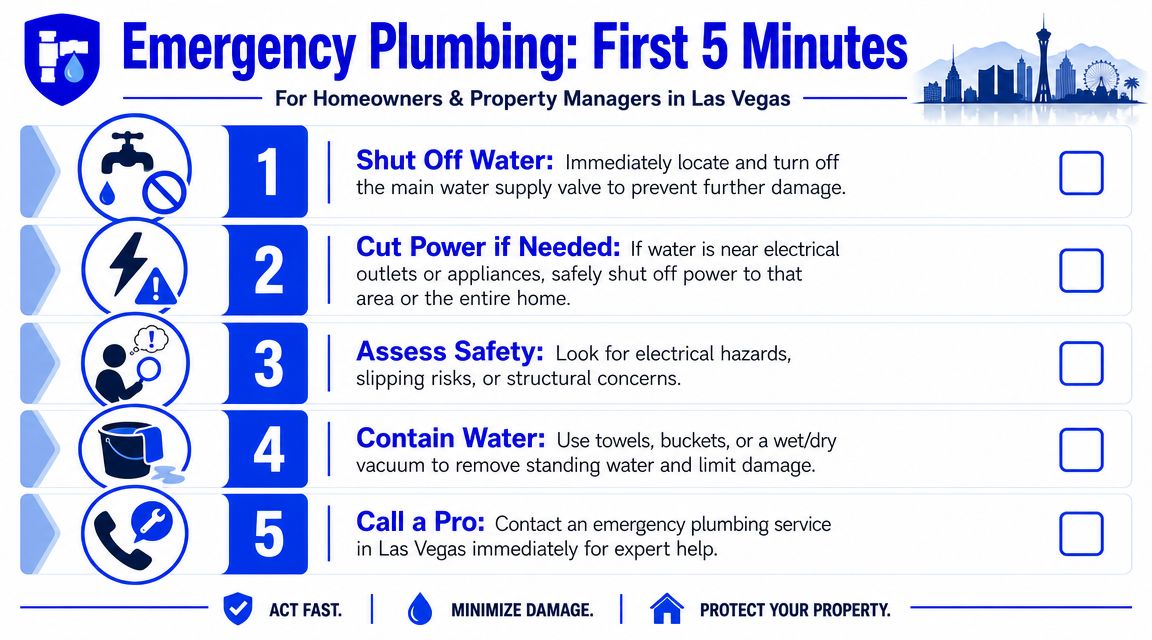
When water is moving, the clock starts immediately. In Las Vegas emergency plumbing work, the most effective response sequence is to shut off the fixture or main water supply, reduce electrical risk, document the area, and dispatch a licensed technician. Delaying shutoff increases secondary damage faster than the original failure, according to Focus Plumbing's emergency plumbing guidance.
Shut the water off first
If the leak is coming from one fixture, try that fixture's stop valve first. That might be under the sink, behind the toilet, or near the appliance. If the valve won't turn, leaks around the stem, or doesn't stop the water, go straight to the main shutoff.
For a homeowner, this is the highest-value move in the whole emergency. Not mopping. Not tightening a fitting. Not searching online for a temporary patch.
Use this order:
- Fixture valve first if it's safe and easy to reach.
- Main shutoff next if water keeps flowing or the source isn't clear.
- Water heater isolation only if the problem involves the heater and you know how to do it safely.
If you're not sure where your water usage problem started, learning how to read a water meter for leaks can help you confirm whether water is still moving through the system after you think you've shut things down.
Treat electricity like a separate emergency
Water near outlets, power strips, garage appliances, or hardwired equipment changes the situation. Don't step into standing water to unplug something. Don't reach behind an appliance if the area is wet.
If water is close to electrical components and you can't safely isolate the area, stop and wait for qualified help.
Slip hazards also matter. So do ceiling bulges, soaked drywall, and water moving from one room to another. A plumbing emergency can turn into an injury claim fast if people keep walking through a flooded path.
Document before cleanup goes too far
Take photos and short videos before you remove everything. Get the source area, the spread pattern, damaged contents, and any visible staining or swelling. Then move valuables, rugs, paper goods, and electronics away from the wet zone.
A basic containment setup often helps:
- Towels and buckets for active drips under sinks or valves
- Wet/dry vacuum for shallow standing water on tile or concrete
- Plastic bin under a leak when a ceiling drip is small and stable
- Fans only after safety is checked and power issues are ruled out
If the issue is a split line or active flooding, resources on burst pipe assistance for homeowners can help you think through containment and water-damage priorities while waiting for a plumber.
Call with useful information
When you call, be ready to say:
- What failed if you know it, such as toilet supply line, water heater, kitchen sink, or main drain
- Whether the water is off
- Whether power is at risk
- Whether sewage is involved
- Whether one fixture or multiple fixtures are affected
That short summary helps dispatch decide whether your problem needs immediate arrival, drain diagnostics, or a scheduled repair with the right tools on board.
Common Plumbing Emergencies in Las Vegas Homes
Some plumbing emergencies are obvious. Others look small at first and turn into recurring damage because the underlying cause isn't visible. That's especially true in Las Vegas, where a “simple clog” may be a line condition that keeps coming back.
Burst pipes and active leaks
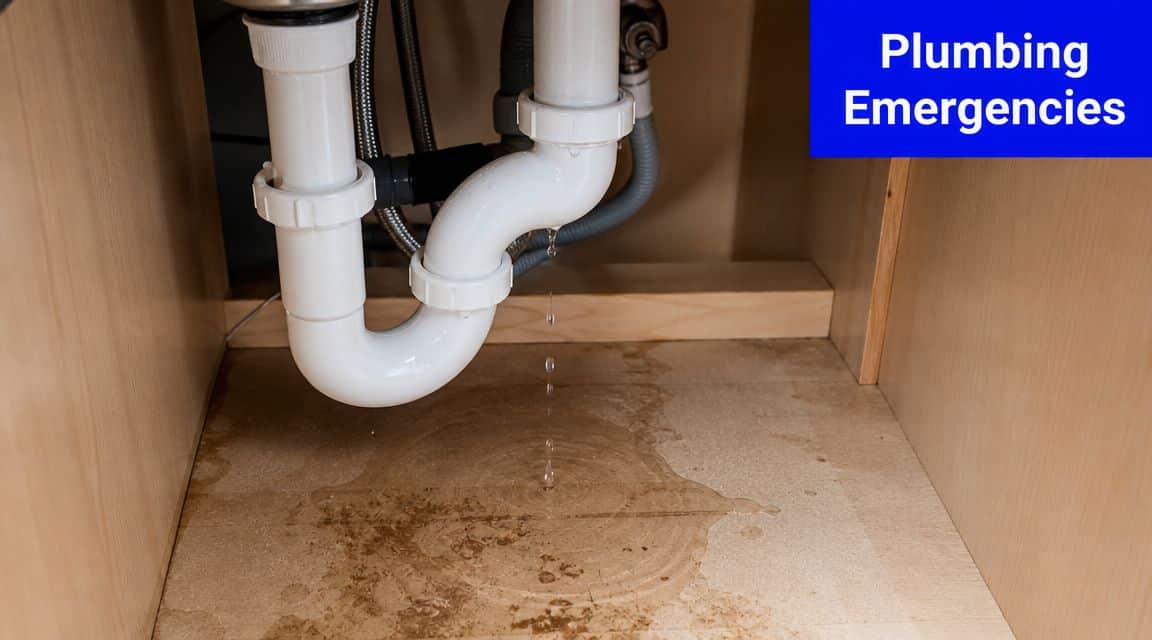
The emergency isn't just the pipe itself. It's the path the water takes after the failure. Under-sink leaks soak particleboard cabinets quickly. Wall leaks travel farther than people expect. A failed angle stop behind a toilet can keep feeding water until someone physically shuts it off.
What works is isolation and diagnosis. What doesn't work is wrapping tape around a pressurized failure and hoping it holds overnight.
A few signs the leak may be more involved than it looks:
- Staining away from the visible leak that suggests water has been traveling
- Cabinet swelling or floor softening that points to a longer-duration problem
- Repeated pressure loss after one repair, which can indicate another weak point
- Warm spots or unexplained moisture that may justify slab-leak evaluation
If the leak location isn't obvious, how to find water leak under slab is worth reviewing before the problem gets dismissed as a surface issue.
Water heater failures
A water heater emergency usually shows up in one of three ways. You lose hot water suddenly. The unit starts leaking. Or pressure and temperature behavior changes in a way that makes the system unreliable.
Homeowners often wait too long here because they assume “no hot water” is only an inconvenience. Sometimes it is. A leaking tank isn't. Water around the base, rust-colored discharge, or active dripping from the unit area means the problem needs attention before it damages flooring, walls, or stored items.
Sewer backups and recurring clogs
People often misjudge the situation. A single slow sink may be a local drain problem. Multiple drains acting up together, toilets bubbling, or wastewater coming back into a tub usually points to a larger line issue.
Sewer backups and recurring drain clogs can be caused by root intrusion, grease buildup, or pipe damage. The EPA point about routine inspection matters here, and it's summarized in this Las Vegas emergency plumbing discussion. The practical lesson is simple. Not every clog needs a middle-of-the-night panic response, but repeated clogs should not be treated like random bad luck.
Here's a quick field rule:
- One sink clogging alone often stays in the branch line category
- Kitchen sink plus dishwasher backup may still be local, but needs proper clearing
- Toilet, tub, and floor drain problems together raise concern for a main line issue
- Sewage exposure indoors moves the problem into urgent territory
A short visual walk-through helps if you're trying to spot the difference between a local drain issue and a larger problem:
Repeated clogs are a warning sign. The line may need a camera inspection, not just another round of snaking.
Hiring Emergency Plumbing Services Las Vegas What to Expect
The biggest frustration during an emergency usually isn't just the plumbing problem. It's uncertainty. People want to know whether someone will answer, whether the plumber can handle the issue in one visit, and how much more after-hours service is going to cost.
The pricing reality is straightforward. Emergency plumbing calls are commonly priced at 1.5 to 3 times the standard rate, and Angi's cost guide says emergency plumbers typically charge $100 to $500 per hour, with an average near $200 per hour, while regular plumbers generally charge about $40 to $200 per hour. The same guide says the highest rates usually hit on holidays, followed by weekends and after-hours weekday calls, as outlined in Angi's emergency plumber cost guide.
That doesn't mean every emergency invoice is inflated. It means after-hours plumbing involves premium labor, dispatch logistics, and a truck rolling when most service departments are closed.
What 24 7 service usually means in practice
Las Vegas homeowners see “24/7” everywhere, but the useful question is what happens after someone answers the phone. A trustworthy provider should explain whether you're getting immediate dispatch, a service window, temporary containment, or a scheduled first slot in the morning.
For some issues, that distinction matters more than the marketing line. If the water is off and the situation is stable, a next-available visit may be the smarter financial choice. If sewage is entering the home or water can't be isolated, that's a different call.
A local company page like plumbers near me in Las Vegas should make it easy to understand service areas, communication, and how to start the booking process without guesswork.
Questions worth asking before you approve service
Use the call to narrow risk, not just get a promise. Ask direct questions.
- Trip charge What is the after-hours or weekend dispatch fee?
- Rate structure Is pricing flat-rate, hourly, or diagnosis first and quote after?
- Emergency threshold What problems do you consider true emergencies?
- Repair scope Can the technician provide temporary mitigation if a full repair has to wait?
- Credentials Are you licensed and insured?
- Coverage area Are Henderson, North Las Vegas, and Summerlin handled the same way?
Even outside plumbing, homeowners often use licensing and insurance as a basic trust filter. That's why guides like this Phoenix homeowners guide to window cleaning are useful as a general service-hiring reminder. In any trade, clear answers about coverage, responsibility, and billing matter more when the customer is under pressure.
Emergency vs Standard Plumbing Service Expectations
| Factor | Standard Service (Business Hours) | Emergency Service (After-Hours/Weekend) |
|---|---|---|
| Scheduling | Planned appointment window | Immediate or priority dispatch when available |
| Pricing | Regular service rates | Commonly higher than standard service |
| Problem type | Repairs that can wait safely | Active leaks, sewage issues, no safe way to contain damage |
| Decision pace | Time to compare options | Faster decisions, often with containment first |
| Repair approach | Full diagnosis and repair planning | Stop damage first, then complete repair path |
Practical check: if a company won't discuss pricing approach, emergency criteria, or whether the first visit is containment versus full repair, keep asking questions.
One option in the valley is MG Drain Services LLC, which provides plumbing repairs, drain cleaning, sewer camera inspections, hydro-jetting, and water leak detection in Las Vegas, Henderson, North Las Vegas, and Summerlin, with online booking and transparent quotes listed as part of its service approach.
Preventing Your Next Plumbing Catastrophe
The cheapest emergency is the one that never becomes after-hours service. Most serious plumbing calls show warning signs first. Homeowners miss them because the system still “mostly works” until the day it doesn't.
Focus on the troublemakers
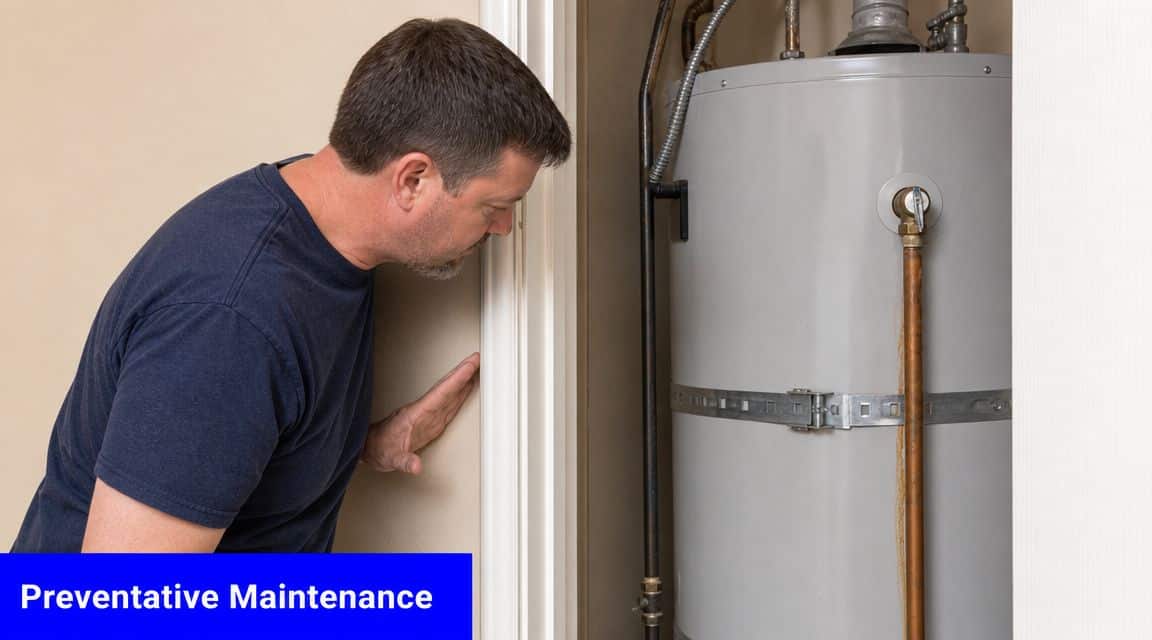
Drains, water heaters, shutoff valves, and older supply connections deserve regular attention. If a kitchen line slows down every few months, stop treating it as a one-off nuisance. If a water heater area shows rust, mineral residue, or moisture, don't wait for a full leak.
The same goes for toilets that rock, outdoor hose bibs that drip, and valves that haven't been touched in years. In a real emergency, a shutoff valve that won't move is a problem all by itself.
A simple maintenance routine
Use a checklist that's easy to repeat instead of a long list you'll never follow.
- Test shutoff access Know where the main water shutoff is and make sure adults in the home can reach it.
- Watch for repeat drain symptoms Gurgling, recurring slow flow, and backups after prior clearing usually mean the line needs proper diagnosis.
- Inspect around the water heater Look for dampness, corrosion, or staining near connections and the base.
- Check under sinks and behind toilets Small drips often show up as swelling, musty smell, or supply line corrosion before they become active leaks.
- Schedule professional drain and sewer diagnostics when patterns repeat Camera inspection and hydro-jetting are often more useful than repeated temporary clearing.
What DIY can and can't do
DIY is fine for observation, shutoff, cleanup, and basic prevention. It's not fine for guessing at concealed leaks, forcing old valves, or assuming a recurring backup is “just another clog.”
The repair that looks cheaper tonight often becomes the expensive repair next month if nobody finds the actual cause.
Property managers and small commercial owners should take this even more seriously. Repeat drain calls, especially in kitchens or tenant-occupied properties, usually mean the system is telling you something. Listen the first time.
Why Las Vegas Trusts MG Drain Services for Fast Response
At 11 p.m., trust comes down to simple things. You want someone to answer the phone, ask the right questions, and tell you clearly whether you need a truck tonight or a scheduled visit in the morning.
That standard matters in Las Vegas because response times are not identical across the valley. A company may reach a central Las Vegas address faster than a late-night call in Henderson, Summerlin, or North Las Vegas, especially during storms, freeze events, or heavy weekend volume. Good service starts with a realistic arrival window, not a vague promise.
MG Drain Services LLC has earned that trust by keeping the process practical. They serve Las Vegas, Henderson, North Las Vegas, and Summerlin with licensed, experienced plumbers, bilingual support, and the diagnostic tools needed to identify the actual problem. For recurring drain backups, sewer line trouble, and leak investigation, equipment like video inspection and hydro-jetting helps separate a temporary symptom from a line that needs repair or full cleaning.
That saves people money.
In emergency plumbing, speed matters, but accuracy matters too. A rushed guess can turn one service call into three. Homeowners and property managers usually remember the companies that explain the trade-off clearly: stop the immediate damage now, then decide whether the lasting fix should happen tonight or under normal daytime pricing.
Clear communication is a big part of why local customers keep calling MG Drain Services LLC. They are known for straightforward quotes, plain-language explanations, and practical guidance during stressful situations. If the issue is an active leak, sewage exposure, or a fixture failure that cannot be isolated, they treat it like the urgent problem it is. If it can wait safely, they should say so.
If you need emergency help now, call 702-480-8070.
Your Emergency Plumbing Questions Answered
What counts as a real plumbing emergency
A real emergency usually means one of two things. The problem is causing active damage right now, or it creates a safety or sanitation risk if you wait. Water that won't stop, sewage backing up into the property, or a failed plumbing component that can't be isolated belongs in that category.
A single drain moving slowly, with no overflow and no effect on other fixtures, often can wait until normal service hours if the situation is stable.
Should I call at night or wait until morning
If you can fully shut the water off, protect the area, and stop people from using the affected fixture, waiting may be the more cost-aware choice. If you can't control the source, or wastewater is entering the home, call immediately.
The key is not the inconvenience. It's whether damage, contamination, or safety risk is still growing.
What should I ask when a company says it offers 24 7 service
Many consumers want clarity on trip charges, weekend price differences, what counts as a true emergency, and how response timing varies across places like Henderson and Summerlin. Transparent answers to those questions are a hallmark of a trustworthy provider, as noted in Focus Plumbing's general plumbing service guidance.
Ask direct questions and listen for direct answers. If a company stays vague on pricing approach or arrival expectations, keep looking.
Can a plumber fix everything on the first visit
Sometimes yes, sometimes no. The first priority in emergency work is often containment and diagnosis. A technician may stop the leak, clear immediate blockage, or make the system safe first, then return for a larger repair if parts, access, or line condition require it.
That isn't bad service. It's often the correct service.
Is recurring drain trouble an emergency
Not always tonight. But it is a problem you shouldn't ignore. Repeated clogs often point to buildup, root intrusion, pipe damage, or another hidden issue that needs inspection tools, not repeated temporary clearing.
If you need fast, practical help from MG Drain Services LLC, call 702-480-8070. Serving Las Vegas, Henderson, North Las Vegas, and nearby communities, the team provides professional plumbing and drain service with honest pricing, experienced technicians, and real diagnostic support when the problem can't wait.