For most Las Vegas homes, especially those built before 1990, the answer is yes. A sewer camera inspection usually costs a few hundred dollars, and that small spend can help you avoid a five-figure repair hiding under the slab.
That's the core issue with buying here. You can get a clean-looking home inspection, move in, and still inherit a sewer line that's cracked, offset, root-filled, or near collapse.
Why a Standard Home Inspection Misses Sewer Problems
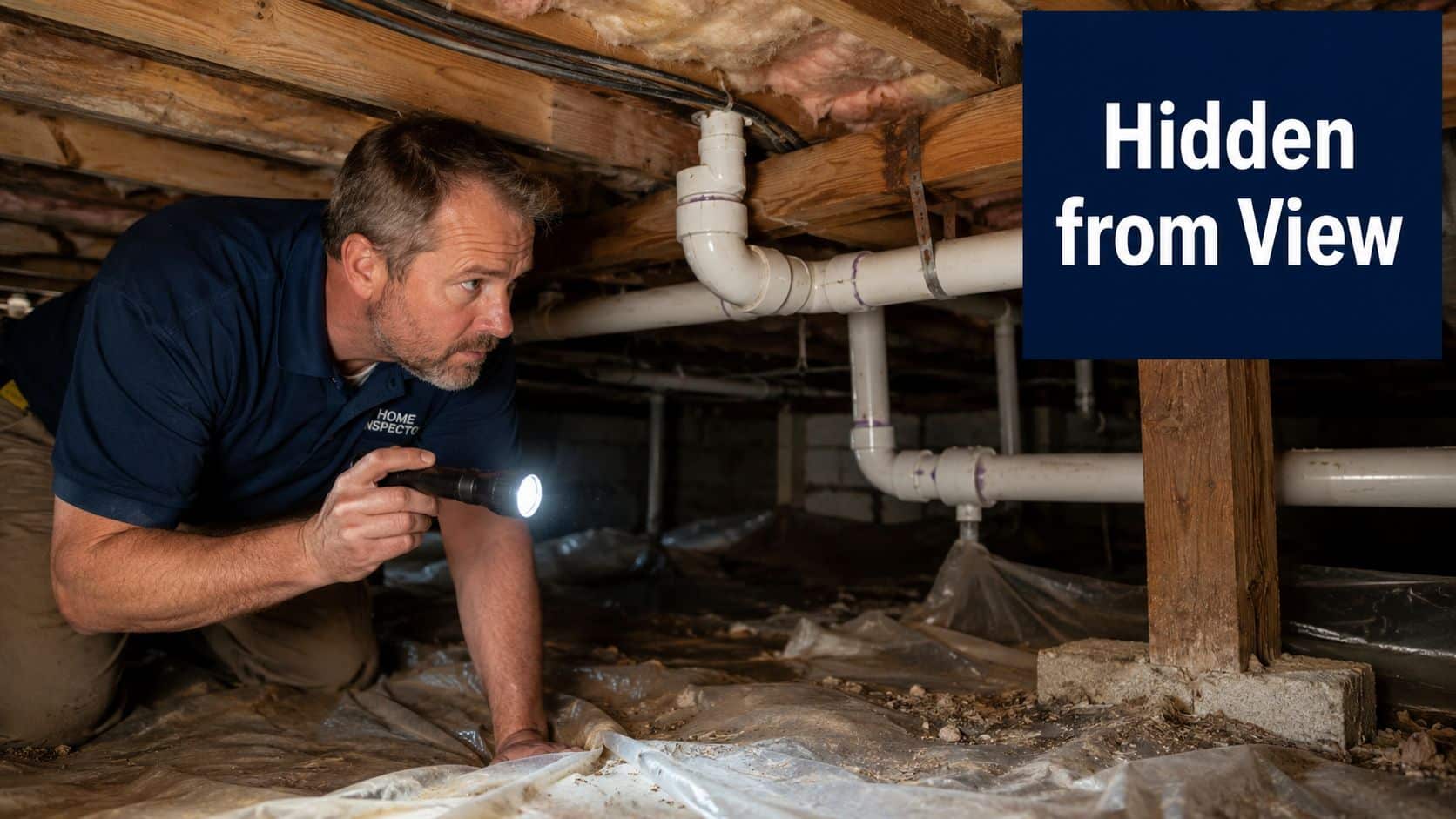
A lot of buyers assume the home inspector checked everything that matters underground. They didn't. A general home inspection usually covers accessible fixtures, visible pipes, and normal plumbing function inside the house, but not the buried sewer lateral that carries waste to the public main industry guidance.
That gap matters more in Las Vegas than it does in many newer markets. In older neighborhoods, the highest-cost plumbing failures often live out of sight, under concrete slabs, under landscaping, or in a run of pipe nobody can evaluate without a camera.
The blind spot buyers miss
A standard inspection can tell you whether sinks drain and toilets flush, but that's not the same as knowing the line is healthy. The buried sewer line may have a partial blockage, corrosion, or a settled section that still drains today but is already failing.
In practical terms, that means a buyer can feel confident right up until the first backup happens after closing. At that point, the problem stops being a negotiation item and becomes your repair.
Practical rule: if the sewer line is not visible, it's not really inspected. It's only inferred.
Why that matters in a purchase
That blind spot is exactly why a sewer scope has become standard due diligence on many older homes. The camera is the only pre-closing tool that looks at the pipe itself instead of guessing from symptoms inside the house.
For a buyer, the question isn't whether a home inspection is valuable. It is. The question is whether you want to close with a known sewer condition or an unknown one.
How a Sewer Camera Reveals Hidden Pipe Problems
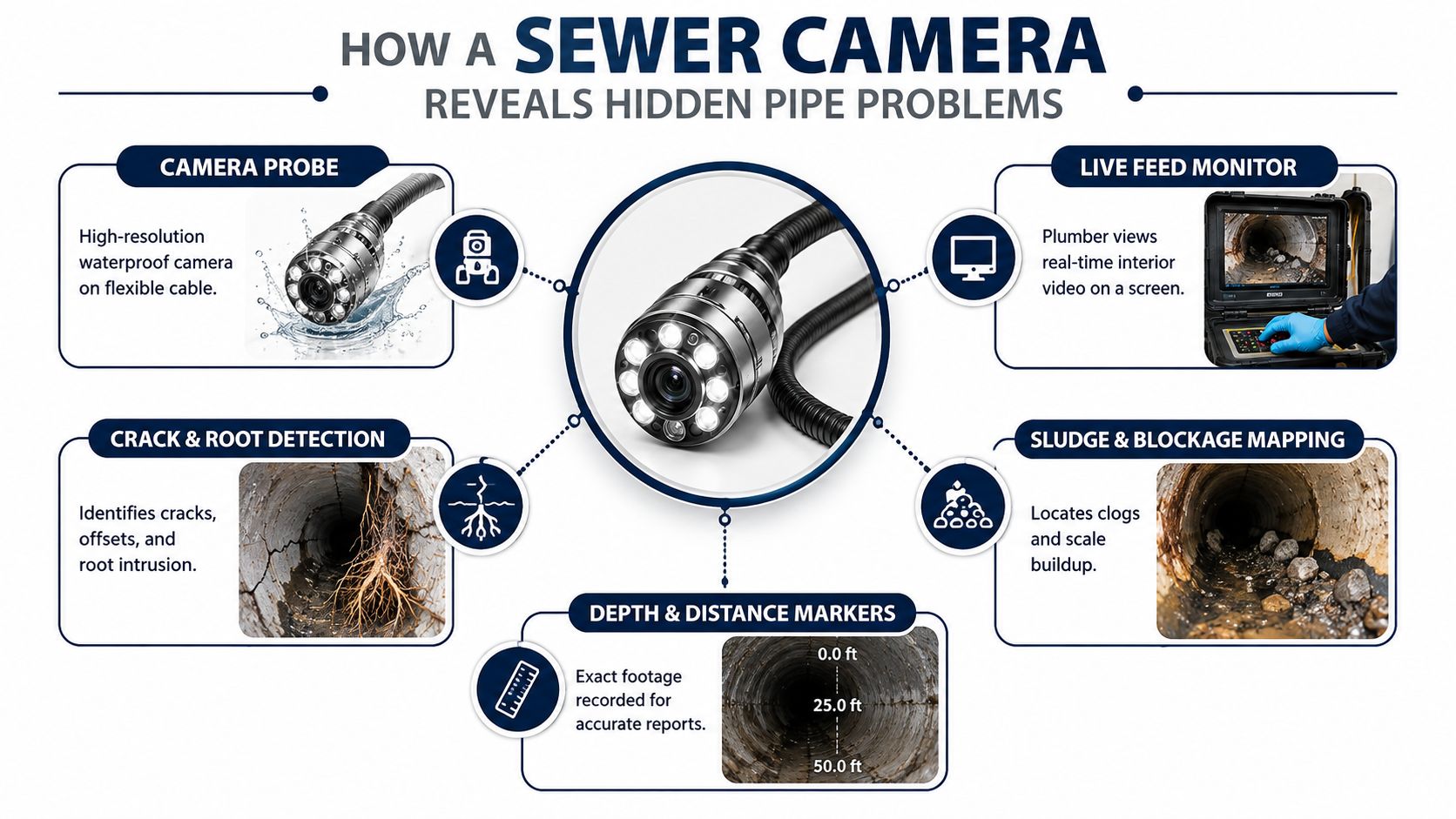
A sewer camera inspection is a non-invasive diagnostic. A plumber feeds a small waterproof camera on a flexible cable into the sewer line from a cleanout, then watches the live feed on a monitor as it moves through the pipe how the process works.
It's like an endoscope for plumbing. Instead of guessing what's going on underground, the camera shows the interior surface of the line in real time and records the condition as it goes.
What the camera is looking for
A pre-purchase sewer camera inspection can directly identify the kinds of defects a normal home inspection usually can't see, including root intrusion, cracked or collapsed pipe, pipe misalignment, sagging belly sections, and buildup inside the lateral sewer line camera inspection findings.
Those aren't abstract problems. They're the failures that lead to recurring backups, sewage odors, slow drains, and repair bills that show up after escrow closes.
A good inspection also helps distinguish between a line that's still serviceable and one that's drifting toward replacement. That difference matters because not every sewer problem needs the same fix.
What makes the reading useful
The value isn't just seeing damage. It's seeing where the damage is, how far it runs, and whether it looks localized or systemic. That lets a plumber recommend cleaning, repair, or replacement based on evidence instead of guesswork.
The camera doesn't just expose the problem. It gives you a map for the repair.
Specific Sewer Risks for Las Vegas Homebuyers
Las Vegas homes come with a specific set of sewer risks. Older housing stock, slab construction, desert soils, mature landscaping, and years of use can all wear on a sewer line at the same time.
In older neighborhoods, especially North Las Vegas and central Las Vegas, cast iron drain lines under the slab are common, and homes built before the 1980s commonly have those cast iron lines local cast iron line guide. Over time, cast iron can develop rust flaking, scale buildup, thinning walls, cracks, and sagging sections that hold waste and water.
Why older neighborhoods deserve extra attention
Many pre-1990 homes in the valley were built with sewer materials that age poorly over decades. According to the 2026 Las Vegas home inspection guide from View Vegas Now, original lateral sewer lines in those neighborhoods were often cast iron or Orangeburg pipe, materials that typically degrade after 40 to 60 years Las Vegas inspection guide.
Mature yards add another layer of risk. Trees and shrubs planted for shade in an arid climate can send roots toward any source of moisture, and sewer joints are exactly where those roots try to enter. In slab homes, the pipe is also harder to access, so small defects can stay hidden for a long time.
If you want a broader sense of how plumbing surprises can affect a transaction, plumbing repair cost data shows why underground failures deserve attention before closing.
Why the desert environment makes it worse
Southern Nevada conditions do not help aging pipe. Heat, soil movement, and long service life can turn a line that looks fine on paper into one that is already brittle in real life.
Field reality: a clean-looking yard doesn't tell you much about what the pipe under it has been through.
For buyers who also suspect hidden moisture problems inside the home, pairing a sewer scope with water leak detection makes sense in older slab homes, because a sewer line issue and a separate leak can show up in the same transaction.
What to Expect During a Pre-Purchase Sewer Inspection
The process is usually straightforward. A plumber looks for an access point, usually the sewer cleanout, then feeds the camera into the line while watching the live video on a monitor camera inspection process.
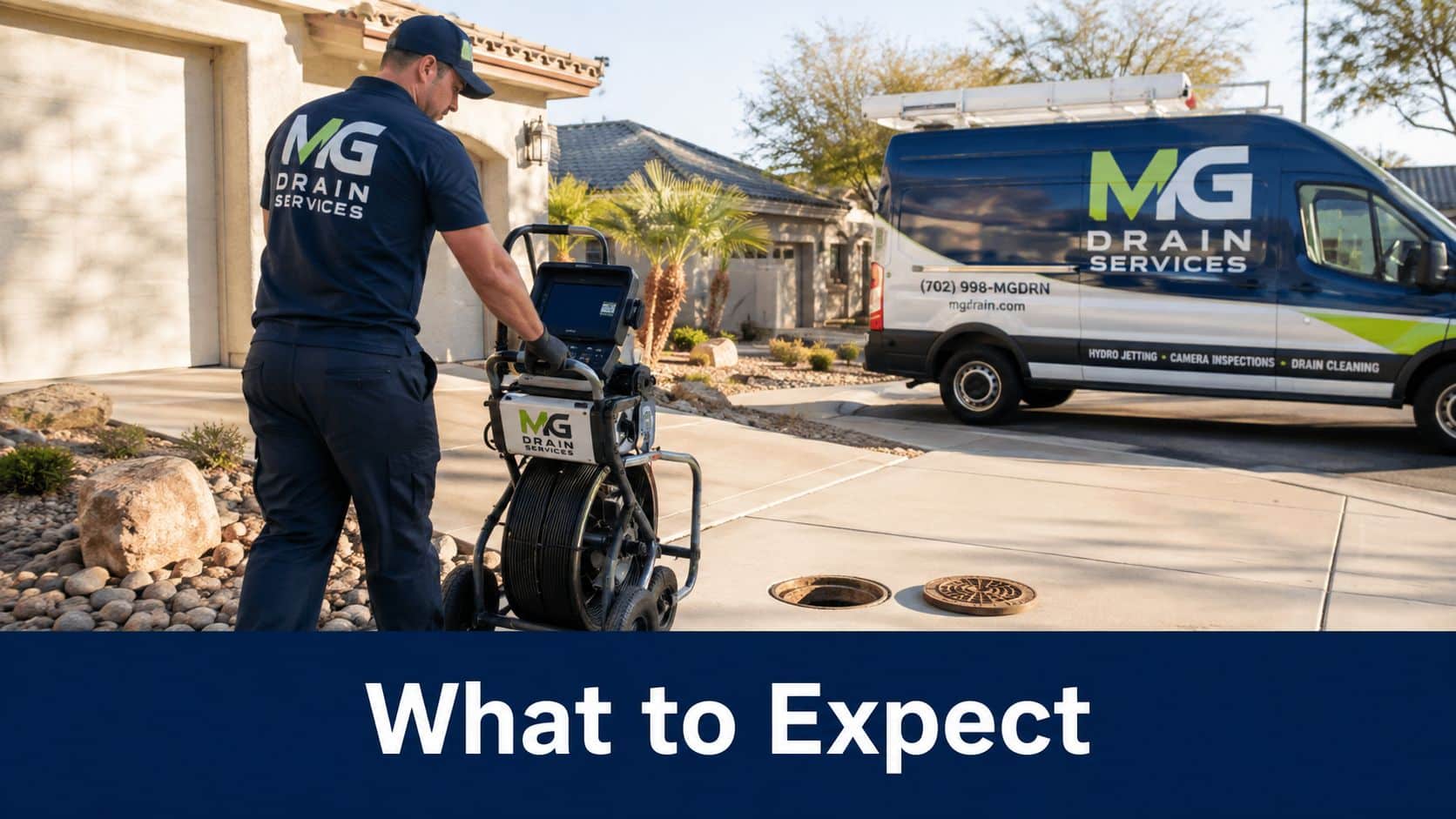
Most residential inspections take about 45 minutes to 2 hours, depending on access and line length, and one Las Vegas source places standard inspection pricing around $250 to $500 for standard work and $300 to $600 for pre-purchase inspections local pricing and timing. If the line is easy to reach and the cleanout is clear, it can go quickly. If access is tight or the pipe is long, it takes longer.
What you get back
The buyer should expect a straightforward explanation of what the camera found, along with a digital record of the line's condition. In practice, that documentation is what gives you an advantage later if you need to negotiate.
If you want a rough way to think about the service fee itself, cost estimates can help put the inspection in the context of other buyer-side plumbing work in the valley.
Why the live video matters
Seeing the footage is useful because it removes the back-and-forth over what the technician “thinks” might be happening. You're looking at the same pipe, at the same time, and you can ask questions while the camera is still in the line.
Here's what good process looks like in the field:
- Find the access point: The cleanout gives the camera a path into the sewer line without excavation.
- Run the line slowly: The technician watches for roots, offsets, buildup, and standing water.
- Mark the issue location: Measured footage helps a plumber locate the defect without tearing up the wrong part of the yard.
- Review the findings: The buyer gets the condition report before closing decisions are final.
Some companies, including MG Drain Services LLC, use that same inspection approach on older resale homes to document sewer condition before the contract is locked in.
Using Your Sewer Inspection Report in a Real Estate Deal
A sewer report only helps if you use it before you sign. If the line looks healthy, you get peace of mind and one less surprise at closing. If it shows damage, you have a chance to deal with it while the seller still has skin in the game.
That matters in Las Vegas because the repair bill can be far larger than the inspection fee. According to the 2026 Las Vegas home inspection guide from View Vegas Now, a lateral sewer repair costs $8,500 to $18,000, while the inspection itself is about $250 to $400. That gap is why I tell buyers to treat the scope like cheap insurance against a five-figure problem.
How to read the findings
Small root intrusion that can be cleared may support a seller credit or a cleaning after closing. A collapsed line, a severe belly, or a badly damaged cast iron section changes the deal because those defects affect the whole sewer system, not just one spot in the pipe.
The report also gives you a cleaner way to separate plumbing risk from appraisal issues. If you want a practical reference for that difference, appraisal vs inspection for homeowners explains how each report affects your position during a purchase.
What to ask for
Use the report to choose between three outcomes. The seller can repair the problem, offer a credit, or refuse, and that refusal tells you plenty about how much risk you want to take on.
A simple way to read the result:
- Clean report: move ahead with more confidence.
- Repairable defect: ask for a credit or a targeted fix.
- Major failure: push for a larger price reduction or walk away.
If the line needs cleaning after the inspection, hydro jetting services are often the next step for buildup or root-related restriction, but only after the camera shows that cleaning will solve the problem.
According to the same Las Vegas repair context noted earlier, that kind of documentation can keep a bad line from becoming your problem after closing.
Frequently Asked Questions About Pre-Purchase Inspections
Buyers usually ask the same follow-up questions once the sewer scope comes up. Those questions are smart, because the inspection is valuable, but it isn't magic.
Do I need one on a brand-new home
Not always, but don't assume new construction is automatically problem-free. A newer home is less likely to have long-term corrosion, yet construction debris, poor slope, or a bad connection can still create a sewer issue.
What if there's no accessible cleanout
A plumber can sometimes use another access point, but lack of a cleanout can make the job more limited or more awkward. That's one reason I like seeing a sewer inspection scheduled early in escrow, not at the last minute.
What can the camera not tell me
This is the part buyers misunderstand most. The camera inspects the underground sewer line from the house to the public connection, not the full plumbing system inside the walls or every branch line in the home inspection scope limitation.
It can document pipe defects, but it may not reliably diagnose hidden slab leaks, branch-line problems, or future soil movement risk. That's why older slab homes sometimes need a sewer scope paired with other checks instead of treated as a one-and-done answer.
Should I treat it like a house survey
Yes, in the practical sense that you're paying for specialized information before you commit. The same logic behind do I need a house survey applies here, because both services reduce surprise and help you decide whether the property is worth the risk.
Can I skip it if the drains seem fine
You can, but that's not a good bet on an older Las Vegas home. Sewer lines can look fine at the fixture level and still have serious damage underground.
If you're buying an older home in Las Vegas, Henderson, or North Las Vegas, get the sewer checked before closing and make the decision with real information instead of hope. Call MG Drain Services LLC at 702-480-8070 for a pre-purchase sewer camera inspection, or visit MG Drain Services LLC to schedule service and protect yourself from a hidden five-figure mistake.