
If you live in an older Las Vegas home, you probably know the feeling. The shower starts draining slower every month. The kitchen sink gurgles after the dishwasher runs. There's a faint musty smell near a wall, but nothing obvious enough to point to a single cause. Those small warnings often turn into the bigger problems behind Las Vegas plumbing repairs in older homes.
In Las Vegas, Henderson, and North Las Vegas, older houses face a rough combination of aging pipe materials, desert heat, and water quality issues that newer homes handle better. What looks like one clogged drain or one leaky fixture often traces back to corrosion, scale, hidden leaks, or failing drain lines. The fix usually starts with identifying the actual failure point instead of guessing and replacing parts at random.
That Nagging Feeling Something Is Wrong with Your Plumbing
A lot of plumbing calls in Las Vegas start with something homeowners tried to ignore.
It's the tub that never drains quite right. The toilet that bubbles when the washing machine empties. The cabinet under the sink that smells damp even when everything looks dry. In older homes, those signs usually aren't isolated. They tend to connect back to a system that's been wearing out for years.
Older Las Vegas neighborhoods have plenty of homes with original piping, older fittings, and drain lines that were never designed for decades of mineral-heavy water and constant seasonal stress. The problem isn't just age. It's age combined with local conditions. Pipes that might limp along elsewhere often fail faster here.
What these early signs usually mean
- Slow drains that keep returning usually point to buildup deeper in the line, not just hair at the stopper.
- Low pressure at multiple fixtures often means internal pipe restriction, not a bad faucet.
- Stains, odors, or soft drywall can signal a hidden leak behind a wall, below a slab, or around an aging drain connection.
- Gurgling sounds often mean air is being displaced by a partial blockage or a drainage problem further down the system.
A recurring symptom is usually more important than a severe symptom that happens once.
That's where many homeowners lose time and money. They clear one drain, replace one angle stop, swap one showerhead, and the problem keeps showing up because the underlying issue is further back in the system.
Las Vegas plumbing repairs in older homes require a different mindset. You're not just fixing a symptom. You're figuring out whether the home has isolated wear, failing pipe material, or a drainage system that's reached the point where patch repairs stop making sense.
Why Older Las Vegas Homes Have Unique Plumbing Problems
A house can look solid from the street and still have a plumbing system that is wearing out in ways the owner cannot see yet.
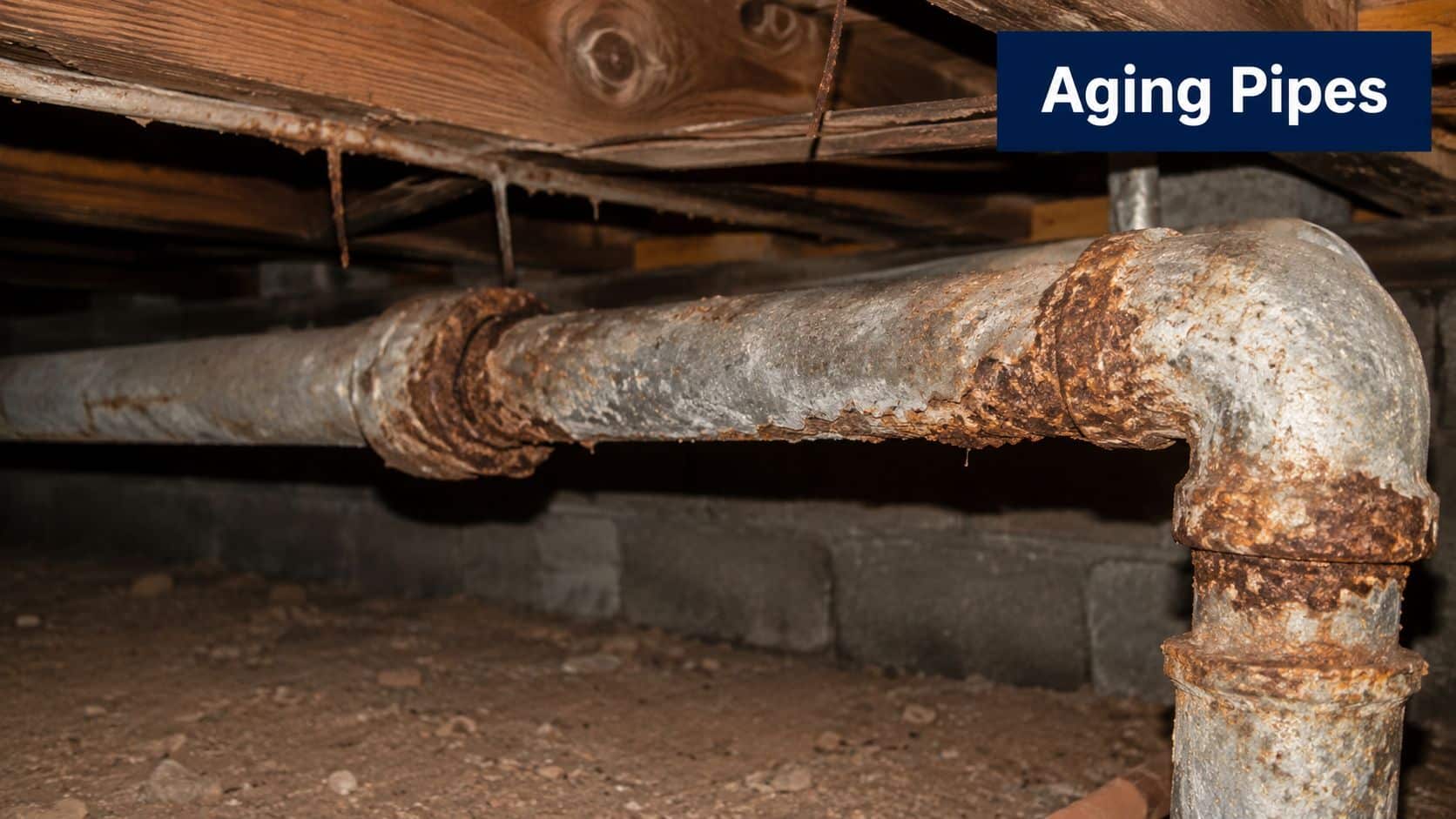
In older Las Vegas homes, pipe age is only part of the story. Desert heat, sharp temperature swings between conditioned and unconditioned spaces, and hard water all put extra stress on supply lines, fittings, and drains. Materials that lasted reasonably well in milder climates often break down faster here, especially in homes built before the 1980s with original galvanized steel, early copper, or outdated drain components.
As noted in this overview of common plumbing problems in older homes, galvanized steel and lead pipes are common sources of leaks and low water pressure because years of internal corrosion and mineral buildup restrict flow. In Las Vegas, that restriction tends to build faster because the water leaves scale behind as it moves through older piping.
The result is usually gradual decline, not one obvious failure. Water pressure drops fixture by fixture. Threaded joints start weeping. Shutoff valves stiffen up. A homeowner replaces a faucet and expects better performance, but the actual restriction is several feet back in the wall.
What shows up first in older local systems
Most owners do not see the failing pipe. They see the effects:
- Weak flow at sinks, tubs, and showers
- Small leaks around older threaded fittings or angle stops
- Rust-colored water or staining at fixtures
- Fixtures that still perform poorly after replacement
That pattern matters. If only one fixture has trouble, the problem may stay local. If several fixtures show the same symptoms, the system itself usually needs attention.
Drain lines age differently, but Las Vegas conditions are hard on them too. Hard water scale gives waste lines a rougher interior surface, which helps soap residue and grease cling to the pipe wall. Add decades of use, minor settling, and older joints, and a simple stoppage can turn out to be a line condition problem instead of a one-time clog.
A camera inspection is often the point where guesswork stops. It shows whether the issue is heavy buildup, a shifted connection, root intrusion, or a section of pipe that has reached the end of its service life. Homeowners dealing with recurring symptoms usually benefit from reading more about corroded pipe repair options in older plumbing systems before deciding between another patch and a larger repair.
In older Las Vegas homes, the pipe material, the local water, and the desert climate usually fail together. That is why isolated repairs do not always stay isolated.
Beyond Clogs Hidden Dangers in Your Pipes
A kitchen line can still drain. A shower can still run. Meanwhile, an older pipe system may already be failing in ways the homeowner cannot see.
Desert temperature swings and slab leaks
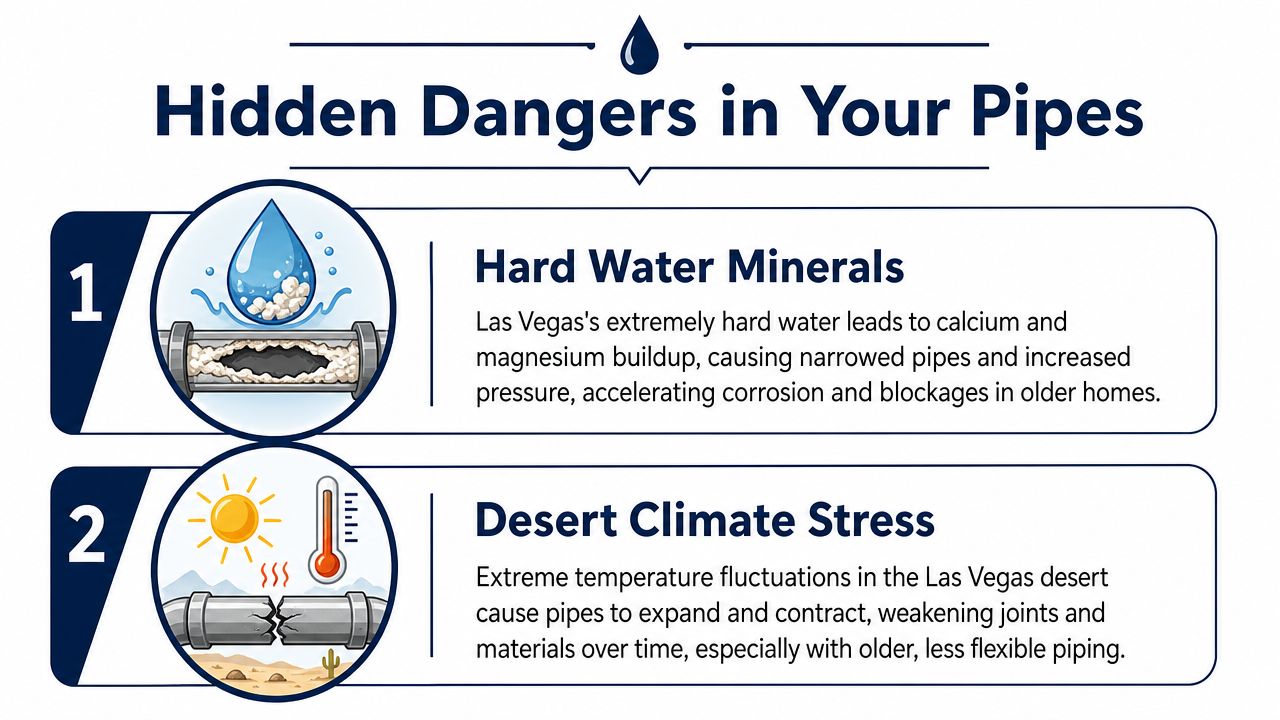
Las Vegas plumbing ages under a different kind of stress than homes in milder climates. Summer heat loads attics, garages, and wall cavities for months at a time. Winter nights still bring enough temperature change to make older copper lines expand and contract over and over, especially where the original insulation has broken down or disappeared.
That repeated movement shows up at fittings, soldered joints, and bends in the line. In slab homes, it can also contribute to pinhole leaks or failures that stay hidden until the floor feels warm, a baseboard stains, or moisture starts lifting flooring.
The Southern Nevada Water Authority explains that leaks can occur under concrete slabs and may not be obvious right away, which is why unexplained water use, warm spots, or damp flooring deserve prompt leak detection instead of guesswork. See the SNWA guidance on finding and fixing leaks.
A proper inspection saves time here. If you want a clearer picture of how age, corrosion, and pipe condition affect the repair choice, this guide to corroded pipe repair options in older plumbing systems lays out the usual paths.
Hard water does more than leave spots
Hard water gets blamed for white crust on fixtures, but the bigger problem is what it does inside older plumbing. Mineral scale builds along the pipe wall, reduces inside diameter, and gives corrosion more places to start. In galvanized lines, that restriction can get severe enough that a fixture change does nothing because the supply line feeding it is the actual choke point.
There is also a trade-off homeowners should understand. Softening water helps limit future scale, but it does not restore pipe wall thickness or remove heavy internal corrosion in aging metal systems. Some owners focus on visible buildup first, the same issue behind how to tackle Reno hard water stains, while the more expensive problem is already inside the line.
What usually holds up, and what wastes money
| Condition | Usually works | Usually wastes time or money |
|---|---|---|
| Scale-related restriction in an older supply line | pressure testing, targeted cleaning, checking line condition before replacing fixtures | swapping faucets and showerheads without testing the line |
| Suspected slab or concealed leak | electronic leak detection, line location, then repair or reroute based on access | waiting for flooring damage to confirm the problem |
| Corroded cast iron or galvanized piping | camera inspection, sectional repair, or repipe where the pipe wall is spent | repeated clearing with no diagnosis |
| Unclear leak source behind walls or under floors | locating the leak first, then opening only the needed area | cutting into finishes based on stains alone |
Hidden plumbing problems usually announce themselves late. By the time water shows up where it should not, the repair is often bigger than the leak itself.
Common Las Vegas Plumbing Repairs in Older Homes
Most service calls in older Las Vegas homes fall into a few patterns. The symptom may look simple. The repair often isn't.

Low water pressure and restricted flow
In Las Vegas homes, hard water damage is the most prevalent plumbing issue, causing mineral buildup that restricts water flow and corrodes fixtures. Homeowners are advised to use a quality water softener and change the filter every 6–12 months according to this Las Vegas plumbing article.
That doesn't mean every low-pressure problem gets fixed by adding a softener. If older galvanized lines are already restricted, the softener helps reduce future scale, but it won't reverse heavy internal corrosion. At that point, plumbers usually test pressure, inspect fixture stops, and determine whether the issue is localized or system-wide.
Recurring drain clogs
A plunger or hand snake can solve a shallow blockage. It won't tell you why the line keeps backing up.
For repeated clogs in older homes, the better process is:
- Inspect first with a sewer camera when the clog keeps returning.
- Clear the actual obstruction with the right machine for the line size and material.
- Clean the pipe wall when buildup is the issue, often with hydro-jetting when the pipe condition allows it.
- Repair or replace damaged sections if the camera shows offsets, breaks, or severe corrosion.
Homeowners looking for those services can compare options like drain cleaning in Las Vegas or a sewer camera inspection, both of which are commonly used on older properties with recurring backups.
Discolored water, odors, and hidden leaks
Discolored water can come from aging supply lines. Odors often trace back to drain problems, sewer gas issues, or a hidden leak feeding moisture into cabinets, walls, or flooring.
A homeowner can check accessible shutoff valves, look under sinks, and note whether the problem affects one fixture or the whole house. But once there's wall staining, persistent odor, or unexplained moisture, professional leak detection is the safer move. MG Drain Services LLC handles color video camera inspections, hydro-jetting, drain cleaning, leak detection, and plumbing repairs for older homes in Las Vegas, Henderson, and North Las Vegas.
If hard water is leaving buildup on fixtures as well as inside lines, homeowners may also find practical cleaning advice outside plumbing repair. For fixture care and surface scale, this guide on how to tackle Reno hard water stains is a useful companion resource.
When a DIY Fix Is Not Worth the Risk
You swap a shutoff under an old bathroom sink, turn the water back on, and the valve stem starts dripping into a cabinet that was dry ten minutes earlier. That is how small plumbing jobs turn expensive in older Las Vegas homes.
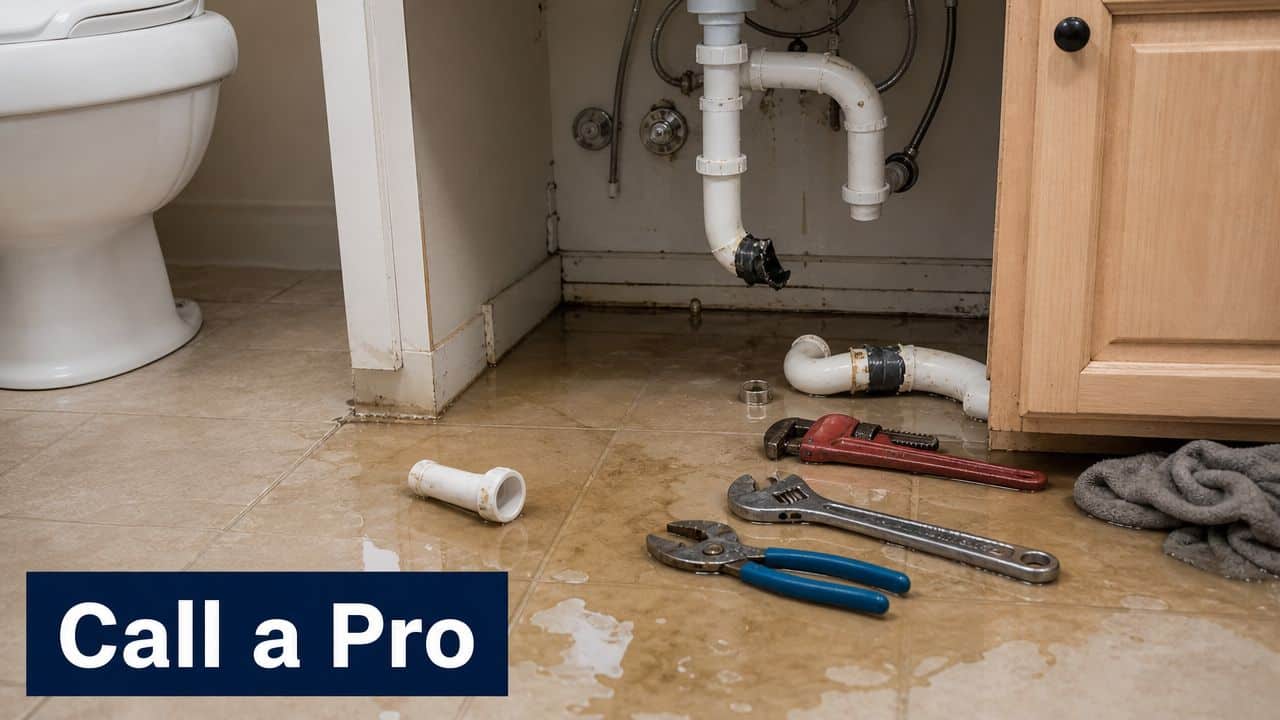
Basic tasks still make sense. Cleaning a P-trap, replacing a showerhead, or pulling hair from a stopper is usually low risk. The line gets crossed when the repair involves aged metal, hidden piping, or drain lines that may already be weakened by decades of heat, hard water scale, and temperature stress.
Older Las Vegas plumbing systems fail in ways that are not obvious from the outside. A fitting can look serviceable and split when it is tightened. A shutoff can hold for years and start leaking the first time it is turned. Cast iron can be open enough to drain one day and rough, scaled, or cracked just beyond view.
Repairs that commonly go sideways
- Old shutoff valves often leak after being operated because the packing, stem, or body is already worn.
- Brittle drain assemblies can crack from routine disassembly and re-tightening.
- Chemical drain cleaners may sit in older lines, add heat, and leave the actual blockage in place.
- Wall or slab leaks are easy to misread, especially when moisture travels before it shows up.
Las Vegas adds its own pressure to these decisions. Extreme attic heat, hot garage conditions, and sharp temperature swings between day and night speed up wear on older materials. Hard water leaves scale inside supply lines and on valve parts. In homes that also use softened water, the diagnosis can get more complicated, especially if the property still has aging metal drainage or mixed generations of pipe. That is one reason repeated guesswork rarely saves money on an older system.
Before opening tile, cutting drywall, or replacing fixtures that may not be the cause, get the line inspected. A sewer camera inspection for older drain lines shows whether the problem is buildup, a break, an offset, or corrosion. That changes the repair plan fast.
I tell homeowners this all the time: if the fix requires force, guesswork, or opening a surface you cannot easily restore, stop there and get it diagnosed first.
The cheapest repair is often the one that prevents the second repair.
Protect Your Home with a Proactive Approach
Older homes in Las Vegas can be solid, reliable properties. But their plumbing needs a more deliberate maintenance strategy than a newer build.
The biggest mistake is waiting for visible damage. By the time you see a ceiling stain, warped baseboard, foul drain smell, or repeated backup, the system has usually been signaling trouble for a while. A proactive inspection gives you something better than guesswork. It gives you a map of what's aging, what's restricted, and what can still be maintained before replacement becomes urgent.
A practical plan for older Las Vegas homes
- Start with recurring symptoms instead of isolated fixtures. Repetition matters.
- Use camera inspection when backups return so the repair targets the defect.
- Address water quality as part of the plumbing system rather than treating it as a separate issue.
- Plan repiping strategically if older lines are failing in multiple areas. Homeowners comparing options can review what a water system repipe in Las Vegas typically involves.
- Keep records of repairs and inspections if you own rental property or manage multiple units in Henderson or North Las Vegas.
For homeowners, landlords, and property managers, professional diagnosis usually saves money because it reduces repeat visits, unnecessary fixture replacement, and avoidable water damage. That's especially true in Las Vegas, where climate and water conditions put old systems under stress year-round.
If you need help, look for a licensed and insured local company with experienced technicians, honest pricing, modern diagnostic tools, and fast response times. Those details matter more than a low initial quote when the home has older pipes and hidden drain issues. MG Drain Services serves Las Vegas, Henderson, North Las Vegas, and Summerlin with transparent estimates, experienced journeyman plumbers, and bilingual support. Se habla español.
If your older home is showing signs of trouble, call MG Drain Services LLC at 702-480-8070 or book online at mgdrainservices.com. For fast, professional plumbing in Las Vegas, including drain cleaning, sewer camera inspections, leak detection, hydro-jetting, and targeted plumbing repairs, it's worth getting the system checked before a small issue turns into major damage.