If you're shopping for a Saltless Water Softener in Las Vegas, you're probably trying to stay ahead of hard water damage before it shows up as clogged fixtures, white buildup, or expensive plumbing repairs. That's smart. But in older Las Vegas homes, especially ones with aging cast iron drain lines, the bigger question isn't only how to prevent scale. It's whether your pipes already have damage that a conditioner can't touch.
A lot of homeowners in Las Vegas, Henderson, and North Las Vegas assume a saltless unit will fix what hard water has already done. It won't. A saltless system can help reduce new scale on the supply side, but if your home already has corroded drain lines, sewer trouble, tuberculation, or failing cast iron, you need a diagnosis first and a treatment plan second.
The Truth About Saltless Water Softeners and Pipe Health
You buy a saltless water softener to protect the house, then a few weeks later the pressure is still weak, one bathroom drain still acts up, and the plumbing still feels old. I see that in Las Vegas all the time, especially in homes with aging cast iron or heavily used older piping. The system was chosen for prevention, but the plumbing problem had already moved into the repair stage.
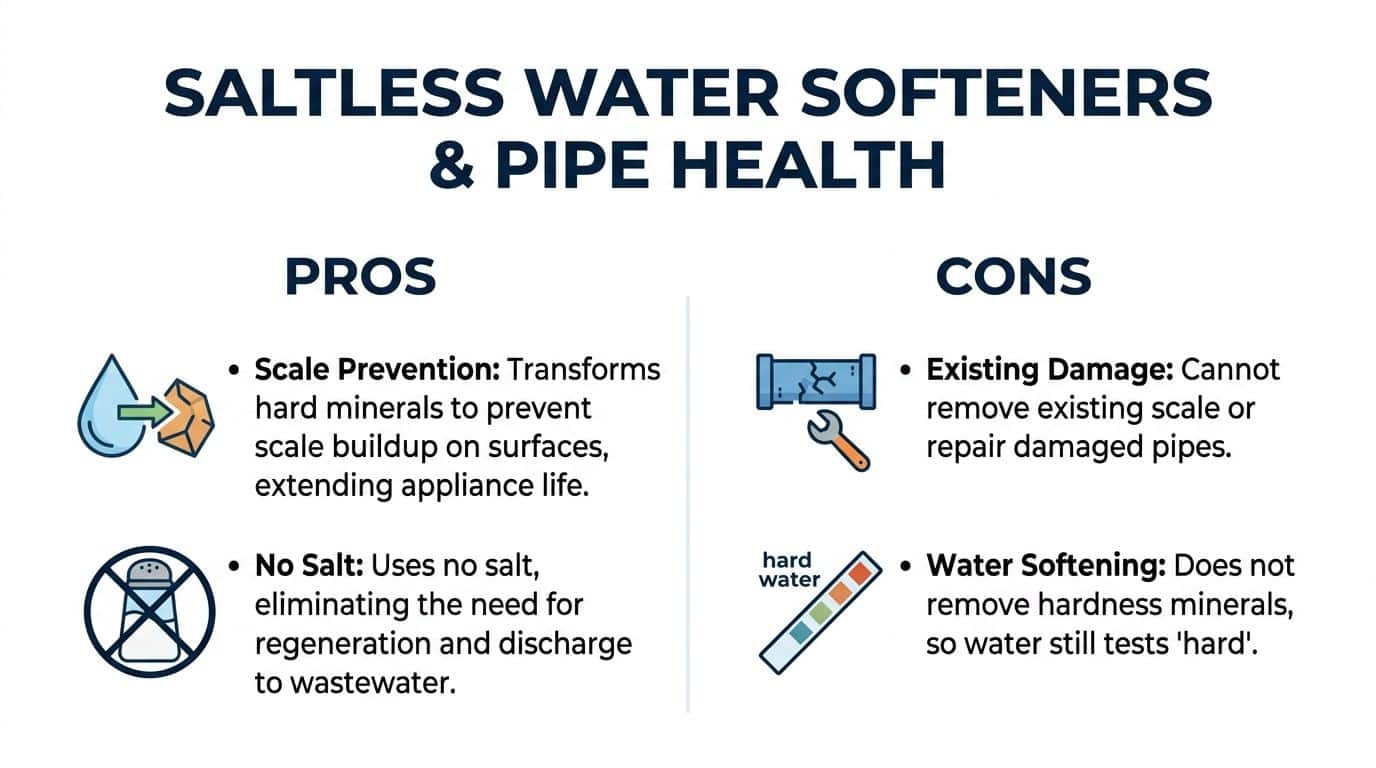
Las Vegas homeowners hear the phrase "saltless water softener" constantly. In practice, these systems are water conditioners, not true softeners. According to SpringWell's explanation of salt-free water softeners, salt-free water softeners do not remove calcium and magnesium minerals from water; instead, they condition it to prevent scale buildup. However, they leave the hardness minerals present, which means a post-system test will still show hard water. For a homeowner, that means the unit may reduce new scale from sticking as aggressively, but it does not reverse years of buildup or wear inside the plumbing system.
What that means for older Las Vegas plumbing
In a newer home with supply lines in good shape, a saltless system can be a reasonable prevention tool. In an older Las Vegas house, you have to ask a harder question first. Are you trying to reduce future scale, or are you already dealing with pipe failure, internal restriction, corrosion, or rough cast iron that has been deteriorating for years?
A conditioner cannot clean out tuberculation, rebuild a corroded pipe wall, or restore inside diameter that has already been lost. If fixtures are slowing down or the water flow has changed, start by checking whether the symptom fits a pressure or restriction problem. This guide on how to fix low water pressure in a Las Vegas home is a useful starting point when hard water and old piping may both be involved.
That distinction matters in the field. Homeowners often buy a preventive product for a remedial problem.
Where saltless systems actually help
Saltless units make the most sense when the plumbing is still serviceable and the goal is to limit new scale while avoiding salt bags, regeneration cycles, and discharge water. That is a practical fit for some households. It is not a pipe repair strategy.
If the house already has aging cast iron drains, repeated sewer issues, or supply lines that are narrowed by years of mineral buildup, the question is no longer "How do I prevent scale?" It is "How much damage is already inside the system, and is it too late for prevention alone?" In older Las Vegas homes, that is the question that saves people the most time and money.
Signs of Pipe Failure a Saltless Water Softener Cannot Fix
When a homeowner says, "I think I just need a saltless system," I usually want to know what the house is doing. The symptoms tell the story. If the issue is inside old drain or sewer piping, a conditioner won't solve it.
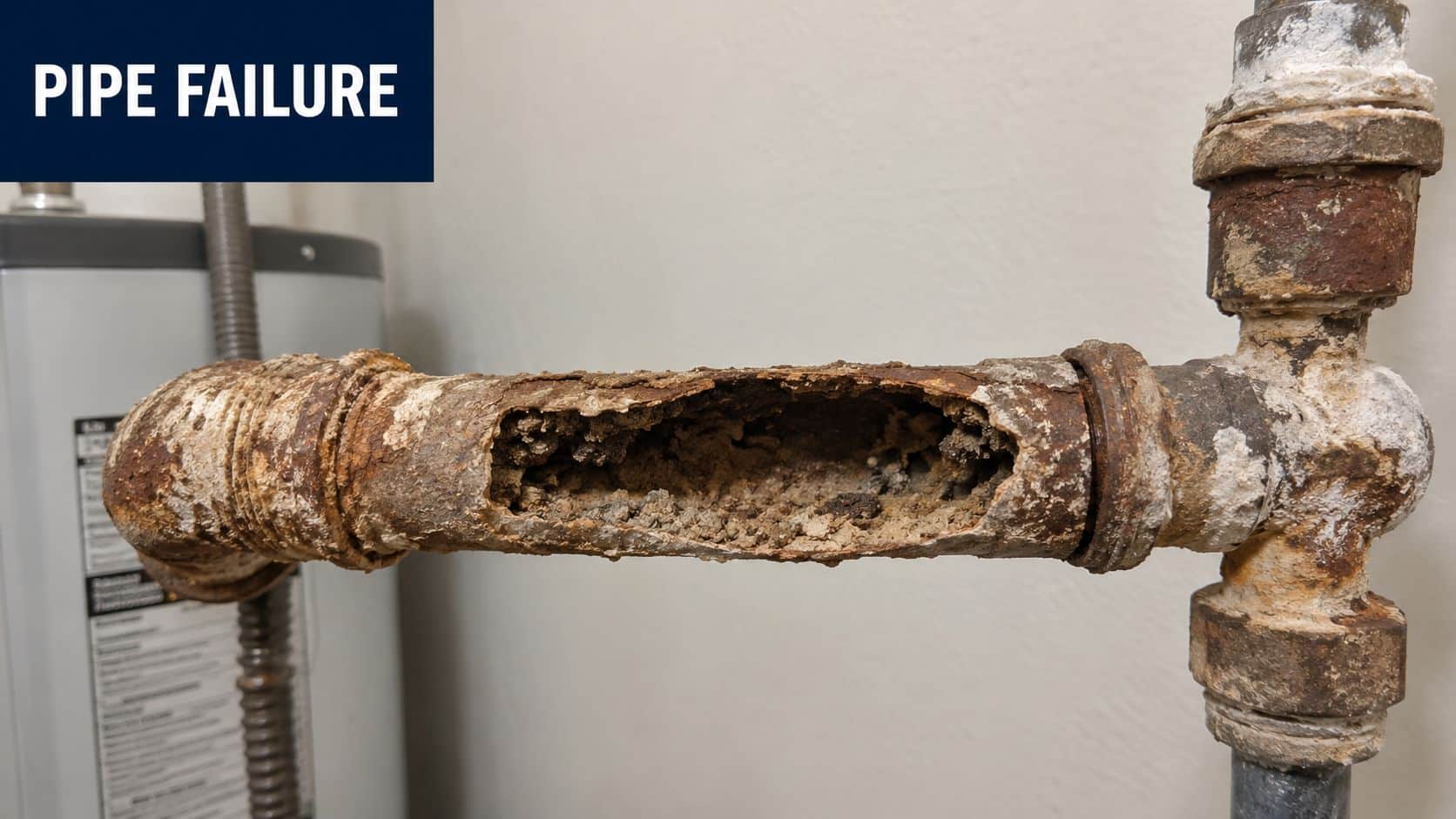
SoftPro's breakdown of salt-based vs. salt-free systems notes that saltless systems use Template-Assisted Crystallization (TAC) to transform dissolved minerals into microscopic, non-adhesive crystals. This prevents new scale but leaves the total hardness concentration unchanged, meaning it does not address existing corrosion or tuberculation inside pipes. That's the line homeowners need to focus on. Existing corrosion stays there.
Warning signs inside the house
Watch for symptoms that repeat, spread, or show up in more than one fixture.
- Recurring drain backups mean waste or water isn't moving freely through the line. If a sink, tub, or toilet backs up again after being cleared, the pipe may be rough, scaled, bellied, cracked, or restricted deeper in the system.
- Gurgling toilets or drains often mean air is getting displaced through standing water because the line isn't venting or draining normally.
- Slow drains throughout the house point to a larger branch or main line problem, not just a single hair clog in one fixture.
- Sewer odor indoors is never a small issue. That smell can signal a broken seal, a cracked line, or sewage that isn't moving out correctly.
A conditioner may reduce future sticking minerals. It won't reopen a drain line that's already narrowed by corrosion.
Clues outside the home
The yard can tell on the sewer before the house does.
- Unusually green patches of grass can indicate leaking wastewater feeding one area of the yard.
- Soft or damp ground near the sewer path may mean the line is letting sewage escape before it reaches the city connection.
- Foundation-area odor is another red flag, especially in older Las Vegas and North Las Vegas properties where pipe age is catching up.
Why homeowners misread these symptoms
Many hard water symptoms and failing pipe symptoms overlap in the homeowner's mind. White crust on fixtures suggests hard water. Slow drains feel related, so people assume one water treatment product will solve both.
It doesn't work that way. Supply-side conditioning and drain-side failure are different systems. One deals with mineral behavior in incoming water. The other deals with the physical condition of the pipe carrying wastewater out of the house.
Professional Diagnostics How We Find the Real Problem
Plumbing gets expensive when people guess. The cleanest way to find out whether you're dealing with scale, corrosion, a break, or a failing sewer is a camera inspection.
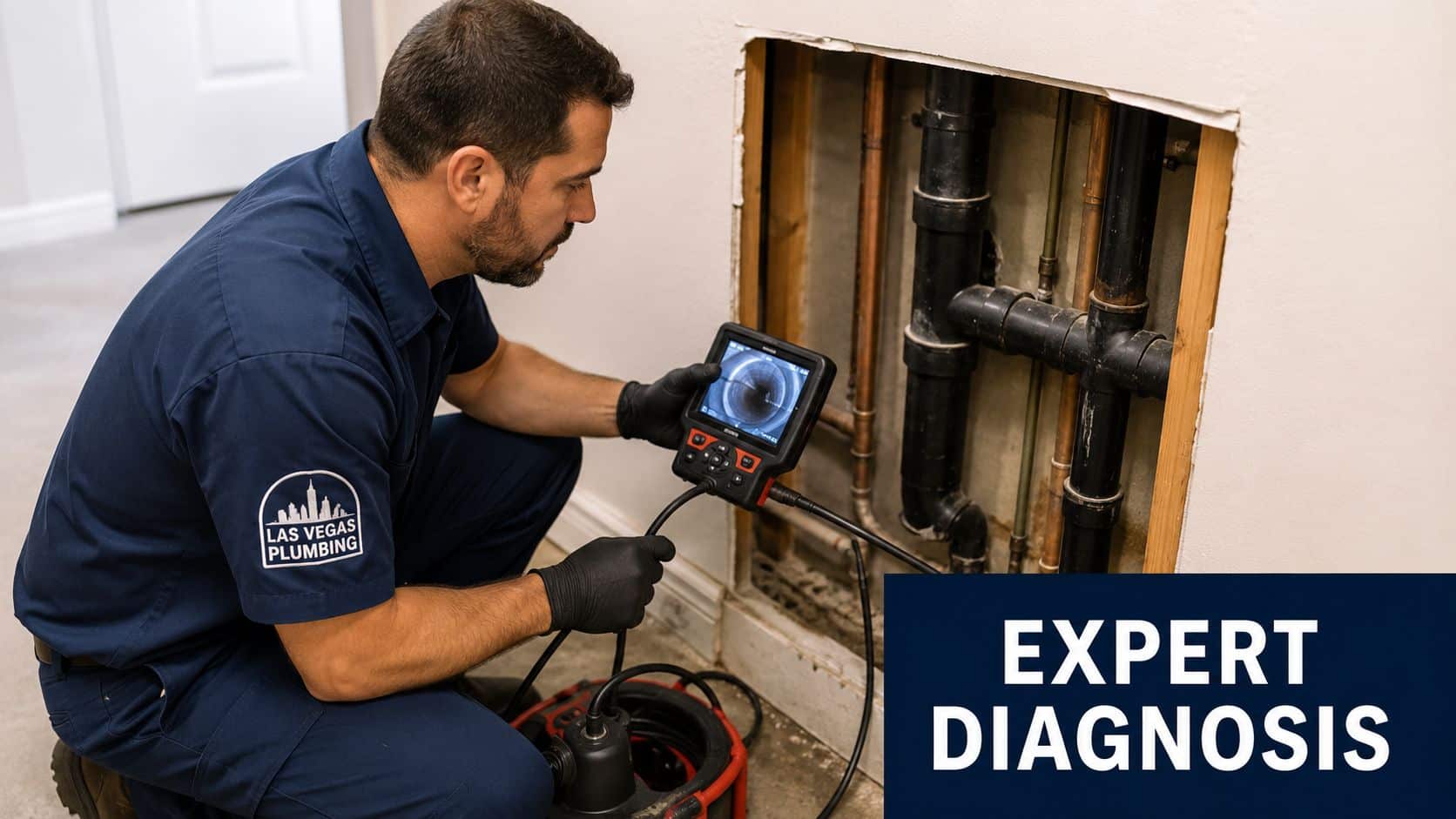
A sewer camera inspection runs a high-resolution camera through the line so the technician can see the pipe wall in real time. That matters because many symptoms look similar from inside the house. A toilet bubbling, a shower backing up, and a bad odor could come from several causes. The camera narrows it down fast.
What the camera actually shows
A proper inspection can reveal:
- Cracks and offsets where pipe sections have shifted
- Collapsed areas that no drain cleaner will fix
- Root intrusion in buried sewer lines
- Heavy scale and tuberculation choking the inside diameter of cast iron
- Standing water that suggests a belly or poor slope
That last point matters for Las Vegas homes with older cast iron. Sometimes the problem isn't a total blockage. The pipe is still open, but only partly. Waste catches on rough interior walls, then buildup compounds every time the line is used.
Field insight: If you can't see the inside of the pipe, you're still estimating.
Why this saves money
The camera keeps the repair tied to the actual defect. If the line only needs cleaning, you avoid overpaying for replacement. If the line is structurally failing, you avoid wasting money on temporary clearing work that won't last.
Homeowners who want to understand the process can review this page on sewer camera inspection. It's one of the most important services for older homes in Las Vegas, Henderson, and North Las Vegas because it replaces hunches with visible evidence.
A good diagnosis also helps when more than one issue is present. Some homes have hard water scaling on the supply side and sewer deterioration on the drain side. Treating one and ignoring the other is how repeat problems start.
Repair or Replace Deciding on the Right Pipe Solution
Once the camera shows the condition of the line, the next decision is practical. Can the pipe be restored with cleaning or localized repair, or is replacement the better investment?
In Las Vegas, that answer depends on the pipe material, the extent of internal decay, the exact location of the failure, and whether the problem is blockage or structural damage. It also depends on the water itself. The University of Nebraska-Lincoln guidance on salt-free conditioners and high-hardness or well water conditions notes that for Las Vegas homes with well water or very hard water exceeding 10 grains per gallon, many salt-free systems are ineffective. These systems also do not remove iron or manganese, often requiring separate pretreatment, which highlights the need for a professional diagnosis to determine the right solution for your specific water and pipe conditions.
When repair makes sense
Hydro-jetting or targeted repair can be the right move when the pipe still has structural life left.
Typical examples include:
- grease or sludge buildup in lines that are intact
- moderate scale restricting flow but not destroying the wall
- limited root intrusion in a section that hasn't collapsed
- isolated trouble spots rather than widespread failure
In those cases, cleaning can restore flow and buy useful service life. For homeowners dealing with broader old-house plumbing questions, this guide to a water system repipe in Las Vegas helps frame when replacement becomes the more dependable route.
When replacement is the better answer
Replacement usually wins when the pipe wall itself is failing. If the camera shows breaks, major deformation, advanced corrosion, or recurring trouble across multiple sections, cleaning is only a temporary reset.
If the pipe has lost its shape or strength, cleaning the inside won't restore the structure.
Cast Iron Pipe Repair vs. Replacement
| Factor | Pipe Repair (e.g., Hydro-Jetting) | Pipe Replacement (e.g., Repiping) |
|---|---|---|
| Best use | Heavy buildup, minor intrusion, restorable flow | Collapsed sections, advanced corrosion, repeated failures |
| Goal | Reopen and clean existing pipe | Remove failed pipe and install new material |
| Short-term disruption | Usually less invasive | Usually more invasive, depending on access |
| Long-term reliability | Depends on remaining pipe condition | Stronger option when the old pipe is worn out |
| Good fit for older cast iron | Sometimes, if the wall is still serviceable | Often better when decay is widespread |
| Budget approach | Lower upfront scope | Larger project, but often more durable |
For some Las Vegas homes, the smartest path is phased work. Clean and inspect first. Replace only the sections that are failing. That's a disciplined way to protect both the plumbing and the budget.
The Cost of Waiting vs The Value of Immediate Action
The most expensive plumbing problem is usually the one the homeowner waited on because it seemed manageable. A slow tub drain or occasional toilet gurgle doesn't stay small if a deteriorating line sits underneath it.
When wastewater can't leave the property correctly, it can come back through the lowest opening in the house. That turns a plumbing problem into flooring damage, drywall damage, odor cleanup, sanitation work, and time lost dealing with the mess. If sewage reaches porous materials, cleanup gets more complicated fast.
What delay usually changes
Waiting often makes three things worse:
- The repair area gets larger. A localized issue can spread into neighboring pipe sections or surrounding materials.
- The cleanup becomes dirtier. Once sewage enters living space, the work isn't just plumbing anymore.
- The schedule gets forced. Planned work happens on your timeline. Emergency work happens when the house decides.
For homeowners who want to understand what broader recovery can involve after a major water or sewage event, this overview of the 2026 property restoration process is useful context. It shows why an early inspection is usually easier than a post-failure restoration project.
Why acting early is the cheaper move
A planned inspection gives you options. You can confirm whether the line needs cleaning, spot repair, or replacement before the problem spills into cabinets, bathrooms, or flooring.
Bottom line: Paying for clarity early usually costs less than paying for cleanup late.
This matters even more in Las Vegas properties with older plumbing stock. Heat, age, hard water history, and prior patchwork repairs can all stack up. Homeowners in Henderson and North Las Vegas often call only after a backup. Calling at the warning-sign stage is the better move for safety, cost control, and peace of mind.
Call the Las Vegas Experts for Your Pipe Problems
A Saltless Water Softener can be part of a prevention plan in Las Vegas. It isn't a cure for old cast iron, sewer deterioration, recurring backups, or pipe walls that are already failing. If your home has warning signs, the smartest next step is a real diagnosis, not another guess.
MG Drain Services LLC serves Las Vegas, Henderson, North Las Vegas, and Summerlin with practical plumbing and drain solutions backed by field experience. The company is licensed and insured, locally based, and known for fast response times, honest pricing, and experienced technicians. Owner Miguel Garcia brings 25 years of experience to the work, and that matters when the job calls for judgment, not just equipment.
If your property needs a sewer camera inspection, drain cleaning, hydro-jetting, leak detection, or a larger pipe solution, you want a crew that can tell the difference between buildup, blockage, and failure. That's how homeowners avoid wasting money on the wrong fix.
Call MG Drain Services LLC at 702-480-8070 or book online at mgdrainservices.com for fast, professional plumbing in Las Vegas. If you're seeing slow drains, sewer odor, recurring backups, or signs of aging pipes, don't wait for an emergency to make the decision for you.
Call MG Drain Services LLC for fast, professional plumbing in Las Vegas. If you're dealing with hard water concerns, slow drains, sewer odors, or signs of failing pipes in Las Vegas, Henderson, or North Las Vegas, schedule an inspection and get honest answers before a preventable problem turns into major damage.